REVIEW · KAWASAKI
Authentic Sumo Experience in Tokyo: Enter the Sanctuary
Book on Viator →Operated by MagicalTrip Inc. · Bookable on Viator
A real sumo stable beats arena seats. This 4-hour experience takes you into the training world of sumo in Kawasaki, with a guided tour of the stable’s daily spaces, ring-side morning practice, hands-on movement lessons, and a sit-down lunch.
I especially love the way you get inside the routine—dining room, bath, and practice area—so sumo feels like a way of life, not just a sport. I also love the payoff at lunch: chanko-nabe made with chicken dumplings, eaten together at a table used in the sumo room. One thing to consider: this is an active, timed experience, so you’ll want to be ready to move and arrive on time (and large suitcases aren’t allowed).
In This Review
- Key highlights you’ll care about
- Entering a real sumo stable from Shin-Kawasaki Station
- Touring the dining room, bath, and practice space
- Ring-side morning practice: what you actually see
- Learning sumo moves with retired wrestlers
- Chanko-nabe lunch: eating at the table used in the sumo room
- Price and value: what $171.12 buys you in real access
- Who this experience is best for (and who should rethink it)
- Practical tips for a smoother sumo morning in Kawasaki
- Should you book this authentic sumo stable experience?
- FAQ
- Where is the meeting point for the sumo experience, and what time does it start?
- How long is the tour?
- What’s included in the price?
- Do you get to eat lunch, and what is it?
- Can I participate in training moves, or is it only watching?
- What about dietary restrictions or allergies?
Key highlights you’ll care about
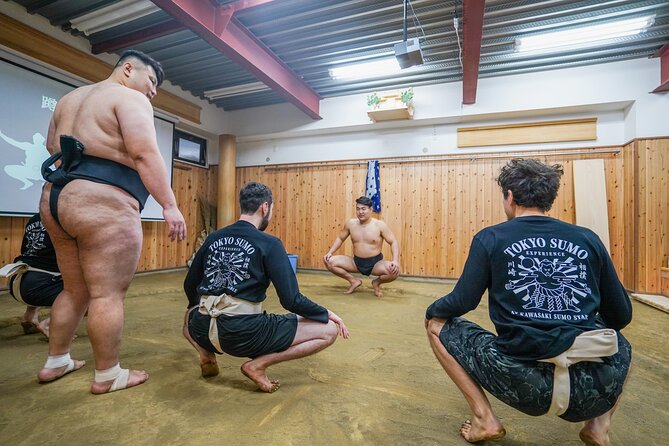
- Real stable access: You visit a sumo stable that was officially used until 2022.
- Ring-side morning practice: You sit right in front of the ring to watch training.
- Hands-on instruction: You learn sumo basics and can experience training movements with wrestlers.
- Chanko-nabe lunch included: You eat with the group, and the food is part of the cultural story.
- Small groups (max 15): Easier questions, better interaction, and a more personal flow.
- Photos and a designed T-shirt: You leave with memories, not just memories-in-your-phone.
Entering a real sumo stable from Shin-Kawasaki Station
You start at Kawasaki and meet up at Shin-Kawasaki Station. From there, you head to the stable in a small-group setting, with a guide setting the tone right away. This isn’t about shouting facts at you. It’s about giving you the map first: how wrestlers live, what’s tradition versus training “rules,” and why sumo has a culture that feels both strict and surprisingly human.
The biggest win here is the location choice. You’re not doing a theater-style “watch and exit” tour. You’re going to the actual place where training happens. And because you’re with a guide (certified by MagicalTrip), you get commentary that ties what you see to how sumo works day to day.
In reviews, guides like Charlie, Jim, Lily, and Fugi stand out for being funny and clear, and for using tools like a PowerPoint to make the history and customs easier to grasp while you’re standing in the spaces.
Touring the dining room, bath, and practice space
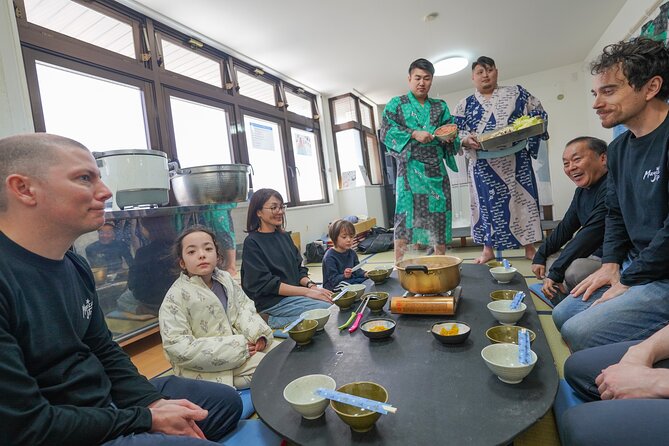
Before you even get near ring-side action, you get the “how they live” portion. Your guide leads you through key areas of the stable: the dining room, bath area, and practice space. Seeing these rooms changes how you understand sumo. It’s not just strength and suits. It’s schedule, routine, and shared space.
Here’s what I like about this part for you: you’ll know what you’re looking at instead of just snapping photos. For example, the dining room isn’t only where people eat. It’s where relationships and routine get reinforced. The bath area is part of recovery and daily rhythm. And the practice area shows how training is built into the home base.
A practical note: you’ll be walking and looking around a working space, so go in with a calm, respectful mindset. Sumo is tradition-heavy, and the experience runs better when everyone behaves like they’re visiting someone’s home.
Also, since the stable was officially used until 2022, you get a sense of continuity. Even though the outside world has changed, you’re still witnessing a space shaped by long-standing sumo habits.
Ring-side morning practice: what you actually see
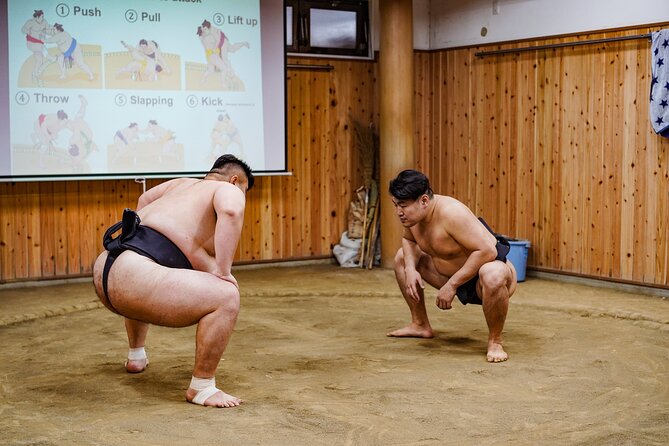
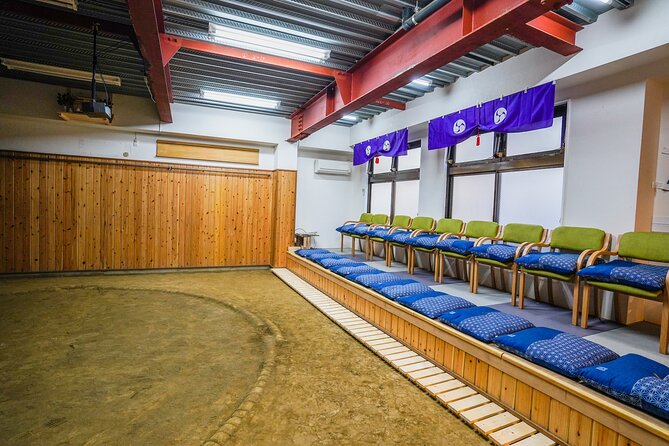
After the room tour, you move to the ring area and watch a morning practice session. Typically, sumo morning practice begins around 7:00 a.m. and can last three to four hours. Your tour is shorter, so you’ll be seeing part of that flow, from ringside where you can understand the pace and the physicality.
Sitting right in front of the ring is a big deal. In a stadium, you’re far away. Here, you’re close enough to notice details like spacing, how wrestlers transition between drills, and the focus it takes to repeat movements over and over.
What’s smart about this format is that you’re learning with your eyes first. Then, later, you get to try some movements yourself. That order helps the instruction stick, because you’ve already seen what the motion is supposed to look like.
Learning sumo moves with retired wrestlers
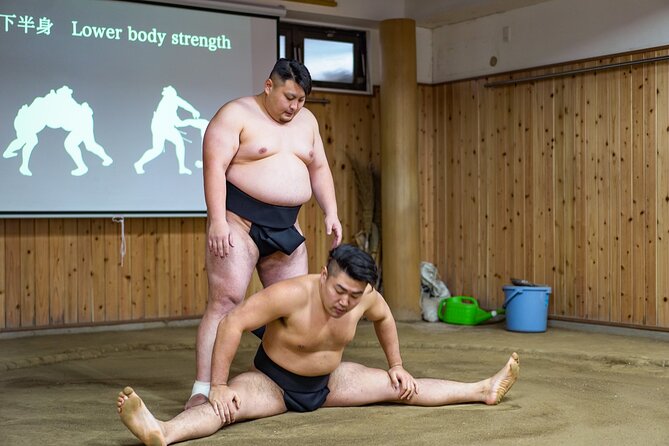
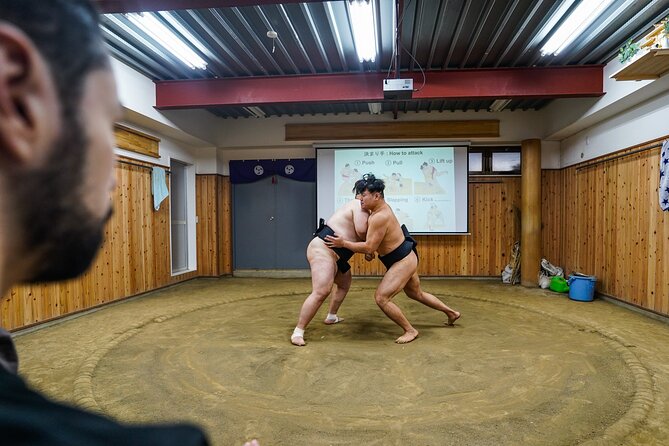
This is the part most people remember. You don’t just watch. You get instruction from the wrestlers, and many guests have the chance to participate in training movements.
In the experience, you meet sumo wrestlers who are actively involved in teaching guests, and the tone is friendly and practical. Reviews mention wrestlers being kind, jovial, and willing to answer questions. You’ll usually get a demo, then a try, and you’ll learn how to do at least some basic movements in a way that feels more like training than cosplay.
Be ready for this to be physical. Even if you’re not an athlete, you’ll likely squat, shift weight, and use your legs and balance. It’s not just arm strength. Sumo fundamentals are about how you stay stable while pushing and moving.
The payoff is real perspective. After you try the movements, watching training again later (or during other sumo content during your trip) makes more sense. You understand why small posture changes matter.
One more “watch for this” tip: since there’s a ring schedule in a working stable environment, the tour keeps moving on time. Respect the plan, and don’t show up late expecting to slide in at the end.
Chanko-nabe lunch: eating at the table used in the sumo room
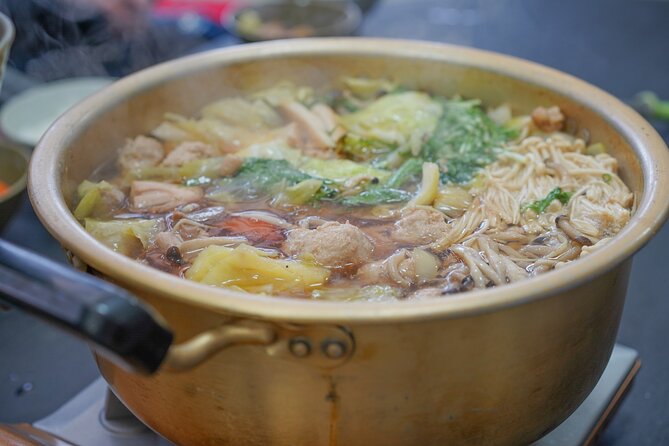
Lunch is not an afterthought. It’s part of the culture lesson. You eat chanko-nabe together, a traditional dish associated with wrestlers’ diets.
What makes this lunch feel special is the way it’s handled. You’re seated for a shared meal, and you help with a component—chicken dumplings are prepared with the wrestlers. Then everyone eats around a table that was actually used in the sumo room.
For me, this is where the day becomes a full experience. You get the training environment, the teaching, and then you shift to food and conversation. You’re not just consuming a meal; you’re seeing how community works inside the stable.
And the flavor story matters too. Reviews repeatedly call the chanko-nabe delicious. Some guests mention how satisfying the hot pot feels and how quickly people go back for more bowls. If you like cozy, hearty comfort food, this fits.
Price and value: what $171.12 buys you in real access
At $171.12 per person, you’re not paying for a generic “tour talk.” You’re paying for access, instruction, and included food in a small setting.
Here’s how I think about the value for you:
- You get the stable tour plus ring-side morning practice time.
- You get interaction with sumo wrestlers, including hands-on movement practice.
- Lunch is included, specifically a sumo-associated meal (chanko-nabe) made with ingredients prepared with the wrestlers.
- You also receive tour photos and an original designed T-shirt, which turns the memory into something you can keep.
If you’re comparing this to the cost of a standard guided tour with no special access and no hands-on component, this feels like the smarter use of money. You’re paying for proximity to the real thing: a training stable and instruction from people who live the sport.
That said, if you’re the type who only wants to watch from afar and hates any chance of getting sweaty or active, this may feel like too much effort for the time you’ll spend.
Who this experience is best for (and who should rethink it)
This works great for families, couples, and anyone with a genuine curiosity about sumo culture. It also fits well if you like interactive travel—learning by doing, not only seeing.
It’s especially good for you if:
- you want a rare peek into sumo’s daily spaces (dining, bath, practice),
- you’re curious how wrestlers train and think,
- you enjoy food-based cultural experiences like chanko-nabe.
You might want to reconsider if:
- you have limited mobility and want a purely seated activity (this includes participatory movements),
- you dislike small-group schedules and prefer to wander freely.
The tour says most travelers can participate, and the max group size is 15, which supports good interaction. Still, it’s a “training-stable” day, not a leisurely stroll.
Practical tips for a smoother sumo morning in Kawasaki
A few practical things will make your day easier and more comfortable:
- Arrive early and be prompt. The tour starts on time, and being late can cause you to miss the group. If you plan to take transit, build in buffer time.
- Bring water and consider a hat, especially in summer. Japan can be hot and humid, and you’ll be moving around.
- Wear clothing you can move in. Even when instruction is friendly, you’ll likely be practicing stances and movements.
- Avoid bringing large luggage like suitcases. Large luggage isn’t permitted on this tour.
- If you have allergies or dietary needs, tell the organizers at least one day in advance. The tour also notes they can’t guarantee allergy-free meals, and substitutions may not always be possible. You’ll do better by communicating needs early rather than trying to solve it on the day.
One more “small but important” point: you’ll get a mobile ticket, so keep your phone charged and ready. You don’t want to be searching for it when you meet up.
Should you book this authentic sumo stable experience?
If you’ve been wondering what sumo life is really like, this is one of the clearer answers you’ll find. The top reason to book is simple: you get more than viewing. You get room-by-room context, ring-side training observation, hands-on movement practice with wrestlers, and a proper lunch tied to the culture.
I’d book it if you want authentic access in a small group and you like experiences where your role changes from audience to participant. It’s also a strong choice for food lovers, because chanko-nabe here is treated like part of the day, not just included calories.
I’d hesitate only if you prefer low-activity tours or you’re not comfortable arriving on time and participating in a schedule built around a stable’s training flow.
FAQ
Where is the meeting point for the sumo experience, and what time does it start?
You meet in Kawasaki at the address listed for the activity (Kiyoken1-chōme-2-1, Saiwai Ward, Kawasaki, Kanagawa 212-0058, Japan) and you’ll start at 9:30 am. The experience ends back at the meeting point.
How long is the tour?
The total duration is about 4 hours 10 minutes.
What’s included in the price?
The tour includes the sumo experience, a certified guide by MagicalTrip, the sumo wrestler’s lunch, tour photos, and an original designed T-shirt.
Do you get to eat lunch, and what is it?
Yes. You eat chanko-nabe together. The tour specifically mentions preparing chicken dumplings as a main ingredient with the wrestlers.
Can I participate in training moves, or is it only watching?
You’ll watch a morning practice session from in front of the ring, and guests who wish to participate can also experience the movements during the training session.
What about dietary restrictions or allergies?
You need to inform the organizers at least one day before the tour about dietary requests or allergies. The tour also states they can’t guarantee allergy-free meals and substitutions may not always be possible, though they will make every effort to compensate at different stops.