REVIEW · DA LAT
Canyoning Tour in Dalat Viet Nam
Book on Viator →Operated by Highland Adventure Travel · Bookable on Viator
Canyoning in Dalat feels like physics class. This extreme canyoning tour at Datanla Waterfall strings together 7 challenges—from rappels and a Tyrolean traverse to water slides, a 7-meter cliff jump, and a dramatic final 14-meter abseil. I like that it runs at 8:00 AM daily, with pickup offered and a mobile ticket to keep the day easy.
Two things I really love: the hands-on start at the base camp (you practice knots, harness setup, and rappelling technique before anyone points you toward the next drop), and the fact the tour builds in fun breaks, like natural water sliding and that high-energy free jump. One consideration: this activity needs good weather, so you’ll want flexibility in your schedule if conditions aren’t right.
In This Review
- Key points at a glance
- Datanla Waterfall: why this canyoning day feels so alive
- Base camp briefing: where safety and confidence get built
- Rappel #1: an 18-meter descent beside a 30-meter waterfall
- Tyrolean traverse: when the canyon gets wider
- Natural water sliding: repeated fun, not just one quick run
- The 25-meter abseil through the water: the toughest technical moment
- The 7-meter free jump: mental power in one clean moment
- Final abseil: the 14-meter Washing Machine drop
- Food and timing: what 6 hours feels like on the ground
- Price and value: what $70 gets you in a small-group adventure
- Who this tour suits best (and who should think twice)
- Should you book Highland Adventure Travel’s Dalat canyoning tour?
- FAQ
- What time does the canyoning tour start in Da Lat?
- How long does the tour last?
- Is pickup available?
- Will I get a ticket on my phone?
- What do you do at the base camp before the first rappel?
- What are the main challenges included in the tour?
- What group size should I expect?
- Is the tour dependent on weather?
- What food is included?
Key points at a glance
- Base-camp coaching before you rappel, including knot tying and harness fitting
- 18m first descent right beside a 30m waterfall for a strong start
- Tyrolean traverse that takes you over the canyon and water below
- Multiple water-slide options you can repeat before moving downriver
- Big-ticket moments: a 25m abseil, a 7m cliff jump, and a final 14m Washing Machine drop
Datanla Waterfall: why this canyoning day feels so alive
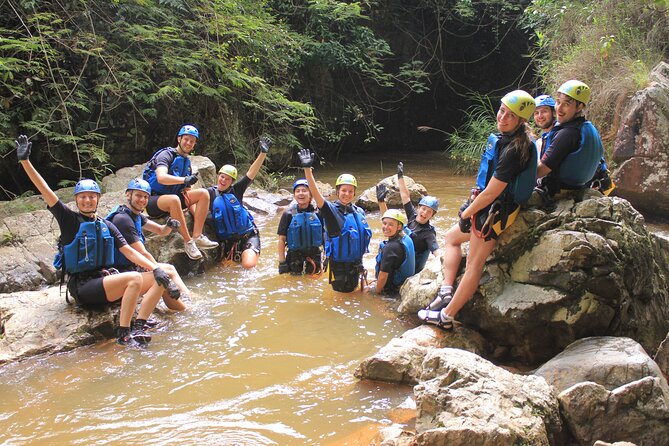
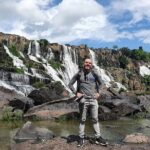
Da Lat already has that cool, misty mountain feel, and Datanla Waterfall adds the wet, wild part. This tour keeps you moving through the canyon rather than doing one or two big stunts and calling it a day. You spend time in the forest corridor, then get pulled toward waterfalls and river sections where the water does the work—and you do the controlled, gear-assisted part.
The “extreme” label here makes sense because you’re not only sliding down water. You’re learning to control your body on ropes for multiple abseils, including one at 25 meters and another at 14 meters. The pay-off is that you get a full canyoning experience: technique, adrenaline, and repeated chances to feel what the water route is actually like.
You can also read our reviews of more tours and experiences in Da Lat.
Base camp briefing: where safety and confidence get built
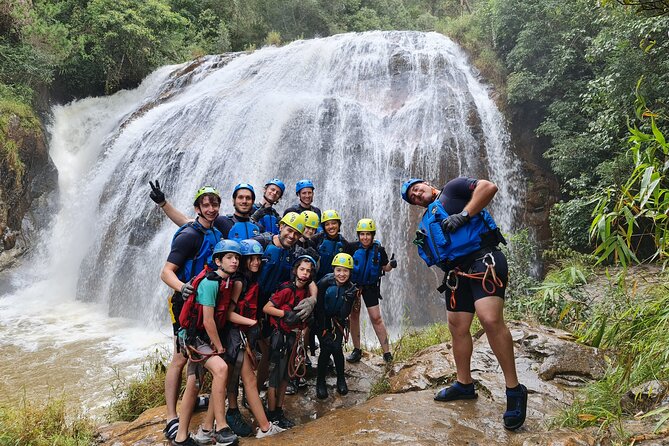
The day begins at the base camp with the basics that matter. You’ll learn knot tying, how to wear your harness correctly, what the hardware is for, and the proper rappelling technique. The order is important: you don’t jump straight into the hard stuff. You practice, then the guides check that you’ve got it before you head downriver.
If you’re worried about ropes, this section is exactly why the tour works for people with different comfort levels. The goal isn’t to make you a rock climber by breakfast—it’s to make sure you can follow commands, handle your gear, and trust what’s controlling your descent.
Also, the group size is capped at 15, which tends to keep the energy focused during training. That matters when harness adjustments and rope checks take time.
Rappel #1: an 18-meter descent beside a 30-meter waterfall
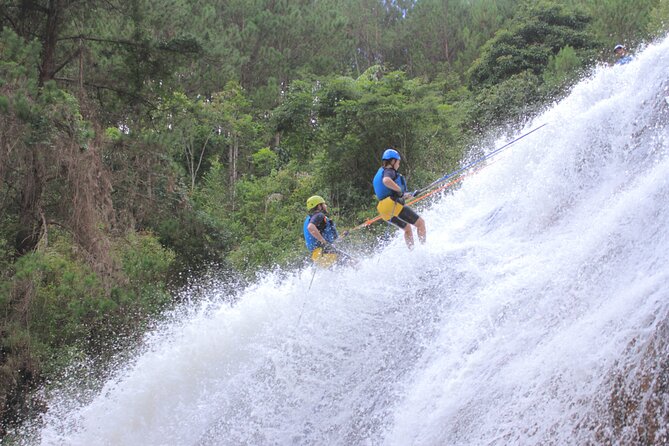
After the training, you start your first rappel: an 18-meter descent into the river below. The tour highlights that you’re descending right next to a 30-meter waterfall, which changes the feel of the moment. You’re not just looking at water—you’re standing beside it, then moving through it with controlled body position on the rope system.
What to expect, practically: you’ll be concentrating on the guide’s instructions and your own setup. Once you start down, it’s less about fighting fear and more about staying calm and letting the rope do its job. The waterfall proximity also means you’ll feel more mist and splash than you might imagine from photos.
Tyrolean traverse: when the canyon gets wider
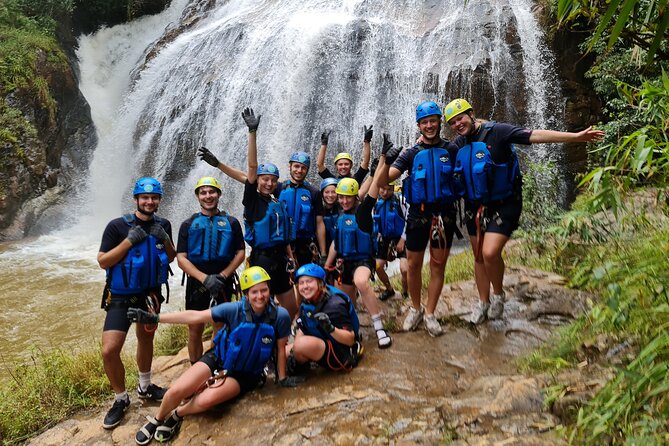
Next comes the Tyrolean traverse, described as dropping down and moving over a waterfall and the river. This is a shift from vertical down movement to a more “across-and-through” moment. You’ll go from rappelling to gliding/traversing with a different kind of focus: steady posture, listening for cues, and keeping your body positioned while you’re out over the water.
This part is valuable because it adds variety. Instead of repeating the same descent motion, you experience a section where you can breathe, look around, and feel how the canyon corridor connects different drops.
If you’re the type who gets motion-sick easily, keep your eyes on the guide’s cues and the path rather than staring down at the water. The traverse is still exciting, but your attention management makes a big difference.
Natural water sliding: repeated fun, not just one quick run
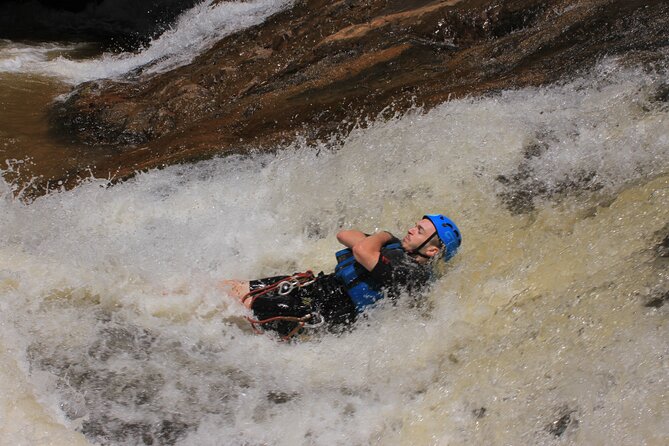
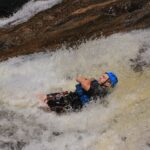
After the traverse, the tour moves into the playful section: natural water sliding. The description notes that there are many kinds of sliding you can try in a couple of goes before continuing downriver. Translation: you get more than one quick slide. You get chances to repeat and choose what feels best as you learn how the water carries you.
This is also where the tour balances adrenaline with actual enjoyment. You’ll still have to stay aware, but it’s less “rope technique” and more “let gravity help.” For many people, this section is the break the body needed after handling gear and rope focus.

The 25-meter abseil through the water: the toughest technical moment
Then comes the biggest waterfall and the real technical test: a 25-meter abseiling through the water. The key point in the tour description is that you’ll need good instruction and techniques from the canyoning experts to get over this hardest fall.
This part can feel intimidating before you start, mostly because of the height and the fact that you’re abseiling with water interaction. The practical way to handle it is simple: trust the setup, listen for instructions, and stay composed through each cue. Don’t rush your attention. Your job is to execute technique properly—one controlled move at a time.
If you’re comfortable with heights but new to ropes, this is still doable because the tour begins with training. If you’re uncomfortable with heights overall, be honest with yourself about whether you want the mental load of a high waterfall abseil. The guides’ job is safety and instruction; it’s still your decision to participate in the tough moments.
The 7-meter free jump: mental power in one clean moment
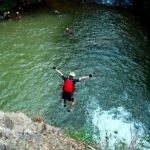
Next is a free jump from a 7-meter cliff. The tour frames it as a test of mental power: take a breath, jump, and land in the water below.
This is not a “maybe” kind of activity. If you hesitate, you feel it immediately. What helps is treating it like a single decision rather than a long negotiation with your fear. Once you commit, the motion becomes straightforward—down, then water, then getting pulled into the next stage of the day.
If you want a way to gauge your readiness, remember how the base-camp training was structured: practice first, then take the drop when the guides confirm you’re ready. The jump is the same idea, just with your feet leaving the edge on purpose.
Final abseil: the 14-meter Washing Machine drop
The last abseil is described as the most special one, called Washing Machine, with a height of 14 meters. The name is doing a lot of work here because it suggests movement and water action that feels more chaotic than a simple vertical descent.
By the end of a canyoning day, you’re tired in a good way—muscles warming up from effort, arms and core doing their share, and your mind finally getting used to the rhythm. That’s when a finale like this can hit the hardest: you’re experienced enough to follow technique, but the environment still has teeth.
Go in thinking of it as a guided conclusion. You’re not trying to out-muscle anything; you’re following rope technique and letting water do what water does.
Food and timing: what 6 hours feels like on the ground
The whole experience runs about 6 hours. In that window, you’re not only doing stunts. You’re also learning, suiting up, moving between sections, and getting breaks built into the flow.
One standout detail from the experience is lunch. The meal is described as a real highlight: banh mi with vegetarian, vegan, and meat options, plus plenty of fruits and sweets. That matters more than it sounds. Canyoning is physically draining, and you want food that doesn’t feel like a token snack.
Pace-wise, you can expect a day with several “gear moments” (training and rope checks) and several “water moments” (slides, waterfall sections, and the jump). It’s not a lazy tour, but the structure keeps it from feeling chaotic.
Price and value: what $70 gets you in a small-group adventure
At $70 per person, the value isn’t only the height or the stunts. It’s the combination of instruction, equipment use, and time in a guided setup.
Here’s how I’d judge the price for your decision:
- You get a full half-day of guided canyon time, not just one short activity
- You start with structured safety coaching: knots, harness wearing, hardware, rappelling technique
- The group is capped at 15, which helps the instruction feel controlled
- Pickup is offered, and you get a mobile ticket, both of which reduce friction on a tight day
In other words, you’re paying for more than adrenaline. You’re paying for the people-and-process side that makes rope activities safer and less stressful.
Who this tour suits best (and who should think twice)
This experience is built for people who want real action in a natural setting—hands-on, sometimes wet, often loud with waterfall noise, and always guided. The tour also states that most people can participate, which lines up with the training-based setup at base camp.
It’s especially a good fit if:
- you want a mix of technique and fun (rappels plus slides plus traversing)
- you like guided challenge days where you get coached instead of thrown in
- you’re okay with heights and water splashes
Think twice if:
- you’re very uncomfortable with heights or free jumps, since the 7-meter jump and major abseils are part of the program
- your schedule is strict and you can’t handle weather-related changes (the tour requires good weather)
If you’re coming from central Da Lat and you want one big outdoor day that actually uses the region’s waterfall scene, this is a strong choice.
Should you book Highland Adventure Travel’s Dalat canyoning tour?
I’d book it if you want an organized extreme canyoning day with coaching built in, a real meal afterward, and a route that doesn’t just repeat one stunt. The tour’s structure—training first, then progressively bigger drops—makes the hardest parts feel less random.
If you’re mainly looking for scenic walking or a low-stress water activity, this won’t match that vibe. This is ropes, height, and active movement. But if you want to trade a normal sightseeing day for something more hands-on, the combination of the 25-meter abseil, the 7-meter free jump, and the 14-meter Washing Machine finale is exactly the kind of memorable challenge that sticks.
FAQ
What time does the canyoning tour start in Da Lat?
The tour starts at 8:00 am.
How long does the tour last?
The duration is about 6 hours.
Is pickup available?
Yes, pickup is offered.
Will I get a ticket on my phone?
Yes, the tour uses a mobile ticket.
What do you do at the base camp before the first rappel?
You learn basics like knot tying, harness wearing, hardware handling, and proper rappelling technique. Guides check you can do it before you go down.
What are the main challenges included in the tour?
The tour includes 7 challenges such as an 18-meter first rappel, a Tyrolean traverse, natural water sliding, a 25-meter abseil through water, a 7-meter free jump, and a final 14-meter abseil called Washing Machine.
What group size should I expect?
The tour has a maximum of 15 participants.
Is the tour dependent on weather?
Yes. The experience requires good weather. If it is canceled due to poor weather, you will be offered a different date or a full refund.
What food is included?
Lunch is included, described as banh mi with vegetarian, vegan, and meat options, along with fruits and sweets.