REVIEW · CHIYODA CITY
From Tokyo: Mt Fuji, Arakurayama and Kawaguchi Lake Day Trip
Book on GetYourGuide →Operated by Hakuu Co Ltd. · Bookable on GetYourGuide
Fuji in a day sounds too easy, until it isn’t. I like having Hikari-san (often praised as the soul of the trip) turn the ride into stories, and I like that the schedule hits multiple real Fuji viewpoints, including the Chureito area. One drawback: the 397-step climb at Arakurayama/Chureito may be tiring for some people, even with breaks built into the time.
If you want Mt. Fuji without juggling trains and transfers, this is built for you. You start in central Tokyo at Tokyo Station Marunouchi North Exit, then spend the day in the Fuji ring with photo stops that feel weirdly specific in the best way, like the famous LAWSON sign at Lake Kawaguchi.
The tone is organized but human. You’ll get multilingual guidance (English, Chinese, Japanese), clear meet-up points, and a plan that’s flexible enough to respond to traffic and weather, including days when Fuji is shy.
In This Review
- Key points I’d bet on
- Getting from Tokyo to Fuji without the stress
- Hikari-san’s storytelling is the difference-maker
- Arakurayama Sengen Park and the Chureito Pagoda: plan for the 397 steps
- Hikawa Clock Shop: a quick stop with a surprisingly good Fuji frame
- Oshino Hakkai: eight springs, reflections, and local food stops
- LAWSON Lake Kawaguchi: the photo stop that actually fits the day
- Lake Kawaguchiko and the Oishi Park vs Maple Corridor choice
- When weather hides Fuji, you still get value
- Timing, crowds, and small comfort notes
- What to bring (and what you shouldn’t) for an easy day
- Who should book this Tokyo to Fuji day trip
- Price and value: what $55 gets you (and what it doesn’t)
- Should you book this tour to see Mount Fuji from Tokyo?
Key points I’d bet on
- Hikari-san: funny, patient, and photo-savvy, with explanations that connect the sights to local meaning
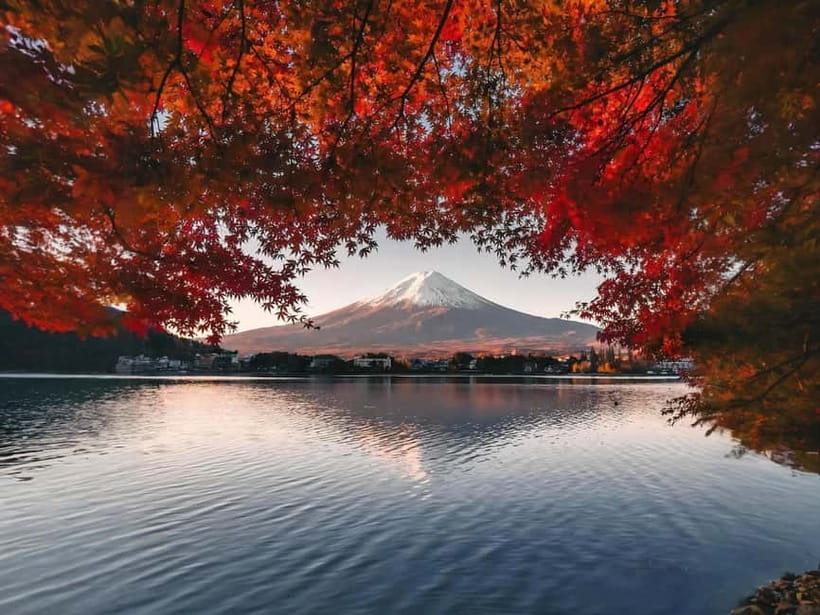
- Multiple Fuji viewpoints: Arakurayama Sengen Park, Chureito Pagoda, Hikawa Clock Shop, Oshino Hakkai, and Lake Kawaguchiko
- Seasonal payoff: spring views for blossoms and winter-friendly moments, plus a Maple Corridor swap in late October to mid-November
- Convenient Tokyo logistics: one meeting spot and one coach ride, with drop-offs back around major central areas
- Easy photo flow: you’re guided to the right angles and timing, including the iconic LAWSON Lake Kawaguchi frame
Getting from Tokyo to Fuji without the stress
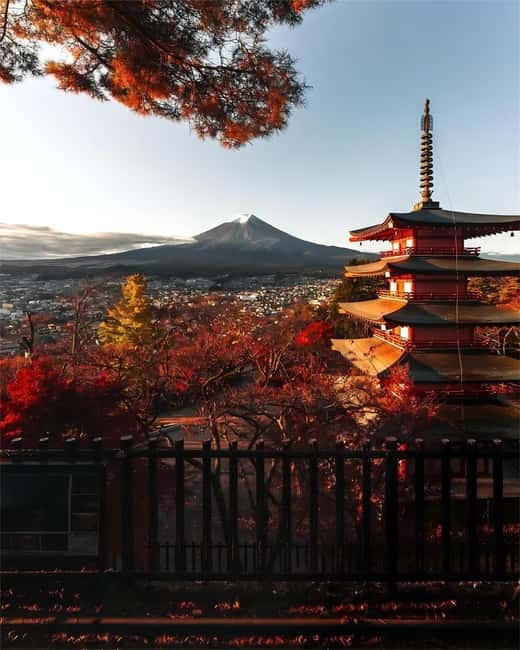
This day trip is designed for one big goal: make Mt. Fuji feel doable from Tokyo. Instead of piecing together trains, you meet at Tokyo Station Marunouchi North Exit (near the taxi stand at the north exit) and board an air-conditioned bus/coach for the outbound drive.
That first stretch is about 105 minutes, and it matters more than you’d think. You’re not just commuting; you’re settling in. One good thing about this setup is that you’re able to stay focused on the day, not the route, and you avoid the “which platform again?” problem that hits many first-time Fuji trips.
At the end, the tour typically wraps around 16:30, and you’re looking at a return to Tokyo around 18:00 to 18:30. In peak traffic periods, it can run later (up to 20:00 is mentioned), so I’d avoid booking anything important the same evening. This isn’t a “sprint and disappear” style day; it’s a full 10-hour experience that respects driving time.
Also, the meeting details are unusually clear. You’ll be sent the guide’s phone number and the vehicle info the night before (around 7:00–8:00 PM), which helps if you’re trying to line up at the right spot the next day.
You can also read our reviews of more tours and experiences in Chiyoda City.

Hikari-san’s storytelling is the difference-maker
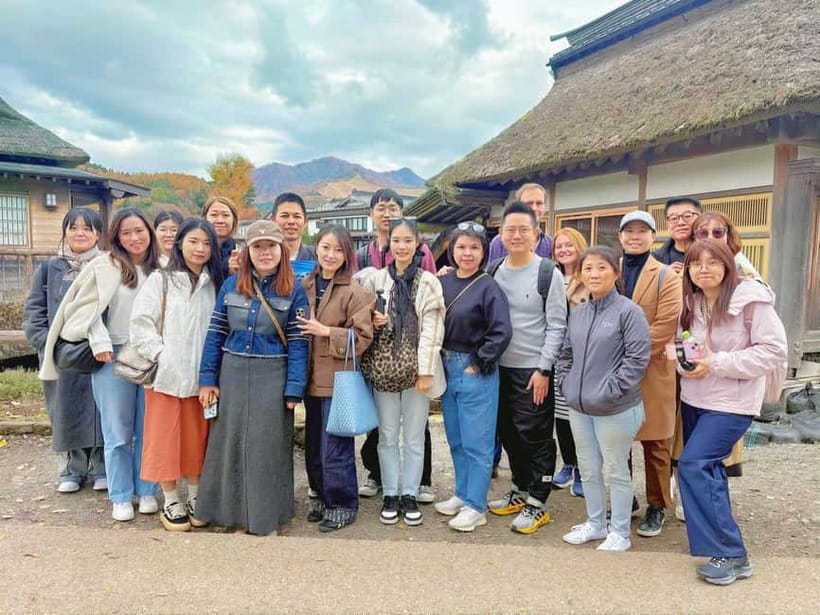
If you care about more than just taking photos, the guide is the main event here. Many people single out Hikari-san as the trip’s heart—someone who keeps the mood light, explains what you’re seeing, and helps you get better shots without making it feel like homework.
What I like about this kind of guiding is that it changes how you look at the same places. Arakurayama isn’t just stairs and a pagoda view; the route becomes a story about how the mountain is perceived and how people connect to it. Oshino Hakkai isn’t just “pretty reflection water”; it turns into a place with real local context—springs fed by Fuji’s snowmelt.
You’ll also get multilingual support (English, Chinese, Japanese). In practical terms, that means you’re not stuck decoding basic directions while everyone else understands what to look for. And when timing matters—like where to stand for the Fuji framing—clear guidance helps a lot.
There’s one more detail I appreciate: the trips often arrive early at key photo points. That can mean fewer people in your frame, or at least a better chance of getting your shot before the crowd crush.
Arakurayama Sengen Park and the Chureito Pagoda: plan for the 397 steps
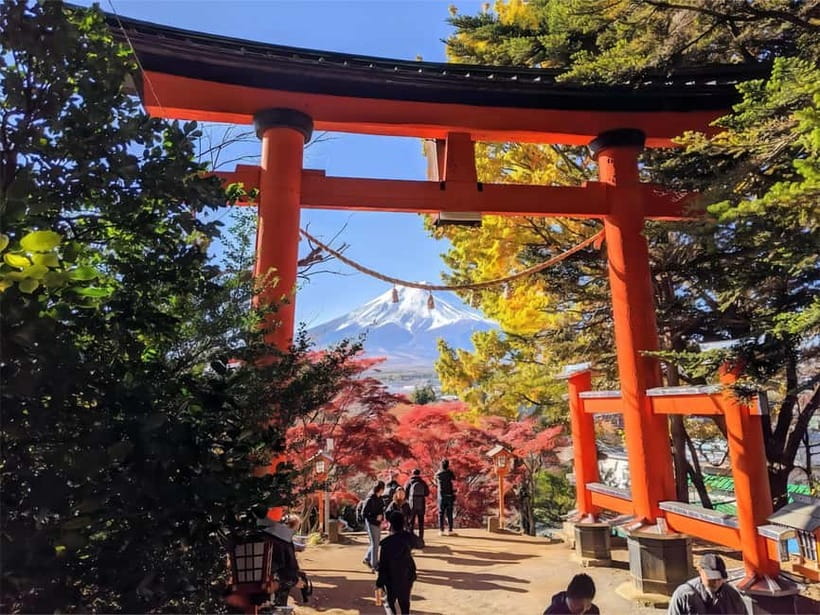
This is the signature Fuji stop for a reason. You’ll spend about 1 hour at Arakurayama Sengen Park, then you’ll hit Chureito Pagoda with about 45 minutes for a break, photos, and sightseeing.
The main thing to understand is the physical reality: the route includes a 397-step climb. It’s not an extreme hike, but it’s steady. I’d wear comfortable shoes and take it slow. If you’re traveling with kids, or you’re someone who gets winded easily, make sure you pace yourself and don’t treat the steps like a photo sprint.
Why it’s worth it: this viewpoint is famous for a layered Fuji composition—pagoda + steps + mountain. And it’s built for seasonal variety. In spring, you can chase cherry blossom looks. In autumn, you’re aiming for fall color. In winter, you’re in the realm of snow-capped moments if weather cooperates.
Crowds can be part of the equation at Chureito. Even with that, the time allocation is fair: you’re not rushed the moment you arrive. The best move is to use your first minutes to position yourself, then enjoy the area afterward rather than spending the entire time relocating.
Hikawa Clock Shop: a quick stop with a surprisingly good Fuji frame
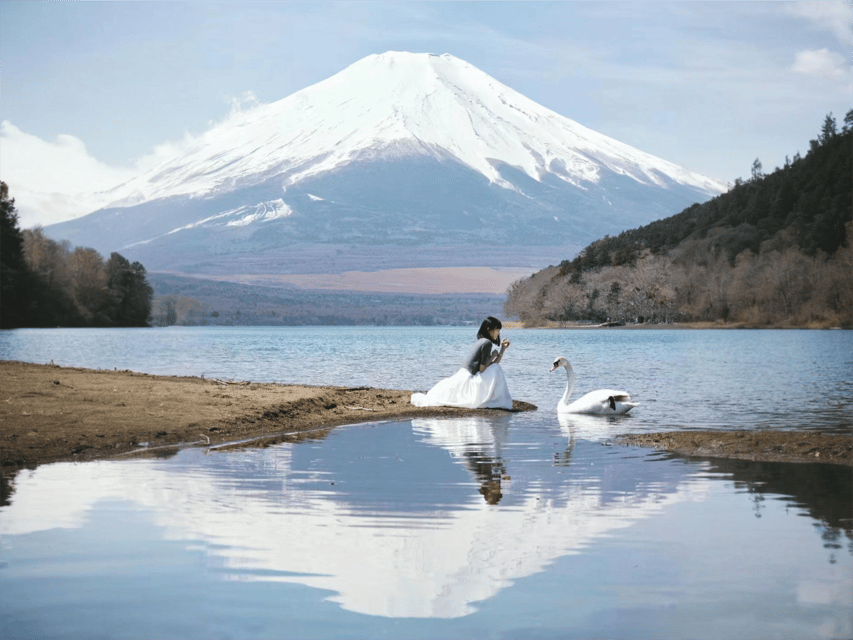
Next comes a shorter photo break: about 20 minutes at the Hikawa Clock Shop area. This isn’t a long “explore and wander” stop. Instead, it’s a classic Fuji photo strategy stop.
The idea here is simple: walk along a small stretch where the road layout can line up nicely with the mountain view. It’s the kind of spot where your timing and angle matter, and a good guide helps you avoid standing in a mediocre spot while the right view is just a few steps away.
If you’re the type who likes to collect “variety” photos rather than only iconic landmarks, you’ll probably appreciate this kind of side stop. It gives you a different look of Fuji—less staged than a postcard spot, more like you discovered it.
Oshino Hakkai: eight springs, reflections, and local food stops
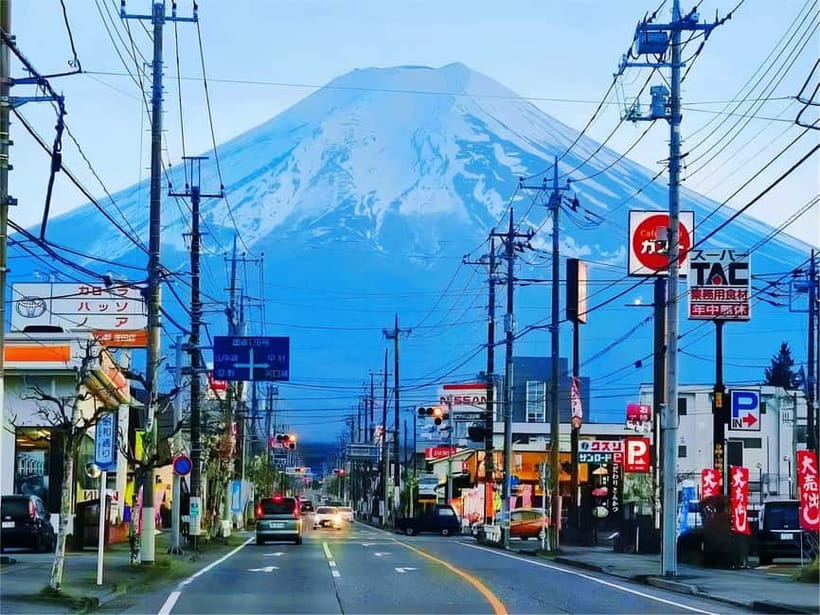
Oshino Hakkai is where the day shifts from “look at Fuji” to “feel the place Fuji creates.” You’ll get about 80 minutes here, including time for sightseeing, walking, photo stops, and shopping.
This area is known for eight springs formed from snowmelt from Mount Fuji. It’s visually satisfying because the water reflects the mountain when conditions line up. Even when Fuji isn’t perfectly visible, the springs still have a calm, grounded atmosphere.
One practical tip: plan to take your time with photos near the water edges. The reflections can be subtle and angle-dependent, and you don’t need perfect weather to get something worth keeping.
Food and shopping are part of the Oshino Hakkai experience. You can taste local specialties such as:
- Tofu with pickled miso
- Kusamochi, a green rice cake with sweet red bean paste
Admission is not included, but the point here isn’t formal “ticket attractions.” It’s the village feel—shops, local treats, and that sense of being in a traditional pocket near Fuji.
One more fun cue from past guests: make space for a museum-type stop around this area if you see it on your path. It can add a little context without taking over your time.
LAWSON Lake Kawaguchi: the photo stop that actually fits the day
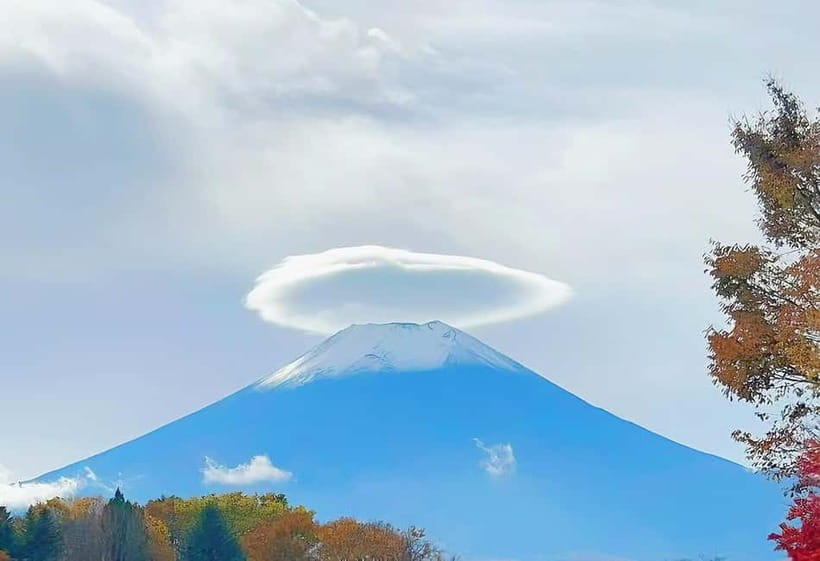
The famous LAWSON at Lake Kawaguchi is treated as a short break, about 20 minutes, and it works well in the flow of the day. You’ll stop at the station area for photos, plus a chance to grab something quick from the convenience store.
Why it’s memorable: the LAWSON sign becomes part of the Fuji composition. It’s a goofy detail that somehow becomes iconic once you see the framing in person.
This stop is also useful for energy. People often use it for a snack or a hot drink, and you can reset before the last stretch on the lake.
The only thing to watch is the usual Fuji-day effect: if many tour groups show up at once, you might have to wait a moment for clean lines in your shot. Keep your expectations friendly and focus on getting your angle right.
Lake Kawaguchiko and the Oishi Park vs Maple Corridor choice
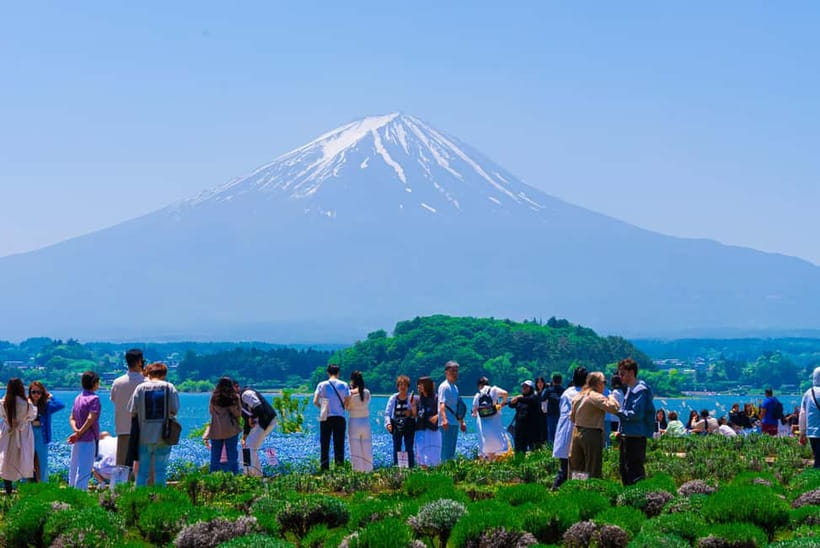
Your final major stop is Lake Kawaguchiko, with about 50 minutes allocated for sightseeing and walking around Oishi Park most of the year.
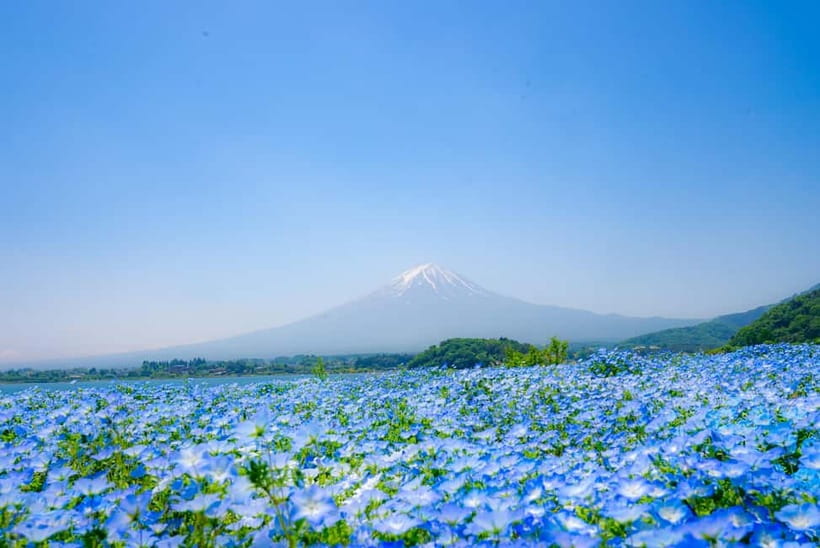
This is where the tour gives you a “seasonal Fuji” experience rather than just “Fuji again.” Oishi Park is known for flower fields, with variety that may include lavender, begonia, cosmos, and Japanese blood grass depending on the season.
Then there’s the seasonal swap: from about October 30 to November 20, you visit the Maple Corridor instead. That stretch is basically a tunnel of autumn color, and it pairs beautifully with Fuji when visibility lines up.
Either way, this is a strong finish because you get to transition from landmark stops into the broader lake-area atmosphere. It’s a good time to breathe, take a last set of photos, and enjoy the weather for what it is.
When weather hides Fuji, you still get value
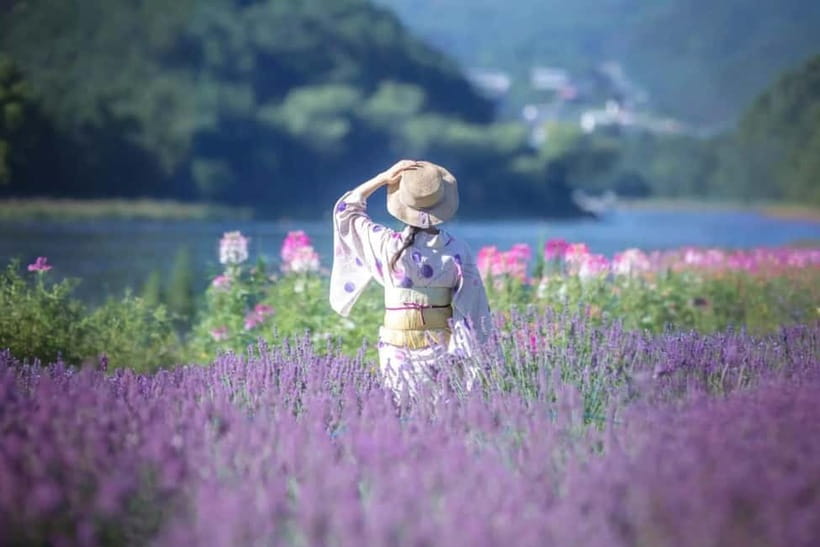
Mount Fuji is famous for being unpredictable. Sometimes it’s clear and dramatic early. Sometimes clouds roll in and you get partial views later. The good news is that this tour doesn’t collapse when Fuji disappears.
The reason is simple: the route still includes meaningful places even if the mountain is faint—Oshino Hakkai springs, the LAWSON photo frame, and lake views that can still be worth your attention. Plus, the guide’s job becomes even more important on low-visibility days: pacing, positioning, and choosing the right order can help you catch Fuji if it peeks through.
Past guests also mention that the tour often stays worth it even on cloudy days. That’s the kind of realism I like, because it sets your mindset: you’re buying a day of Fuji-area highlights, not a guaranteed mountain sighting.
Timing, crowds, and small comfort notes
Most of this trip runs on a schedule that tries to keep everyone together. That’s good for sanity, but it also means each stop has limits.
At Chureito Pagoda, for example, some people say it can feel a little crowded, and you might wish for more time there. That’s not a failure of the tour—it’s the reality of one of Japan’s most photographed views. If you want a slow, lingering climb, this format may feel a bit brisk.
There are also a couple comfort notes to keep in mind:
- If you’re sensitive to loud audio on buses, you might find the sound system disruptive.
- You do need to be on time for each meet-up point. If you miss the bus at a stop, it can leave without you, and you may have to take a taxi to rejoin the group.
Those sound like small things until you’re standing in a crowd wondering where everyone went. So treat timing like part of the experience.
What to bring (and what you shouldn’t) for an easy day
This is a day trip, so pack like it. Here’s what matters most:
Bring:
- Comfortable shoes (especially for the steps at Chureito)
- Weather-appropriate clothing (layers help when lake winds change)
Know before you go:
- There’s limited space for luggage, and large bags aren’t allowed.
- Food and drinks aren’t allowed in the vehicle, so plan to eat during stops instead.
- If you’re late or you miss the tour (no-show), you won’t receive a refund or alternative date, so build in buffer time when you meet at Tokyo Station.
Also, you’ll be asked to stay with your group for safety and for the guide’s story flow. I treat that as a feature, not a limitation. It keeps the day moving and prevents chaos.
Who should book this Tokyo to Fuji day trip
This works best if you:
- Want a first-time Mount Fuji overview without transit headaches
- Care about multiple viewpoints in one day (not just one postcard stop)
- Like photo planning and want help getting angles at each site
- Prefer a guided day where the schedule is organized, not “free-form”
It’s also a good choice for families, as it’s described as family-friendly. The catch is the 397 steps at Chureito, so keep that in mind with kids or anyone who doesn’t do well on stairs.
It’s not suitable for people over 75, according to the provided guidance. And if you’re the type who wants a quiet, uncrowded, slow hike day, you may find this format a bit too structured.
Price and value: what $55 gets you (and what it doesn’t)
At $55 per person for a 10-hour day trip, you’re paying for three big things: round-trip transport from Tokyo, a live multilingual guide, and access to multiple Fuji-region stops in one go.
Admissions and tickets aren’t included, and you’ll handle snacks/meals on your own. That means you’re not buying a “museum ticket day.” You’re buying guided access and time-efficient routing between major highlights.
Is it good value? For most first-timers, yes, because the alternative is piecing together transport and spending more time figuring out where to go. The tour’s strength is that you’re not left with a map and a question mark.
If you have a group and want privacy or a smaller group format, private/small group options exist. That can improve comfort and timing flexibility, but you’ll want to compare total costs once any add-ons are discussed.
Should you book this tour to see Mount Fuji from Tokyo?
I’d book it if you want a high-yield Fuji day: multiple viewpoints, strong photo stops, and a guide who treats the journey like a story instead of a conveyor belt.
I’d skip it (or at least rethink) if stairs are a deal-breaker for you, because that 397-step climb is real. And if you’re the kind of traveler who needs tons of downtime at one location, the schedule may feel tight.
One last decision helper: bring cash for small purchases if you can. Some stalls in the Oshino Hakkai area may have limited card options, so you’ll feel smoother having a little yen ready.
If you match the vibe—organized, scenic, photo-focused—this is a solid way to do Mount Fuji from Tokyo without turning your day into a logistics project.