REVIEW · CITY PALACE JAIPUR
Jaipur: Private Full-Day Sightseeing Tour by Tuk-Tuk
Book on GetYourGuide →Operated by Rajasthan Tour Driver · Bookable on GetYourGuide
Jaipur feels like a living postcard, but this tour keeps it practical. You’ll cover the big hitters of the Pink City in comfort, with the choice of a tuk-tuk for street-level energy or an AC car for heat and fuss-free timing. I especially like the stop list that actually makes sense in one day, and I also like that your guide-driver tends to build in time so you can look, photograph, and move at a human pace. One thing to consider: there’s moderate walking, and entrance fees are not included, so plan on a little extra spending once you arrive.
The day is built around iconic Jaipur architecture: the face of Hawa Mahal, the royal sweep of City Palace, and the UNESCO-listed instruments of Jantar Mantar, then out to Amber Fort and the quiet surprise of Panna Meena Ka Kund. You get hotel pickup and drop-off, bottled water, and a professional English-speaking driver, which matters in a city where traffic and navigation can eat your day. If you’re sensitive to long drives, heat, or hills, you’ll want to think carefully before choosing this format.
In This Review
- Key things I’d watch for on this tuk-tuk Jaipur day
- How the tuk-tuk format changes your Jaipur day
- Pickup, timing, and practical ride comfort
- Hawa Mahal: the 953-window façade that looks better in real life
- City Palace complex: more than one palace, more than one era
- Jantar Mantar: UNESCO astronomy you can actually stand inside
- Jal Mahal photo stop: the calm break between big sights
- Amber Fort: hilltop views, plus a smart way to handle the approach
- Panna Meena Ka Kund stepwell: the quieter side of the fort area
- Pink City wandering: when the guide helps you stay in charge
- What’s included, what’s not, and how to budget smart
- Who this Jaipur full-day tour fits best
- Book it or skip it: my quick decision guide
- FAQ
- Is hotel pickup and drop-off included?
- What transport options are available?
- Are meals included?
- Do I need to pay entrance fees at the monuments?
- What should I bring for the tour?
- Are there restrictions on luggage or pets?
Key things I’d watch for on this tuk-tuk Jaipur day
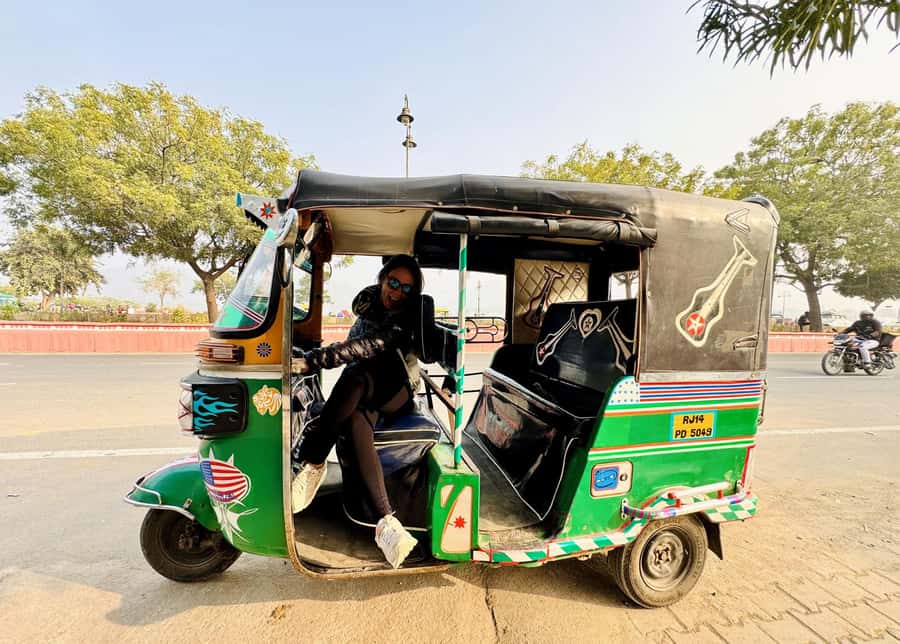
- Tuk-tuk vs AC car choice: pick the vibe, not the stress
- Hawa Mahal at the right moment: those windows really pop in person
- One-day architecture sprint: City Palace + Jantar Mantar are a smart combo
- Amber Fort with flexibility: you can spend time exploring and ask about the fastest approach
- Panna Meena stepwell time: a calmer counterpoint to the crowds up on the fort
- Shopping pressure is often low: guides who keep it respectful help you stay in control
How the tuk-tuk format changes your Jaipur day
Jaipur can be gorgeous and also chaotic. The value of a private full-day tour is not just seeing famous sights. It’s having someone else handle the order, the timing, and the constant “Where do we go next?” problem.
A tuk-tuk day is especially useful here because you’re not trapped in one “car bubble.” You get closer to street life as you move between stops, and you can snag quick photo moments without dragging a whole plan behind you. I like that this tour gives you a genuine choice: ride in a tuk-tuk for that local feel, or switch to an AC car if you’d rather arrive cooled and ready.
The best part is the way the day is paced around landmarks that are worth slow looking. Hawa Mahal is all about details, City Palace is about scale, and Jantar Mantar rewards time at each instrument. When you’re not rushing from place to place, Jaipur stops feeling like a checklist.
Pickup, timing, and practical ride comfort
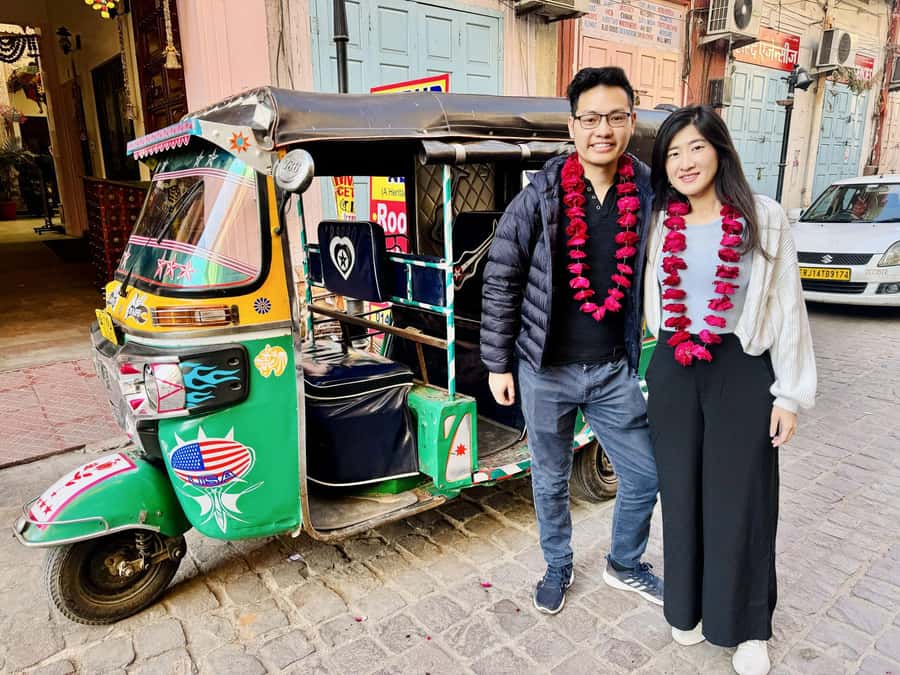
Pickup from your hotel is included, which saves real energy. You tell them when you want to start, and then you roll. That matters because Jaipur’s sites aren’t all packed together, and you don’t want your morning eaten up with arranging transport.
You’ll also get bottled water, which sounds basic until you’re outside under the sun. Several guides in this service style are known for being patient and adjusting when conditions change. One guide was especially helpful during heavy rain, keeping the day on track while still accommodating requests.
A few practical points so you’re comfortable:
- Wear comfortable shoes. The day involves a moderate amount of walking.
- Bring a camera, but also know you may face separate camera fees at some monuments.
- Smart casual is safest. Sleeveless tops and short shorts aren’t a great idea for temple-related visits, even if you’re just passing by.
Also note the restrictions: pets aren’t allowed, and you shouldn’t plan to bring luggage or large bags. If you’re a light packer, you’ll feel much freer.
Hawa Mahal: the 953-window façade that looks better in real life
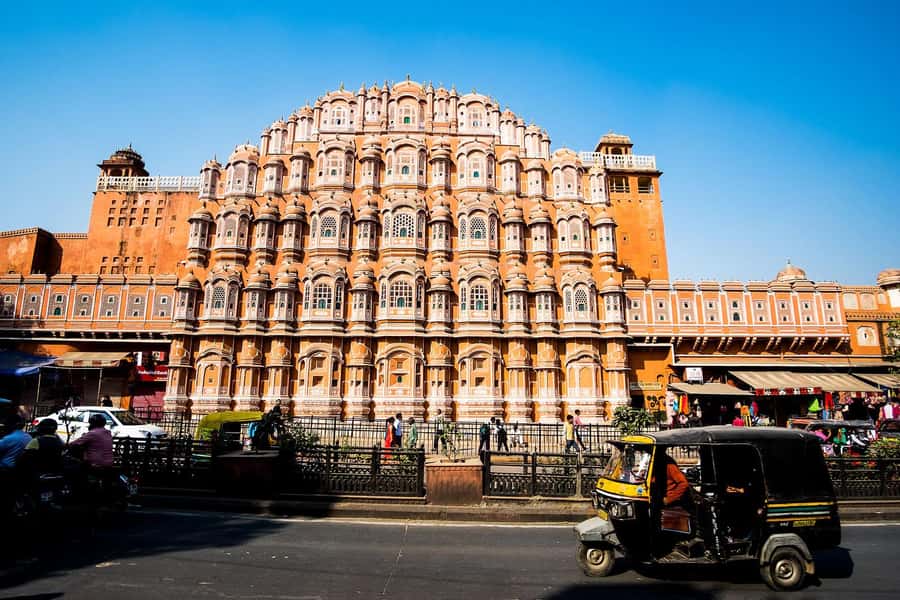
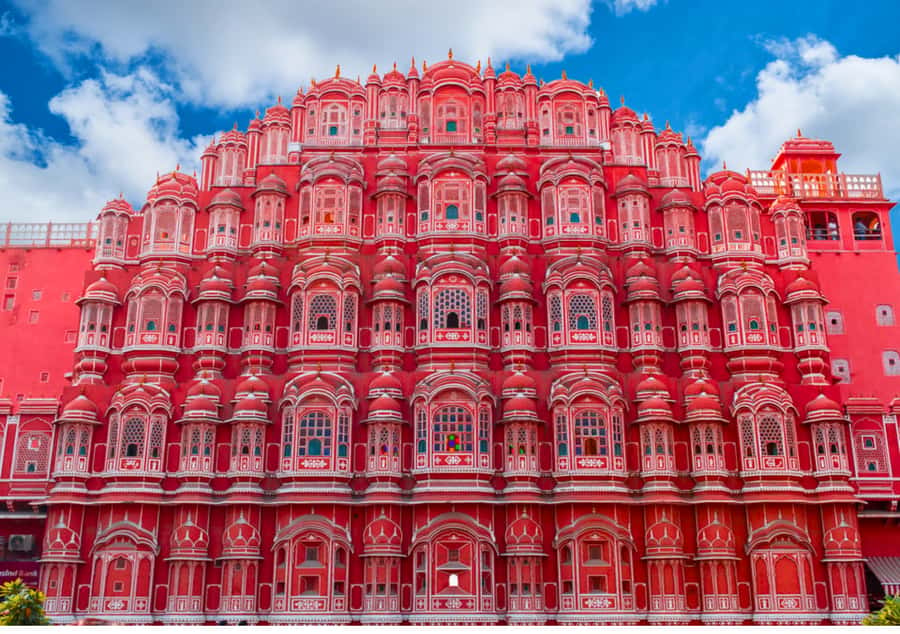
Hawa Mahal, the Palace of Winds, is a must, and not only because it’s famous. It’s famous for a reason: it’s an architectural honeycomb with 953 intricately designed windows, and it’s over 220 years old.
What I love about this stop is how the building changes depending on where you stand. From one angle, it reads as a sculpted pattern. From another, it feels like a place designed for watching the street below. Even if you’re not a “window person,” you’ll end up staring, because the repetition is so deliberate.
Practical tip: bring your camera and expect to slow down. This is one of those places where rushing makes you miss the details. If your guide offers quick advice on where to position yourself, take it. One of the perks of hiring a driver-guide is that you don’t waste time hunting for the best viewpoint.
City Palace complex: more than one palace, more than one era
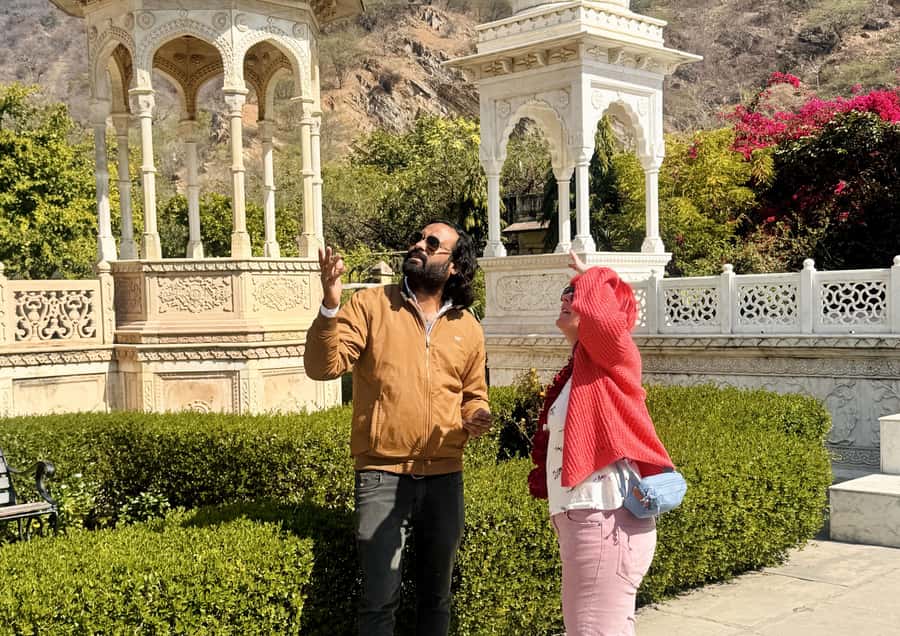
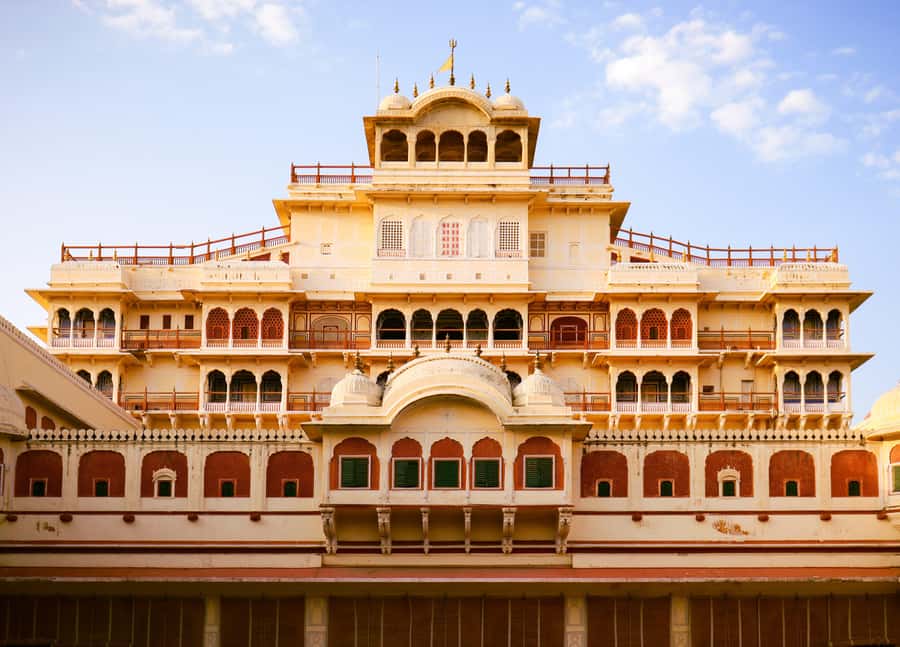
City Palace is a massive royal complex, not a single building. It houses multiple royal residences, including Mubarak Mahal, Chowk, Chandra Mahal, Diwan-i-Khas, and Maharani Palace. The feeling is part museum, part lived-in royal memory.
This is where the tour’s “private” nature pays off. You can spend more time where your interests pull you. If you love Indian royal design, you’ll enjoy how the complex layers together. If you’re more into history, you’ll get stories from your guide that turn the stone into something with context.
What to watch for: City Palace is often busy, and you’ll likely want to keep your schedule flexible. Since entrance fees aren’t included, check your budget ahead of time so you’re not stuck deciding at the gate.
Jantar Mantar: UNESCO astronomy you can actually stand inside
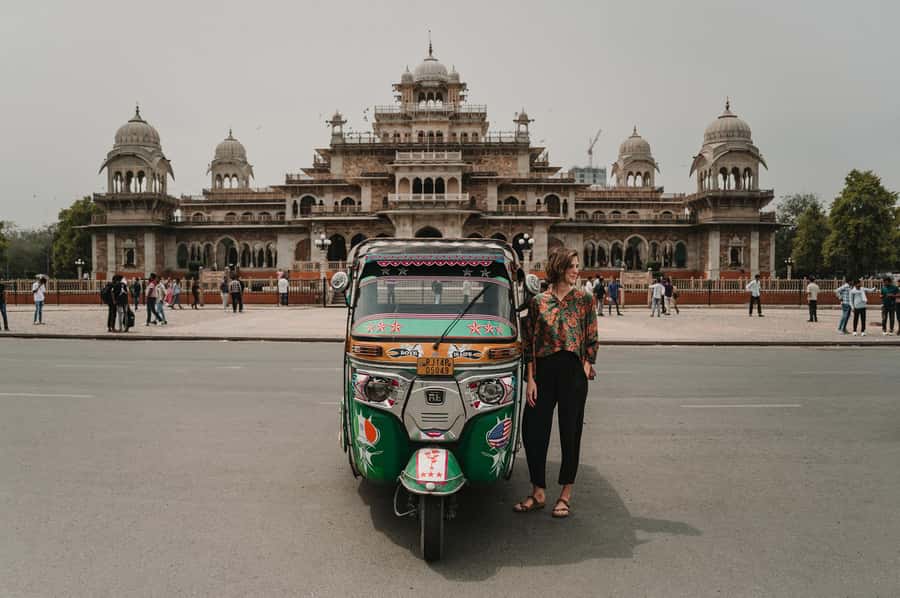
After City Palace, you go to Jantar Mantar, a UNESCO World Heritage site and one of India’s best-known astronomical observatories. It was built in the 18th century, and it’s packed with large instruments designed to measure time, track celestial bodies, and support star study.
This stop can surprise people. It’s not only “cool old buildings.” The instruments are physical, big, and oddly satisfying to look at. You get a sense of how measurement and observation were built into everyday science and royal planning.
I also like that this portion of the day gives your eyes a break from royal architecture. You’ll still be looking at design and precision, but in a different way. If you have any curiosity about how early astronomy worked, this is one of the best places in Jaipur for that kind of understanding.
Jal Mahal photo stop: the calm break between big sights
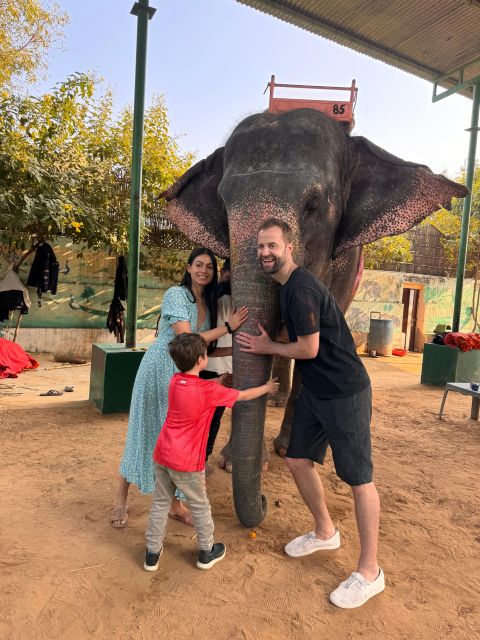
On the way toward Amber Fort, you’ll stop at Jal Mahal, the Water Palace. It sits in the middle of the water, and it’s a strong photo moment because it contrasts with the dry, dusty surroundings.
The key here is that it’s a stop, not a long sit-down. You’ll usually get enough time to capture the look and enjoy the atmosphere before heading onward. If it’s misty or sunny, the reflections can change fast, so be ready to shoot quickly when your guide says the timing is good.
If your day runs on schedule, Jal Mahal becomes a breather. If the day gets delayed, you still get that quick visual payoff, which helps keep morale high.
Amber Fort: hilltop views, plus a smart way to handle the approach
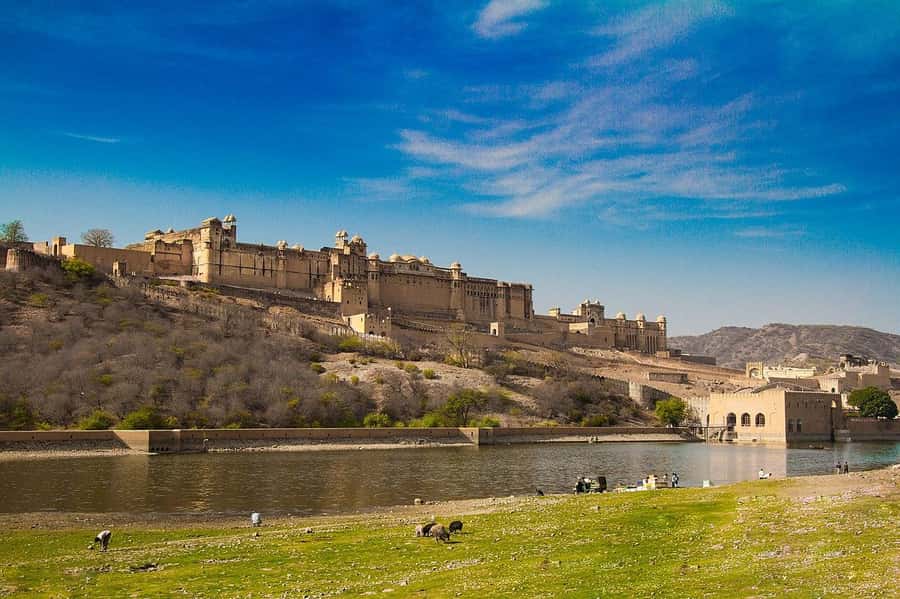
Amber Fort is perched high on a hill, and it’s one of Jaipur’s principal attractions. This is the stop where your guide’s storytelling matters most, because the fort is layered: defensive architecture, royal life, and the long arc of Jaipur’s rise.
You’ll also have time to explore around the fort area and hear history and hidden tales from your guide. In a place this visually intense, you don’t want to only “look at it.” You want someone to explain why it looks the way it does.
One practical tip from this tour style: the approach to the fort can involve traffic and delays depending on how you get up. Some guides recommend walking up instead of waiting for vehicles like jeeps, because it can be quicker and less frustrating. If you see options, ask your driver what’s likely faster that day.
Panna Meena Ka Kund stepwell: the quieter side of the fort area
Near Amber Fort is Panna Meena Ka Kund, also known as Panna Meena Ka Kund / Panna Meena Ka Kund area in different spellings. This is the kind of stop that makes the full-day format worthwhile, because it’s not always on the shortest “greatest hits” versions.
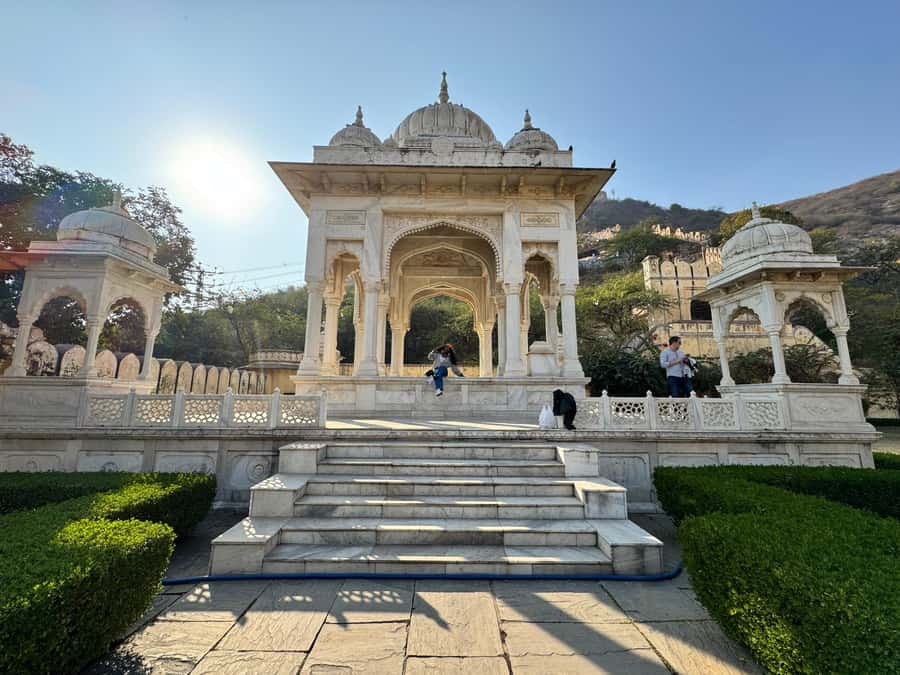
It’s an ancient stepwell and a hidden-style spot with intricate design and strong symmetry. The main payoff is calm. You leave the fort energy and get a more reflective place where architecture is about water and engineering, not only power.
Even if you don’t climb every step, it’s worth it to slow down for a few minutes. The patterns are the point, and stepwells are one of the most visually satisfying “small” stops in Rajasthan.
Pink City wandering: when the guide helps you stay in charge
After the major monuments, you’ll have time to stroll the Pink City’s streets. This is where you can do the unplanned things that make Jaipur feel real: talk with locals, spot street scenes, and taste traditional food if you’re ready for it.
A private guide helps here because you don’t have to follow a rigid script. Some guides have also worked in extra stops based on interest, like artisan areas and market browsing. In one example from the guide culture around this tour style, there were photo stops along routes and recommendations tied to jewelry and block-print style workshops, with salespeople described as respectful rather than pushy when you keep your boundaries clear.
Also, I appreciate the way guides sometimes warn you away from tourist traps. One guide was known for advising where to avoid unnecessary “guide interference” during shopping and attractions. If that’s your priority, tell your guide at the start that you want honest recommendations and no pressure.
What’s included, what’s not, and how to budget smart
This tour includes a private tuk-tuk or AC car, depending on your preference, plus a professional English-speaking driver, hotel/airport/railway station pickup and drop-off, fuel and parking, and GST. You also get bottled water.
Not included are the two biggest cost surprises:
- Entrance fees to monuments
- Camera fees (if charged)
Meals are not included either.
Here’s the value logic. The headline price is extremely low per person (listed as $2.70 per person), but that price likely reflects the transportation and guide service while you pay monument entry separately. In other words: the “real” cost depends on how many paid sites you enter and whether camera fees apply. Still, for a full-day plan with transport and a guide handling logistics, it’s often very good value once you factor in how much time it saves you.
One more practical detail: alcoholic drinks are not included, but you can purchase them.
Who this Jaipur full-day tour fits best
This is a strong fit if you want to see the major sights without doing the stress math yourself. It’s also a great option if you appreciate a guide who can explain what you’re seeing in plain language, and then help you plan your day so you don’t feel rushed.
From the practical limits listed:
- Not suitable for people with heart problems
- Not suitable for wheelchair users
- Requires comfortable walking shoes for moderate walking
This style is also ideal if you’re traveling solo or as a small group and want control over pace. Many of the guides associated with this tour style are praised for being patient, punctual, and flexible. Several guides are also described as professional even when weather turns, which is a big deal for an outdoor-heavy city day.
Book it or skip it: my quick decision guide
Book this tour if:
- You want Hawa Mahal, City Palace, Jantar Mantar, Amber Fort, and Panna Meena Ka Kund in one day
- You prefer a private plan with pickup and a driver who can adjust timing
- You like the idea of choosing tuk-tuk for local feel or AC car for comfort
Consider a different approach if:
- You hate walking or steep hill areas
- You need wheelchair access
- You want a day that’s mostly flexible with long meals built in, because meals and monument fees are extra
If you do book, do one simple thing: tell your guide your priorities upfront (photos, history, markets, shopping limits). The best experiences in this service style happen when the guide knows what you actually care about, not just what’s on a standard route.
FAQ
Is hotel pickup and drop-off included?
Yes. The tour includes pickup from your hotel (and also from the airport or railway station) and returns you at the end of the day.
What transport options are available?
You can choose a private tuk-tuk or an AC car, depending on your preference.
Are meals included?
No. Meal expenses are not included, so you’ll want to budget separately if you plan to eat during the day.
Do I need to pay entrance fees at the monuments?
Yes. Entrance fees to monuments and any camera fees are not included.
What should I bring for the tour?
Bring a passport or ID card, comfortable shoes, a camera, and comfortable clothes. Smart casual is recommended, especially for temple visits.
Are there restrictions on luggage or pets?
Yes. Pets are not allowed, and luggage or large bags aren’t allowed on the tour.