REVIEW · SAMARKAND
Samarkand: Historical Monuments Guided Walking Tour
Book on GetYourGuide →Operated by Travel to Central Asia · Bookable on GetYourGuide
Samarkand feels like it runs on stories. This 5-hour guided walking tour strings together the city’s big-ticket monuments—Registan Square, Gur-e Amir, Bibi-Khanym Mosque, and Shah-i-Zinda—so you see more than pretty tiles. I love how the guide turns stonework into context, and I also love that the pace leaves room to look closely and take photos. The main drawback: this is real walking with religious-site dress and indoor photo limits, so plan for the sun and the crowds you might meet.
In particular, I like the way Registan Square comes alive with the three madrasahs (Ulugh Beg, Sher-Dor, Tillya-Kori) and how the guide connects them to the Timurid push for power and learning. I also like the contrast between the grand domes at Gur-e Amir and the intimate, tile-lined lanes of Shah-i-Zinda near sunset. One consideration: entrance fees are not included, and the walking route is not a good fit if you have mobility limits (even though wheelchair wording is mixed—confirm ahead).
In This Review
- Quick hits before you go
- Registan Square: the heart you can actually stand inside
- Gur-e Amir Mausoleum: Amir Timur’s blue-tiled center of gravity
- Bibi-Khanym Mosque: architecture with attitude
- Siyob Bazaar: a smart break before the final leg
- Shah-i-Zinda: sacred necropolis at sunset
- How the 5-hour format really works for your feet and your brain
- Price and entrance fees: what $20 gets you (and what it doesn’t)
- What to bring, what to wear, and what rules to respect
- Which guide style you might get—and why it changes the whole day
- Should you book this Samarkand monuments walking tour?
- FAQ
- Is the $20 tour price enough for everything?
- Which sites are included on the walking route?
- Do I need to pay entrance fees in cash or can I use a card?
- Can I take photos inside the monuments?
- What should I wear and bring for the day?
- Is this tour wheelchair accessible?
Quick hits before you go
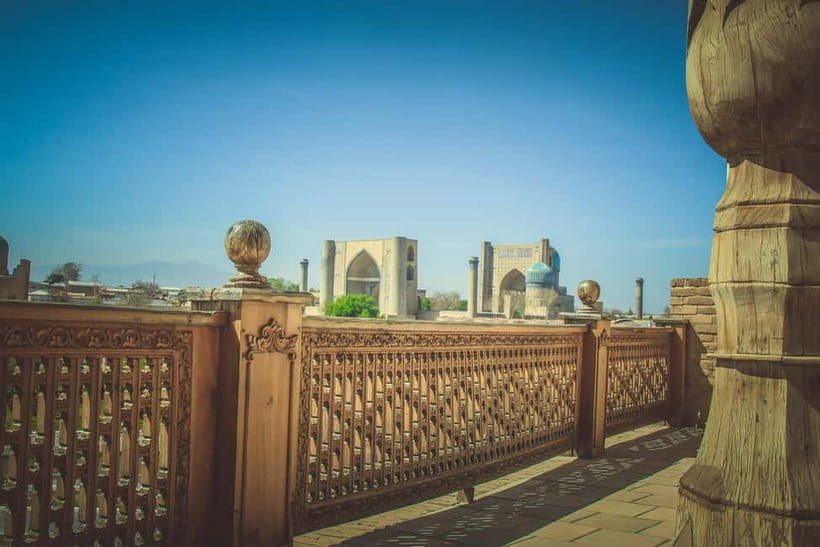
- Real monument-to-monument flow: Registan to Gur-e Amir to Bibi-Khanym to Shah-i-Zinda, with Siyob Bazaar as your mid-tour reset.
- Guides who read the buildings well: Many guides use stories and legends to give meaning to what you see.
- Photo-friendly stops: Flash is not allowed inside monuments, but you’ll still get good angles and time to shoot outside.
- Sunset finish at Shah-i-Zinda: The light hits the turquoise tiles beautifully, and the setting feels more special late-day.
- Entrance fees add up: Budget about $21.5 extra for the four paid sites, on top of the $20 tour.
- Dress respectfully at religious sites: Normal coverage is expected; avoid very short or thin clothing.
Registan Square: the heart you can actually stand inside
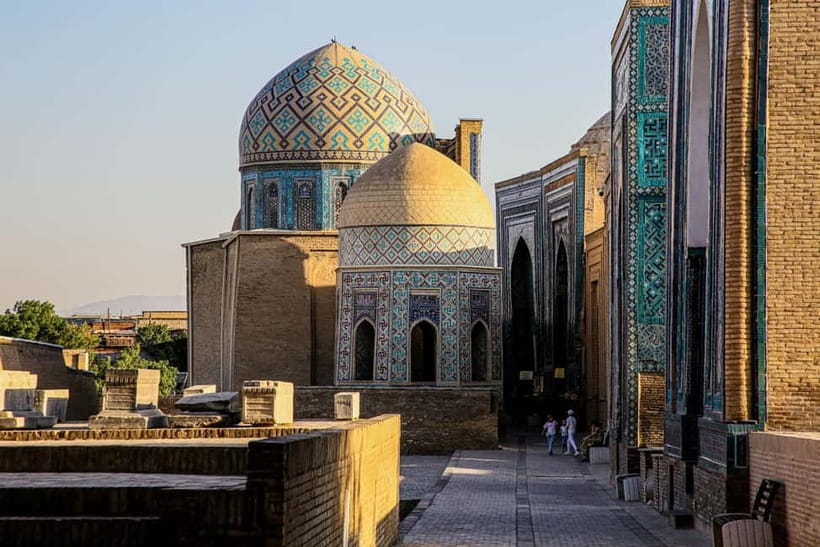
If there’s one place in Samarkand that makes the city feel “big,” it’s Registan Square. You’re not just looking at a landmark from a distance—you’re in its middle, with three monumental madrasahs facing you like a stage set that never stopped rehearsing.
The three buildings—Ulugh Beg, Sher-Dor, and Tillya-Kori—create a front-and-center view of Timurid ambition. The guide helps you notice tilework patterns, large domes, and restored facades, then places them in the wider story of Samarkand as a crossroads on the Silk Road. It’s the kind of explanation that helps you stop treating buildings like wallpaper and start reading them like historical documents.
Practical note: this stop is visually intense. Go slowly. Look up, then look around, then look again—especially at the tile geometry that looks different as the angle changes.
Gur-e Amir Mausoleum: Amir Timur’s blue-tiled center of gravity
Next comes Gur-e Amir, where Amir Timur—also known as Tamerlane—is associated with the site’s most famous resting place. Even if you already know the name, the guide’s pacing helps you understand why his legacy still matters in Samarkand’s identity.
What you’ll notice right away is the blue-tiled dome feel and the ornate interior details. The guide connects the design choices to Timurid power: this wasn’t built to be subtle. It’s meant to impress, and the story adds weight to what otherwise could look like more “old buildings.”
The other reason Gur-e Amir is a strong early stop: it gives you orientation. Once you see the grandeur here, Registan’s scale makes more sense, and Shah-i-Zinda’s tilework detail feels even more meaningful later.
Practical note: indoor rules can affect your photos. Flash photography is not permitted inside monuments, so plan on natural light and your phone at normal exposure.
Bibi-Khanym Mosque: architecture with attitude
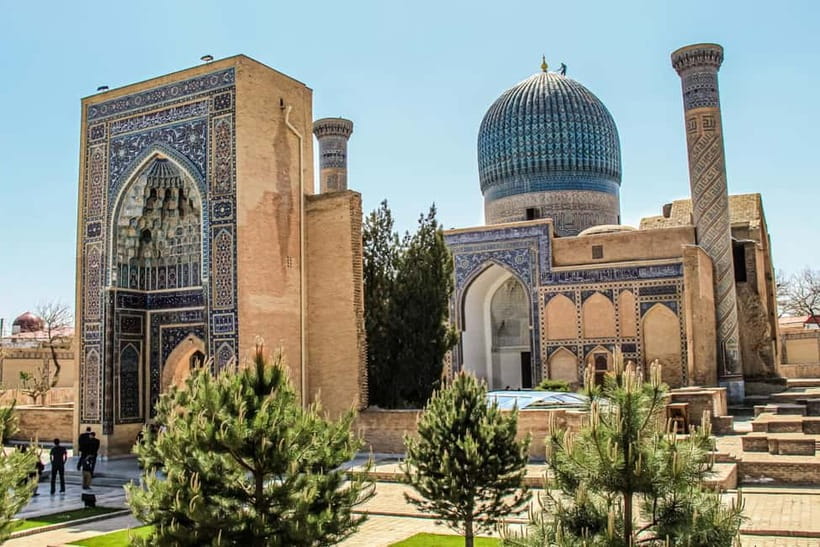
Then you’ll step into Bibi-Khanym Mosque, one of the most striking symbols of construction ambition during Timur’s reign. It’s impressive for its size, but the best part is that the tour doesn’t just point at the mosque—it explains why legends and claims surround it.
The guide’s job here is to help you interpret the artistry: where the scale comes from, what the craftsmanship signals, and how the mosque fits into the broader Timurid-era “we’re here to last” vibe. Even when you’re standing quietly, you’ll feel like the building is talking back.
Timing note: this is a shorter stop compared to Registan and Shah-i-Zinda, so use the first few minutes to orient yourself, then go back for close looks at patterns and proportions.
Siyob Bazaar: a smart break before the final leg
Between the monuments, the tour includes time at Siyob Bazaar, Samarkand’s larger, older market area. This is your breathing space—about a half hour for a photo stop, shopping, and a relaxed walk.
The guide’s value here is practical. You’ll get help with what to look for and how to shop without getting lost in the noise. A couple of helpful, real-life suggestions that tend to come up during these market breaks: plan to grab snacks like dried fruits and nuts, and if you see it, try Samarkand non (bread). One guide-led tip worth remembering: there are often good deals when you ask before you buy and compare what’s being sold right at your feet.
Even if you’re not a shopper, this stop matters. After hours of monuments, a market reset helps your brain store what you just learned, instead of just rushing to the next postcard.
Shah-i-Zinda: sacred necropolis at sunset
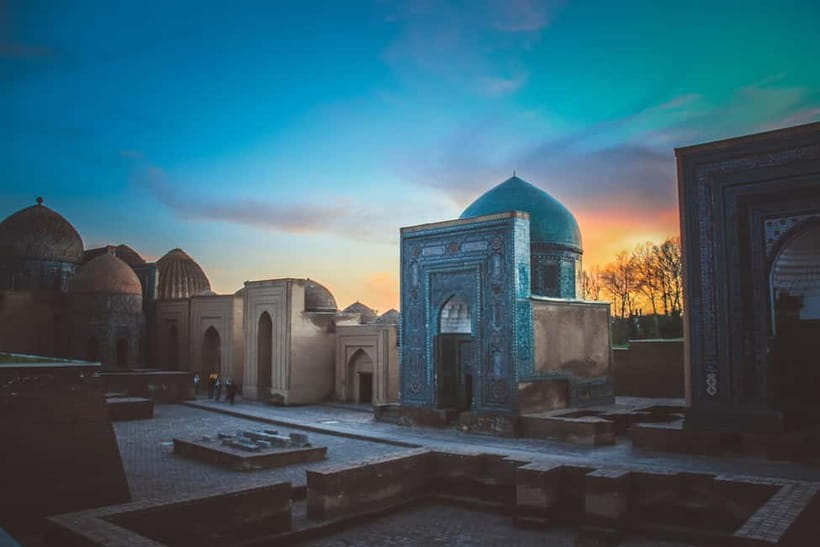
Your final highlight is Shah-i-Zinda, a sacred necropolis known for its mausoleums and vivid tilework. This site hits a different emotional tone than the big open squares. The alleyways feel tighter, the walls feel closer, and the details keep rewarding your attention.
The guide will point out how the different mausoleums reflect work from different periods—so you start seeing the necropolis as a timeline, not just a single stop. You’ll notice vibrant turquoise tiles and intricate mosaics that look stunning in daylight, but the late-day timing makes them feel warmer and more dramatic.
This is also the most memorable part for many first-timers because the site feels like you’re walking through decorated history rather than just around it. The light near sunset helps, but the structure matters too: the narrow approach forces you to slow down.
How the 5-hour format really works for your feet and your brain
This tour is built like a script: major monument, meaning added by your guide, then another major monument. You’ll walk between stops, and it can feel like a lot—especially if you’re visiting in hot weather. Comfortable shoes aren’t optional advice; they’re the difference between enjoying the day and counting blisters.
The pacing also matters. A standout theme from the guides you might get—people like Gulli (Gulsanam), Sarvinoz, Sevinch, Sevara, and Shahrizoda—is that they manage time without rushing you through photo moments. That balance is what makes a walking tour feel like a guided experience instead of a checklist.
Group size can vary depending on booking, and you may find yourself with a small group or even a more personal setup. Either way, the guide’s explanations stay the center of gravity.
Price and entrance fees: what $20 gets you (and what it doesn’t)
The tour price is $20 per person, and it includes a professional English-speaking guide. But entrance fees to the monuments are not included, and this matters when you’re budgeting.
Here are the entrance fees listed for the main stops:
- Gur-e Amir: 75,000 UZS (about $6)
- Registan Square: 100,000 UZS (about $8.5)
- Bibi-Khanym Mosque: 50,000 UZS (about $3.5)
- Shah-i-Zinda ensemble: 50,000 UZS (about $3.5)
Add those up and you’re looking at roughly $21.5 in entrances, depending on currency conditions and how rates are handled that day. So your all-in budget for the day is closer to the price of another attraction—not just the $20 label.
Good news: you can pay with card or cash at each destination.
What to bring, what to wear, and what rules to respect
This tour is mostly outdoors, with visits to active religious sites. That means you should pack for sun and for standing around looking up.
Bring:
- Comfortable shoes
- Hat and sunscreen (the tour information strongly recommends sun protection)
Wear:
- Respectful clothing is expected at religious spots. Avoid very short and thin clothes.
Photography and behavior:
- Photography is allowed, but flash is not permitted inside monuments
- Drones are not allowed
- Smoking is not allowed inside the monuments
- Alcohol and drugs are not allowed
There’s also an important note about accessibility: one part of the description says wheelchair accessibility, but another part says it’s not suitable for wheelchair users or people with mobility impairments. I’d treat that as a reason to confirm with the operator before you book if mobility is a concern.
Which guide style you might get—and why it changes the whole day
A big reason this tour earns such strong satisfaction is the guide quality. Names you could see include Gulli (Gulsanam), Sarvinoz, Sevara, Abrorbek E., Shahrizoda, Sevinch, Charos, Ibrohimova, Zulfina, and Shehrezada.
Across those different guides, the patterns are consistent:
- Friendly explanations that make buildings feel tied to real people
- Patient answers when you ask lots of questions
- Careful pacing so you’re not stuck rushing between photo stops
- Helpful photo moments—some guides are clearly aiming for good angles, not just speed
If you like history but hate dry lectures, this tour tends to land well because the guide treats the monuments like characters in a story.
Should you book this Samarkand monuments walking tour?
Book it if:
- You want to see the top Timurid sites in one efficient day
- You like walking tours that add meaning, not just directions
- You’re okay paying entrance fees on top of the $20 price
- You’re comfortable in respectful religious-site attire and normal monument rules
Skip or reconsider if:
- You have mobility limits and can’t handle uneven sidewalks and a full walking route
- You dislike paying additional entrance fees after booking
- You need constant indoor comfort (this is mostly a walk-and-look day)
If you’re choosing between rushing Samarkand on your own and understanding it as you go, this tour gives you a clean middle path: you get the big monuments—Registan, Gur-e Amir, Bibi-Khanym, Shah-i-Zinda—plus the market context at Siyob Bazaar that makes the city feel lived-in.
FAQ
Is the $20 tour price enough for everything?
The $20 includes the guide, but entrance fees are not included. The listed entrance fees for the four sites total about $21.5.
Which sites are included on the walking route?
You’ll visit Gur-e Amir Mausoleum, Registan Square, Bibi-Khanym Mosque, Shah-i-Zinda, and you’ll also stop at Siyob Bazaar for a break.
Do I need to pay entrance fees in cash or can I use a card?
You can use card or cash at each destination, based on the tour information provided.
Can I take photos inside the monuments?
Yes, photography is allowed, but flash photography is not permitted inside the monuments. Drones are also not allowed.
What should I wear and bring for the day?
Wear comfortable shoes. The tour guidance also recommends bringing a hat and sunscreen. Since these are religious sites, dress normally and avoid very short or thin clothing.
Is this tour wheelchair accessible?
The description includes mixed accessibility notes: it says wheelchair accessible in one place, but also says it is not suitable for wheelchair users or those with mobility impairments. It’s best to confirm with the provider before booking if accessibility is important to you.