REVIEW · RYOGOKU KOKUGIKAN
Tokyo: Sumo Tournament Tour with Chair Seat Tickets
Book on GetYourGuide →Operated by Japan Wonder Travel · Bookable on GetYourGuide
Sumo in Tokyo has a different gravity than TV. This tour takes you into Ryogoku Kokugikan for real tournament action, plus the traditions that explain why the crowd reacts the way it does.
I really like that you get English guidance while you’re inside the stadium, not just a ticket drop-off. Names like Taka, Mieko, Sho, Kent, and Kaz show up again and again, and the common thread is clear: the guide helps you understand who to watch and what matters in each bout.
One thing to think about: your seats depend on the option, and 2F chair seating can feel high and a bit far from the action compared with closer views.
In This Review
- Key Things That Make This Sumo Tour Worth Your Time
- Tokyo Sumo at Ryogoku: What Makes This Arena Special
- The Exact Day Flow: From JR Ryogoku to First Bout at 4:10 PM
- Ceremonies That Actually Teach You How to Watch
- Your Seat Options: 2F Chair vs 1F Box (and What You Can Expect)
- 2F Chair Seats (Most Common Option)
- 1F Box Seats (If You Want More Comfort)
- The English-Speaking Guide Part: Why It Changes Everything
- Cheering Like a Sumo Fan: The Supporter Kit Moment
- Tickets and Value: Why This Often Beats Hunting on Your Own
- Food and Drinks: What’s Included, What’s Not, and What to Check
- Who This Sumo Tournament Tour Suits Best
- Small Practical Considerations That Make the Day Easier
- Should You Book This Sumo Tour in Tokyo?
- FAQ
- What tournament does this tour cover in Tokyo?
- Where do we meet for the tour?
- What time do the ceremonies and matches happen?
- What seating options are included?
- Can I choose specific seats?
- Is food included with the tour?
- Are strollers allowed?
- Is the tour suitable for wheelchair users?
Key Things That Make This Sumo Tour Worth Your Time
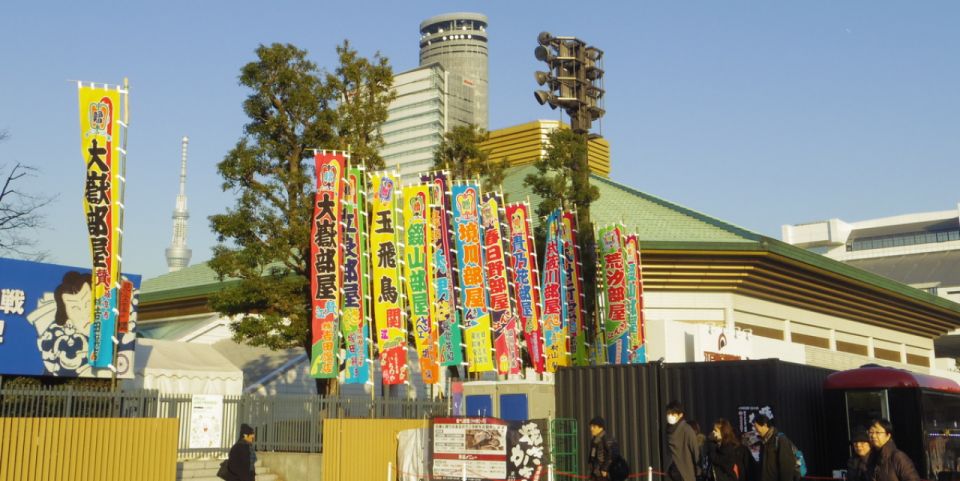
- Ryogoku tournament schedule built in: you watch ring-entering ceremonies for the Makuuchi and Yokozuna lineups before the fights begin.
- Pro English guide stays with your group: you learn the rules and ranking fast, so the matches make sense right away.
- Supporter kit if you pick that option: it’s a fun way to cheer like locals, not just watch politely.
- 2F chair vs 1F box options: 2F is for traditional viewing; 1F box is a more private, easier-to-settle-in setup.
- Tickets are hard to get on your own: this is a practical back-up when official sales move fast.
Tokyo Sumo at Ryogoku: What Makes This Arena Special
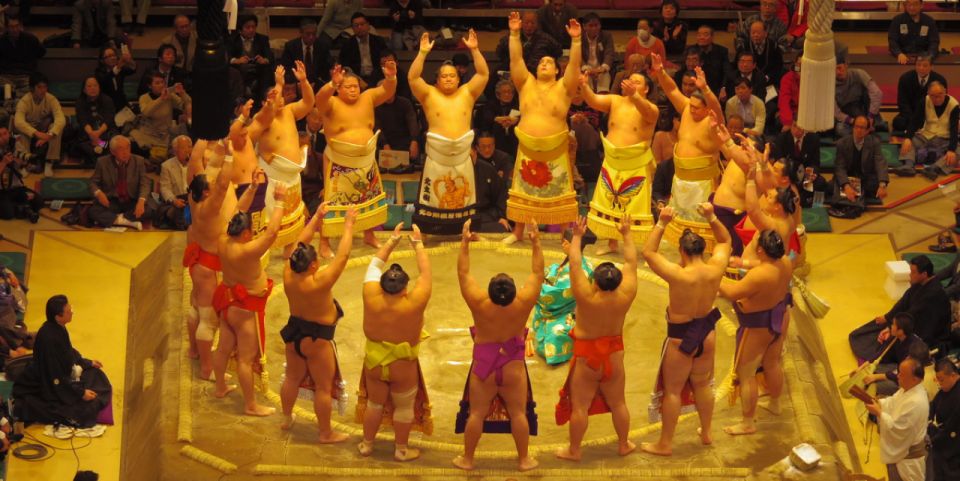
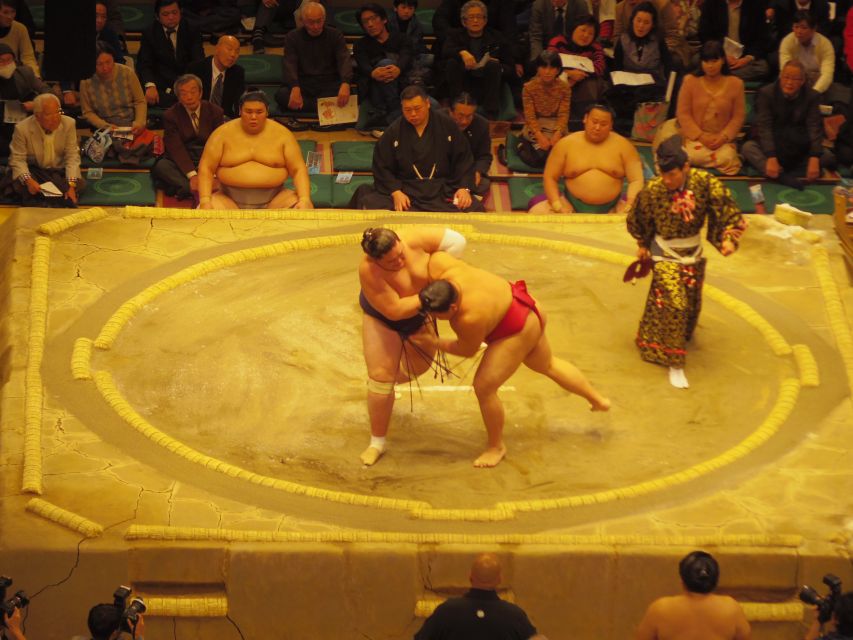
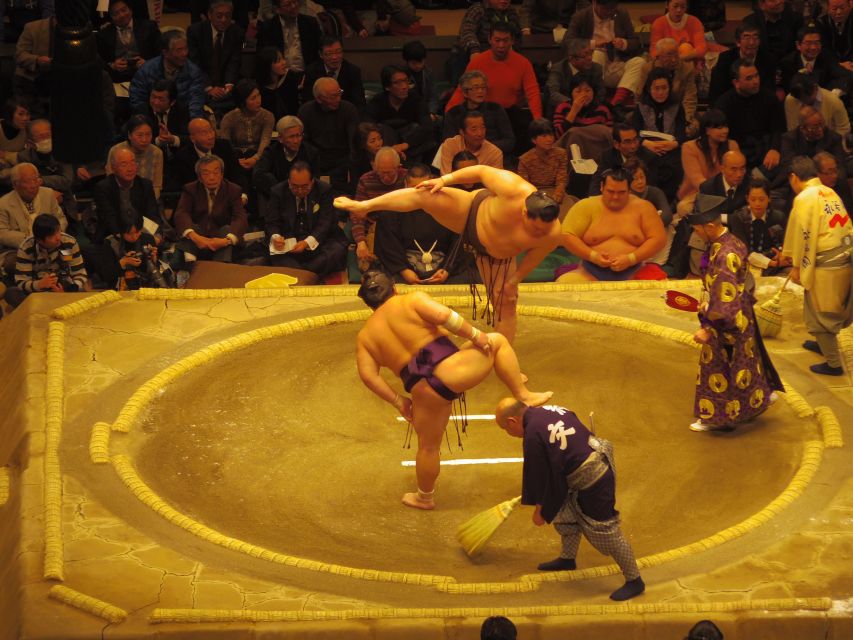
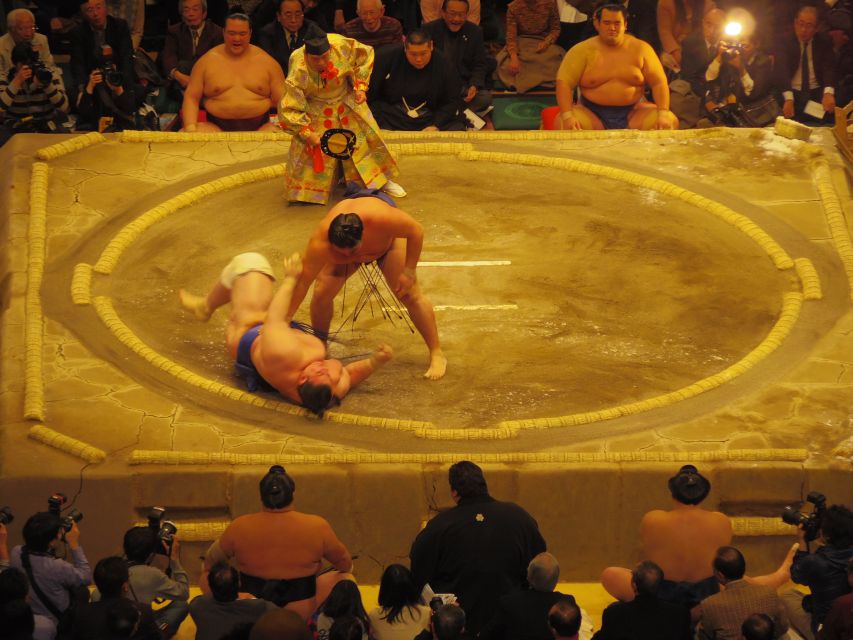
Ryogoku is where modern Tokyo sumo lives. Even if you’ve seen sumo on video, you’ll notice the sport’s pace and physical force the moment you’re in the arena. It’s loud, it’s ritual-heavy, and it moves faster than you’d expect once bouts start.
This tour is built around the matchday rhythm. You’re not just arriving after the action begins. You time your visit for ceremonies and then the Makuuchi bouts that most visitors remember as the core tournament experience. That helps you connect the cultural parts of sumo with what’s happening on the ring.
The Exact Day Flow: From JR Ryogoku to First Bout at 4:10 PM
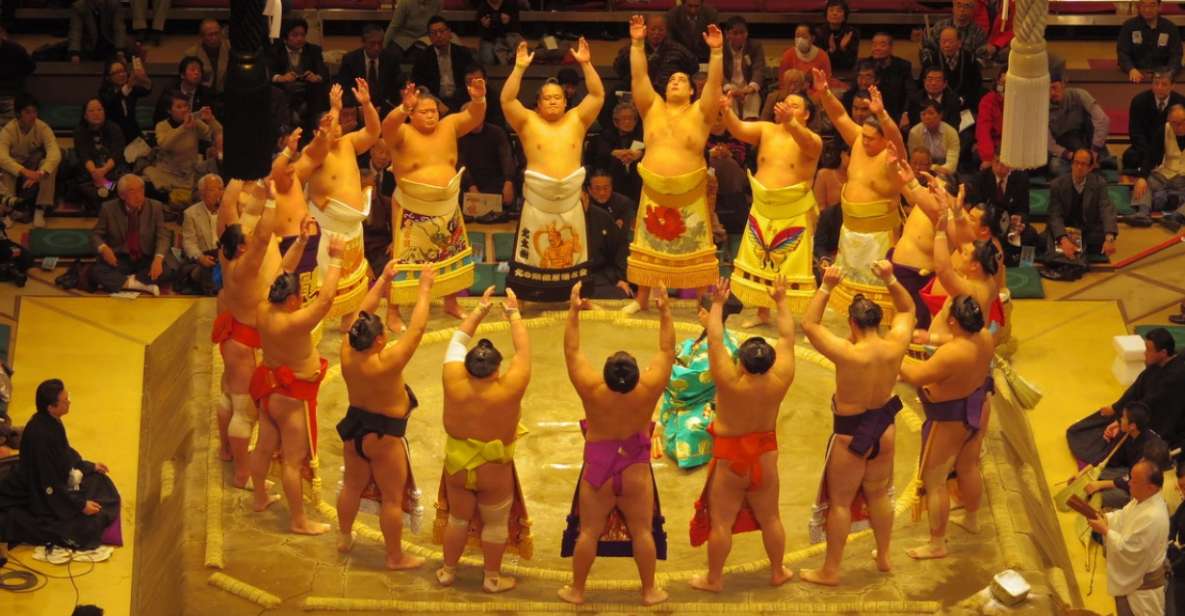
Your day starts at 2:15 PM at the West Gate of JR Ryogoku Station. The meeting point can vary depending on the option you book, but the standard idea is the same: you gather first, then your guide leads the group to Ryogoku Kokugikan.
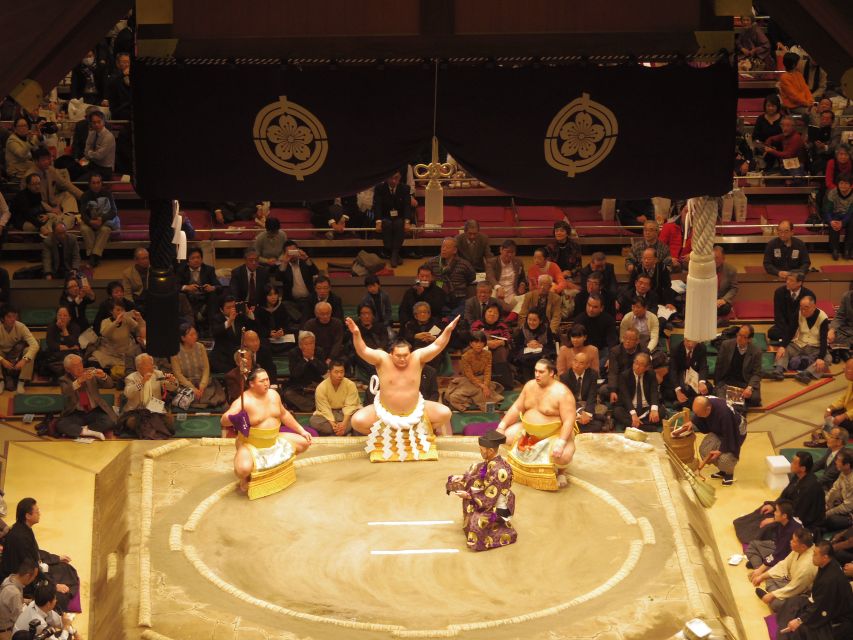
From there, you head into the stadium area with your group. Your guide walks you through what you’re about to see and keeps the timing clear, which matters because the schedule is tight. The ring-entering ceremonies kick off at 3:40 PM for the Makuuchi division, then the Yokozuna ring-entering follows at 3:55 PM.
Main action starts at 4:10 PM with the Makuuchi division bouts. The tournament concludes around 6:00 PM. That means you get a full slice of tournament day without turning it into an all-day ordeal.
Ceremonies That Actually Teach You How to Watch
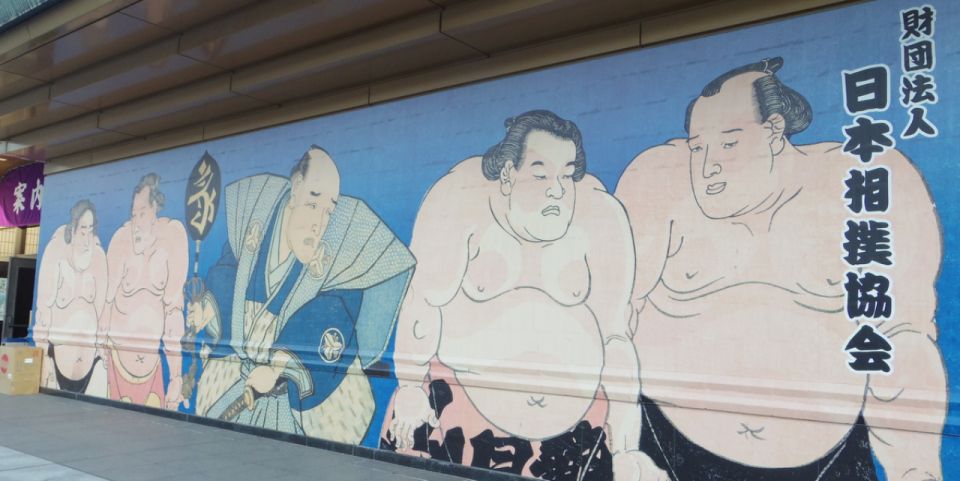
If you only care about the fights, the ceremonies might sound like filler. In practice, they’re the fastest way to understand what you’re seeing once wrestlers start pushing, twisting, and testing each other.
The Makuuchi ring-entering at 3:40 PM gives you the lineup context. Then the Yokozuna ceremony at 3:55 PM adds extra meaning because those top-ranked wrestlers get a heightened spotlight. You’re not just watching men in suits and hair details for tradition’s sake. You’re learning how rank shapes the mood of the arena.
Your guide’s job here is simple: connect the rituals to the matches. Many guides named in the experience focus on how rankings work and why the crowd responds at certain moments. Once you know that, the rest feels less random.
Your Seat Options: 2F Chair vs 1F Box (and What You Can Expect)
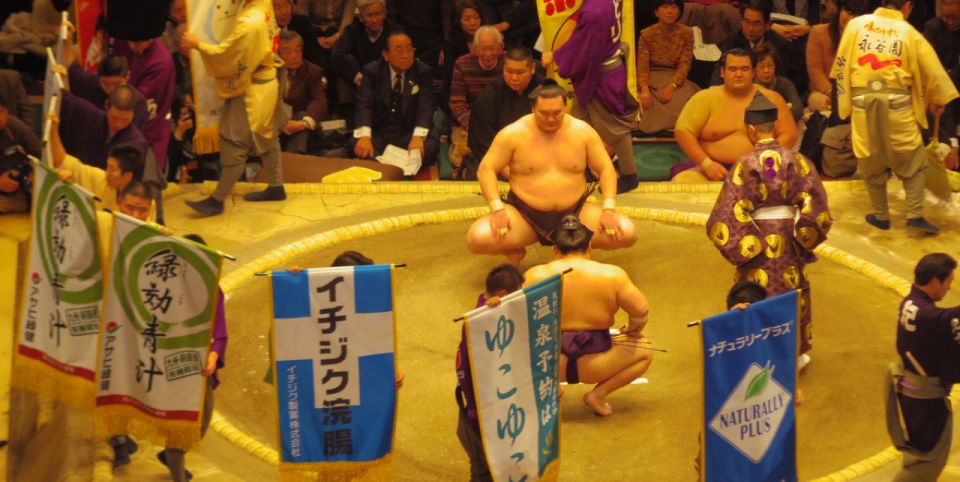
This is where you’ll want to choose based on how you like to watch.
2F Chair Seats (Most Common Option)
With the 2F chair seats, you get a traditional tournament viewpoint. Expect a higher angle, and seats are typically not close like ringside wrestling. A few people note the view is still good because the stadium is relatively compact, but you may feel far when you compare it to close-up sports.
A practical tip: plan to watch the whole body, not just the hands. In sumo, key moments happen with feet placement, belt control, and positioning. Even from higher seats, those shifts are visible if you’re paying attention.
Also, the tour doesn’t let you pick specific 2F seats. Your guide hands out tickets on the day of the tournament, and you accept the seat assignment based on availability.
1F Box Seats (If You Want More Comfort)
If you select the 1F box seats, you get more of a defined viewing space. The big plus: 1F has only box seats, and you enjoy your own seating area without sharing with others. That can matter if you’re traveling as a couple or family and want fewer interruptions.
You also avoid the “we’re here but where do I put my bag” feeling. Large luggage can’t go into the seating area, so having a more contained space helps you manage what you bring.
The English-Speaking Guide Part: Why It Changes Everything
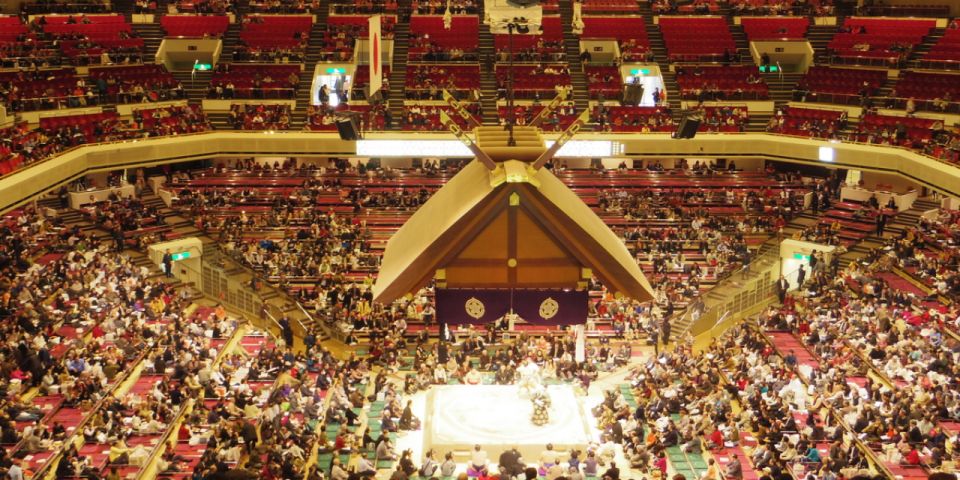
A tournament ticket is one thing. Understanding what you’re looking at is another. That’s where this experience earns its keep.
With a guide, you get a running explanation of:
- how match outcomes connect to technique, positioning, and pushing strategies
- what tournament ranking means and why certain bouts feel more intense
- why the crowd cheers differently depending on what’s unfolding
People specifically praise guides like Taka, Mieko, Sho, Kaz, and Take for making sumo click for first-timers. In plain terms, the guide helps you stop guessing. When you know what to watch, you enjoy the sport more, even if you don’t know a single wrestler’s name when you arrive.
Cheering Like a Sumo Fan: The Supporter Kit Moment
If you choose the option with the sumo supporter kit, it gives you something small but useful: the cue to participate. Instead of sitting there like you’re at a museum, you can respond with the crowd. The kit is meant to help you cheer in a way that fits the atmosphere.
This is one of those “small add-on, big feeling” choices. In reviews, people describe being more involved because they knew when and how to cheer. You’re still watching high-level sport, but you’re also part of the arena energy.
Tickets and Value: Why This Often Beats Hunting on Your Own
Sumo tournament tickets can be extremely hard to secure on your own. Official sites can sell out quickly, and even when you find a route, it can be stressful if you’re trying to navigate Japanese-only checkout steps.
At $141 per person, you’re paying for two things:
- the tournament entry ticket
- a guide-led experience that reduces time stress and helps you understand what you’re seeing
Is it cheap? No. Is it good value? Often yes, especially if you want the real tournament experience without gambling on last-minute ticket hunts. People also mention being glad they booked this kind of tour rather than struggling for access independently.
If you’re already a seat-hunting pro and you’re confident you’ll grab tickets easily, you might compare costs. But if you want peace of mind and context, the math usually works out.
Food and Drinks: What’s Included, What’s Not, and What to Check
The base tour info is clear: food and drinks are not included.
That said, there are indications of an optional lunch setup because there’s guidance about informing your provider about allergies and dietary restrictions for the lunch option. So if lunch is offered when you book, read what it actually includes. One person noted they expected a hot-pot style lunch but didn’t receive it as assumed, so it’s worth checking details before you build expectations.
Once you’re in the stadium, you’ll typically find food and drink sold on-site at reasonable prices, but those purchases are separate from the tour price.
Who This Sumo Tournament Tour Suits Best
This works best for you if:
- it’s your first time seeing sumo and you want the rules explained in real time
- you care about ceremonies and not only the bout highlights
- you want a stress-free way to get into Ryogoku during a tournament period
It’s also a good fit for families who can manage the pace and follow the guide’s instructions. Just know there are limits: baby strollers aren’t allowed, and large luggage can’t be brought into the seating area.
It’s not suitable for wheelchair users based on the tour information.
Small Practical Considerations That Make the Day Easier
Here are the details that tend to matter most on tournament day:
- Children: kids age 3 and under can enter for free but won’t have their own seat and need to sit on your lap. Kids age 4+ need their own tickets.
- Seat assignment: you can’t choose specific 2F chair seats. Your guide hands out tickets on tour day.
- What to bring: keep bags light. Large luggage can’t go into the seating area.
- Lateness: since ceremonies and entry times are fixed, plan to arrive early at Ryogoku.
If you like having your plan checked for you, this tour does that well. If you like full independence, you may find the guided structure less flexible, but the payoff is clarity.
Should You Book This Sumo Tour in Tokyo?
Book it if you want the real deal: tournament sumo at Ryogoku, a guided explanation, and seats handled for you. At $141, the value usually holds when you consider ticket difficulty plus the fact that you’ll actually understand what’s happening on the ring.
Skip it or choose a different approach if:
- you’re confident you’ll secure tickets quickly on your own and you don’t care about ceremonies or explanations
- you’re extremely sensitive to seat distance and want the closest possible viewing (2F can feel far for some)
If this is on your Tokyo must-do list, this is a smart way to do it: you get the schedule, the context, and the atmosphere in one package.
FAQ
What tournament does this tour cover in Tokyo?
You’ll attend a Tokyo sumo tournament during one of the three annual tournaments held in Tokyo.
Where do we meet for the tour?
The meeting point is the West Gate of JR Ryogoku Station (the exact meeting point may vary depending on the option booked). Tours end back at the meeting point.
What time do the ceremonies and matches happen?
You’ll see ring-entering ceremonies at 3:40 PM (Makuuchi division) and 3:55 PM (Yokozuna). The Makuuchi bouts start at 4:10 PM and the event finishes around 6:00 PM.
What seating options are included?
Depending on the option selected, you’ll get either 2F chair seats or 1F box seats.
Can I choose specific seats?
For 2F chair seats, you cannot choose specific seats. Your guide hands out the tickets on the tour date.
Is food included with the tour?
Food and drinks are not included in the standard offering. If you select a lunch option, you’ll want to check what’s included and mention allergies when booking if applicable.
Are strollers allowed?
Baby strollers are not allowed.
Is the tour suitable for wheelchair users?
No, the tour is not suitable for wheelchair users.