REVIEW · CHIANG MAI
From Chiang Mai: Chiang Rai’s Temples Exploration Day Trip
Book on GetYourGuide →Operated by Chiang Mai Footsteps Travel · Bookable on GetYourGuide
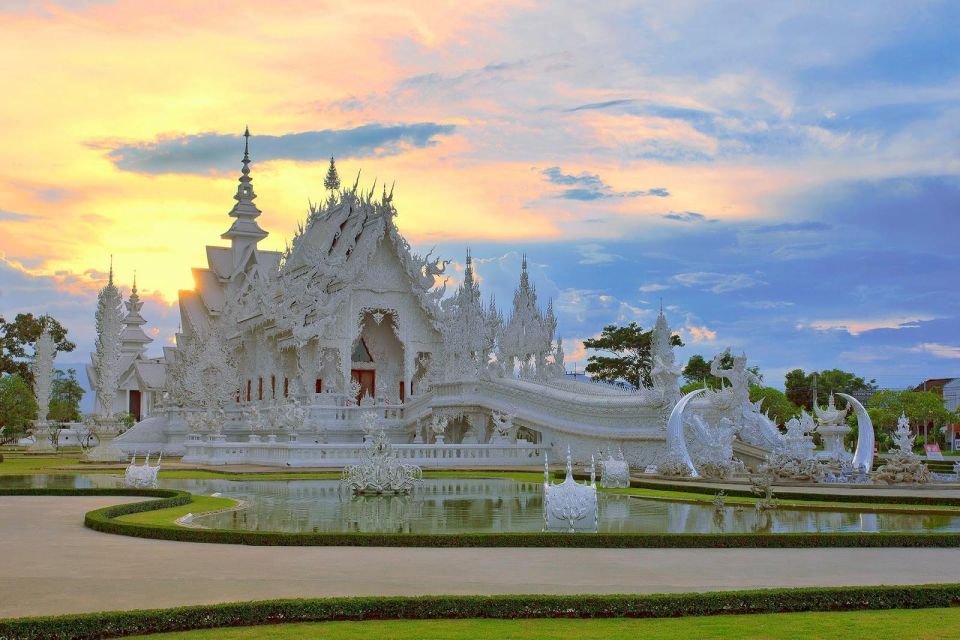
Three temples, one colorful day. This day trip from Chiang Mai strings together Wat Rong Khun (White Temple), Wat Rong Suea Ten (Blue Temple), and the Red Temple with real storytelling and an easy, guided flow. I love how the White Temple’s mirrors and ponds turn daylight into part of the artwork.
I also really like the English-speaking guide approach. You get practical explanations on what you’re looking at and when to pause for photos, plus enough structure that you’re not just herded from gate to gate. The drive is long, but there are regular break stops along the way so the day doesn’t feel like one endless bus ride.
One consideration: the distance. Chiang Rai is far from Chiang Mai, so you’re spending a big chunk of the day in transit, and the visits move at a fairly efficient pace.
In This Review
- Key highlights
- Chiang Rai temples from Chiang Mai: the long drive is part of the payoff
- Hotel pickup from Baan Meesuk and how the day runs on the clock
- First stop: the natural hot spring steam break
- Wat Rong Khun (White Temple): mirrors, pond reflections, and a built-in photo pause
- Wat Rong Suea Ten (Blue Temple): cobalt blues with a tiger legend
- The Red Temple: Thai spirituality and folk tales in color
- Optional extras you might get: big Buddha, long-neck villages, and swaps when weather changes
- Lunch, comfort breaks, and why small groups feel easier
- Temple etiquette basics you should not skip (especially if you want good photos)
- Price and value: does $51 make sense for this much logistics?
- Who should book this Chiang Rai day trip (and who might not)
- Should you book? My straight answer
- FAQ
- Where is the meeting point for this Chiang Rai day trip?
- What time does hotel pickup happen?
- How long is the tour?
- How many people are in the group?
- What temples are included in the tour?
- Is lunch included?
- Is the hot spring stop for swimming?
- What should I wear and bring for temple visits?
- Is this tour suitable for people with mobility impairments?
- Can I cancel or pay later?
Key highlights
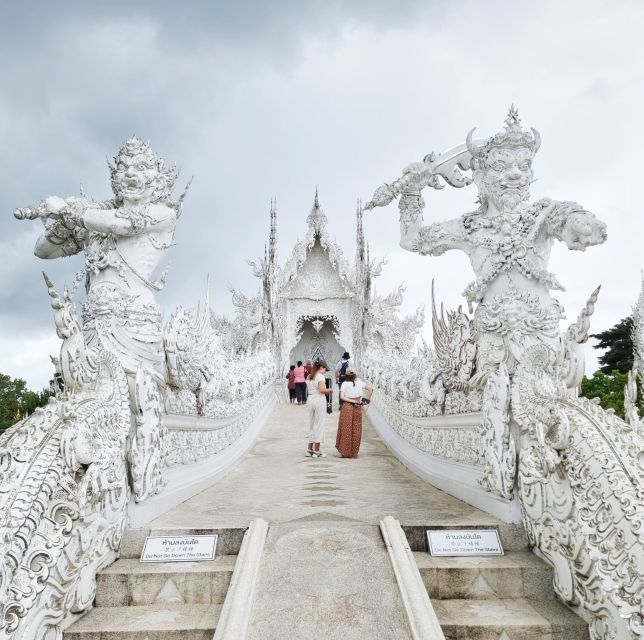
- Wat Rong Khun’s mirrored façade and reflections across the pond
- Wat Rong Suea Ten’s deep blue design and the tiger-related origin story
- The Red Temple’s folk tales and spiritual art, told through vivid details
- A quick hot spring stop to watch steam rise (no swimming)
- Small group touring (max 12) with hotel pickup around 7:00–7:30
Chiang Rai temples from Chiang Mai: the long drive is part of the payoff
This trip is a classic Northern Thailand “big day” plan. You start early, get picked up from your hotel area in Chiang Mai, then settle in for the ride north toward Chiang Rai.
Plan on serious windshield time. The road can take about 3 hours each way depending on traffic, and you’ll feel it if you’re not used to Thai driving days. The good news is that the vehicle setup is comfortable, and there are frequent stretch breaks so you can reset, use clean facilities, and grab a snack or drink if you need it.
The payoff is that you see three of Chiang Rai’s most iconic temples in one shot—without having to arrange transport yourself. If you only have a day in Chiang Mai, this is one of the most efficient ways to experience Chiang Rai’s temple scene.
You can also read our reviews of more tours and experiences in Chiang Mai.


Hotel pickup from Baan Meesuk and how the day runs on the clock
This tour meets at Baan Meesuk in Chiang Mai’s old town. If your pickup is included, you’ll wait in the hotel lobby, with pickup usually between 7:00 and 7:30.
Because it’s a small group (limited to 12), the day tends to feel organized rather than chaotic. You’re not stuck in a large crowd from the start, and your guide can actually keep an eye on timing—especially helpful at temples where shoe rules and dress expectations matter.
You’ll also get lunch as part of the package. That matters on a long day, because the alternative is hunting for food around the tourist zones while you’re tired and hungry.
First stop: the natural hot spring steam break
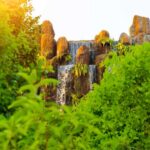
Before the temples, the day includes a short break at a natural hot spring. The key detail here is that it’s not for swimming. Instead, you stop to observe the steam rising from mineral-rich water.
Think of it as a quick, calming pause. It’s a low-effort stop that helps break up the morning drive, especially if you’re traveling with a group that needs a bathroom break and a moment of quiet.
Bring the same basics you’d bring for the temples—water, insect repellent, and comfortable shoes. Even short stops can involve walking on uneven ground.
Wat Rong Khun (White Temple): mirrors, pond reflections, and a built-in photo pause
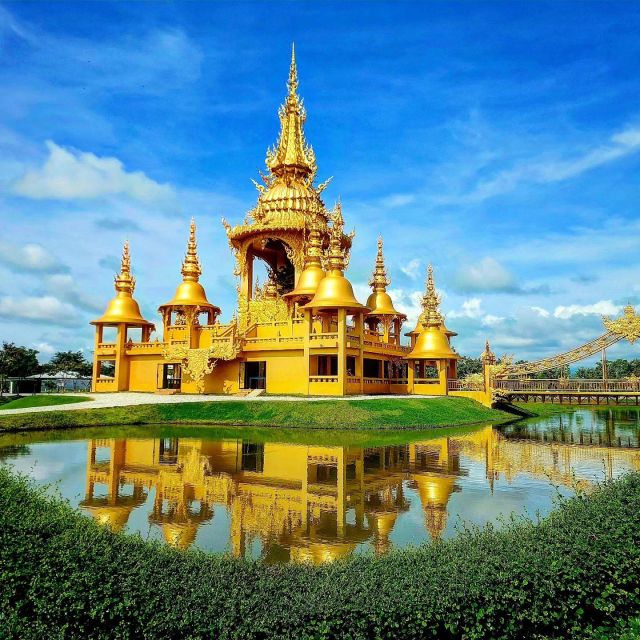
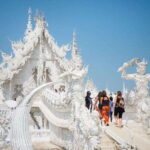
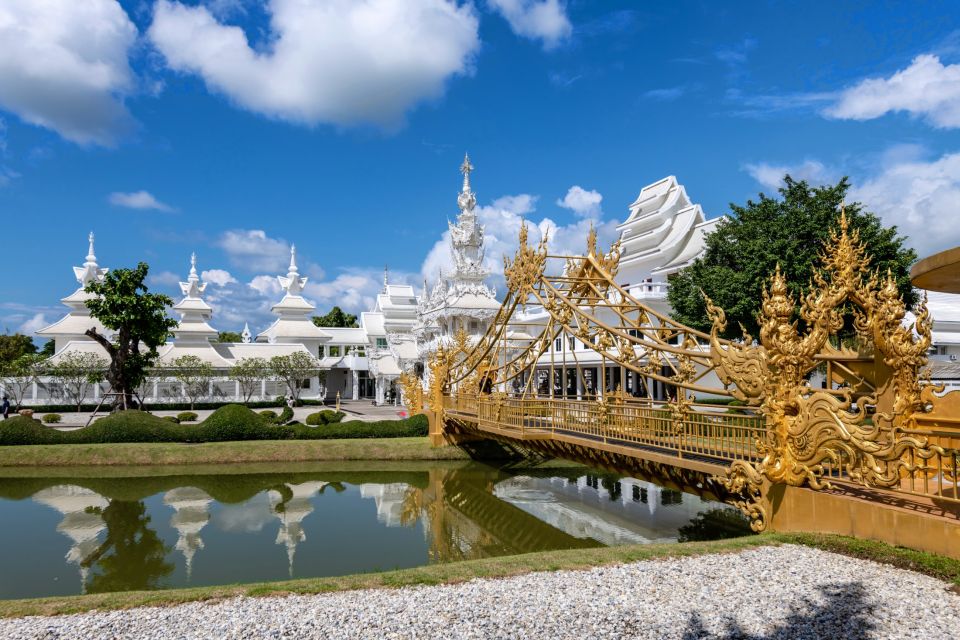
Wat Rong Khun, the White Temple, is the star of the show. It’s covered in white surfaces and shimmering mirror details that catch the light as you move around.
I love that this temple isn’t just pretty. It has Buddhist lessons worked into the design, so your photos don’t feel like empty sightseeing. The calm pond nearby also adds to the mood—if you time it right, reflections make the scene look even more dreamlike.
Timing is the one thing to watch. You usually get about an hour to explore at the White Temple. That’s enough to walk the key areas and take photos, but it can feel fast if you’re the type who wants to read every detail slowly. One practical tip: arrive with your shoes on and your camera ready, then prioritize angles that include the pond reflection early, before the crowds and light shift.
You’ll also want to remember the basic temple rules here: cover your knees and shoulders, and take off your shoes before entering the main chapel areas.
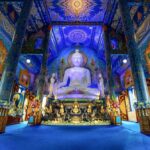
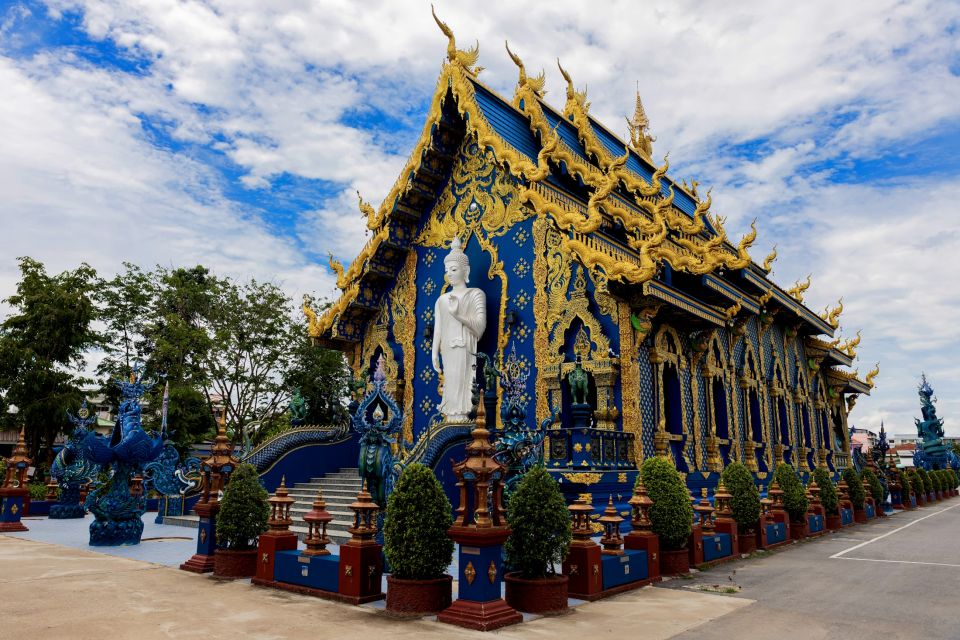
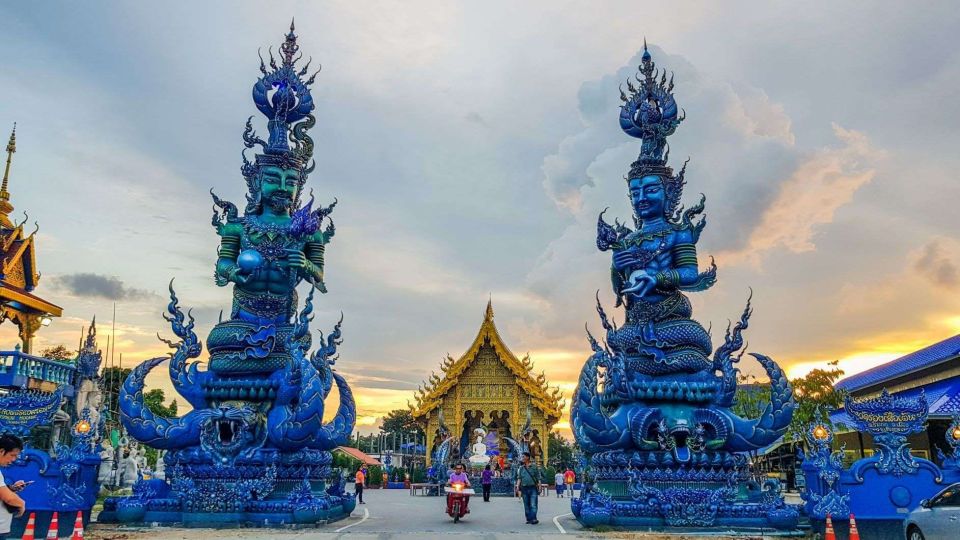
Wat Rong Suea Ten (Blue Temple): cobalt blues with a tiger legend
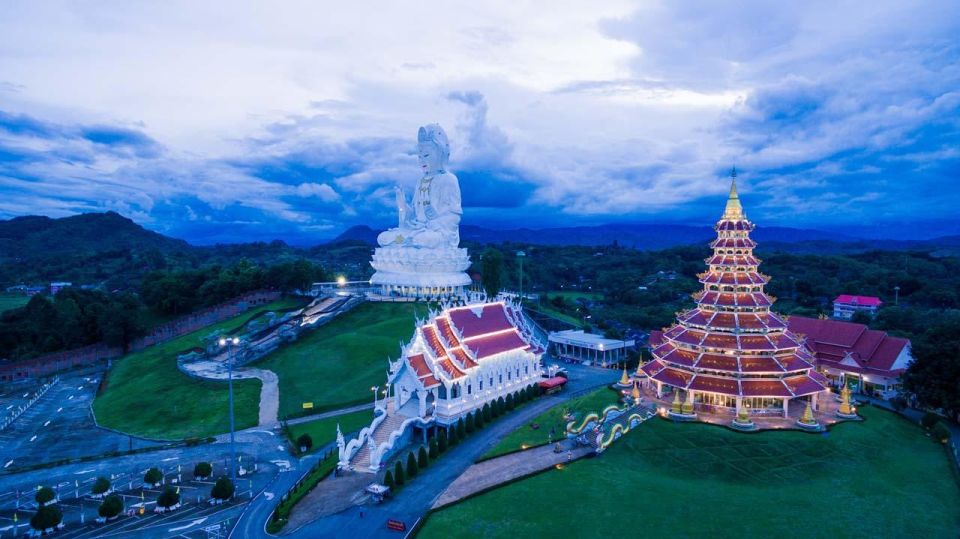
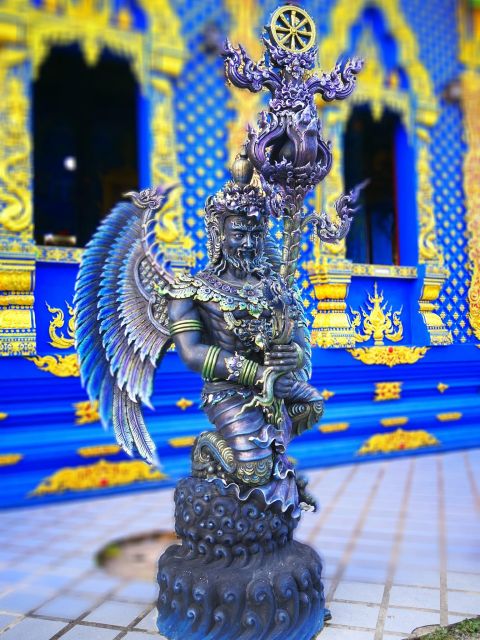
Next comes the Blue Temple, or Wat Rong Suea Ten. This one hits you visually right away: deep blue paint, crisp lines, and lots of detailed decoration.
The story attached to the site adds texture. The temple was built where an old temple once stood—an area that people believed was home to roaming tigers. Whether you read that as legend, folklore, or spiritual storytelling, it helps explain why the place feels protective and theatrical rather than plain and functional.
You’ll have time to walk around, but keep your pace steady. This stop is part of a three-temple sequence, so the day works best when you stay flexible and don’t get stuck only on the biggest photo spot.
Also, expect the usual temple rhythms: short walks, photo pauses, and your guide pointing out what matters. On many departures, guides such as Anna, Bee, Paul, Goi, and others help you understand what you’re seeing without turning it into a lecture.


The Red Temple: Thai spirituality and folk tales in color
Then it’s the Red Temple, a complete mood shift. Instead of whites and blues, you’re looking at bright colors, intricate artwork, and scenes that feel like Thai spirituality told through art and folklore.
What makes the Red Temple special is the way the details feel story-driven. You’re not only admiring architecture—you’re scanning symbolic scenes that connect back to Thai spiritual themes and folk narratives. Even if you don’t speak Thai, your guide can help you connect the visuals to the meanings, and the place rewards slow looking.
As with the other temples, dress and shoe etiquette apply. And because the Red Temple can attract a steady stream of photos, I suggest you do two passes: one pass for the big views, and a second pass for the smaller details while the crowd flow shifts.
Optional extras you might get: big Buddha, long-neck villages, and swaps when weather changes
This day trip is built around the three temples plus the hot spring. Still, the real world can add extras depending on timing and conditions.
Some departures include a stop connected to a big Buddha or Big Guan Yin statue. Others may include a long-neck village visit, sometimes treated as an optional bonus if time allows. In practice, opinions vary on these adds—some people enjoy the cultural stop, while others feel it’s more of a tourist-style setup. So if you’re sensitive to staged experiences, treat this as a possible add-on, not the core attraction.
Weather can also change the plan. If something is closed due to rain, guides have swapped in other activities (like visiting a tea-related stop). That’s a practical advantage of having a live guide and a driver managing the day.
If you want the cleanest, most temple-focused version of the trip, keep your expectations aligned with the three main sites and the hot spring. Extras are just that—extra.
Lunch, comfort breaks, and why small groups feel easier
Lunch is included in the price. In real terms, it helps you avoid the time sink of figuring out where to eat after long driving hours. The meal is typically a Thai buffet style, and vegetarian options have been mentioned, which is a major plus if you don’t want to rely on a single dish.
The comfort breaks between stops are another underappreciated part of the value. The day often includes stretch breaks roughly every 90 minutes. That means you’re less likely to feel drained before the next temple photo session.
Small group size also matters. With a group limited to 12, you tend to spend less time waiting for everyone to shuffle off the van. And your guide can usually answer questions on the spot—like why the temples look so different from the usual Thai temple style you might know from Bangkok or central Thailand.
Temple etiquette basics you should not skip (especially if you want good photos)
Thailand’s temples are welcoming, but they do require respect. Dress for it. Cover your knees and shoulders, even if it’s hot. This isn’t the moment for shorts and tank tops.
Shoes come off when you enter main chapel areas. And yes, you’ll want comfortable shoes for walking around temple grounds, because uneven paths and lots of steps happen even on “short” visits.
For your photos: stand back before you shoot close-ups, and don’t block entrances or prayer areas. If you’re unsure, ask your guide for a quick pointer on where it’s fine to linger.
For the day itself, bring sunscreen, insect repellent, a hat, and water. Even in a structured tour, you’ll be outside for significant parts of the morning and afternoon.
Price and value: does $51 make sense for this much logistics?
$51 per person sounds like a bargain when you look at what’s included. You’re paying for round-trip transfers from Chiang Mai, hotel pickup and drop-off, all entrance fees, lunch, insurance, drinking water, and an English-speaking guide.
Now factor in the “real cost” most DIY travelers feel: time planning, figuring out temple entry details, managing transport on winding roads, and keeping everyone on the same schedule. This tour bundles the work so you can spend your energy on looking at the temples, not coordinating the day.
The only reason $51 might not feel right is if you’re the type who hates early mornings and long travel days. But if you’re okay with that, this is a strong value pack: you get guided context and three major sites without the hassle.
Who should book this Chiang Rai day trip (and who might not)
This tour fits you best if you want a first taste of Chiang Rai’s temple style and you’re short on time. It’s also a good match if you like photos and appreciate explanations—guides often help with timing, what to look for, and photo tips.
It’s less ideal if you need a slower pace or have mobility limits. The tour is explicitly not suitable for people with mobility impairments, and the temple grounds involve walking and steps.
If you’re traveling solo, you still get the benefit of a guide managing timing and logistics. If you’re traveling with friends, the small group size keeps the day from turning into a crowd-control exercise.
Should you book? My straight answer
Book it if you want an efficient, structured way to see Wat Rong Khun, Wat Rong Suea Ten, and the Red Temple in one day from Chiang Mai—complete with lunch and hotel pickup. The combination of iconic visuals, guide-led context, and frequent break stops makes the long drive feel less painful.
Skip it if you’d rather spend Chiang Rai time more slowly, or if the idea of a long van day leaves you cranky before you even arrive. Also be honest about the visit pace: you’ll have time to explore, but it’s not a slow, hours-long museum-style experience at each temple.
If your goal is a memorable temple sampler day, this is a smart booking.
FAQ
Where is the meeting point for this Chiang Rai day trip?
You meet at Baan Meesuk, an hotel/hostel in Chiang Mai’s old town.
What time does hotel pickup happen?
Pickup is optional, and pickup is between 7:00 and 7:30. You should wait in the hotel lobby.
How long is the tour?
The duration is 1 day.
How many people are in the group?
The group is small, limited to 12 participants.
What temples are included in the tour?
The day includes Wat Rong Khun (White Temple), Wat Rong Suea Ten (Blue Temple), and the Red Temple.
Is lunch included?
Yes, lunch is included.
Is the hot spring stop for swimming?
No. It’s not a place for swimming. You can observe the steam rising from the mineral-rich water.
What should I wear and bring for temple visits?
Wear comfortable shoes, and bring sunscreen, insect repellent, and a hat. In temples, cover your knees and shoulders and remove your shoes before entering the main chapel.
Is this tour suitable for people with mobility impairments?
No, it is not suitable for people with mobility impairments.
Can I cancel or pay later?
Yes. You can cancel up to 24 hours in advance for a full refund. You can also reserve now and pay later.