REVIEW · CHIANG MAI
Half-Day Thai Cooking Class at Organic Farm in Chiang Mai
Book on Viator →Operated by Smile Organic Farm Cooking School · Bookable on Viator
Thai food gets real when you make it yourself. This half-day class in Chiang Mai takes you out to the countryside for an organic farm experience, then turns it into a practical cooking workshop where you learn from start to finish. You’ll start with a short market visit, meet the ingredients up close, and then cook under expert guidance at Smile Organic Farm Cooking School. Organic farm details, herb garden time, and hands-on prep are the big draw.
I especially like the round-trip transfers and the way the day flows from market to farm to cooking. Another strong point is how much choice you get: you can pick your menu, go vegetarian or vegan, and adjust spice from mild to fiery. It feels far less like a scripted show and more like a guided skill-building session.
The only drawback to plan for is that the half-day can still be a lot of food. You’re making multiple dishes across the day, so pace yourself. Some people also wish there were a dessert option at the end, since the focus is on getting you cooking and fed with the courses you make.
In This Review
- Key things I’d circle before you book
- From Hotel Pickup to Market Check: How Your Chiang Mai Morning Sets Up
- Entering Smile Organic Farm: The Herb Garden and Organic Kitchen Setup
- Pick Your Menu, Choose Vegan or Vegetarian, and Set Your Spice
- Hands-On Thai Cooking You’ll Practice: Paste, Curry, Stir-Fry, Soup, Spring Rolls
- 1) Curry paste: the flavor engine
- 2) Curry: turning paste into a full dish
- 3) Stir-fried dish: fast cooking and balance
- 4) Soup: comfort, freshness, and aromatic depth
- 5) Spring rolls: the wrapping skills
- Eating and pacing
- Why the Flavor Feels More Authentic Than a Typical Class
- Time, Transfers, and the Small-Group Advantage
- Price and Value: Is $29.35 a Good Deal in Chiang Mai?
- Who This Organic Thai Cooking Class Works Best For
- Quick Tips to Make the Day Go Smoothly
- Should You Book This Chiang Mai Thai Cooking Class?
- FAQ
- How long is the Thai cooking class experience?
- Does the tour include pickup and transfers?
- What food can you cook, and how many categories are covered?
- Can you make the dishes vegan or vegetarian?
- What is the maximum group size?
- Are there cooking stations for children?
- Does the price include a mobile ticket, and is free cancellation available?
Key things I’d circle before you book
- Market-to-farm start: a quick market stop to connect flavors to ingredients before you cook
- Pick-your-menu flexibility: vegetarian or vegan options, plus mild or spicy
- Five cooking skill areas: curry paste, curry, stir-fried dish, soup, and spring roll
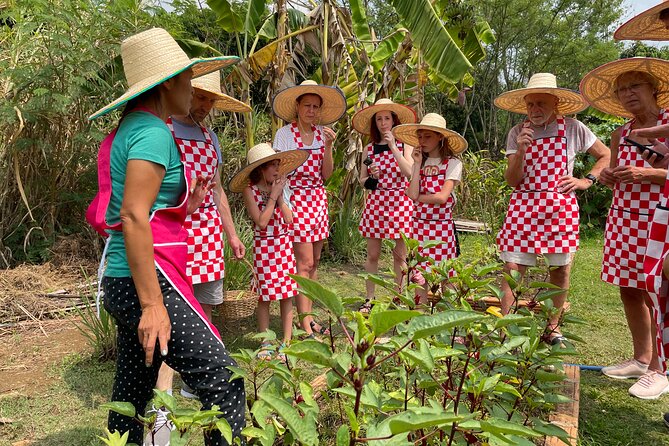
- Organic herb and veg garden time: learn how common Thai herbs are used, then smell them fresh
- Small groups: up to 12 people, with dedicated instruction during hands-on cooking
From Hotel Pickup to Market Check: How Your Chiang Mai Morning Sets Up
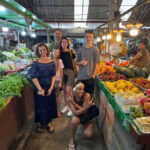
Your day usually starts with hotel pickup somewhere in Chiang Mai city. The goal is to get you out to the countryside without wasting time figuring out transportation. From there, you head to a local market for a brief visit before continuing on to Smile Organic Farm Cooking School.
That market stop matters more than it sounds. Thai cooking is built on ingredients that can look similar but behave differently: herbs you smell, spices you grind, pastes you build, and vegetables that hold up in stir-fry versus soup. Seeing ingredients in context helps you understand what you’ll be cooking later, instead of just following steps.
The market portion is also where you get your first quick education. You’ll be guided through key products and spices so you know what to look for when you’re chopping, grinding, and cooking at the farm. In other words, you’re not just eating and then cooking once. You’re learning what’s behind the flavor.
Practical note: because you’ll be moving between pickup, market, and farm, wear comfortable shoes. You’ll likely be standing, walking around stalls, and then spending more time outdoors during the farm portion.
You can also read our reviews of more tours and experiences in Chiang Mai.


Entering Smile Organic Farm: The Herb Garden and Organic Kitchen Setup
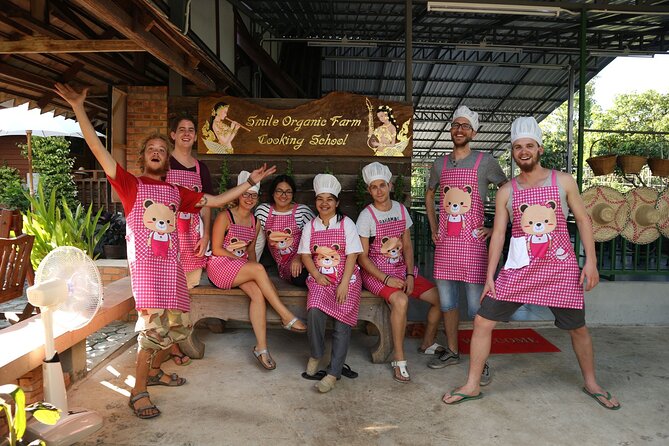
Once you arrive at Smile Organic Farm Cooking School, you get your first real sense of place. You’re not in a restaurant kitchen with a hot plate and an audience. You’re in an organic farm environment where you can see how ingredients connect back to the ground.
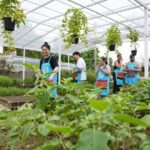
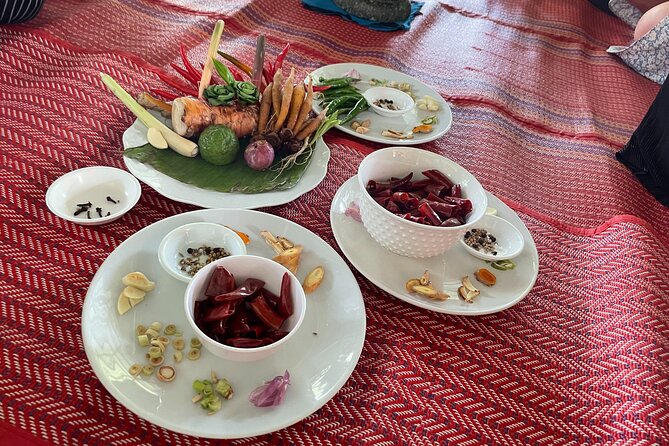
A big part of the experience is the organic kitchen garden visit. You’ll learn about Thai herbs and vegetables, then watch how those crops get used in cooking. You’ll also get a chance to smell herbs and understand why aromatics are such a core part of Thai flavor. The point isn’t just facts. It’s building the habit of thinking in ingredients: what’s fresh, what’s dried, what’s pounded, and what goes in early versus late.
You may also notice farm life beyond the kitchen. Some groups mention seeing animals on site, including tortoises and dogs, which turns the farm portion from educational into gently memorable. It’s not the main purpose of the class, but it makes the waiting and transitions more pleasant.
When you’re ready, the instructors explain what you’ll be cooking. Then you choose what you want from the menu categories. That’s one reason this experience lands well for both food lovers and picky eaters: you’re not stuck with someone else’s plan.
Pick Your Menu, Choose Vegan or Vegetarian, and Set Your Spice
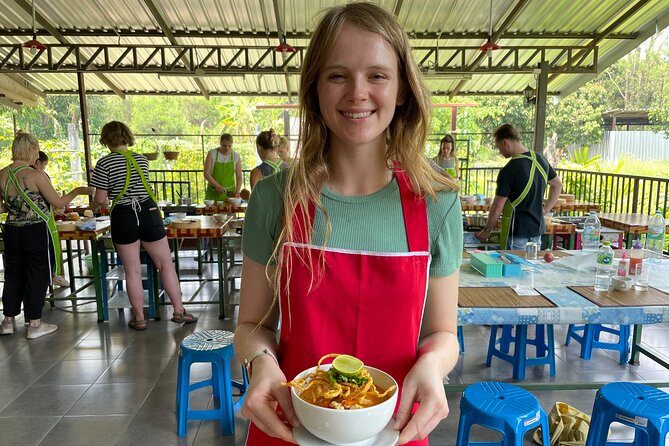
At the start of the cooking portion, you’ll be able to choose your menu by category. The format is simple: you’ll work through the main Thai cooking skill areas, and your ingredient choices line up with the dishes you want to make.
One of the most useful options here is dietary flexibility. Your menu can be made vegetarian or vegan, and you can choose the spice level you want. That matters in real life. Thai food can swing from mild and fragrant to aggressive and smoky fast, and spice tolerance varies a lot from person to person. Giving you control helps you actually enjoy the meal you cook, rather than suffering through heat you did not plan for.
You’ll also get hands-on cooking at your station. Many people love that this class gives each participant a personal setup rather than expecting you to crowd around one workstation. When multiple groups are running at once, the school still keeps things organized so you’re cooking, not just watching.
Also, you can expect a group size capped at 12. That small ceiling helps with pacing and supervision during steps like grinding curry paste or wrapping spring rolls.
Hands-On Thai Cooking You’ll Practice: Paste, Curry, Stir-Fry, Soup, Spring Rolls
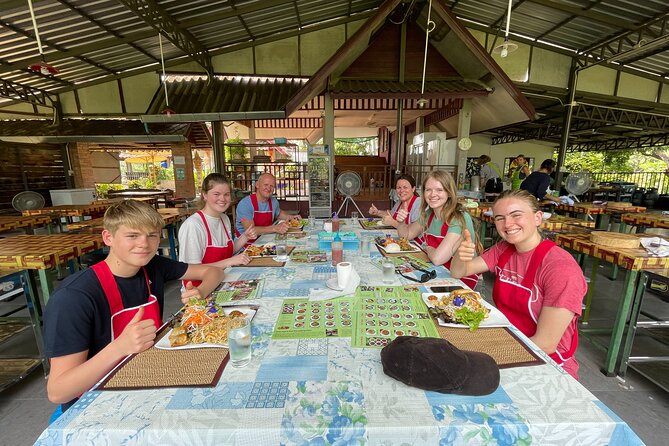
This class is built around Thai techniques, not just finished dishes. You learn basic Thai cooking in five categories: curry paste, curry, stir-fried, soup, and spring roll.
Here’s how each category fits into the overall flow.
1) Curry paste: the flavor engine
Curry paste is where the magic starts. You’ll chop ingredients, then grind or pound them into paste. That’s a key lesson: in Thai cooking, depth often comes from building a paste rather than relying on pre-made bases.
People tend to mention the satisfaction of doing it themselves—chopping, grinding, and then seeing how it changes when it hits the pan. If you’ve ever wondered why Thai curries taste more layered than jarred versions, this is the reason.





2) Curry: turning paste into a full dish
Once you have your curry paste, you’ll learn how it transforms into a curry. You’ll follow the instructor’s guidance for cooking the paste with the right rhythm, then adding ingredients that match your chosen dish.
Some menu options can lead to regional Thai favorites like Khao Soi, or other curry-style meals depending on what you select. The common thread is the method: paste first, then build the flavor through cooking steps.
3) Stir-fried dish: fast cooking and balance
Stir-fry teaches you a different skill than curry. It’s about timing and heat control so vegetables keep their texture and sauces cling without turning watery or dull.
Because this is hands-on, you’re learning how Thai stir-fry balances aromatics with savory, tangy, and salty elements. It’s also a great category for anyone who wants a dish you can repeat at home without needing a special curry paste supplier.
4) Soup: comfort, freshness, and aromatic depth
Soup often feels simpler, but Thai soup is all about layers—aroma, broth flavor, and how you finish the bowl. Your menu choice determines what soup style you cook, and you may end up making something coconut-based depending on your selection.
Many people leave impressed by how much flavor a soup can carry when you start with fresh paste and herbs rather than shortcuts. It’s also one reason the meal feels substantial: soup is not just a filler course here.
5) Spring rolls: the wrapping skills
Spring rolls are the hands-on skill many first-timers think they’ll be watching, but you’ll be doing the work. Wrapping is the final step where technique and patience matter. You learn how the ingredients come together and how to form the rolls so they cook up properly.
This category also helps you learn the texture side of Thai cooking—crisp outside, flavorful inside—so you understand that Thai cooking isn’t only about sauces.
Eating and pacing
You’ll enjoy the dishes you cook in a relaxing atmosphere. Some participants mention that the structure feels like multiple courses across the half-day. That lines up with the categories: you may not see every dish as a giant plate, but you do practice several skills and end up with a full meal you cooked yourself.
One practical tip from real class experience: don’t go into the first course with a full appetite. You’ll be making and eating enough that it’s easy to overfill early. Pace yourself so you can taste the later dishes too.
Why the Flavor Feels More Authentic Than a Typical Class
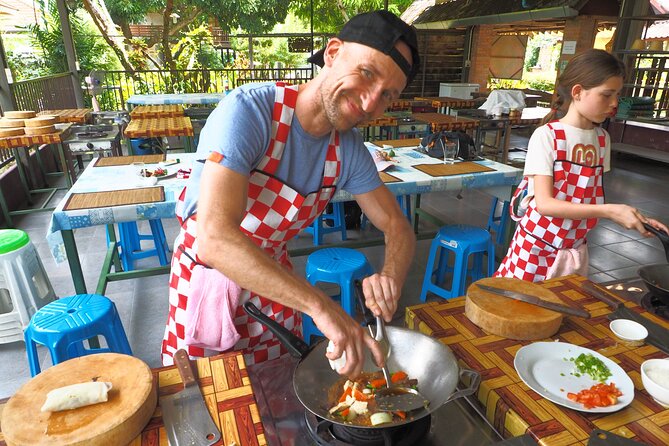
A lot of cooking classes promise authenticity. This one tries to earn it through process.
First, you start with real ingredients at a market. Even if it’s only a brief stop, it helps you understand the difference between Thai herbs/spices and what you might buy at home.
Second, you learn Thai flavors through actual farm-grown herbs and kitchen garden context. When you smell and identify herbs where they grow, you stop cooking on autopilot.
Third, you build curry paste yourself. Curry paste is where Thai cooking often separates from “Thai-inspired” food. Grinding and cooking the paste properly is what gives the curry its aroma and depth.
And finally, you taste what you made. That matters because you can connect a step to a result. If your paste tastes strong enough, you’ll know you nailed the balance. If it’s milder, you’ll learn which ingredient or step affects the final outcome.
People also point out that the taste is authentic and the dishes are delicious, but the best part for you is the repeatability. When you understand what’s happening in the paste, the soup, and the stir-fry, you can cook something similar later instead of only remembering the meal.
Time, Transfers, and the Small-Group Advantage
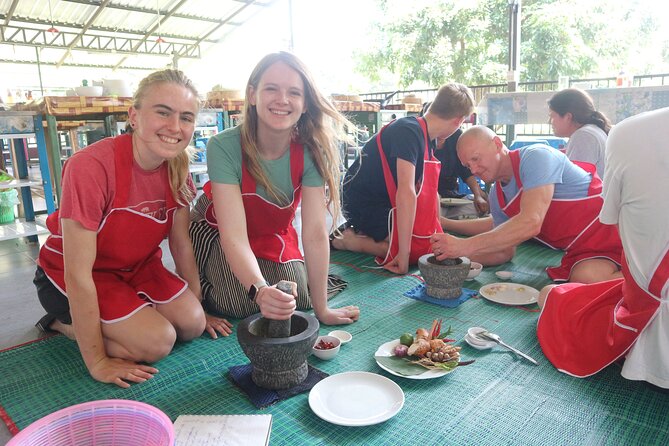
Even though it’s sold as half-day, the full time commitment is about 6 hours, give or take. That’s usually because the day includes pickup, market time, farm travel, cooking, and then eating before you’re driven back.
One useful detail: the drive between the market and the farm is described as about 30-plus minutes. That’s normal countryside travel, and it explains why the experience feels like a real excursion rather than a quick class.
Also pay attention to the group cap: up to 12 travelers. Many people like that the school can handle multiple groups but still keeps instruction personal, with a dedicated chef/guide for each group.
Instructors mentioned across classes include people like Lilli, Luna, K, Love, Cici, Lizzy, Natty, Natalie, and K again. That tells you something important even without names on your day: you’ll likely get a lively guide who explains procedures clearly and helps you make sure your station stays on track.
Price and Value: Is $29.35 a Good Deal in Chiang Mai?
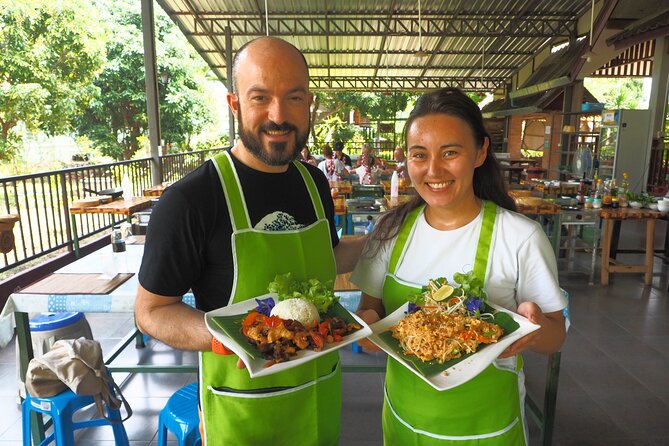
At $29.35 per person, the price feels unusually fair for what you get, especially in a city where cooking classes can range widely in quality. The value here comes from the package:
- Round-trip transfers from your hotel area
- A market stop before cooking
- An organic farm visit plus herb and vegetable education
- Hands-on cooking across multiple categories
- A meal you cook and eat
The biggest value lever is the hands-on format. If you were only watching, the value would drop. But here you’re doing the prep and learning techniques like grinding curry paste and wrapping spring rolls.
Another value point is choice. Being able to go vegetarian or vegan and pick mild or spicy means you’re more likely to enjoy what you make. That’s real-world value, not marketing fluff.
So for you, the question isn’t only whether $29.35 is cheap. It’s whether this class gives you skills you can use later. The curry paste practice, herb knowledge, and ingredient-driven instruction are exactly what make that happen.
Who This Organic Thai Cooking Class Works Best For
This is a great fit if you want a hands-on food activity that still feels grounded in real place. It’s especially good for:
- Foodies who want to understand Thai flavor through technique
- Couples who want something memorable that isn’t just another restaurant night
- Solo travelers who like structured group experiences with time to talk and cook
- Families with kids old enough to participate as participants
There’s also guidance around children. Children 0–3 are free of charge. Children 4–8 are priced as visitors. Kids above 9 can cook at their own station as participants. If you’re traveling with teens, this setup tends to feel inclusive rather than child-only entertainment.
For groups of friends, the small size helps everyone get time and attention instead of feeling like a crowd.
Quick Tips to Make the Day Go Smoothly
A few practical ideas can help you get more out of the experience:
- Eat a little before pickup, but don’t arrive stuffed. You’ll likely want room for multiple courses.
- Choose your spice level early. If you prefer mild, tell your guide so your menu stays fun, not uncomfortable.
- Wear closed-toe shoes. You’ll be on farm ground and moving around.
- If you’re vegan or vegetarian, confirm your preferences when you choose the menu categories so there’s no confusion later.
Should You Book This Chiang Mai Thai Cooking Class?
I’d book it if you want a cooking class that connects ingredients to flavor and gives you time to practice. The best reasons to choose Smile Organic Farm Cooking School are the market-to-farm flow, the organic herb garden education, and the hands-on skill-building around curry paste, curry, stir-fry, soup, and spring rolls. With a small group cap and hotel pickup, it also stays easy.
Skip it only if you hate being busy for hours or if you already know you’re not interested in making paste and cooking multiple dishes. For everyone else, this is a strong value way to spend part of your Chiang Mai trip.
FAQ
How long is the Thai cooking class experience?
The duration is listed as about 6 hours.
Does the tour include pickup and transfers?
Yes. You’re picked up from your hotel or accommodation in Chiang Mai city, and round-trip transfers are included.
What food can you cook, and how many categories are covered?
You learn Thai cooking in five categories: curry paste, curry, stir-fried, soup, and spring roll.
Can you make the dishes vegan or vegetarian?
Yes. The class menus can be made vegetarian or vegan, and you can choose your spice level from mild to spicy.
What is the maximum group size?
The maximum is 12 travelers.
Are there cooking stations for children?
Children 0–3 are free of charge. Children 4–8 are visitors. Children above 9 can have their own cooking stations as participants.
Does the price include a mobile ticket, and is free cancellation available?
The experience uses a mobile ticket, and free cancellation is available up to 24 hours before the experience’s start time.