REVIEW · CHIANG MAI
Chiang Mai: Chiang Rai Temples, Karen Tribe and Hot Springs
Book on GetYourGuide →Operated by MONKEY TRAVEL ASIA by Ask Discovery · Bookable on GetYourGuide
Chiang Rai in one long day feels worth it. This tour strings together Wat Rong Khun (White Temple), the Blue Temple, and Huay Pla Kang with a calmer start at Mae Kachan Hot Springs. I also like how the schedule gives you a culture stop at the Karen long-neck village, not just temple photos. The main trade-off is the pace: it’s a long day with plenty of sitting in the bus and tight timing at each site.
You’ll get an easy, guided route out of Chiang Mai (round trip) with an official guide and entrance fees for the big temple stops. That matters because Chiang Rai’s standout sights are scattered, and paying for the transport and key entries in one bundle usually feels better than trying to stitch it together yourself. The other consideration: you’ll likely need to add extra spending for lunch and the long-neck village entrance fee.
One more thing that affects your experience: the live guide is English-only, but there’s an audio guide in 41 languages via QR code. Plan to bring your own earphones, and pack light since large bags aren’t allowed.
In This Review
- Quick hits before you go
- Why this Chiang Rai route works when you only have one day
- Mae Kachan Hot Springs: a warm start that sets the mood
- Karen long-neck Mae Kachan village: a cultural stop that asks for respect
- Wat Rong Khun (White Temple): purity in white, with glass that catches your eye
- Wat Rong Suea Ten (Blue Temple): a calmer Buddha surrounded by blue and gold
- Huay Pla Kang Temple: Guan Yin, nine tiers, and the best views late in the day
- Price and what you’ll actually spend (beyond the ticket)
- The guide makes or breaks the experience: English-only, plus QR audio
- Timing, comfort, and logistics you should plan for
- Who should book this tour, and who should skip it
- Should you book this Chiang Rai temples day trip?
- FAQ
- How long is the tour?
- What’s included in the price?
- What extra costs should I plan for?
- Is swimming allowed at Mae Kachan Hot Springs?
- Do I need to bring earphones for the audio guide?
- Where do I meet the guide?
- What if I’m late to the meeting point?
Quick hits before you go
- Mae Kachan Hot Springs is a true reset point, with warm mineral water but no swimming
- Karen long-neck Mae Kachan village gives you a look at brass neck-ring traditions and craft-making
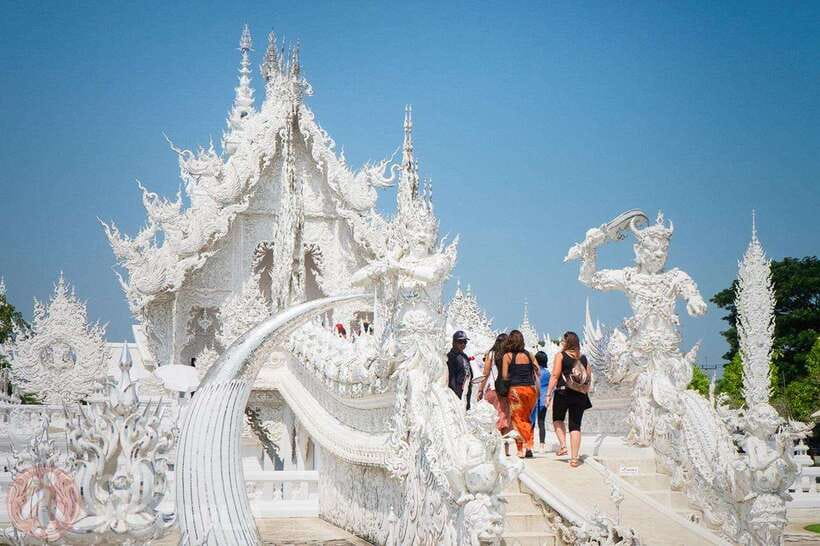
- Wat Rong Khun combines classic Buddhist imagery with striking modern details in white and glass
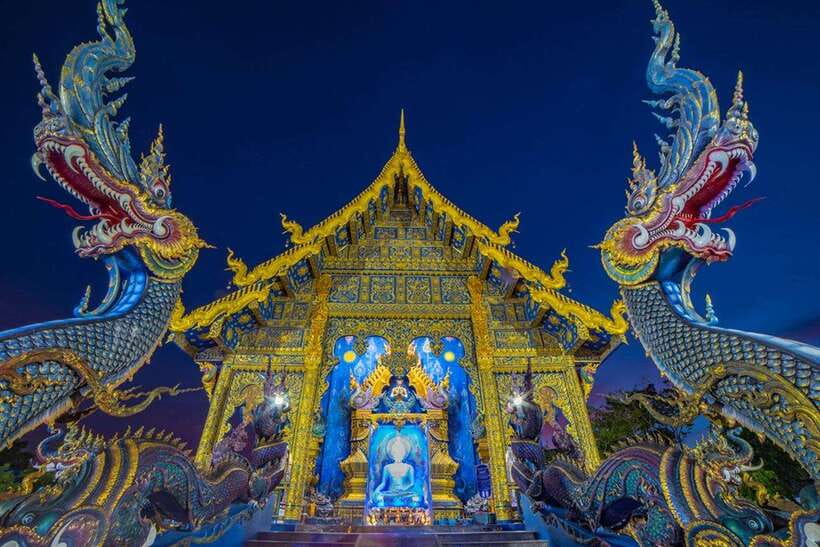
- Wat Rong Suea Ten is all about deep blue interiors, gold accents, and dragon statues at the entrance
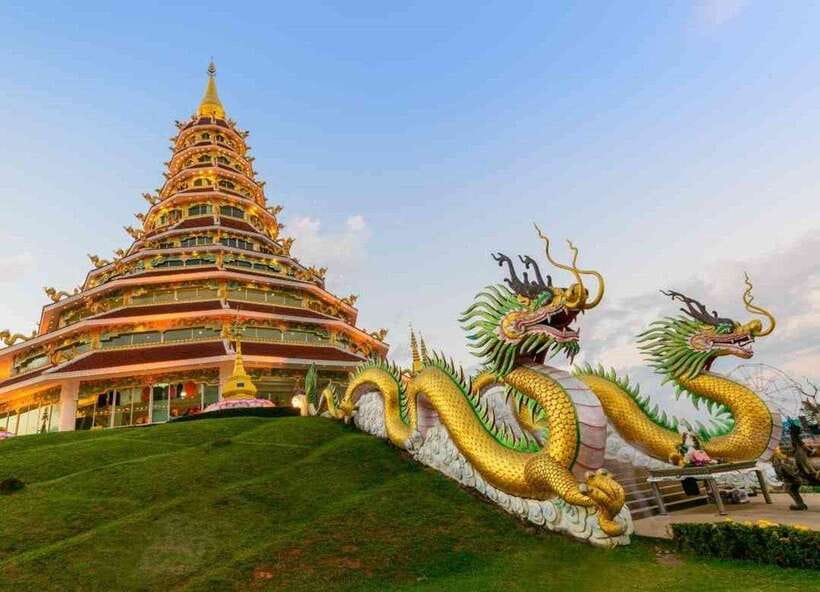
- Huay Pla Kang Temple is famous for the nine-tiered pagoda and a big Guan Yin statue
- Plan for a long day: the best sights are worth it, but you’ll move on quickly between stops
Why this Chiang Rai route works when you only have one day
Chiang Rai is close enough for a day trip, but it still feels like a different world from Chiang Mai. You trade short distances for variety: hot springs, hill-tribe village culture, and three temple styles that look like they belong to different artists and eras.
This tour is built around that logic. It runs as a round-trip loop from Chiang Mai with air-conditioned transport, a guide to explain what you’re seeing, and entrance tickets for the key temples. In practice, that helps you move efficiently through locations that can take time to reach and figure out on your own.
The part to be honest about is the day length. Plan on long travel time and heat, then comfort-breaks and quick meals. If you hate being on a tight schedule, you’ll feel it by the last temple.
You can also read our reviews of more tours and experiences in Chiang Mai.

Mae Kachan Hot Springs: a warm start that sets the mood
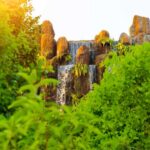
You start the day with Mae Kachan Hot Springs, after about 1.5 hours on the coach. The stop includes a photo break plus time for a visit and guided tour. It’s not a full-on swim session. Swimming isn’t allowed here, which keeps the vibe relaxed and more about soaking feet, walking the area, and taking a breather before the bus.
I like this start because it changes your energy. Temples can be exhausting in the best way—crowds, stairs, bright sun, and nonstop photos. The hot spring stop gives you a slower rhythm so the rest of the day doesn’t feel like one continuous sprint.
Practical note: the heat can hit hard, so sunglasses, a hat, and sunscreen matter early, not later. Reviews also mention you can find coffee/tea and snack-type options around the hot spring area, plus small stalls, so you’re not stuck with only water while you wait.
Karen long-neck Mae Kachan village: a cultural stop that asks for respect
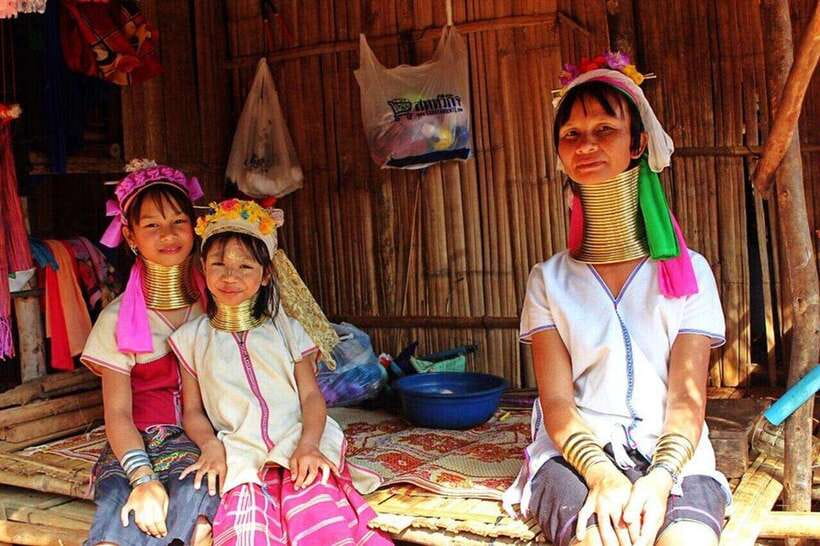
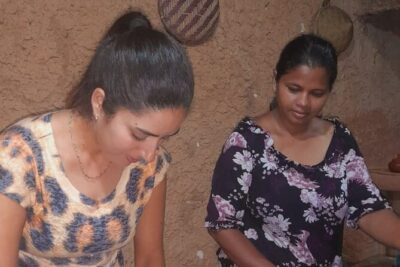
Next comes the Mae Kachan Karen long-neck village. Expect another short transfer, then time for photos, a guided visit, and learning about the long-neck tradition of brass neck rings worn by women. You’ll also see handmade crafts—often colorful and made for visitors to take home.
This stop is fascinating, but it’s also emotional for some people. The idea of neck rings can feel unsettling, even when the tradition is explained as part of identity and heritage. I’d treat this like any cultural encounter: ask questions respectfully, don’t stare, and be mindful about what you’re consuming—stories included.
One important cost detail: the long-neck village entrance fee is 300 THB and not included. If you want to shop (scarves and crafts are common), it’s smart to come with smaller notes because some places don’t always have change.
Wat Rong Khun (White Temple): purity in white, with glass that catches your eye
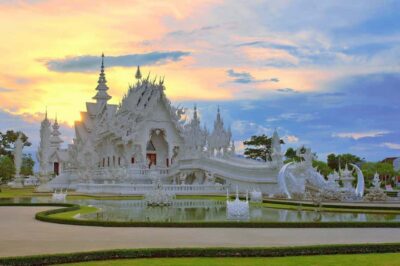
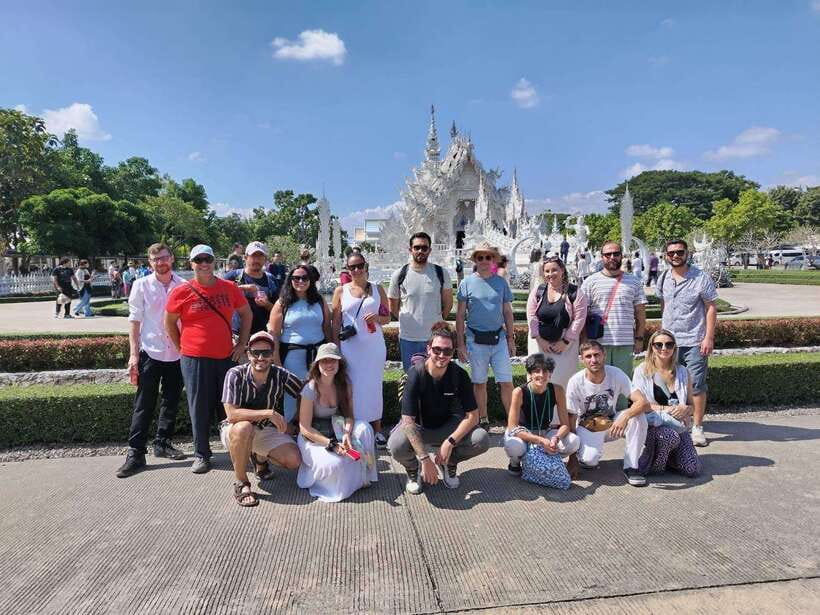
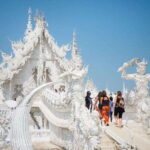
After lunch in Chiang Rai, you head to the showstopper for many people: Wat Rong Khun, the White Temple. This one is tied to the artist Chalermchai Kositpipat, and the look is instantly recognizable—an all-white design meant to symbolize purity, with intricate glass details that reflect Buddhist wisdom.
What I find compelling here is that the White Temple isn’t only traditional religious art. It includes classic temple elements and surprising modern imagery. That mix is a big part of why it draws repeat attention: you can keep looking and still find new details instead of only checking one highlight photo.
Time management tip: this is one of the most photographed stops, so expect you’ll be moving through crowds and photo angles. If you want your best shots, wear shoes you trust for walking, and keep your camera ready. Also remember you’ll likely be tired by midday—so bring water and take short breaks without feeling guilty.
Wat Rong Suea Ten (Blue Temple): a calmer Buddha surrounded by blue and gold
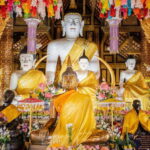
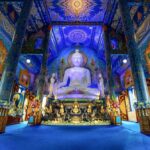
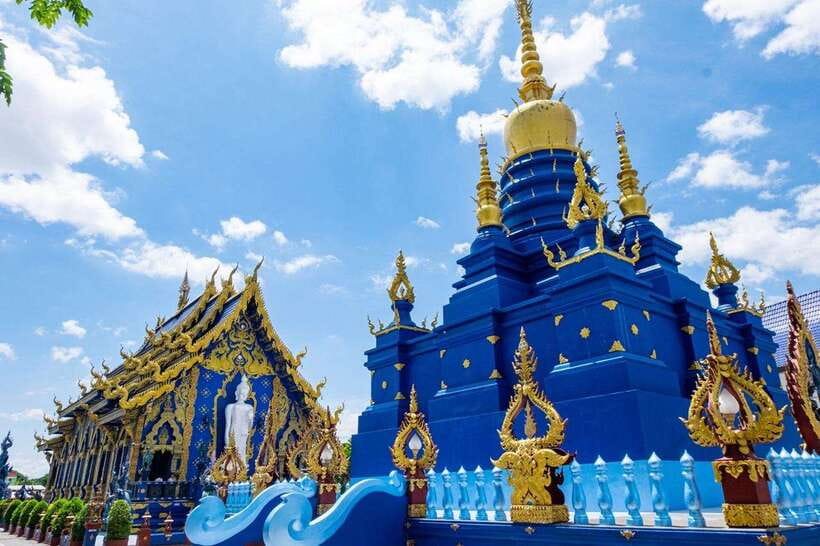
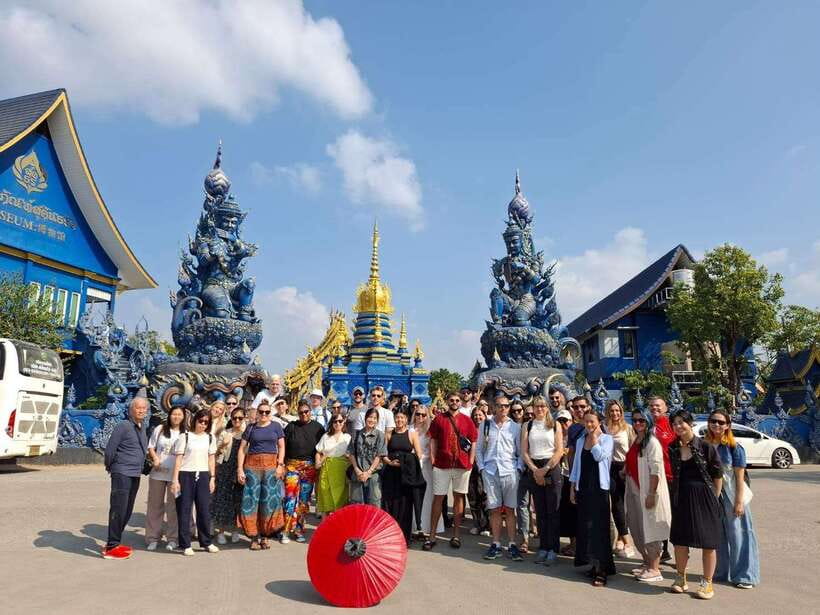
The Blue Temple, or Wat Rong Suea Ten, leans hard into color and symbolism. The interior is deep blue with gold details, and the design blends modern artistic style with Buddhist temple elements. At the entrance, you’ll see dragon statues guarding the way in.
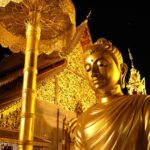
Inside, there’s a calm, bright Buddha statue at the center. That contrast matters after White Temple crowds. The Blue Temple can feel more meditative in the moment because the room composition pulls your attention inward rather than only upward into exterior details.
Also, bring patience for the line flow. Like most temple stops, it’s a guided circuit through sight points. If you’re sensitive to heat or glare, consider stepping aside for a minute rather than forcing photos constantly.
Food note: some guides recommend treats nearby—one popular mention is blue coconut ice cream. Even if you skip sweets, it’s good to know there’s often something to cool down with on the way.


Huay Pla Kang Temple: Guan Yin, nine tiers, and the best views late in the day

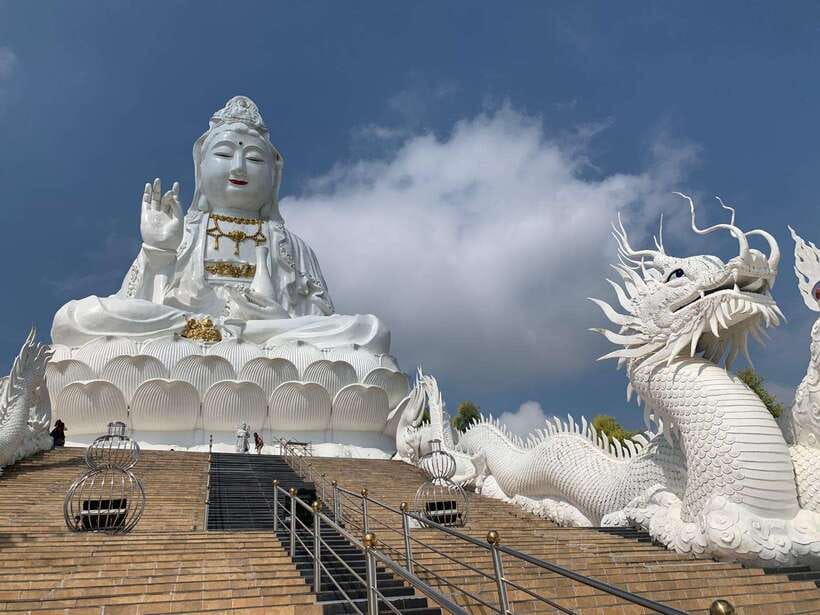
The final major site is Huay Pla Kang Temple, known for its large statue of Guan Yin (Goddess of Mercy) and its nine-tiered pagoda. The stop includes a guided visit and time for photos. The temple grounds are decorated throughout, and you can climb toward the upper areas for views.
This is where good shoes pay off. If you’ve already walked a lot that day, the stairs and uneven temple paths can feel like a workout. Still, the payoff is the view angle and the scale of the pagoda structure. If you’ve been loving the artistic styles so far, this temple adds yet another flavor—more monumental and more expansive.
A reality check: timing can feel a little tight here if the day runs full as planned. Plan to enjoy the first major sight points, then decide if you want the climb, rather than committing to everything and ending the day stressed.
Price and what you’ll actually spend (beyond the ticket)
This tour is priced around $35 per person, and that’s where the value story starts. The price includes round-trip transport from Chiang Mai, air-conditioned coach comfort, an official guide, and entrance fees for White Temple, Blue Temple, and Huay Pla Kang Temple.
What’s not included is also clear:
- Lunch
- Long-neck village entrance fee (300 THB)
- Earphones for the optional audio guide
So yes, it costs extra—but you’re still getting a bundled day: transportation across Chiang Rai province plus entry into the temples that eat up both time and ticket hassle if you DIY.
My budget advice is simple:
- Bring cash for the village fee and lunch
- Plan for snacks and water so you don’t have to rely on whatever stall has change
- If you want audio support, bring your own earphones and charge your phone
Also remember: luggage or large bags aren’t allowed. Keep your essentials small enough for easy handling on a busy coach day.
The guide makes or breaks the experience: English-only, plus QR audio
The live guide on this tour speaks English-only, even though you’ll have the option of a QR audio guide in 41 languages. The audio guide can help if you’re not fully confident in English, but you still need to bring your own earphones. If your phone battery is low, charge it before you leave Chiang Mai.
What stands out from guide behavior on this route is how they manage energy and timing. Several named guides (like Benz, Kwan/K Wan, Ruby, Ann, Dee, and Alex) are described as upbeat and attentive to the group’s pace, including help with comfort breaks and photo suggestions.
If you want to get better value from the guidance:
- Use the audio/guide moments to learn what to look for at each temple
- Ask for photo tips before moving on—angles matter at White and Blue temples
- Be ready for a lot of explanations while you’re still walking and standing in heat
It’s also worth knowing this is the kind of tour where the group stays together. If you wander, you may miss the next briefing window.
Timing, comfort, and logistics you should plan for
The itinerary is temple-heavy, which means your day is built around short transfers and brief stop windows. You’ll feel this especially with a long coach day and Chiang Mai traffic.
Two practical tips that save stress:
- Be at the meeting point 15 minutes early. The tour will not wait for late arrivals.
- Bring supplies for the heat: sunscreen, sunglasses, a sun hat, insect repellent, and comfortable clothes.
The meeting point listed is Burger King Thapae in Hotel M Chiang Mai area. Pickup is optional, but the standard guidance is to be ready early if you’re using the hotel lobby pickup.
Also, there’s an important safety rule: no alcohol or drugs, and keep the day focused and respectful at temples. Dress modestly—this isn’t about comfort only, it’s part of how you’re expected to behave in religious spaces.
Who should book this tour, and who should skip it
This works best if you:
- Want the major Chiang Rai temple icons in one day from Chiang Mai
- Like art-driven temple architecture (White Temple and Blue Temple are especially unique)
- Don’t mind a full day of transport, walking, and heat
It may not work if you:
- Have mobility limitations, since the tour isn’t suited for that
- Have a flight the same day. The day can run long and traffic can affect timing
- Prefer slow travel with long temple stays and lots of downtime
If you’re somewhere in the middle, you can still make it work. Just go in expecting a packed day, not a relaxed retreat.
Should you book this Chiang Rai temples day trip?
Book it if you want maximum Chiang Rai highlights without the hassle of arranging a driver and tickets yourself. The value comes from the included transport and major temple entrance fees, plus the hot spring reset that keeps the day from feeling purely exhausting.
Skip or downgrade expectations if you hate tight schedules. You’ll see a lot, but you won’t linger like you would on a multi-day trip. And if the Karen long-neck village topic feels too personal for you, do a bit of reading first and decide how you want to handle that stop.
FAQ
How long is the tour?
The tour runs about 11 hours (listed as 810 minutes) for a full day from Chiang Mai and back.
What’s included in the price?
Included are round-trip transportation from Chiang Mai, an official guide, entrance fees for the White Temple, Blue Temple, and Huay Pla Kang Temple, mandatory insurance, and an optional audio guide via QR.
What extra costs should I plan for?
Lunch is not included, and the Long Neck Village entrance fee is 300 THB. Earphones for the audio guide are also not included.
Is swimming allowed at Mae Kachan Hot Springs?
No. Swimming is not allowed at Mae Kachan Hot Springs, though it’s still a place to relax and enjoy the hot spring atmosphere.
Do I need to bring earphones for the audio guide?
Yes. The QR audio guide is available in multiple languages, but you must bring your own earphones.
Where do I meet the guide?
Meet the guide 15 minutes before departure at Burger King Thapae in Hotel M Chiangmai (meeting point is specified as that location).
What if I’m late to the meeting point?
The tour will not wait for late arrivals and will start with participants who are present. Those who miss the tour due to lateness are not entitled to a refund or rescheduled option.