REVIEW · NEW DELHI
Old & New Delhi City Tour – Half or Full Day Options Available
Book on Viator →Operated by Keeper Landwey · Bookable on Viator
Delhi feels huge until you get a plan. This Old & New Delhi city tour gives you a tight route with private pickup and an AC car, plus the kind of local guidance that saves hours in a city that can feel overwhelming. You can do it as a half-day focus (Old or New Delhi) or go full day and stitch the two sides of the capital together without hopping between taxis.
Two things I really like: you get entrance fees handled and you also get bottled water during the tour, so you can keep moving. Second, the highlights hit both faith and history, from Gurudwara Bangla Sahib to Jama Masjid, Humayun’s Tomb, and either Lotus Temple or Qutub Minar on Mondays.
One consideration: this is a fast day, not a slow museum crawl. You’ll see a lot, but if you want long, quiet time in fewer places, you may feel rushed when the schedule moves on.
In This Review
- Key things to know before you go
- A Smart Delhi Route: Old Delhi Meets New Delhi in One Day
- Old Delhi Essentials: Gurudwara Bangla Sahib, Jama Masjid, and the Spice Market
- The Drive-By Stops That Help You Understand Delhi’s Power Centers
- Connaught Place: A Useful Pause for Food and Photos
- Humayun’s Tomb and Agrasen Ki Baoli: Two Very Different Atmospheres
- Lotus Temple or Qutub Minar: Plan Around the Monday Closure
- Private Comfort Details: Vehicle Size, Guide Style, and How the Day Feels
- Value Check: What $38 Covers (and Why It Can Beat DIY)
- Small But Important: Photo ID and the Practical Stuff That Prevents Delays
- Who Should Book This Tour (and Who Might Not)
- My take
- FAQ
- How long is the Old & New Delhi city tour?
- Do I get pickup and drop-off?
- Is the tuk-tuk ride included?
- Are monument entrance fees included?
- What happens if my tour is on a Monday?
- Is photo ID required for entry?
Key things to know before you go

- Private pickup and drop-off anywhere in Delhi NCR, so you skip the hunt for meeting points
- Bottled water included to keep you comfortable in the heat
- Tuk-tuk time in Old Delhi for a real street-level view of the markets
- Entrance fees included for the major sights on the route
- Lotus Temple swap on Mondays: Qutub Minar steps in when Lotus is closed
- Private vehicle sizes match your group, from a 4-seater sedan to a van for larger parties
A Smart Delhi Route: Old Delhi Meets New Delhi in One Day

Delhi can be three cities at once: Old Delhi with its lanes and senses, New Delhi with its wide boulevards and big institutions, and the in-between areas where your taxi route can get confusing fast. This tour is built for that reality. With 4 to 7 hours on the clock, you can actually make progress instead of just getting stuck in traffic and dead-end navigation.
The big practical win is the structure. You don’t just “visit places.” You move between them in a private air-conditioned vehicle, and you’re not spending energy negotiating taxis or figuring out the order yourself. If it’s your first trip to Delhi, that alone is worth something.
Then there’s the pacing choice. A half-day option lets you commit to either Old Delhi or New Delhi, while the full-day option gives you the contrast: spice and mosques up close, then the grand civic sites and monuments outside of the old quarters. It’s the kind of plan that helps you get your bearings fast.
And yes, at $38 per person, it’s priced like a value-heavy “see a lot with less friction” day. What helps is that key costs are rolled in: entry fees and transfers are included, so you’re not doing the mental math every time you stop.
You can also read our reviews of more tours and experiences in New Delhi.



Old Delhi Essentials: Gurudwara Bangla Sahib, Jama Masjid, and the Spice Market
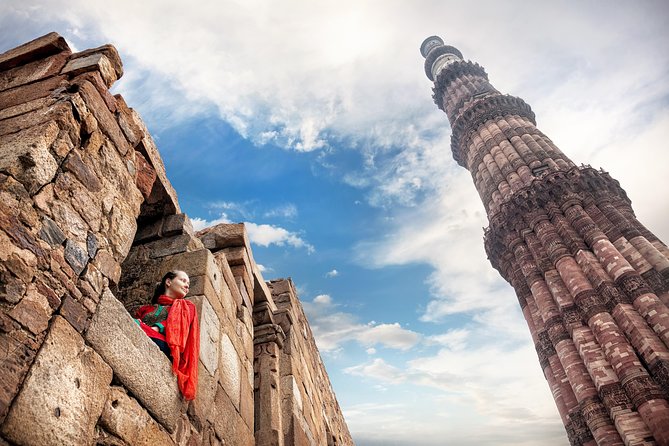
The route often starts in the Sikh spiritual center at Gurudwara Bangla Sahib. The site is known for its link to the eighth Sikh Guru, who reportedly stayed here in 1664 and helped people during a cholera epidemic. You get a short visit window, but it’s long enough to see the holy pond (Sarovar) and feel what this place means to locals.
From there, the tour heads to Jama Masjid, described as India’s largest mosque. The main experience here is walking through the red sandstone courtyard and taking in the scale. You also get time to pause, look around, and ask questions—this isn’t a “photo and run” stop. With about an hour, you can actually observe the rhythms of the place rather than sprinting through it.
Next comes the fun sensory part: Khari Baoli, the spice market associated with Chandni Chowk. This stop is built for your senses, not for your guide’s PowerPoint. You’ll get a short visit focused on spices—how they’re used and what makes the market special. If you’re the kind of person who likes to understand what you’re smelling and seeing, this is where the day turns from sightseeing into learning.
One more Old Delhi advantage is the street ride. Depending on your option (Old Delhi or full day), you’ll take a tuk-tuk ride through the bazaars, with your guide explaining how the markets function for local people. The point isn’t just the ride—it’s that you’re seeing how Old Delhi connects commerce, daily life, and faith in the same tight spaces.
The Drive-By Stops That Help You Understand Delhi’s Power Centers
Not every Delhi highlight can be visited with tickets in hand. Some are best understood from the route itself, and this tour uses the car to your advantage.
You’ll pass by big Mughal-era architecture like Red Fort, built by Shah Jahan in the 1600s and tied to the Mughal emperors as a main residence. Even if you don’t go inside on this tour day, seeing it from the road helps you place Old Delhi’s older grandeur against the later institutions you’ll see later.
Then come the more modern civic landmarks. You’ll pass the Tomb of the Unknown Soldier, with names of 13,300 Indian servicemen carved on the wall who died during the First World War. After that, the car route takes you past Parliament House—housing the Lok Sabha and Rajya Sabha—and then past the President House (Rashtrapati Bhavan). It’s a strong sequence for first-timers because it shows you how Delhi’s story changes from imperial rule to democratic institutions.
A practical note: those are “pass by” style views. So if you were hoping for long interior time in every building, this isn’t that kind of itinerary. Instead, it’s designed to help you recognize what you’re seeing when you read signs, look at maps later, or revisit certain areas on your own.
Connaught Place: A Useful Pause for Food and Photos
Connaught Place is your midday reset, with about 45 minutes to wander and breathe a bit. This is also where your guide typically recommends food options. The tour description calls out Mughlai cuisine as well as international choices, and it notes that vegetarian and dietary-specific options can be found.
Meals aren’t included, but you’re not left hanging. You get guidance on where to eat based on your preferences and what’s convenient for the rest of your route. If you’re cautious about street food, Connaught Place can be a comfortable place to choose something familiar-ish while still being in Delhi.
Even if you skip food, it’s a good stop for photos. It’s a visible contrast point: after the older quarters, this central, planned area feels like the “New Delhi” world coming into view.
Humayun’s Tomb and Agrasen Ki Baoli: Two Very Different Atmospheres
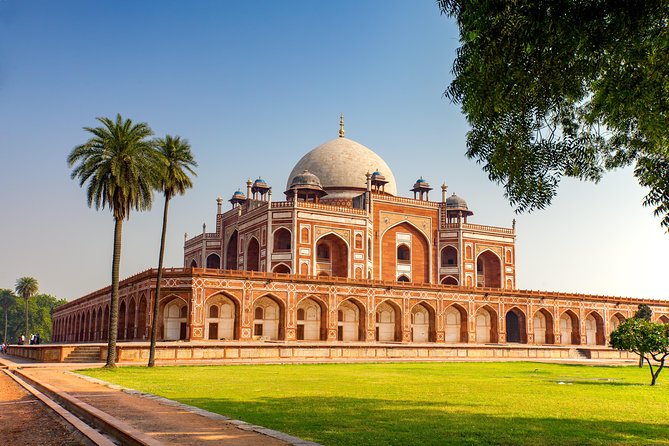
The tour’s UNESCO stop is Humayun’s Tomb. It’s described as a UNESCO World Heritage Site and the first garden tomb of India. The story element matters here: the tomb was built after his death, with the purpose connected to Humayun’s wife commissioning the site.
You’ll have about an hour, which is a decent amount of time for walking the grounds, taking in the layout, and noticing the way the gardens frame the architecture. This is one of those Delhi monuments where your photos actually look like what you’re seeing in person.
Then you may get a quick stop at Agrasen Ki Baoli. This one is famous for legends and spooky rumors. The tour description doesn’t promise a supernatural experience, but it does highlight that many people consider it haunted and that it’s been linked to paranormal stories.
The practical value is how it breaks up the day. After big-ticket sites, this stop adds atmosphere and a slightly different mood, especially if you like urban stories and local folklore.






Lotus Temple or Qutub Minar: Plan Around the Monday Closure
Lotus Temple is next on many routes, and it’s one of the most recognizable shapes in Delhi. It’s a Bahá’í House of Worship dedicated in December 1986, known for its flower-like design. You’ll have about 45 minutes, giving you time to look, walk around the main areas, and take in the modern contrast to the older monuments from earlier in the day.
But there’s a key scheduling detail you should know: Lotus Temple is closed on Monday. On Mondays, the tour takes you to Qutub Minar instead. If your trip lands on a Monday, this swap is a big deal. It changes the feel of that final stretch, so it’s worth planning your expectations around which monument you’ll actually see.
Private Comfort Details: Vehicle Size, Guide Style, and How the Day Feels

A private tour should feel easy, and this one is set up to do that. You’re with a local tour guide and a driver for the day, and you’re not switching companies or waiting on strangers.
Vehicle size scales with your group:
- 1–2 people: 4-seater sedan
- 3–5 people: 6-seater wagon
- 6–12 people: 12-seater van
- Larger groups: a bus sized to the number of adults
That matters because Delhi traffic can be unpredictable. Having the right-sized vehicle reduces stress and keeps the day moving.
On the guide side, the names showing up with top ratings include Vimal Mathur, Aman, Anas, Suhani, Kevin, Tabrez, Neeraj, Davinder, Kaif (listed as Kevin in one note), and Zayn, along with support from drivers like Balveer and Asif. The consistent theme across these guide praises is that they keep things organized, explain what you’re seeing in clear terms, and adjust timing when needed. One guide was specifically noted for working smoothly with a 3-year-old child and making room for a feeding stop, which is a reminder that flexibility is part of what you’re paying for.
If you’re traveling solo, this style matters even more. One solo female traveler highlighted feeling safe and well taken care of, particularly with Suhani and driver Asif. That doesn’t mean every day will feel identical, but it’s a strong signal that the operation takes comfort seriously.
Value Check: What $38 Covers (and Why It Can Beat DIY)
Let’s talk money in a practical way. The listed price is $38 per person, and the included items are what make it feel like real value instead of a basic sightseeing add-on.
Included:
- Private tour and private air-conditioned transportation
- Hotel or airport pickup and drop-off within Delhi NCR
- Local tour guide
- Bottled mineral water
- Entry fees to monuments
- Tuk-tuk ride for Old Delhi and full-day options
- All taxes, fuel charges, tolls, and GST
- Mobile ticket
Not included:
- Tips/gratuities
- Meals
Here’s the math logic you can use. If you try to DIY this route, you’ll quickly pay for multiple entry tickets, plus transport costs that often require several taxi rides through different areas. Add in the time cost of deciding the order and waiting for cars, and DIY can end up being more expensive in the end, even if the taxi price looks lower at first glance.
Also, the tour saves you from a common Delhi first-timer problem: you know the names of sites, but you don’t know how to sequence them so the day stays efficient. This plan has a built-in sequence that moves you from major religious sites to landmark monuments and then into New Delhi’s civic centers.
The only caution is expectation. This doesn’t replace a museum-focused multi-day plan. It’s a high-coverage day. If you’re the type who wants to linger for an hour in every courtyard, choose the half-day option or plan one extra standalone visit afterward.
Small But Important: Photo ID and the Practical Stuff That Prevents Delays
For monument entry, you’ll want to have valid photo ID with you, and the tour notes that a photo ID on your phone is acceptable. Bring it even if you usually travel light. It’s the kind of detail that prevents last-minute hassle.
Also, because the tour uses multiple stops that include walking and market time, you’ll be happier if you plan for moving around. The schedule includes time in courtyards, markets, tomb grounds, and temple areas, so build in flexibility to stop for photos and questions.
Customization is mentioned too. If you want changes to the order or specific priorities, you can request customization after booking, which is helpful if you care more about religious sites, photography, or a certain neighborhood.
Who Should Book This Tour (and Who Might Not)
This tour is a great match if:
- You’re in Delhi for a short time and want the best first-day overview
- You want private, guided sightseeing without taxi stress
- You like the mix of Old Delhi street life and New Delhi landmarks
- You want entry fees and transfers handled so you can focus on the day
It’s less perfect if:
- You want slow pacing and long stays in only one or two places
- You’re already very comfortable navigating Delhi on your own
- You’re trying to pack in extra stops beyond what the route already covers
My take
If you’re weighing Old Delhi versus New Delhi, this is the rare plan that solves the “too much city” problem. You’ll come away with a clearer sense of how Delhi layers faith, empire, and modern government into the same metropolitan experience.
FAQ
How long is the Old & New Delhi city tour?
It runs about 4 to 7 hours depending on whether you choose a half-day option or a full-day route.
Do I get pickup and drop-off?
Yes. Pickup is offered from anywhere in Delhi NCR areas listed, and the driver drops you off at a preferred location in Delhi, Noida, Gurugram, Ghaziabad, or at the airport.
Is the tuk-tuk ride included?
The tour includes a tuk-tuk ride through the bazaars of Old Delhi for Old Delhi and full-day options.
Are monument entrance fees included?
Yes. Entry fees to monuments are included as part of the tour.
What happens if my tour is on a Monday?
Lotus Temple is closed on Monday, so you’ll be taken to Qutub Minar instead.
Is photo ID required for entry?
Yes. You’re asked to carry all travelers’ valid photo ID for monument entry, and a photo ID on a mobile device is acceptable.