REVIEW · NEW DELHI
Full-Day Private Old and New Delhi Combo Tour
Book on Viator →Operated by A Star Tours · Bookable on Viator
Delhi is a lot to handle. This tour makes it manageable, fast. You’ll cover Old Delhi’s big-name Mughal sites and New Delhi’s grand government landmarks in one efficient circuit, with a guide who helps you spot what matters instead of just seeing stone and traffic. In practice, I especially like the way Asim (and other guides) keep the day organized and easy to follow, and how drivers like Sunil handle the city’s driving stress so you don’t have to.
I also like that you’re not doing this in a stuffy group van. You ride in a private air-conditioned vehicle, and the route is built to reduce wasted time—exactly what you want on a hot, loud Delhi day. It’s designed so you can enjoy the sights instead of constantly figuring out how to get between them.
One thing to watch: it’s a packed full-day loop. If you’re hoping for a slow, deep visit, you may feel the pace. And while the itinerary is mostly sightseeing, some tours include time at retail stops in Old Delhi; it can feel a bit salesy for people who just want monuments, plus Lotus Temple is closed on Mondays, so the day may shift.
In This Review
- Key Things That Make This Tour Worth It
- A One-Day Mix of Old Delhi Power and New Delhi Planning
- Private Car and Air Conditioning: The Delhi Sanity Saver
- Old Delhi: Jama Masjid, Chandni Chowk, and Khari Baoli the Right Way
- Jama Masjid: the huge courtyard feeling
- Chandni Chowk: classic street-market energy
- Khari Baoli: spice market heaven (and yes, it’s intense)
- Red Fort and Humayun’s Tomb: Mughal Power Meets UNESCO Gardens
- Red Fort: built for rulers, seen through centuries
- Humayun’s Tomb: the first garden-tomb you’ll remember
- New Delhi Landmarks: India Gate, Rashtrapati Bhavan, and Parliament Stops
- India Gate: a memorial you can see from the road
- Rashtrapati Bhavan and Parliament House: big buildings, strong context
- Lotus Temple and Qutub Minar: Modern Calm and Ancient Height
- Lotus Temple: white marble petals and quiet light
- Qutub Minar: the 73-meter minaret moment
- How the 8-9 Hour Timing Works (and Where You Might Lose Patience)
- Price and Value: Is $20 a Good Deal?
- Small Tradeoffs to Know Before You Go
- Who This Tour Suits Best
- Should You Book This Old and New Delhi Combo Tour?
- FAQ
- FAQ
- What are the main stops on this Old and New Delhi day tour?
- How long is the tour?
- Is hotel pickup and drop-off included?
- Is an English-speaking guide provided?
- Are entrance fees included?
- Is Lotus Temple open every day?
Key Things That Make This Tour Worth It

- Private guide + private vehicle, so your pace and interests can shape the day
- Old Delhi spice-market rickshaw ride, a classic sensory way to get around without walking the whole crush
- UNESCO hits without logistics headaches, including Humayun’s Tomb and Qutub Minar
- New Delhi landmarks in one run, with stops near India Gate, Rashtrapati Bhavan, and Parliament House
- Admission-free stops built into the day, so you’re not always reaching for your wallet
- High satisfaction for a reason, with a 4.9 rating and 98% recommendation rate
A One-Day Mix of Old Delhi Power and New Delhi Planning
This is a true combo tour: you start in Old Delhi where the Mughal era is written into mosques, forts, and markets, then move into New Delhi where the city shows off its modern, government-centered layout. The best part is that it’s built like a route you can actually survive. Delhi traffic can drain a whole day fast, so paying for a driver and a guide is mostly about buying back your time and energy.
The itinerary is also designed to help you connect themes. In Old Delhi, you’ll see how faith and empire shaped public life—big courtyards, massive gates, and the human rhythm of street markets. In New Delhi, you’ll get the planned, ceremonial side: wide avenues, monumental arches, and the political buildings that define the city’s center.
If you want to get your bearings fast on your first trip, this kind of day works well. If you already know Delhi well and you want ultra-deep museum-style time, you might prefer splitting Old and New into separate days.
You can also read our reviews of more tours and experiences in New Delhi.



Private Car and Air Conditioning: The Delhi Sanity Saver
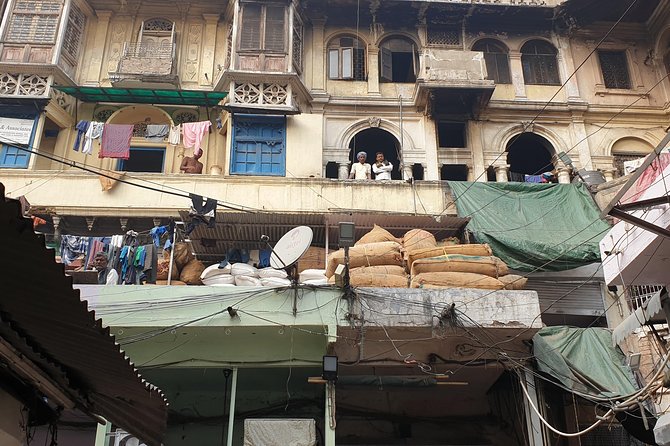
Delhi’s heat and traffic aren’t just annoying. They change how much you enjoy everything else. This tour avoids the worst of that by using a private, air-conditioned vehicle and handling pickup and drop-off from your hotel area.
You’ll also notice the day flows smoother because your driver is responsible for the complicated parts: moving through crowded roads, timing between stops, and getting you back on track. Reviews repeatedly highlight skilled driving and smooth navigation, and that matters on a day where you’re hopping between neighborhoods.
Practical tip: if you can choose your start time, go early. One review specifically calls out how tough Delhi traffic can be, and starting earlier usually means more sight time and less stress in the middle of the day.
Old Delhi: Jama Masjid, Chandni Chowk, and Khari Baoli the Right Way
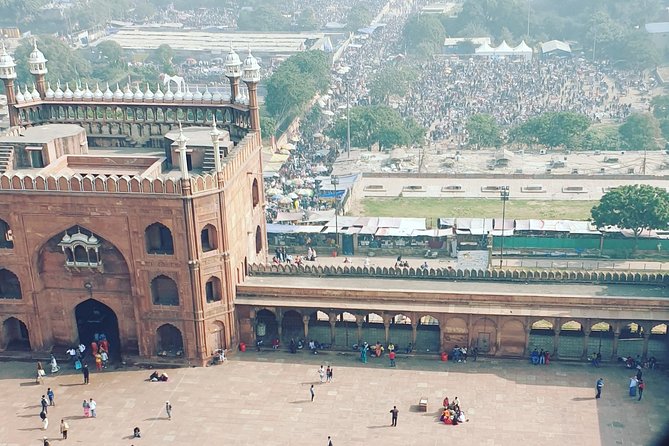
Old Delhi is where Delhi feels like Delhi—tight streets, strong smells, constant motion, and a crowd that doesn’t really pause. The tour doesn’t try to tame that. It helps you experience it in manageable chunks.
Jama Masjid: the huge courtyard feeling
Your first stop is Jama Masjid, the country’s largest mosque. You’ll spend about an hour here, with the admission being free. The key experience isn’t just the building itself—it’s the scale. The courtyard can hold tens of thousands of worshippers, so even if you’re just touring, you get a sense of how central this place is.
A guide is useful at a stop like this because the interesting details are easy to miss when you’re focused on crowds and photography. A good guide also helps you understand what you’re seeing in plain language.
Chandni Chowk: classic street-market energy
Next comes Chandni Chowk, one of Old Delhi’s oldest and busiest lanes. Plan on about 30 minutes. Admission is free, which helps you keep your day budget-friendly.
Chandni Chowk is a sensory overload by design—sounds, colors, bargaining, and food smells all at once. That’s exactly why a guide helps: you’re not just walking through chaos, you’re learning how to read it.






Khari Baoli: spice market heaven (and yes, it’s intense)
After Chandni Chowk, you’ll hit Khari Baoli, the major spice market area. The tour allows about an hour here, and admission is free.
This is where the rickshaw ride or tuk-tuk ride element can really pay off. One review mentions a cycle-rickshaw ride through the spice market area, and that’s a great way to see the lanes without walking every step. It’s also more comfortable if you’re feeling the heat.
What to expect: spice stalls everywhere, herbs, dried ingredients, and lots of colorful stacks. If you like cooking or food stories, this portion is especially satisfying. If you get overwhelmed easily, pace yourself and take a quick break when you need to reset.
Red Fort and Humayun’s Tomb: Mughal Power Meets UNESCO Gardens
You’ll keep the Mughal theme going after Old Delhi’s markets, moving into two landmark experiences that show how Mughal rulers wanted their authority to feel permanent.
Red Fort: built for rulers, seen through centuries
The day includes a stop at the Red Fort, built in the 1600s by Emperor Shah Jahan. It served as the residence of the emperor for centuries. Even if you don’t get a long, museum-style deep visit, the fort’s scale and layout help you understand why it’s such a symbol.
One reality check: this is a full-day tour, so your time at each monument is limited. If you want to linger for photos, read every plaque, or walk every ramp slowly, this may not feel long enough.
Humayun’s Tomb: the first garden-tomb you’ll remember
Then you move to Humayun’s Tomb, a UNESCO World Heritage Site and described as the first garden-tomb on the Indian subcontinent. You’ll spend about an hour, and admission is included.
This stop works because the experience is calm in a way that Old Delhi often isn’t. You’re surrounded by structured gardens around a monumental tomb, which makes it easier to slow down and actually take in the design. If you like architecture, this is one of the more rewarding portions of the day because the space is designed to be looked at.
Tip: bring your eyes for details. A guide can point out the architectural cues that make the Mughal style feel recognizable across multiple sites.
New Delhi Landmarks: India Gate, Rashtrapati Bhavan, and Parliament Stops

After Old Delhi, the city shifts into something more planned and formal. You’ll see major landmarks including India Gate, plus stops near Rashtrapati Bhavan and Parliament House.
India Gate: a memorial you can see from the road
India Gate is a 42-meter arch-like memorial. It’s built as a memorial to the 70,000 India soldiers killed in World War I. The way Delhi surrounds it—traffic, crossings, and big open sightlines—makes it a good “reset” stop between intense historic areas.
If you’re short on time, this portion still gives you something important: a sense of modern national symbolism in a single glance.
Rashtrapati Bhavan and Parliament House: big buildings, strong context
You’ll also stop to see Rashtrapati Bhavan, the President of India’s official residence, and the Parliament of India complex. Your time here is about viewing and appreciating the setting, not touring every interior room (the tour data lists them as stops, not long entry experiences).
This segment is valuable because it rounds out the story of Delhi. Mughal Delhi built monuments for imperial power; New Delhi is built for the state. Seeing both in one day helps the city click.
Lotus Temple and Qutub Minar: Modern Calm and Ancient Height
This is your late-day pair: one calm, one towering.
Lotus Temple: white marble petals and quiet light
You’ll visit the Lotus Temple for around 45 minutes. Admission is free, but there’s a big practical note: it’s closed on Mondays. So if your dates include Monday, the tour needs to adjust.
The temple is built from pure white marble, shaped like blooming petals, and the design includes nine pools of water around it. That setting matters because it changes how the temple looks through the light of the day.
If you want a break from the noise and crowds, this is a strong choice. It’s also easier to enjoy if you like places where you can walk slowly and take in design.
Qutub Minar: the 73-meter minaret moment
Finally, you’ll go to Qutub Minar, including admission. It rises about 73 meters and is described as the tallest brick minaret in the world, built in 1193 by Qutub-ud-din Aibak. It’s another UNESCO stop.
This is often the kind of sight people remember because it’s so tall and so clearly visible in the surrounding area. A guide helps here too, because when you understand what was built when and why, you stop viewing it as just a tall tower and start seeing it as a marker of conquest and change.
How the 8-9 Hour Timing Works (and Where You Might Lose Patience)
This tour runs about 8 hours, sometimes listed as completing in 8-9 hours. In Delhi terms, that’s quick for how many major sites get packed in.
The order matters. You start with Old Delhi (Jama Masjid, Chandni Chowk, Khari Baoli) when you have fresh energy for crowded streets. You then transition into larger, more structured monument grounds like Humayun’s Tomb. Later you hit New Delhi icons like India Gate and the government complex area. Then you finish with Lotus Temple and Qutub Minar.
Where people may feel time pressure:
- Old Delhi market segments can slow you down if you stop often for chai, photos, and browsing.
- Any extra shop stops (when included) can eat into monument time.
- Late-day towers and temples can feel long if you’re already tired from the earlier crowd.
My advice: go in with a simple goal. Pick one or two sites that matter most to you. If you try to deeply savor everything equally, the schedule will feel tight.
Price and Value: Is $20 a Good Deal?
At $20 per person, this is positioned as high value for a private day. The key is what’s included versus what’s optional.
Included items that change the math:
- Hotel pickup and drop-off
- Transport by air-conditioned private vehicle
- Professional English-speaking guide
- Private tour
- Rickshaw/tuk-tuk ride
- Entrance fees if you book an all-inclusive option
Important nuance: entrance fees are listed as included only if you choose that all-inclusive option. Humayun’s Tomb and Qutub Minar are shown as having admission included in the itinerary, while other stops like Jama Masjid and several market segments are free. So you’re not always paying. But you should still confirm what version you booked.
Given the high rating (4.9) and the strong recommendation rate (98%), this seems to deliver on the main expectation: getting you to the right places without wasting your time.
Small Tradeoffs to Know Before You Go
A tour like this is built for efficiency, not wandering. That usually works great, but it creates a few tradeoffs.
First: shopping pressure. One review mentions an artisan shop stop with persistent persuasion, enough that the person felt they missed later stops. That doesn’t mean every day will be the same, but it’s a fair caution if you really hate sales tactics. If you sense you’re losing time, politely ask your guide to keep you moving.
Second: extra fees you might run into. The tour notes that still and video camera fees are not included, and food and drinks aren’t included. Tips and gratuities aren’t included either.
So plan on carrying some cash for snacks, water, and any on-the-spot items that come up. This isn’t a “hands-off everything” day.
Who This Tour Suits Best
This combo tour is a great fit if you:
- Have limited time in Delhi and want a strong highlights lineup
- Want a private, guided experience rather than figuring it out solo
- Like architecture, monuments, and the story behind what you’re seeing
- Prefer comfort because Delhi heat and congestion can drain you fast
It also seems especially helpful for solo travelers. One review highlights how comfortable a solo female traveler felt during the day. That comfort likely comes from having one guide handling navigation and pacing, plus a private car and driver.
Families can work too, but you’ll want to be ready for a long day and frequent transfers between neighborhoods.
Should You Book This Old and New Delhi Combo Tour?
Book it if you want a strong, efficient first look at Delhi’s biggest historic and modern landmarks, and you’re okay with a schedule that moves. The value is strong for what you get: private pickup, air-conditioned comfort, a guide to connect the sites, and key UNESCO stops like Humayun’s Tomb and Qutub Minar.
Don’t book it if you want slow travel. If you dream about spending half a day in Chandni Chowk just eating and browsing, or you want to do Red Fort with deep, unhurried time, consider splitting your sightseeing into two days instead.
FAQ
FAQ
What are the main stops on this Old and New Delhi day tour?
The day includes Jama Masjid, Chandni Chowk, Khari Baoli, Red Fort, Humayun’s Tomb, India Gate, Rashtrapati Bhavan, Parliament House, Lotus Temple, and Qutub Minar.
How long is the tour?
The tour is about 8 hours, with guidance that it typically completes in 8-9 hours depending on timing and your preferences.
Is hotel pickup and drop-off included?
Yes. Hotel pickup and drop-off are included, along with transport in a private air-conditioned vehicle.
Is an English-speaking guide provided?
Yes. The tour includes a professional English-speaking guide.
Are entrance fees included?
Entrance fees are included only if you book the all-inclusive option. Some sights on the route are listed as free, while others like Humayun’s Tomb and Qutub Minar are listed with admission included.
Is Lotus Temple open every day?
No. Lotus Temple is closed on Mondays, so your itinerary may need adjustment if your tour date falls on a Monday.