REVIEW · NEW DELHI
Sanjay Colony Slum Tour
Book on Viator →Operated by Reality Tours & Travel Pvt Ltd · Bookable on Viator
A door-opener to a part of Delhi. This small-group walking tour takes you through Sanjay Colony with locally connected guides (I noticed names like Ajay and Doli show up a lot) who know the everyday stories behind the streets, shops, and families. You get a clear sense of how this residential community works, not just a photo-op.
I especially like the balance here: you’re guided to see how local education and social impact projects are funded, and your visit is framed with respect for residents. The tour also includes water or a cold drink, and you’ll connect easily to the rest of Delhi via the metro at the end.
One thing to plan for: the experience has strict no-photography rules inside Sanjay Colony, plus a conservative dress code (shoulders and knees covered). If you’re hoping for lots of casual sightseeing photos, this tour will feel restrictive.
In This Review
- Key things you’ll notice on this Sanjay Colony tour
- Why Sanjay Colony is worth your time in South Delhi
- Getting there and what the schedule feels like
- Entering the neighborhood: how the walk is guided
- Stop at the Sanjay Colony market: what to look for
- Homes, temples, school, and everyday institutions
- The guides: why names like Doli, Ajay, Cavita matter
- Respect rules you should take seriously (dress and no photography)
- Price and value: why $21.20 can actually feel fair
- Safety, comfort, and what to mentally prepare for
- Who should book this Sanjay Colony Slum Tour?
- Should you book this Sanjay Colony Slum Tour?
- FAQ
- How long is the Sanjay Colony Slum Tour?
- What does it cost?
- Where does the tour start and end?
- Are there morning and afternoon departures?
- Is pickup from my hotel included?
- How big is the group?
- Is there a local guide?
- What’s included in the ticket?
- Is photography allowed in Sanjay Colony?
- What should I wear?
- Can I cancel and get a full refund?
Key things you’ll notice on this Sanjay Colony tour
- Small group (up to six in the group option), with a private upgrade available
- Two daily departure times so you can fit it into your Delhi plan
- Respect rules are real: no photography while you’re in Sanjay Colony
- Proceeds support education and social impact projects in local communities
- Local guides with first-hand ties (names that come up include Naresh, Ajay, Doli/Dolly, Cavita, Hema, and Chitti)
- Metro-friendly route: start near Harkesh Nagar Okhla and end at the Harkesh Nagar Okhla metro station
Why Sanjay Colony is worth your time in South Delhi

Sanjay Colony is one of those places in Delhi that most visitors never see. That’s exactly why this tour works: it gives you context for a community that’s close enough to reach, but far enough from most tourists’ comfort zones to be misunderstood.
What I like most is that the focus stays on people and daily life. You’re not treated like you’re watching misery from a distance. Instead, your guide helps you connect the dots: small businesses, family routines, places of worship, and local schooling all show up as part of one living system.
Also, the tone is carefully set. The community gets to be a community, not a set. That matters more than it sounds.
You can also read our reviews of more tours and experiences in New Delhi.



Getting there and what the schedule feels like
This is a walking tour that runs about 1 hour 45 minutes. You can choose a morning or afternoon departure, which is handy in Delhi when your day can change fast based on traffic, heat, and your energy level.
Meeting is at Harkesh Nagar Okhla, Okhla Phase II, Okhla Industrial Estate area, and the tour ends at Harkesh Nagar Okhla metro station. That end point is practical: you can hop back into the city without needing a complicated ride.
There’s no hotel/residence pickup or drop-off included. In other words, you’ll start by getting yourself to the metro-adjacent meeting point, then the guide takes it from there. If you like simple logistics, you’ll appreciate that.
The tour also uses a mobile ticket, which is good if you’re trying to keep your day low-friction.
Entering the neighborhood: how the walk is guided
The walk is led by a local English-speaking guide, and the group size is capped (the overall activity maximum is stated as 25 travelers, with smaller grouping available). In practice, that smaller feel is what keeps the experience from turning into a slow-moving crowd.
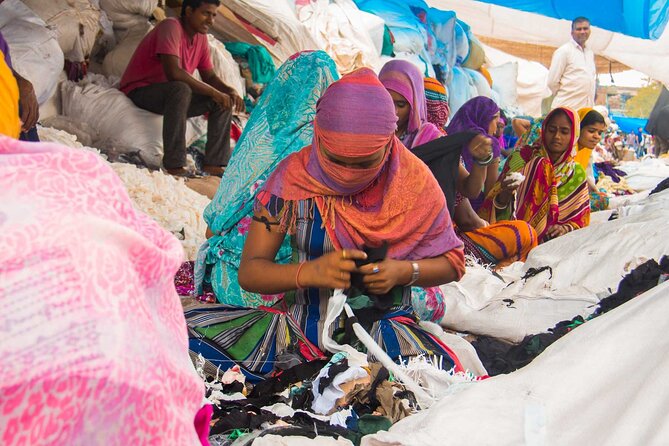
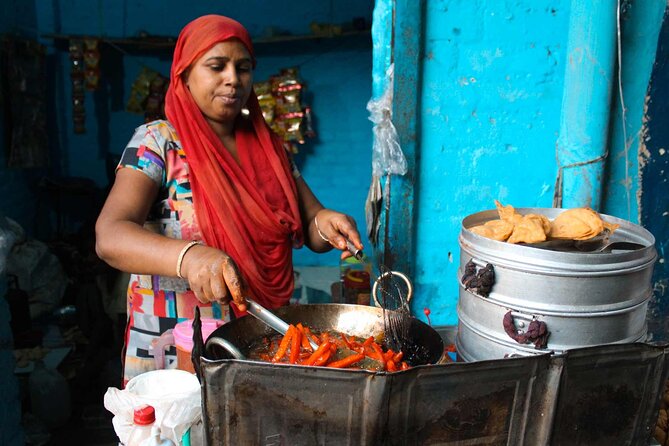
The route centers on community spaces, starting in the market area around All Surplus Store. Markets like this are more than shopping. They’re where you see how neighbors trade, how small enterprises survive, and how people organize daily needs in a place where outsiders often expect only hardship.
From there, the tour moves through residential streets and everyday destinations. Depending on what’s open and what the guide thinks is most meaningful that day, you may also pass:
- local businesses and work areas where people earn an income in varied ways
- temples and other places of worship that show shared community life across religions
- a local school, and discussions of education efforts supported by the tour’s social impact work
Some tours can feel like a single straight line. This one reads more like a guided circuit through the places that make the neighborhood function.
Stop at the Sanjay Colony market: what to look for

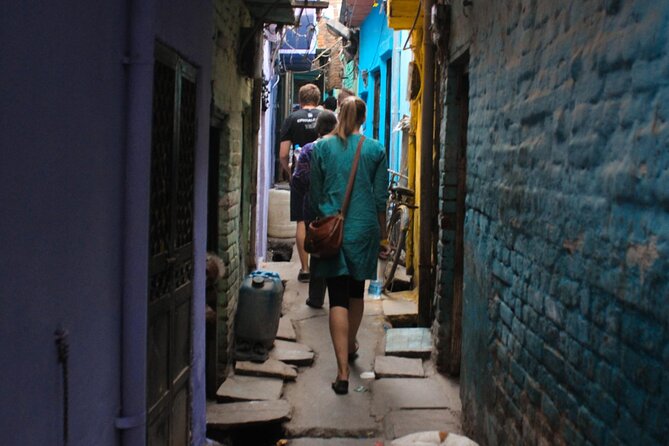
The first focus is the Sanjay Colony market area near All Surplus Store. This is a smart opener. A market gives you immediate grounding. You see people moving, vendors working, and the everyday rhythm that’s easy to miss if you only think about a slum as a label.
When you walk through, I’d suggest you slow down and watch for three things:
- How people solve problems without big systems. You’ll notice improvisation and practicality, not just lack.
- How work is woven into the street. Businesses aren’t tucked away; they’re part of the neighborhood’s “normal.”
- How community members interact. The tone can be friendly, and your guide helps you understand what you’re seeing.
If you came to Delhi expecting big monuments and polished facades, this market will recalibrate your sense of what “important sights” look like.
Homes, temples, school, and everyday institutions

After the market, the tour is built around neighborhood life: family homes, small enterprises, temples, and schooling. This is where the locally connected guide really earns their place.
You’ll get explanations for daily life, including what challenges exist and what achievements people are working toward. One of the most praised parts is how guides respond to questions with patience, including kids’ questions. If you’re traveling with family, that’s a big plus—you won’t feel like every question is a bother.
Some guests also described seeing additional angles on work and community support, such as workplace visits connected to how people earn money, and conversations about community services like medical support through doctors who give time. The exact stops can vary by day, but the theme stays consistent: you’re learning how the community is functioning, not just observing poverty from the outside.
School is another standout. People often mention that the school is a key part of the mission behind the tour. If you arrive on a day when you can’t see everything in action, don’t panic. A good guide will still explain the role education plays and what the supported projects are aiming to do.





The guides: why names like Doli, Ajay, Cavita matter
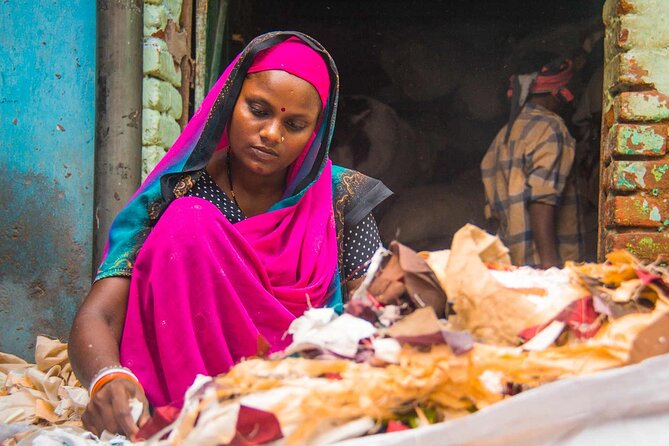
I care a lot about guides on tours like this, and this one is powered by them. The guides are described as locally connected, with first-hand knowledge of the colony. That shows up in how they explain the area and how they handle sensitive moments.
A few guide names that come up repeatedly include Ajay, Doli/Dolly, Naresh, Cavita, Hema, Chitti, and Stanley. Even without knowing their background in advance, you’ll notice a pattern: they’re not reading a script. They’re telling you how things are lived, and they’re careful about how they frame it.
What I like is that the storytelling often has room for real conversation. In a place like Sanjay Colony, good questions lead to better understanding, and the guide’s job is to translate what you’re seeing into meaning.
Also, many guides are praised for keeping the pace calm—more walk, less rush.
Respect rules you should take seriously (dress and no photography)
This tour comes with clear expectations, and you’ll want to follow them early, not later.
Dress code is conservative: shoulders and knees need coverage. Think modest, comfortable clothing you can walk in. Delhi weather changes quickly, so bring something breathable but not revealing.
The biggest rule: no photography is permitted while in Sanjay Colony. This is not one of those “maybe” situations. If you’re the kind of person who takes photos constantly, set that habit aside before you arrive. It’s also the kind of rule that makes residents feel safe and in control of what happens in their community.
Your guide should keep you on the right side of local respect. But you should also keep your own boundaries tight: don’t stare, don’t crowd, and don’t treat the area like a themed set.
Price and value: why $21.20 can actually feel fair
At $21.20 per person, the price is genuinely accessible for a guided experience in Delhi. What makes it more than “cheap” is what the tour does with the proceeds.
The tour states that proceeds support educational and social impact projects within local communities. Guests also mention a large share of profits going back into the community through education support (one common figure mentioned is about 80%). Even if you don’t focus on the exact percentage, the direction is clear: your fee is tied to community goals, not just operator profit.
You also get value in practical ways:
- local English-speaking guide
- water or a cold drink included
- a route that helps you navigate an area that can be confusing if you’re there without local connections
- metro access that makes the outing easy to slot into a normal Delhi day
What isn’t included is also part of the value math: there’s no hotel pickup. So you’re paying for the walking tour and guide time, not a car ride.
If you want a Delhi experience that feels human and directly connected to the neighborhood you’re visiting, this price-to-impact ratio is hard to beat.
Safety, comfort, and what to mentally prepare for
The tour is described as safe by many guests, and that aligns with how it’s structured: you’re with a guide, in a group setting, walking through an active residential area. Still, you should treat it like what it is—a community walk. That means you’ll see real-world challenges.
So prepare mentally. This isn’t a light picnic stroll. It’s a respectful look at day-to-day life in a place that doesn’t have the same services and infrastructure you’re used to in other parts of Delhi.
Also, some things might not be visible on the day you go. One reason is simple: community schedules and opening times aren’t built for tourists. If you don’t see everything you hoped for, your guide’s job is to explain what the tour supports and what the colony’s day-to-day work looks like beyond what’s visible at that moment.
Bring patience. You’ll get a better experience from slow observation than from trying to “collect” sights.
Who should book this Sanjay Colony Slum Tour?
I’d point you toward this tour if you want:
- a more meaningful Delhi day than one museum stop
- a local guide-led walk focused on everyday life and community education
- a small-group experience that isn’t intrusive and isn’t built around sensationalism
- a straightforward plan that ends at the metro
This tour may not be ideal if you:
- want lots of photos (photography isn’t allowed inside the colony)
- dislike walking in residential areas where you need to stay respectful and low-profile
- need a fully “comfortable” setting at all times—some parts of the experience involve difficult realities
If you’re bringing kids, this can still work well. Guides are noted for answering questions, and the tone tends to be patient.
Should you book this Sanjay Colony Slum Tour?
If you want to understand Delhi beyond its monuments, I think this is a smart booking. The value is strong, the pacing is calm, and the emphasis on respectful visiting and education support makes it feel purposeful.
My practical decision checklist:
- If you can follow the dress code and skip photography, book it.
- If you’re okay with learning about tough realities without sensational packaging, book it.
- If your goal is mainly pictures and quick hits, you’ll likely feel constrained by the rules.
With a 5/5 rating from 498 reviews and consistent praise for the guides and the education mission, this is one of the better ways to spend a couple hours in South Delhi when you care about real people more than postcard views.
FAQ
How long is the Sanjay Colony Slum Tour?
It runs about 1 hour 45 minutes (approx.).
What does it cost?
The price is $21.20 per person.
Where does the tour start and end?
It starts at Harkesh Nagar Okhla (Okhla Phase II, Okhla Industrial Estate) and ends at Harkesh Nagar Okhla metro station.
Are there morning and afternoon departures?
Yes, morning and afternoon departures are available.
Is pickup from my hotel included?
No. Hotel/residence pickup and drop-off are not included.
How big is the group?
The group option is limited to six people, and the overall activity has a maximum of 25 travelers.
Is there a local guide?
Yes. You’ll have a local English-speaking guide.
What’s included in the ticket?
A local English speaking guide and water/cold drink are included.
Is photography allowed in Sanjay Colony?
No. Out of respect for residents, photography is not permitted while you are in Sanjay Colony.
What should I wear?
Clothing should be modest and respectful, covering shoulders and knees.
Can I cancel and get a full refund?
Yes. You can cancel up to 24 hours in advance for a full refund. If you cancel less than 24 hours before the start time, the amount paid is not refunded.