REVIEW · NEW DELHI
3-Day Private Luxury Golden Triangle Tour to Agra and Jaipur From New Delhi
Book on Viator →Operated by Crystal India Holidays · Bookable on Viator
This Golden Triangle moves with purpose.
You’ll zip between UNESCO sights in Delhi, Agra, and Jaipur with a private, air-conditioned driver doing the hard part (traffic and timing). What makes it interesting is the balance: big-ticket icons like the Taj Mahal sunrise, plus Delhi’s quieter landmarks like Agrasen ki Baoli and the science-y wow of Jantar Mantar.
I also like that you’re not doing this as a solo logistical puzzle. Each day includes local guides who help you understand what you’re seeing, and the schedule is tight enough to feel satisfying without turning into a nonstop sprint.
One possible drawback: monument entry fees are not included (plan on roughly $65 per person), and the Taj Mahal sunrise is weather-dependent.
In This Review
- Key highlights worth your attention
- Price and logistics: what you pay for, and what you do not
- Delhi Day 1: Qutub Minar, Lotus Temple, and Old Delhi by rickshaw
- Qutub Minar: UNESCO and the spiral-stair detail
- Lotus Temple and the pause it gives your day
- India Gate and the government core
- Agrasen ki Baoli and Humayun’s Tomb: quieter, more photogenic
- Chandni Chowk and Jama Masjid: the real Delhi energy
- Rickshaw ride in Old Delhi: the practical fun moment
- Day 1 timing and the drive to Agra
- Agra Day 2: sunrise Taj Mahal, Agra Fort, and Baby Taj
- Taj Mahal at sunrise: early start, big payoff
- Agra Fort: architecture that adds depth
- Itmad-ud-Daula (Baby Taj): the smaller one with charm
- Overnight in Agra
- Jaipur Day 3: Amer, Jal Mahal, City Palace, and Jantar Mantar
- Panna Meena ka Kund and Amer’s watery setting
- Jal Mahal: the palace in the lake
- City Palace and Jaipur’s ceremonial heart
- Jantar Mantar: the part of Jaipur that surprises people
- Hawa Mahal: the famous façade, plus context
- Gaitore Ki Chhatriyan: the calm ending
- Back to Delhi around 9 PM
- Guides, drivers, and why this tour feels safe in traffic
- Where the day feels tight: walking, crowds, and shopping choices
- Expect to walk more than you think
- Shopping stops are optional in spirit
- Queue reality: help with entrance fees
- Hotels and comfort: 4-star vs 5-star tradeoffs
- Who should book this Golden Triangle tour (and who might not love it)
- Should you book this tour
- FAQ
- What is included in the tour price?
- Are entrance fees to monuments included?
- Does the tour include Taj Mahal sunrise?
- How does transportation work between cities?
- Is this a private tour or a group tour?
- Are hotels included?
- What are typical hotel locations for the two nights?
- Can you skip or add shopping stops?
- Are there any days when Lotus Temple is closed?
- When does the tour return to Delhi?
Key highlights worth your attention
- Taj Mahal at sunrise with a guided interior visit and early-morning timing that saves a lot of hassle
- Private air-conditioned transport with a driver used to India’s traffic reality, not just calm roads
- Local guides in each city who help you get the story behind Qutub Minar, Amer Fort, and Jantar Mantar
- Old Delhi Old City time with a rickshaw ride and guided stops through Jama Masjid and Chandni Chowk
- Included convenience touches like mineral water, hotel pickup/drop-off, and battery bus access near the Taj
- Hotel options from 4 to 5 stars (or skip hotels entirely if you prefer your own stays)
Price and logistics: what you pay for, and what you do not

The advertised price is $164.67 per person for a 3-day private tour from New Delhi. That number is for the core experience: private vehicle, guides, hotel nights (if you choose the hotel package), breakfast, and the day-by-day plan.
Two things matter for your budgeting. First, monument entrance fees are not included and are listed separately at about $65 per person. Second, lunch and dinner are on your own. If you’re the type who likes full-service meals every day, your final spend will rise.
Where the value shows up is how much the tour handles that usually turns into chaos: getting you between cities in a climate-controlled car, booking the right time windows, and coordinating guide-led site visits so you spend less energy on ticket lines and crowd guessing. You’re paying to buy back time and reduce decision fatigue, not just to ride in a vehicle.
You can also read our reviews of more tours and experiences in New Delhi.



Delhi Day 1: Qutub Minar, Lotus Temple, and Old Delhi by rickshaw
Delhi is two cities in one day. You start with grand landmarks, then slide into Old Delhi for the sensory overload you came for.
Qutub Minar: UNESCO and the spiral-stair detail
The tour begins at Qutub Minar, a UNESCO World Heritage site dating to 1193. The main draw isn’t just the tower itself—it’s the spiral staircase detail and the way the architecture carries that early Sultanate period vibe. Plan for some walking and stair-adjacent viewing time. If you like history you can read with your eyes, this one pays off.
Lotus Temple and the pause it gives your day
Next is the Lotus Temple (built in 1986). It’s short on “must-do facts” but strong on atmosphere. The flower-like shape makes it a great reset after Qutub Minar. And since entry is free, you can treat it like a breather rather than a checklist item.
India Gate and the government core
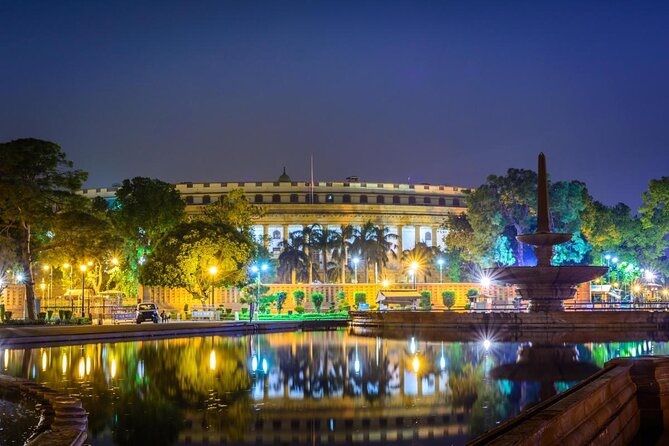
You then pass India Gate, a war memorial near Rajpath, plus stops connected to Rashtrapati Bhavan and Parliament House. Even if you’re not into memorials, India Gate gives you a sense of scale and modern Delhi layout. It’s also a useful way to break the day into smaller chunks before the Old Delhi portion.






Agrasen ki Baoli and Humayun’s Tomb: quieter, more photogenic
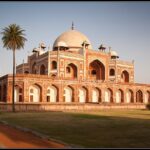
Agrasen ki Baoli is a protected stepwell site. It’s short, but stepwells look best when you slow down, not when you rush. Later, Humayun’s Tomb adds Mughal gravitas. The guide’s role here is helpful: without context, these places can blend together, but with the story, you notice how style, burial culture, and landscape planning connect.
Chandni Chowk and Jama Masjid: the real Delhi energy
Then you hit Chandni Chowk, the historic market area known for spices, dried fruit, silver jewelry, and saris. You’re not shopping all day by default, but you do get that street-level feel. After that comes Jama Masjid, one of the largest mosques in India, built by Shah Jahan in the mid-1600s.
Rickshaw ride in Old Delhi: the practical fun moment
One of the best included extras is the rickshaw ride in Old Delhi. It dates back to the time when Shahjahan shifted the capital, and the route sits inside the market rhythm. This is one of those activities that feels like a snapshot of the city rather than another ticketed stop.
Day 1 timing and the drive to Agra
After lunch at a local restaurant and the drive via expressway, you’ll reach Agra and check in. Day 1 is designed to get Delhi highlights in without pretending you can do everything on foot. You should still wear comfortable shoes, because Old Delhi walking adds up.
Agra Day 2: sunrise Taj Mahal, Agra Fort, and Baby Taj
Agra is the day of two emotions: awe and motion. Sunrise at the Taj Mahal is the awe. The rest is where the story thickens.
Taj Mahal at sunrise: early start, big payoff
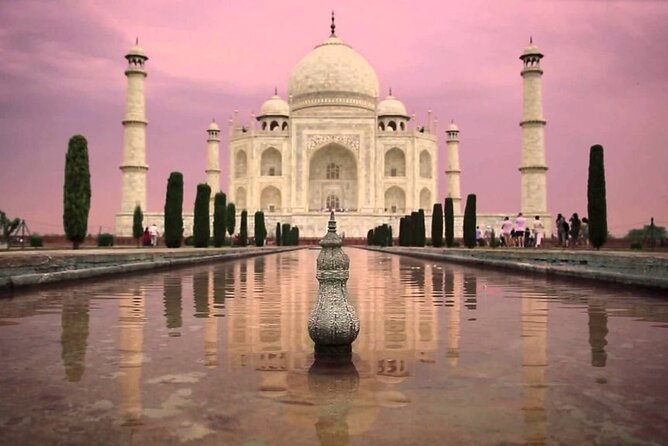
You wake up early to visit the Taj Mahal at sunrise, and you’ll get a guided tour inside for about two hours. This is the moment most people remember because you’re seeing the Taj when the light softens the marble and the crowds behave a little better.
A practical note: the sunrise visit is subject to weather conditions, so keep expectations flexible. If conditions are poor, you’ll still be in Agra for the key Taj experience during your scheduled window.
Also included is a battery bus ride between the parking lot and closer to the Taj Mahal area. That saves you energy and walking time—especially when you’re starting before the sun really warms up.
Agra Fort: architecture that adds depth
After the Taj, you move to Agra Fort, another UNESCO site. This is not just scenery. It’s a fortress with apartments and power behind the walls, and the guide’s job is to connect the architecture to the people who lived there. It’s the kind of stop that makes the Taj Mahal feel less like an isolated masterpiece and more like part of a bigger Mughal world.
Itmad-ud-Daula (Baby Taj): the smaller one with charm
You then visit Itmad-ud-Daula, often nicknamed Baby Taj. It’s a Mughal mausoleum with gardens and outbuildings, and it tends to be calmer than the main Taj area. If you like details—carving, symmetry, and the feel of a crafted resting place—this stop is a quiet win.
Overnight in Agra
You’ll stay in Agra for the night. If you choose a 4-star package, options listed include Holiday Inn or Royale Sarovar Portico Agra (or similar). For a 5-star upgrade, you’ll have higher-end options, depending on what you select.
Jaipur Day 3: Amer, Jal Mahal, City Palace, and Jantar Mantar
Jaipur earns its reputation for visuals. Day 3 is the mix of fort drama and city-scale sightlines.
Panna Meena ka Kund and Amer’s watery setting
Your first stop is Panna Meena ka Kund, a stepwell near Amber Fort. It’s short, free, and photogenic, and it helps set the scene before you climb into Amer.
Then it’s Amer (Amber) Fort, built by Raja Man Singh I. The fort’s artistic elements are the headline, but the sightlines matter too: the Maota Lake in front connects the fort to water control and survival planning. You’ll spend about two hours here, which feels right for seeing the main areas without rushing.
Jal Mahal: the palace in the lake
Jal Mahal is one of those locations that looks better the longer you look. It’s a palace in the middle of Man Sagar Lake and was renovated and enlarged in the 18th century by Maharaja Jai Singh II. Entry is listed as included in this tour, so you can focus on the views rather than ticket logistics.
City Palace and Jaipur’s ceremonial heart
Next is the City Palace of Jaipur, constructed in 1721 as the administrative and ceremonial center. You’ll typically have about an hour for this, enough time to grasp why it mattered and to spot the layers of palace-life that still show through today.
Jantar Mantar: the part of Jaipur that surprises people
Then comes Jantar Mantar, a UNESCO site with 19 astronomical instruments built in 1734 by Sawai Jai Singh II. If you think of Jaipur as only forts and palaces, this stop changes your mind. It’s hands-on in the way it makes you see how people measured the sky long before smartphones and apps.
Hawa Mahal: the famous façade, plus context
You’ll also see Hawa Mahal, the Palace of Winds. It’s made with red and pink sandstone, and the façade is the star. The guide’s context helps here: it’s not just decorative. It’s tied to how royal women could observe life while staying unseen.
Gaitore Ki Chhatriyan: the calm ending
If you want a less crowded, more reflective final stop, Gaitore Ki Chhatriyan is a serene royal cremation site with intricately carved cenotaphs. It’s free and gives your legs a break after earlier fort walking.
Back to Delhi around 9 PM
After Jaipur, you drive back to Delhi, arriving around 9 PM. If you have a flight, there’s also the option to be dropped at Jaipur Airport for onward travel.
Guides, drivers, and why this tour feels safe in traffic
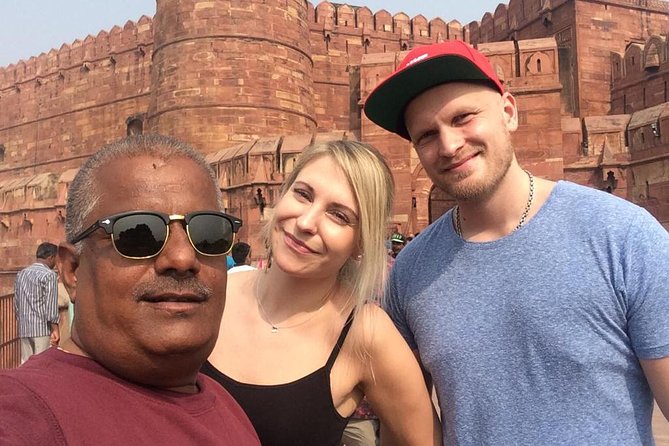
In India’s traffic, the driver is not a background character. With this tour, you’re matched with a driver who is used to navigating the chaos—then you stay comfortable because the car is air-conditioned.
From what I’ve seen emphasized in real experiences, drivers like Rajesh, Surinder, Ashok, Sharwan, and Madan are repeatedly praised for calm, careful driving and punctuality. That matters because you’re spending hours in transit across highways and city streets, and you want someone who treats safety as a job, not a hope.
You’ll also meet local guides in each city. Names that have come up include Manoj for Agra and Himanshu for Jaipur, plus guides like Varun in Delhi. The best part isn’t just facts—it’s the way they help you interpret the details, point out good photo angles, and keep the pace moving.
One standout theme is communication. A dedicated coordinator and daily check-ins are built in, and some solo travelers have specifically mentioned receiving messages with driver details like the name and contact, which reduces the anxiety that can come with doing India independently.
Where the day feels tight: walking, crowds, and shopping choices
This tour is designed to cover a lot. That also means some days feel full.
Expect to walk more than you think
Even with private car pickup, you’ll do frequent walking at Qutub Minar areas, Old Delhi markets, forts, and palace complexes. Comfortable walking shoes are a must, and sunscreen helps. If you’re sensitive to heat, plan for breaks.
Shopping stops are optional in spirit
There’s an explicit note that you can skip or add shopping, based on your preferences. Still, you may encounter places that function like retail stops. If you want fewer sales moments, just state clearly that you prefer to skip. The tour’s structure is supposed to protect your time, but the reality of India means some stops are built into the cultural/craft ecosystem.
Queue reality: help with entrance fees
Monument entrance tickets are handled with guide support, including help for buying so you’re not stuck waiting in ticket lines. You’ll still need to budget for those fees separately, but the process is designed to be smoother than a solo grab-and-go.
Hotels and comfort: 4-star vs 5-star tradeoffs
Two hotel choices show up clearly. With hotels included, you get two nights plus daily breakfast.
- 4-star options listed include properties like Holiday Inn or Royale Sarovar Portico Agra (and Sarovar Premiere Jaipur in Jaipur).
- 5-star options listed include names such as Intercontinental, Hilton, and Radisson in Jaipur (and similar premium properties for Agra, depending on your package).
Your biggest comfort upgrade isn’t only the bed. It’s that you’re not scrambling for rooms after a long day. After sunrise starts and fortress walking, having a predictable base matters.
If you pick the version without hotels, you can still travel with the transport and guides, but you’ll book your own stays in Agra and Jaipur.
Who should book this Golden Triangle tour (and who might not love it)
Book it if you want:
- A high-value private setup: your own car, local guides, and a clear plan across all three cities
- A structured way to see Delhi highlights, Taj Mahal sunrise, and Jaipur forts without dealing with day-to-day logistics
- A driver and guide team that prioritize timing and safety in traffic
You might skip it if:
- You want maximum freedom to wander without any structured stops
- You’re strongly against early mornings (sunrise Taj is the core draw)
- You don’t want any shopping or retail-style stops at all, even if they can often be declined
Should you book this tour
I think this is a smart booking for first-timers to India who want the Golden Triangle in three days without turning every day into a problem to solve. The mix of private transport, guided context, and the included convenience touches like the Taj-area battery bus ride add up fast.
Do the math with one key adjustment: entrance fees and your own meals are extra. If you budget for those and you’re okay with a full schedule, this tour is a clean way to see the main icons plus the Delhi and Jaipur details that make the Triangle feel like more than postcards.
If you want, tell me your travel month and whether you prefer 4-star or 5-star hotels, and I’ll suggest the most comfortable pacing choices for sunrise, walking-heavy forts, and meal breaks.
FAQ
What is included in the tour price?
The tour includes a private experience, local guides for sightseeing, a private air-conditioned car, hotel pickup and drop-off, mineral water during journeys, and breakfasts for the two hotel nights (if you book the hotel option). It also includes a rickshaw ride in Old Delhi and a battery bus ride to and from the Taj Mahal parking area.
Are entrance fees to monuments included?
No. Monument entrance fees are listed as not included, with an estimated total of about $65 per person. Your guide helps you buy tickets for monuments to avoid long waits at ticket counters.
Does the tour include Taj Mahal sunrise?
Yes. You’ll do a sunrise visit to the Taj Mahal and also have guided time inside. This sunrise visit is subject to weather conditions.
How does transportation work between cities?
You travel by private air-conditioned vehicle with an appropriate car size depending on group size (sedan for 1–2 people, SUV for 3–4, and van for 5–10). Transfer times are approximate and depend on traffic.
Is this a private tour or a group tour?
It is a private tour. Only your group participates.
Are hotels included?
You can choose options with 4- or 5-star hotels, which include two nights and daily breakfast. There is also an option without hotels, where you arrange your own accommodation.
What are typical hotel locations for the two nights?
With the no-hotels option, the first night is in Agra and the second night is in Jaipur. With hotels included, you stay in Agra on the first night and in Jaipur on the second night.
Can you skip or add shopping stops?
The tour notes that you can choose to skip or add shopping. If you do not want shopping, you should clearly communicate that preference.
Are there any days when Lotus Temple is closed?
Yes. Lotus Temple remains closed every Monday.
When does the tour return to Delhi?
On the third day you return to Delhi at around 9 PM (approximately four hours). There is also an option to be dropped at Jaipur Airport for onward flights.