REVIEW · NEW DELHI
4 Days Golden Triangle Tour
Book on Viator →Operated by Creative India Holidays · Bookable on Viator
Four days, three cities, one smooth plan. This Golden Triangle tour strings together Delhi, Agra, and Jaipur with air-conditioned transfers and a guide who keeps the logistics from turning into a part-time job. I love the way you can tick off UNESCO World Heritage stops without guessing transport or opening hours.
The one real catch: entrance fees and meals (beyond the included breakfasts) are mostly on your own. Some of the headline sites will cost extra, and the schedule is intense enough that you’ll want to come ready to move.
Still, for $146 per person, it’s strong value if you want a private setup (only your group), predictable driving between far-apart sights, and help buying tickets so you don’t waste time in line.
In This Review
- Key things that make this Golden Triangle tour work
- Golden Triangle in 4 days: the real value is reduced stress
- Price and logistics you should plan for (so you don’t get surprised)
- Day 1 in Delhi: Old Delhi icons plus imperial monuments
- Pickup and the quick New Delhi orientation
- Jama Masjid in Old Delhi
- Raj Ghat: a quieter break
- India Gate and the Lutyens-style government axis
- Qutub Minar and Humayun’s Tomb
- Night in Agra
- Day 2: Agra sights, Taj Mahal, and Fatehpur Sikri on the way to Jaipur
- Agra Fort: more than a backdrop
- Taj Mahal: the reason most people book
- Fatehpur Sikri: the Mughal stopover in between
- Overnight in Jaipur
- Day 3 in Jaipur: Hawa Mahal, Amber Fort, City Palace, Jantar Mantar
- Hawa Mahal (Palace of Wind)
- Amber Fort (Amer): the fortress day
- City Palace: where the Maharajas lived
- Jantar Mantar: the astronomy stop
- Evening free for shopping
- Overnight still in Jaipur
- Day 4 back to Delhi: when you want the trip to end gently
- Who this Golden Triangle tour suits best
- The verdict: book it if you want efficiency with real support
- Should you book this 4-day Golden Triangle tour?
- FAQ
- What time does the tour start?
- What’s included in the 4 days?
- Are monument entrance fees included?
- What cities does the tour cover?
- Is Taj Mahal ever closed on this tour?
- Where do you stay overnight?
- What kind of hotel rooms are provided?
- Is this tour private?
- What’s the cancellation policy for a full refund?
Key things that make this Golden Triangle tour work
- Air-conditioned vehicle transfers between Delhi, Agra, and Jaipur, so you’re not stitching together public transport
- Big UNESCO hits across all three cities, including the Taj Mahal and major Mughal-era monuments
- Guide-assisted ticket buying at monuments to reduce waiting time
- Fatehpur Sikri on the way to Jaipur, so the long day doesn’t feel like dead travel
- Friday closure rule for the Taj Mahal, with a different route order if needed
- Hotel rooms are generally twin-sharing, with triple-sharing default for 3 people unless you pay for 2 rooms
Golden Triangle in 4 days: the real value is reduced stress
This tour is designed for one thing: getting you through Delhi, Agra, and Jaipur fast, without turning your day into a scavenger hunt. If you’ve ever tried to map routes between sites like Old Delhi mosques and Delhi’s big imperial monuments, you know it can eat half the day.
What makes it feel like good value is the combination of a proper guide + private driving. You’re paying for time-saving support, not just sightseeing. And because the itinerary is stop-by-stop, you don’t need to constantly make decisions about what to do next.
One more practical detail: the tour starts at 8:00am. That matters, because morning timing is when monuments are easier to handle and you can still enjoy the day instead of racing the clock.
You can also read our reviews of more tours and experiences in New Delhi.



Price and logistics you should plan for (so you don’t get surprised)
The price is $146 per person, which is appealing for a multi-city route with a guide and air-conditioned transport. But like most Golden Triangle packages, your budget needs room for extra costs.
Here’s what you should expect to pay yourself:
- Monument entrance fees for sites where tickets are listed as not included (for example, Jama Masjid, the Taj Mahal, Qutub Minar, Humayun’s Tomb, Amber Fort, City Palace, and Jantar Mantar)
- Food and drinks, since only breakfasts are included
The good news is that you’re not left to figure out ticket lines alone. Your guide helps you buy entrance fees so you can avoid standing around.
Also note the hotel setup: rooms are generally twin-sharing. If your group has 3 people in one booking, the default is triple-sharing, and you’ll need an added charge if you want 2 separate rooms.
Day 1 in Delhi: Old Delhi icons plus imperial monuments
Day 1 is all about variety: you start in New Delhi with major landmarks, then slide into Old Delhi with one of the city’s most important mosques.
Pickup and the quick New Delhi orientation
You begin with pickup from the airport or any location in Delhi/Gurugram. From there, the plan includes a first round of New Delhi sights. Expect the early hours to feel like a warm-up: getting your bearings, learning the layout, and setting context before the deeper monuments.
Jama Masjid in Old Delhi
Jama Masjid is the big Old Delhi stop. It’s a Mughal-era mosque built in 1650–56 under Shah Jahan, and it’s the kind of place where your camera will work overtime because the scale is hard to capture from just one angle.
The main consideration here is simple: it’s a major religious site, so you should be ready to dress appropriately and behave respectfully. Ticket cost is not included, but your guide handles entrance-fee buying.






Raj Ghat: a quieter break
Then you switch gears to Raj Ghat, Gandhi’s memorial on the banks of the Yamuna. This is a good pause from heavy architecture because it’s reflective and spacious. It also helps balance the day so you don’t burn out before the evening drive.
India Gate and the Lutyens-style government axis
Next comes India Gate, followed by a visit to impressive government buildings in the central zone. The itinerary includes Sansad Bhavan (Parliament House), and it also mentions the Rashtrapati Bhavan area. These are monumental, and even if you’re not a design nerd, the architecture tells you how New Delhi was shaped.
Qutub Minar and Humayun’s Tomb
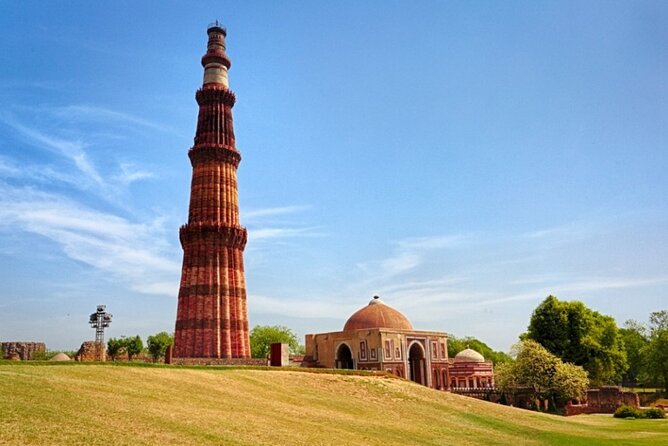
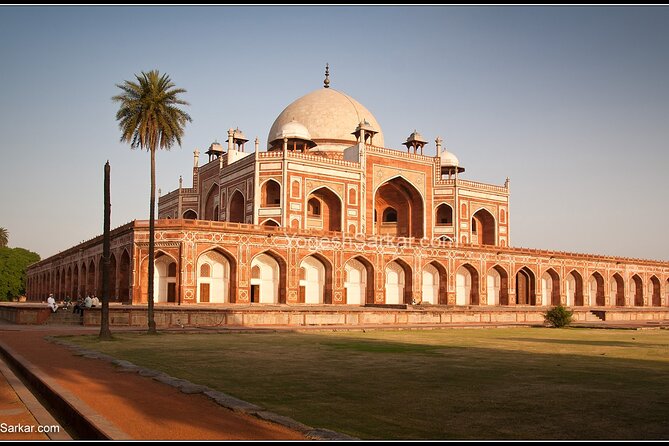
Later, you move into two of the most important UNESCO-linked stops: Qutub Minar and Humayun’s Tomb. Qutub Minar is a towering red sandstone and marble minaret, while Humayun’s Tomb is known for its strong influence on later Mughal design.
Ticket costs aren’t included here either, but again, your guide helps with entry so you spend less time sorting paperwork.
Night in Agra
After Delhi sightseeing, you drive to Agra for an overnight stay. The day ends with a travel shift, not another monument sprint, which is exactly what you want on day one after a long set of stops.
Day 2: Agra sights, Taj Mahal, and Fatehpur Sikri on the way to Jaipur
Day 2 starts with breakfast in your Agra hotel, then moves straight into sightseeing. The day’s structure matters: you see major Agra sites before you head to Jaipur, with Fatehpur Sikri included as the hinge between cities.
Agra Fort: more than a backdrop
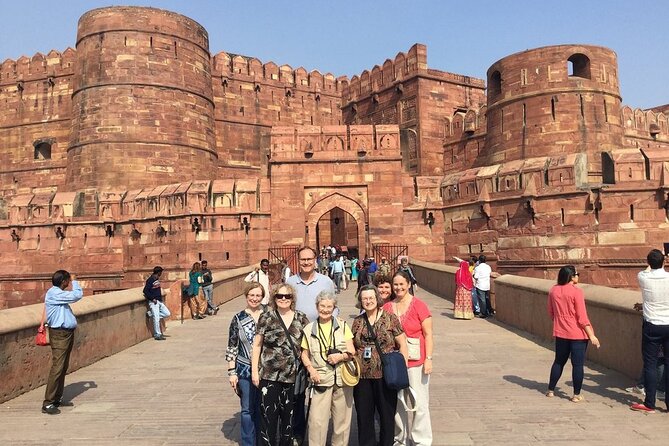
Agra Fort is the first major stop in the Agra portion. It’s a massive red sandstone fort associated with Akbar, and the itinerary also notes decorative additions by Shah Jahan. It’s also located by the Yamuna, so the setting gives you that river-adjacent sense of where power sat.
If you like your monuments to feel practical, forts can be more satisfying than pure tombs because you read them like buildings, not just monuments.
Taj Mahal: the reason most people book
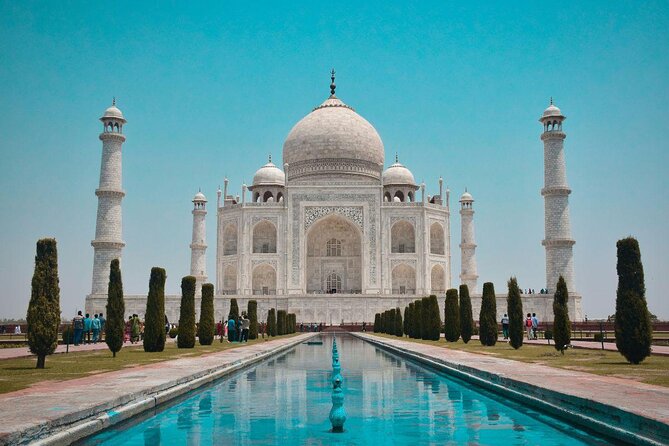
Then comes the headline: the Taj Mahal. It’s described as a white marble mausoleum built between 1631 and 1653 under Shah Jahan. This stop usually needs a bit of mental preparation, because it’s not just one photo moment—it’s the layered effect of symmetry, details, and changing light as you walk around.
Entrance fees for the Taj Mahal are not included, and the itinerary includes a key note: the Taj Mahal remains closed for all visitors on Friday. If your dates touch a Friday, your route will need to shift.
Fatehpur Sikri: the Mughal stopover in between
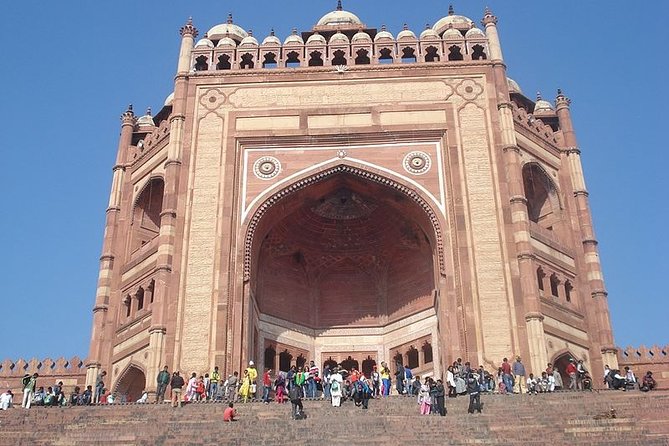
The day includes Panch Mahal (Fatehpur Sikri), about 40km west of Agra. It was a short-lived Mughal capital between 1572 and 1585, during Akbar’s reign. This is one of those stops that changes the tone of the trip from single-city highlights to a bigger story of empire and movement.
Ticket cost is not included here either. The time you get is listed as about 2 hours, which is enough to see the main layout without rushing.
Overnight in Jaipur
Finally, you drive to Jaipur and stay overnight. This is a good pacing move: you don’t try to do Jaipur’s big forts and palaces the same night you arrive. Instead, day 3 is built around Jaipur’s top sights.
Day 3 in Jaipur: Hawa Mahal, Amber Fort, City Palace, Jantar Mantar
Jaipur day is laid out like a highlight reel, but it’s still balanced: you get street-level icon views, then the big fort and palace interiors, then the science-curiosity stop at the end.
Hawa Mahal (Palace of Wind)
You start with Hawa Mahal, described as a five-storey palace built in 1799. Even if you’ve seen pictures before, standing at the window-like façade gives a different sense of how the building was meant to work with airflow and observation.
Entrance fees are not included. Your guide will help with entry so you’re not wasting time at the desk.
Amber Fort (Amer): the fortress day
Next is Amber Fort, located about 11km from Jaipur. The itinerary notes it was built in 1592 by Raja Man Singh, and it’s a major draw because it was once the capital before Jaipur’s rise.
This is a stop where you’ll want comfortable shoes and patience. Forts are step-heavy and you’ll likely spend time on viewpoints and inner courtyards. The reward is that you feel the scale of Rajasthan’s power centers in a way that a city street can’t replicate.
City Palace: where the Maharajas lived
Then you move to City Palace, located in the heart of the Pink City. The itinerary points out the Maharaja’s seat and mentions parts like Chandra Mahal and Mubarak Mahal. Even when you’re not reading every detail, palace spaces help you understand how ruling families organized life—ceremony, administration, and display.
Entrance tickets aren’t included, so budget ahead.
Jantar Mantar: the astronomy stop
After palaces, the day turns to Jantar Mantar, an astronomical observation site built in the early 18th century with around 20 main fixed instruments. It’s a great way to slow down and look at stone instruments like they’re scientific tools, not just monuments.
This is a smart placement near the end of the itinerary because it’s less exhausting than another long fort climb.
Evening free for shopping
The day finishes with free time for shopping. That’s a plus in Jaipur because you can handle souvenirs at your own pace instead of getting shoved into a single store stop. If you want a calmer evening, you can keep it light and just wander.
Overnight still in Jaipur
You stay another night in Jaipur, which helps you avoid the feeling of constantly relocating luggage and fighting traffic.
Day 4 back to Delhi: when you want the trip to end gently
Day 4 is a return day. After breakfast, you drive back to Delhi and get dropped at the airport or your hotel in Delhi.
The itinerary notes an approximate drive duration of 5 hours, and it also states you’ll be back in Delhi by around 2pm. That gives you a useful buffer. If you have an evening flight or you need time to reset after four days of driving and sightseeing, this timing can feel considerate.
Who this Golden Triangle tour suits best
This tour is a strong match if you:
- Want a planned route through Delhi, Agra, and Jaipur without figuring out transport between distant sites
- Prefer private driving and a guide who helps with monument ticket buying
- Like UNESCO “big hitters” and want them stacked efficiently in 4 days
- Are okay with an intense pace and extra costs for entrances and meals
It may not be ideal if you:
- Want fully included tickets and meals with zero extra spending
- Prefer slow travel where you linger for hours in just one place
- Feel uncomfortable with lots of walking in forts and large monument grounds
The verdict: book it if you want efficiency with real support
I think this is a good choice for your first Golden Triangle trip. The big wins are practical: air-conditioned transfers, a structured itinerary, and help buying entrance tickets so you can spend more time looking and less time handling logistics.
The main thing to watch is your spending outside the package. Entrance fees and food add up fast in India, especially when you’re visiting multiple major UNESCO sites. If you plan for that ahead, the $146 per person price starts to make sense as payment for reduced stress, not just transportation.
Should you book this 4-day Golden Triangle tour?
Book it if your priority is efficiency, comfort, and guidance across Delhi–Agra–Jaipur. It’s also a solid option if you want a private setup and don’t want the burden of coordinating between cities.
Skip or think twice if you want a lighter pace, or if you dislike paying extra on-site for monuments and meals. If you’re flexible and budget-aware, this one gives you a lot of major India moments in a short time.
FAQ
What time does the tour start?
The tour start time is 8:00am.
What’s included in the 4 days?
It includes guide services, pickup and drop-off, an air-conditioned vehicle, and breakfast for 4 days.
Are monument entrance fees included?
No. Entrance tickets are not included for most monument stops. Your guide will help you buy entrance fees at monuments so you avoid waiting in queues.
What cities does the tour cover?
You visit Delhi, Agra, and Jaipur over 4 days.
Is Taj Mahal ever closed on this tour?
Yes. The Taj Mahal remains closed for all visitors on Friday. If you start the tour on Thursday, the itinerary order changes because of the Friday closure.
Where do you stay overnight?
You stay overnight in Agra on day 1, and you stay overnight in Jaipur on day 2 and day 3.
What kind of hotel rooms are provided?
Rooms are generally provided on a twin-sharing basis. If you book 3 people, triple-sharing is provided by default unless you pay an additional charge to get 2 rooms.
Is this tour private?
Yes. Only your group participates, so it’s a private tour/activity.
What’s the cancellation policy for a full refund?
You can cancel up to 3 days in advance for a full refund, and the cutoff is based on local time.