REVIEW · MANILA
Experience Intramuros with Bamboo Bicycle – Ecotours
Book on Viator →Operated by Bamb Ecological Technology Inc. · Bookable on Viator
Bamboo bikes make Intramuros easier to love. This is a small-group, guided loop where you pedal a bamboo bicycle through Manila’s historic core, with frequent stops at gates, churches, and major fort spots, plus time near the old walls. If you want history you can actually move through, this is a fun way to do it.
I especially like the small group setup and the fact you get a real guide, not just a route description. I also like the practical extras along the way: bottled water during the ride, a cooling towel at the end, and refreshments afterward.
One consideration: the tour is packed with stops, so don’t expect long nonstop cycling time between sights.
In This Review
- Quick hits before you go
- Bamboo Bikes in Intramuros: a different way to see Old Manila
- The 3-hour flow: from Casa Manila to the big church and fortress stops
- Stop-by-stop: Muralla to Puerta del Parian, Plaza Roma, and the forts
- Casa Manila: Spanish-style housing as your visual guide
- Muralla street and the Japanese Cannon: WWII history in a Spanish city
- Puerta Real Gardens: how Spanish fortification thinking shows up
- Café Y Ruedas break: a reset before the gate-and-plaza section
- Puerta del Parian: Chinese influence in public space
- Plaza Roma and Manila Cathedral: the civic and church center of the city
- Fort Santiago: stone fortress time with included entry
- San Agustin Church: UNESCO world heritage for the ending finale
- What the bamboo bike ride feels like in real life
- Safety, weather gear, and comfort details that actually help
- Price and value: is $39 worth it in Intramuros?
- Who should book this (and who might prefer another plan)
- Should you book Bamboo Bicycle – Ecotours in Intramuros?
- FAQ
- How long is the Intramuros bamboo bicycle tour?
- How much does the tour cost?
- Where do I meet the tour, and where does it end?
- What is included in the tour price?
- Which stops will we see during the ride?
- Is the bike ride easy?
- What happens if it rains?
- Are children allowed?
- What is the cancellation policy?
Quick hits before you go
- Small group max 15 keeps the pace calmer on busy Intramuros streets
- Bamboo bike variety means you’ll pick a style and size that fits you
- Gates and walls focus makes the Spanish-era layout easy to understand
- UNESCO stop included with San Agustin Church’s major UNESCO-recognized value
- WWII-era context at the Japanese Cannon adds depth beyond Spanish Manila
- Flat ride with careful road navigation helps most riders enjoy it
Bamboo Bikes in Intramuros: a different way to see Old Manila
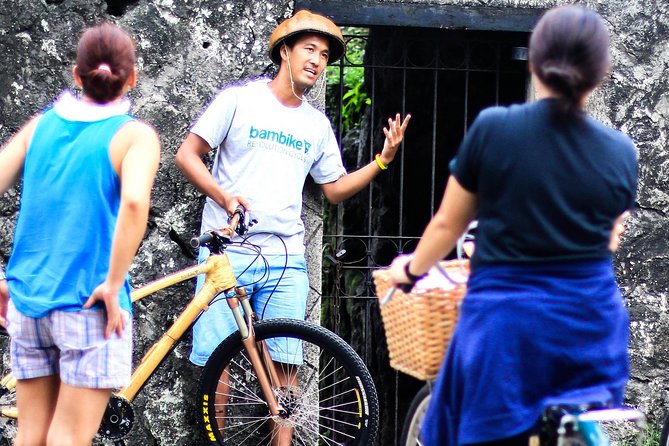
Intramuros is one of those places where it helps to move at a human pace. Walking can work, but the streets are narrow and traffic is real. A bike puts you at the right height for photos, and it helps you cover more ground without feeling rushed.
What makes this tour feel special is the combination: bamboo bikes plus a guided story through the actual physical layout of the walled city. You’re not just jumping between landmarks. You also get the logic of the defenses and the way different communities and empires left their mark—Spanish, Chinese influence, and WWII-era history all show up in the route.
The bikes themselves are a big part of the charm. You’re not handed a generic rental. You fill out waivers at the HQ, and then you choose your bike style and size personally, based on what feels comfortable for you. That matters because comfort affects everything: how relaxed you pedal, how easy it is to stop for photos, and how good you feel after 3 hours of city sightseeing.
You can also read our reviews of more tours and experiences in Manila.
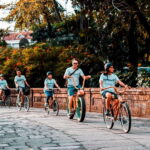
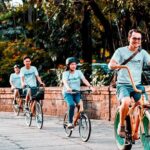
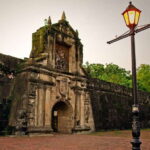
The 3-hour flow: from Casa Manila to the big church and fortress stops
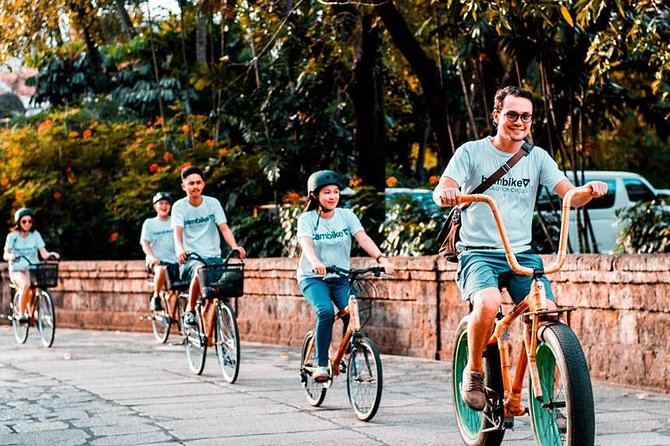
The tour runs about 3 hours, and it moves in a steady rhythm: start at the HQ, ride through the old streets, pause for history, then finish back where you began. It’s set up so you can keep momentum without feeling like you’re sprinting between sites.
You start at Bambike Ecotours Intramuros at the Plaza San Luis Complex, on Real St near the corner of M General Luna St. Before the riding starts, you’ll fill out waivers. Then the team helps you pick your bamboo bike so you don’t end up on something that feels awkward right from the start.
Soon after, you’re at Casa Manila, where you see a copy of a traditional house inspired by Spanish Colonial-era architecture. Even if you’ve visited other Spanish-era sites in the Philippines, this stop gives you a useful “what you’re looking at” framework. It’s a quick primer on the look and style of the period that shaped much of Intramuros.
From there, the ride shifts into the walled-city route. You’ll travel along Muralla streets and hit the Japanese Cannon, then move through major gates and plazas, and end with the standout church-and-fort style experiences—Fort Santiago and San Agustin Church. You’ll also pause at Café Y Ruedas for a refreshing break before finishing up with the church stops and returning to the meeting point.
Stop-by-stop: Muralla to Puerta del Parian, Plaza Roma, and the forts
This tour works best when you treat each stop like a chapter. Intramuros is small on a map, but it’s packed with story. Here’s what each major stop is doing for you, and what to watch.
Casa Manila: Spanish-style housing as your visual guide
Casa Manila is your first “key.” It’s a copy of a traditional house inspired by Spanish Colonial architecture. That helps you later when you’re walking around gates and church areas and trying to picture how the city functioned. You’ll spend about 15 minutes here, so it’s not a long museum detour. It’s more like a warm-up before you start riding deeper into the walled core.
Muralla street and the Japanese Cannon: WWII history in a Spanish city
Next you ride along Muralla, stopping at the Japanese Cannon to learn about the Japanese Occupation in the Philippines and the broader context of World War II. This is a valuable inclusion because many Intramuros tours focus heavily on Spanish colonial history. Here, you get a reminder that the city kept changing, even after Spain’s influence.
Expect a short stop, about 15 minutes. The time is tight, but the payoff is big: you learn how one layer of history sits on top of another. If you like seeing the timeline in real place names and structures, this stop adds real value.

Puerta Real Gardens: how Spanish fortification thinking shows up
At Puerta Real Gardens, you see and explore one of Intramuros’ main gates. The emphasis here is on the Spaniards’ defense fortification strategy beyond the walls. This is one of those stops where the guide explanation turns the gate from a photo-op into something you actually understand.
You’ll spend around 20 minutes. Good time for pictures, but also enough time to hear how the gates worked in practice.
Café Y Ruedas break: a reset before the gate-and-plaza section
Then you bike out toward the walls for a refreshing break at Café Y Ruedas. This stop is about 15 minutes, and the admission is included. In plain terms, it’s there to keep you comfortable before you continue through more standing and viewing.
This is the spot where a lot of the tour’s mood clicks. The ride is easy, but Intramuros heat and sun can add up. A break helps you enjoy the later church and fortress parts instead of just enduring them.
Puerta del Parian: Chinese influence in public space
Puerta del Parian is another main gate stop, and it’s focused on the significance of Chinese people and their influence in Philippine history. This is a strong theme because it adds more than one culture to the story. You’re not stuck in only Spain and only churches.
It’s about 30 minutes here, which is longer than most stops. That extra time usually means you’ll have room for both understanding and photos.
Plaza Roma and Manila Cathedral: the civic and church center of the city
Next you reach Plaza Roma, where you learn about the history of one of Intramuros’ public plazas and the establishments around it. This stop connects directly to Manila Cathedral, which is described as serving as the center of… (the tour frames it as the heart of Christianity in the Philippines).
You’ll spend roughly 10 minutes in Plaza Roma, then about 10 minutes visiting Manila Cathedral itself. This is one of the most meaningful sequences because a plaza is where the city lived in daily life. Pair that with the cathedral, and you get a feel for how power, religion, and community space overlapped.
Fort Santiago: stone fortress time with included entry
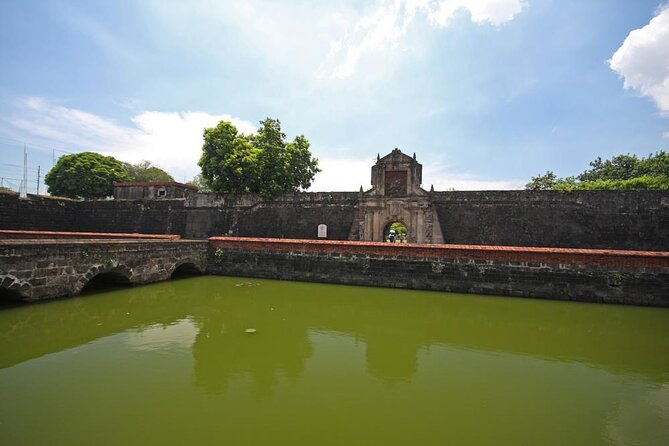
Fort Santiago is the big fortress stop, and it takes about 40 minutes. You’ll explore the stone fortress and learn about spots that were significant in Philippine history. Importantly, a small amount of walking happens here, inside the fort.
If you’re into military architecture or you like when history feels physical, this is the stop that delivers. Also, the admission is included, so you’re not stuck worrying about buying an extra ticket while you’re on a schedule.
San Agustin Church: UNESCO world heritage for the ending finale
The final church stop is San Agustin Church – Immaculate Conception Parish. The tour frames it as the oldest church in the Philippines and notes its UNESCO World Heritage recognition. It’s a short stop, about 5 minutes, but it’s a major anchor to close the loop.
Even with the short time, the guide explanation is what makes it land. You get the chance to see why people treat this as a must in Intramuros.
What the bamboo bike ride feels like in real life
This tour is designed for easy cycling. The “work” part is light: the ride is generally flat and the pace is calm. That’s ideal if you’re not training for a marathon and you want to save your energy for standing, photographing, and listening.
That said, Intramuros isn’t a closed park. Streets can be crowded with pedestrians, and you’re also dealing with city movement. In practice, you’ll want to stay alert and follow instructions right away when you’re crossing busy moments.
The team adds structure for safety. Helmets are provided, and there’s also an escort approach that keeps the group together and helps block roads when needed. In other words, you’re not riding solo in traffic. You’re riding with a coordinated team.
Also, your bike selection matters. Because every bamboo bike is unique and you choose yours, you’ll likely feel more stable and comfortable from minute one. That’s a big deal on any tour where you’ll be stopping frequently.
Safety, weather gear, and comfort details that actually help
This is one of the more “thoughtful” tours for comfort in the heat and weather of Manila.
You get a helmet, sunscreen or rain ponchos when needed, and even a cold towel at the end. Bottled water is provided throughout the ride. Those are the basics, but they make a difference when you’re in a sun-heavy historic district.
Rain is part of the real world. The tour operates in all weather conditions, with ponchos provided when needed. One caution for you: warm rain can still mess with footing and visibility. If you’re sensitive to slick pavement, wear grippy shoes and keep an eye on the guide’s cues near wet sections.
Comfort-wise, the stops add up. Even though it’s a “bike tour,” you’ll still stand at gates and churches for explanations, and you’ll do a small amount of walking inside Fort Santiago. Plan your day with that in mind.
One more note from a recurring concern: the area around certain streets can have strong odors for parts of the ride, and that can be unpleasant if you’re sensitive. If smells bother you easily, you might want to bring a small comfort item like a face mask or just mentally expect a brief uncomfortable moment near certain corners.
Price and value: is $39 worth it in Intramuros?
At $39 per person for about 3 hours, this tour sits in a very reasonable range for Manila. The real value isn’t only the bike. It’s the package effect.
Here’s what you’re paying for, in practical terms:
- A local guide and tour escort/host
- Bamboo bicycle use plus helmet
- Bottled water during the ride and cold towel at the end
- Refreshments afterward and Filipino snacks as the finish
- Included entry at key points like Fort Santiago, plus the Café Y Ruedas stop
You’re also getting a small-group format with a maximum of 15 people. That usually means better attention from the guide and fewer delays during photo stops.
If you’re the type of traveler who wants to understand what you’re seeing (not just click photos), the guided history turns the route into something more than a loop around Intramuros. And because the bike route helps you cover multiple areas efficiently, you avoid the “I walked 2 kilometers and saw 3 things” feeling.
Who should book this (and who might prefer another plan)
I think this tour is a great fit if you:
- Want history you can follow in the layout of Intramuros
- Like cycling, even casually, and want a flat, manageable pace
- Prefer small groups so you can hear explanations clearly
- Want an easy way to hit multiple big sites in a single morning-style session
It might be less ideal if you:
- Expect hours of nonstop riding (this is stop-heavy)
- Hate city-street conditions with pedestrians and occasional traffic moments
- Are very sensitive to strong odors near certain areas
If you’re traveling as a family, it can work well, but only if kids can ride competently. The tour involves real street riding at times, so this isn’t the place for a child who needs training wheels and extra time.
Should you book Bamboo Bicycle – Ecotours in Intramuros?
If you want a light, guided way to see the gates, churches, and fortress spots of Intramuros, I’d book it. The mix of bamboo bikes, hands-on history stops, and included access at Fort Santiago gives you good value for the time.
My deciding tip is simple: if you like understanding place names and seeing how Spanish, Chinese, and WWII history overlap in the same walled city, this tour will feel satisfying. If you’re only chasing distance or you want a quiet, car-free bike ride, you might do better with a different kind of cycling plan.
FAQ
How long is the Intramuros bamboo bicycle tour?
The tour lasts approximately 3 hours.
How much does the tour cost?
It costs $39.00 per person.
Where do I meet the tour, and where does it end?
You start at Bambike Ecotours Intramuros, Bambike HQ in the Plaza San Luis Complex (Real St corner M General Luna St, Intramuros, Manila). The tour ends back at the meeting point.
What is included in the tour price?
The tour includes a local guide, tour escort/host, helmet, use of a bamboo bicycle, sunscreen or rain ponchos when needed, bottled water throughout the ride, a cold towel at the end, and gratuities. Refreshments afterward are also part of the experience, and the Café Y Ruedas stop is included.
Which stops will we see during the ride?
You’ll stop at several Intramuros landmarks, including Casa Manila, the Japanese Cannon, Puerta Real Gardens, Café Y Ruedas, Puerta del Parian, Plaza Roma, Manila Cathedral, Fort Santiago, and San Agustin Church – Immaculate Conception Parish.
Is the bike ride easy?
The bike portion is described as flat and easy, but the streets can be crowded with pedestrians. There is also a small amount of walking inside Fort Santiago.
What happens if it rains?
The tour operates in all weather conditions and provides rain ponchos when needed. If it is canceled due to poor weather, you will be offered a different date or a full refund.
Are children allowed?
Children must be accompanied by an adult.
What is the cancellation policy?
You can cancel up to 24 hours in advance for a full refund. If you cancel less than 24 hours before the start time, the amount you paid is not refunded.