REVIEW · CHIANG MAI
Chiang Mai: Authentic Cooking Class with Market & Farm Visit
Book on GetYourGuide →Operated by Grandma's Home Cooking School · Bookable on GetYourGuide
Want Thai cooking lessons with farm-to-curry perks? This Chiang Mai experience pairs a market tour with Grandma’s organic farm, then sends you to an open-air kitchen where you cook step by step at your own station. I love how hands-on it feels, from picking mushrooms to smelling fresh herbs, because it makes Thai flavors easier to recreate later. I also love the payoff: you don’t leave with a lecture—you leave with a full plate and a new set of skills. One possible drawback: the sessions run long, and the farm part involves walking, so plan for comfortable shoes and sun protection.
What really sells the experience is the mix of ingredients education and real cooking practice. You’ll work through Thai favorites like Pad Thai, Green Curry, Red Curry, Panang, Tom Yum, Tom Kha, Som Tam, and spring rolls, plus Chiang Mai’s signature Khao Soi, often the dish people talk about for days.
In This Review
- Key highlights you’ll feel right away
- Grandma’s Home Cooking School: the vibe and setup that make it work
- Market tour: learn Thai ingredients in the fastest possible way
- Grandma’s organic farm: chickens, eggs, mushrooms, and herb smells
- The open-air kitchen: how you cook step by step (and eat what you make)
- Khao Soi and curry paste: the Chiang Mai flavors you’ll remember
- Desserts and coconut milk: mango sticky rice and the wooden grater
- Dietary options: vegetarian and Halal, plus allergy adjustments that feel practical
- Price and value: why around $34 can make sense for this much food
- Timing, pickup, and what to plan around
- Small-class energy and instructor personalities (Kiki, Jimmie, Patty and more)
- Who should book this cooking class?
- Should you book this Chiang Mai market and farm cooking class?
- FAQ
- What dishes will I cook?
- Do I cook at my own station or watch?
- Is there a vegetarian or Halal option?
- Can the class handle gluten-free or allergy needs?
- What’s included in the price besides cooking?
- What should I bring and wear?
Key highlights you’ll feel right away
- Market shopping with Thai ingredient focus so you know what to buy and why
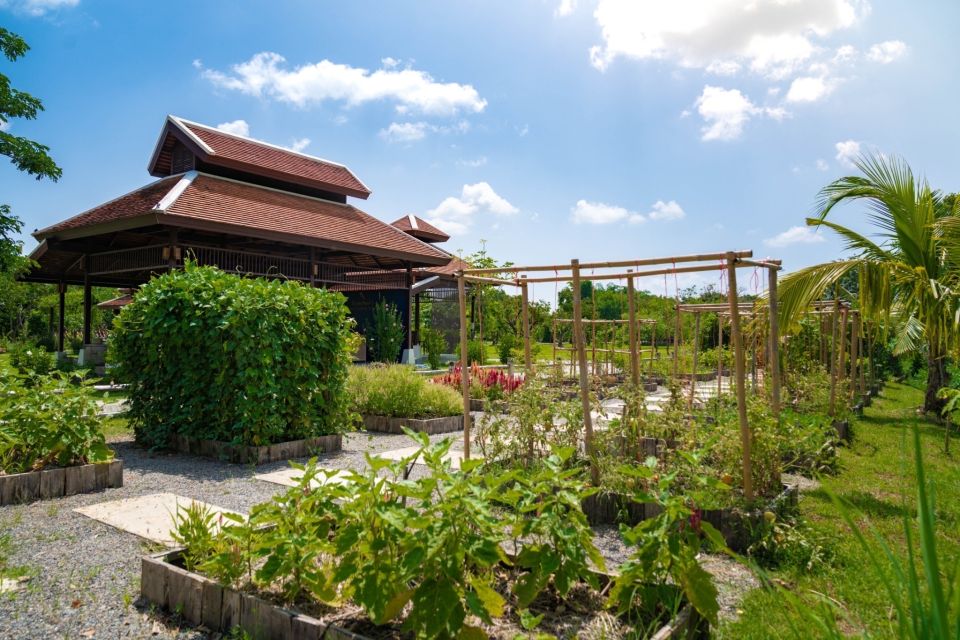
- Farm time with chickens, fresh eggs, herbs, and mushrooms (even a gentle chicken hug)
- Cook at your own station with step-by-step guidance instead of watching only
- Curry paste from scratch using a mortar and pestle
- Big variety of dishes across Pad Thai, curries, soups, Som Tam, and more
Grandma’s Home Cooking School: the vibe and setup that make it work
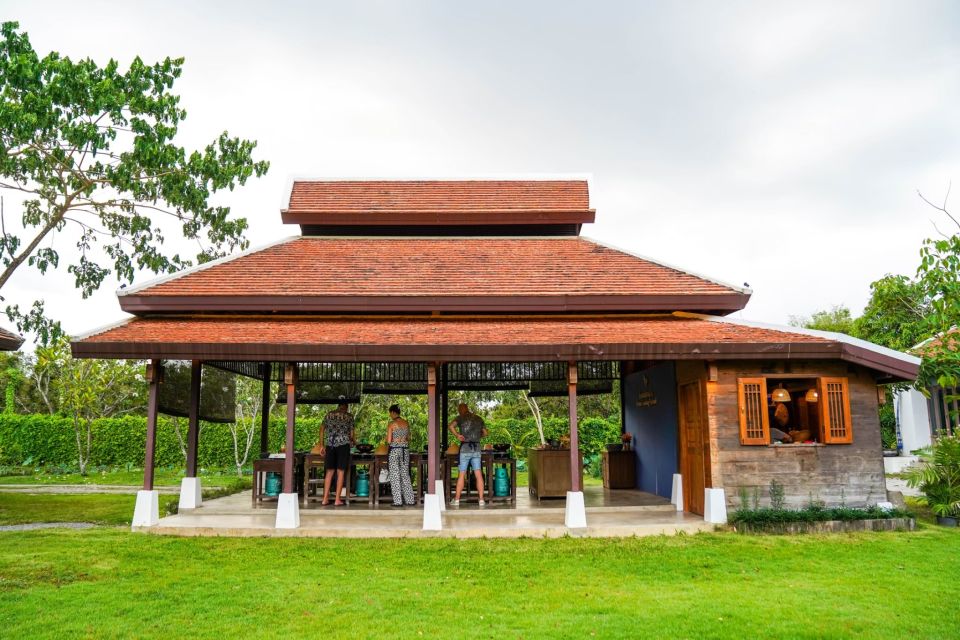
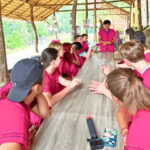
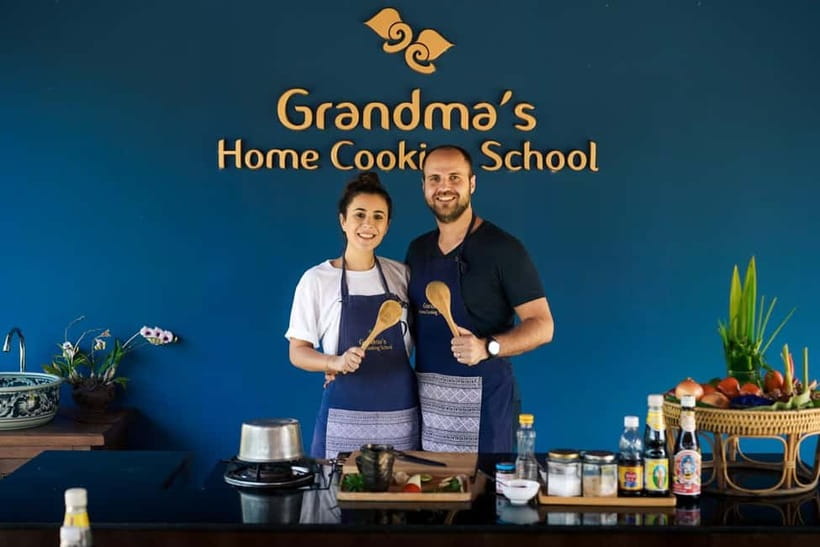
This is the kind of cooking class where the setting matters. Grandma’s Home Cooking School sits in a countryside-style property with open-air cooking areas and a farm you can actually walk through. In plain terms: you’re not stuck in a fluorescent room with tiny cutting boards and bottled sauce. You’re working where ingredients grow, where fresh herbs smell strong, and where you can see the raw materials behind Thai food.
The class is also built for active participation. You cook at your own cooking station, not on a shared demo setup where you do the stirring once and then go back to watching. That hands-on structure is a big deal if you’re a beginner or if you’ve cooked before but want a Thai flavor foundation—because Thai cooking often depends on balancing aromatics, spice, and acidity in the right order.
From the instructor names people mention most often—Kiki, Jimmie, Patty, Roger, Bryan—one pattern shows up: the teaching style is energetic and practical, and the guides do a lot of explaining in everyday English. If you have dietary needs, you’ll usually get direct help rather than a vague yes/no.
One more detail worth noting: the grounds are set up like a real operation, with multiple kitchen areas and strong organization. That’s part of why this class consistently runs on time and feels smooth even though you’re doing a market portion, farm portion, and then cooking.
You can also read our reviews of more tours and experiences in Chiang Mai.


Market tour: learn Thai ingredients in the fastest possible way
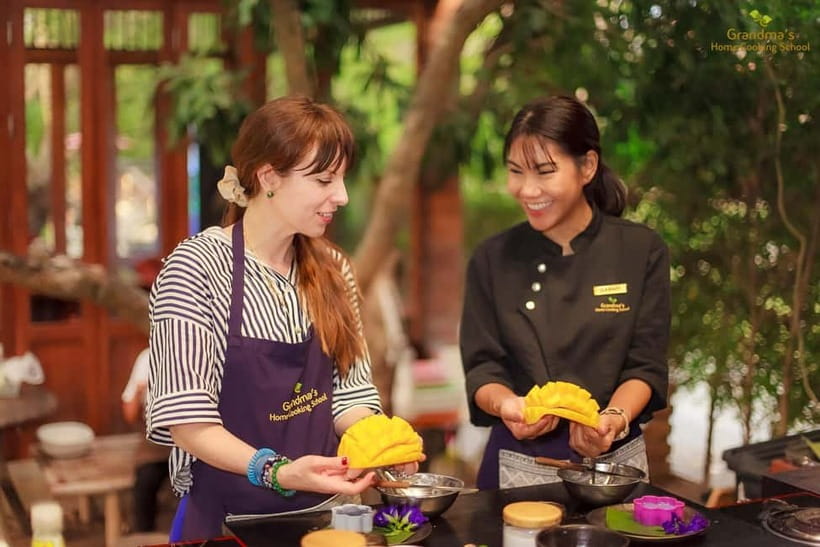
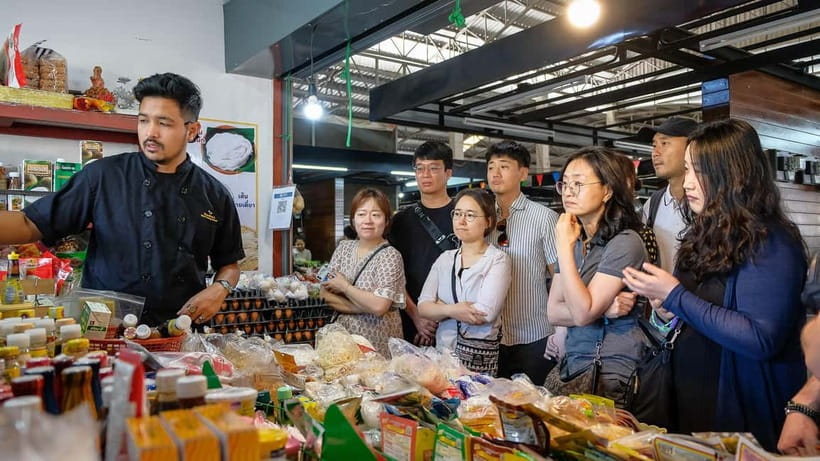
The market stop is where Thai cooking clicks. Instead of starting with a recipe list, you start with ingredients. You learn what’s used in Thai staples and how those ingredients change the flavor of dishes you’ll make later.
Depending on your session, you’ll do the market tour in the morning, afternoon, or as part of the full day. In all cases, the goal is the same: you get a guided look at things like herbs, vegetables, and common Thai pantry items. You also get to ask questions while you’re still surrounded by the real products—so later, when you’re cooking, you’re not translating from memory.
If you’re the kind of traveler who likes to buy spices after a trip, this market part is especially useful. When you know what to look for—fresh aromatics, chili types, herb bundles, and the building blocks for curry sauces—you’ll be more confident in Thai restaurants back home, too. Even if you never cook at home, you’ll understand what makes dishes taste the way they do.
Practical tip: if you’re sensitive to heat, treat the market portion like a real outdoor outing. Go at a pace that keeps you comfortable, and keep water nearby—unlimited drinking water is included.
Grandma’s organic farm: chickens, eggs, mushrooms, and herb smells
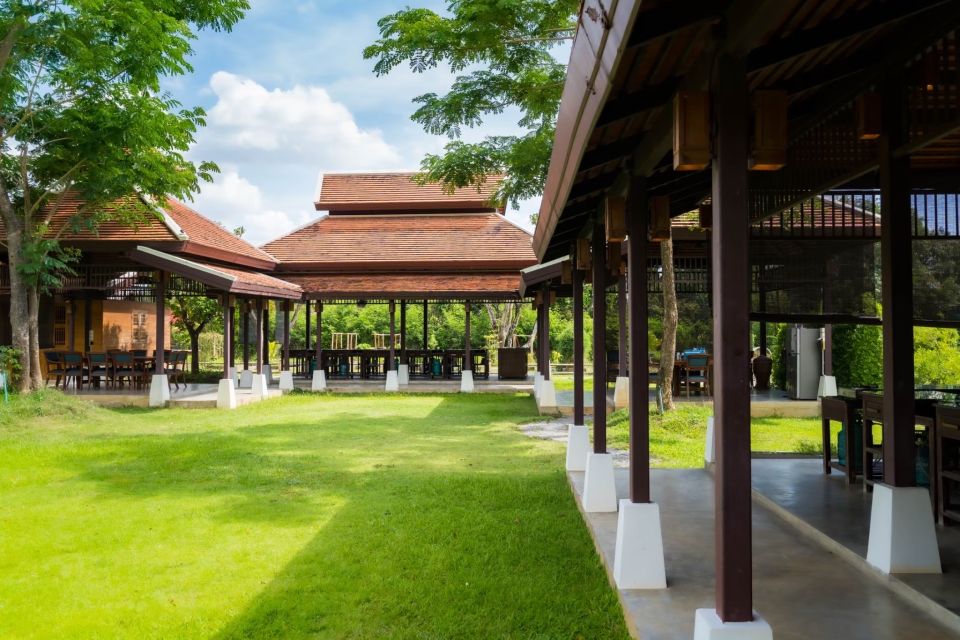
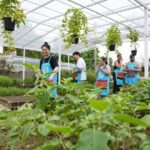
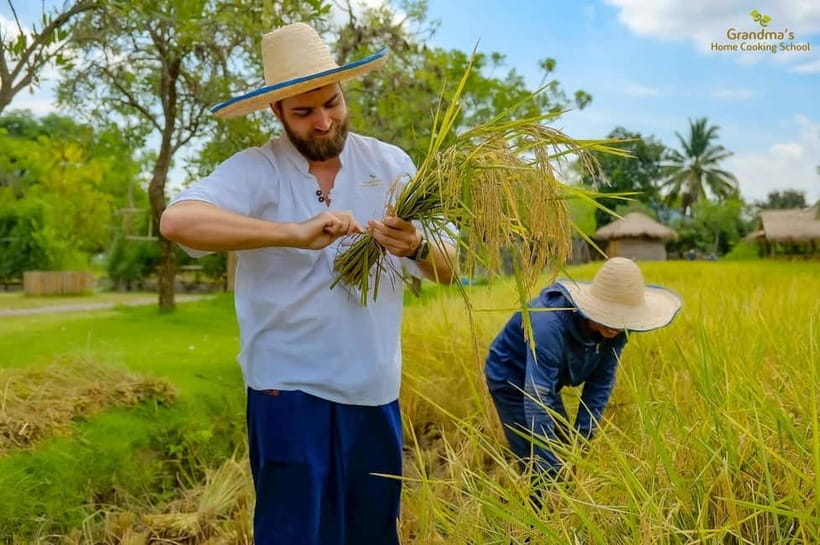
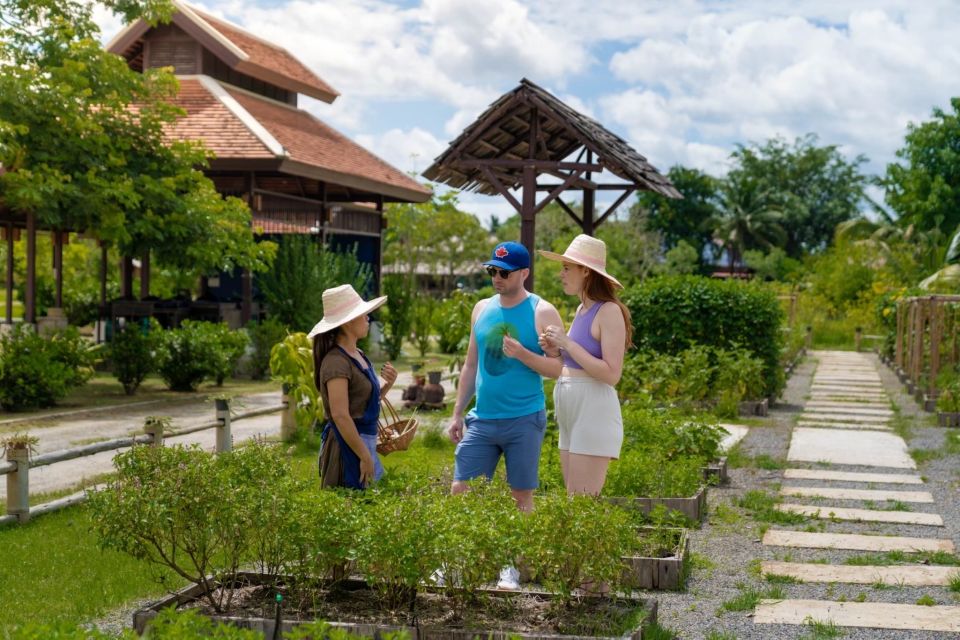
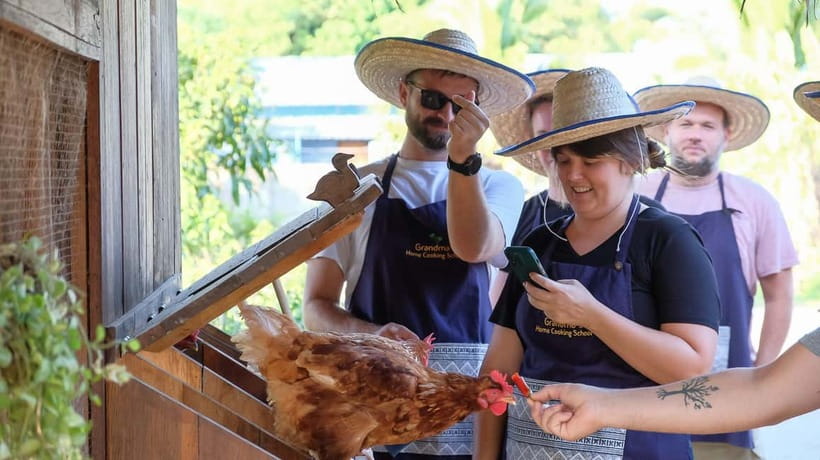
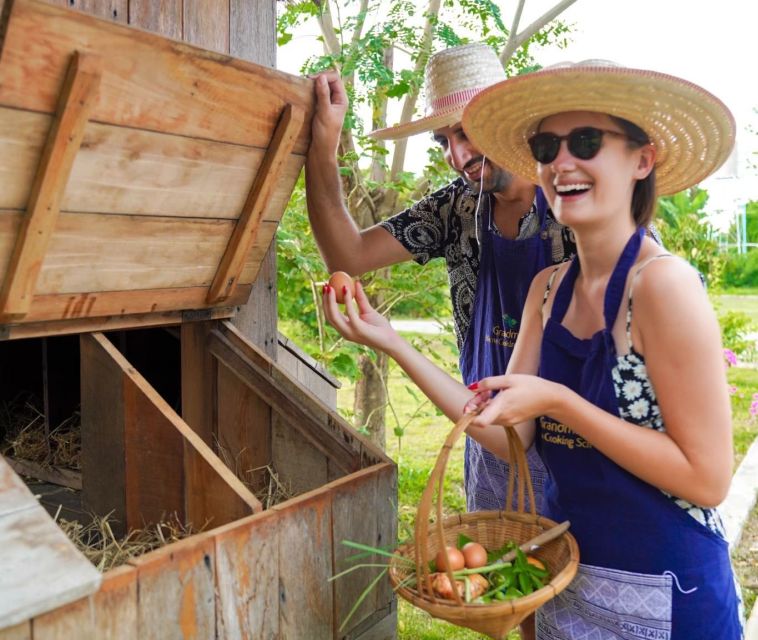
The farm portion is the personality of the day. You’re walking through a peaceful countryside setup with rice fields nearby, and you’re doing activities that feel oddly joyful for a cooking class—like feeding chickens and collecting fresh eggs.
A few specifics that make the farm time memorable:
- You’ll feed the chickens, and yes, you can give them a gentle hug.
- You may collect fresh eggs, which turns the food story into something physical, not theoretical.
- You can pick mushrooms from a mushroom hut setup.
- You’ll smell herbs and fruits, and learn how Thai vegetables and herbs get used.
One part that works well for learning is the sensory angle. Thai food relies heavily on aromatics—basil types, lemongrass notes, limey herbs, and herbaceous greens. When you smell the ingredients where they’re grown, the later cooking steps make more sense.
Also, not all picking is guaranteed. Vegetable harvesting depends on what is ready, so keep expectations flexible. Even if you don’t pick every single ingredient, you still get guided explanations and a clear look at how the ingredient journey starts.
What to pack for this farm time is simple. Comfortable shoes matter, because you’ll walk. A sun hat helps. And no pets are allowed.
The open-air kitchen: how you cook step by step (and eat what you make)
After the market and/or farm, you move into the open-air kitchen where you cook at your own station. This is where the class earns its value. Thai cooking can feel intimidating because it’s heavy on flavor layers and timing. Here, you get step-by-step guidance that breaks the process down so you can actually follow along and produce food that tastes right.
The menu depends on which session you choose, but the dishes you’ll commonly see include Thai classics such as:
- Pad Thai
- Pad Kra Prao
- Green Curry, Red Curry, Panang
- Tom Yum and Tom Kha
- Som Tam (papaya salad)
- Spring rolls
- And often Khao Soi (Chiang Mai’s signature curry noodle soup)
A big skill highlight is curry paste made from scratch. You use a mortar and pestle to build the paste, which teaches you that curry flavor isn’t just a sauce you buy—it’s a mixture of aromatics and spices ground together. That changes how you think about Thai cooking when you’re shopping later.
One more practical win: you choose your menu at the start of the class before cooking begins. That means you’re not stuck with dishes you don’t care about, and it helps the kitchen tailor ingredients to what you’re making.
Portion reality check: you make enough food to eat what you cook, and multiple dishes are prepared by your group. People often leave feeling quite full, so don’t plan a heavy dinner right afterward.
Khao Soi and curry paste: the Chiang Mai flavors you’ll remember
If you’re coming to Chiang Mai, you want at least one dish that feels local. This class often includes Khao Soi, which is Chiang Mai’s signature curry noodle soup. It’s the kind of dish that shows up in the region in a way that generic “Thai cooking class” menus don’t always cover.
What makes Khao Soi worth your attention is that it represents Thai curry logic: rich paste, creamy elements, and complex seasoning, balanced with noodles. When you cook it as part of a structured class, you understand the steps behind the flavor rather than just tasting a restaurant version.
Pair that with the curry paste technique—mortar and pestle work—and you get a memorable learning moment. You’re not just cooking. You’re building the base that drives the dish.
If you like food with depth, this is where the day starts to feel more than a fun activity and turns into a real culinary lesson.




Desserts and coconut milk: mango sticky rice and the wooden grater
Thai desserts are part of the teaching too, not just an afterthought.
Mango sticky rice appears as a dessert in morning and afternoon classes. In full day and evening options, it’s taught as part of the cooking sequence. That means you’ll get the method, not just a plate dropped in front of you.
Then there’s the full-day extra: coconut milk made the traditional way with a wooden grater. This is one of the most unique add-ons in the whole experience because it connects the final flavor to the raw process. Coconut milk isn’t just a carton in this lesson. You see how it’s prepared, and that often changes how people feel about coconut-based curries afterward.
If you’re deciding between class types, this is a key factor:
- Choose a shorter session if you mainly want market + cooking practice.
- Choose full day if you want more farm interaction and that coconut milk hands-on step.
Dietary options: vegetarian and Halal, plus allergy adjustments that feel practical
Thai cooking is flexible, but only if someone adjusts the real ingredients for you. Here, vegetarian and Halal options are available if you tell the team before class starts. Dietary restrictions like gluten-free or allergies can also be accommodated with ingredient swaps.
In the feedback people share, the most reassuring examples involve real substitutions—like providing gluten-free soy sauce and other sauce options for people with gluten intolerance. That matters, because Thai dishes often rely on sauces for salt, umami, and depth. If you only replace the obvious ingredient, the flavor can fall flat.
Also important: each guest chooses their menu at the start, before cooking begins. That early choice helps the kitchen plan substitutions without scrambling at the last minute.
One simple instruction for you: send your dietary needs ahead of time, clearly. If you’re gluten-free, mention it directly. If you have a specific allergy, include it before class starts so the station you use is set up correctly.
Price and value: why around $34 can make sense for this much food
At about $34 per person, this class often feels like a fair trade for what you get. The value isn’t just the cooking. It’s the full package: hotel pickup and drop-off in an air-conditioned van (within 5 km of the city center), market and/or farm time, cooking instruction at your station, and drinks throughout the day.
On top of that, you get:
- A digital recipe e-book
- A welcome drink (Thai milk tea, Thai lemon tea, or butterfly pea flower tea)
- An herbal drink during the class
- Unlimited drinking water
- Lunch and/or dinner depending on session timing, because you eat what you cook
The class length matters too. Duration ranges from about 210 minutes to up to 7 hours depending on your session. If you pick the longer option, you’re paying for more ingredient time, more dishes, and extra steps like coconut milk prep.
One value note from people’s comments: it’s often described as worth it because you leave feeling fed and because you get enough variety to make the learning worthwhile—dishes like Pad Thai, curries, soups, and Khao Soi are different enough that you’ll notice what changes flavor across styles.
Timing, pickup, and what to plan around
Pickup is included for hotels within 5 km of Chiang Mai’s city center, using an air-conditioned van. For hotels outside that area, you’ll likely meet at a nearby point or there may be a small extra charge.
Pickup timing depends on the class session. For many evening-style schedules, pickup is around 3:30 PM to 4:00 PM, but you should confirm your exact time the week of travel.
One practical heads-up: some people noted minor communication gaps about pickup time, even though the day itself goes smoothly once the van arrives. So I’d treat pickup like this—double-check your confirmation message, and be ready at your lobby a bit early.
What to bring is simple and useful:
- Comfortable shoes
- Sun hat
And remember: no pets.
Small-class energy and instructor personalities (Kiki, Jimmie, Patty and more)
The class runs with an English-speaking instructor, and the tone tends to be lively. Names people mention—Kiki, Jimmie, Patty, Roger, Bryan—show that you might get a very enthusiastic chef-teacher style, often with humor and high energy.
That matters because Thai cooking can be detail-heavy. When your guide keeps the pace clear and the instructions easy to follow, you’re more likely to get the steps right. People also mention accommodations for allergies and clear explanations in plain English, which makes the experience easier if you’re not fluent in Thai food terms.
Also, you may see photo moments during the day. One person specifically mentioned a photographer and receiving photos free, so if photos matter to you, ask on arrival whether the team is capturing images.
Who should book this cooking class?
This is a great fit if you want Thai cooking that feels hands-on, not just observational.
You’ll likely enjoy it if:
- You’re a beginner who wants structure and step-by-step guidance
- You want to understand ingredients, not just copy recipes
- You’re visiting Chiang Mai for a food-focused itinerary
- You like animals and farm activities (chickens, eggs, herb picking)
It’s also a nice option for families, but read the family rules carefully. Children under 10 are considered visitors and won’t have their own cooking station. They can join cooking with parents unless they’re booked as an adult.
If you’re short on time, pick the session length that matches your day. If you want the most farm-to-kitchen connection, lean toward full day.
Should you book this Chiang Mai market and farm cooking class?
Here’s my straightforward take: if you want Thai food that comes with context—where the ingredients come from and what they do in the dish—this is a strong booking.
I’d especially book it if you’re the kind of traveler who thinks, I’ll eat Pad Thai anywhere, but can I learn why it tastes right? The market-and-farm pairing does that job. The cooking at your own station does the rest.
Skip it only if long outdoor portions feel like a chore for you, or if you’re hoping for a super-short dinner-only class. Also be mindful that kids under 10 won’t have their own station, so families should plan accordingly.
If you want a single “do this in Chiang Mai” food experience that teaches real technique and gives you a local signature dish like Khao Soi, this one is worth your spot.
FAQ
What dishes will I cook?
Your menu is chosen at the start of class, but common dishes include Pad Thai, Pad Kra Prao, Green Curry, Red Curry, Panang, Tom Yum, Tom Kha, Som Tam, and spring rolls. Khao Soi is highlighted as Chiang Mai’s signature curry noodle soup.
Do I cook at my own station or watch?
You cook at your own cooking station with step-by-step guidance from the English-speaking instructor, not just a demonstration.
Is there a vegetarian or Halal option?
Yes. Vegetarian & Halal options are available if you tell the team before the class starts.
Can the class handle gluten-free or allergy needs?
Dietary restrictions like gluten-free and allergies can be accommodated if you let them know before the class starts.
What’s included in the price besides cooking?
You get hotel pick-up and drop-off within 5 km of the city center, market and/or farm activities, the hands-on cooking class, drinks (welcome drink plus an herbal drink), unlimited drinking water, and a digital recipe e-book.
What should I bring and wear?
Wear comfortable shoes for the farm walk and bring a sun hat.