REVIEW · CANGGU
Canggu: 2-Hour Surf Course
Book on GetYourGuide →Operated by Spicy Surfschool · Bookable on GetYourGuide
Two hours is enough to catch your first waves. In Canggu at Batu Bolong, this 2-hour surf course mixes a quick setup on shore with real wave time, so you’re not just watching from the beach. I like that the coaching adjusts fast, whether you’re brand-new or you’ve already stood up.
What really makes it worth your time is the focus on safety and technique. The instructors are certified lifeguards, and you get the basics taught before you paddle out—plus soft-top boards, rash guards, and a leash so you’re not improvising gear.
One thing to consider: bring water-sport shoes. Some people warn about sharp rocks near the shoreline, and nothing kills good momentum like a sore foot before you even get to the surf.
In This Review
- Key takeaways before you go
- Why This 2-Hour Canggu Surf Course Fits Real Bali Time
- Getting Oriented at Black and White, Batu Bolong
- The 30-Minute Sand Lesson That Saves You in the Water
- In the Water: How the Coaching Helps You Catch More Waves
- Safety, Lifeguards, and the Gear You Don’t Have to Hunt Down
- Private or Small Groups: When One-on-One Changes Everything
- The Real Value of $23 for 2 Hours
- What About Photos and That End-of-Lesson Moment?
- Who Should Book This Surf Course in Canggu
- Quick Tips Before You Show Up
- Should You Book This 2-Hour Canggu Surf Course?
- FAQ
- How long is the surf course?
- Where do I meet for the surf lesson?
- Is the course good for total beginners?
- What if I already have some surfing experience?
- What equipment is included?
- What should I bring with me?
- Are the instructors certified?
- What languages do the instructors speak?
- Is this activity suitable for everyone?
- Can I cancel and get a refund?
Key takeaways before you go
- Batu Bolong start point: You’ll meet at the surf café Black and White by the beach.
- Built for beginners: About 30 minutes of dry-land instruction before you hit the water.
- Real coaching in the lineup: If you’ve surfed before, you’ll go straight to waves with positioning and timing help.
- Soft-board learning: Rash guard, wax, and leashes reduce the guesswork and boost safety.
- Action photos, usually pay-as-you-go: You may get photos taken, but they aren’t always included.
Why This 2-Hour Canggu Surf Course Fits Real Bali Time
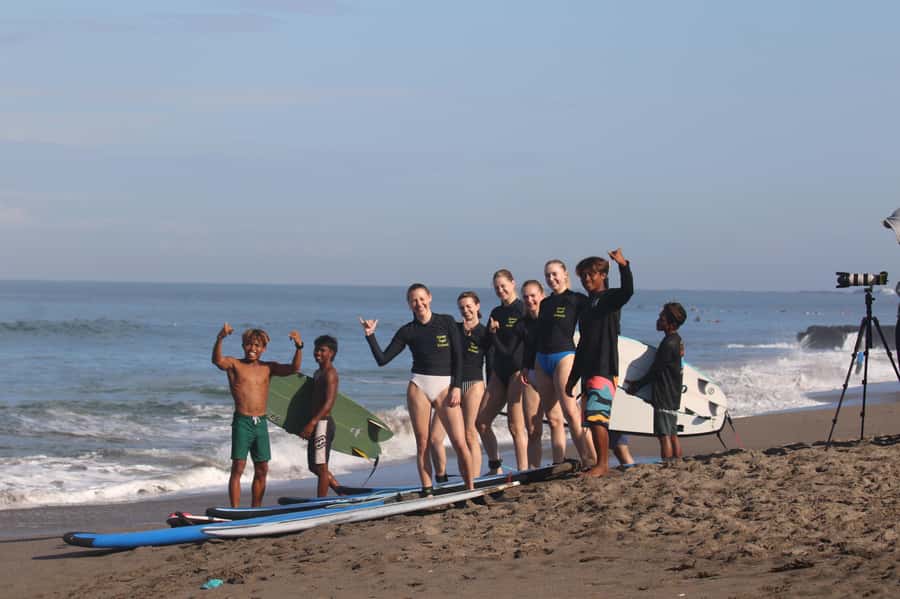
If you’re in Bali for a short window, a 2-hour surf lesson is a smart deal. It’s long enough to feel progress, short enough that you’re not spending half your day traveling, waiting, and rehydrating. And in Canggu, time matters because mornings and late afternoons can fill up fast.
This is also a good format for first-timers. The session doesn’t just throw you into the water and hope for the best. It guides you through the small steps that matter: how to paddle, how to pop up, how to handle your board, and how to act safely around other surfers.
The other reason I like it: you’re learning in a place built for beginners. Batu Bolong is known for surf-school energy, which means you’ll likely see lots of people in similar boats. That lowers the intimidation factor, and it makes the coaching easier to follow in the moment.
You can also read our reviews of more tours and experiences in Canggu.

Getting Oriented at Black and White, Batu Bolong
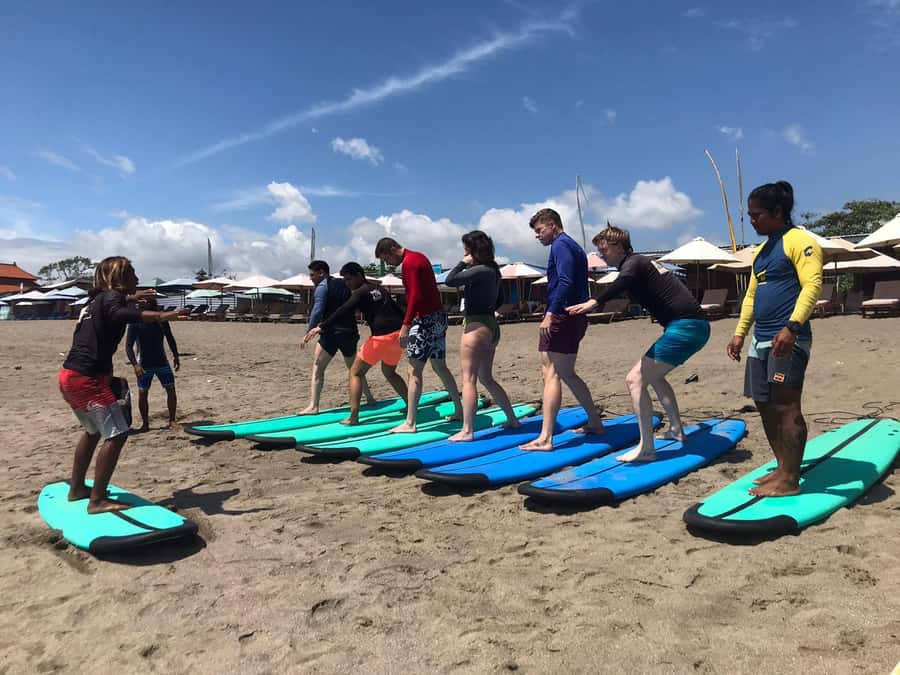
Your session starts at the surf café Black and White at the beach of Batu Bolong. That matters more than it sounds. When you’re new, a clear meeting point reduces stress right away—no wandering, no guessing, no last-minute gear scrambling.
Your exact meeting point can vary depending on what you book, but this Black and White base is the anchor most people use. The lesson flow is designed around it: you meet, get equipped, and then get set for either the sand warmup (for beginners) or straight to waves (for more experienced surfers).
You’ll also hear coaching in English and Indonesian. That’s a big practical win if your Bali vocab is limited. Surfing is hard enough when language is working normally; it’s extra hard when you’re decoding instructions while getting knocked around.
The 30-Minute Sand Lesson That Saves You in the Water
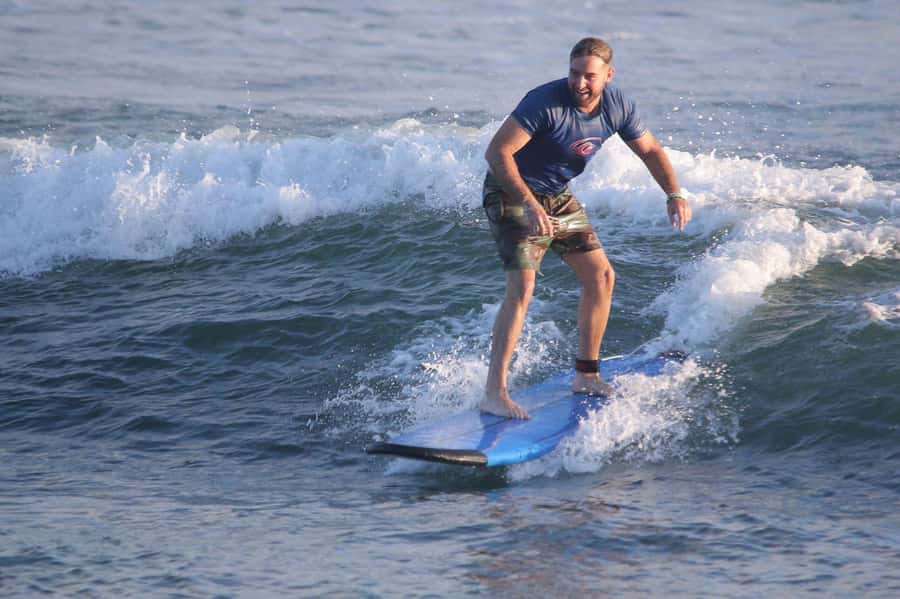
For beginners, the pace is deliberate. You get around 30 minutes of dry surf instruction first. Think of it like your “board handling boot camp,” minus the boring stuff.
On land, you’ll cover the key basics:
- How to stand up (and stand up without panicking)
- How to paddle out efficiently
- How to behave in the water so you don’t become a hazard
- How to move with your board, instead of fighting it
People love this part because it compresses your learning. One minute you’re clumsy. The next minute you’re repeating the right motion at the beach, then trying it on the water almost right away.
This is also where instructors can spot what you’re doing wrong early. If your timing is off, they can correct it before you burn energy in the ocean. That’s a quiet advantage—less wasted paddling means more chances to actually catch a wave.
In the Water: How the Coaching Helps You Catch More Waves
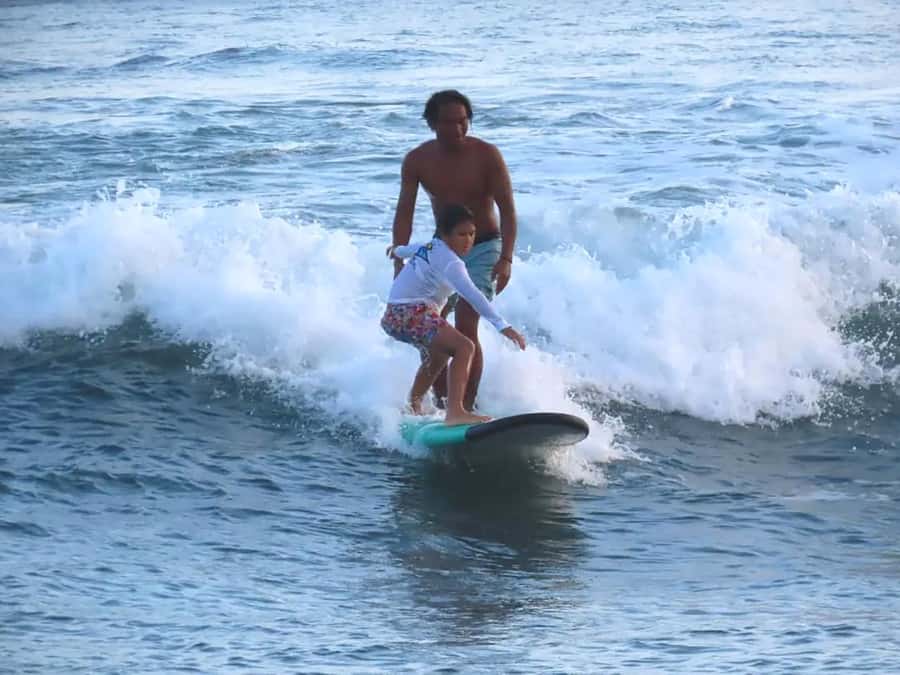
After the sand session, beginners spend about 1.5 hours in the water. That’s the real payoff: wave time with a coach giving feedback and helping you get into better positions.
The coaching focus tends to be very practical:
- When to paddle hard versus when to rest
- Where to sit on the board and how to aim it
- How to time your pop-up with the wave energy
- How to recover after a wipeout and rejoin calmly
If you’re more experienced, the lesson changes. Instead of sand-first, the coaches hit the waves more quickly and focus on positioning and timing. You’ll get help with where to be in relation to the wave and when to commit.
You’ll also notice a safety mindset in the way instructors manage conditions. For example, there’s at least one report of coaches waiting when the water was choppier at high tide—because your goal is learning, not bravely going nowhere.
Bottom line: the structure is designed so you get more successful attempts, not just more time in the water.
Safety, Lifeguards, and the Gear You Don’t Have to Hunt Down
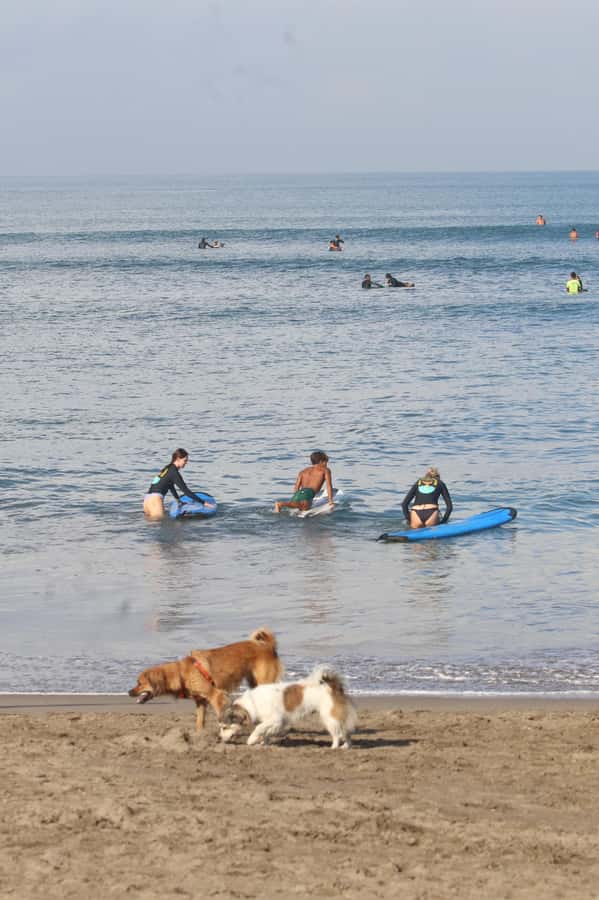
Surf schools vary a lot in how “real” their safety setup is. Here, instructors are certified lifeguards, which gives you a stronger baseline than generic surf coaching.
On top of that, your equipment is part of the safety plan. You get:
- A soft-top surfboard
- A rash guard
- A leash
- Wax
Soft boards are a big deal for beginners. They help you recover faster when you fall, and they make first attempts more forgiving. Rash guards and leashes also reduce the common starter problems: friction and losing control of your board.
They also provide sunblocker and water. That’s not glamorous, but it’s practical in Bali sun. You don’t want to be thinking about hydration when you should be practicing your paddling rhythm.
One more practical safety tip I’d add from the real-world feedback: wear water-sport shoes if you have them. The shoreline can be rocky, and sore feet can ruin your stamina and your mood.
Private or Small Groups: When One-on-One Changes Everything
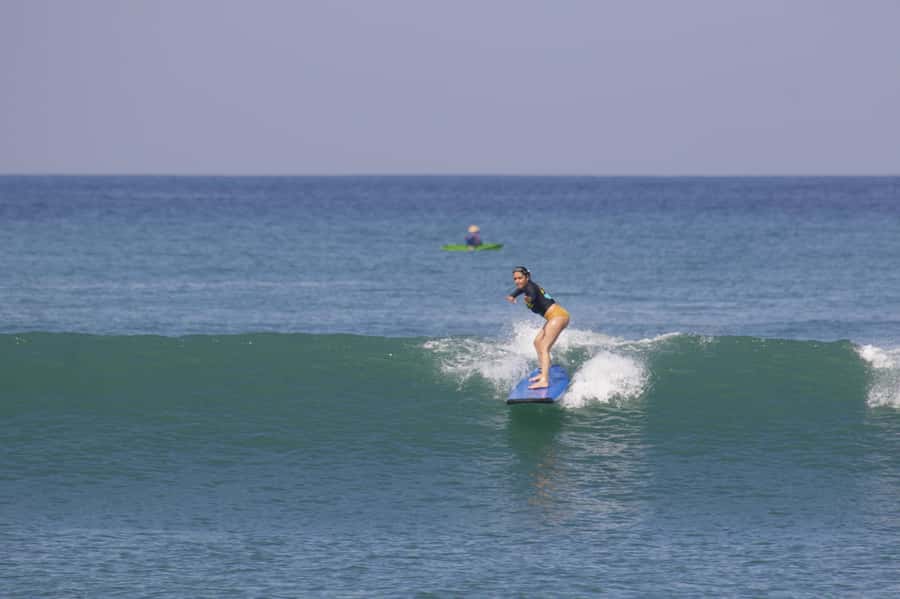
This course can be private or small groups. In practice, that can mean more attention per person. One report described a private setup where each surfer had an instructor in the water. That kind of ratio helps you move faster because your coach can correct your specific mistakes immediately.
If you’re with a friend or partner and you both want to learn without waiting your turn, a small group can be a sweet spot. If you’re nervous, a private or near-private setup can also boost confidence fast. Surfing is partly technique, and partly feeling steady.
If you’re already somewhat comfortable on a board and you want faster improvement, private coaching can make a bigger difference than you’d expect. Timing fixes are easier when your coach is watching your exact takeoff instead of giving general tips to a cluster.
The Real Value of $23 for 2 Hours
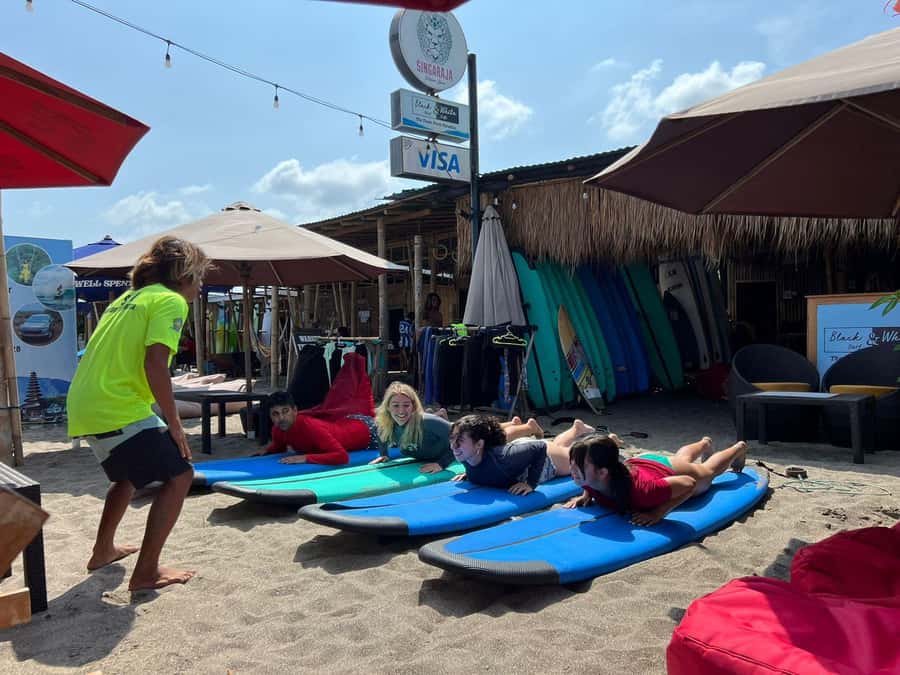
At $23 per person for a 2-hour lesson, you’re paying for coaching time plus gear plus a structured beginner-to-wave progression. That’s the part people miss when they only compare price tags.
A cheap lesson can still be expensive if it’s short on coaching, weak on safety, or heavy on waiting. Here, the format is designed to reduce that waste: land instruction early, water time right after, and instructors dedicated to helping you catch the right wave.
Also, you’re not responsible for sourcing boards, leashes, rash guards, and wax. That saves money and time. And time in Canggu isn’t free—you feel it in transport, lineup searches, and figuring out what “the right board” even means as a beginner.
Is it a luxury day? No. But it’s good value if your goal is a real first surf experience with clear instruction and safety-minded coaching.
What About Photos and That End-of-Lesson Moment?
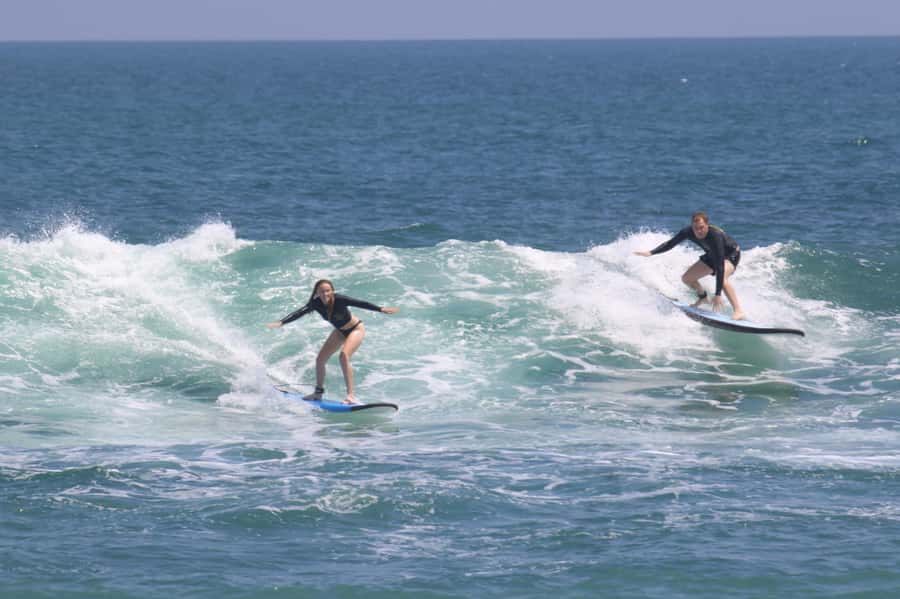
You might get photos taken during your session. Multiple people mention photographers and the chance to purchase photos on the spot. That’s nice because your memories will be sharper than whatever blurry video you tried to shoot while sprinting for the next wave.
But one important consideration: photos may not be included. If you want the full souvenir package, plan on paying extra after the lesson.
Some instructors also keep the vibe friendly afterward—music and drinks have come up in feedback. That part isn’t the reason you book the surf course, but it does make the whole thing feel less like a quick transaction and more like a social start to your day in Canggu.
Who Should Book This Surf Course in Canggu
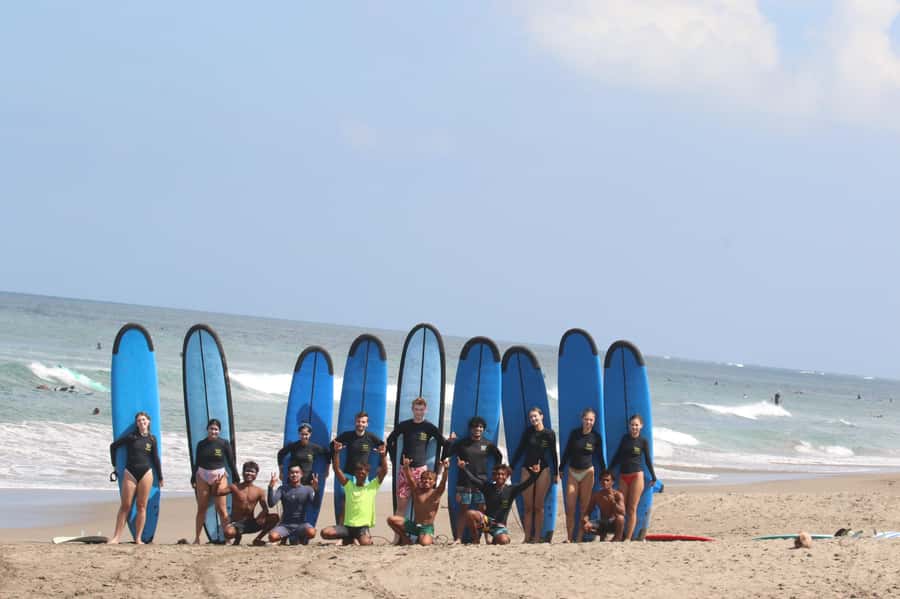
This is a great match if:
- You’re a true beginner and want a structured first lesson
- You’re anxious and want lifeguard-style safety
- You want a short, focused activity that actually teaches skills
- You and a friend want to surf together with coaching attention
It might not be your best fit if:
- You’re expecting a long, scenic tour. This is training and practice time.
- You hate cold ocean stretches or heavy sun unless you’re ready for it.
- You don’t want any chance of extra costs for photos afterward.
Also, it’s not suitable for pregnant women, based on the activity info you’re given at booking.
Quick Tips Before You Show Up
Here’s how to get the most out of your two hours:
- Wear or pack swimwear and a towel. You’ll want to change fast.
- Bring beachwear for after you’re done.
- If you can, wear water-sport shoes for rocky entry zones.
- Expect to work. Even beginners can get tired quickly, so rest when your coach encourages it.
- Be ready for coaching feedback the moment you enter the lineup. That’s when it starts clicking.
If you’re nervous, that’s normal. A lot of people come in scared and leave standing. The course is built to make that progression possible.
Should You Book This 2-Hour Canggu Surf Course?
If you want a beginner-friendly way to learn surfing in Canggu without turning it into a half-day production, I’d book it. The combination of a beginner sand warmup, lifeguard-certified safety, and coaching that focuses on positioning and timing is a strong formula at this price.
Choose it especially if you care about getting instruction you can use right away—paddle, stand, and catch more waves—not just a fun splash.
If you’re photo-minded, plan for possible extra purchases. And if you’re sensitive about feet, pack water shoes. Do those two things, and you’ll set yourself up for a smooth, confidence-building first surf session.
FAQ
How long is the surf course?
The duration is 2 hours.
Where do I meet for the surf lesson?
You’ll find the surf school at the surf café Black and White at the beach of Batu Bolong. The meeting point may vary depending on the option booked.
Is the course good for total beginners?
Yes. Beginners typically do about 30 minutes of dry surf instruction first, then spend about 1.5 hours surfing in the water.
What if I already have some surfing experience?
If you’re more experienced, you’ll generally head straight to the waves and get coaching focused on positioning and timing.
What equipment is included?
You get a surfboard, rash guard, wax, leash, sunblocker, and water.
What should I bring with me?
Bring swimwear, a towel, and beachwear.
Are the instructors certified?
Instructors are certified lifeguards, and they prioritize safety.
What languages do the instructors speak?
The lesson is offered with instructors who speak English and Indonesian.
Is this activity suitable for everyone?
It is not suitable for pregnant women.
Can I cancel and get a refund?
Yes. Free cancellation is available up to 24 hours in advance for a full refund.