REVIEW · BANGKOK
From Bangkok: Railway & Damnoen Saduak Floating Market Tour
Book on GetYourGuide →Operated by Discova Thailand · Bookable on GetYourGuide
A train slices through a market in Thailand. That alone is worth the early start, and it’s only the warm-up for a boat cruise into the Damnoen Saduak canal world. I like how this trip mixes three different kinds of local life: the railway chaos, the floating stalls, and a calm stop tied to coconut sugar-making. One thing to keep in mind is the day runs early and moves fast, so it’s not a “slow wander” plan.
Two things I really appreciate: you get hotel pickup and AC van transport, and the schedule includes both a guided visit plus a long-tail boat ride (with snacks and water included). You’ll also get help navigating crowded places, which makes a big difference at Mae Klong and on the water. The possible drawback is timing and crowd levels: you’ll want comfy shoes and patience, because this is popular and close-quarter.
In This Review
- Key things that make this tour worth your time
- Getting out of Bangkok early: why 6–7am matters
- Mae Klong Railway Market: the “umbrella pulldown” moment
- Van transfer and the shift from rails to canals
- Long-tail boat ride to Damnoen Saduak: the canal view you came for
- Damnoen Saduak floating market: shopping, snacks, and optional paddle time
- Lao Tuk Luck (Old Damnoen Saduak): a calmer floating step
- Baan Tao Thai Derm and the sugar palm stop: coconut to sweet
- Price and value: what $43 gets you (and what it doesn’t)
- Who this tour fits best (and who should skip it)
- Tips so the day feels smooth, not chaotic
- Should you book this Railway and Damnoen Saduak tour?
- FAQ
- What’s the duration of the tour?
- What’s the pickup time from Bangkok?
- Where does the tour go from Bangkok?
- Is the tour guide English-speaking?
- What’s included in the price?
- Do I need to pay extra for boat options?
- What should I bring?
- Is the Damnoen Saduak ride a long-tail boat?
- Is it offered as private or small group?
- Is free cancellation available?
Key things that make this tour worth your time
- Mae Klong Railway Market: you can see the storefronts move back when the train comes through
- Long-tail boat cruising: you get on the canals before you hit the thickest market areas
- Damnoen Saduak floating market time: shop, snack, and browse from the water level
- Lao Tuk Luck (Old Damnoen Saduak): a quieter look at older-style floating selling
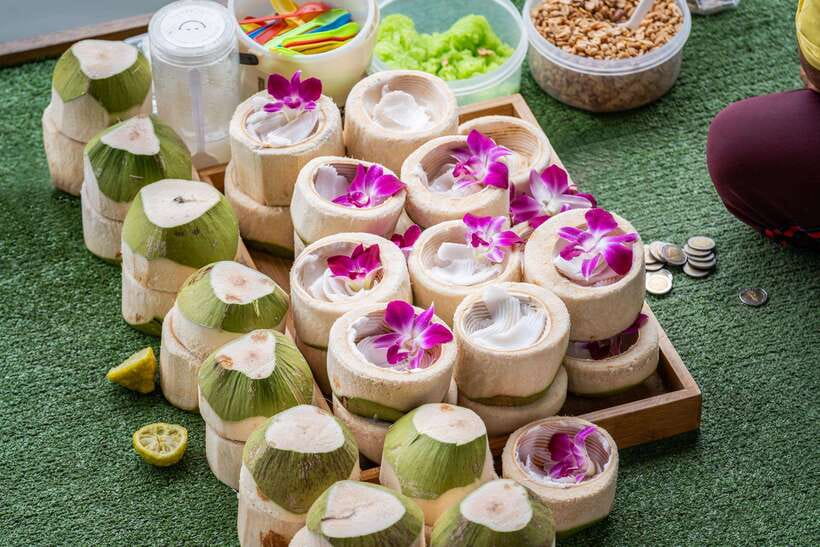
- Sugar palm from coconut plantation: you learn how the local sweet is made, not just where to buy it
- Guides who manage the photos: several guides on this route are praised for helping people get a great viewpoint
Getting out of Bangkok early: why 6–7am matters
This is a morning-first, half-day-style outing. Pickup is typically between 06:00 and 07:00, and your exact time gets confirmed ahead of time so you can plan breakfast accordingly. If your hotel is one of the first stops, you’ll likely be back around 1:00 PM. Later pickup stops usually mean returning closer to 1:30–2:00 PM.
That early start isn’t just for efficiency. It helps you see Mae Klong and the river-water scene before the hardest wave of crowds settles in. It also gives you enough buffer to buy a few things, try snacks, and still make it back to Bangkok with daylight left.
You’ll ride in an air-conditioned van, and the itinerary keeps you moving between locations instead of dragging out travel time. The downside: it’s still a full morning program, so keep your expectations realistic and pack for walking.
You can also read our reviews of more tours and experiences in Bangkok.

Mae Klong Railway Market: the “umbrella pulldown” moment
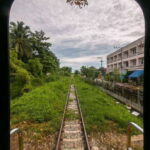
Mae Klong is famous for one reason: a railway line cuts right through the market. As the train approaches, shop fronts shift back from the rails, and the whole scene changes in seconds. The local name Talad Rom Hup translates roughly to umbrella pulldown market, which hints at the practical way vendors protect their space when the train is coming.
What I like here is how visual and immediate it feels. You’re not just watching people sell food and fruit—you’re witnessing a system built for a shared infrastructure. If you want great photos, don’t just stand anywhere. Take a moment to get your bearings near the track area before the train arrives so you aren’t scrambling when everything moves.
Practical note: you’ll walk through the market with a guided plan, usually around an hour at this stop. Wear comfortable shoes, because the ground can be uneven and you’ll be standing close to moving activity.
If you get a guide with strong photo coordination—people have praised guides such as Alex, Travis, and Mai for viewpoint help—use it. Ask for the best side to watch the train and take pictures without blocking anyone.
Van transfer and the shift from rails to canals
After Mae Klong, you hop back into the AC van for the drive toward Ratchaburi Province. The ride is short enough that you don’t feel trapped on the highway, and it sets you up for the next change of pace: boat travel.
This is a good moment to mentally reset. Mae Klong is narrow, loud, and fast. The canals feel different—more open, more watery, and more tied to everyday boat movement. If you’re prone to motion sickness, keep that in mind; you’ll be on water again soon.
You’ll also want to have your camera ready before the boat portion begins, because the first stretches of canal life can look like a living postcard: boats, stalls, and vendors calling out.
Long-tail boat ride to Damnoen Saduak: the canal view you came for
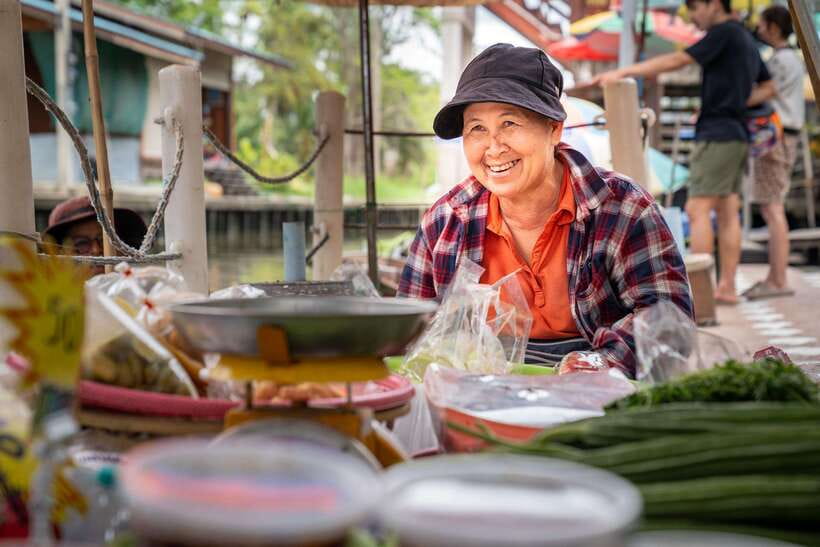
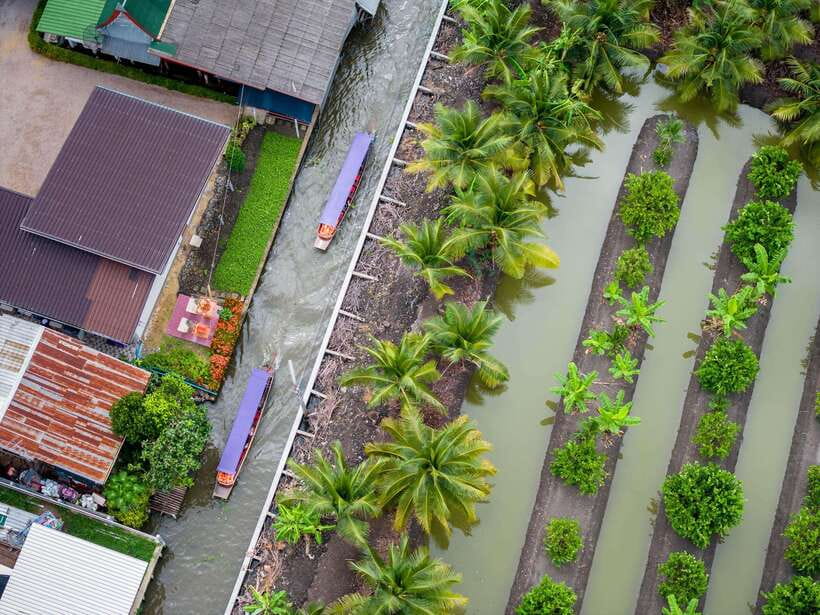
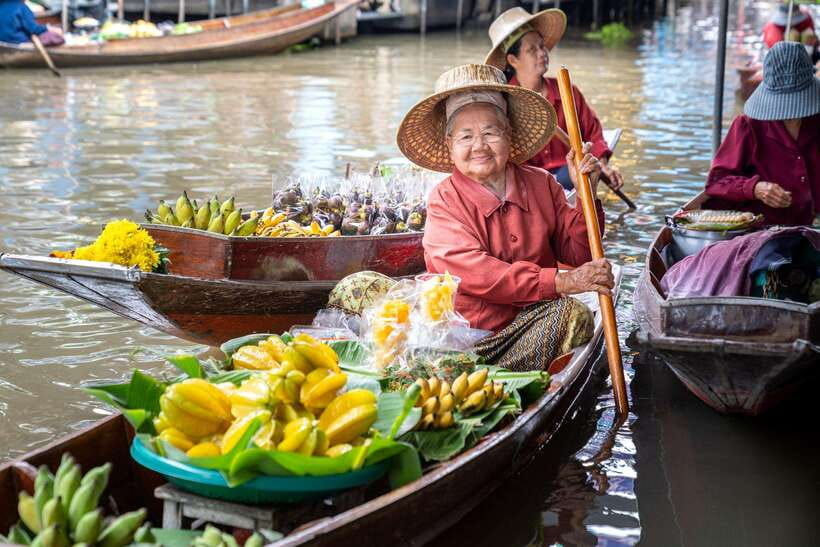
Once you reach Damnoen Saduak, the day becomes about moving by water. You’ll take a long-tail boat ride (boat rental is included), cruising through the marshy canal channels toward the floating market zone.
I like this section because it acts like a buffer between land crowds and water crowds. From the boat, you see how vendors position themselves and how daily canal life works. It also gives you a sense of scale: these are not tiny ponds; it’s an entire network of canals people use for work and commerce.
Your guide is there to talk you through what you’re seeing, including the idea that canal transport was once the main way goods traveled. You don’t have to be a history nerd to appreciate this part, because the geography does the teaching for you.
Tip: if you’re sensitive to heat, plan to stay hydrated and take short shade breaks when you can. Snacks and drinking water are included, but you’ll still want to pace yourself.
Damnoen Saduak floating market: shopping, snacks, and optional paddle time
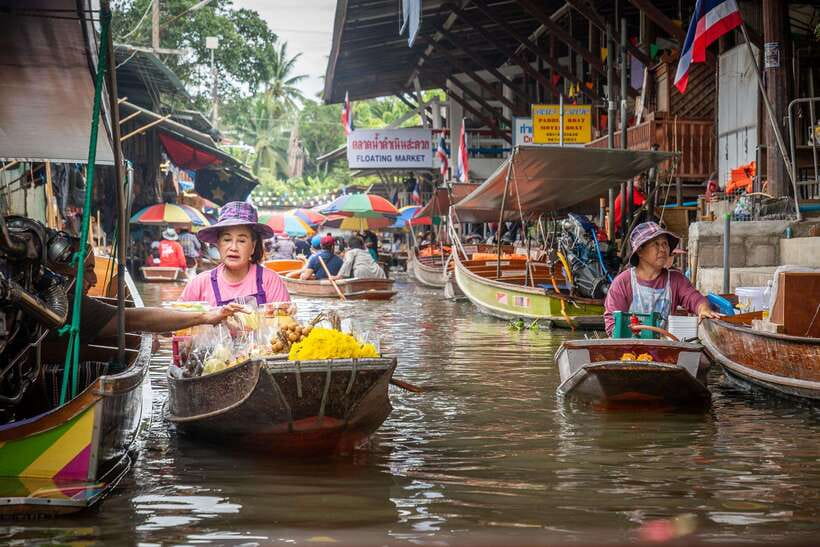
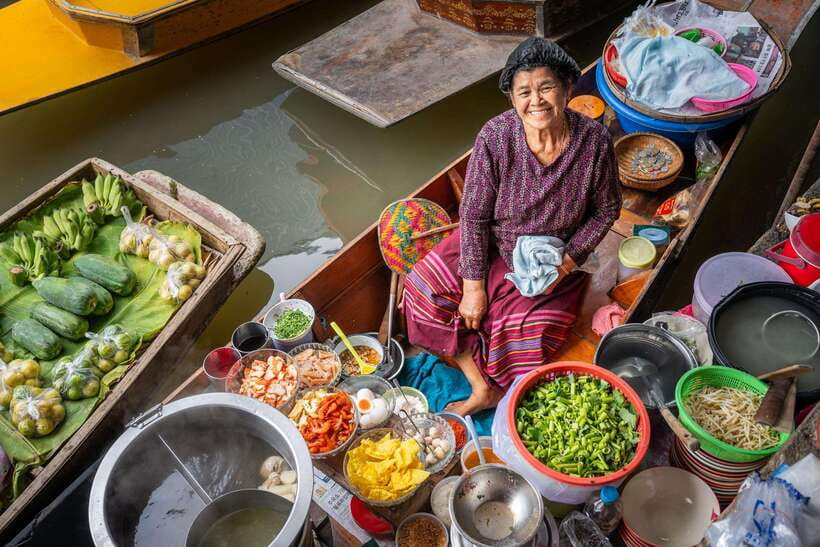
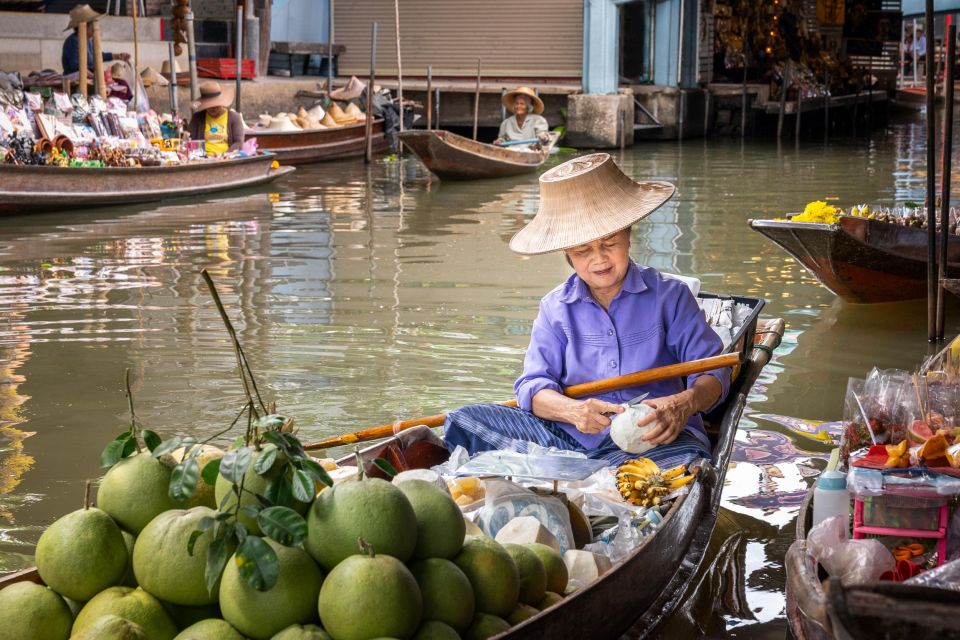
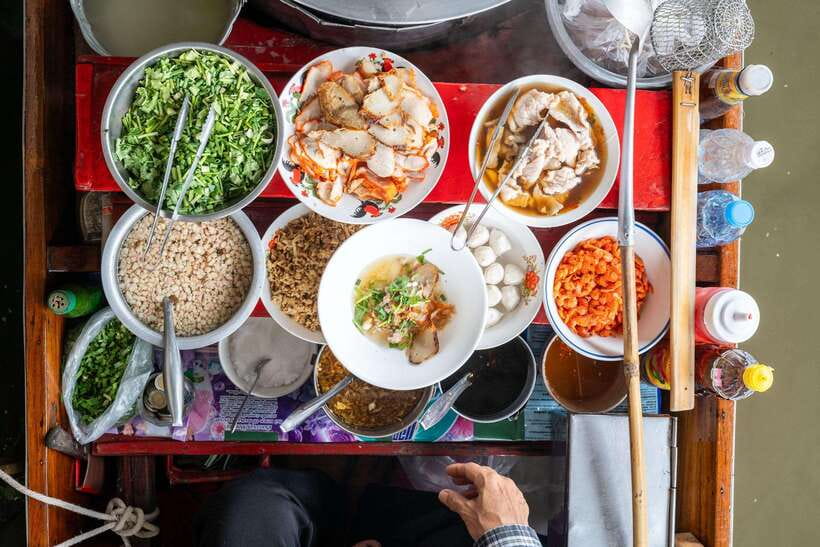
Damnoen Saduak is the headline. Expect stalls, food smells, colorful clothes, and a steady flow of boats around you. You’ll have guided time to walk around the market area and browse for fresh produce, handmade sweets, street food, and souvenirs.
What makes Damnoen Saduak worth doing as part of a guided package is control. The water is busy, boats are moving, and it’s easy to get turned around if you’re alone. A good guide helps you find practical spots to stop and look without losing time to confusion.
You also have a choice: you can rent a paddle boat at your own expense to move through tighter canoe-like pathways. This is optional, and it can be a fun way to slow down and get a closer view of what’s happening at stall edges. If you skip it, you can still enjoy the floating market from the main area and rely on the long-tail ride for the “water perspective” portion.
A small reality check: this market can feel crowded. If you’re the kind of person who likes space to think, come ready to move quickly and take photos in short bursts.


Lao Tuk Luck (Old Damnoen Saduak): a calmer floating step
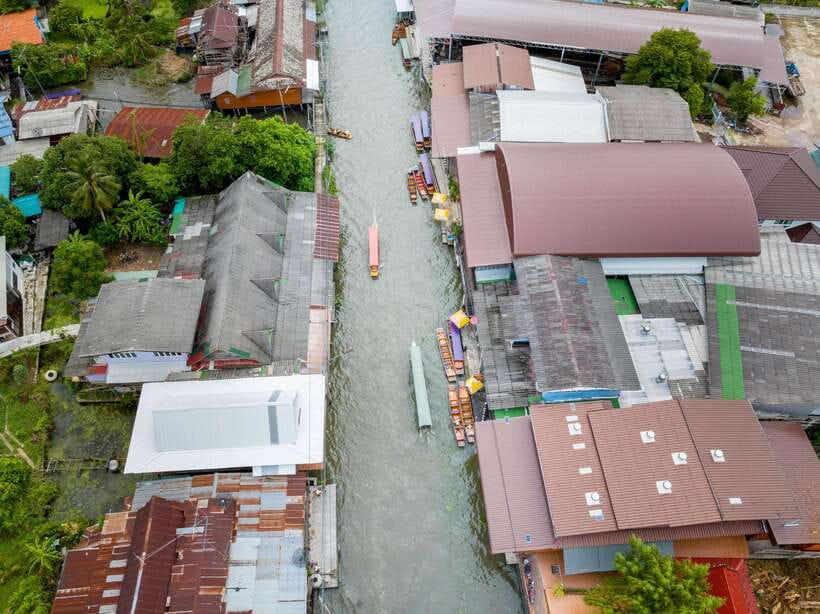
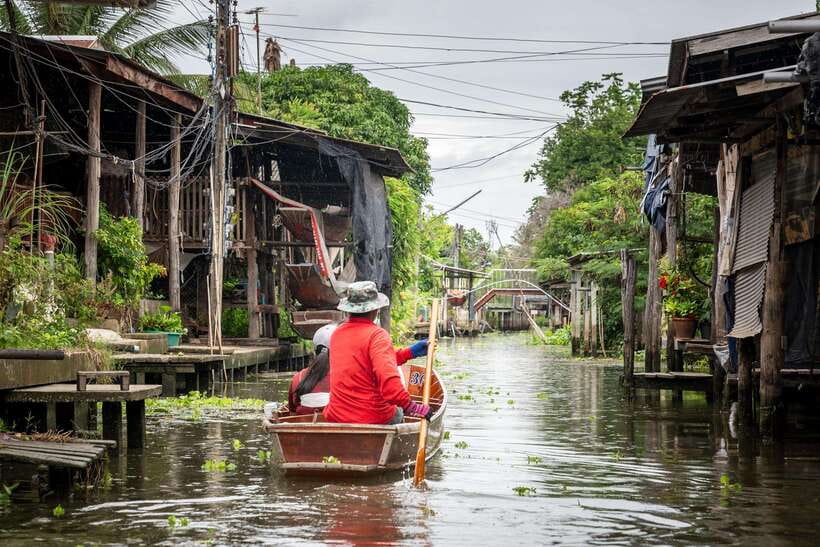
After Damnoen Saduak, the tour continues to Lao Tuk Luck market, also called old Damnoen Saduak. This stop is shorter—about 30 minutes—but the point is different. You’re looking at an older-style selling rhythm and traditional riverside home life.
Here, you’re more likely to see people practicing the older way of trading fruits, vegetables, and everyday goods. The atmosphere tends to feel less like a show and more like a working market you happen across. If your first stop felt like a photo sprint, this one can feel like a breather.
You’ll be sightseeing with your guide, so even in a short time you get context for what you’re seeing and what the boats and stalls represent.
Baan Tao Thai Derm and the sugar palm stop: coconut to sweet
The final cultural piece happens at Baan Tao Thai Derm, where you visit a traditional house related to producing sugar palm from a coconut plantation. The tour isn’t only about markets. This is the “how it’s made” moment, where you can see local production tied to a familiar Thai flavor: coconut-derived sweetness and related products.
Some guides on this route are noted for making this stop feel personal and easy to understand. You might see demonstrations of processing and learn how the sweet is produced from what grows in the plantation. Even if you’re just curious, it’s a satisfying change from the noise of markets.
If you like souvenirs that aren’t just mass-made, this is often where you find items connected to real small-scale work. Also, it’s a reminder that Thailand’s food culture is built on agriculture and process, not only cooking.
Price and value: what $43 gets you (and what it doesn’t)
At about $43 per person for a roughly 6–7 hour program including drop-off, you’re paying for a bundled day: guided transport from Bangkok, two different markets, a long-tail boat ride, and included snacks and water.
Here’s what helps justify the value:
- Hotel pickup and drop-off in Bangkok city outskirts areas (your driver meets you at the hotel)
- AC van transport between locations
- Tour guide in English
- Boat rental to experience the Damnoen Saduak canals
- Snacks and drinking water included
And here’s what you should budget separately:
- Paddle boat rental (if you choose to do it)
- Any extra food and drinks beyond the included snacks
If you’re comparing options, don’t just look at the ticket price. A DIY trip can quickly become expensive in time, taxis, and boat logistics. This tour packages the hard parts: getting out early, getting to the right market timing, and having a guide handle the flow.
Who this tour fits best (and who should skip it)
This is a good match if you want a short, structured day that mixes:
- a high-impact spectacle (Mae Klong railway market),
- a water-based experience (long-tail boat to Damnoen Saduak),
- and a culture/production stop (sugar palm from coconut plantation).
It can be especially appealing for families and people who don’t want to plan transport between multiple out-of-town stops.
It’s listed as not suitable for pregnant women, wheelchair users, and people over 70. The walking and the water/boat movement make that understandable.
If you’re a total slow-travel person who hates crowds, you might find Damnoen Saduak and Mae Klong a bit much. But if you like getting a lot done in one morning without stressing about logistics, this plan works.
Tips so the day feels smooth, not chaotic
- Wear comfortable shoes. You’ll stand and walk in active market spaces.
- Bring a camera. The train moment at Mae Klong is the kind of shot you’ll want to nail.
- Carry some cash. Market browsing and optional extras (like paddle boats) are easier with cash.
- Plan to start the day early and keep your morning light. Pick up is typically 6–7am, so don’t plan a late breakfast.
- If you care about photos, tell your guide you want the best viewpoint when the train comes through at Mae Klong. Several guides (including Alex, Travis, and Mai) have been praised for setting people up for great shots.
Heat can matter even when the schedule feels busy. Take sips of water and use breaks where you can, especially during the longer walking market segments.
Should you book this Railway and Damnoen Saduak tour?
Book it if you want a guided, low-stress half-day that gives you the two headline markets plus a production stop tied to coconut sugar/palm processing. The long-tail boat ride and the included transport make it a practical way to see Central Thailand canal life without wrestling with logistics.
Skip or look for a different style of tour if you hate crowds, prefer long unstructured time in one place, or you need mobility support. This is a moving, early-start day with active walking.
If you do book, show up with comfy shoes, a camera you’re ready to use fast, and an open mind for both the chaotic railway moment and the quieter old floating market stop.
FAQ
What’s the duration of the tour?
The total duration is about 7 hours, including hotel drop-off. The operator notes the tour is approximately 6 to 7 hours overall.
What’s the pickup time from Bangkok?
Hotel pickup time is typically between 06:00am and 07:00am. The operator confirms your exact pickup time by email, and you should be ready about 15 minutes before.
Where does the tour go from Bangkok?
You travel from Bangkok to Ratchaburi Province for stops including Mae Klong Railway Market, Damnoen Saduak Floating Market, Lao Tuk Luck market, and a traditional house/sugar palm-related stop.
Is the tour guide English-speaking?
Yes. The live tour guide is listed as speaking English.
What’s included in the price?
Included are hotel pickup and drop-off, air-conditioned van transport, a tour guide, boat rental to Damnoen Saduak, snacks and drinking water, and accidental insurance.
Do I need to pay extra for boat options?
Paddle boat rental is not included. You can rent one at your own expense if you want to paddle through smaller waterways.
What should I bring?
Bring comfortable shoes, a camera, comfortable clothes, and cash.
Is the Damnoen Saduak ride a long-tail boat?
Yes. The tour includes a long-tail boat ride to experience the floating market area.
Is it offered as private or small group?
Yes. Private or small groups are available.
Is free cancellation available?
Free cancellation is available up to 24 hours in advance for a full refund.