REVIEW · BANGKOK
Damnoen Saduak Floating Market & Ayutthaya Tour from Bangkok
Book on Viator →Operated by WanderSiam · Bookable on Viator
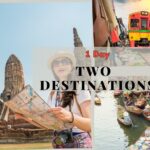
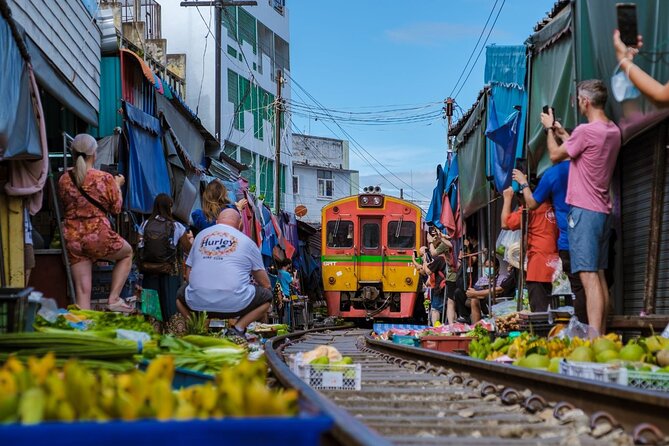
You’ll see a train cut through the market. This long but well-paced day tour links two famous Bangkok-area markets with Ayutthaya’s temple ruins, guided in English so you can focus on what you’re seeing instead of figuring it out.
I love the small-group setup capped at 10, which keeps the day from turning into herding cats. I also like the included long-tail boat ride at Damnoen Saduak, so you get canal views right away instead of standing around waiting for the right angle.
The main drawback is time. Traffic out of Bangkok is heavy, so the day runs long (10–11 hours) and lunch can land late, so plan on bringing snacks.
In This Review
- Key Things That Make This Tour Work
- Price and Logistics: What About $70 Really Means
- Mae Klong Railway Market: The Train Market You Don’t Forget
- Damnoen Saduak Floating Market: Long-Tail Boat Views Over Souvenirs
- Ayutthaya Temples: One Day, Three Sacred Stops
- Wat Phanan Choeng Worawihan: A Temple from 1324
- Wat Mahathat: Where Spiritual Power and Ruins Meet
- Wat Phra Sri Sanphet: The Royal Chapel
- Group Size, Guides, and Photo Help: Why This Feels Easier
- Food, Snacks, and Shopping: How to Plan Without Stress
- Timing Reality Check: Why It’s a Long Day
- Who This Tour Suits Best (and Who Might Split It)
- Should You Book This Day Trip?
- FAQ
- How long is the tour?
- Is hotel pickup included?
- What time does the tour start?
- What’s included in the price?
- Are lunch and snacks included?
- Do I need to pay temple entrance fees?
- Are the markets’ admission tickets included?
- What happens if it rains?
Key Things That Make This Tour Work
- Small group feel (max 10): easier questions, easier photos, and less waiting around.
- Train-market timing: you catch the action early, including the train passing close to stalls.
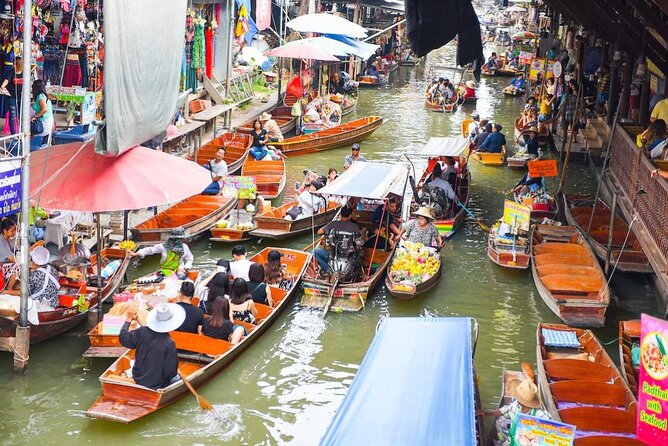
- Boat ride included at Damnoen Saduak: the best part isn’t just the souvenir boats.
- Ayutthaya temples with clear context: big religious monuments plus royal history in one stretch.
- Real human guide energy: names you may meet include Joyce, Wan, Surina, and Tum Tum, with strong English and lots of on-the-spot help.
Price and Logistics: What About $70 Really Means
At about $70.11 per person, this tour is priced for a full day that includes transportation, an English-speaking guide, hotel pickup (within a defined service area), and the long-tail boat ride. What you’re really paying for is the convenience: you’re compressing a market-and-temples circuit that would take most travelers a lot longer to organize on their own.
Here’s the part to watch: temple entrance fees are not included. Based on the listed costs, you’ll likely pay:
- Wat Phanan Choeng Worawihan: THB 20
- Wat Mahathat: THB 80
- Wat Phra Sri Sanphet: THB 80
That’s about THB 180 total, before lunch and snacks. If you’re budgeting, treat this as a “tour day + a little extra cash for temples.”
Timing matters, too. The start time is 7:00 am, and the day is built around beating crowds where possible. Bangkok traffic is famously slow, and the tour makes that a reality instead of pretending it won’t happen.
One more practical note: pickup is not citywide. It’s available only from hotels/areas on or near Khao San Road and Siam Square. If you aren’t in that pickup list, you’ll meet at the operator office on Chao Khamrop Road in Chinatown.
You can also read our reviews of more tours and experiences in Bangkok.

Mae Klong Railway Market: The Train Market You Don’t Forget
This is where the day starts getting memorable fast.
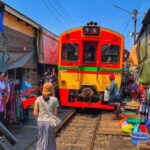
Mae Klong Railway Market (often called Hoop Rom Market) dates back to 1905, and the area’s economy is tied to fishing and fresh produce. The setup is simple: market stalls line the railway, and when the train approaches, the whole scene changes instantly. You’ll see that close-up moment when vendors react and the market shifts around the tracks.
What I like about this stop is the scale of it. It’s not a “nice street market.” It’s a working market built around a working railway. That makes it feel real, not staged.
Still, one consideration: it’s also a famous stop, so it can be tourist-heavy. If your top priority is quiet local life, you might prefer a half-day market-only option. But if you want the iconic train-through-market experience, this is the place to get it.
If you’re bargain-minded, this is often where your guide’s bartering coaching helps. One useful tip that came up in guide-led experiences: prices can be cheaper here than at Damnoen Saduak, so don’t feel like you must buy your souvenirs at the floating market.
Damnoen Saduak Floating Market: Long-Tail Boat Views Over Souvenirs
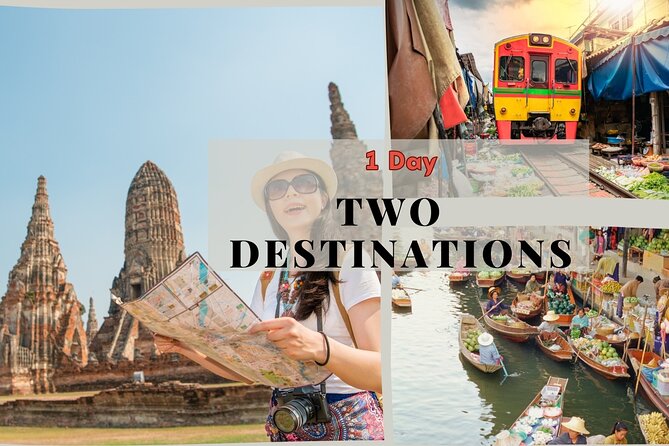
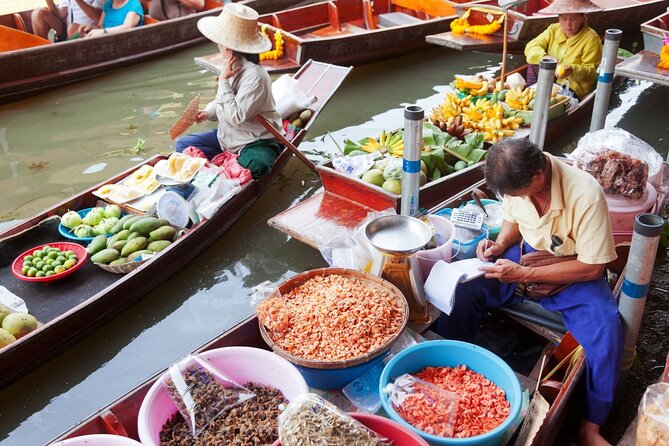
Damnoen Saduak is the big-name floating market in Thailand, and yes, it comes with tourist trappings. But the included long-tail boat ride is the reason this stop stays worthwhile.
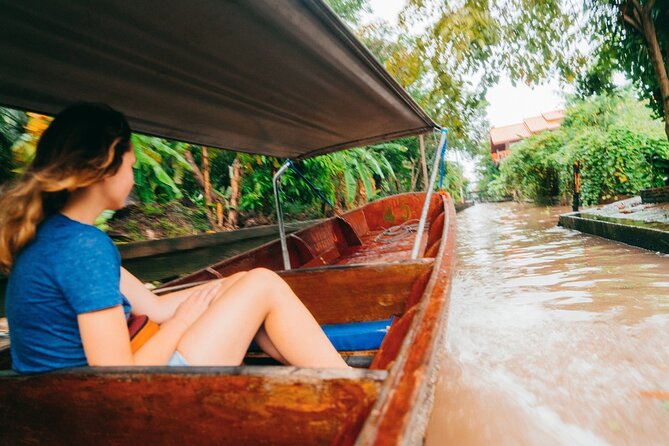
When you arrive, you board a traditional long-tail boat and glide through the canals. The market experience is built around water-level movement: you get a sense of how daily life works when homes, food, and trade revolve around waterways rather than roads.
What to expect:
- More time on the water than just browsing from a dock.
- Canal views and the sound/tempo of boats moving around you.
- A shop-heavy environment on shore, so souvenirs are part of the deal.
What I’d suggest for your mindset: focus on the experience of the canals and boat ride first, then treat shopping as a bonus. If you go in expecting “authentic only,” you’ll miss the point. If you go in expecting “waterway culture + a lot of stalls,” it clicks.
Also, bring a little patience. This is a long day tour and the floating market often happens in the middle of a packed schedule. If it starts to feel like sensory overload, step back, take a few photos, and enjoy the fact that you’re actually moving through the market rather than just looking at it.
Some guides may offer small extras on the day, such as fruit snacks after the boat ride, so it pays to be ready to taste things as they come.
Ayutthaya Temples: One Day, Three Sacred Stops
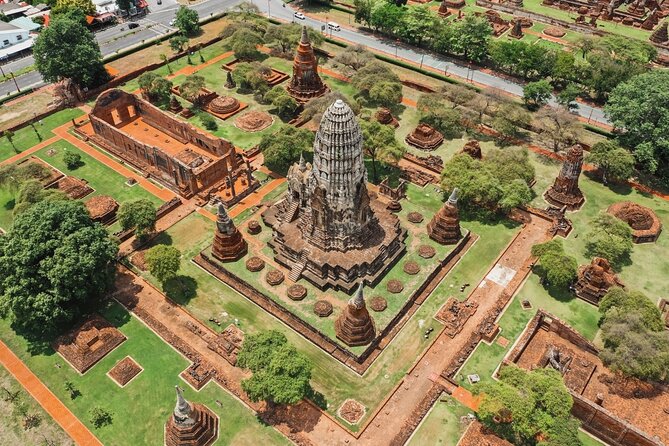
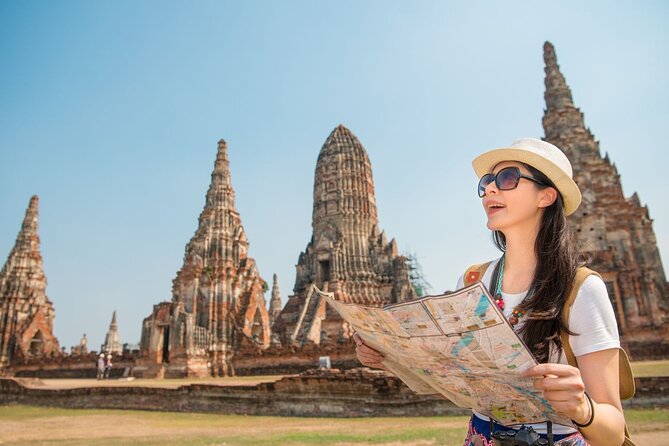
Ayutthaya is the emotional anchor of the tour. It’s where Bangkok’s modern chaos drops away, and you get a strong sense of Thai Buddhist architecture and royal religious history.
The tour includes three temple stops:
- Wat Phanan Choeng Worawihan
- Wat Mahathat
- Wat Phra Sri Sanphet
Each one contributes a different piece of the bigger story.
Wat Phanan Choeng Worawihan: A Temple from 1324
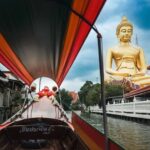
Wat Phanan Choeng Worawihan is one of Ayutthaya’s oldest and revered temples. It’s said to have been founded in 1324, which is early—before the city was officially established. The highlight is a massive seated Buddha image, which gives you a strong focal point right away.
This is a great stop to start your Ayutthaya understanding. Your guide can help you connect what you see to Buddhist meaning—how monuments are used, how worship is structured, and why certain images are so central.
Consideration: this stop is about religion and monuments, not shopping. If your feet are already tired from markets, wear comfortable shoes and plan to slow down here rather than rushing for photos.


Wat Mahathat: Where Spiritual Power and Ruins Meet
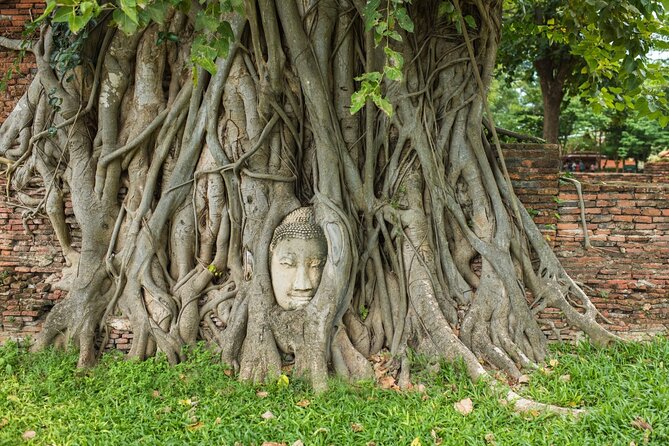
Wat Mahathat was once the spiritual and political heart of the Ayutthaya kingdom. It also housed sacred Buddha relics and served as the seat connected to the supreme religious authority.
This stop is typically the most atmospheric for many people because you’re looking at a mix of history and ruins. It’s the kind of place where you stop walking for a minute just to stare.
The practical side: the area can involve walking on uneven ground, so again, comfort matters. Bring water habits from earlier in the day too—Ayutthaya plus market heat can add up.
Wat Phra Sri Sanphet: The Royal Chapel
Wat Phra Sri Sanphet was the most important and grandest temple in Ayutthaya’s kingdom, located within the royal palace complex. It functioned like the royal chapel, and the scale is meant to communicate status and reverence.
This is where you feel the “royal religion” angle most strongly. It’s less about discovering a hidden detail and more about standing before a major monument and understanding what it represented.
If you want the best value from the temple stops, this is also where asking your guide questions pays off. If your guide is like those highlighted in the day’s experiences (Joyce, Wan, Surina, Tum Tum), you’ll get clear explanations that make the stone feel less random.
Group Size, Guides, and Photo Help: Why This Feels Easier
A standout pattern from the day’s guide-led experiences is simple: a great guide makes a long day feel like it has momentum.
This tour is capped at 10 travelers, which usually means:
- you’re not waiting for long group regrouping
- you get help navigating temples and market flow
- it’s easier to get your questions answered in real time
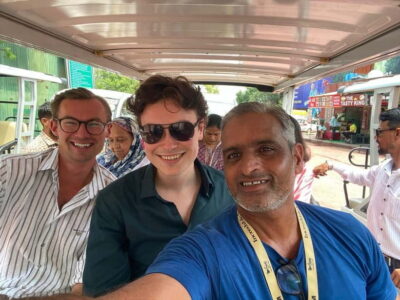
Guides you might meet include Joyce, Wan, Surina, Tum Tum, and Jonathan/Johanne. In the experiences shared, their strengths show up in a few ways:
- strong English communication
- proactive photo help, especially if you’re solo
- clear explanations of Buddhism and what you’re seeing
- bartering tips so you don’t feel lost in the bargaining rhythm
If you’re someone who hates the awkward “what should I say?” feeling in markets, that coaching matters more than you’d think. It’s not just about bargaining. It’s about having a plan so you can enjoy the moment instead of scanning menus and prices the whole time.
Food, Snacks, and Shopping: How to Plan Without Stress
Lunch is not included, and timing can be late. Several experiences point out that lunch may land around 2 pm or later, so build your day around the fact that you might be hungry before lunch.
Here’s the practical approach I’d use if I were going again:
- Bring small snacks you like before you leave Bangkok.
- Keep water handy when possible (one bottle is included, but you may want more).
- If you’re the type who likes fruit snacks, you’ll likely find chances during market time.
Shopping-wise, both markets are souvenir zones, but the vibe differs:
- Mae Klong Railway Market feels like a working market first, with bargains and fresh products mixed in.
- Damnoen Saduak leans more into the tourist market feel, which is exactly why the boat ride is the best investment of your time there.
Also note: temple entrance fees are separate, so don’t spend every baht you have on souvenirs before Ayutthaya.
Timing Reality Check: Why It’s a Long Day
This is the big truth about this tour: it takes time to get out to Ayutthaya and back, and Bangkok traffic can make it long. Expect lots of driving between stops.
Many people say it feels like a long day, and that’s not wrong. But the structure helps. The early start is often designed to get the most exciting parts before the biggest crowd waves.
If you’re trying to decide between doing both markets plus Ayutthaya in one go, ask yourself one question: do you want one full-day hit, or do you want a calmer half-day with more breathing room?
This tour fits best if you want variety and don’t mind a packed schedule.
Who This Tour Suits Best (and Who Might Split It)
This tour is a strong match if:
- you want markets and temples in one day
- you prefer a small group (up to 10) over big bus crowds
- you like having an English-speaking guide explain religion and history in a clear way
- you want an included boat ride, not just a scenic stop
It might be less ideal if:
- you hate long driving days and are easily worn out by heat
- you’re only interested in temples or only interested in markets
- you want a relaxed schedule with earlier lunch
A smart strategy: if your priority is only one side of the itinerary—either markets or Ayutthaya—splitting into separate tours can save energy. But if you only have one day and you want the full combo, this does the job.
Should You Book This Day Trip?
I’d book it if you want a classic Thai “outside the city” day that actually gives you different worlds: railway market drama, canal life by boat, and Ayutthaya’s temple monuments. The value is strongest when you use the included guide support—bartering help, temple context, and photo assistance.
Don’t book it if you’re expecting a slow, quiet, uncrowded day. This is structured for highlights, which means you’ll move a lot and you’ll likely eat lunch later than you’d like.
If you do book, come prepared for a warm, action-packed day. Wear comfortable shoes. Bring snacks. And take your guide up on their advice for what to bargain and how to shop without turning the day into a stress test.
FAQ
How long is the tour?
The tour runs about 10 to 11 hours.
Is hotel pickup included?
Yes, hotel pickup and drop-off are included, but only within the provider’s regular service area.
What time does the tour start?
The start time is 7:00 am.
What’s included in the price?
Included items are hotel pickup/drop-off (within the service area), air-conditioned transportation, an English-speaking guide, one bottle of water per person, and the long-tail boat ride at Damnoen Saduak.
Are lunch and snacks included?
No. Lunch and snacks are not included.
Do I need to pay temple entrance fees?
Yes. Entrance fees for temples are not included (Wat Phanan Choeng Worawihan THB 20, Wat Mahathat THB 80, Wat Phra Sri Sanphet THB 80).
Are the markets’ admission tickets included?
Admission tickets for the Mae Klong Railway Market and Damnoen Saduak Floating Market are listed as free.
What happens if it rains?
The tour operates rain or shine, so weather cancellations are not eligible for a refund.