REVIEW · KYOTO
Kyoto: Samurai Kenbu Traditional Sword Dancing Show
Book on GetYourGuide →Operated by Ginbu Co. · Bookable on GetYourGuide
A samurai story you can actually feel. This Kyoto Kenbu performance pairs stage storytelling with real technique—from sword stances to fan work—and ends with a hands-on moment. I especially like how the show teaches Bushido ideas (including the responsibility of carrying a Samurai sword) and how the narration makes feudal-era culture understandable. The main thing to watch is that you can’t take photos or videos during the show, so plan to save your camera for after.
You’ll step into the Samurai Kembu Theater experience like it’s 700 years ago: you arrive, take off your shoes, and settle in for a guided run through Kenbu. Expect multiple demonstrations, each framed with short history about Samurai culture from roughly the 12th to 19th centuries, with an English narration track that keeps you from getting lost. If you want sword combat, this is more “controlled, ceremonial motion” than full-on fighting.
A final heads-up: there’s no waiting room. If you show up late or carry big luggage, it’s not going to be fun. Build in 5–15 minutes before start time, and keep bags small.
In This Review
- Key things to know before you go
- Samurai Kembu Theater: setting the tone in Kyoto
- The Kenbu show: storytelling through motion, not brawling
- The Samurai side: responsibility, Bushido, and sword culture
- Fan technique on stage: the detail people miss
- The mini sword lesson: what you can safely try
- Photo time and strict show etiquette
- Price and value: is $32 worth an hour?
- Who this is best for (and who might want something else)
- Should you book the Samurai Kenbu Kyoto show?
- FAQ
- How long is the Kyoto Samurai Kenbu show?
- How much does it cost?
- Where is the meeting point?
- Is the sword lesson included?
- Are photos and videos allowed during the show?
- Is there a chance to take photos after the performance?
- What languages are used?
- Is it wheelchair accessible?
- Is hotel pickup or drop-off included?
- Is food and drinks included?
- Can I cancel, and how far in advance?
Key things to know before you go
- English narration built into the performance: You get context, not just motion.
- Kenbu isn’t random dancing: Each segment includes a short Samurai-themed history.
- Sword-and-fan technique on stage: You’ll see folding fan movements tied to Samurai practice.
- Hands-on katana mini-lesson: You get to hold the sword briefly and try gentle-to-strong swings.
- Photos are time-limited: No filming during the show, then photo time after.
- Small, friendly feel: The experience is designed to include you, not just observe.
Samurai Kembu Theater: setting the tone in Kyoto
This activity starts at the Samurai Kembu Theater in Kyoto, and that location is useful because it’s not out in the countryside. You’re only a few minutes on foot from Subway Sanjo Keihan Station (about a 4-minute walk) and Sanjo Station on the Keihan Main Line (about 5 minutes). That makes it easy to slot into a normal Kyoto day without wasting half your time on transit.
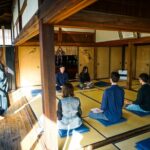
When you arrive, the first rule is simple: take off your shoes. That’s not just theater-nerdery detail. It signals respect for the performance space and helps set the tone for a more traditional, seated experience. You’ll also want to arrive 5–15 minutes early because there’s no waiting room for people without an appointment. If you’re delayed, you can’t just wander in and wait.
One more practical point: no room for large luggage or travel bags. If you’re touring Kyoto with a bigger backpack, switch to something compact when you come here, or keep valuables on your body. This isn’t a “drop your bag and come back later” kind of stop.
You can also read our reviews of more tours and experiences in Kyoto.


The Kenbu show: storytelling through motion, not brawling
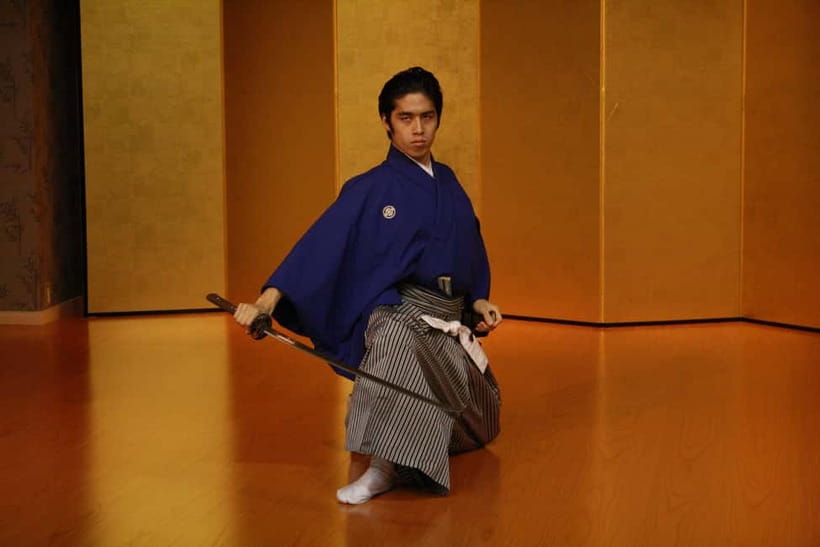
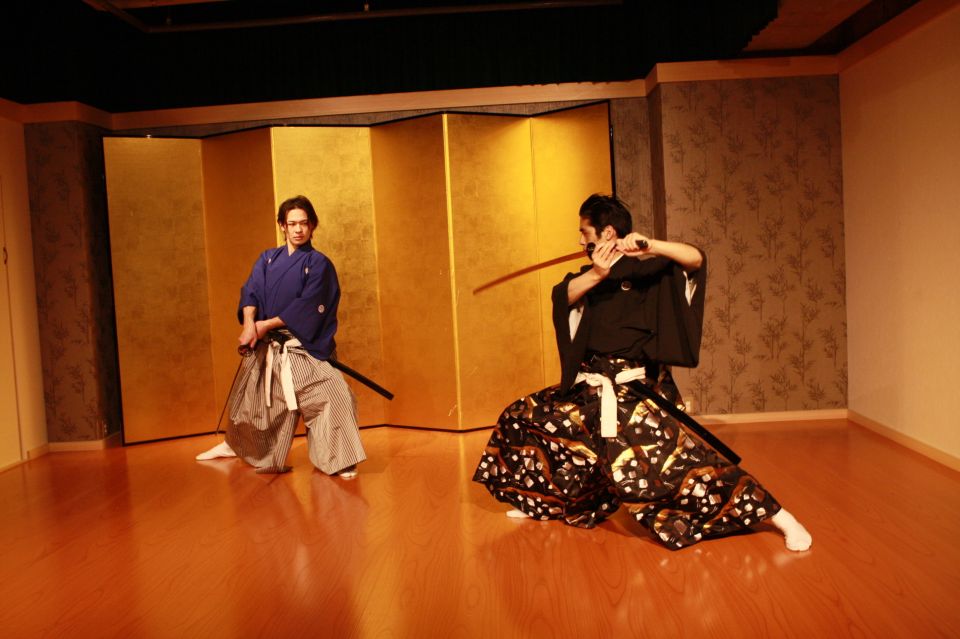
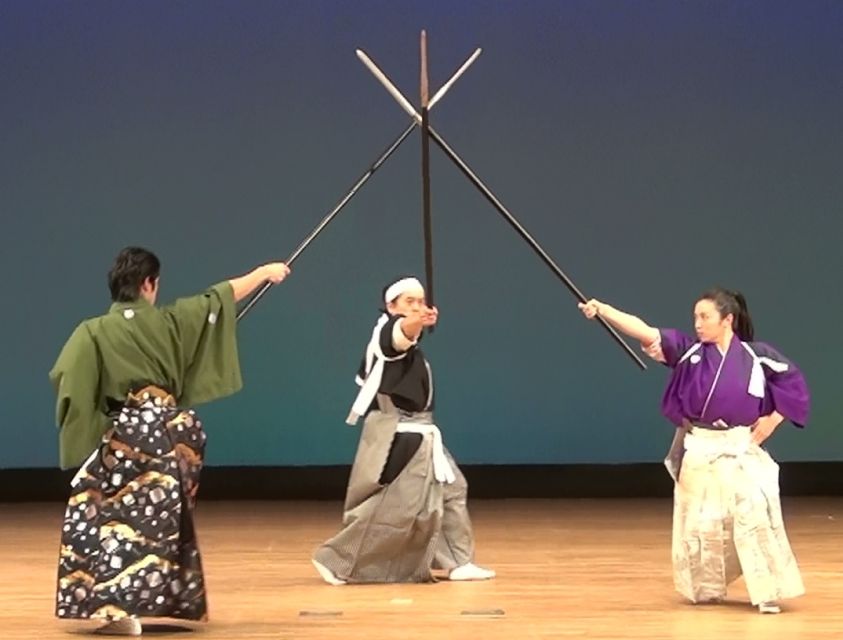
The full experience runs about 1 hour, and the pacing stays tight. You’ll start seated, listening to an introduction from a performer who explains Kenbu history and technique. Then the performance moves through a series of demonstrations, and the structure matters because each segment comes with a bit of context—short histories about Samurai culture spanning the 12th to 19th centuries.
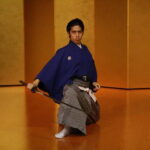
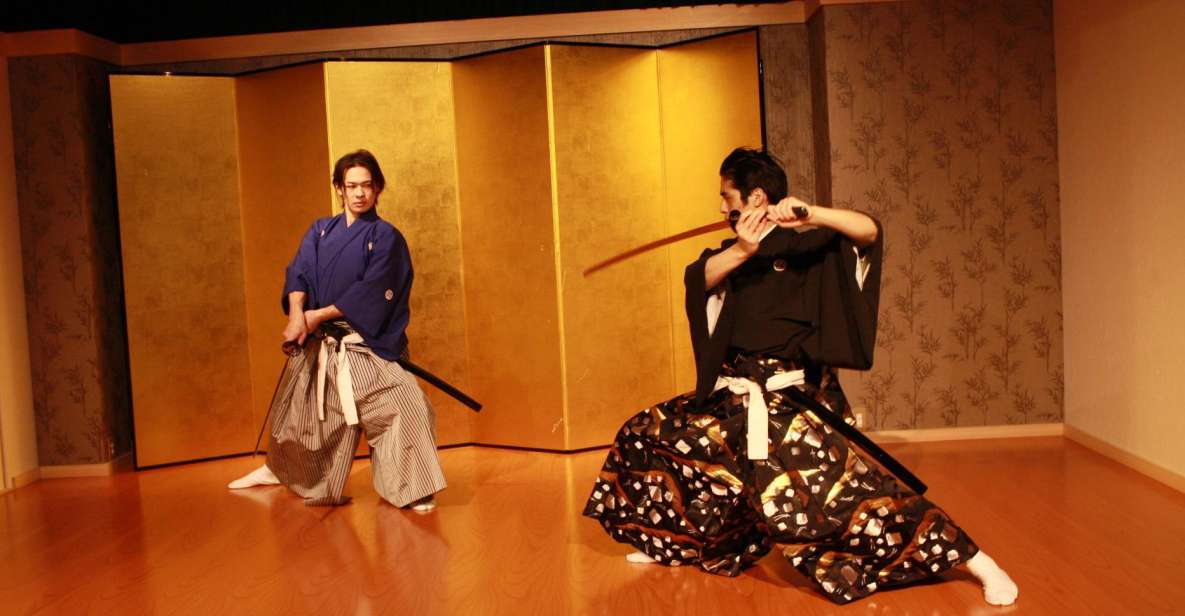
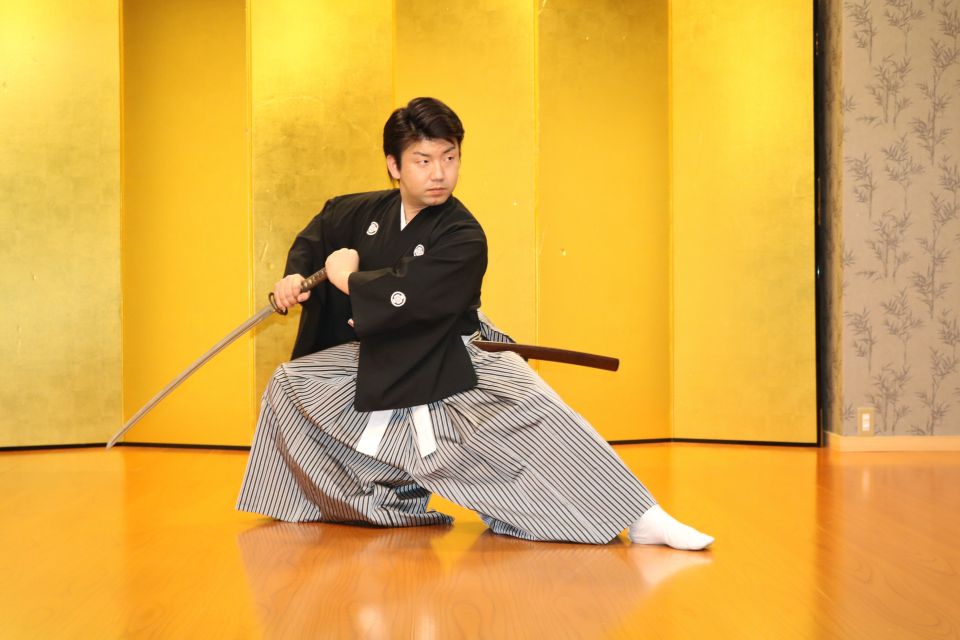
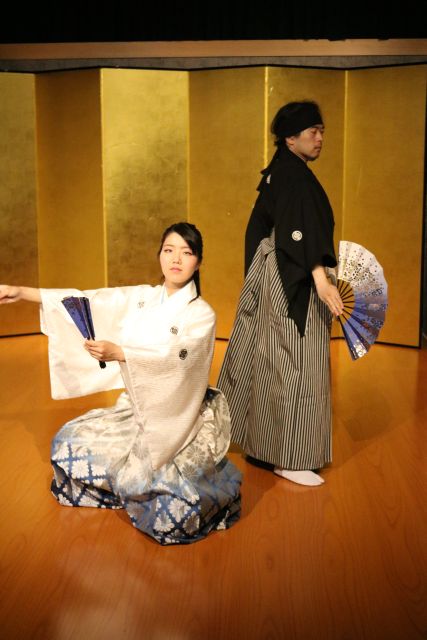
What you’re really watching is how Kenbu uses the sword as a storytelling tool. The dancers/swordsmen swing and move through complex sequences that represent scenes and Samurai ideals. The narration also ties those movements to poems recited by samurai before heading into battle. If you like understanding what you’re seeing, this is a big part of the value: the show doesn’t treat the audience like blank spectators.
You’ll also see traditional-style Kenbu and new-style Kenbu. That’s a helpful detail because it shows Kenbu isn’t just “old footage preserved.” It’s a living performance form—same core discipline, different presentation.
Also, a small note from how the show’s described: it’s not built around graphic combat. One reviewer comparison point you should keep in mind is that if you’re expecting a bigger stage or a full fight demo, you might find the format more ceremonial than action-heavy.
The Samurai side: responsibility, Bushido, and sword culture
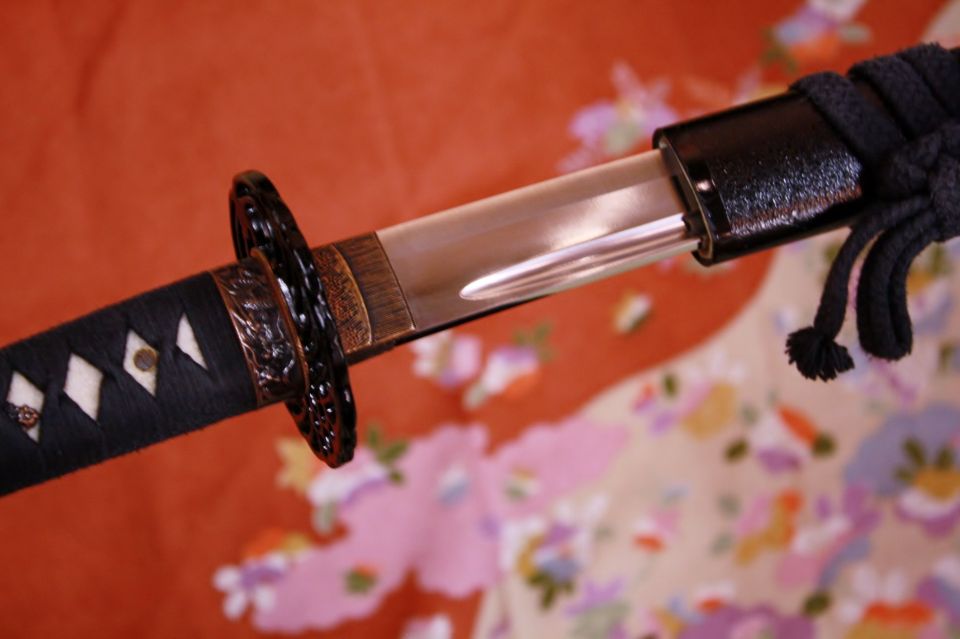
One of the strongest parts of this experience is that it doesn’t only focus on movement mechanics. The show explicitly discusses the responsibility of carrying a Samurai sword, and it frames sword possession as tied to duty and character. That’s a useful lens for modern visitors because it turns the sword from a “cool object” into a responsibility with social meaning.
The performance also covers Samurai practices tied to preparation and ritual. The way Kenbu is presented makes it feel like a discipline—something practiced to control body, intention, and timing. That’s why the show works even if you’re not a hardcore sword fan.
And since you get English narration (and Japanese is also used), you should be able to follow the story beats without needing to study Japanese history first. Still, if your listening attention is limited on vacation, you may want to sit close and watch the performer’s face and body cues. Some people have found the narration a bit harder to catch, even though the presentation is designed for English-speaking audiences.
Fan technique on stage: the detail people miss
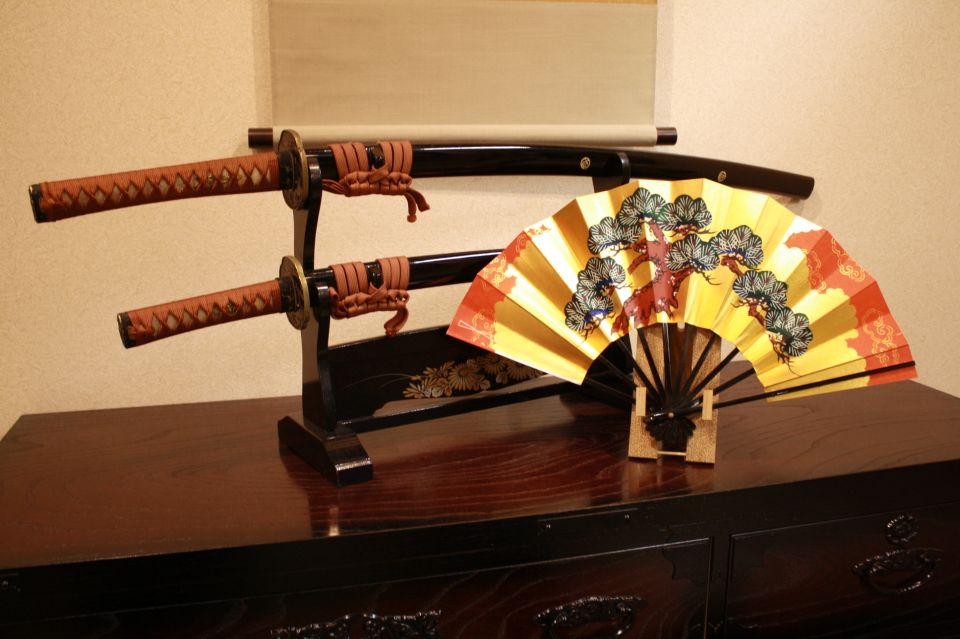
I like that this show includes folding fan techniques, not as random props but as part of Samurai practice. You’ll see how the fan fits into the choreography, and it’s a nice contrast: one moment you’re watching sword arcs, and the next you’re seeing disciplined fan work.
This matters because it broadens what Kenbu can mean. It’s not only “sword dance.” It’s a set of performance and movement traditions that connect tools, stance, and control. If you’re the kind of traveler who likes cultural nuance (not just the highlight), this is a rewarding stop.
If there’s time at the end, you might also get a fan-related teaching moment during the mini-experience. Don’t assume it will happen every time, but it’s part of what the activity describes.
The mini sword lesson: what you can safely try
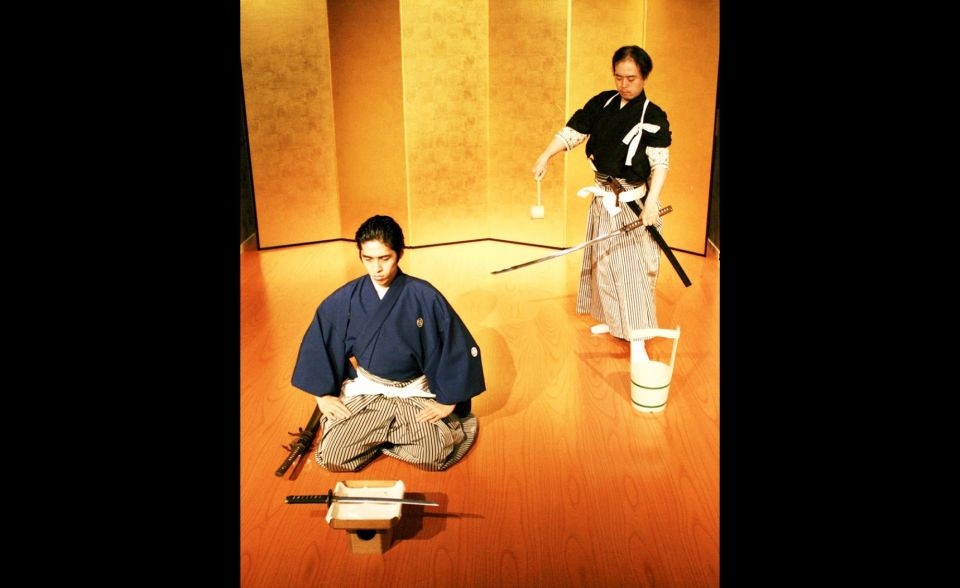
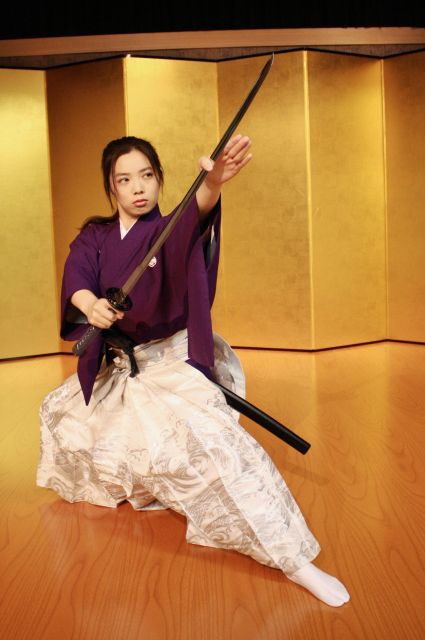
After the staged portion ends, the show shifts from watching to doing. You’ll get a short sword lesson where you can try holding a sword and practice a basic sequence under instructor direction.
Here’s what to expect from the lesson structure:
- You pick up a sword and slowly draw it from the scabbard.
- At the instructor’s command, you start with gentle swings.
- Then you progress to swings with more force as you gain confidence and control.
It’s not meant to teach you real combat. It’s meant to let you understand what “control” feels like—how posture, grip, and timing matter. And this is the moment where most people’s opinion flips. The sword looks easy in movies. In real hands, it’s noticeably heavy and demanding. That’s exactly the point.
Some participants also mention extra elements like trying a tsuki-style thrust at the end, depending on timing. So if you’re curious about the vocabulary of sword drills, keep your attention open during the closing instruction.
The instructor guidance is also described as interactive and friendly, and people mention a relaxed atmosphere during the teaching. That helps, because the lesson can feel intimidating until someone shows you what to do and reminds you to keep it safe.


Photo time and strict show etiquette
There’s a key rule: please refrain from taking photos or videos during the show. This is one of those annoying travel realities that also makes sense. Stage performers need focus, and flash or phones ruin the mood.
The good news is that you still get a photo moment. After the performers return, the activity includes a time when you can capture the experience, and some people even note that staff may help with photos after the lesson. So don’t pack your camera and resign yourself to zero images. Just understand the timing.
Also watch your behavior during the lesson. The activity is traditional and safety-focused, so listen closely to commands and don’t rush your swings. You’re not just taking part—you’re borrowing skill and space from trained performers.
Price and value: is $32 worth an hour?
At about $32 per person for roughly an hour, the value is strongest if you want both halves: cultural explanation and a brief hands-on experience.
If you only wanted to watch sword dancing, you could find cheaper performances around Kyoto. But here you’re paying for:
- English narration that explains what you’re seeing
- Multiple demonstrations (including fan work)
- A structured short sword lesson where you actually try the motions
That combination is what makes the price feel reasonable rather than “tourist pay-to-watch.” People also frequently highlight that the performers are professional and attentive, and that the staff makes the experience feel welcoming, which matters when you’re paying for an activity that includes participation.
One more value point: the theater location is convenient, so you’re not budgeting extra transport time. That keeps the real cost down in practice.
Who this is best for (and who might want something else)
This show is a great fit if you:
- Want a short, focused Kyoto cultural activity that fits into a day
- Like story-based performances where you learn what Samurai culture meant
- Enjoy interactive elements (holding a sword briefly beats a purely passive show)
- Care about etiquette and traditional context, not just spectacle
It may be less ideal if you:
- Expect a large dramatic stage or full fight action
- Want unlimited filming during the performance
- Plan to bring big luggage (there’s no space for it)
- Need a long buffer for arriving late (since there’s no waiting room)
For families, it’s also described as friendly and accessible in atmosphere, with some families bringing younger kids—mainly because the structure is like short story segments narrated for you.
Should you book the Samurai Kenbu Kyoto show?
Book it if you want a compact, meaningful slice of Kyoto that goes beyond photos. The strongest reason to choose this is the mix of storytelling + technique + a real chance to handle a katana for a short, coached moment. If your schedule is tight, it’s also an easy add because the theater is close to major rail stops.
Skip it (or consider a different style of sword experience) if you’re mainly chasing high-speed combat choreography or you’re the type who needs to film freely during performances. With that in mind, if you’re flexible on the photo rule and open to ceremonial motion, this is a solid, high-value stop.
FAQ
How long is the Kyoto Samurai Kenbu show?
The experience is listed as about 1 hour.
How much does it cost?
The price is listed as $32 per person.
Where is the meeting point?
Meet at the Samurai Kembu Theater, Kyoto. It’s around a 4-minute walk from Subway Sanjo Keihan Station and about a 5-minute walk from Sanjo Station on the Keihan Main Line.
Is the sword lesson included?
Yes. The experience includes entry to the Samurai Kenbu Theater, the Kenbu show, and a short sword lesson.
Are photos and videos allowed during the show?
No. You’re asked to refrain from taking photos or videos during the show.
Is there a chance to take photos after the performance?
Yes. After the show, there is a mini-experience period where you can take pictures, and staff may help with photos during that time.
What languages are used?
The instructor is listed as English and Japanese.
Is it wheelchair accessible?
Yes, the activity is described as wheelchair accessible.
Is hotel pickup or drop-off included?
No. Hotel pickup and drop-off are not included.
Is food and drinks included?
Food and drinks are not included.
Can I cancel, and how far in advance?
Free cancellation is available up to 24 hours in advance for a full refund.