REVIEW · KYOTO
Kyoto: Ramen, Gyoza, and Onigiri Cooking Class
Book on GetYourGuide →Operated by Friendship Adventures Co., ltd · Bookable on GetYourGuide
A side-street ramen lesson beats another food tour. In this 90-minute class in central Kyoto, you learn the part most people skip: how to build ramen broth, then you wrap gyoza and shape onigiri from scratch. I especially like the small-group feel, and how the instructors’ English stays clear even when the pace speeds up.
The big consideration is the diet limits. There’s no vegan, pescatarian, or gluten-free option, and the class expects participants aged 13+ to cook on their own.
In This Review
- Key Points If You’re Short on Time
- A Kyoto Cooking Class You’ll Actually Recreate at Home
- Where To Meet: B1 of Life Building (And Why You Should Arrive Early)
- What You Do in 90 Minutes: Broth, Gyoza, and Onigiri
- The Ramen Part You Can Recreate: Miso and Shoyu Broth
- Gyoza: Filling Balance and the Wrap-and-Seal Technique
- Onigiri: Shaping Rice Balls That Don’t Fall Apart
- The People Matter: English Instruction With Real Feedback
- Food Amount and What It Tastes Like
- Who This Class Suits Best (And Who Should Skip It)
- Price and Value: What $90 Buys You Here
- Tips to Get the Most Out of Your Class
- Should You Book the Kyoto Ramen, Gyoza, and Onigiri Class?
- FAQ
- How long is the cooking class?
- How much does it cost?
- Where is the meeting point?
- Is the class taught in English?
- Is there a vegetarian option?
- Can they accommodate vegan, pescatarian, or gluten-free diets?
- What age is the class for?
- Do you make ramen noodles in the class?
- What’s included in the price?
- What should I wear or bring?
- Is it okay to just tour the facility without joining the class?
Key Points If You’re Short on Time
- Broth focus, no noodle-making: you learn how to make the soup you’re after at home.
- Two ramen styles: miso and shoyu, with simple toppings that don’t overpower the base.
- Gyoza “know-how”: filling balance plus the actual wrapping and sealing technique.
- Onigiri shaping practice: you’ll leave able to form rice balls for snacks or lunch.
- Small groups up to 8: easier questions, quicker coaching at each station.
A Kyoto Cooking Class You’ll Actually Recreate at Home
Kyoto is loaded with great food, but most cooking classes teach tricks you can’t quite reproduce when you’re back at home. This one is different. You’re not just assembling a meal. You’re learning systems: broth that tastes right, gyoza that holds together, and onigiri that look like they belong on a convenience-store shelf.
The value also hits fast. For one set price (around $90), you get guided cooking, all ingredients and equipment, and the food you make. That means you’re paying for technique and instruction, not just the right to eat.
One more thing I appreciate: the class doesn’t pretend you’ll master everything without effort. You’ll do real hands-on work, including wrapping gyoza yourself, and shaping onigiri so you can repeat it later.
You can also read our reviews of more tours and experiences in Kyoto.
Where To Meet: B1 of Life Building (And Why You Should Arrive Early)
The meeting point is B1 of Life Building, tucked on a side street rather than on the main drag. If you’re using a cab, get off in front of Family Mart at Sanjo Keihan, then walk about two minutes. Search for Manryo cooking class on Google Maps so you don’t end up hunting for the entrance in a maze of back alleys.
I recommend you arrive a little early with that in mind. The class is tight at 90 minutes, so being rushed at the start doesn’t help anyone.
What You Do in 90 Minutes: Broth, Gyoza, and Onigiri
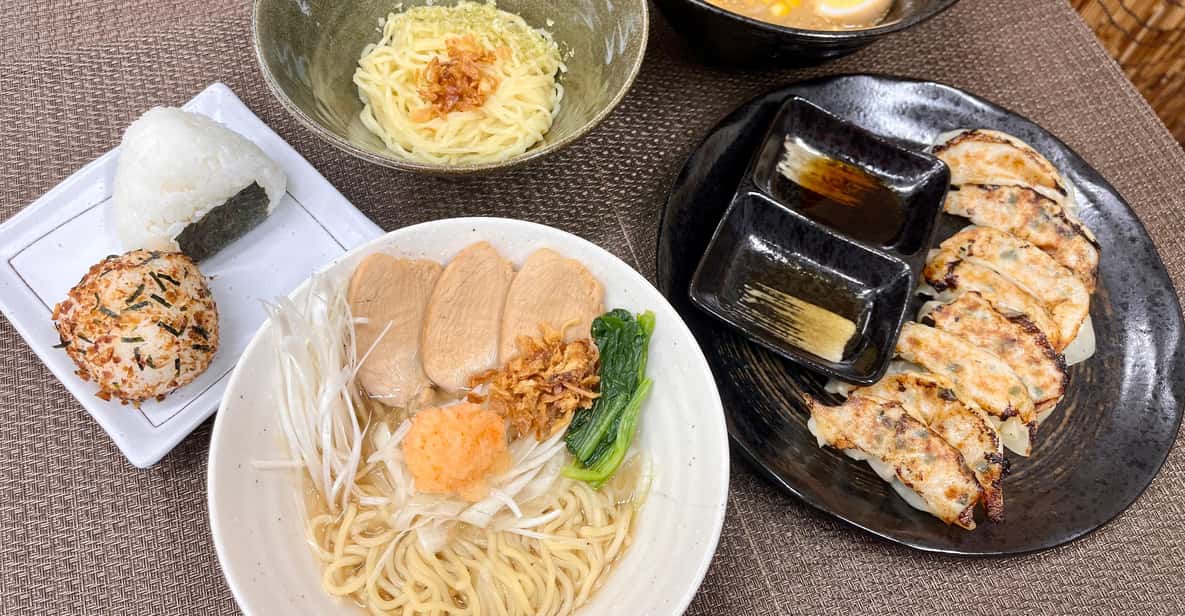
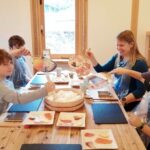
This class is built like three mini-lessons inside one kitchen flow. You’ll rotate through stations, cook what you learn, and then eat it all at the end. Since the group is capped at eight, you don’t feel like you’re stuck waiting for someone to reach your station.
It’s also worth knowing what you’re not doing. They do not make noodles here. The ramen part is all about the soup base: how to make broth with ingredients and seasonings you can get at home.
The Ramen Part You Can Recreate: Miso and Shoyu Broth
Ramen shops sell you noodles, sure. But the reason the bowl works is the broth. Here, the teaching focus is that backbone.
You’ll learn broth for two styles:
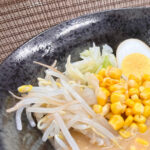
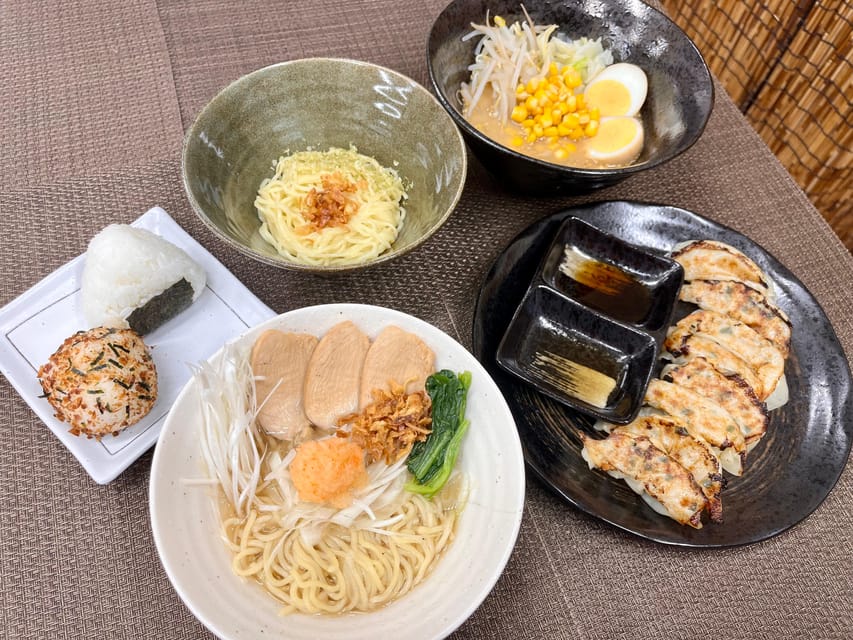
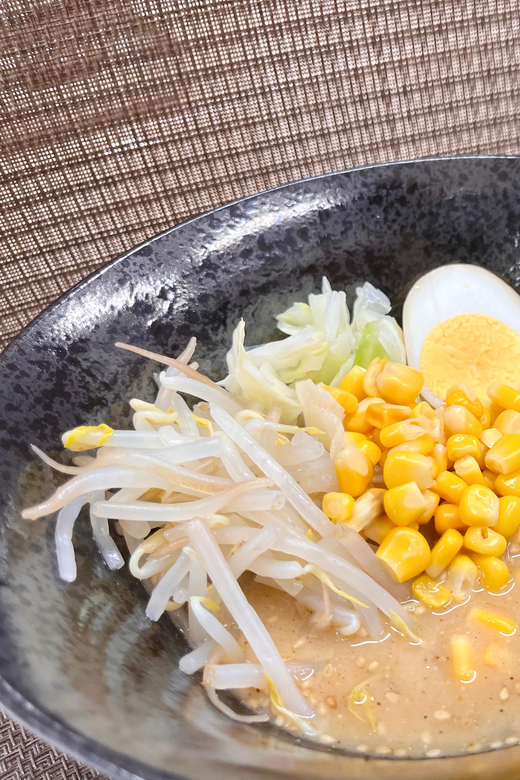
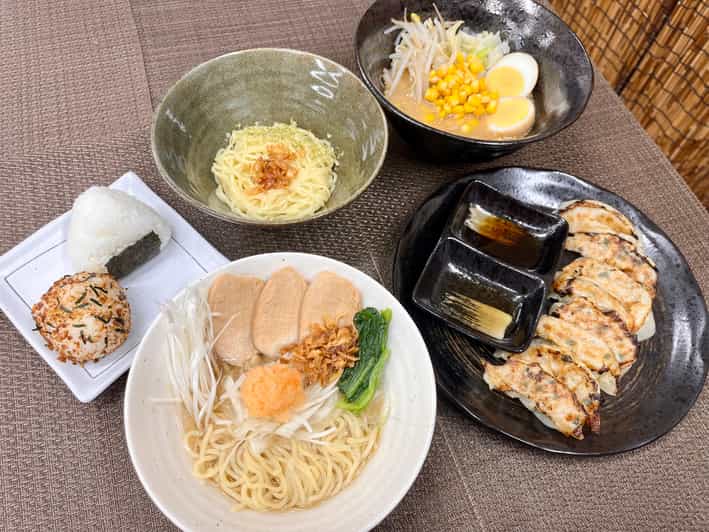
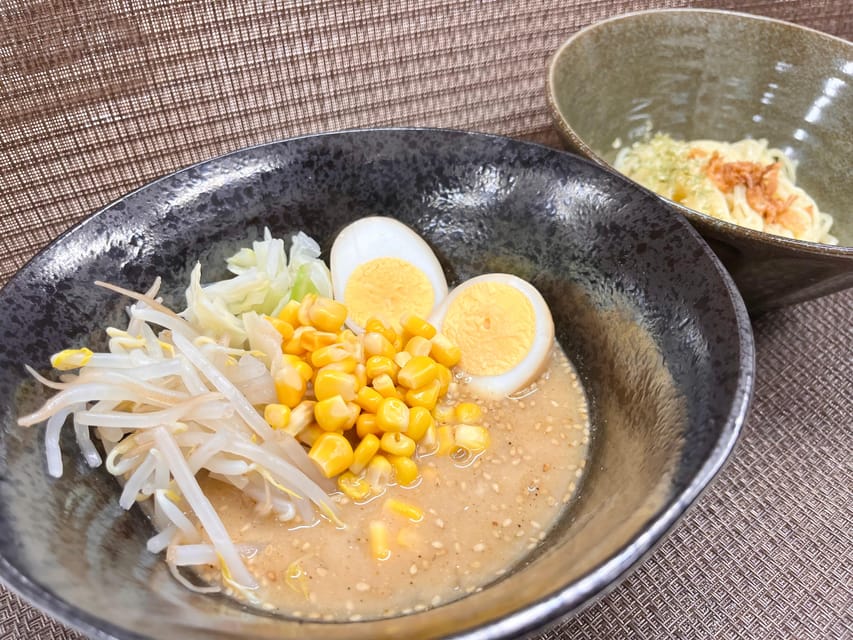
- Miso ramen toppings include boiled egg, bean sprouts, green onions, and sweet corn.
- Shoyu ramen toppings include chicken, bamboo shoots, and green vegetables.
The topping strategy is smart. Toppings shouldn’t scream over the broth; they should support it. This class sticks with simple vegetables as a guide for balancing flavors, so you learn a principle, not just a shopping list.
The ingredients list gives you a feel for the flavor engineering. You’ll see basics like soy sauce, miso, garlic, ginger, mirin, sesame oil, and salt and pepper, plus things like lard and fish powder. It’s a reminder that ramen broth is layered, even when the ingredient list looks straightforward.
And yes, many people leave loving this part because it’s the one step that usually feels mysterious when you try to cook at home. If you’ve ever tasted restaurant ramen and wondered how they got that depth, this is the answer-focused segment.
Gyoza: Filling Balance and the Wrap-and-Seal Technique
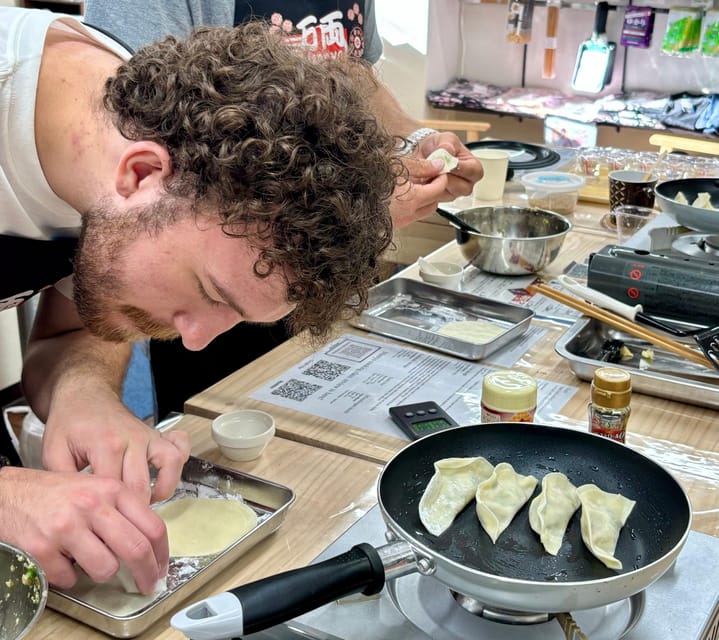
Gyoza is the star homework. The class doesn’t just let you fold dumplings and hope for the best. You’ll get complete instruction on:
- making the right gyoza filling (meat/veg/seasonings balance)
- and mastering the wrapping technique so the shape and seal hold up
In practice, you’ll learn how to avoid common gyoza problems: filling that’s too wet, wrappers that tear, or folds that don’t seal. Once you understand the mechanics, gyoza becomes repeatable, not luck-based.
The station setup also helps. Several class descriptions mention ingredients being portioned and prepared ahead of time. That means you’re not spending your 90 minutes measuring every pinch like a chemist. You’re learning technique while still getting hands-on cooking.


Onigiri: Shaping Rice Balls That Don’t Fall Apart
Onigiri is one of the best “real-life” skills to take home. It’s a quick snack, a lunch alternative to sandwiches, and it’s built for travel days when you don’t want to hunt for a sit-down meal.
Here, you’ll practice making perfectly shaped rice balls. That sounds simple until you try it. The magic is in forming them so they hold together and look tidy, not messy and collapsed.
Even if you’re new to Japanese home cooking, onigiri is beginner-friendly in a way gyoza isn’t. You’re learning shape control and stuffing balance without needing advanced sauce-making.
The People Matter: English Instruction With Real Feedback
A big reason this class earns so many top scores is how coaching actually feels. In the kitchen, it’s one thing to explain. It’s another to notice what you’re doing and correct it fast.
I’ve seen the pattern in the instructor names and teaching styles people mention. Nori and Kairi show up again and again, often with a humorous, friendly approach. Aoi, Mia, Kiara, Ayuna, and Riho also appear as part of the teaching crew in different sessions.
The common thread: instructors speak clear English, and they keep instructions organized at each station. That matters because ramen broth, gyoza folding, and onigiri shaping all require different hand movements. You’ll get guidance in the exact moment you need it.
Food Amount and What It Tastes Like
You’ll eat what you make, and it’s more than a small tasting bite. The class is structured to reward your effort with a full meal at the end, plus the food you cook along the way.
Based on the menu, expect a combination of:
- brothy miso or shoyu ramen
- pan-fried-style gyoza (the folding work is meant for dumplings that hold their shape)
- and seasoned onigiri as a snack-style finish
Also, the class is built around Japanese-style home cooking flavor balance: toppings are simple, so the broth stays in control. If you like the clean, comforting side of Japanese food (not just spicy or heavy flavors), you’ll likely enjoy how the dishes complement each other.
One extra note: some participants mention the option to purchase beer after eating. It’s not part of the included coffee and tea, but if you want something adult with your dumplings, that detail might matter.
Who This Class Suits Best (And Who Should Skip It)
This is ideal for you if:
- you want practical, repeatable technique (especially broth and gyoza)
- you enjoy hands-on cooking with clear English guidance
- you want a Kyoto activity that’s more than watching someone cook
It’s a tougher fit if:
- you need vegan, pescatarian, or gluten-free cooking (they cannot accommodate those diets)
- anyone in your group needs wheelchair access (wheelchair users aren’t suitable for this class)
- you’re bringing younger kids; it’s not suitable under 12, and it requires participants 13+ who can cook by themselves without stuff help
- you’ve had recent surgery and aren’t cleared to stand, handle food, and move around a kitchen setting
Also, the class is pretty hands-on and fast enough that you’ll want comfy clothes and shoes. This isn’t a sit-and-watch workshop.
Price and Value: What $90 Buys You Here
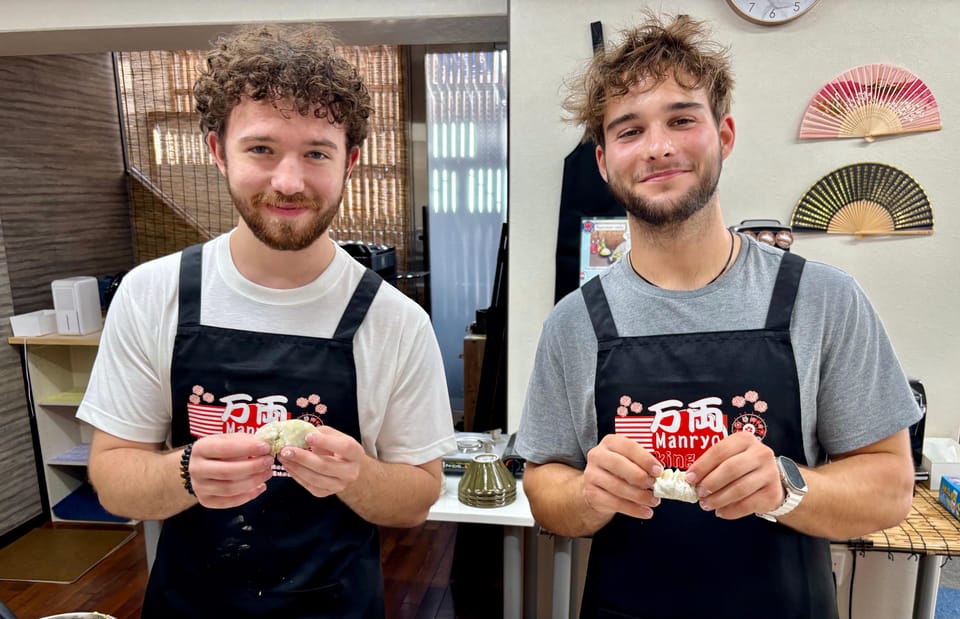
$90 can sound steep until you break down what you’re actually getting.
You pay for:
- 90 minutes of guided cooking in English
- all ingredients and equipment
- the food you make (you’re not just sampling)
- and recipes for ramen and gyoza
- plus free coffee and tea
For ramen specifically, this is the value engine. Homemade ramen is usually hard because the broth is the part most visitors never learn. This class teaches the broth method using ingredients that can be sourced at home, so your money becomes usable skill, not just a one-time meal.
For gyoza, the value is the wrapping and sealing. If you’ve ever eaten a great gyoza and then tried to copy it later with guesswork folding, you know technique matters. This class targets that exact point.
Tips to Get the Most Out of Your Class
If you want the best experience, do these:
- Come ready to eat. You cook and then you eat what you make, so don’t plan a big snack beforehand.
- Wear comfortable shoes and clothes you don’t mind getting a little food on.
- Ask about broth flavor balance while you’re making it. The goal isn’t memorizing steps; it’s understanding how to get that ramen taste with the ingredients you can find later.
- If gyoza feels tricky, slow down your hands and follow the wrap and seal cues. That’s where the class really teaches.
Also, choose Regular vs Vegetarian carefully. The Vegetarian option swaps pork for tofu, but other ingredients remain the same. If your food needs go beyond that, plan on skipping this specific class.
Should You Book the Kyoto Ramen, Gyoza, and Onigiri Class?
If you want a hands-on Kyoto experience that leaves you with skills you can actually repeat at home, I think this is a strong booking choice. It’s focused where most classes are vague: broth you can make again, gyoza wrapping that holds, and onigiri shaping that looks right.
I’d only hesitate if you fall into the diet restrictions, age requirements, or mobility limits. And if you’re hoping to learn how to make ramen noodles here, you should know the class does not make noodles. This one is about soup, dumplings, and rice balls.
FAQ
How long is the cooking class?
It lasts 90 minutes.
How much does it cost?
The price is $90 per person.
Where is the meeting point?
The classroom is located at B1 of Life Building. It’s not on the main street; it’s one street down. If you arrive by cab, get off in front of Family Mart at Sanjo Keihan, then walk about 2 minutes. Search for Manryo cooking class on Google Maps.
Is the class taught in English?
Yes. The instruction is in English.
Is there a vegetarian option?
Yes. There are two menu options: Regular and Vegetarian. In the Vegetarian menu, only pork is replaced with tofu; other ingredients remain the same.
Can they accommodate vegan, pescatarian, or gluten-free diets?
No. The class cannot accommodate vegan, pescatarian, gluten-free, or any other special diets.
What age is the class for?
It isn’t suitable for children under 12. Participants must be 13 and able to cook by themselves without staff help.
Do you make ramen noodles in the class?
No. The class focuses on making ramen broth. You won’t make the noodles.
What’s included in the price?
English-speaking instructors, all cooking ingredients and equipment, the food you make, recipes for ramen and gyoza, and free coffee and tea.
What should I wear or bring?
Bring comfortable shoes and comfortable clothes.
Is it okay to just tour the facility without joining the class?
No. Admission is only allowed for people participating in the class.