REVIEW · KYOTO
Kyoto: Gion Geisha District Walking Tour – Stories of Geisha
Book on GetYourGuide →Operated by Localized Walking & Food Tours · Bookable on GetYourGuide
Nighttime makes Kyoto’s geisha districts feel real. On this two-hour Gion and Pontocho walking tour, you follow candle-lit alleys and get the stories behind the people and the places.
You’ll see narrow lanes, old wooden teahouses, and key landmarks with a local guide in English or Spanish. You also get chances to spot geisha and maiko en route to appointments, as your guide explains how this world works.
I love the way the walk connects practical street-level details to the bigger picture, especially at stops like the Izumo-no-Okuni statue and Yasaka Shrine. I also like that you can ask questions as you go, with guides such as Manuel, Yukari, Ann, Deborah, Nami, and Yuki often praised for answering thoughtfully and keeping the pace easy.
One possible drawback: you’ll be outside for the full two hours, so plan for cool evenings or wet weather.
In This Review
- Key things you’ll notice on this Gion geisha walk
- Nighttime Gion and Pontocho: why this walk hits differently
- Meet your guide at Ben’s Cookies Kyoto Shijo (and what to look for)
- Pontocho Alley at night: old wooden lanes and the mood of the district
- Izumo-no-Okuni statue: kabuki origins with a Kyoto connection
- Walking Gion: how geiko and maiko sightings fit the story
- Yasaka Shrine and Gion Corner: sacred place meets performance culture
- Hanamikoji Street: the classic approach road for noticing everything
- The pacing: a two-hour walk that gives you time to ask questions
- Value for $20: what you actually get for the money
- Etiquette that makes the experience better (and keeps you respectful)
- Who this tour is best for
- Should you book this Gion Geisha District tour?
- FAQ
- Where do I meet the guide?
- How long is the Kyoto Gion Geisha District Walking Tour?
- What areas do we walk through?
- What languages is the tour offered in?
- What should I bring?
- Is the tour suitable for children?
- Are alcohol or drugs allowed?
Key things you’ll notice on this Gion geisha walk
- Pontocho Alley at night: a classic corridor of traditional venues that sets the mood fast
- Izumo-no-Okuni statue: a history stop tied to kabuki origins
- Gion after dark: Hanamikoji and the nearby lanes where you may spot geiko and maiko moving to appointments
- Yasaka Shrine and Gion Corner: a blend of sacred Kyoto and show-culture context
- Live guide stories: names like Yukari, Nami, Kenji, Yuki, and Adrian come up repeatedly for pacing and Q&A
- Easy meeting point: Ben’s Cookies Kyoto Shijo is a simple landmark to start from
Nighttime Gion and Pontocho: why this walk hits differently
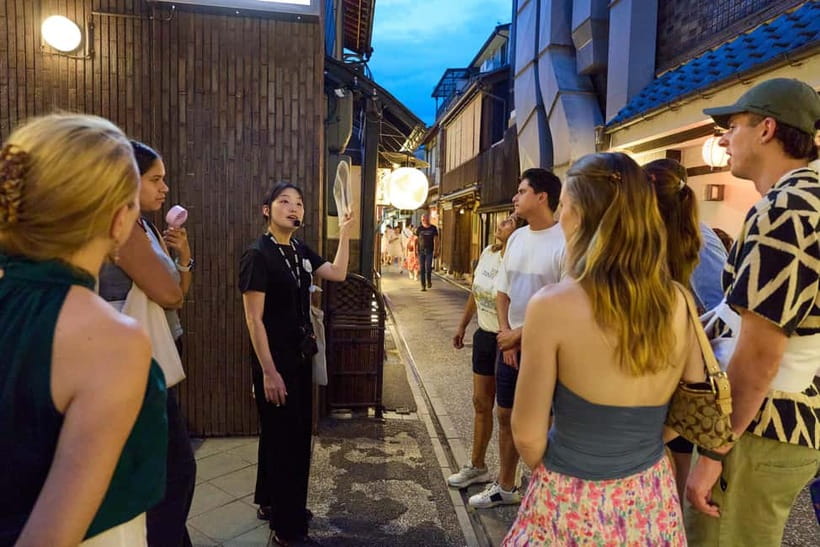
Daytime is for photos. Nighttime is for atmosphere. This tour leans into that difference by sending you through Gion and Pontocho after dark, when the alleys feel quieter and the details stand out more.
The biggest payoff is that you’re not just looking at pretty streets. You’re learning how the culture fits together: appointments, performance tradition, and the way certain landmarks function as real parts of the district’s rhythm. When your guide points things out and keeps the story moving from stop to stop, the whole area starts to make sense.
You can also read our reviews of more tours and experiences in Kyoto.
Meet your guide at Ben’s Cookies Kyoto Shijo (and what to look for)
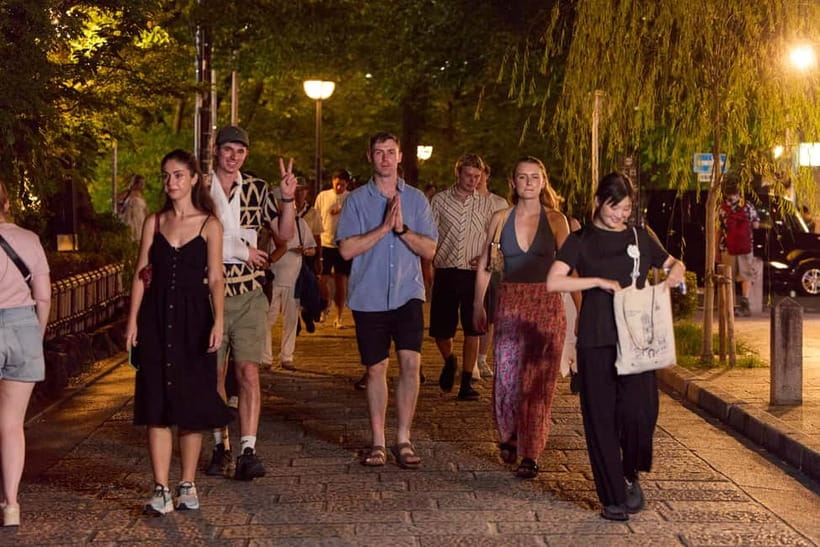
You start at Ben’s Cookies Kyoto Shijo, meeting your guide in front of the shop. Your guide will be holding a sign board, so you can confirm you’re in the right group quickly.
This start location matters more than you might think. In Kyoto, alley networks can tangle your brain. Starting at an obvious, well-known spot helps you get oriented fast, so you can spend your energy on the walk instead of map-wrangling.
Pontocho Alley at night: old wooden lanes and the mood of the district
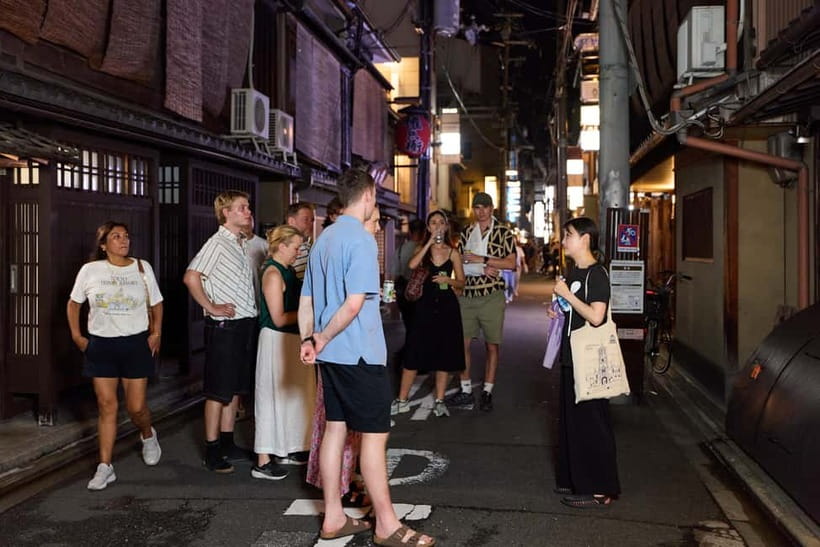
Your first real street immersion is Pontocho Alley. You’ll stroll through a lane known for traditional Japanese eateries and elite clubs, and your guide uses the setting to explain what makes this entertainment area special.
Here’s what I’d watch for: the narrowness. Pontocho feels like a corridor of old Kyoto architecture, so even simple street scenes become more meaningful when you understand what the area was built for. And because it’s nighttime, you’re more likely to notice the rhythm of the district rather than just the landmarks.
Practical tip: keep your phone ready, but don’t freeze mid-step. You’ll want a steady pace so you can hear the explanations and still catch what your guide is pointing out.
Izumo-no-Okuni statue: kabuki origins with a Kyoto connection
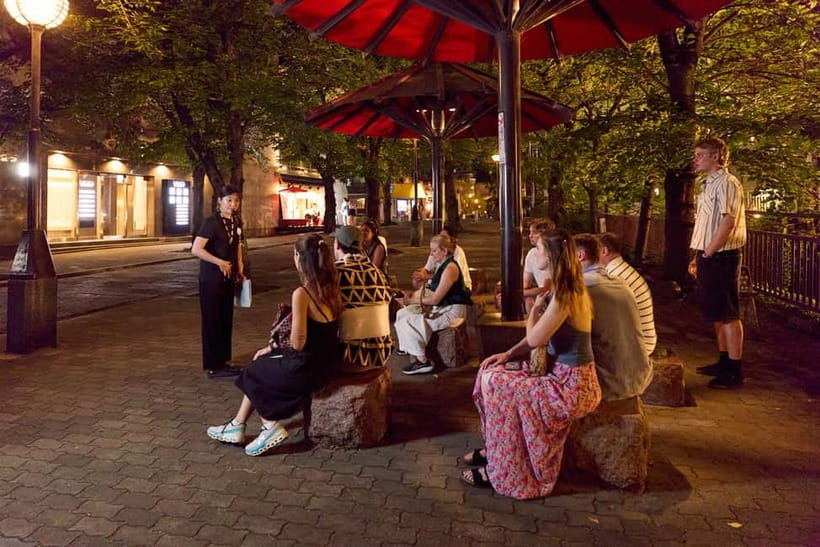
After Pontocho, you stop at the statue of Izumo-no-Okuni. The tour uses this moment to tell the story of the woman who is credited with inventing the art of kabuki.
This is a smart stop for a couple reasons. First, it connects Kyoto’s geisha culture to Japan’s broader performance world, instead of treating geisha as an isolated curiosity. Second, it gives you a concrete name and story you can hold onto while you walk, so the district’s entertainment vibe feels rooted in history.
You’ll usually get time to look around and absorb the explanation, which helps the stop land rather than feeling like a quick photo break.
Walking Gion: how geiko and maiko sightings fit the story
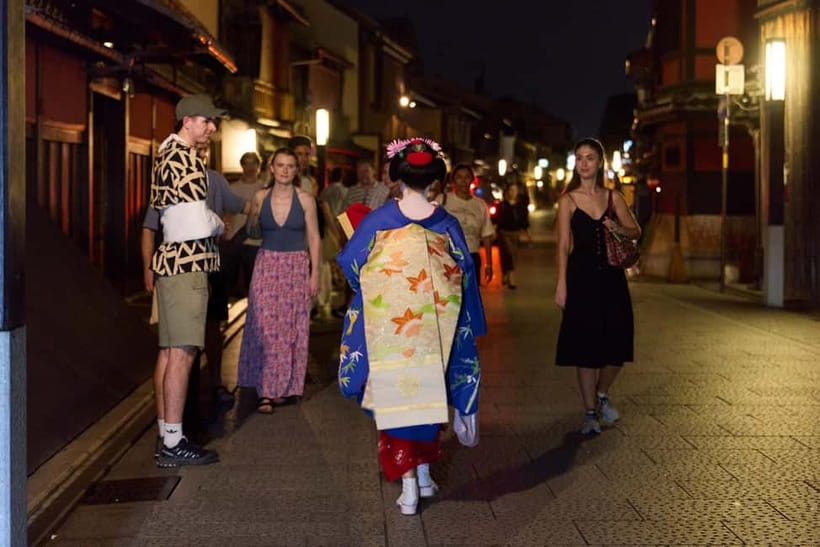
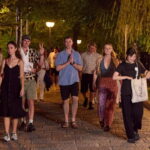
Next comes Gion, with time to explore the district on foot. This is the heart of the experience: you move through lanes tied to Kyoto’s most famous geisha district while learning how geisha culture works in daily life.
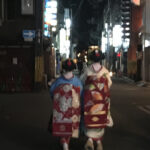
One of the most exciting parts is the chance to encounter geisha and maiko en route to appointments. Some groups also report seeing a maiko during the walk, but remember: you’re looking at people’s real routines, not a staged show. Your best approach is quiet attention and respect, and let the district surprise you.
This stop is also where guides often shine. In the feedback, many guides are praised for adjusting the level for beginners and seasoned Japan-watchers alike. If you’re new to the terms, that flexibility helps a lot. If you already know the basics, you’ll likely appreciate the extra context your guide adds as you walk.
Yasaka Shrine and Gion Corner: sacred place meets performance culture
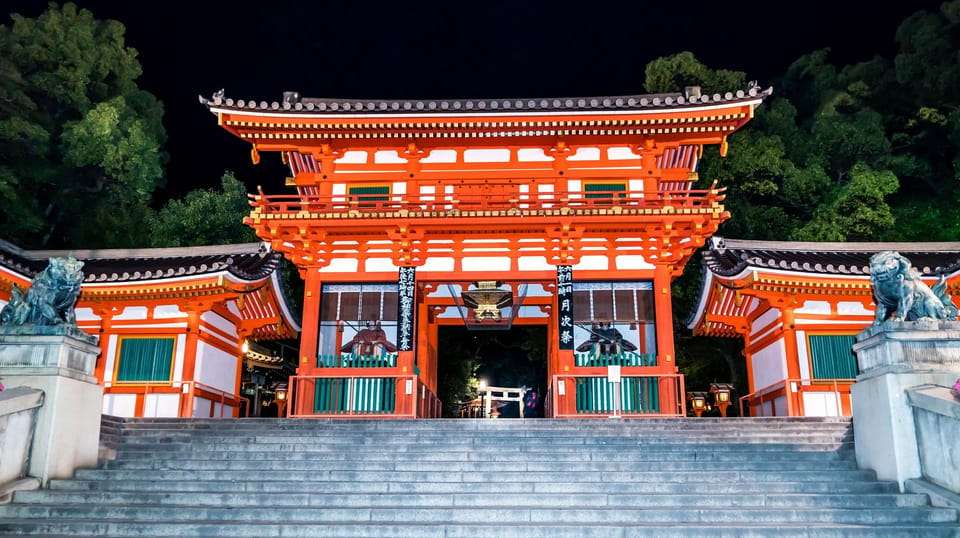
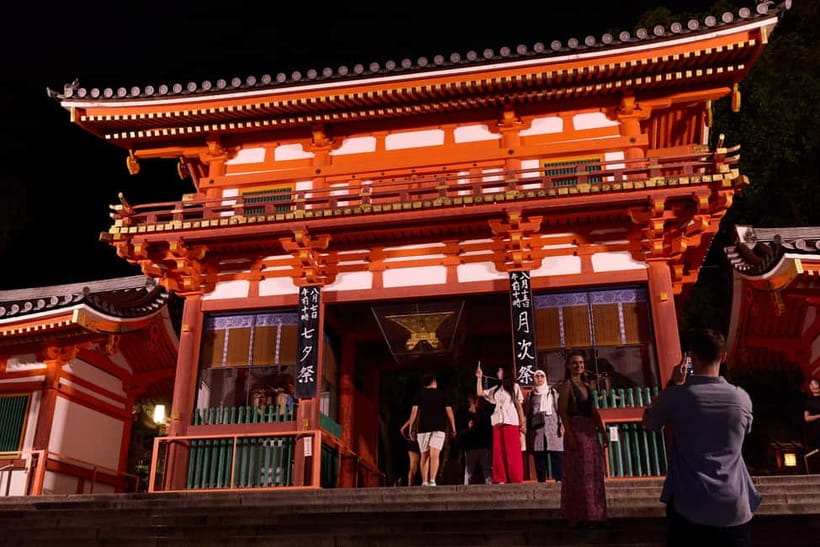
You’ll head to Yasaka Shrine, one of Kyoto’s major landmarks tied to local tradition. The tour uses the shrine stop to add depth to the cultural setting around Gion—less about geisha as an isolated theme, more about how ceremony and public life intersect in the city.
Then you continue to Gion Corner, a smaller stop that acts like a bridge between the district you’re walking through and the performance side of Japanese tradition. Even if you don’t know every detail, you’ll come away with better context for what you’re seeing in the streets: why certain areas exist, and how entertainment traditions connect to identity and history.
If you’re hoping for a purely scenic stroll, this is where the tour turns more educational. That balance is usually what makes the two hours feel worth it.
Hanamikoji Street: the classic approach road for noticing everything
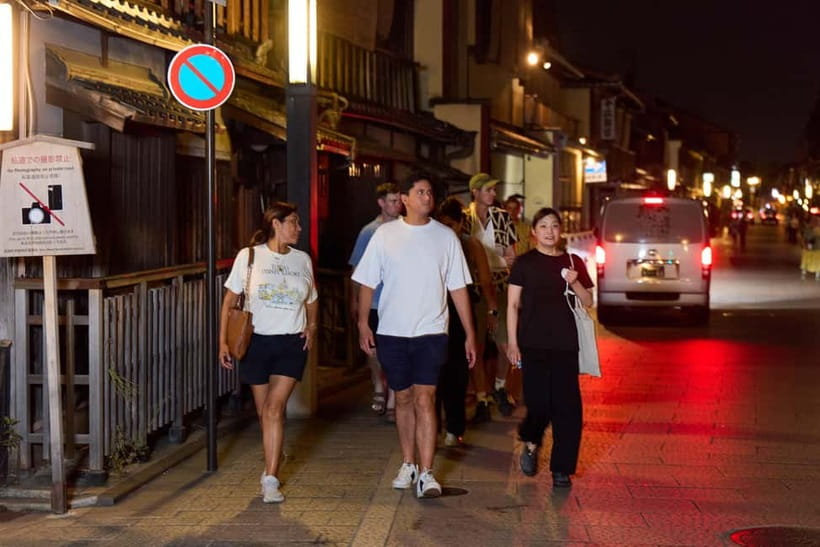
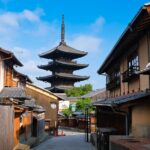
To finish up, you spend time on Hanamikoji Street, another signature lane of Gion. This is the place where your guide will likely help you keep an eye out for geishas as they make their way to appointments.
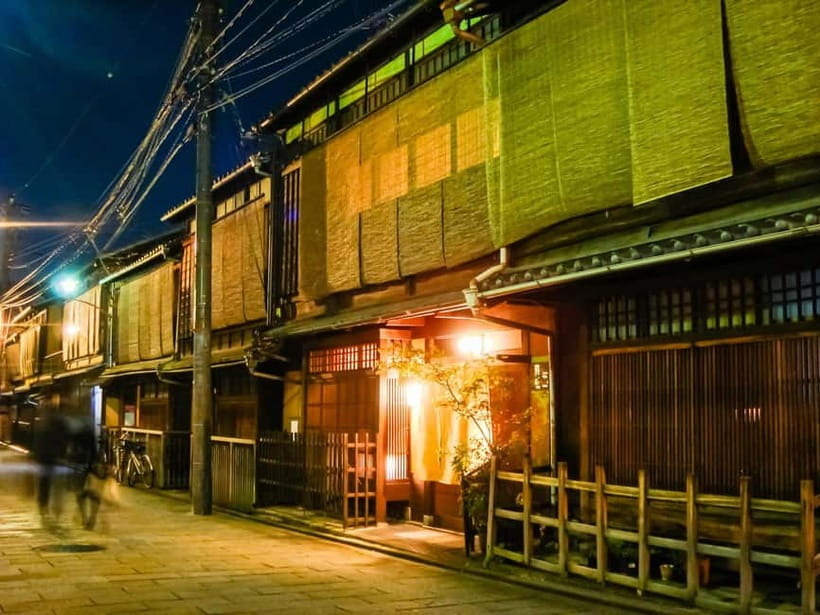
Hanamikoji is famous for a reason, but the tour makes it more than a name on a map. As you walk, you start seeing patterns: where people pause, how the street feels at night, and how the district’s identity shows up in the architecture and flow of movement.
Pro move: slow down at the wider sightlines. That’s where you’ll have an easier time spotting what your guide is referencing without blocking anyone’s path.
The pacing: a two-hour walk that gives you time to ask questions
A lot of walking tours either rush the story or treat questions as a nuisance. This one aims for the sweet spot: enough time at each stop to understand what you’re looking at, plus room to ask your guide something that’s been bugging you.
The itinerary is built for a steady rhythm: short visits at key points, then a longer stretch through the district so the story isn’t chopped into tiny pieces. In feedback, many guides are praised for managing timing well, checking in with the group, and not making the walk feel like a lecture.
If you’re traveling with limited time in Kyoto, this format is a practical win. You get a focused introduction to Gion at night without needing a full half-day.
Value for $20: what you actually get for the money
At $20 per person for a two-hour guided walking tour, you’re paying for three things: local context, time efficiency, and a guided way to notice details you’d likely miss on your own.
Could you wander Gion and Pontocho solo? Sure. But without an explanation of why specific landmarks matter, you’d be stuck with vibes only. This tour gives you a structure: Pontocho, Izumo-no-Okuni, Gion, Yasaka Shrine, Gion Corner, Hanamikoji. That structure turns the streets into a story you can follow.
And because it’s a live guide in English or Spanish, you’re not just watching a slideshow. You can ask questions in plain language and get answers on the spot. Several guides in the feedback are specifically noted for being friendly, funny, and good at shaping the tour to the group’s level.
Etiquette that makes the experience better (and keeps you respectful)
Because the tour focuses on geisha culture in real streets, your behavior matters.
- Keep your voice low in quiet lanes and don’t crowd doorways or street corners.
- Take photos only if your guide indicates it’s okay, and don’t block foot traffic.
- Treat any geisha or maiko sighting as a moment to observe, not a moment to chase.
- Bring water and wear shoes you can walk in comfortably on uneven pavement.
Also, the tour rules clearly say no alcohol and no drugs. Follow that. It helps everyone keep the right tone for a cultural walk.
Who this tour is best for
This tour works best if you want more than scenery. It’s a great fit for:
- First-timers in Kyoto who want a structured introduction to Gion and Pontocho at night
- People who enjoy asking questions and learning the “why” behind the places
- Travelers who want a short plan that still feels culturally focused
It’s not suitable for children under 10, based on the tour’s guidelines. If you’re traveling with kids, you may want to plan a different kind of family-friendly Kyoto walk.
Should you book this Gion Geisha District tour?
Book it if you want an organized, two-hour night walk where the streets actually come with context. It’s especially worth it when you’re short on time in Kyoto but still want to understand what you’re seeing in Gion and Pontocho.
Skip it if you hate walking at night, aren’t interested in cultural stories, or need a guaranteed chance at seeing geiko and maiko. Night sightings can’t be forced, and this tour is about respectful observation plus history—not a controlled performance.
FAQ
Where do I meet the guide?
Meet your guide in front of Ben’s Cookies Kyoto Shijo. The guide will be holding a sign board.
How long is the Kyoto Gion Geisha District Walking Tour?
The tour lasts 2 hours.
What areas do we walk through?
You’ll walk through Pontocho Alley and Gion, with stops at the statue of Izumo-no-Okuni, Yasaka Shrine, Gion Corner, and Hanamikoji Street.
What languages is the tour offered in?
The live guide speaks English and Spanish.
What should I bring?
Bring water.
Is the tour suitable for children?
It is not suitable for children under 10.
Are alcohol or drugs allowed?
No. Alcohol and drugs are not allowed.