REVIEW · KYOTO
Kyoto Nighttime All-Inclusive Eats and Streets, Gion and Beyond
Book on Viator →Operated by Pinpoint Traveler, Inc · Bookable on Viator
Kyoto after dark has a whole other rhythm, and this tour is built around it. You’ll start in Gion as the evening economy wakes up, then shift into local food stops where you’ll eat Kyoto-style favorites at standing bars and small restaurants. The goal is not just to spot pretty streets, but to understand why people go out, how entertainment changed, and what that means in everyday life.
I love how this experience mixes street culture with real eating. You get storytelling about geiko (and why Kyoto avoids the geisha label), plus a look at how traditional evening arts connect to today’s hostess clubs. I also like the practical value: dinner-style tastings plus two included beverages, with options like beer, shochu, or sake depending on what you choose and what the restaurants offer.
One possible drawback: you’re on foot for a good chunk of the evening, and nights in Gion can feel less photogenic as it gets darker. Also, small local spots can mean tight seating and occasional smoking in rare cases, so if you’re sensitive, plan accordingly and let your guide know.
In This Review
- Quick take: what makes this Kyoto night tour work
- Why Kyoto’s nighttime economy feels personal in Gion and beyond
- The 6:30 Gion start: geiko vs geisha, and how the streets explain the culture
- The first food stop around 7:30: dinner tastings and the included drink choice
- The 8:15 west-bank stroll: Pontocho, Kiyamachi, and Kawaramachi’s two speeds
- The second stop near 9:00: more Kyoto food, another included drink, and a clean ending
- Price and value: what $119 buys you on a 3-hour Kyoto night
- Who this tour fits best (and who should think twice)
- Smart tips to make the evening smoother
- Should you book this Kyoto nighttime eats tour?
- FAQ
- Where does the tour start?
- Where does the tour end?
- How long is the experience?
- What is included in the price?
- Can I choose alcohol or non-alcoholic drinks?
- Is the tour suitable for teenagers?
- Are vegetarian dietary needs accommodated?
- How big is the group?
- Will the restaurant stops always be the same?
- What happens if the weather is bad?
Quick take: what makes this Kyoto night tour work
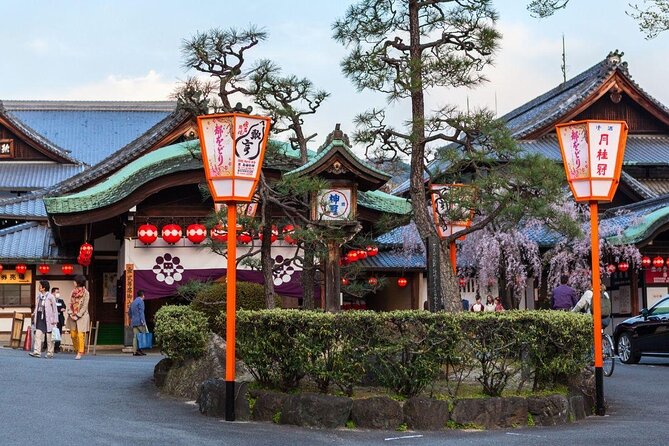
- Gion at the start (east bank): learn the etiquette and vocabulary behind geiko culture
- Local bars, not tourist menus: food is served in small, shareable rounds
- Two included drinks: alcohol is optional at either stop; non-alcoholic options also work
- Small group size: max 6 people (up to 8 if it’s one reservation group)
- West-bank night stroll: Pontocho, Kiyamachi, and Kawaramachi area streets
- Guides with real character: names like Hugo, Lin, Joshua, Maya, Laura, Jamie, Bryan, Rin, Brian, and Jaime show up in standout experiences
Why Kyoto’s nighttime economy feels personal in Gion and beyond
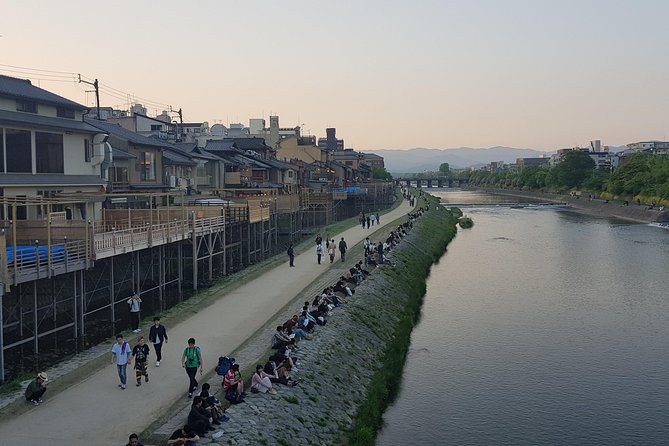
Kyoto’s nightlife isn’t loud like some cities. It’s more about roles, rituals, and neighborhoods, and this tour gives you the map for how it all fits together. You start near Gion Shijo, then you’ll spend the night moving along the Kamogawa River—east first, then west—so you can feel how the city changes when the lights come on.
What you learn here is surprisingly practical. You’ll hear the difference between terms people use for traditional entertainers, and you’ll also learn how evening entertainment evolved over time into what you see now, including hostess clubs. That context helps a lot if you’ve only seen Kyoto from temple lines and vending machines.
You can also read our reviews of more tours and experiences in Kyoto.
The 6:30 Gion start: geiko vs geisha, and how the streets explain the culture
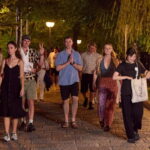
The evening begins at Minamiza Theater near the Gion Shijo area, with a guided walk into Gion, Kyoto’s famous entertainment district on the east side of the Kamogawa River. Expect an educational stroll that’s not academic for its own sake. You’ll learn what makes Gion special and how evening entertainment works there.
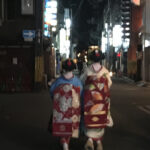
A key moment is the talk about geiko—the term used in Kyoto—and why you generally don’t hear the word geisha the same way here. That kind of detail matters, because language in Kyoto is part of respect and accuracy, not just trivia.
You’ll also get an explanation of how the traditional evening arts connect to modern hostess clubs. It’s the sort of cultural bridge that turns what looks like a street-scene into something you can actually interpret as you walk.
If you’re worried about pacing or staying engaged, the format is built for it. The walking portion sets the tone, and the tour stays suitable for teenagers and up (minimum age 13+). Guides with strong feedback—like Hugo, Joshua, and Laura—are often praised for making the stories feel lively, not lecture-like.
The first food stop around 7:30: dinner tastings and the included drink choice
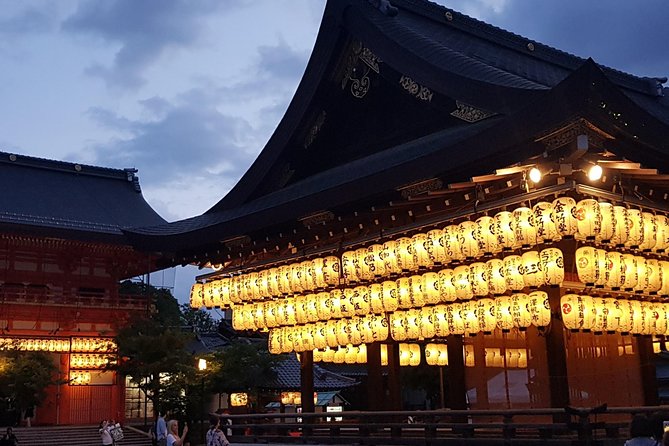
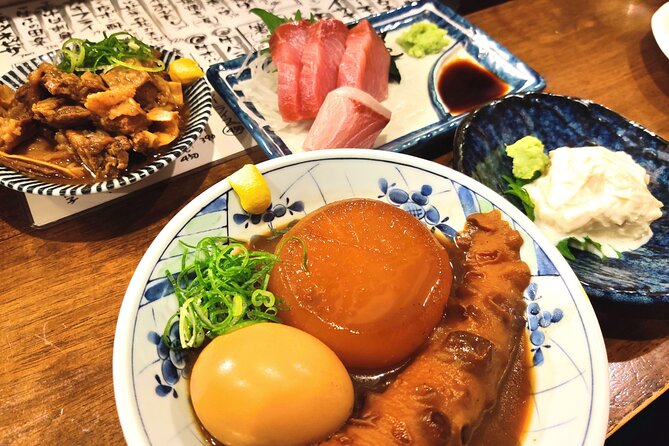
After the Gion walk, you switch into food mode around 7:30. The tour is designed for multiple small tastings, which is smart in Kyoto, where restaurants can be compact and menus can shift fast depending on the day.
This is where you’ll sample regionally representative dishes. The included beverage can be beer, or you can choose shochu or sake instead if that fits you better. The tour notes that various dietary needs can be accommodated, including vegetarian options, so you’re not stuck on one “safe” item.
Two things I really like about how the food is handled:
- You get enough variety to understand what you’re tasting, instead of eating one heavy dish and calling it a night.
- You aren’t doing the logistics yourself. In Japan, that alone saves time and stress, especially when you’re trying to order in a language you don’t read.
One practical note from real-world dining: standing-bar style places can be louder and tighter than sit-down restaurants. That’s part of the atmosphere, but it also means your comfort depends on your tolerance for close quarters.
The 8:15 west-bank stroll: Pontocho, Kiyamachi, and Kawaramachi’s two speeds
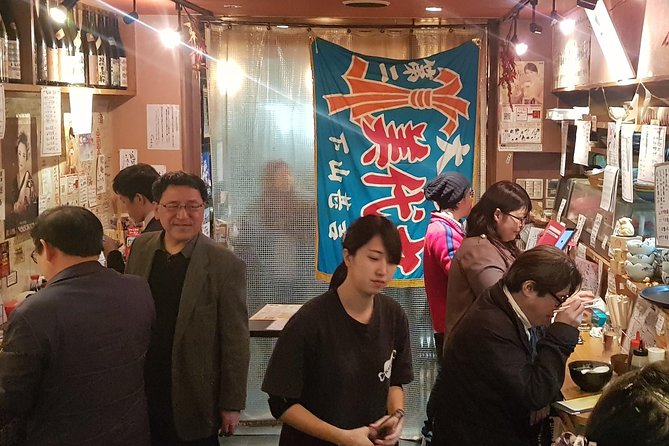
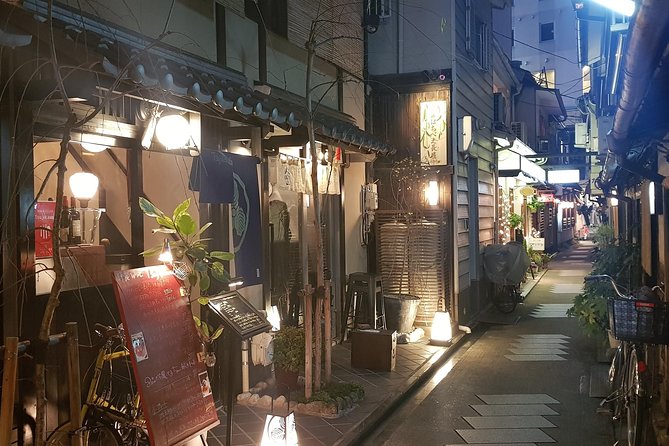
Around 8:15, you’ll move to the west side of the Kamogawa River and spend time walking through Pontocho, Kiyamachi, and the Kawaramachi St. area. This segment is a great “contrast walk.”
On the one hand, you’ll see the older, narrow streets around Pontocho, where Kyoto people take preservation seriously. On the other hand, a couple blocks away you’ll notice the younger side—areas where people are just as eager to live in the present. Walking both feels like comparing two versions of Kyoto at the same hour.
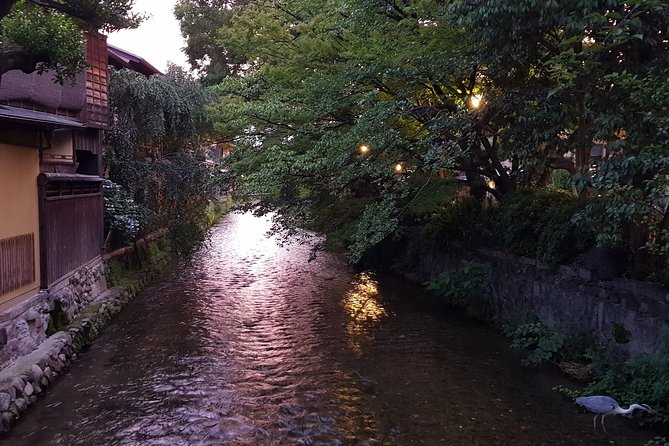
This is also the stretch where your photo expectations should be realistic. Nights get dark fast, and some of the street scenes are best appreciated by sight and sound rather than a perfect camera shot.
If you want a tip to enjoy this section more: slow down and watch how people move. Kyoto nightlife often looks calm, but it has flow—groups lining up, small doors opening into warm rooms, and the quiet choreography of staff and regulars.
The second stop near 9:00: more Kyoto food, another included drink, and a clean ending
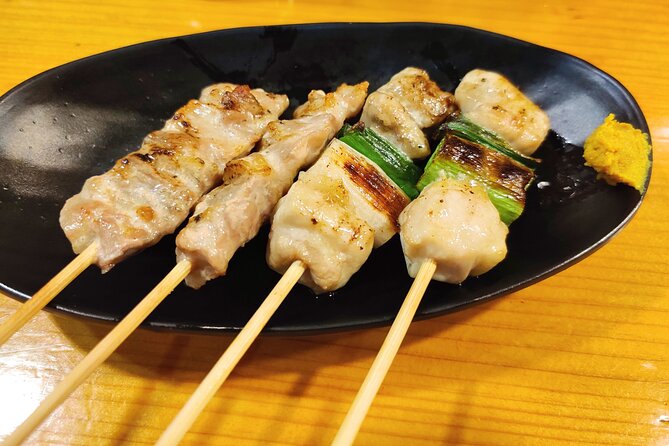
No one eats just once in Japan, and this tour plans for a second stop around 9:00. Expect more tasty food options plus another included drink. This is the point where the night usually clicks: you’ve learned the cultural context, you’ve tasted Kyoto-style dining, and now you’re just letting the evening unfold.
This second restaurant is also where seating can vary. One important consideration: some venues seat groups at a bar setup, which can make conversation harder if you’re traveling with friends who want to talk nonstop. If you’re sensitive to that, it helps to go in knowing that the main purpose here is food and atmosphere, not a long, relaxed table chat.
Toward the end, you’ll finish the tour around 9:30 at Kyoto-Kawaramachi Station. That ending location is useful because it keeps you central for onward plans—whether that’s more exploring, dinner-hopping on your own, or heading back to your hotel.
Price and value: what $119 buys you on a 3-hour Kyoto night
At $119 per person for about 3 hours, this isn’t “cheap,” but it’s not overpriced for what you get either. The value equation is pretty clear:
- You’re paying for guided walking through Gion with cultural storytelling that helps the streets make sense.
- You’re paying for dinner-style tastings across stops, not just snacks.
- You’re getting two included beverages, with alcohol available at restaurant stops (one drink in each place).
- The group is kept small: max 6 travelers (or up to 8 when it’s one reservation group), which tends to make ordering and pacing easier.
If you tried to replicate this on your own, you’d likely spend extra time figuring out where to go, how to order, and what’s truly local versus tourist-friendly. This tour buys you that confidence fast.
Who this tour fits best (and who should think twice)
This is a great fit if you want:
- a first-night Kyoto plan that’s different from temples and gardens
- izakaya-style energy (standing bars, small dishes, shared vibe)
- cultural context about geiko culture and modern hostess entertainment
- food variety with vegetarian accommodations
It may be less ideal if you:
- need lots of downtime and minimal walking (this is a real walking evening)
- dislike tight seating environments, especially bar-style spots
- are extremely sensitive to smoke, since smoking can occur in rare cases at small local venues
Also, if you’re the kind of traveler who wants only daytime photos, know that night streets can be harder to photograph well. The payoff is the feel, not the Instagram brightness.
Smart tips to make the evening smoother
Here’s how to set yourself up for a great night.
- Wear shoes you can walk in. This is Kyoto, but at night you’ll move more than you expect.
- Bring a light layer. Night in Kyoto can feel chilly, and the walking segments last long enough that you’ll notice.
- If you’re ordering alcohol, remember Japan’s minimum drinking age is 20.
- For dietary needs, plan to be clear at booking. The tour states that vegetarian diets are happy to be accommodated, and the format is set up to handle different restrictions.
- Meet with a bit of buffer time at the start. The meeting area can have multiple groups, so give yourself a minute to locate your guide confidently.
Should you book this Kyoto nighttime eats tour?
If you want a guided night plan that gives you both context and cuisine, I’d book it. The combination of Gion storytelling, a west-bank street walk through Pontocho and Kiyamachi, and two restaurant stops with tastings and drinks is exactly the kind of “first-night” strategy that saves time and adds meaning.
I’d think twice only if your top priority is a quiet, sit-down dinner experience with lots of breathing room. This tour leans into small places, walking, and lively neighborhood energy. If that sounds like your style, it should fit you well.
FAQ
Where does the tour start?
The tour meets at Minamiza Theater in Kyoto, near the Gion Shijo area, with the address listed as 605-0075 Kyoto, Higashiyama Ward.
Where does the tour end?
The tour ends at Kyoto-Kawaramachi Station in Shimogyo Ward.
How long is the experience?
It lasts about 3 hours.
What is included in the price?
The price includes dinner, plus two alcoholic or non-alcoholic beverages (one in each restaurant).
Can I choose alcohol or non-alcoholic drinks?
Yes. The tour includes two alcoholic or non-alcoholic beverages, and the minimum drinking age in Japan is 20 for alcoholic drinks.
Is the tour suitable for teenagers?
Yes. All participants must be 13+, and the tour is described as suitable for teenagers and higher.
Are vegetarian dietary needs accommodated?
Yes. Vegetarian guests are accommodated.
How big is the group?
The tour is limited to a maximum of 6 travelers, and groups up to 8 are welcome when the entire group is the same reservation.
Will the restaurant stops always be the same?
The specific restaurant stops can differ each evening, since the tour visits a variety of small locally owned restaurants and bars.
What happens if the weather is bad?
This experience requires good weather. If it’s canceled due to poor weather, you’ll be offered a different date or a full refund.