REVIEW · KYOTO
Kyoto: Hop-on Hop-off Sightseeing Bus Ticket
Book on GetYourGuide →Operated by Myojo bus Co. · Bookable on GetYourGuide
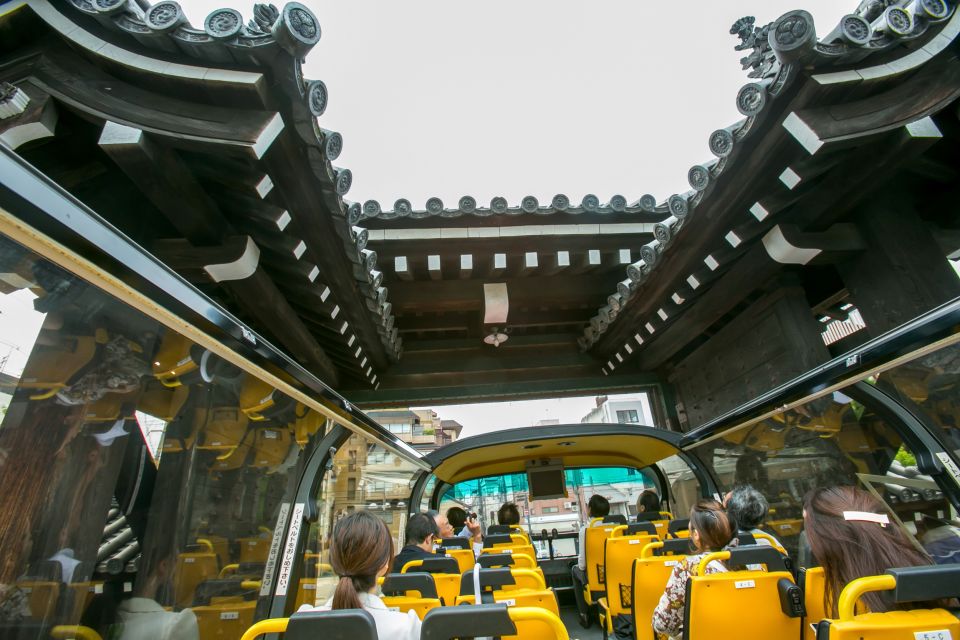
Kyoto is big, spread out, and easy to over-plan. This hop-on hop-off bus gives you a simple way to hit the major sights without wrestling transit. I like the open-top double-decker views and the freedom to stay on long or get off fast. I also really appreciate the 7-language audio that helps you understand what you’re seeing as you roll past it.
The big win is convenience: you board at any stop using your mobile voucher and ride the route at your pace, with enough coverage to support a first-timer day or a calmer two-day plan. One thing to think about: the top deck is open to the sun (and rain rules are strict), so you’ll want to pack for weather and follow the on-board limits.
In This Review
- Key points to know before you ride
- Why this Kyoto bus works: freedom plus a ready-made route
- Price and value: what $27 gets you (and what it doesn’t)
- Where you board at Kyoto Station: the easiest starting point
- Your route, stop by stop: what each location is best for
- Kyoto Station: reset your day and orient fast
- Nishihonganji (Kyoto Tokyu Hotel): a strong mid-city landmark
- Shijo Karasuma / Nishiki-ichiba Market: food street energy
- Nijo-jo Castle: where Kyoto history feels tangible
- Kitano-tenmangu Shrine / Kamishichiken: north Kyoto flavor
- Kinkakuji (Golden Pavilion): yes, it’s crowded. Plan anyway.
- Daitokuji Temple: for when you want quiet after the spotlight
- Kyoto Imperial Palace (Doshisha University): formal Kyoto
- Ginkakuji (Silver Pavilion): the classic follow-up
- Heian-jingu Shrine / Okazaki Park: Kyoto’s scenic pause
- Gion (Kotowa-Kyoto Yasaka): Kyoto at its most postcard-like
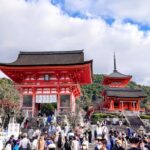
- Gojozaka (Kiyomizu-Dera Temple / Gion): the Kiyomizu access point
- Sanjusangendo / Kyoto National Museum (Hyatt Regency Kyoto): culture stop with options
- Open top reality check: sun, shade, and how to ride smarter
- Audio guidance: helpful, but not a substitute for site history
- Timing and crowds: how to avoid the usual hop-on frustration
- Staff help: where it actually makes a difference
- Who this Kyoto hop-on bus is best for
- A realistic 1-day vs 2-day plan (so you don’t rush yourself)
- Should you book Kyoto’s hop-on hop-off bus?
Key points to know before you ride
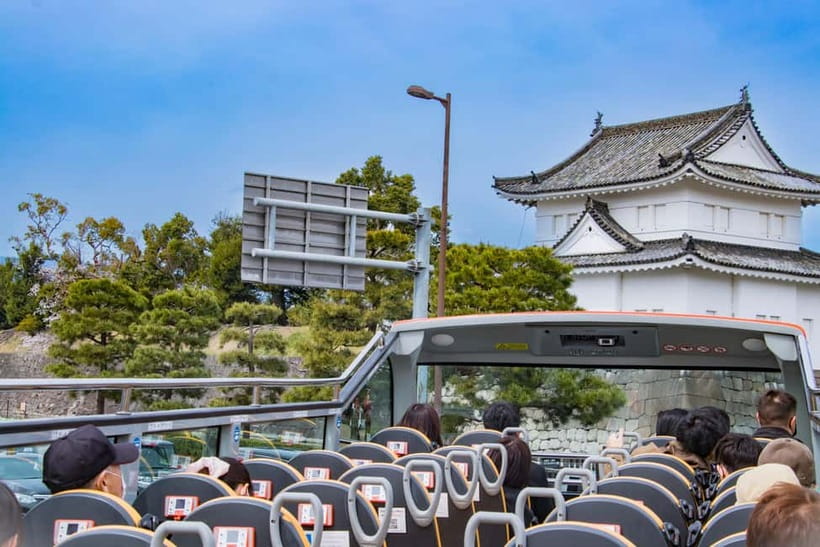
- Open-top views: great panoramas, but direct sun means plan shade breaks
- Hop on/off with a mobile voucher: you can bounce between neighborhoods without fixed timing
- Audio in 7 languages: English, French, Japanese, Korean, Chinese, Spanish, German
- A route built for Kyoto highlights: from Nijo Castle to Kinkakuji and down to Gion
- Two ticket lengths that actually match reality: 1 day for a fast sweep, 2 days for breathing room
- Practical rider guidance from staff: attendants are often reported as friendly and helpful at stops
Why this Kyoto bus works: freedom plus a ready-made route
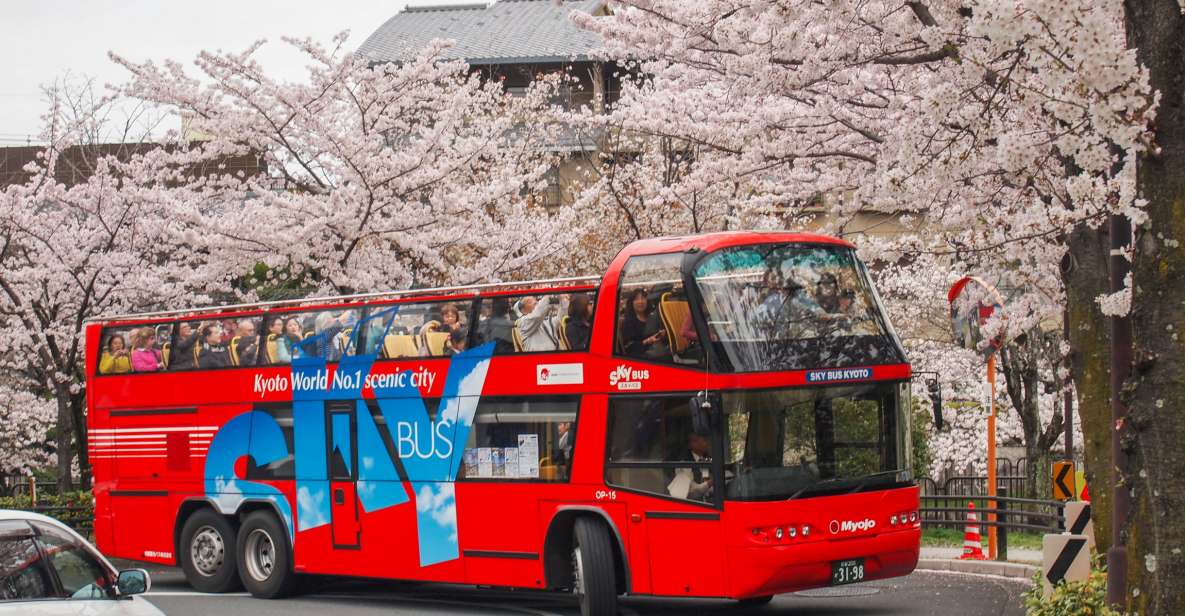
Kyoto’s charm can also be a trap: you’ll love a temple, then realize the next one is across the city. This bus solves that problem in a very simple way. You get a fixed set of stops, but you control the timing at each one. That’s the sweet spot for people who don’t want to calculate bus transfers every hour.
I like that the route is built around the sights most people actually plan their trip around. You’re not just passing by generic landmarks. You’re going past major Kyoto anchor points—UNESCO sites like Nijo Castle, Kinkakuji (Golden Pavilion), and Kiyomizu-Dera—so your day feels purposeful even when you’re moving at your own speed.
The second reason this works is how easy it is to use. You can board at any stop using your mobile voucher. No complicated ticketing puzzle. Just get on, find your language on the audio, and let the bus carry you between neighborhoods.
You can also read our reviews of more tours and experiences in Kyoto.
Price and value: what $27 gets you (and what it doesn’t)
At about $27 per person for a 1–2 day pass, this is the kind of deal that makes sense when you’re short on time or energy. Kyoto can burn money in small ways—taxis, multiple transit tickets, and the cost of missing your best sight because you ran out of time. This pass is a way to turn that uncertainty into one predictable line item.
What it includes is the transport and guidance:
- Your 1-day or 2-day bus ticket
- Audio commentary (in 7 languages)
- On-board Wi‑Fi is listed as temporarily suspended, so don’t count on it
What it doesn’t include:
- Entrance fees to temples/shrines
- Food and drinks
- Any special “skip-the-line” entry
That matters because Kyoto’s biggest sites often have their own admission rules. The bus helps you get there, but you still need to pay to enter many attractions. So, I treat this bus as a logistics tool and a sightseeing sampler—not as a ticket that includes everything you’ll want to see up close.
Where you board at Kyoto Station: the easiest starting point
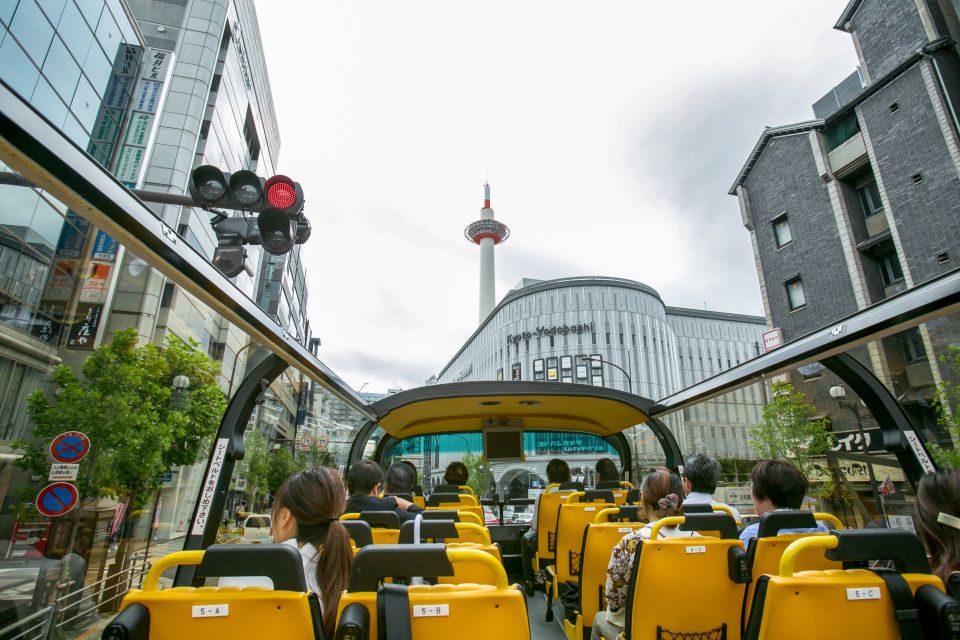
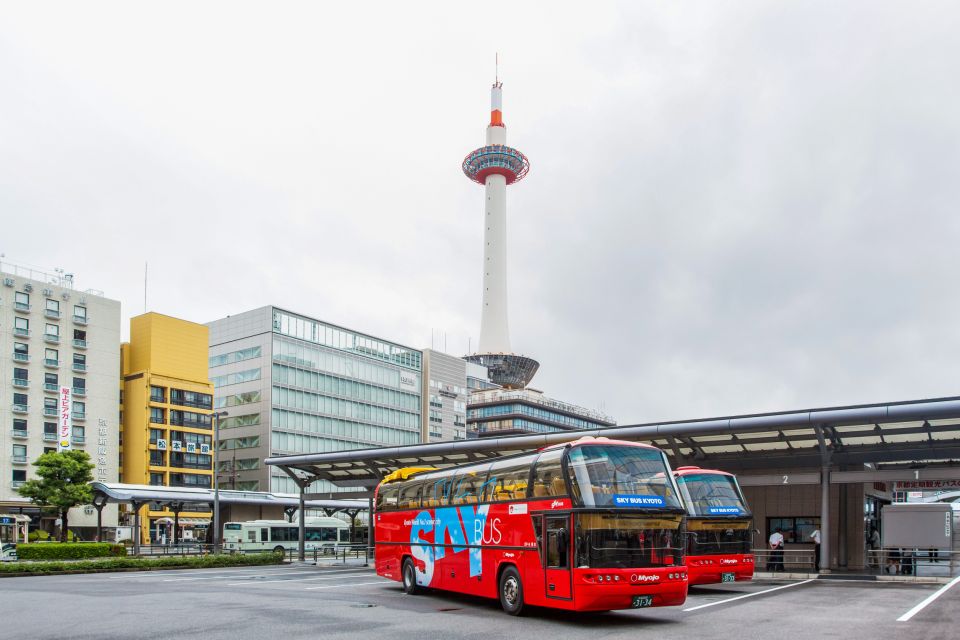
You can board at any stop, but Kyoto Station is the easiest first move for most people. The first stop is at Kyoto Station, specifically from the north central exit area. You’ll find the bus stop in front of the Isetan department store.
If you’re the type who hates wasting the first half-day figuring things out, start here. You’ll also find it handy when you want to re-enter the route later after wandering shopping streets like Nishiki area.
Also note the practical stuff:
- No umbrellas on board.
- No selfie sticks.
- No food or alcohol on the vehicle.
- You’re allowed soft drinks with lids.
Those rules aren’t glamorous, but they help the ride stay smooth—especially when crowds build around major stops.
Your route, stop by stop: what each location is best for
The stops cover a classic Kyoto loop: city center → castles/temples → northern temple area → Eastern shrines and Gion → down toward Kiyomizu-Dera.
Below is how I’d think about each stop, so you don’t just get off—you actually use your time.
Kyoto Station: reset your day and orient fast
Starting at Kyoto Station is useful beyond convenience. It’s the place where you can decide what kind of Kyoto day you want. If you’re still adjusting to the city, you can do a “ride first, explore later” approach—stay on the bus for the first pass and watch how the neighborhoods connect.
Once you’ve seen the route from above street level (especially from the open top), you’ll understand where you want to linger.
Nishihonganji (Kyoto Tokyu Hotel): a strong mid-city landmark
This stop places you near a well-known temple area close to the hotel zone, making it easier to transition from the station area into more traditional Kyoto scenery.
If you’re trying to avoid a long day of walking right away, this is a good place to get your bearings before committing to deeper temple visits.
Shijo Karasuma / Nishiki-ichiba Market: food street energy
Nishiki Market is a magnet for snacks and quick bites. Even if you don’t plan a heavy shopping detour, getting off around Shijo Karasuma / Nishiki-ichiba Market lets you experience Kyoto’s everyday bustle.
This is one of the best places to break your day into chunks: ride the bus for orientation, then do a shorter, satisfying wander while you’re in the mood for crowds and quick tastes.
Nijo-jo Castle: where Kyoto history feels tangible
Nijo Castle is a major stop for a reason: it’s one of Kyoto’s big “you came here on purpose” sights. The bus passes by UNESCO-level attractions, and Nijo Castle is the kind of site that rewards spending time inside.
I’d use this stop if you want at least one stop that feels like a full visit, not just a quick look.
Kitano-tenmangu Shrine / Kamishichiken: north Kyoto flavor
This area brings you toward Kyoto’s northern shrine life. It’s a nice shift from the city-center vibe and helps break up the day so it doesn’t blur into one long line of temple gates.
If your plan includes a bit of wandering after you get off the bus, this stop can give you that “slow down and look around” feeling.
Kinkakuji (Golden Pavilion): yes, it’s crowded. Plan anyway.
Kinkakuji (Golden Pavilion) is one of Kyoto’s most famous images. Being on the bus helps you reach it without turning the day into a transit puzzle.
Two practical cautions:
- It can be busy, so aim to arrive with a calm mindset.
- One real-world note: this stop is associated with cash-only entry, and there’s no ATM on the premise. Bring cash so you’re not stuck at the gate.
Daitokuji Temple: for when you want quiet after the spotlight
After Kinkakuji, the route moves you toward Daitokuji Temple. This can be a great “temperature change” stop—less about one iconic photo and more about temple atmosphere.
I’d treat it as a palate cleanser. Get your visual highlights from the famous places, then use this stop to slow down.
Kyoto Imperial Palace (Doshisha University): formal Kyoto
This stop covers the area near the Kyoto Imperial Palace (Doshisha University). Think of it as a shift to more formal, spacious Kyoto scenery.
If you’re tired from tight lanes and crowds, this kind of setting can feel like a breather.
Ginkakuji (Silver Pavilion): the classic follow-up
Ginkakuji (Silver Pavilion) is another major Kyoto image, and it fits well into a hop-on plan because it’s a “get off, explore, then move on” kind of sight.
This is also the stop that often makes the difference between a rushed day and a satisfying day. You’ll want enough time here to look around without feeling like you have to sprint back to the bus.
Heian-jingu Shrine / Okazaki Park: Kyoto’s scenic pause
This is one of the best stops for a “stop and breathe” moment. Heian-jingu plus Okazaki Park gives you room to slow down, especially if the earlier stops filled your eyes.
It’s a good place to stretch your legs, grab a snack off the bus area (within the rules), and reset your energy.
Gion (Kotowa-Kyoto Yasaka): Kyoto at its most postcard-like
Getting off at Gion (Kotowa-Kyoto Yasaka) puts you where Kyoto’s evening vibe is famous for a reason. This stop is perfect for late-day wandering when you want atmosphere more than adrenaline.
If you’ve got 2 days, I’d use Gion as a repeat candidate. Morning and evening can feel like two different places.
Gojozaka (Kiyomizu-Dera Temple / Gion): the Kiyomizu access point
This stop links you toward Kiyomizu-Dera via the Gojozaka area. It’s ideal if you want to experience Kiyomizu’s dramatic setting without stress about getting there.
I’d plan to take your time here. The bus gets you close, but this is still a “walk around the area, then decide when to go in” kind of stop.
Sanjusangendo / Kyoto National Museum (Hyatt Regency Kyoto): culture stop with options
The final listed stop runs near Sanjusangendo and the Kyoto National Museum area (by the Hyatt). This is a strong closer because it gives you options: if one attraction isn’t your mood, the other might be.
It also works well if you want to end the day with something indoors or calmer before heading back toward your next base.
Open top reality check: sun, shade, and how to ride smarter
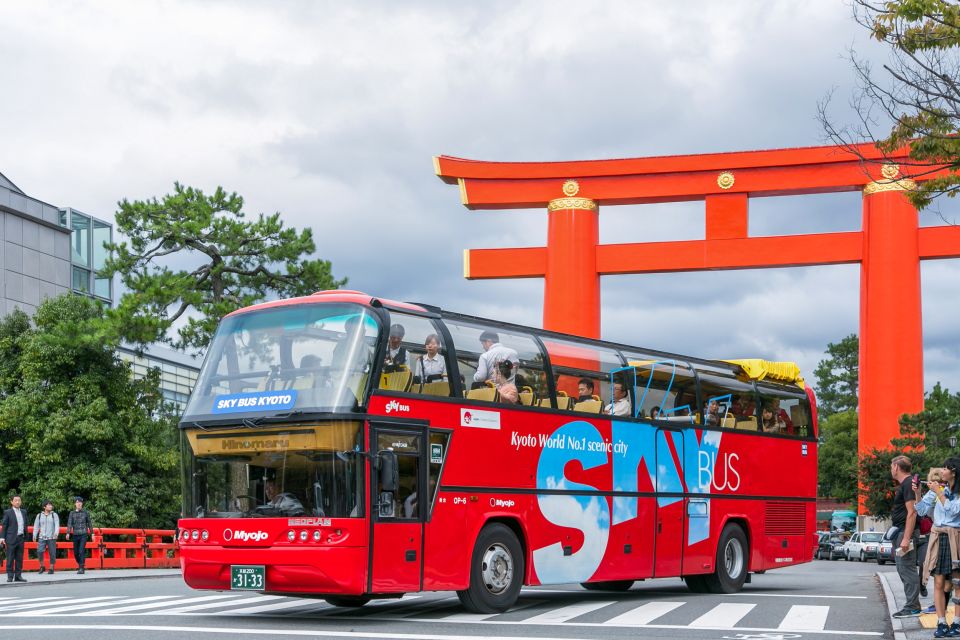
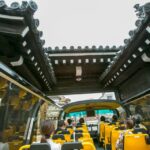
The top deck is open, which is why people sign up. Panoramic views of Kyoto are a real treat here. But open top also means you’re dealing with weather directly.
- In bright sun, you’ll roast faster than you think.
- You’re going to feel cold if the weather turns cool and breezy.
- Rain can happen, and the operator provides raincoats in wet weather.
My rule: dress like you’ll step outside for an hour, not like you’ll sit in a vehicle all day. Bring sunscreen, a hat, and water outside the no-food/no-drink rules. Also, avoid umbrellas entirely since they’re not allowed onboard.
Audio guidance: helpful, but not a substitute for site history
The audio includes English, French, Japanese, Korean, Chinese, Spanish, and German. That’s a big plus for visitors who don’t want to read everything on the street.
It’s also worth setting expectations. The audio is best for orientation—what you’re seeing, why it matters in broad strokes, and which stop is coming next. Some riders found the narration can feel a bit stop-and-start when the bus approaches each location, so don’t count on it to replace a proper guide at a temple.
I use the audio like this:
- Listen while traveling to the next stop.
- Then turn it into questions in your head: what do I want to see up close?
- Use your time at the site itself to get the real answers.
Timing and crowds: how to avoid the usual hop-on frustration
This is Kyoto. Crowds are part of the deal at major sights like Kinkakuji and Kiyomizu-Dera. The good news is the bus helps you avoid transit stress and helps you choose your own pace.
Still, plan for a few real-world friction points:
- Bus frequency can vary, and some time windows can feel less frequent.
- There can be longer waits if you miss one bus and want to catch the next.
So I do two things:
- I build a small buffer if I’m aiming for a specific time-based visit.
- If a stop is crowded, I don’t try to win the crowd. I just give myself extra time and accept that Kyoto is popular for a reason.
Staff help: where it actually makes a difference
The staff are often reported as friendly and helpful, including named attendants and guides like Lauren, Casey, Miyuki, Heidi, and Frederick. Whether your spoken-language preference is English or one of the other options, the on-ground people can help you figure out where to go and how to get the most out of each stop.
This matters most if it’s your first time with a hop-on route. When there’s confusion about which line you’re on (some riders mix up the red/blue style naming), staff guidance can save you from an awkward detour.
Also, a practical note: some riders describe the service as punctual even with traffic, and if the bus is full, staff work to keep things moving.
Who this Kyoto hop-on bus is best for
I’d put this pass at the top of the list if you:
- Are doing Kyoto as a short stop (1–2 days) and want major sights without planning fatigue
- Want an overview route and the freedom to choose your own pace at each stop
- Prefer open-air sightseeing and a simple way to avoid repeated transit changes
- Like structured sightseeing, but still want flexibility
It may be less ideal if you:
- Want deep, detailed history at every stop from the onboard audio alone
- Hate crowds at iconic sites like Kinkakuji and Kiyomizu-Dera (because you’ll still be dealing with them)
- Need exact timing guarantees without buffers (frequency can vary)
A realistic 1-day vs 2-day plan (so you don’t rush yourself)
If you’re doing 1 day, I’d treat it like a highlight reel. Focus on:
- One or two “big ticket” stops (Nijo Castle and Kinkakuji, for example)
- One or two quieter stops (Daitokuji, Imperial Palace area, or Okazaki Park)
- End with Gion or the Kiyomizu access stop so the day feels complete
If you’ve got 2 days, you can do something smarter: ride the loop on day one to spot what you want, then build a calmer, more detailed day two. That’s where hop-on hop-off really pays off because you’re no longer guessing how long each place needs.
Should you book Kyoto’s hop-on hop-off bus?
Yes, if you want a low-stress, high-value way to connect Kyoto’s top sights. The route is built around the temples and landmark neighborhoods that shape a first Kyoto impression, and the audio in 7 languages makes the ride feel purposeful, not random.
Book it especially if:
- You’re visiting for 1–2 days and want to avoid transit math.
- You like panoramic views from the top deck and you can handle sun/rain planning.
- You want freedom: get off when you’re ready, not when a tour schedule tells you.
Skip or reconsider if you’re hunting for a fully guided, site-by-site deep history experience. This bus is best as your fast, flexible backbone—and then you spend your time inside the sites that matter most to you.