REVIEW · BANGKOK
Bangkok: Wat Pho and Wat Arun Guided Walking Tour
Book on GetYourGuide →Operated by TripGuru Thailand · Bookable on GetYourGuide
Bangkok temples read like a living book. In a tight 3-hour guided walk from Tha Tian Pier, you get two headline stops in one go: Wat Pho’s 46-meter reclining Buddha and Wat Arun’s mosaic-covered chedi. You’ll also get the kind of guidance that helps you make sense of what you’re looking at instead of just snapping photos. One thing to plan for: temple entry tickets cost extra, and the dress code is strict.
I like how the tour keeps it practical and low-impact. You’ll meet your guide holding a TripGuru sign, walk between sites with a clear rhythm, and get coconut water along the way. The experience is GSTC-certified, with water provided in glass bottles and carbon emissions offset credits included.
This is a walking tour in Bangkok heat. Bring the right clothes and gear, and you’ll enjoy it; show up in flip-flops and you’ll feel it fast. Also note the tour isn’t suitable for pregnant travelers, people with mobility impairments, or anyone with heart problems or high blood pressure.
In This Review
- Key things I’d watch for
- Meeting at Tha Tian Pier: getting started without stress
- Wat Pho: the 46-meter reclining Buddha plus the details people miss
- Wat Pho’s mosaics, praying basics, and why you want a human guide
- Wat Arun: the river temple where the mosaics steal the show
- Walking time, heat, and what to bring so the tour feels easy
- Price and value: $17 worth it if you want guidance, not just entry
- The guides: what repeatedly makes this tour work
- Who should book this Wat Pho and Wat Arun walking tour
- Should you book it?
- FAQ
- Are the temple entry tickets included?
- How long is the tour?
- Where do I meet the guide?
- What’s included in the price?
- What languages is the guide available in?
- Is food included?
- What should I wear to the temples?
Key things I’d watch for
- Wat Pho’s 46-meter reclining Buddha is only half the story; the guide helps you read the temple layout
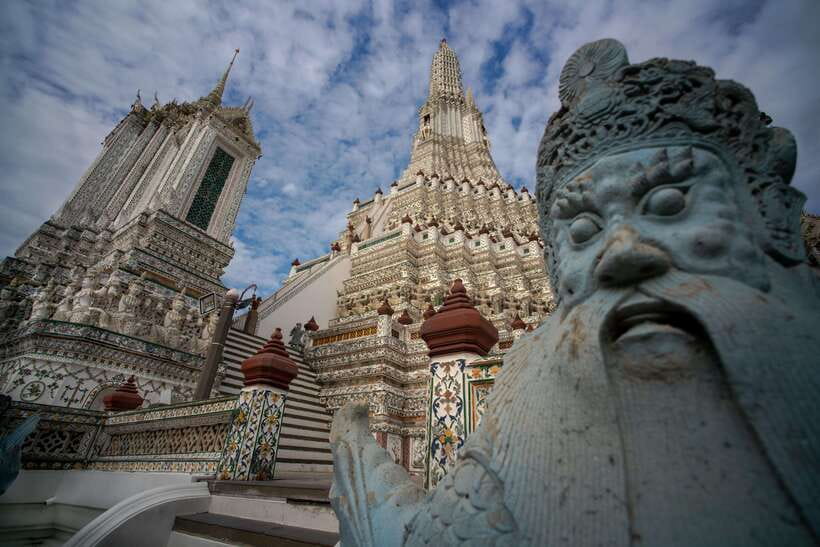
- Wat Arun’s mosaic chedi by the river is built for close-up detail, especially in photos
- Short, 1.5-hour blocks at each temple means you see the big sights and still have time to roam
- Small, hands-on guidance: guides often help with praying basics and photo spots
- Low-impact touches like glass bottles for water and carbon offset credits
- Strict clothing rules mean you should pack a cover-up before you go
Meeting at Tha Tian Pier: getting started without stress
The tour starts at Tha Tian Pier (ท่าเรือท่าเตียน). That’s good news because you’re not hunting through endless streets for a “general meeting spot.” You’ll find your guide holding a TripGuru sign, and you should show up about 10 minutes early so you don’t slow the group down.
Timing matters in Bangkok. Traffic and heat can throw off plans, but the tour is built around a short, fixed window—so getting to the pier matters more than arriving late somewhere else in the city. One practical tip from the field: using the MRT tends to beat driving in traffic for many people heading toward the river area.
Once you’re with the group, you’ll move as a unit. You don’t need to worry about navigation or figuring out which side of the river-facing temples to hit first. The guide keeps the route logical and the pacing steady.
You can also read our reviews of more tours and experiences in Bangkok.

Wat Pho: the 46-meter reclining Buddha plus the details people miss

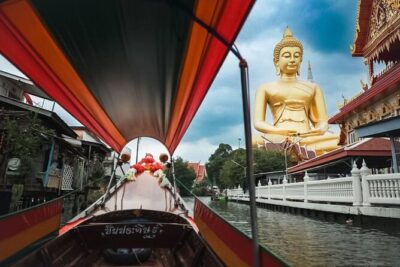
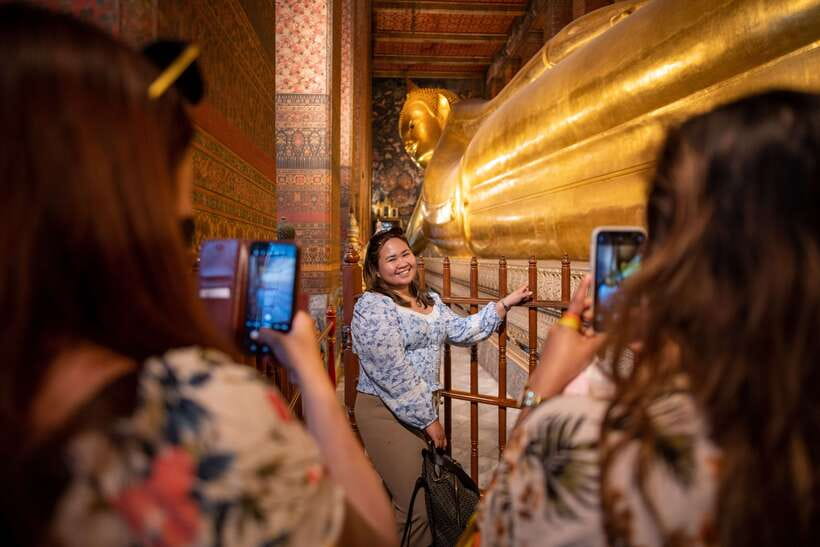
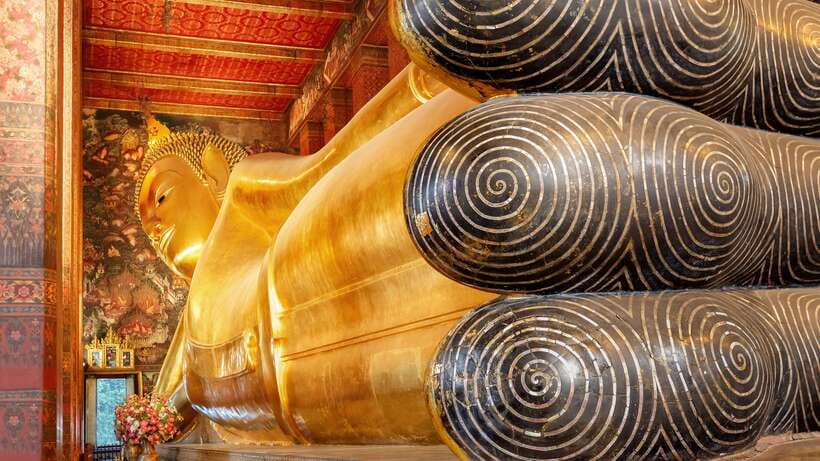
Wat Pho is the place you expect to be wowed. Even if you’ve seen pictures, seeing the reclining Buddha in person has scale that’s hard to fake. This tour takes you in and gives you time to really look around the 46-meter-long reclining Buddha and its setting.
What I like most is that you don’t just get a photo stop. Your guide walks you through the temple’s layout so you know what you’re seeing: the reclining Buddha is the star, but the surrounding elements—mosaics and colorful shrines—are where your brain starts connecting the symbolism.
Practical tip: plan to pause. The crowds can move quickly, but the temple rewards slow looking. If you’re the type who likes to understand what you’re photographing, the guide’s explanations can turn a quick glance into something you remember later.
Also, Wat Pho is a temple complex, not a single building. You’ll want comfortable shoes and a plan for shade breaks. One theme that comes through from guides is they try to find better spots to stand while you learn and while you take photos.
Wat Pho’s mosaics, praying basics, and why you want a human guide
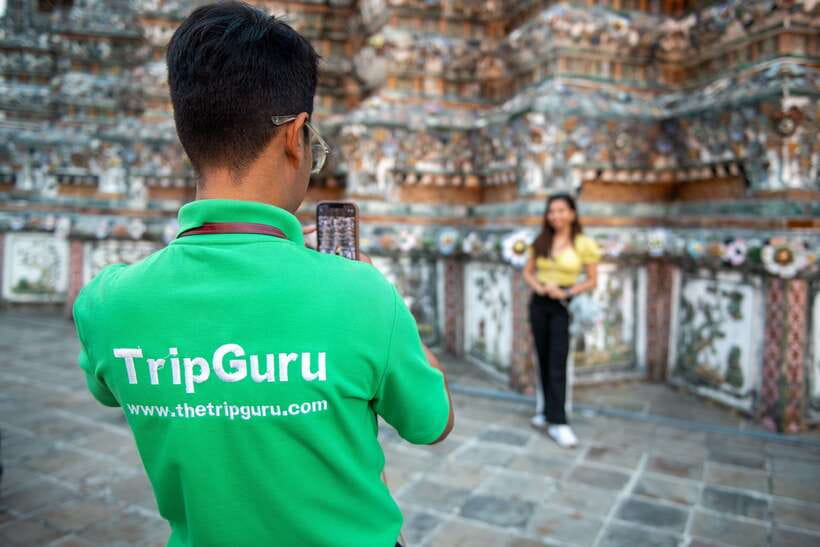
Wat Pho isn’t only about size; it’s about craftsmanship and practice. The guide helps you notice the parts that explain how the space functions for worship. You’ll see colorful mosaic details and smaller shrines, which are easy to overlook if you’re just trying to rush to the main statue.
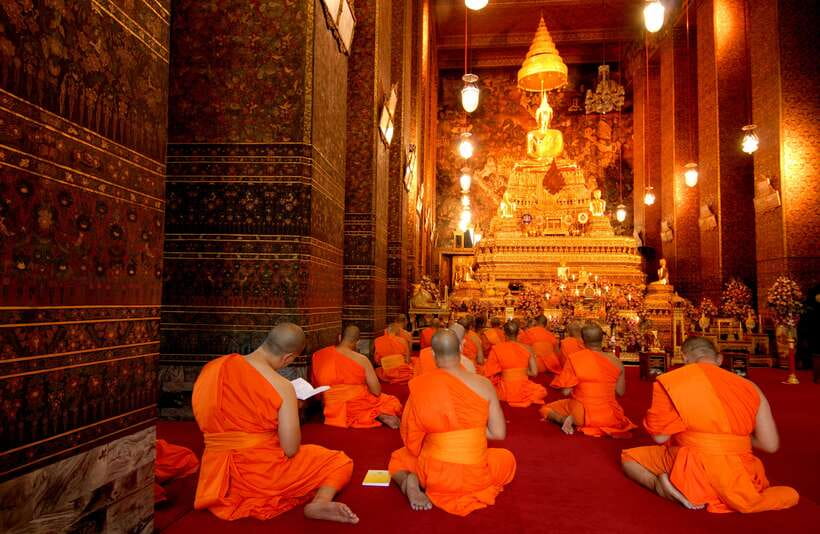
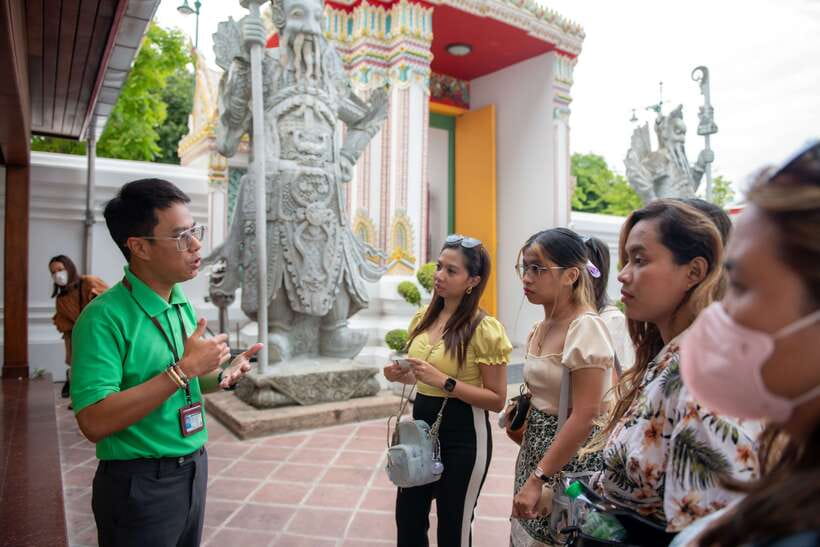
Several guides are known for making the spiritual side feel approachable. In particular, some of them share a quick primer on Buddhism and practical guidance on how people pray at temple sites. You don’t need religion to appreciate this—what you gain is context, so your visit feels respectful and less like you’re passing through.
There’s also a comfort factor. Guides often keep an eye on the group and help with pacing, especially if someone needs extra time for photos or if the heat hits harder than expected. If you’re traveling with friends who want different things—some photo time, some explanations—you’ll likely appreciate the way your guide balances both.
One more practical note: Wat Pho requires covering up. If your outfit doesn’t meet the temple dress code, you might be stuck sorting something out on the spot. Better to come prepared so you can focus on the temple instead of fabrics.
Wat Arun: the river temple where the mosaics steal the show
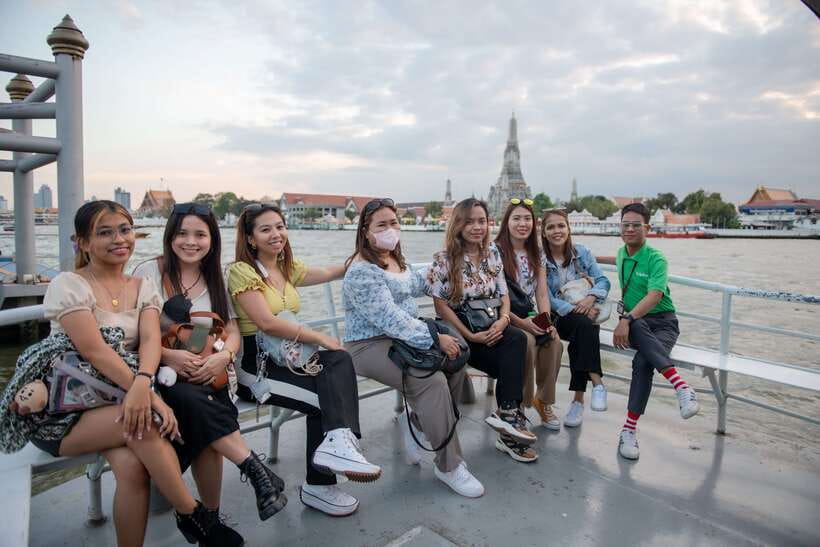
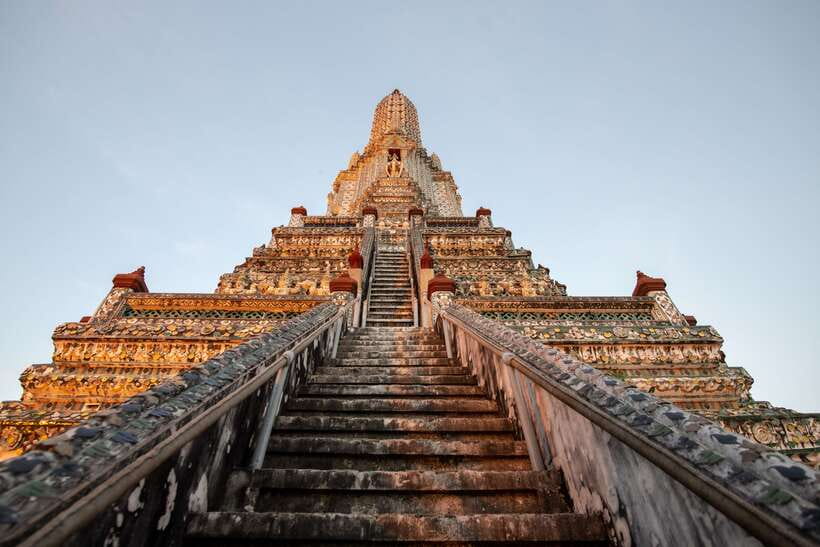
After Wat Pho, you continue to Wat Arun, a temple known for its dramatic riverside presence. This is where the tour gives you the second big visual payoff: the 300-year-old Wat Arun and its enormous white chedi covered with thousands of colorful mosaic pieces.
Wat Arun’s look is so distinctive that it’s easy to treat it like a viewpoint stop. I’d encourage you to do a bit more than that. The guide’s job here is to help you see why the mosaics matter and how the architecture is meant to be noticed up close. The temple’s setting along the Chao Phraya River also changes the feel of the place—sightlines open up, and the lighting often makes the details pop.
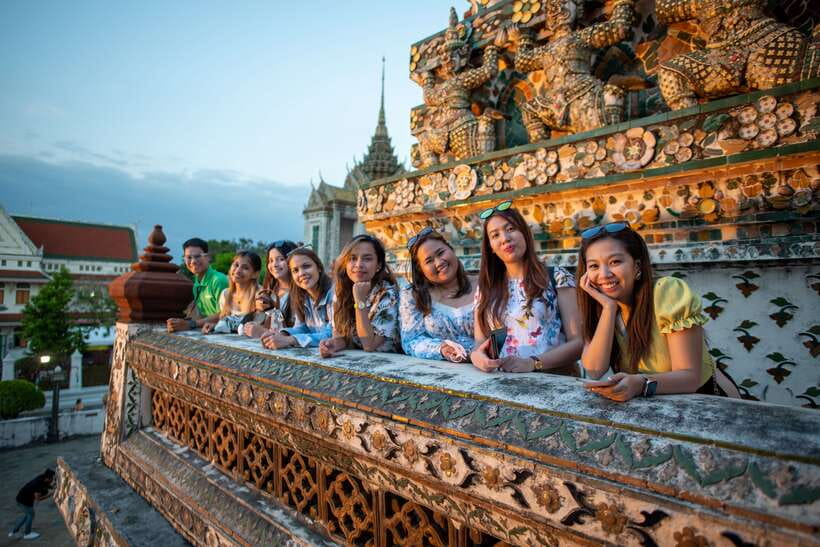
Photo tip that comes up again and again: this is one of the most camera-friendly spots in Bangkok, but the best shots often depend on your exact angle and where you stand. Some guides are proactive about taking photos for the group at key positions, which saves you from playing camera-operator for half the trip.
You’ll have time to walk around and enjoy the grounds rather than just circling the main structure. That longer look time is important because Wat Arun’s beauty is in the patterns, not just the silhouette.
Walking time, heat, and what to bring so the tour feels easy
This tour is built for walking, and it’s only three hours total. Each temple gets about 1.5 hours, so you’re not stuck all day, but you will be outside and on your feet. Bangkok’s heat can be real even when the schedule looks short on paper.
Here’s what you should bring based on what makes the biggest difference:
- Comfortable shoes (non-negotiable)
- Hat and sunglasses for sun protection
- Sunscreen and insect repellent
- A camera
- Cash for entry tickets
- A cover-up item (sarong, scarf, or sweater) to meet the dress code
The dress code is strict about shoulders, underarms, back, and knees. Plan for that even if you’re sure you packed the “right” outfit in your head. Temperatures don’t care about your confidence. Cover-up items also help with sun and can double as a quick “shade strategy” when you’re waiting for the group.
One more reality check: the tour isn’t suitable for everyone. Avoid it if you’re pregnant, have mobility limitations, have heart problems, or have high blood pressure. That’s not a judgment call; it’s about the walking and the outdoor conditions.




Price and value: $17 worth it if you want guidance, not just entry
The tour price is $17 per person for about 3 hours. That’s budget-friendly for two of Bangkok’s top temple visits with a live guide and included refreshments.
What you get that matters:
- A guide leading the route and explaining what you’re seeing
- Time at both major sites (not a drive-by)
- Coconut water included
- Carbon emissions offset credits included
- Water in glass bottles as part of the low-impact approach
- GSTC-certified format for responsible touring
What costs extra:
- Entry tickets are not included: Wat Pho is 300 Thai Baht, Wat Arun is 200 Thai Baht
So, is it good value? If your goal is to see both temples efficiently and understand them while you’re there, yes. Two big temples in one guided session can save you time and guesswork. If you’d rather wander independently with zero structure, you could do it on your own—but you’d be giving up the context that makes the mosaics, layouts, and worship areas feel meaningful.
Also keep in mind: entry tickets aren’t huge, but they do add up. If you’re traveling with others, carry a bit of extra cash so everyone isn’t trying to scramble at the gate.
The guides: what repeatedly makes this tour work
A lot of what people love comes down to the guide. Across the recent guide names you’ll see on this kind of tour, there’s a pattern: guides bring energy, keep things moving, and tailor explanations to the group.
Some guides are praised for:
- Clear historical context for both temples
- Making explanations easy without turning the tour into a lecture
- Humor that keeps the mood light (people often mention the guide’s personality)
- Photo help, including taking separate photos at iconic spots
- Patience with slower walkers and extra photo stops
- Care during heat, including checking on people who are struggling
Names that come up in recent experiences include Nancy, Jack, Sun, Surina, Tank, Tee, Angie, Bond, Fern, Bela, and Cherry. If your guide is one of the more energetic ones, you’ll likely feel like you got more than a basic walkthrough. You’ll get a sense of why these spaces matter to Thai Buddhists today—not just how they look in pictures.
Who should book this Wat Pho and Wat Arun walking tour
You’ll probably love this tour if you:
- Want a focused visit to Wat Pho and Wat Arun in one afternoon
- Prefer a guide to help you understand temple layouts and symbolism
- Appreciate photo support and time to wander inside the sites
- Like low-impact touches such as glass-bottled water and carbon offset credits
You might not love it if you:
- Have limited mobility or health constraints that make outdoor walking hard
- Want a totally self-paced, no-guidance visit
- Aren’t willing to follow the dress code rules
Should you book it?
Yes, I’d book it if you want an efficient, guided way to see Bangkok’s two most memorable temple experiences without losing time to planning. The big reason to choose this format is simple: Wat Pho and Wat Arun reward attention, and a good guide helps you notice what you’d otherwise skip.
If you’re traveling with the right gear (comfortable shoes and a cover-up) and you’re okay paying the separate entry fees, this is a strong value at $17 for a three-hour temple pair. Plan for the heat, show up a bit early at Tha Tian Pier, and let the guide handle the where-and-why. You’ll come away with more than photos—you’ll have a clearer sense of the places.
FAQ
Are the temple entry tickets included?
No. Wat Pho entry costs 300 Thai Baht and Wat Arun entry costs 200 Thai Baht.
How long is the tour?
It’s about 3 hours total, with around 1.5 hours at each temple.
Where do I meet the guide?
Meet at Tha Tian Pier (ท่าเรือท่าเตียน). Your guide will be holding a TripGuru sign.
What’s included in the price?
A guided walking tour, a guide, coconut water, and carbon emissions offset credits.
What languages is the guide available in?
Live guides are available in Chinese and English.
Is food included?
No food is included. Coconut water is included, but you should plan for other drinks and meals on your own.
What should I wear to the temples?
The dress code is strict: shoulders, underarms, back, and knees must be covered. Bring a sarong, scarf, or sweater to cover up if needed.