REVIEW · OSAKA
Kyoto: Full-Day English Guided Tour of Kyoto’s Highlights
Book on GetYourGuide →Operated by LIMON Tours · Bookable on GetYourGuide
Kyoto in one day feels like a sprint. This full-day English tour strings together Fushimi Inari and Kiyomizudera with live commentary, then keeps you moving comfortably in an air-conditioned coach. I especially like having the ride handled for you, because you can focus on the sights, not the trains.
I also love how the route hits the big names without wasting time. In one day, you’ll see all four crowd magnets: torii at Fushimi Inari, the famous hillside stage and Otowa Falls at Kiyomizudera, the Golden Pavilion at Kinkaku-ji, and the bamboo hush of Arashiyama.
The one thing to watch is time pressure. This is a jam-packed day, and you’ll feel it most at Fushimi Inari and Kiyomizudera, where the lineups and crowds can eat into your free wandering time.
In This Review
- Quick hits before you go
- Kyoto Highlights in One Day: Why This Route Works
- Getting On the Bus: Meeting Points, Pacing, and Comfort
- Stop at Fushimi Inari Taisha: Torii Gates, Pilgrimage Energy, and Good Photo Angles
- Kiyomizudera: Otowa Falls, the Nail-Less Stage, and the Overlook
- Kinkaku-ji Golden Pavilion: Gold Leaf Glimmer and Garden Calm
- Arashiyama and Sagano Bamboo Forest: When the Walk Becomes the Point
- Food and Entry Tickets: How the Optional Package Changes the Value
- Price and Value: Is $88 Worth a Full Day?
- Practical Tips to Make the Day Feel Easy
- Should You Book This Kyoto Highlights Tour?
- FAQ
- How long is the Kyoto highlights tour?
- Where does the tour start and end?
- Do I get an English-speaking guide?
- Is Wi‑Fi and air-conditioning included on the bus?
- Are tickets and lunch included?
- What should I bring for the day?
- Is free cancellation available?
Quick hits before you go
- A/C coach + free Wi‑Fi: real comfort breaks up a long day of walking.
- A guide who helps you read the places: people mention guides like Maki, Masa, Josh, Maria, Jewel/Jewell, Yumi, Toshi, Haru, Eve, Eiko, and Arthur for clear explanations and good photo help.
- Four headline stops, not “maybe someday” Kyoto: Fushimi Inari, Kiyomizudera, Kinkaku-ji, and Arashiyama in one sweep.
- Otowa Falls is a moment, not a detour: you get time to drink from one of the three streams.
- Golden Pavilion photos are easier with structure: you’re guided in and out, so you don’t spend your precious minutes figuring out where to stand.
- Arashiyama is cool, shaded, and quick: great for the bamboo grove walk, plus time to shop or snack.
Kyoto Highlights in One Day: Why This Route Works
If you’re in Kyoto for a short stay, this kind of tour is the practical choice. You trade deep, slow exploration for a smart highlight checklist. And you still get real time on foot at each place, not just a drive-by.
What makes this itinerary work is the pairing of different Kyoto moods. Fushimi Inari is a shrine pilgrimage you walk through. Kiyomizudera is a hillside stage viewpoint with waterfalls nearby. Kinkaku-ji is a carefully composed temple-and-garden scene. Arashiyama then changes the vibe to nature walks and river atmosphere. You get variety instead of four versions of the same street view.
And you’re not doing it solo with buses and transfers. You’re in an organized, air-conditioned group flow, which matters when the day runs long.
You can also read our reviews of more tours and experiences in Osaka.


Getting On the Bus: Meeting Points, Pacing, and Comfort
You’ll start at either Kyoto Station Hachijo Exit Tourist Bus Parking or Osaka City Air Terminal (OCAT), depending on what option you book. The tour ends back at your starting meeting point, so you don’t have to re-plan your return.
Two practical notes keep this from getting stressful. First: plan to arrive at least 10 minutes early. The bus leaves on schedule. Second: the day can shift a bit due to traffic or weather for safety, so don’t build a separate timed plan right after.
Inside, the bus is meant for long distance touring: air-conditioned coach, free Wi‑Fi, and plenty of chances to look out the window between stops. A few review details stand out as “real life” helpful: legroom can feel tight for taller passengers, and being able to charge your phone is a nice bonus if your battery is already living on borrowed time.
Stop at Fushimi Inari Taisha: Torii Gates, Pilgrimage Energy, and Good Photo Angles
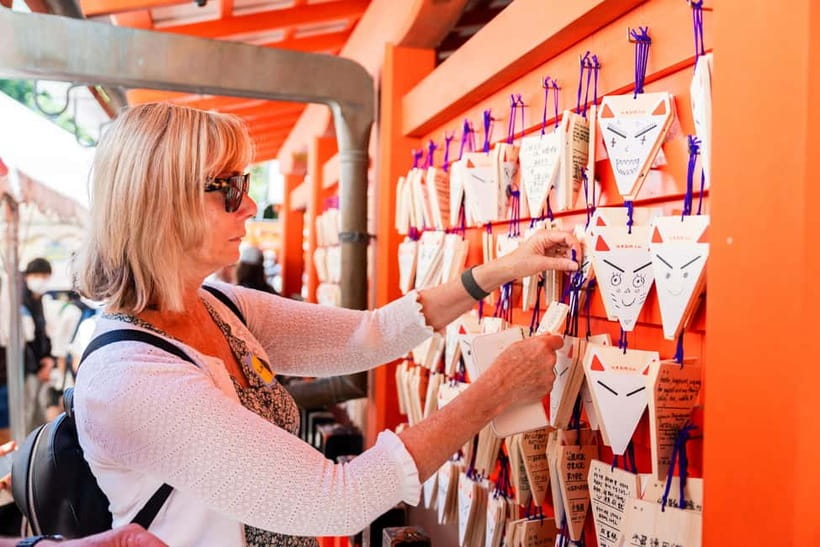
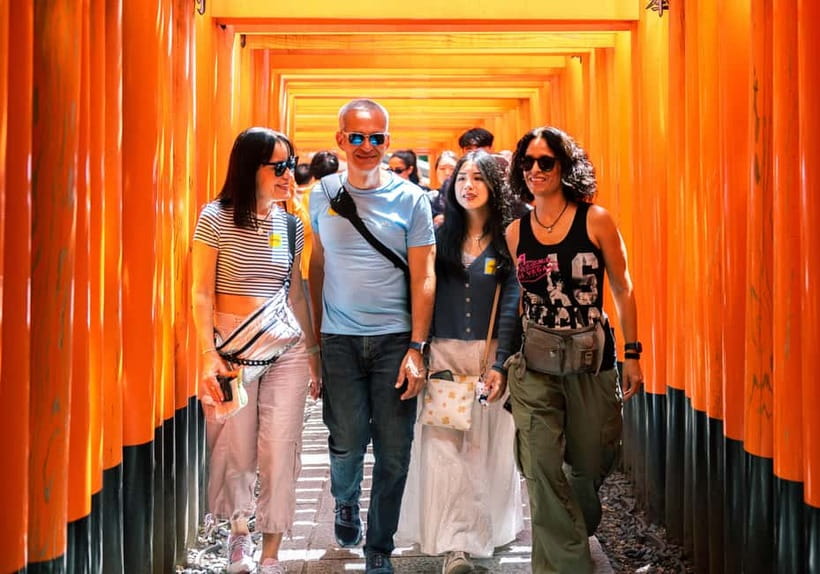
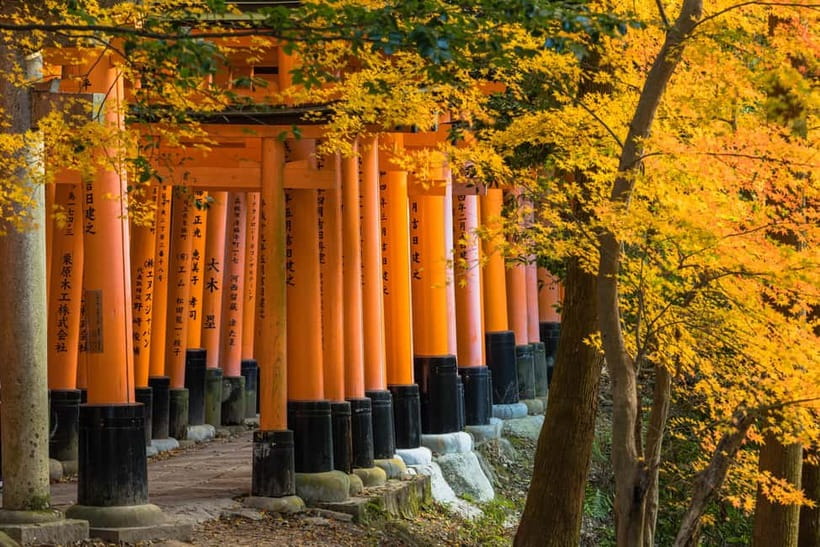
Fushimi Inari Taisha is the reason people come to Kyoto with a camera. You’ll spend about 80 minutes here, which sounds short until you see how fast the torii pathway pulls you forward.
Here’s the key: the famous red torii gates don’t just sit there for photos. You walk through them. The path climbs and curves, so your best pictures come from choosing your spot and letting the crowd pattern around you. If you go early in your own pace, you’ll have an easier time finding openings between groups.
What I like about this stop on a structured tour is that you’re not stuck wandering with no plan. You get time to explore at your own speed, but the group rhythm helps you avoid losing half the visit to indecision.
Tip for the walking part: wear shoes you can trust. The ground can be uneven in places, and you’ll be moving for long stretches.
Kiyomizudera: Otowa Falls, the Nail-Less Stage, and the Overlook
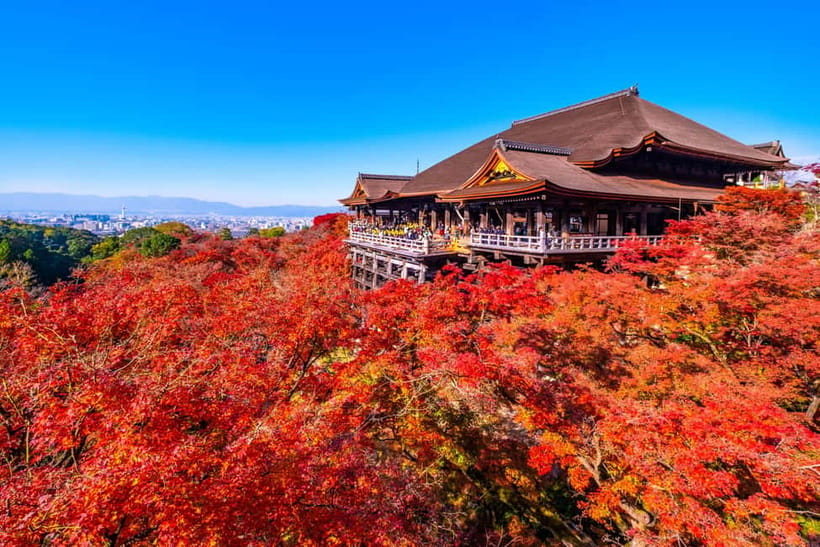
Kiyomizudera is one of those places where the first look is already the payoff. You’ll have around 100 minutes here, which usually feels like the longest stop of the day because there’s just so much to do in a small area.
The big draw is the iconic wooden stage that dramatically extends over the hillside. This temple is UNESCO-listed, and it’s famous for two details you can actually point out as you stand there: it was built without using a single nail, and it’s supported by 139 pillars. Even if you’ve seen photos, being there changes the scale.
Then there’s Otowa Waterfall. You can drink from one of the three streams, and each one is said to bring different kinds of success: love, longevity, and success. It’s a small moment in the middle of a busy stop, but it’s also the kind of Kyoto detail that makes the visit feel personal rather than just scenic.
Also, Kiyomizudera is known for seasonal beauty. The spring cherry blossom crowds and autumn foliage are famous, so if you’re going in those seasons, expect the area to feel extra busy.
The one “watch out” at Kiyomizudera is the same issue as everywhere in Kyoto: crowds. If you want a slower moment for the stage views, go a little earlier in your own plan inside the stop window.
Kinkaku-ji Golden Pavilion: Gold Leaf Glimmer and Garden Calm
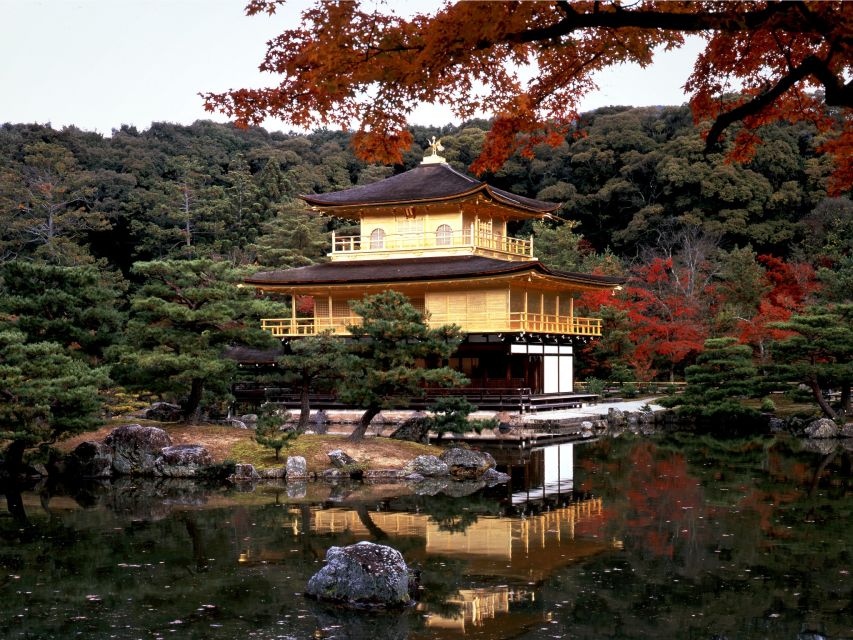
At Kinkaku-ji (the Golden Pavilion), you’re dealing with a different kind of Kyoto. This isn’t a climb through gates. It’s a temple-and-garden composition designed to be viewed and moved through carefully.
You’ll get about 45 minutes here. That’s not much, but it’s enough to see the pavilion exterior, walk through the surrounding gardens, and take photos without turning the visit into a full-day project.
What makes this temple special is the look: the exterior is covered in gold leaf, so it glimmers when the sunlight hits. And you’re not just standing in front of a single postcard view. The gardens preserve Japanese design that has been maintained since the Ashikaga shogunate era, so the grounds feel intentional rather than random.
Because your time is limited, I’d recommend choosing one or two focal paths in the garden and giving yourself permission to skip “every possible angle.” You’ll enjoy it more, and you won’t end up rushing the best part.



Arashiyama and Sagano Bamboo Forest: When the Walk Becomes the Point
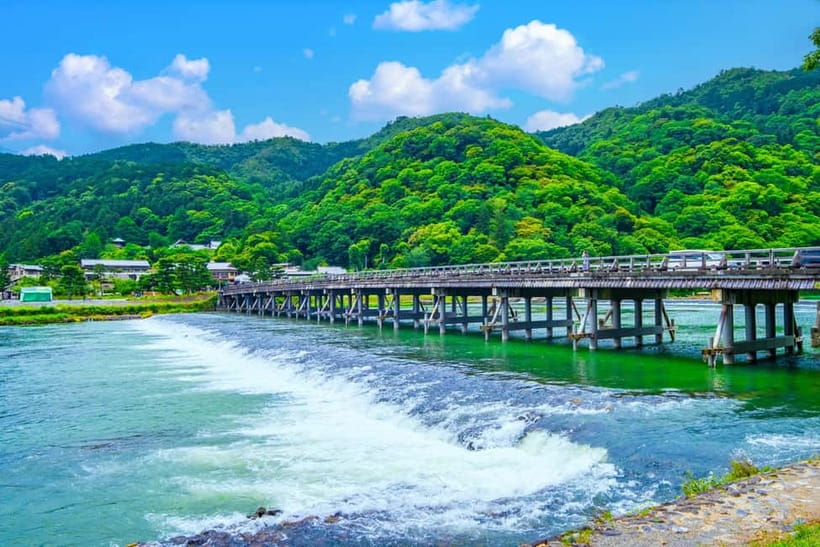
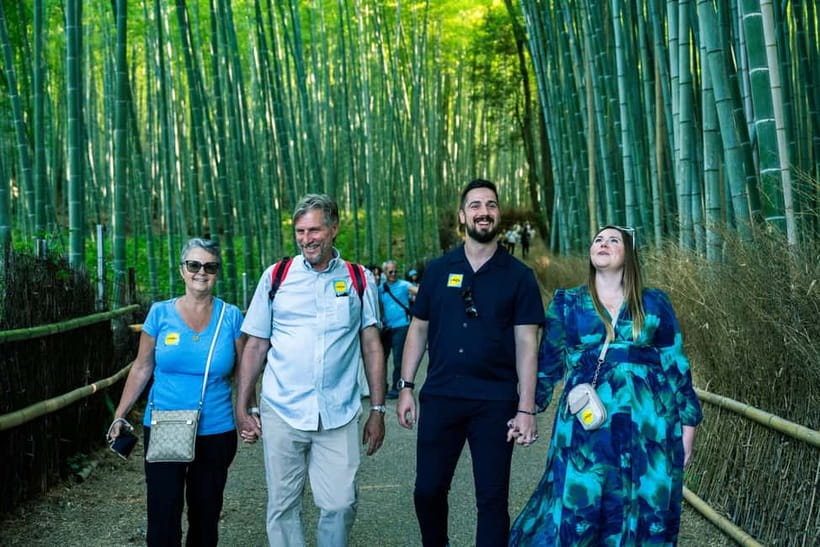
Arashiyama is where the day slows down in your head. You’ll have about 80 minutes here, which gives you enough time to do the main walk and still breathe.
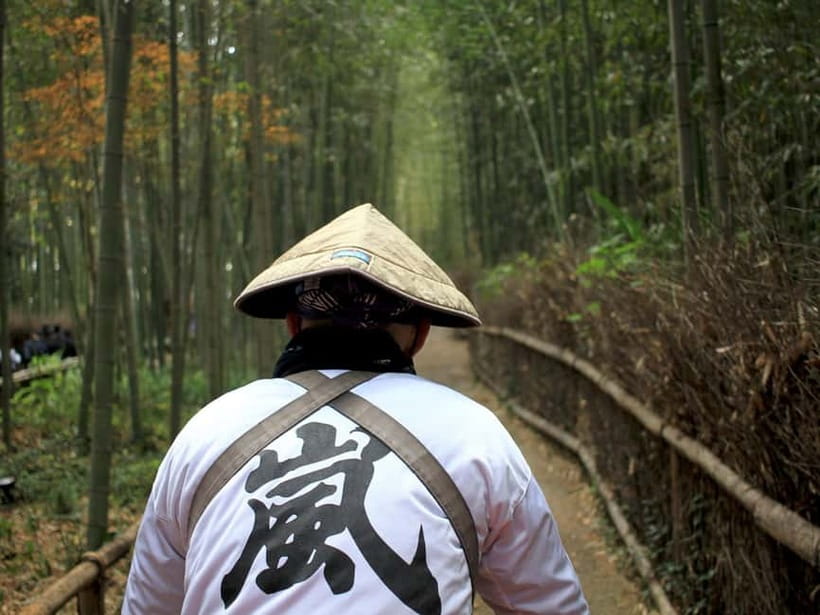
The star is the Sagano Bamboo Forest in the Sagano area. As you stroll, you can hear the distinct rustle of bamboo leaves as the wind moves through. That sound is the magic. It’s not just a photo spot. It’s a place where your mind quiets because the sensory input is simple.
One practical note from real-world experience: bamboo walks can be mosquito-heavy. If you’re going in warmer months, bring bug spray or something similar and apply before you enter.
You’ll also have photo opportunities and time to shop or snack nearby. Some people like stretching the evening mood toward the river, with time to wander along the Katsura river if the timing works out.
Food and Entry Tickets: How the Optional Package Changes the Value

This tour has options, and the smartest pick depends on how much you hate lines.
Your base includes an English-speaking guide, an air-conditioned bus, free Wi‑Fi on board, and—depending on the option you select—Japanese lunch and entry tickets to Kinkaku-ji and Kiyomizudera.
In plain terms: the best value comes when you pick the option that includes lunch and admissions. People often say they were glad they did it because it saved them time and helped them avoid extra ticket-hunting while crowds are intense.
If you choose the without-lunch option, you’ll want to bring your own snacks. That’s not a flaw; it’s just a planning switch. Also note a limitation that matters for meal planning: halal and vegan lunches aren’t available. For vegetarian requests, you need to contact the provider at least 3 days before the tour.
Price and Value: Is $88 Worth a Full Day?
At $88 per person, you’re paying for a few big things at once: local English guiding, transportation, and (if selected) entry tickets and lunch. That combination is often what makes highlight tours feel worth it. You’re not just buying attractions. You’re buying time-saving structure.
Without the included items, the day would still be reasonable because Kyoto highlights are spread out. But with the admissions and lunch included, you reduce decision fatigue when you’re already tired from walking and crowds.
So who gets the most value? People on a tight schedule, people who don’t want to puzzle out transport on their own, and people who want a clear sequence. If you already plan to spend full days at single temples, you might prefer independent exploring. But for “I want the icons” Kyoto, the math usually works.
Practical Tips to Make the Day Feel Easy

Here’s how you keep this from turning into a sore-feet day.
Wear comfortable shoes. You’ll be walking at multiple stops, and you’ll want grip on paths that can feel slick or uneven. Bring water and consider a small snack stash. Even with lunch included on some options, there can be long gaps between meals.
For the Kiyomizudera and Fushimi Inari portions, the key tool is patience. Expect crowds. Plan your photos like a checklist: one wide shot, one detail shot, then move on.
Also: be ready for weather. The schedule can adjust for traffic or conditions, and Kyoto can run hot and humid. Bring a cloth or towel if you’re going in summer, and a hat helps.
Finally, don’t assume you can stroll the whole route without paying attention. The bus is on a schedule and the day is tight. If you lose the group, it’s not the end of the world, but it will feel like one. Your best defense is to stay close and listen when the guide gives instructions.
Should You Book This Kyoto Highlights Tour?
Book it if:
- You have one day in Kyoto and want the headline sights: Fushimi Inari, Kiyomizudera, Kinkaku-ji, and Arashiyama.
- You’d rather spend energy on photos and viewpoints than planning transportation between neighborhoods.
- You like having a guide explain what you’re seeing, including the famous stage engineering at Kiyomizudera and how the garden designs connect to historical periods.
Skip it or consider another option if:
- You hate feeling rushed and want long, slow time at just one or two temples.
- You’re sensitive to heat and long walks, since this itinerary is active and crowded at peak times.
- You’re hoping for a relaxed, laid-back day with lots of free wandering—this is structured and efficient.
If you’re a “see the big stuff fast, then come back later” Kyoto visitor, this tour fits. It’s a well-run way to get your bearings quickly and leave with photos that actually match the legends.
FAQ
How long is the Kyoto highlights tour?
The tour runs about 8.5 to 9.5 hours, depending on the starting time and real-world conditions like traffic.
Where does the tour start and end?
It starts at either Kyoto Station Hachijo Exit Tourist Bus Parking or Osaka City Air Terminal (OCAT), and it ends back at the same meeting point.
Do I get an English-speaking guide?
Yes. The tour includes a live English-speaking guide.
Is Wi‑Fi and air-conditioning included on the bus?
Yes. The bus has air-conditioning and free Wi‑Fi onboard.
Are tickets and lunch included?
That depends on the option you choose. Japanese lunch is included if selected, and entry tickets for Kinkaku-ji and Kiyomizudera are included if selected.
What should I bring for the day?
Bring comfortable shoes, a camera, snacks, and water, plus comfortable clothes for walking.
Is free cancellation available?
Yes, you can cancel up to 2 days in advance for a full refund.