Osaka reveals itself in side streets. This walking tour stitches together Hozenji Yokocho, Dotonbori, and Kuromon Market with a local guide who adds personal stories and practical street-level tips.
I love the way it dodges the big-bus vibe and instead routes you through the kind of lanes where Osaka actually feels lived-in. I also like the seafood-market stop, which trains you to notice unremarkable storefronts and then step inside to the good stuff at Kuromon Market. One possible drawback: if you’re not into lots of walking, this can feel like a workout, especially on hotter days or when the group moves quickly.
In This Review
- Key Highlights You’ll Feel Fast
- Osaka on Foot: How This Kickstart Changes Your First Day
- Hozenji Yokocho: Cobblestones, Tradition, and Painted Osaka Walls
- Dotonbori Tsuribori and New Ebisubashi: The River Stops You’ll Remember
- Shinsaibashi-suji and America Mura: Shopping Without the Same Old Route
- Kuromon Market: How to Spot the Good Shops in 15 Minutes
- The Gaming and Cosplay Lanes: Tucked-Away Osaka Fun
- Shinsekai on the 4, 5, or 7-Hour Options: Retro Osaka Energy
- Tower Knives Osaka: The Included Knife-Making Lesson (4 or 5 Hours)
- Osaka Castle, Shitennoji, and Abeno Harukas on the 5 and 7-Hour Routes
- Osaka Castle and the Unification Story
- Shitennoji as a Spiritual Anchor (5 or 7 Hours)
- Abeno Harukas: Japan’s Tallest Building
- The 7-Hour Add-Ons: Ukiyo-e and the Museum of Housing and Living
- Osaka Ukiyoe Museum
- Osaka Museum of Housing and Living
- What You Actually Get Included (And What You Still Pay For)
- Price and Time: Is $31.84 Good Value?
- Who This Tour Fits Best in Real Life
- Should You Book Osaka Kickstart?
- FAQ
- How long is the Osaka Kickstart tour?
- Is it a private tour?
- What’s included with the tour price?
- Are attraction entry fees included?
- Where does the tour start and end?
- Does the tour offer pickup and mobile tickets?
Key Highlights You’ll Feel Fast
- Short hop between old lanes and neon rivers: Hozenji Yokocho to Dotonbori in a way that keeps energy high.
- Seafood shopping street, but explained well: Kuromon Market is treated like a place to learn how to spot the right shops.
- A costume and gaming zone stop (only when it fits): tucked-away quirky lanes make this feel different from a standard city walk.
- Extra wow on longer private tours: Shinsekai and Osaka Castle appear on 4/5/7-hour options.
- A real knife lesson if you choose 4 or 5 hours: Tower Knives Osaka includes the experience, not just a photo stop.
- Flexible transport support: you can request optional train or taxi use if needed.
Osaka on Foot: How This Kickstart Changes Your First Day
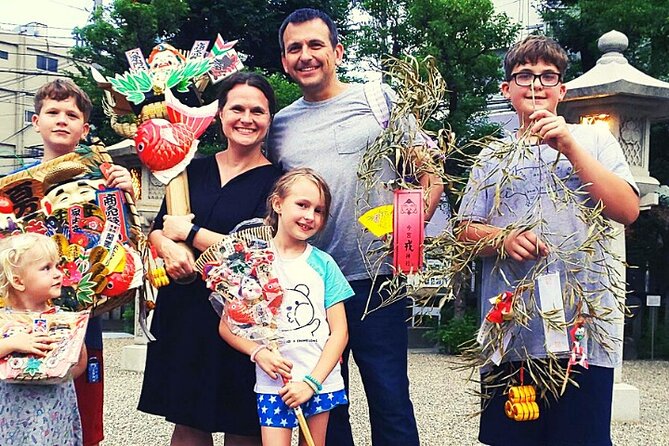
This is the kind of tour that helps you stop guessing. You start in Namba, then you’re walked through the core Osaka vibe—alley tradition, river views, shopping streets, and the food-focused market lanes that locals actually use. Even if you only have 3 hours, the route has enough variety that you’ll learn what part of Osaka you’ll want to revisit on your own.
The big value is pacing plus context. You’re not just shown sights; you get stories that connect why places exist and how people use them. That makes later planning easier, because you’ll know what you’re looking at when you return for dinner or a second look.
The tour is also adjustable. Choose a shorter version if you want orientation, or go longer if you want landmarks like Osaka Castle, Shitennoji, or Abeno Harukas.
You can also read our reviews of more tours and experiences in Osaka.


Hozenji Yokocho: Cobblestones, Tradition, and Painted Osaka Walls

Hozenji Yokocho is the warm-up act that sets the tone. Expect tight, winding cobblestone alleys with character and old-school atmosphere. It’s the kind of spot where you can slow down, look at small details, and feel that Osaka isn’t only neon.
A neat extra here is the mention of walls painted with Osaka’s history. That matters because this alley isn’t just a pretty background—it’s part of a neighborhood story, and the guide’s framing helps you notice what you might otherwise miss.
This stop is short, around 20 minutes, so it works even if you’re jet-lagged. Wear shoes you can trust. The alley streets are charming, but you’ll still be walking.
Dotonbori Tsuribori and New Ebisubashi: The River Stops You’ll Remember
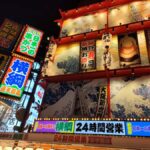
Dotonbori is one of those places where your first view is almost immediate. The tour takes you to the river area at Dotonbori Tsuribori, then moves you through nearby classic meeting points like New Ebisubashi.
What makes this section worth doing with a guide is the timing and flow. You get the river scene and then continue through the lanes and bridges that feed into the shopping and restaurant energy around it. In practice, this helps you avoid doing the Dotonbori loop twice.
New Ebisubashi has a simple story—its origins as wood in the 1600s, later replaced with iron—so the “photo moment” comes with meaning. It’s a local meeting spot at the very heart of Osaka, which is exactly why it’s such a good anchor point for a first-time walk.
Shinsaibashi-suji and America Mura: Shopping Without the Same Old Route

After the river area, you move into the retail pulse of Osaka.
Shinsaibashi-suji is a lively shopping street. The tour frames it as a place to browse Japanese fashion, quirky gadgets, and street-level energy—good if you want souvenirs that feel more like Osaka than like a mall. The stop is brief (about 20 minutes), which is ideal for a first day because it keeps you from turning the whole morning into shopping time.
Then comes America Mura, where the vibe gets intentionally strange. Think Osaka’s version of America-themed street culture, including a statue of Liberty on top of a building. The point isn’t to hunt for one specific store—it’s to understand why this area feels like a playful costume city within the city.
If you love design, street fashion, and “what is this?” moments, this pairing hits the right note. If you hate crowds, you’ll still have fun, but you’ll want to keep your pace steady and plan a calmer break later.
Kuromon Market: How to Spot the Good Shops in 15 Minutes
Kuromon Market is fast, intense, and food-obsessed—and that’s why the guide-led approach matters. The tour steps into fish market stores that might look ordinary from the outside. Then, once inside, you see the “seafood heaven” side of the market.
The stop itself is about 15 minutes on the standard route, so you won’t be doing a leisurely browse. What you get instead is a guided selection strategy: where to look, what to notice, and how to work out what sounds good even if your Japanese isn’t perfect. That’s a skill, not a lecture.
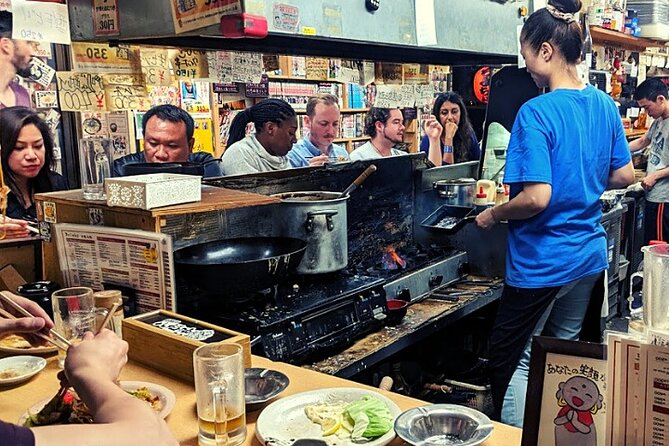
This is also where your included snack pairs well. You typically get 1 drink and 1 small side dish (often described as 1 takoyaki ball). So you can test the flavor without committing to a full meal before you’ve walked the rest of the route.
If you’re traveling with kids, this is a great energy stop. If you’re very food-restricted, double-check the snack expectations before you commit, because the tour doesn’t list special dietary options.




The Gaming and Cosplay Lanes: Tucked-Away Osaka Fun
One of the more distinctive parts of this tour is a stop in a tucked-away area tied to gaming and cosplay. The route explains that navigating these quirky stores is tricky on your own, and that’s where a guide helps—by taking you to the right lanes and pointing out where the fun stuff is.
This section tends to feel like a small world inside the city. You’re not just passing by; you’re being shown how to find the corners that match your interests. If you like retro arcade culture, collectable odds and ends, or just the joy of browsing odd little shops, this stop can be a highlight.
Timing matters here. It’s described as something that fits depending on how quickly the group walks, especially around the 3-hour timing window. That’s why choosing a longer duration can be helpful if this part is your top priority.
Shinsekai on the 4, 5, or 7-Hour Options: Retro Osaka Energy
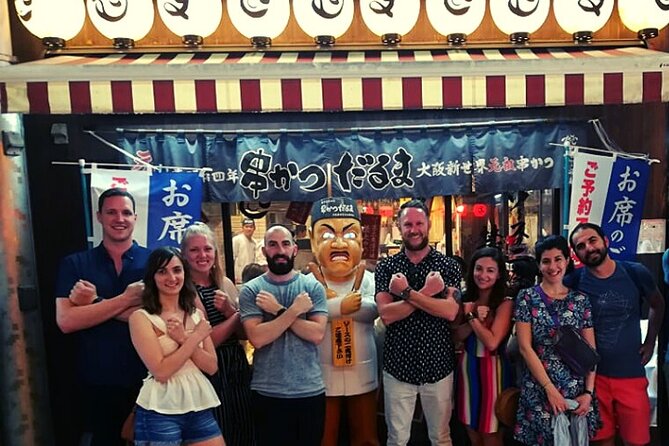
Shinsekai is only included on the longer private tours (4, 5, or 7 hours). That’s a good design choice: it keeps the shorter versions focused on the core center sights, while the longer tours give you the chance to experience Osaka’s older retro neighborhood mood.
The description calls out quirky fishing restaurants, vintage game arcades, board game shops, and old vinyl stores. In other words, Shinsekai isn’t just a landmark; it’s a shopping-and-snacking zone with a different personality than Dotonbori.
This stop is around 30 minutes. It’s long enough to feel the neighborhood, but short enough that you won’t end up tired from hopping between too many places. If you want the full Osaka character mix—modern city center plus retro district—this is the add-on that changes the whole tour flavor.
Tower Knives Osaka: The Included Knife-Making Lesson (4 or 5 Hours)
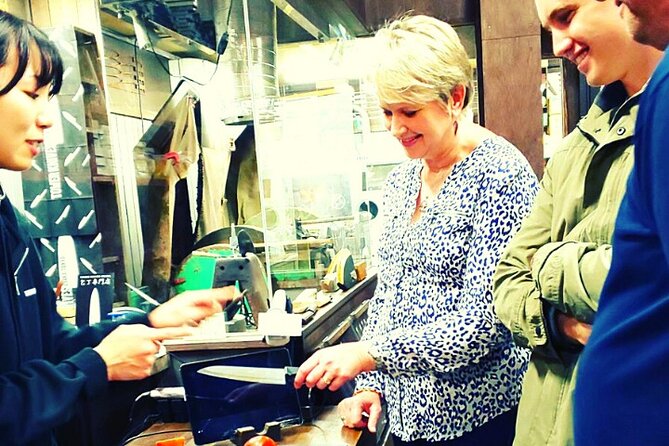
If you pick the 4 or 5-hour private tour, you can add Tower Knives Osaka and a knife lesson. The tour describes it as a private experience that explains how a knife is made, crafted at the rear of the building, followed by a hands-on cutting experience.
This is the rare stop where you’re not just watching Osaka—you’re participating in something practical and specific. It also breaks up the shopping and sightseeing cycle with a real skill-focused break.
One caution: because the lesson includes cutting, it’s worth confirming that your footwear and comfort level are up to basic hands-on activity. The tour doesn’t mention any limits, so use your best judgment.
This stop lasts about 15 minutes and is included on the 4- and 5-hour versions only, so plan around it if it’s on your list.
Osaka Castle, Shitennoji, and Abeno Harukas on the 5 and 7-Hour Routes
If you want the big icons, choose 5 or 7 hours.
Osaka Castle and the Unification Story
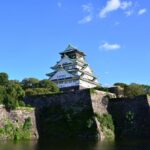
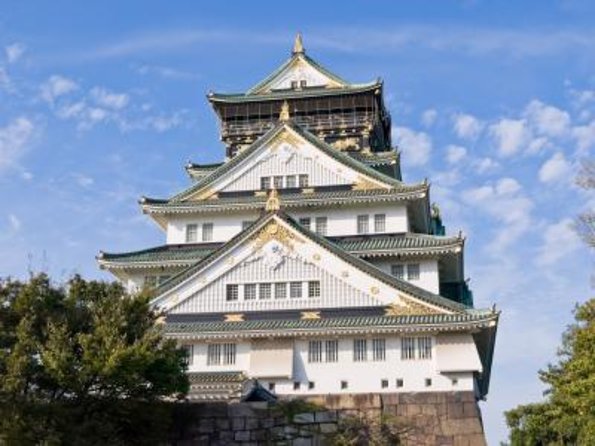
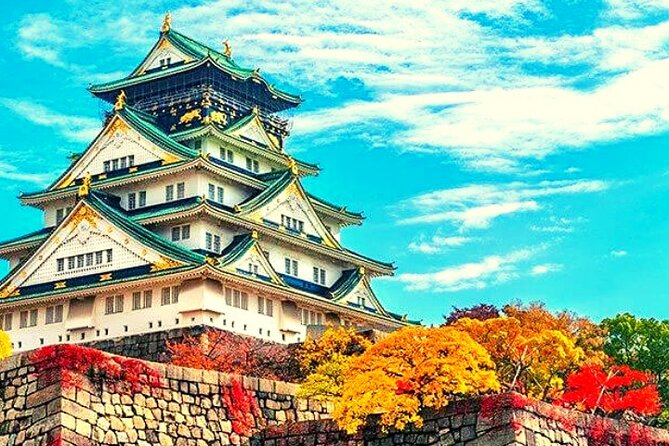
Osaka Castle is included only on 5 or 7-hour private tours, and the park time is built in. The tour adds context about its role in Japan’s unification years ago, which matters because the castle is more than a view spot. The stop is long enough (about 1 hour 10 minutes) that you’ll have time to walk the grounds and absorb the setting without feeling rushed.
Admission to Osaka Castle is not included, so you’ll need to budget for entry if it’s closed or costs more than expected on your travel dates.
Shitennoji as a Spiritual Anchor (5 or 7 Hours)
Shitennoji appears on the 5 or 7-hour private options. It’s described as the first Buddhist and oldest officially administered temple in Japan. The tour notes the temple has a spiritual feel even if you’re not religious, and the stop is about 30 minutes.
Again, admission is not included here. If your goal is mostly street Osaka, this stop may feel like a “breather.” If you like history and architecture, it’s a strong contrast to the neon-heavy center.
Abeno Harukas: Japan’s Tallest Building
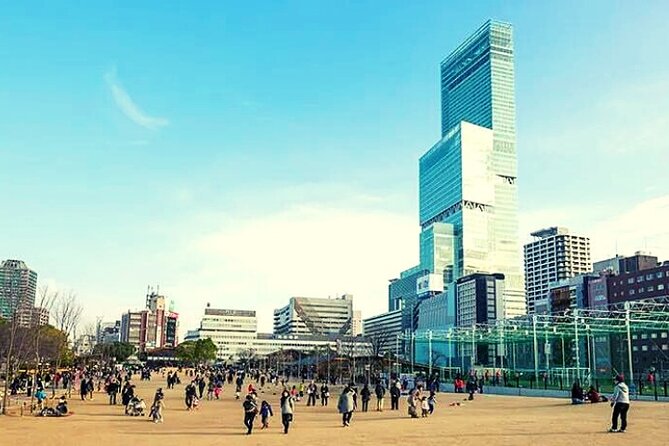
Abeno Harukas is included on 5 or 7-hour private tours. The tour highlights it as Japan’s tallest building at about 300 meters (with the note that it’s a building, not a structure or tower). It’s about 20 minutes, and admission isn’t included.
This is a good “big view” option when you want a skyline moment without losing your whole day. If your legs are already tired from earlier walking, this can act as a contained payoff.
The 7-Hour Add-Ons: Ukiyo-e and the Museum of Housing and Living
If you choose the 7-hour private tour, you unlock two very specific cultural add-ons that go beyond the usual landmark checklist.
Osaka Ukiyoe Museum
The Ukiyo-e museum is described as a small but welcoming place focused on this printmaking tradition. It’s included on the 7-hour option, with admission included. The description mentions a mix of Edo period originals and newer works.
This stop is about 15 minutes, which makes it ideal if you want something art-related without turning your day into a museum day.
Osaka Museum of Housing and Living
The Osaka Museum of Housing and Living is also only on the 7-hour option. The tour description says the standout is a reconstruction of an ancient Osaka town featuring houses, stores, and homes. Admission isn’t included.
This can be a very smart pairing after all the street scenes earlier. You get a “now vs. then” contrast—how everyday life might have looked compared to what you’re walking through today.
What You Actually Get Included (And What You Still Pay For)
For the money, you get a guide-led walking route, with optional train or taxi use if you request it. You also get 1 drink and 1 small side dish (usually 1 takoyaki ball), plus flexibility across 3, 4, 5, or 7 hours depending on your chosen version.
What’s not included is important for planning: entry fees to attractions, transport costs (unless your requested route includes them), and any food and drinks beyond the small included snack.
A practical takeaway: treat the snack as a sampler, not a full meal. The tour is designed to keep you moving so you can still choose where to eat dinner on your own after the walk.
Price and Time: Is $31.84 Good Value?
At $31.84 per person, this tour is priced like a smart orientation walk, not like a full-day private chauffeured experience. In other words, the value comes from routing and storytelling, not from luxury comfort.
The best deal is when you match duration to your priorities:
- If you want orientation and a taste of Osaka center, the 3-hour option can be a high-impact start.
- If you want more neighborhoods and maybe Shinsekai, go longer.
- If you care about unique activity time, pick the 4 or 5-hour option for Tower Knives Osaka.
- If landmarks matter, choose 5 or 7 hours so Osaka Castle and other major stops fit.
Also, pickup is offered and there’s a mobile ticket, which can reduce friction on a day when you’re already navigating Namba. The tour ending back at the meeting point is another small value lever—it helps you plan your next step without guessing where you’ll be.
Who This Tour Fits Best in Real Life
This works especially well if you’re arriving in Osaka for the first time and you don’t want to spend day one confused. A walking format also fits people who enjoy street atmosphere, shopping streets, and food markets.
It’s a strong fit for families too, because the route naturally mixes sights and snacks and keeps the stops relatively short. It’s also a good option if you prefer private touring where only your group participates.
If you travel with mobility limitations, note that this is a walking tour with moderate physical fitness level mentioned. You can request optional train or taxi use if needed, but the core experience is still on foot.
If you’re the type who gets overwhelmed by crowds, plan shorter timing first, then return later to the areas you liked best.
Should You Book Osaka Kickstart?
If your goal is a first-day grounding in Osaka—alley character, river energy, seafood-market confidence, and a few true standout stops—this is a solid booking. The structure makes it hard to waste time, and the guide-led details help you move through Osaka with less guesswork.
I’d book it especially if you want a mix of classics (Dotonbori, Shinsaibashi-suji) plus the more specific zones (Kuromon Market, gaming and cosplay lanes). Choose 4 or 5 hours if you want the knife lesson, and pick 5 or 7 if Osaka Castle and Abeno Harukas are on your list.
One final note: the tour requires good weather. If rain is in the forecast, I’d still consider booking because weather issues can trigger a swap or refund, but have a flexible mindset.
FAQ
How long is the Osaka Kickstart tour?
It’s offered in flexible durations of about 3, 4, 5, or 7 hours, depending on which option you book.
Is it a private tour?
Yes. The experience is listed as private, meaning only your group participates.
What’s included with the tour price?
You get a walking tour with optional train or taxi use if requested, flexible duration options, and 1 drink plus 1 small side dish (usually 1 takoyaki ball).
Are attraction entry fees included?
No. Entry fees for attractions are not included in the tour price.
Where does the tour start and end?
It starts at 2-chōme-2-8 Namba, Chuo Ward, Osaka, and ends back at the meeting point.
Does the tour offer pickup and mobile tickets?
Pickup is offered, and you’ll receive a mobile ticket.