REVIEW · OSAKA
Hungry Osaka Street Food Tour:15 Tastings & 3 Drinks with a Local
Book on Viator →Operated by Hungry Osaka Tours · Bookable on Viator
Shinsekai food hits fast. This Hungry Osaka Street Food Tour turns Osaka’s snack culture into one simple plan: 15+ tastings and 3 drinks in about three hours, walking you through the side alleys and arcades locals actually use.
I love the variety: you’ll work through classics like karaage, yakitori, takoyaki, udon, oden, kushikatsu, and dessert without needing to build an itinerary. I also like that guides such as Anna, Andy, Adam, Tim, Kenzo, and Scott are repeatedly described as fun, people-friendly, and rich on local context while you move.
One drawback to weigh: the tour can’t accommodate gluten-free, vegan, or vegetarian diets, and it isn’t suitable for kids under 7.
In This Review
- Key highlights at a glance
- Shinsekai start: Tsutenkaku, western-style streets, and where kushikatsu began
- Five eateries in one night: how the format keeps it easy (and fun)
- The tasting menu: karaage, yakitori, takoyaki, udon, oden, kushikatsu, and dessert
- Drinks included: alcohol or nonalcohol, and why it helps your pacing
- What makes this tour feel local: arcades, side alleys, and small-seat spots
- Duration, group size, and why the night doesn’t feel chaotic
- Price and value: what $73.29 buys you in Osaka eating terms
- Starting and ending where it’s convenient: Ebisucho to Dobutsuen-Mae
- Who should book this Osaka street food tour
- Should you book it?
- FAQ
- How long is the Hungry Osaka Street Food Tour?
- How many food tastings and drinks are included?
- What kinds of food are included on the tour?
- Where does the tour start and end?
- Are alcohol drinks included?
- Can you accommodate gluten-free, vegan, or vegetarian diets?
- Is filming allowed during the tour?
Key highlights at a glance
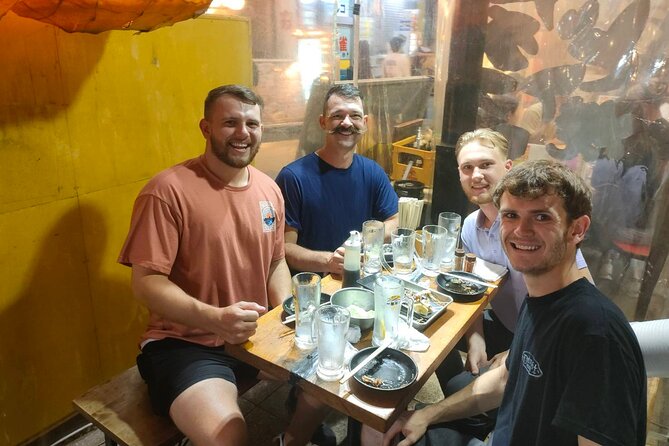
- 15+ tastings at 5 different places (izakaya, restaurants, stall, bar)
- 3 drinks included, alcohol or nonalcohol options
- A Shinsekai orientation stroll with Tsutenkaku sights along the way
- Small group size (max 9) so the tour stays conversational
- Dropped off at Dobutsuen-Mae Station if you need the rail lines
Shinsekai start: Tsutenkaku, western-style streets, and where kushikatsu began
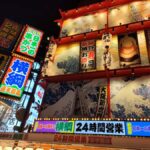
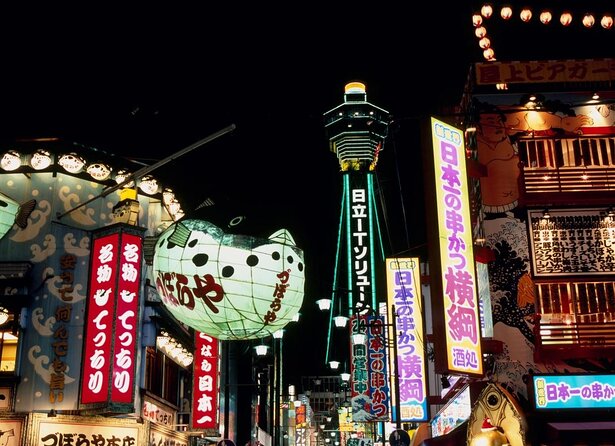
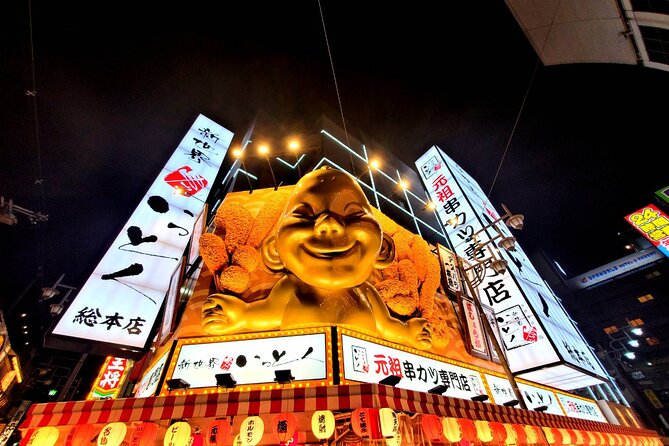
The tour begins near Ebisucho Station (5 Chome-13 Nipponbashi, Naniwa Ward). From there, the early part is a short walk through Shinsekai, which is often skipped by people rushing through Osaka. That’s a shame, because it’s the kind of neighborhood where street life and food life were built together.
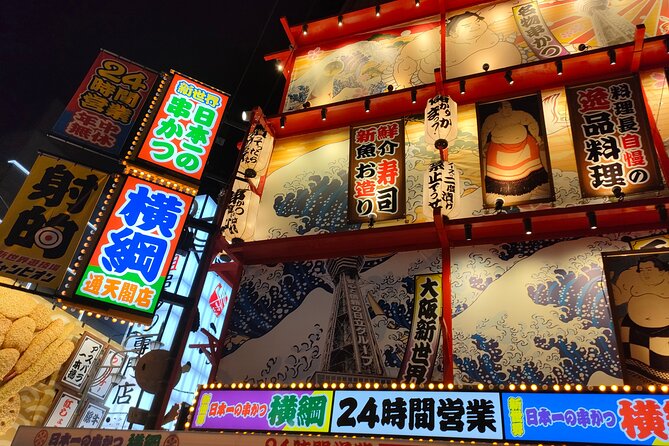
You’ll go past Tsutenkaku, the landmark tower that anchors the area. The guide also points out where kushikatsu all began and chats about how these streets were shaped more than a century ago to feel Western—an unusual angle for an Osaka food story. Even if you know some Japanese food already, this part helps you see why the area feels the way it does tonight.
Tip: this portion is time-permitting, so don’t count on a long “see the sights” walk. Think of it as getting your bearings fast before the food starts multiplying.
You can also read our reviews of more tours and experiences in Osaka.


Five eateries in one night: how the format keeps it easy (and fun)
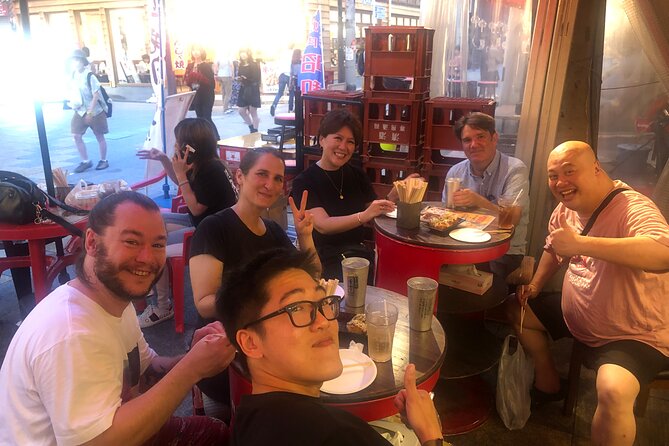
After the Shinsekai stroll, the tour becomes a focused crawl through five unique establishments. The stops mix different styles: an izakaya, a restaurant, a stall, and a bar-type spot (plus another food stop). That matters because Osaka street food isn’t one single format. You’ll feel the difference between a place where people stand shoulder-to-shoulder, a counter-style spot, and a more seated restaurant vibe.
The structure also helps you avoid the common street-food problem: where do you go, what do you order, and how do you say it quickly? Here, your guide handles the “now, go here” part. You just follow along and eat what’s served at each stop.
Pacing is a big deal on a night like this. The tour runs about 3 hours, and the group stays small (up to 9 people), so you’re not in a cattle-line sprint. The best aspect, based on how people describe the experience, is that the night feels like an organized food walk rather than rushed sampling.
The tasting menu: karaage, yakitori, takoyaki, udon, oden, kushikatsu, and dessert
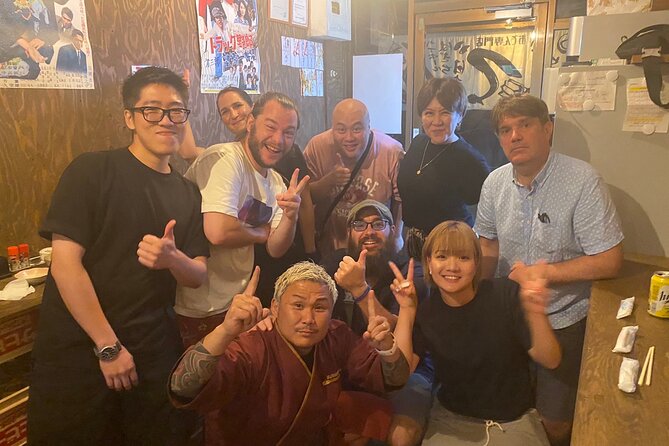
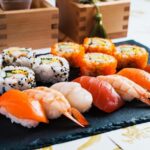
You’re promised 15+ dishes across the stops, with karaage, yakitori, takoyaki, udon, oden, kushikatsu, and dessert called out as part of the lineup. That’s a smart mix because it hits different “moods” in Osaka eating:
- Fried and snacky items (hello karaage and kushikatsu)
- Skewers you can eat quickly while standing or chatting (yakitori)
- Hot round street treats that are easy to share and swap tastes with your group (takoyaki)
- Noodles that help you slow down and reset your palate (udon)
- Comforting simmered food that balances the fried stuff (oden)
- Sweet ending energy (dessert)
You don’t need to plan around these dishes. The tour does the hard part: it bundles them into one evening so you’re not guessing what goes together.
Food reality check: you’ll likely be eating a lot. That’s the point. Wear comfy clothes, keep your water nearby, and accept that dessert is not optional once it shows up. If you’re the type who hates not being in control of the menu, this might feel like too much structure.
Drinks included: alcohol or nonalcohol, and why it helps your pacing
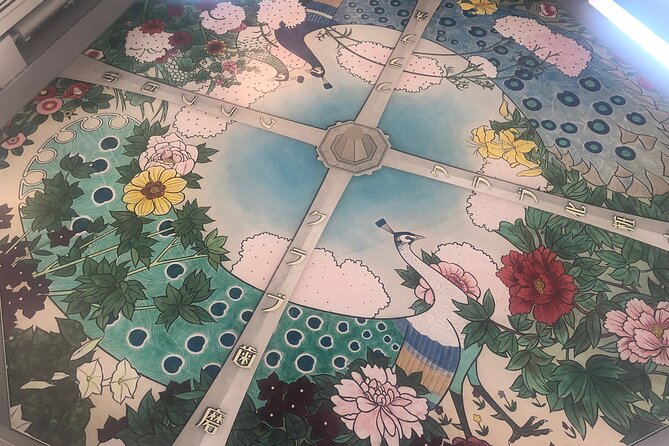
Along with the food, you get 3 drinks included. The drinks can be nonalcohol or alcohol, depending on what’s offered and how you choose.
Even without knowing the exact drink mix ahead of time, having drinks bundled in is a practical win. Street-food nights can blur together fast. A drink breaks up the bites, helps you reset between stops, and makes the whole walk feel more like hanging out than doing a checklist.
Practical tip: if you’re choosing alcohol, pace it. The route and the timing keep moving, and you don’t want to feel sluggish halfway through. If you’re choosing nonalcohol, still treat the drinks like part of your plan, not an afterthought.
What makes this tour feel local: arcades, side alleys, and small-seat spots
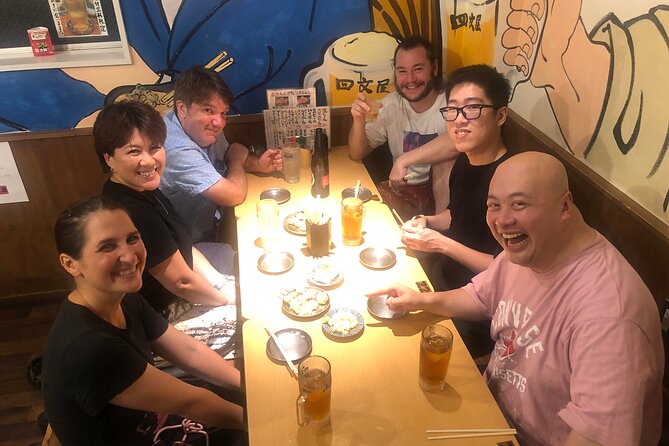
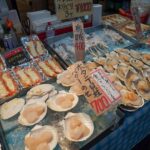
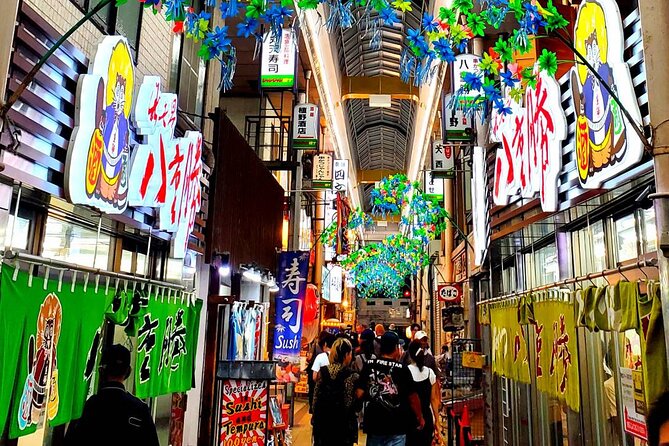
One reason this tour earns such strong repeat love is that it’s built around the neighborhood’s everyday eating. You’ll weave through arcades and side alleys filled with locals as you move between eateries. That’s not just for atmosphere. It changes your experience of the food.
In small spots, you’re often eating at counters or near seating that’s tight. That can be intimidating at first if you’ve never done it, but your guide helps you “fit” without making it awkward. People also mention that the places are family-owned, which usually means you get a warmer welcome and less cookie-cutter tourist flavor.
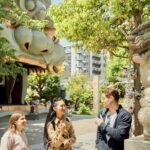
You also get neighborhood context while walking. The guide shares explanations about Shinsekai as you transit. That turns a food crawl into a place story, and it’s why people repeatedly mention history, customs, and Japan-life context during the night.




Duration, group size, and why the night doesn’t feel chaotic
The tour is about 3 hours and capped at 9 travelers. That combo is a quiet advantage. Big group food tours often feel like stop-and-go traffic. Here, the small size keeps attention on you, and it’s easier for the guide to check in on the group.
It’s also about movement plus timing. You’re sampling at five establishments, plus the Shinsekai orientation stroll, so the schedule is naturally packed. The “approx.” duration matters, because it means you should plan to stay flexible. If you’ve got a late-night reservation you can’t miss, give yourself a buffer.
Also note the format: you’re not just being handed food. You’re walking, learning, eating, and walking again. That’s usually a great fit for first-time Osaka visitors who want something more memorable than just a meal.
Price and value: what $73.29 buys you in Osaka eating terms
At $73.29 per person, this isn’t a budget grab, but it also doesn’t feel like you’re paying “tour markup” for nothing. You’re getting:
- 15+ dishes
- 3 drinks
- 5 different eateries
- a local guide who explains what you’re seeing as you walk
- a neighborhood route in Shinsekai that you may not pick on your own
If you break it down in your head, you’re paying for a lot of small portions rather than one heavy restaurant bill. The value rises fast if you’d otherwise spend time searching for food, translating menus, or ordering one item at a time and discovering you missed your favorites.
The main value risk: if you strongly dislike certain kinds of food or can’t eat fried, noodles, skewers, or dairy-based items, the fixed lineup won’t bend for you. And since dietary accommodations for gluten-free, vegan, and vegetarian aren’t available, the price becomes less compelling if those diets matter for you.
Starting and ending where it’s convenient: Ebisucho to Dobutsuen-Mae
You’ll meet at Ebisucho Station and end at Dobutsuen-Mae Station (Midosuji & Sakaisuji Lines), where you can be dropped off at the end of the tour.
That matters because one of the biggest friction points of nightlife food tours is transportation logistics. Here, the route is designed so you’re not stuck figuring out how to get home after your last bite. It’s also helpful if you’re staying somewhere near those lines.
You should still budget a little time to get to the meeting point. The tour uses a mobile ticket, and while you’ll get confirmation at booking time, you don’t want to arrive late and feel rushed before the first stop.
Who should book this Osaka street food tour
Book this if you want:
- A guided way to eat Osaka classics in one evening
- Shinsekai specifically (instead of only the headline districts)
- A tour with a fun, lively guide. People highlight guides like Anna, Andy, Adam, Tim, Kenzo, and Scott for humor and warmth.
- A small group experience (max 9), where conversation feels natural
Consider skipping or choosing something else if:
- You need gluten-free, vegan, or vegetarian options (the tour can’t cater)
- You’re traveling with kids under 7
- You want quiet, low-volume dining rather than a “try everything” approach
- You plan to film during the tour (filming isn’t permitted)
Should you book it?
I’d book it if your Osaka plan includes food and you like the idea of being guided through a neighborhood you might otherwise overlook. The best part is that the tour bundles many Osaka staples into a simple, timed walk while giving you context about Shinsekai and the Tsutenkaku area.
Skip it if diet needs are strict or you’re hoping for a choose-your-own-menu night. This is built for eating lots of the included lineup, not for customizing meals.
If you’re a first-timer in Osaka and want one evening that teaches you the vibe and feeds you at the same time, this is an easy yes.
FAQ
How long is the Hungry Osaka Street Food Tour?
It runs for about 3 hours.
How many food tastings and drinks are included?
You’ll enjoy 15+ dishes at 5 unique eateries and you also get 3 drinks included.
What kinds of food are included on the tour?
The tour includes items such as karaage, yakitori, takoyaki, udon, oden, kushikatsu, and dessert.
Where does the tour start and end?
It starts at Ebisucho Station and ends with a drop-off at Dobutsuen-Mae Station.
Are alcohol drinks included?
The tour includes 3 drinks, and they can be alcohol or nonalcohol.
Can you accommodate gluten-free, vegan, or vegetarian diets?
No. The tour cannot cater for gluten-free, vegan, or vegetarian diets.
Is filming allowed during the tour?
No. Filming of the tour is not permitted.