Osaka hits you fast. This guided walk strings together Osaka Castle Park and the city’s merchant-era neighborhoods so you get the full shape of the place in just 4 hours. You start with big-history context, then slide into modern Osaka’s loud, food-first energy.
I really like the variety here: you’ll get Osaka Castle’s exterior and park time without the crowds of an inside visit, and you’ll also ride public transport to see Osaka’s different faces, from Tsuruhashi Korea Town alleys to the high view at Abeno Harukas 300. It also helps that guides like Ferdinand, Kevin, and Oisin are known for telling stories in a way that actually sticks, not just listing facts.
One drawback to plan around: it’s rain or shine, and there are no food stops on the schedule. You can grab snacks along the way, but if you’re hoping for a sit-down meal included in the price, this is not that kind of tour.
In This Review
- Key things to know before you go
- A 4-hour Osaka route that gives you the whole picture
- Where you meet: Tanimachiyonchome Exit 2
- Osaka Castle Park: the exterior version, done right
- Tsuruhashi Korea Town: narrow alleys and old commerce
- Abeno Harukas 300: the skyline view plus an underground food hall
- Shinsekai: a slightly worn time capsule
- Namba and Dotonbori: shopping energy and the Osaka script
- Kuromon Ichiba: why this market belongs in the story
- Doguyasuji: wax food models and kitchen district chaos (the fun kind)
- Price and logistics: what $59 actually buys you
- The guides make or break the experience
- Pace, weather, and comfort: set yourself up for an easy win
- Who should book this Osaka walking tour?
- Should you book this Osaka Main Sights and Hidden Spots tour?
- FAQ
- How long is the Osaka guided walking tour?
- Where do I meet the guide?
- Do we enter Osaka Castle?
- Is food included in the tour price?
- What do I need for public transportation?
- What languages is the live guide available in?
- Is there hotel pickup?
- Is the tour wheelchair accessible?
- What options do solo travelers have if the minimum number of guests isn’t met?
Key things to know before you go
- Osaka Castle Park sets the historical stage, without entering the castle itself
- Tsuruhashi gives you a pre-war commercial maze with Korea Town vibes
- Abeno Harukas 300 adds a big skyline moment, then you go underground to a department-store food hall
- Shinsekai feels like an older slice of Osaka, still doing its own thing
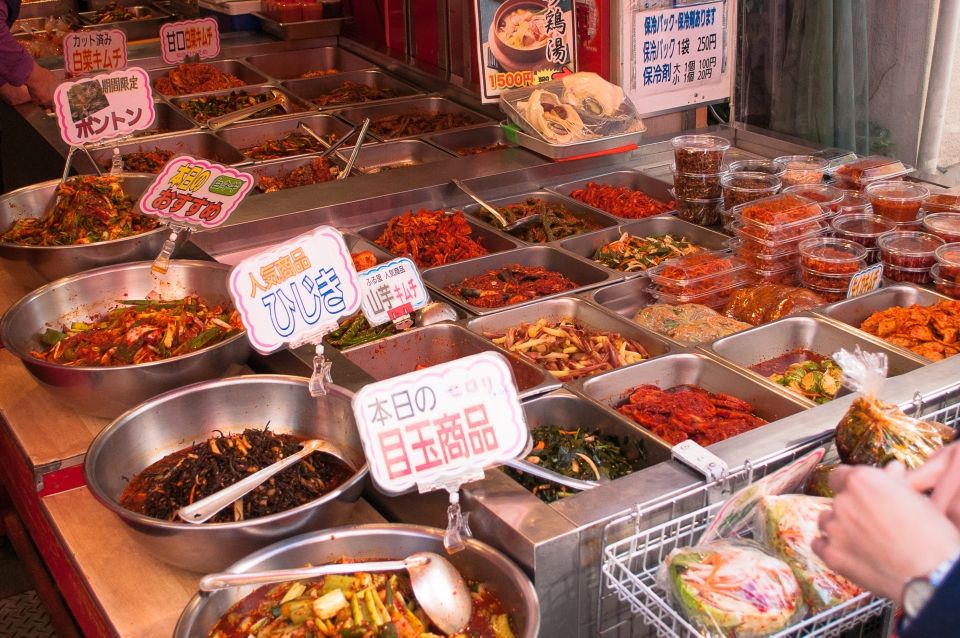
- Dotonbori and Kuromon Ichiba cover the city’s modern must-eats and fish-market credibility
- Doguyasuji finishes with kitchen district sights like wax food models and noren curtains
A 4-hour Osaka route that gives you the whole picture
Osaka is not just neon, not just food, and not just a place to sleep between Tokyo legs. It’s a city where neighborhoods grew around merchants, entertainment, and trade—then layered on modern shopping and skyline drama. This walking tour is built for that idea.
What makes the timing work is the pacing. You get long enough at each area to understand what it is, but you’re not stuck in one spot. The route is also a smart mix of walking plus short public-transport hops, which keeps your legs from turning into two sad noodles halfway through.
You can also read our reviews of more tours and experiences in Osaka.
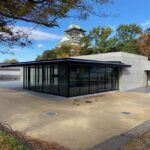
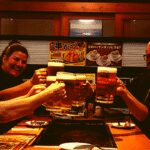
Where you meet: Tanimachiyonchome Exit 2
You’ll start in front of Tanimachiyonchome Station Exit 2. If you’re arriving by taxi, the intersection name to know is tanimachi 3-chome. This matters because Osaka stations can feel like they were designed by someone who enjoys confusing people (the good kind of confusing).
Bring comfortable shoes. Even at a casual pace, your day adds up. And you’ll want a plan for getting to the meeting point: you’re expected to use a subway day pass to reach the start and to ride during the tour.
Osaka Castle Park: the exterior version, done right
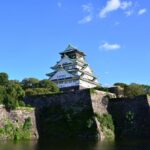
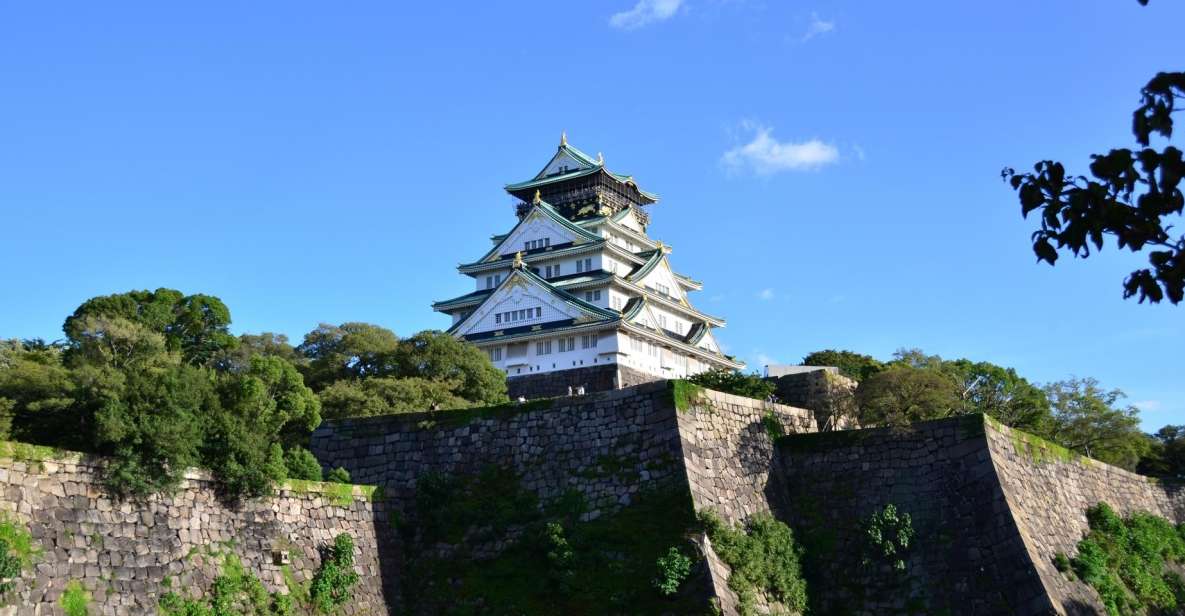
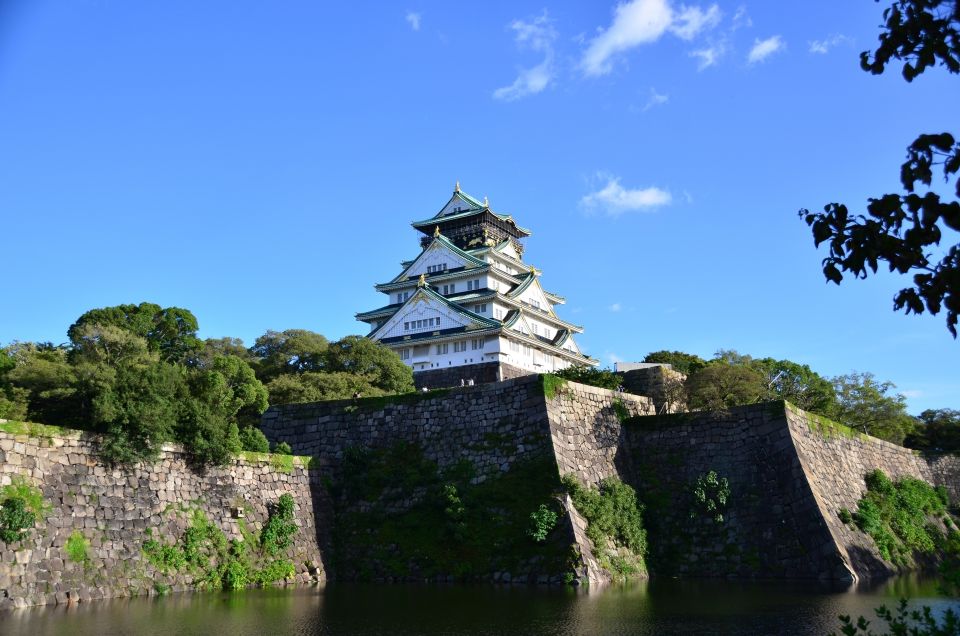
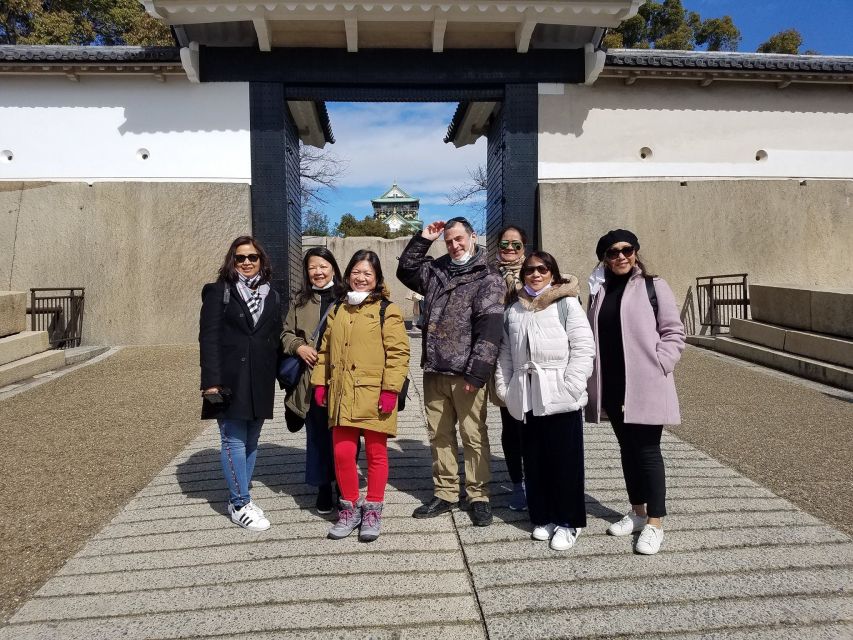
Your first major stop is Osaka Castle Park, where you’ll admire the grand exterior and walk the surrounding grounds. You do not go inside the castle, but that’s not a downgrade. The park gives you space to slow down and absorb the scale, and it’s the easiest way to connect Osaka’s political history to the city that grew around it.
You’ll also hear the kind of story that makes a landmark feel personal. In one guide-led experience, Ferdinand focused on the Shogun period stories around Osaka Castle, and that style of storytelling is a big reason people rate this tour so highly. You’re not just looking at stone—you’re learning why it matters to how Osaka developed.
Practical note: plan to stand and walk on uneven paths. It’s a park, not a paved theme park. If it’s hot, take a breather when your guide offers a pause.
Tsuruhashi Korea Town: narrow alleys and old commerce
After the castle park, you head to Tsuruhashi by quick train. This is Korea Town, but the real win is the physical feeling: narrow streets, pre-war commercial textures, and alleys that encourage slow walking and casual people-watching.
This stop is valuable because it challenges the usual Osaka checklist. Instead of only hitting the famous signs, you get a district that shows how Osaka has absorbed other cultures through everyday business. You’ll feel the difference between a place built for visitors and a place that mostly serves locals—no need for a long explanation, the street layout does it for you.
If you like food, this is the part where your senses wake up early. Even though there’s no formal food stop, the area is the kind of place where you might want to buy something small and snack-sized while you’re still moving with the group.
Abeno Harukas 300: the skyline view plus an underground food hall
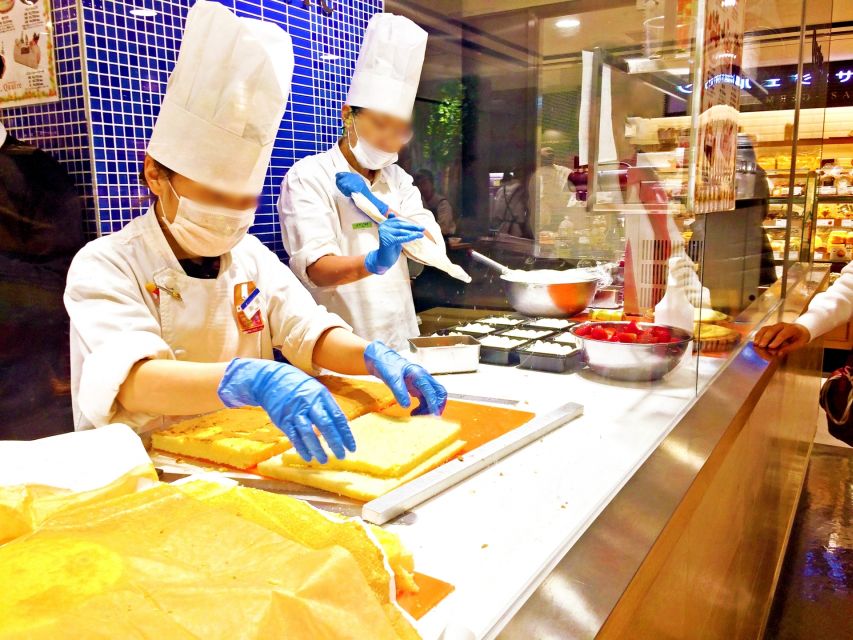
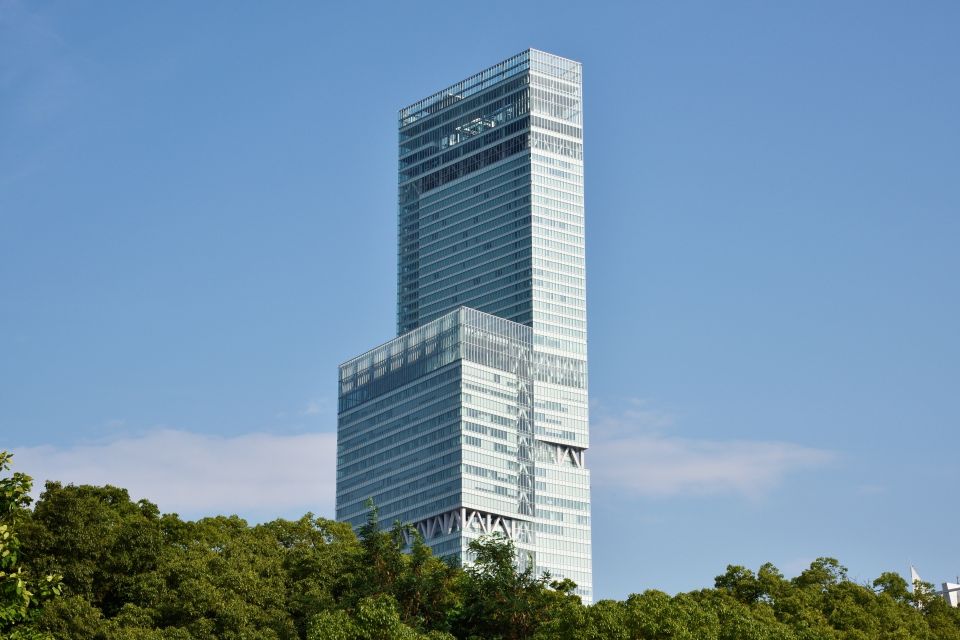
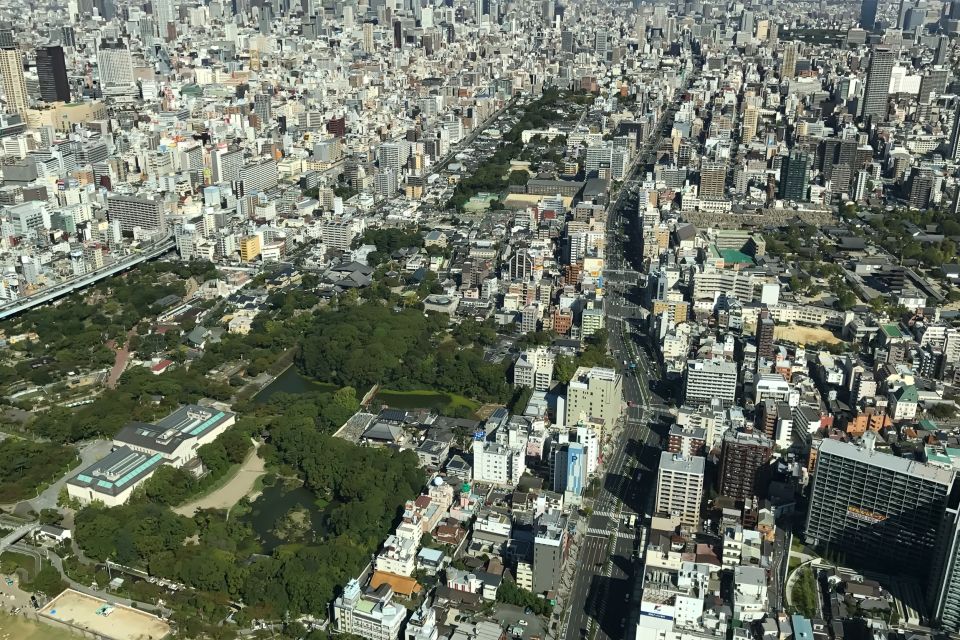
Next comes the highlight combo: Abeno Harukas 300. You’ll get up high for city views, then go underground into the department store’s food hall area.
The skyline view is useful even if you’re not a “lookout point” person. You see how Osaka spreads out—and you get a mental map for later stops like Namba and Dotonbori. It turns the rest of the walk from random streets into a connected city.
Then you drop to the food hall level, where you can spot high-end items for sale—like puffer fish and Kobe beef. You might not buy everything (your wallet may file a complaint), but just seeing the variety tells you something important about Osaka: food here is serious business, and the city treats it that way.
Tip for photos: take a moment before you lift your phone. Stand where your guide points out the angle, and you’ll get better shots with less fiddling.



Shinsekai: a slightly worn time capsule
Shinsekai is one of those districts where the vibe doesn’t try too hard. The streets have that slightly crumbling, lived-in feel—the kind of place where you can sense history in the buildings and the scale of old signage.
This stop matters because Osaka isn’t only sleek towers and bright riverfront scenes. Shinsekai gives you the counterweight. You see a slice of the city’s earlier entertainment and neighborhood character, still visible in everyday street life.
If you’re thinking about photos, this is where you should slow down. Neon and tall buildings get most of the credit. But Shinsekai has texture—shadows, corners, and signage—things you’ll miss if you walk too fast.
Namba and Dotonbori: shopping energy and the Osaka script
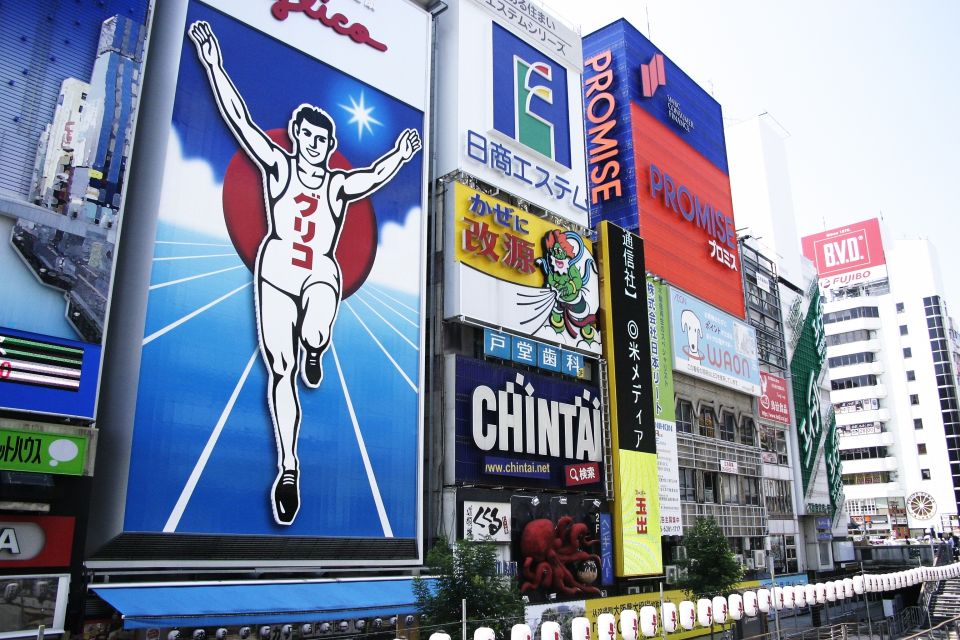
Your next phase centers on Namba, which is basically the heartbeat of present-day Osaka shopping, dining, and entertainment. From there, you’ll visit Dotonbori, Osaka’s version of Times Square—loud, visual, and instantly recognizable once you’re standing in it.
Here’s the thing: Dotonbori can feel like chaos if you approach it alone. With a guide, you get two advantages:
- You know what to look for, so it’s not just lights.
- You move through the back streets with less aimless wandering.
If you enjoy street food culture, you’re in the right zone. The guide can also point you to where the energy changes. Dotonbori has a rhythm—big moments, then quieter lanes—then big moments again.
Kuromon Ichiba: why this market belongs in the story
Right near the central Osaka food lanes, you’ll stop at Kuromon Ichiba, a fresh fish market with a role that stretches back 150+ years. This is more than a place to buy snacks. It’s a clue to Osaka’s merchant identity.
What I like about including Kuromon in a walking tour is that it turns the city’s food reputation into something concrete. You see the market logic: ingredients, display, and the daily flow that keeps the city eating.
Even without a food stop, you’ll usually get chances to buy small bites while you’re there. It’s worth scanning stalls with your guide first, then deciding if you want to buy. You’ll waste less money and get more of what you actually want.
One small practical idea: if you’re sensitive to crowds, come ready to move. Markets get busy.
Doguyasuji: wax food models and kitchen district chaos (the fun kind)
The tour also covers Doguyasuji, Osaka’s kitchen and cooking district. This is one of my favorite categories of places because it doesn’t exist just for visitors. It exists for the people who cook.
Expect to see wax food models, Japanese noren curtains hanging at entrances, and even large pottery pieces that signal what these streets are built around. This stop is a nice balance after the neon and the skyscrapers. You shift from entertainment to craft, from spectacle to tools and trade.
If you like design details, linger here. The district is full of small visual cues—signage, materials, storefront styles—that you’d never notice on a rushed walk.
Price and logistics: what $59 actually buys you
At $59 per person for a 4-hour guided walking tour, you’re mostly paying for two things: route design and a live guide to interpret the city. That matters in Osaka because so much of what makes the neighborhoods interesting is subtle—the street layouts, the mix of old and new, the cultural context behind what you’re seeing.
A few practical things affect value:
- Guide is included, but food and drink are not.
- Transportation isn’t included, so you should plan to use your subway day pass.
- There’s no hotel pickup included by default, but pickup is available for an additional 5000 yen (cash to the guide or via a secure payment link).
So the best value happens if you use the guide’s timing and knowledge to navigate efficiently. If you like learning, the tour becomes more than sightseeing. If you just want to “see the highlights,” you can still enjoy it—but you’ll feel the structure more than you feel the freedom.
The guides make or break the experience
This tour tends to get high marks because the guides bring the stops to life with story and context. You’ll hear that many guides—like Ferdinand, Kevin, Oisin, Oshin, and Brian—focus on the bigger picture and answer questions without turning the walk into a lecture.
A common theme in the best-guided days: photo help. Several guides are praised for pointing out angles and taking family/group shots. One guide (Kevin) even helped with a practical moment at a ramen shop by assisting with ordering via the vending machine—exactly the kind of thing that saves you from awkward menus and bad guesses.
That’s not guaranteed behavior, but it shows the general approach: they want you to leave with photos, clarity, and local confidence.
Pace, weather, and comfort: set yourself up for an easy win
This is a walking tour that takes rain or shine. You’ll want to bring layers and plan for damp weather if forecasts look shaky.
Because there’s no food stop, you should snack strategically. The good news: there are chances to buy snacks here and there. The better news: you can choose what you actually want instead of being steered into one included meal.
Also, be realistic about walking time. Some people mention getting tired by the end. It’s still only 4 hours, but Osaka streets add up fast. If you’re coming from a long flight day, build in a bit of rest beforehand.
Mobility note: the info says wheelchair accessible, but it also says the tour is not suitable for people with mobility impairments. If that’s your situation, contact the provider before booking so you don’t get surprised by the realities of steps, crowds, and street-level conditions.
Who should book this Osaka walking tour?
Book it if you want:
- A fast first introduction to Osaka that connects history, neighborhoods, and food culture
- A route that hits major names like Dotonbori and Kuromon Ichiba but also includes districts like Tsuruhashi and Doguyasuji
- A guide who can answer your questions and help you make sense of what you’re seeing
Skip it (or at least ask questions first) if:
- You want a tour centered on inside monuments only. You’ll admire Osaka Castle exterior, not the inside.
- You’re expecting included meals. You’ll have snack opportunities, but food and drink aren’t included.
- You have mobility constraints and need confirmed step-free routing.
Should you book this Osaka Main Sights and Hidden Spots tour?
I’d book it if your Osaka plan has one or two days and you want the city to click quickly. This route is designed to give you a framework: castle history, Korea Town texture, a high-view orientation, Shinsekai’s older street feel, and then the Namba/Dotonbori/Kuromon food heartbeat, topped off with the kitchen district visual culture.
It’s also a smart choice for families and mixed-age groups because the walk is structured with short transit hops and frequent context. If you pick this tour early, you’ll use the knowledge to plan the rest of your trip with less guesswork.
FAQ
How long is the Osaka guided walking tour?
It’s 4 hours long.
Where do I meet the guide?
Meet above ground at Tanimachiyonchome Station Exit 2. If you arrive by taxi, use tanimachi 3-chome as the intersection name.
Do we enter Osaka Castle?
No. You’ll visit Osaka Castle Park and admire the exterior, but you won’t go inside the castle.
Is food included in the tour price?
Food and drink are not included. There are chances to buy snacks along the way if you get hungry.
What do I need for public transportation?
You should buy a subway day pass and use it to get to the meeting point and during the tour.
What languages is the live guide available in?
The live tour guide is available in English, French, and Spanish.
Is there hotel pickup?
Hotel pickup is not included, but pickup is available for an additional 5000 yen in central Osaka or as a port pickup at Tempozan Ferris wheel.
Is the tour wheelchair accessible?
The information lists wheelchair accessible, but it also says the tour is not suitable for people with mobility impairments. If you have mobility needs, check with the provider before booking.
What options do solo travelers have if the minimum number of guests isn’t met?
If the minimum isn’t met, solo travelers are offered one of these: an alternate date, a 4000 yen solo supplement, or a full refund.
If you tell me what day/time you’re visiting Osaka and what kind of walking you can handle, I can help you choose the best fit for your schedule.