REVIEW · TOKYO
Tokyo: Mt. Fuji Tour, Hakone Ropeway, Owakudani, Lake Ashi
Book on GetYourGuide →Operated by TAIHOU CO,LTD · Bookable on GetYourGuide
Tokyo-to-Fuji days can feel rushed, but this one is built for big scenery and smart pacing. I like the way the route hits Lake Ashi’s torii and then climbs into Hakone’s volcano zone, all in one smooth, guided day. The best part is how the day keeps moving so you’re not stuck in transit forever.
I also really appreciate that Hakone Ropeway is included in the price, so you’re not gambling on extra tickets later. Plus, you get guided context for each stop, which helps the sights make sense fast.
One drawback to plan for: Mt. Fuji visibility is weather-dependent, and the optional Lake Ashi pirate cruise can feel like a splurge if the mountain is hidden.
In This Review
- Key highlights I’d circle before you go
- Getting Out of Tokyo: The 10-Hour Hakone and Fuji Rhythm
- Heiwa no Torii and Hakone Shrine: The Lake Ashi Red-Gate Moment
- Pirate Ship on Lake Ashi: Worth It When the Weather Plays Nice
- Hakone Ropeway: The Included Panoramas You Should Time Carefully
- Owakudani Volcanic Valley: Geothermal Chaos and Black Eggs
- Lake Yamanaka Swan Shore: A Simple Photo Stop With Real Swans
- Oshino Hakkai: Eight Ponds, Clear Water, and Calm Walking
- Lunch Timing and What to Pack for a Long Day
- Price and Value: What $54 Buys (and What It Doesn’t)
- Should You Book This Mt. Fuji and Hakone Day Tour?
- FAQ
- How long is the tour?
- Where do I meet the guide?
- Is lunch included in the price?
- Is the pirate ship cruise included?
- Is Mt. Fuji guaranteed to be visible?
- What happens if the Hakone Ropeway closes?
- Does the tour include the Hakone Ropeway fare?
- What should I bring and wear?
Key highlights I’d circle before you go
- Lake Ashi Heiwa no Torii views: the classic red gate framed by water and, when skies cooperate, Mt. Fuji
- Hakone Ropeway included: aerial panoramas over Lake Ashi and the Hakone caldera
- Owakudani Volcanic Valley: geothermal activity and the chance to try black eggs
- Lake Yamanaka Swan Lake shoreline: a straightforward photo stop with swans and Fuji in the background (if visible)
- Oshino Hakkai’s eight ponds: clear water fed by Mt. Fuji snowmelt, perfect for slow walking and photos
- Optional pirate ship cruise on Lake Ashi: pay extra for wider views from the water (about 1700 JPY)
Getting Out of Tokyo: The 10-Hour Hakone and Fuji Rhythm
This is a long day on purpose. Plan on roughly 10 hours from your morning meeting to evening drop-off, with a lot of sightseeing packed in between. You’ll start with a bus ride from central Tokyo (the tour notes Tokyo Station or Shinjuku as possible starting points), then settle into a steady flow of stops in Hakone and around the Fuji Five Lakes.
That matters because the biggest risk with a Mt. Fuji day trip is wasted time. Here, the schedule is designed to keep you moving between viewpoints: Lake Ashi, then geothermal Owakudani, then Fuji Five Lakes, then Oshino Hakkai. It’s not a slow, pick-one-neighborhood kind of day.
You’ll also be in a shared group with a multilingual guide (English, Japanese, Chinese, and Korea listed as available languages). Based on recent guide names like Jack, Kousei, Tom, Andrew, Sato, Leonard, and Wanting, the tour seems to run with guides who focus on clear timing and getting everyone where they need to be.
Two practical notes I’d treat as non-negotiables:
- Arrive early (the instructions say at least 15 minutes ahead). Meeting points can get chaotic with lots of groups.
- Bring snacks and water. Lunch is not included, and the day can stretch.
You can also read our reviews of more tours and experiences in Tokyo.

Heiwa no Torii and Hakone Shrine: The Lake Ashi Red-Gate Moment
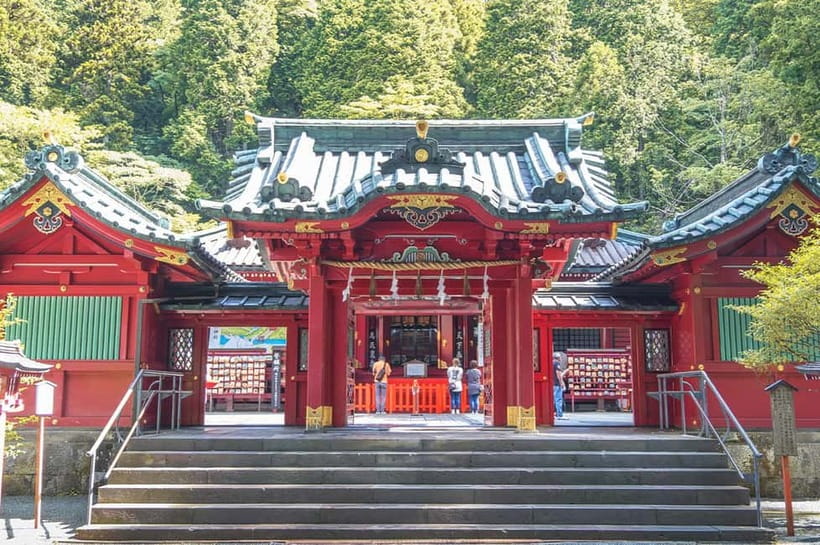
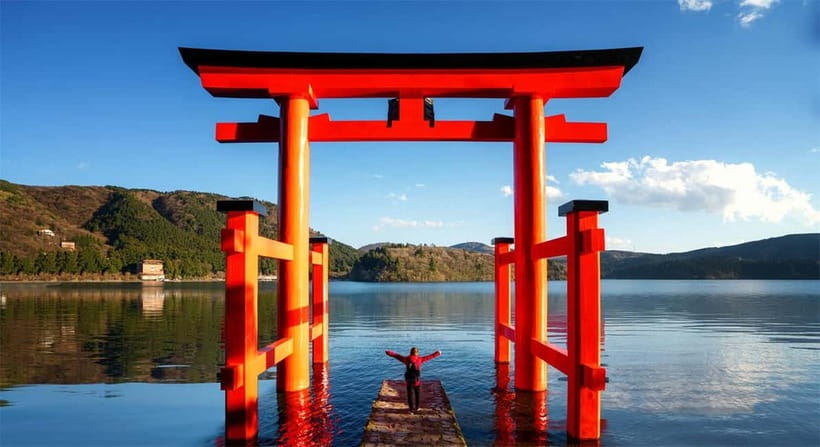
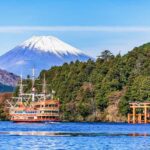
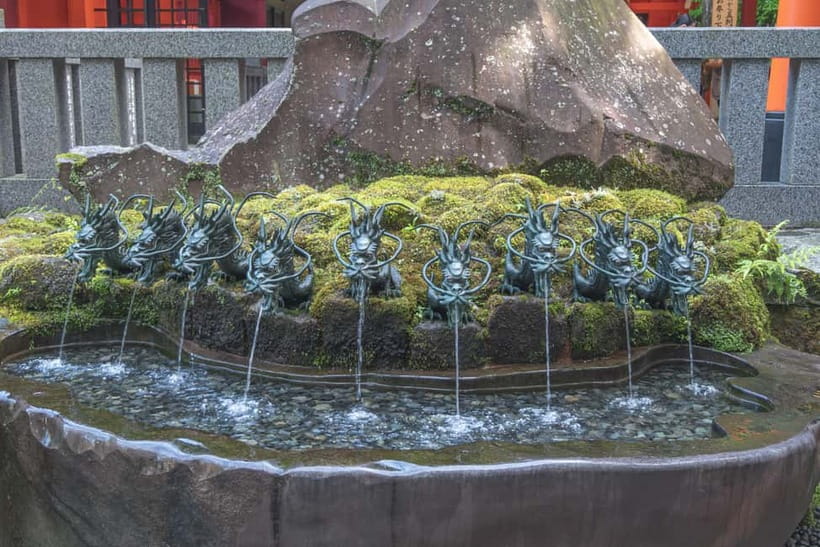
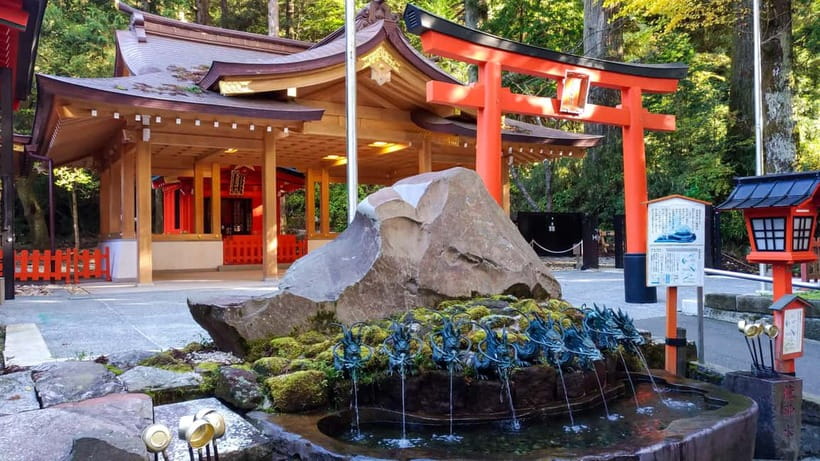
Hakone Shrine and Lake Ashi are why you’re here. You’ll visit Hakone Shrine, and you’ll also stop at Heiwa no Torii—the famous red torii standing out on the lake. The shrine dates back to 757, so it’s not just a photo stop. It’s a real, active sacred site.
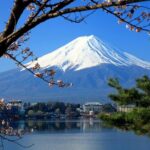
When Mt. Fuji is visible, this torii viewpoint becomes the kind of image you actually remember. Even when Fuji is hidden, the lake setting still gives you that classic Hakone mood: water, open sky, and the sense of being far from Tokyo without going that far.
Important timing heads-up: the torii gate is listed as closed from Dec. 28th to Feb. 10th, 2026. If your dates land inside that window, you’ll need to adjust expectations for the iconic gate photo. The rest of the Lake Ashi and Hakone views should still be part of the day, but the signature shot may not be possible.
Free time here is short but useful. I’d use it for two things:
- Find your torii angle early (lines can form).
- Take a calmer walk around the shrine area before the bus schedule pulls you onward.
Pirate Ship on Lake Ashi: Worth It When the Weather Plays Nice
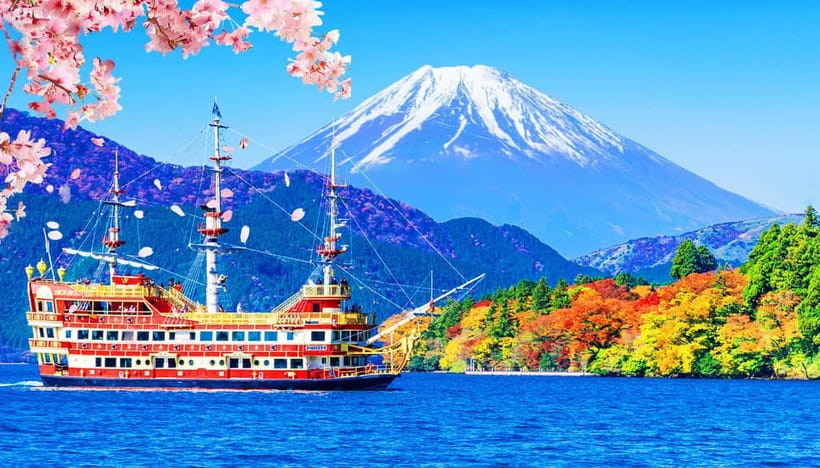
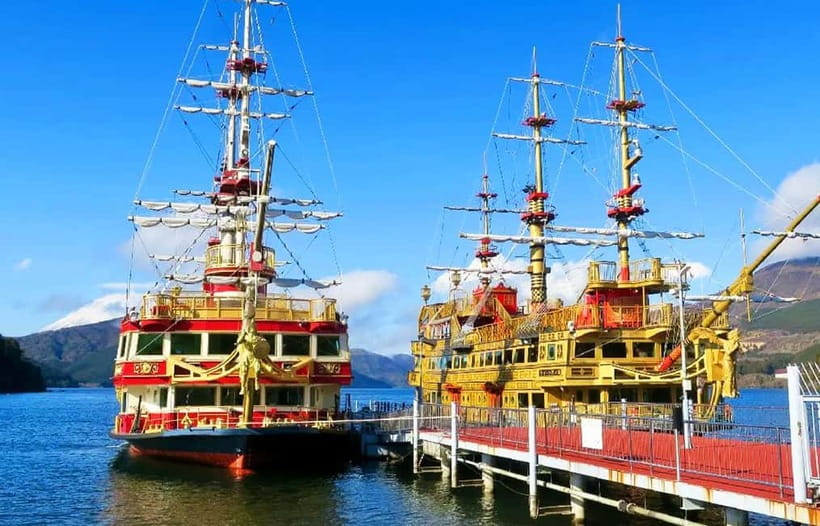
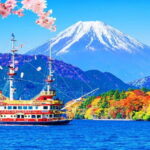
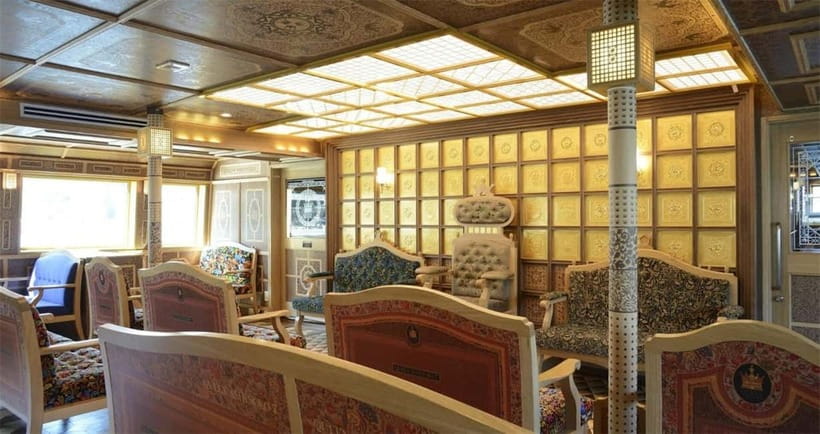
The Lake Ashi pirate ship cruise is an optional add-on, paid by you (around 1700 JPY). You’ll be offered themed boat options listed as Royal II, Victory, and Queen Ashinoko.
Here’s how to decide if it’s worth it for your day:
- If you’re likely to have clear visibility and you want wide, water-level views, the cruise is a good use of your time and money.
- If clouds roll in, you can end up paying extra for scenery without the payoff you came for.
The tour instructions say the pirate cruise is optional and self-paid, so you’re not locked into it. If you choose to skip, you’ll still have plenty of Lake Ashi views from shore and from the ropeway area.
Also watch the order of your day. One practical takeaway from the way this tour runs: if the schedule gets tight, some later photo moments can shorten. So if Mt. Fuji visibility is good that day, it’s smarter to favor viewpoints where you get the best chance of a clear mountain backdrop.
Hakone Ropeway: The Included Panoramas You Should Time Carefully
This is the part of the day that feels like a reward. The Hakone Ropeway fare is included, and you’ll ride it for panoramic views of Mt. Fuji and Lake Ashi.
Why the ropeway is valuable: it’s not just a ride. It gives you a different angle on the Hakone caldera and the lake shoreline that you can’t get from ground-level stops. That variety keeps the day from feeling repetitive.
Weather matters here too. The tour info notes that the ropeway can close due to bad weather or maintenance. If that happens, they mention a 1000 JPY/person refund after you email for the ticket refund. So don’t treat this stop as guaranteed.
My practical advice: plan your photography like a pro.
- Bring your camera and phone fully charged. You’ll likely be hopping between stops.
- If you see a break in clouds, don’t hesitate—views can change fast.
- Wear shoes that work outdoors. Ropeway stations and ramps are not always the kindest on tired feet.
Owakudani Volcanic Valley: Geothermal Chaos and Black Eggs
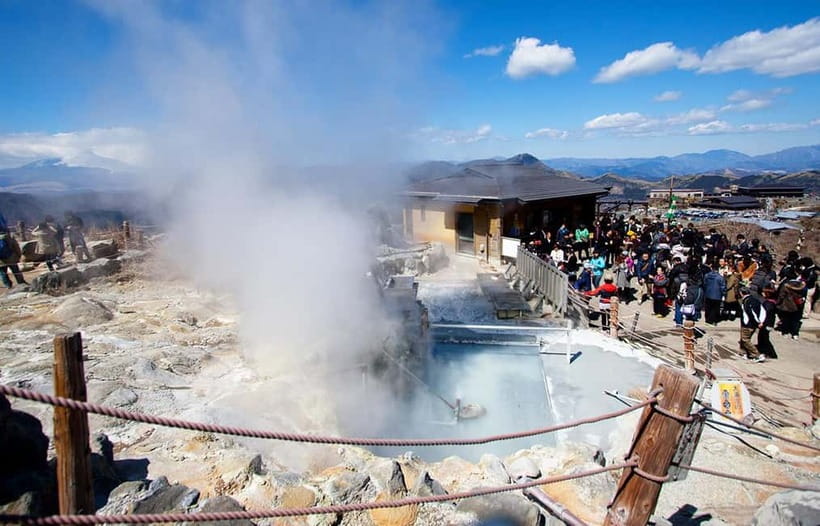
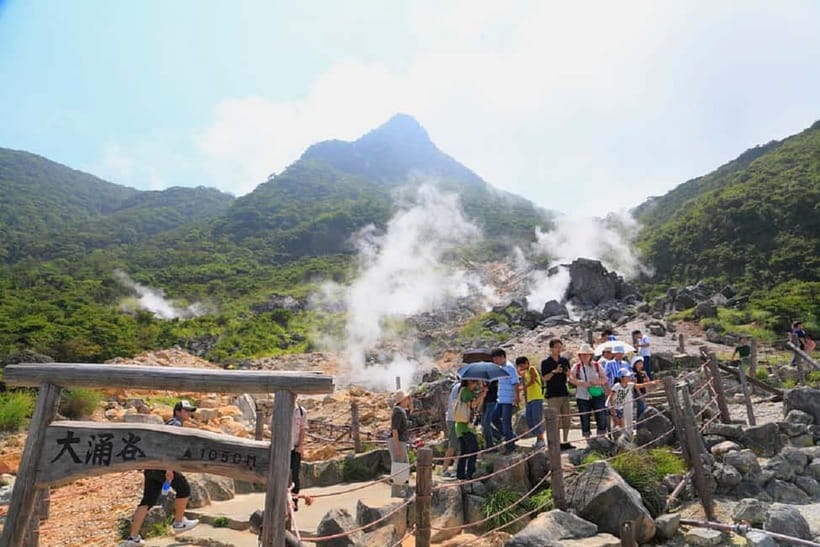
Next comes Owakudani, the geothermal valley tied to volcanic activity in the Hakone region. The tour notes that the area was formed about 4,000 years ago during a massive eruption of Mt. Hakone.
This stop is one of the most memorable because it’s sensory. You’re standing in a landscape shaped by heat, steam, and sulfur-like atmosphere. Even if you’re not a science buff, it’s a strong visual contrast to the lakes and shrine views earlier.
And then there’s the food moment: you can try black eggs, boiled in volcanic spring water. It’s a classic Hakone thing, and the tour specifically flags it as a local specialty. If you’re the type who likes to collect one regional food item per trip, this is a solid choice.
Time here is listed as guided sightseeing for about 50 minutes. That’s enough time to look around, understand what’s happening, and still make it back to the group without running late.
If you’re sensitive to smells or have breathing issues, take care. The tour says it’s not suitable for people with respiratory issues, and Owakudani is where air quality can be a bigger factor than at calmer lakeside stops.

Lake Yamanaka Swan Shore: A Simple Photo Stop With Real Swans
After the volcano, you shift to something gentle: Lake Yamanaka and the Swan Lake Shore photo stop. It’s described as a place with swans, and the key idea is that you can photograph them with Mt. Fuji in the background when skies cooperate.
This is one of those stops I’d call “small but meaningful.” It breaks up the day so you’re not always in lookout mode. It’s also a good moment to slow down, reset your legs, and wipe the dust off your camera settings.
One caution: the schedule can tighten. If the day runs behind, your time here could feel short. So if swans are your priority, stake out your best angle early and don’t wait for perfect light that might not arrive.
Oshino Hakkai: Eight Ponds, Clear Water, and Calm Walking
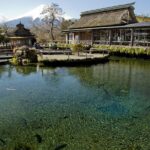
Your last major sightseeing block is Oshino Hakkai, known for eight crystal-clear ponds formed from Mt. Fuji snowmelt. This is where the day shifts from dramatic volcanic power to cool, steady water.
Why this stop is worth it: it’s a change in pace. You can take a real stroll, look at reflections, and get photos that don’t all depend on Mt. Fuji being perfectly framed in the sky.
Time here is listed as about 40 minutes sightseeing/photo stop. That’s enough to:
- Walk the pond area at an easy pace
- Capture a few angles
- Read the vibe of the place without feeling rushed through like a drive-by
If you love photography, this is also the stop where you can focus on details: water texture, pond edges, and the way the walkways shape your framing.
Lunch Timing and What to Pack for a Long Day
Lunch is not included. You’ll either bring food, buy lunch at one of the attractions, or eat at a local restaurant suggested by the guide. The itinerary shows a scheduled restaurant break of about 40 minutes, but based on how these days often run, you should expect lunch to be later rather than early.
My rule: eat before you board if you can. The meeting is in the early morning, and the tour instructions say no eating in the vehicle. A few snacks in your bag make the whole day feel easier.
What to bring (these are specifically recommended):
- Comfortable shoes
- Camera
- Snacks
- Water
- Weather-appropriate clothing
Also follow the simple do-not list:
- No smoking in the vehicle
- No food in the vehicle
It’s a small list, but sticking to it keeps the day running smoothly for everyone.
If you’re traveling in winter, layer up. Hakone areas can feel colder than Tokyo, and you’ll be outside during torii and ropeway timing.
Price and Value: What $54 Buys (and What It Doesn’t)
At about $54 per person, this tour can be a strong value if you actually use what’s included.
Included features that matter for value:
- Hakone Ropeway fare
- Air-conditioned transportation with parking fee covered
- Pickup and drop-off at two designated points
- A live multilingual guide and driver
What you still pay extra for:
- Lunch and drinks
- The pirate ship cruise (optional, around 1700 JPY)
So is it worth it? Usually, yes—because Ropeway access alone would push your total up if you bought everything separately. The tour also saves you effort: you don’t need to coordinate multiple legs of transport, and the guide helps you avoid spending time figuring out what’s where.
The biggest value question is weather. Since Mt. Fuji visibility is not guaranteed, you want your tour day to line up with clear skies. If the mountain is hidden, you’ll still enjoy Hakone’s lakes, geothermal valley, and Oshino Hakkai—but the emotional payoff may be smaller.
Should You Book This Mt. Fuji and Hakone Day Tour?
Book it if you want a high-visibility, big-sightseeing day without planning every connection yourself. It’s a great fit for first-timers who want the classic Mt. Fuji surrounding highlights: Lake Ashi torii views, Hakone Ropeway panoramas, Owakudani’s volcanic feel, and Oshino Hakkai’s snowmelt ponds.
Skip or reconsider if:
- You’re sensitive to smells or have breathing issues (Owakudani is part of the day).
- You need full wheelchair or mobility support (the tour says it’s not suitable for mobility impairments).
- You hate long days. This runs about 10 hours, and lunch is not included.
- You’re booking mainly for the torii or the pirate cruise. If weather is poor, those optional or visibility-driven moments can underdeliver.
If you do book, my best advice is simple: come fed, pack snacks, and treat Mt. Fuji like a bonus, not a promise. If you get clear skies, this tour can feel like you collected a highlight reel of Japan in one day.
FAQ
How long is the tour?
The tour duration is about 10 hours, running from your morning meeting to the evening drop-off. The schedule can shift due to traffic, weather, or peak season crowds.
Where do I meet the guide?
Meeting points can vary by the option you book. The tour notes meeting at Tokyo Station or Shinjuku, and it also lists a specific meeting/drop-off stand area (STAND T, 東京MODE學園) for some options.
Is lunch included in the price?
No. Lunch is not included. You can bring your own food, buy lunch at attractions, or eat at a restaurant suggested by the guide during the break.
Is the pirate ship cruise included?
No. The pirate ship cruise on Lake Ashi is optional and is self-paid at around 1700 JPY.
Is Mt. Fuji guaranteed to be visible?
No. Mt. Fuji visibility depends on the weather and isn’t guaranteed.
What happens if the Hakone Ropeway closes?
If the ropeway closes due to bad weather or maintenance, the tour says to email for a ticket refund (1000 JPY per person).
Does the tour include the Hakone Ropeway fare?
Yes. The Hakone Ropeway fare is included.
What should I bring and wear?
Wear comfortable shoes and bring a camera, snacks, and water. Also bring weather-appropriate clothing, since you’ll be outdoors at multiple stops. Smoking is not allowed in the vehicle, and food isn’t allowed in the vehicle.