REVIEW · TOKYO
Ultimate Sumo Tournament: Tokyo, Osaka, Nagoya, Fukuoka
Book on Viator →Operated by Japan Awaits · Bookable on Viator
Sumo makes sense with the right guide. This day trip lets you watch an official basho while someone breaks down the rules, rituals, and what you are actually seeing in the ring. You get reserved seating and real explanations, not just a ticket and a shrug, in Tokyo’s Ryogoku Kokugikan or the main arenas in Osaka, Nagoya, and Fukuoka.
Two things I really like: the reserved seats (and the option for closer S or A class in a private tour) and the live, English-speaking commentary delivered through an audio headset. You also have the option to add dinner at a local chanko nabe restaurant, so the experience stretches beyond the matches.
One drawback to plan for: seating can involve a bit of waiting, and standard seats are typically on the second floor (B or C chair seats). If you want the closest possible views every minute, you will likely prefer the private seating option.
In This Review
- Key points to know before you go
- Why reserved sumo seats feel like a smart buy
- Tokyo at Ryogoku Kokugikan: the classic sumo address
- Osaka at EDION Arena: March basho energy in Kansai
- Nagoya at IG Arena: July tournament, quick lessons, loud moments
- Fukuoka at Fukuoka Kokusai Center: November basho and year-end intensity
- The real magic: how the guide turns rules into match-day understanding
- Optional chanko nabe dinner: the wrestler meal with a plan
- Off-season choice: morning sumo stable practice near Warabi
- Price, value, and what affects your experience most
- Practical tips so you enjoy the day without stress
- Who this experience suits best
- Should you book Ultimate Sumo Tournament for your Japan trip?
- FAQ
- What cities and months does this sumo experience operate in?
- How long is the tournament portion?
- What time does the tour start?
- What do I get for the standard tour seating?
- What are the seating differences for a private tour?
- Is dinner included?
- Can I bring outside food or drinks into the arena?
- Is there an off-season option if there is no tournament?
- How many people are in the standard join-in seating area?
- What’s not included in the price?
Key points to know before you go
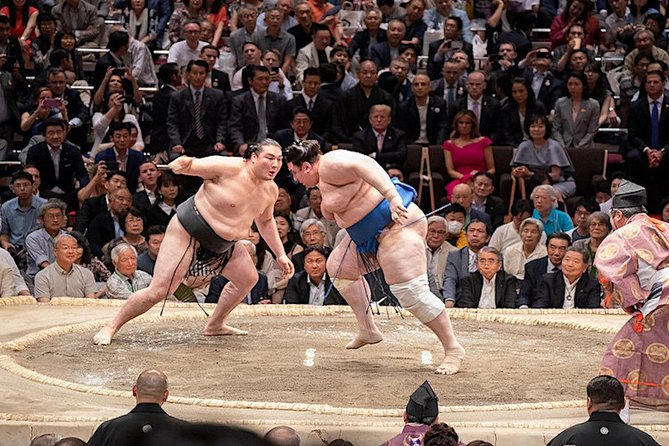
- Reserved seating at the official basho so you are not stuck trying to fight for tickets
- Live commentary through audio headsets that helps you follow bouts as they happen
- B-class/C-class vs A/S-class seat tiers, with private tours closer to the ring
- A banzuke-hyo ranking chart and sumo info pamphlet to decode who is who
- Optional chanko nabe dinner with a vegetarian option available
- An off-season stable morning option (for training practice, not tournament seats)
Why reserved sumo seats feel like a smart buy
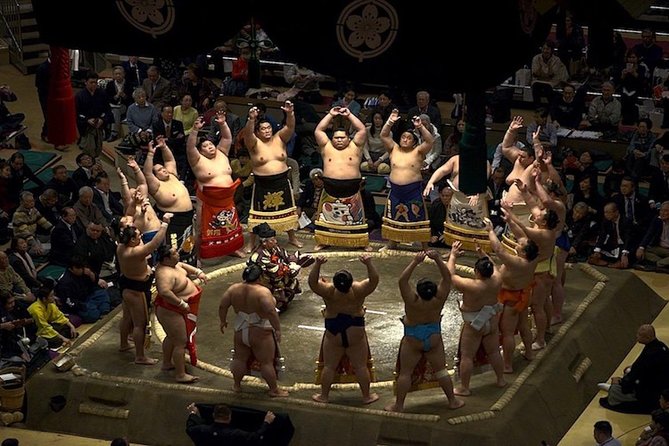
The official sumo tournaments sell out fast, and buying on your own can turn into a frustrating timing game. This tour pays for that hassle with reserved seats and an expert guide who helps you enjoy the event right away. For $184.38 per person, you are not just paying for entry. You are paying for organization, a seat you can count on, and interpretation of a sport that can look chaotic if you do not know the rules.
The value is even clearer once you realize what you get inside the venue. You receive an info pamphlet and a banzuke-hyo ranking chart, and you hear play-by-play style guidance through an audio headset. That means you can follow the match quickly instead of spending the day decoding sumo like a homework assignment.
There is also a practical upside: you are at the center of sumo culture, in the official arena, watching top-division bouts in the middle of Japan’s busiest tournament season rhythm. You will leave with more than photos. You will have context for what you saw—why wrestlers do certain movements, what the rank ladder means, and why rituals matter.
You can also read our reviews of more tours and experiences in Tokyo.
Tokyo at Ryogoku Kokugikan: the classic sumo address
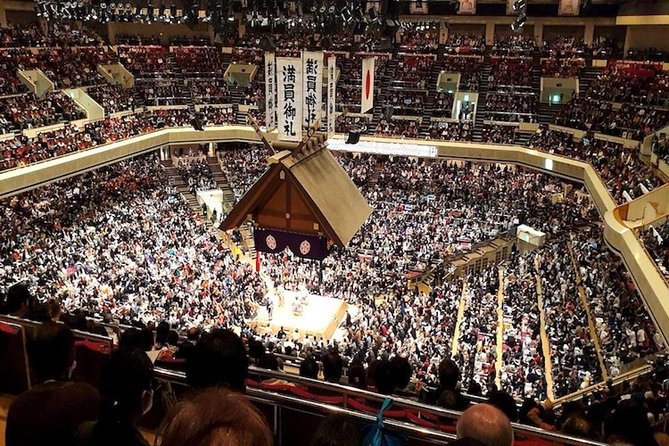
Tokyo’s stop centers on Ryogoku Kokugikan, Japan’s official sumo hall. Your start time is 2:00 pm, and the guided portion runs about 4 hours with reserved seating. In this kind of venue, the first minutes can feel like sensory overload—crowd noise, fast action, and ceremonial moments you might miss if you are scanning only for the final win.
What makes this stop work well is the pacing. The guide helps you get your bearings fast, then you settle in with seats allocated in advance. You also get help understanding what you are watching before the bout energy spikes. One of the most consistent themes from the experience style is that the guide explains the key techniques and what to look for in each bout, which turns the whole event from random wrestling into something you can actually follow.
Even with reserved seating, timing matters. The tour may involve a wait before you are seated because you cannot enter until matches end. And there can be congestion around the Sumo Museum area, so the guide may suggest you visit on your own if the group movement becomes difficult.
Osaka at EDION Arena: March basho energy in Kansai
If you catch the March tournament, you are headed to EDION Arena Osaka for another guided viewing experience with reserved seats. The event rhythm is similar—watch the official bouts in an arena designed for big crowds—while Osaka adds its own Kansai-style crowd vibe. The big advantage remains the same: you are not left to figure out sumo basics on your own.
Practically, this tour still runs as a guided, about-4-hour afternoon session. The seat tier is the same concept as in Tokyo: standard tours land you on B or C chair seats in the second-floor area, while private tours can place you closer with A or S-class seating. Your guide’s role is to connect what you see on the dohyo with the structure behind the sport—rankings, rituals, and the meaning of each match.
One detail worth planning for: you cannot bring outside food or drinks into the arena. That is not a deal-breaker, but it does affect your snack strategy. Vendors are available inside, so you can still grab something once you are inside and settled.
Nagoya at IG Arena: July tournament, quick lessons, loud moments
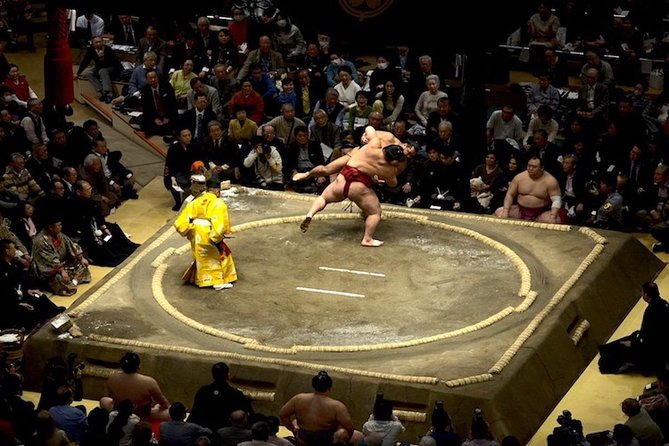
For the July tournament, the tour shifts to IG Arena in Nagoya, again in an official basho setting with a guided, about-4-hour experience and reserved seating. If you are a fan of getting your bearings quickly, this stop is for you. The headset commentary helps you interpret what is happening even when the action moves faster than your reading of signs and ranks.
Nagoya also gives you a nice travel flavor: less of a Tokyo crowd feeling, more of a focused, tournament-centered day. The arena is still the arena—noise builds, and bouts can end in seconds—so the guide’s explanations do real work. You end up knowing what to watch, not just when to cheer.
As with the other cities, standard vs private seating matters. If you choose standard, expect second-floor viewing in the designated B or C chair seat range. If you want the closest views and the strongest sense of scale, the private tier (A/S closer to the ring) is the upgrade that makes sense.
Fukuoka at Fukuoka Kokusai Center: November basho and year-end intensity
The November tournament stop is Fukuoka Kokusai Center, with another guided, about-4-hour experience and reserved seating. Year-end tournaments in Japan can feel extra serious, and Fukuoka’s match-day energy tends to come through in the crowd atmosphere.
The guide-led structure still matters most. Sumo has enough ritual and ranking complexity that it helps to have someone translate it in real time. You also receive the banzuke-hyo chart and the sumo info pamphlet, which are especially useful when bouts are quick and you want to place each wrestler in context.
If you care about comfort, keep expectations realistic. Seating and venue flow can include congestion, and you may experience the kind of brief waiting that comes from arena operations. But the tradeoff is that you get a reserved seat plan that works across multiple cities and tournament dates.

The real magic: how the guide turns rules into match-day understanding
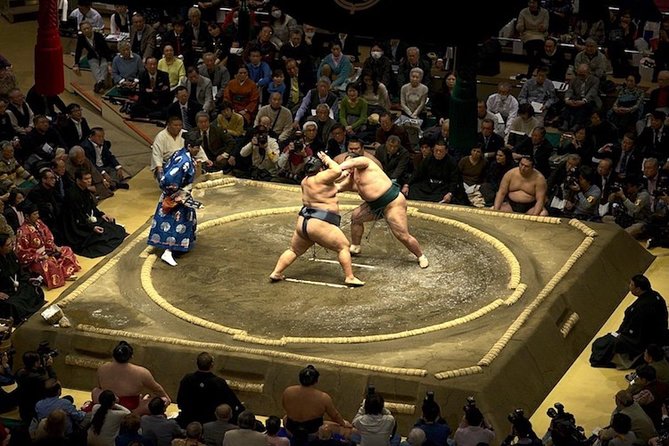
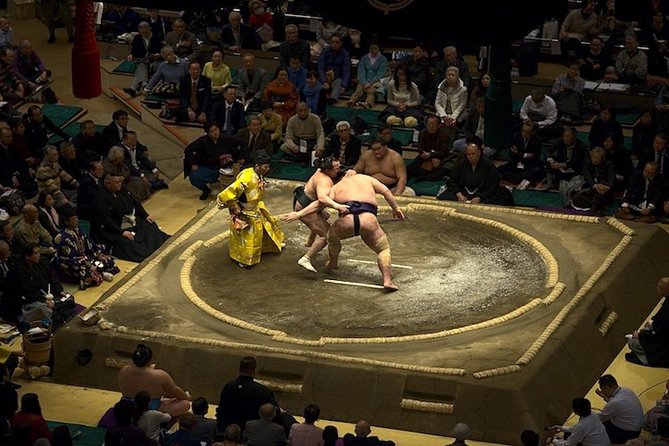
The guide experience is the heart of this tour. You will hear an English-speaking local sumo expert using audio headsets so you can follow explanations even with the arena noise. This is not just general background either. The guide typically explains the history and culture of sumo, then connects commentary to what is happening in the ring, including wrestler style and what matters in each bout.
In practical terms, this is what that does for you:
- You understand why the wrestlers step in and pause, and what the pre-bout flow signals.
- You learn how ranks and the banzuke chart fit into the day’s stakes.
- You catch details you might otherwise miss when you are watching only the final clash.
You will also get help navigating the structure of what you are seeing. Many reports from this type of reserved-seat viewing note that you will catch all of the top-division Makuuchi bouts and about half of the Juryo bouts from the allocated seating sections. That is a solid payoff for a 4-hour visit, especially if this is your only tournament day.
Guide names that have stood out across experiences include Miyko, Hiro, Izumi, Seizo, Yumi, Duke, Taku, and Shunsuke. Even if your guide is someone else, the consistency is the same: the best value is in the headset-led commentary that keeps you oriented bout by bout.
One small but important heads-up: the headset volume can run loud. In some experiences, the audio was described as very loud even at the lowest level. If you are sensitive to noise, bring an earplug or ear loop so you can enjoy the commentary without cranking the volume fatigue.
Optional chanko nabe dinner: the wrestler meal with a plan
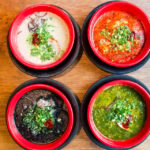
If you add dinner, you get chanko nabe, a sumo stew concept tied to the Ryogoku area. It is traditionally built on chicken stock with vegetables, and it is associated with how wrestlers eat a lot—large batches are practical for training schedules and group meals.
The tour’s dinner add-on includes the meal, with a default of chanko nabe without drinks. A vegetarian option is available, and the restaurant may substitute the broth if pork or chicken is not suitable for your diet. If you have dietary needs, you should set them clearly at checkout, because changes may not be possible close to the date.
What to expect from the meal:
- It is a hot pot style dinner, so it is warming and comforting after the arena crowd energy.
- You will likely eat a hearty, simple bowl that matches the sport’s culture rather than a tourist-style set menu.
- If you are adding dinner, plan your day so you are not rushing from venue exit to restaurant timing.
Food is a great way to close the loop on the day. You watch sumo, then you eat the thing that is part of the lifestyle around it.
Off-season choice: morning sumo stable practice near Warabi
This tour also offers an off-season morning option when no tournament seats are included. Instead, you visit a sumo stable for training practice near Warabi Station (about 30 minutes from Tokyo Station). The session is typically 8:00 am to 12:00 pm and runs about 3 hours with a guide and audio headsets.
Two key points keep expectations straight:
- This option is for training practice, not tournament attendance.
- You do not get the tournament seat ticket with the stable visit since it is off-season.
This part matters if you want a more intimate sense of discipline and technique. Training can show you how wrestlers work on the basics—grip, stance, and repeated drills—without the same tournament pressure. It is also scheduled with a join-in group size of 8 to 16 people, which feels less crowded than larger tour formats.
Some editions of the off-season experience include a chanko lunch after the session, so you still get that cultural food connection even without arena bouts.
Price, value, and what affects your experience most
At $184.38 per person, the best way to think about value is this: your payment covers the expensive parts that are hard to DIY. That includes reserved seating, ticket arrangements and seating allocation, and a guide who makes the experience understandable.
Your seat tier changes the feel:
- Standard tour seats are B or C chair seats on the second floor. That is comfortable for viewing, but it is not the most intimate proximity to the ring.
- Private tour upgrades to S or A-class seats, generally closer to the ring, which helps you see footwork and expressions more clearly.
Group size also matters. For the join-in group format, the tour is described with a maximum of 20 people sitting in the same location with the English-speaking guide. That is a workable size for guidance without losing everyone in the crowd.
If you are traveling with a group, group discounts can improve the price-per-person logic. And if you are traveling alone, the headset and guide structure become even more valuable, since you are not trying to translate sumo on your own mid-match.
Finally, keep in mind this experience depends on the tournament schedule and weather. If it gets canceled for weather, you are offered a different date or a full refund. Cancellations after booking are not treated as refundable changes, so only book the date that fits your trip cleanly.
Practical tips so you enjoy the day without stress
A few small choices make a big difference:
Plan your arrival for the 2:00 pm start. You are meeting near public transportation, and you get the meeting point details by email at least one week before the tour date. Build time for security checks and finding your allocated section.
Dress for arena conditions. One report described the arena running warm. Light layers are a good idea so you can adjust when you go from outdoors to indoor seating.
Bring ear protection if you are sensitive to sound. The headset can be loud. Earplugs or an ear loop can help you hear the guide without discomfort.
Skip outside snacks. No outside food or drinks are allowed inside the arena. Vendors are available, so plan to buy refreshments once you are in.
Use the banzuke chart. It is not just a souvenir. Refer to it as the bout lineup comes into focus. That little ranking cheat sheet is what turns the seating time into comprehension time.
Be patient about movement. There may be a wait before seating because the venue operations depend on match schedule. Congestion can also happen around nearby areas like the Sumo Museum.
Who this experience suits best
This is ideal if:
- You want to see an official tournament but you do not want to study sumo for months first.
- You prefer a structured day with reserved seats and real-time explanations.
- You like Japanese cultural experiences that have rules, rituals, and meaning behind them.
It is also a good fit if you are short on time. With a start time at 2:00 pm and about 4 hours in the arena, you still get a full tournament-style experience without devoting your whole day to logistics.
If you are the type who hates waiting in crowded places or you strongly prefer to sit closest to the ring, you may want to choose the private tier for the better seat location.
Should you book Ultimate Sumo Tournament for your Japan trip?
Yes, if you care about understanding what you are watching. The combination of reserved seats, the banzuke chart, and headset commentary is exactly what turns sumo from unfamiliar to fun in a single afternoon.
Book it if:
- You are going during one of the six tournament months (January Tokyo, March Osaka, May Tokyo, July Nagoya, September Tokyo, November Fukuoka).
- You want dependable tickets rather than a risky self-booking scramble.
- You would enjoy a guided cultural day, not just a seat in a stadium.
Consider skipping or choosing a different option if:
- You are extremely close-view focused and standard second-floor seating would feel disappointing.
- You know you dislike group schedules and possible venue waits.
If your trip timing lines up with a tournament you can reach, this is one of the cleanest ways to experience sumo at the source—official arena energy, plus the explanation that makes it click.
FAQ
What cities and months does this sumo experience operate in?
The official tournaments that this tour connects to take place six times per year. January is in Tokyo, March is in Osaka, May is in Tokyo, July is in Nagoya, September is in Tokyo, and November is in Fukuoka.
How long is the tournament portion?
The guided sumo tournament experience is about 4 hours, and it includes the tournament admission ticket.
What time does the tour start?
The start time is 2:00 pm.
What do I get for the standard tour seating?
Standard tour seats are B-class or C-class (second floor). B chair seats are described as from rows 7 to 11, and C chair seats are also second-floor seats.
What are the seating differences for a private tour?
A private tour uses higher tiers closer to the ring, described as S-class or A-class seats.
Is dinner included?
Dinner is optional. If you select it, you get chanko hot pot dinner at a local restaurant, with a vegetarian option available. Drinks are not included.
Can I bring outside food or drinks into the arena?
No. Outside food or drinks are not allowed in the arena, but food is available for purchase from vendors inside.
Is there an off-season option if there is no tournament?
Yes. Off-season only includes a morning sumo stable visit with a guide and headset, but it does not include a tournament seat ticket because no tournament is taking place.
How many people are in the standard join-in seating area?
For the standard join-in group option, the tour has a maximum of 20 people sitting in the same location with the English-speaking guide.
What’s not included in the price?
Hotel pickup and transportation are not included. Meals and drinks are not included unless you add the optional dinner.