REVIEW · TOKYO
Tokyo: Hop-On Hop-Off Sightseeing Bus Ticket
Book on GetYourGuide →Operated by SKY HOP BUS · Bookable on GetYourGuide
Tokyo from the top deck is pure easy mode. This hop-on hop-off bus ticket is a fast way to see a lot of Tokyo’s big-name sights without planning every transfer. You get panoramic open-top views plus multilingual commentary on your own phone or tablet.
I love the freedom to ride at your pace: you can hop off and back on whenever you want, using the same ticket across all routes. I also like that the audio guide covers 10 languages on a personal device, so you’re not stuck listening only when a bus-mounted system feels available.
One thing to keep in mind: it’s open-air with no air-conditioning, so hot summers and rainy days can get uncomfortable fast. If you’re sensitive to weather, plan your riding times and pack accordingly.
In This Review
- Key things to know
- Value and what you’re really buying for $30
- Where to board: Mitsubishi Building + QR access at stops
- The open-top ride: what it’s like in real Tokyo weather
- Route 1: TOKYO SKYTREE loop for Asakusa, Ueno, and Akihabara
- Route 2: Tokyo Tower plus Tsukiji Ginza for skyline and harbor-adjacent energy
- Route 3: Shinjuku and Shibuya with Harajuku/Meiji Jingu stops
- Audio guide on your phone: 10 languages, but bring your tech
- Timing and hopping: how to avoid missing the next bus
- Best ways to structure a 1–2 day Tokyo plan
- Comfort, staff help, and practical tips that matter
- Should you book this Tokyo hop-on hop-off bus?
- FAQ
- How long do I need for a Tokyo hop-on hop-off bus ticket?
- Where do I meet the bus?
- Can I use the same ticket for all routes?
- Do I need my own smartphone for the audio guide?
- Is the bus air-conditioned?
- What happens if it rains?
Key things to know
- Unlimited access across all routes, so you can choose what matters most each day
- Open-top panoramas of Tokyo, with seating on the second floor only
- Phone-based audio guide available in 10 languages (bring your device and earphones)
- Three route loops: Skytree/Asakusa/Ueno/Akihabara; Tokyo Tower/Tsukiji/Ginza; Shinjuku/Shibuya/Harajuku/Meiji Jingu
- Expect gaps between buses on some days, so build in time when you hop off
Value and what you’re really buying for $30
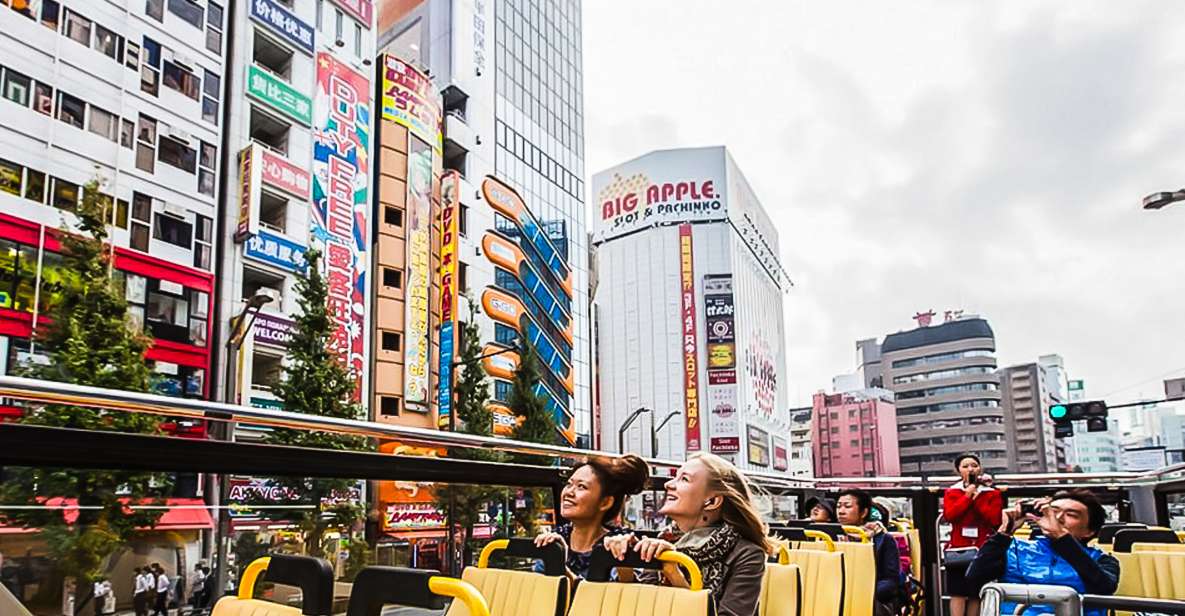
At $30 per person for 1–2 days, this ticket is priced like a time-saver. Tokyo is huge, and even when you know where you want to go, hopping between neighborhoods can eat up daylight. This bus basically turns a lot of that “how do I get there?” stress into “pick your next stop and go.”
You’re also buying comfort in the form of frequent sightseeing access. Instead of wrestling with multiple train lines just to orient yourself, you can stay above street level and look around as the city moves past.
Is it the best deal if you only want one or two stops? Maybe not. If your plan is super focused and you don’t want to build flexibility, trains can be cheaper. But for first-time organization, rainy-day backup, or “I want to see the whole map” planning, this hop-on hop-off format usually feels worth it.
You can also read our reviews of more tours and experiences in Tokyo.

Where to board: Mitsubishi Building + QR access at stops
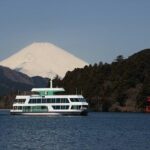
The main meeting point is in front of the Mitsubishi Building. That’s handy because you can arrive, scan, and start—no guessing which corner is the right one.
You can also board from other bus stops using the QR code sent to you on the voucher. That matters because Tokyo’s stop locations can be spread out. Being able to jump on at a nearby stop saves time when you’re already exploring on foot.
You do not have a reserved seat. If the bus is full, you’ll need to board the next bus, so don’t treat it like a timed reservation.
The open-top ride: what it’s like in real Tokyo weather

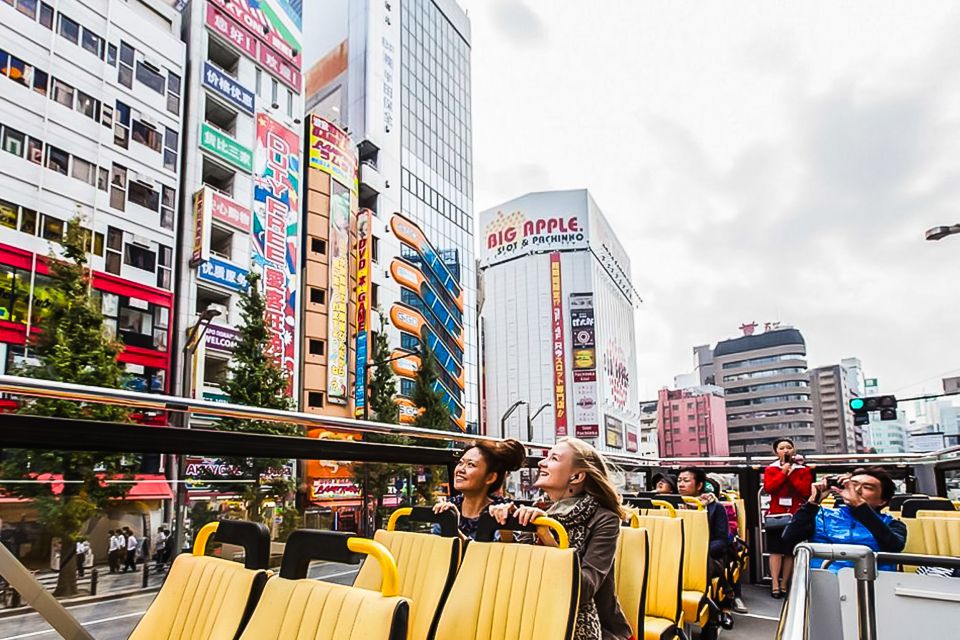
This is an open-air bus and there’s no air-conditioning. The views are great, but the comfort depends heavily on the day. In summer heat, it can feel like you’re sitting in the sky.
The bus has a clear layout: passenger seats are on the second floor, while the first floor is for storage. Standing while the bus is moving is prohibited, so plan to sit and watch from your spot.
Rain rules are also straightforward. Raincoats are distributed if needed, and umbrellas are not allowed on board. If weather is severe (typhoons or thunderstorms), the tour may not operate—so keep an eye on conditions.
My practical take: this is best used when you can enjoy the ride between stops, not when you’re trying to beat the weather for hours straight. Early or late timing often feels better than the midday sun.
Route 1: TOKYO SKYTREE loop for Asakusa, Ueno, and Akihabara
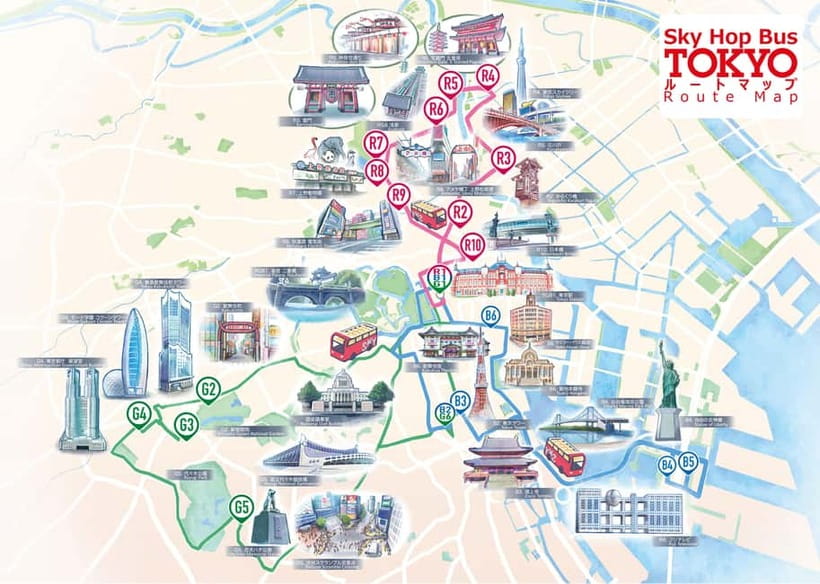
Route 1 is built around central Tokyo hopping and then working outward toward some of the city’s most-visited areas. The loop runs:
Marunouchi Mitsubishi Building → Kodemmacho Station → Ryogoku Edo-Tokyo Museum → TOKYO SKYTREE Station → Asakusa Hanakawado → Asakusa Tawaramachi → Ueno Matsuzakaya → Akihabara (Suehirocho) → Shin-Nihombashi Station → back to Marunouchi Mitsubishi Building
If you’re aiming for Tokyo Skytree first, this is the easiest route to organize your day. You can treat the Skytree stop like your main “anchor,” then add nearby neighborhoods depending on how much time you want to spend walking.
Here’s how I’d use it as a strategy:
- If you want classic-photo Tokyo in one big sweep, stay on the bus through the Skytree-to-Asakusa segment, then hop off for specific exploration.
- If you like browsing shops and electronics-adjacent areas, Akihabara (Suehirocho) is one of your natural drop-off points.
- If you want a smoother return to central Tokyo, the loop brings you back toward Marunouchi, which makes it easy to restart your day.
A drawback of any hop-on hop-off approach: the more times you hop off, the more you’re relying on bus frequency. If you’re hopping a lot on Route 1, give yourself extra time buffers.
Route 2: Tokyo Tower plus Tsukiji Ginza for skyline and harbor-adjacent energy
Route 2 focuses on skyline icons and a stop sequence that pairs well with shopping and waterfront-area exploring. The loop runs:
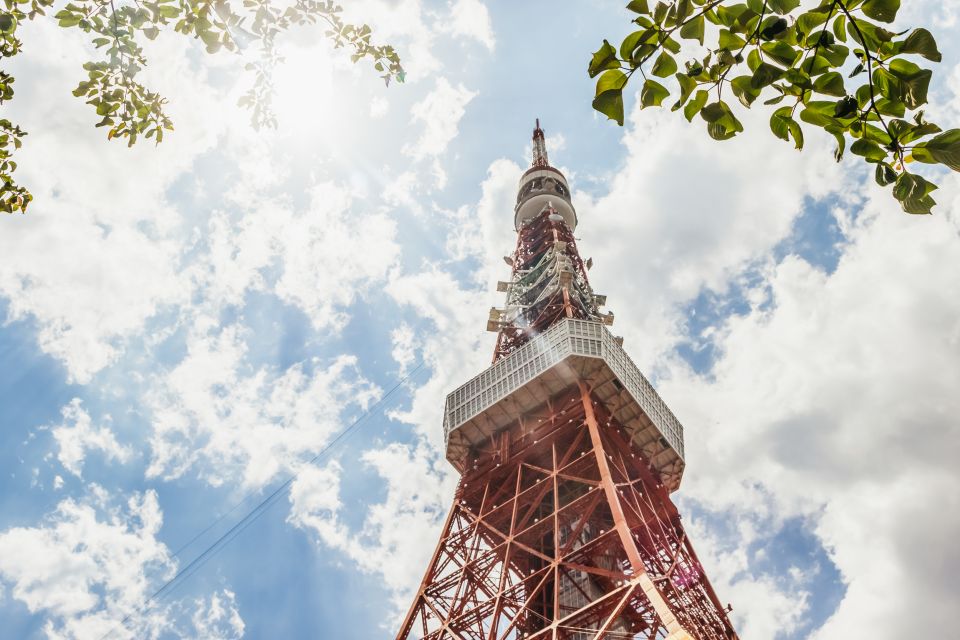
Marunouchi Mitsubishi Building → Tokyo Tower → Tokyo Prince Hotel/Zojo-ji Temple → Tokyo Teleport Station → Tsukiji Ginza → back to Marunouchi Mitsubishi Building
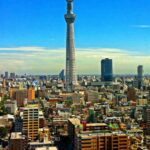
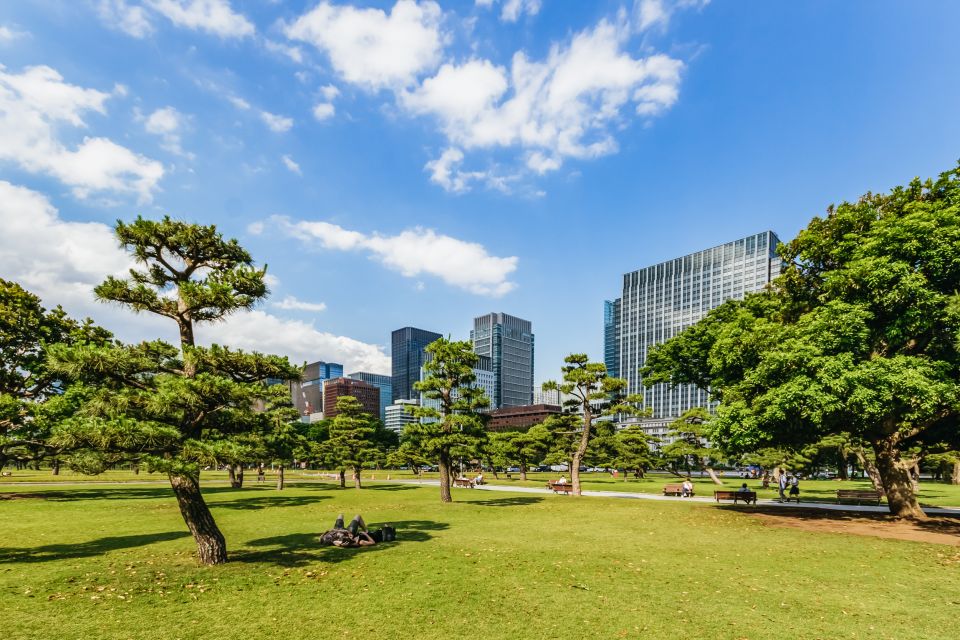
This one is for the “I want a Tokyo skyline moment” traveler. Tokyo Tower is the obvious headline stop, and it’s built right into the route so you’re not trying to backtrack across the city.
A practical way to plan Route 2:
- Ride the loop for the big landmarks, then hop off near Tokyo Tower if you want extra time for photos and walking.
- Use the Tsukiji Ginza stop if your day includes browsing around market-style streets or shopping streets (or if you just want a different vibe than pure business districts).
I like Route 2 because it gives you options without forcing a complex plan. It’s also a good route if you want a clear central-to-west/east rhythm while staying in the same hop-on system.





Route 3: Shinjuku and Shibuya with Harajuku/Meiji Jingu stops
Route 3 is the west-side surge. It runs:
Marunouchi Mitsubishi Building → Shinjuku-gyoemmae Station → Shinjuku Station South Exit/Hotel Century Southern Tower → Shinjuku Mitsui Building (Nishi-Shinjuku) → Shibuya City Hall/Harajuku/Meiji Jingu Shrine → back to Marunouchi Mitsubishi Building
If Shinjuku and Shibuya are your top priorities, this loop is where you’ll feel the most direct payoff. The route includes multiple Shinjuku access points (like Shinjuku Station South Exit and Nishi-Shinjuku), which is useful because Shinjuku can be confusing on foot.
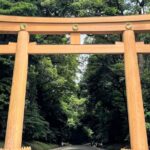
The last segment is especially handy because it stacks several famous names into one bus-stop area: Shibuya City Hall, plus Harajuku and Meiji Jingu Shrine. That means you can choose your mood—neon streets, youth-fashion neighborhoods, or a quieter shrine stop—without reorganizing your transportation.
Route 3 can also be a strong pick if you’re trying to spot Tokyo’s “different Tokyo” feeling across neighborhoods in a single day. Just remember: it’s popular territory, and crowd levels can affect how long you want to stay off the bus.
Audio guide on your phone: 10 languages, but bring your tech
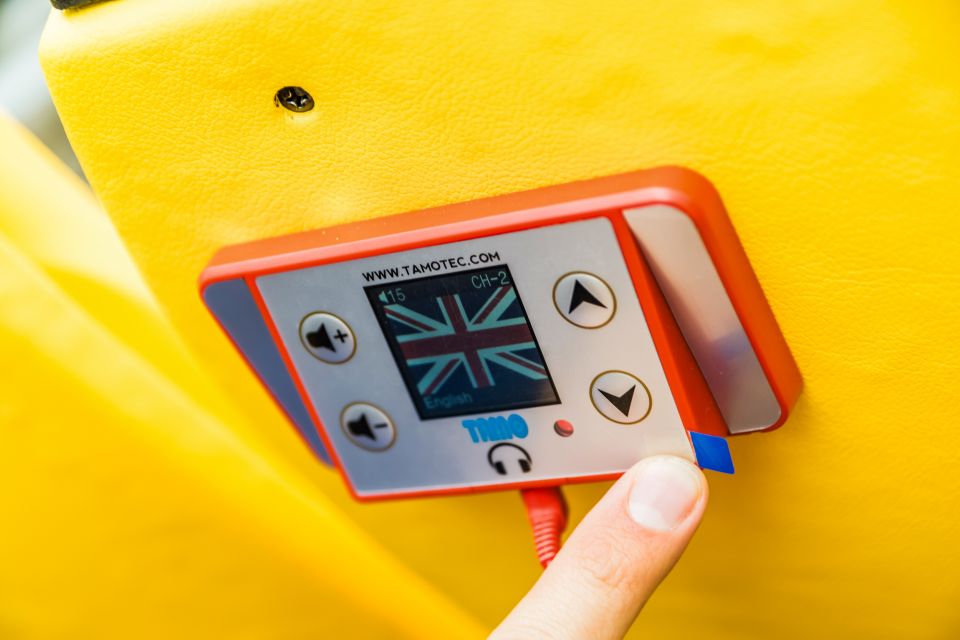
Here’s one of the best parts of this Sky Hop Bus setup: a new audio guide system works on your own smartphone or tablet.
What you need:
- your own device
- earphones
- enough battery (and a realistic expectation that data charges may apply)
Language coverage is listed as 10 languages: Japanese, English, Korean, Chinese, French, German, Spanish, Thai, Vietnamese, and Indonesian. There’s also a mention of vehicle-mounted audio being available on some buses (Japanese/English/Korean/Chinese/French/German/Spanish), but that may not show up on every bus.
In plain terms: plan to rely on the personal-device audio. That’s the more consistent option across buses.
One real-world hint from the on-the-ground experience: on some days, people run into issues with audio playback and needed the audio guide system to work through their phone. So when you start, test your audio right away at the stop—don’t wait until you’re halfway down the road.
Timing and hopping: how to avoid missing the next bus
Hop-on hop-off works best when you treat it like a rhythm, not a guaranteed metro replacement. On this ticket, buses run along set routes, and there can be longer gaps between departures. Some riders describe waits like 30–45 minutes, and sometimes you may not catch the next one immediately after hopping off.
Traffic congestion can also delay the schedule, and this is normal in Tokyo. The tour can’t magically dodge rush hour.
My best method:
- If it’s your first day, ride enough to get oriented without over-hopping.
- If you’re doing two days, use day one to learn which stops you’ll return to on day two.
- When you hop off, snap a photo of the stop timetable and keep the stop name pinned in your maps. If you miss the bus by a small margin, the next one may not be close.
Also: if the bus is crowded and you can’t board, it’s not a disaster. You’ll just need to board the next bus.
Best ways to structure a 1–2 day Tokyo plan
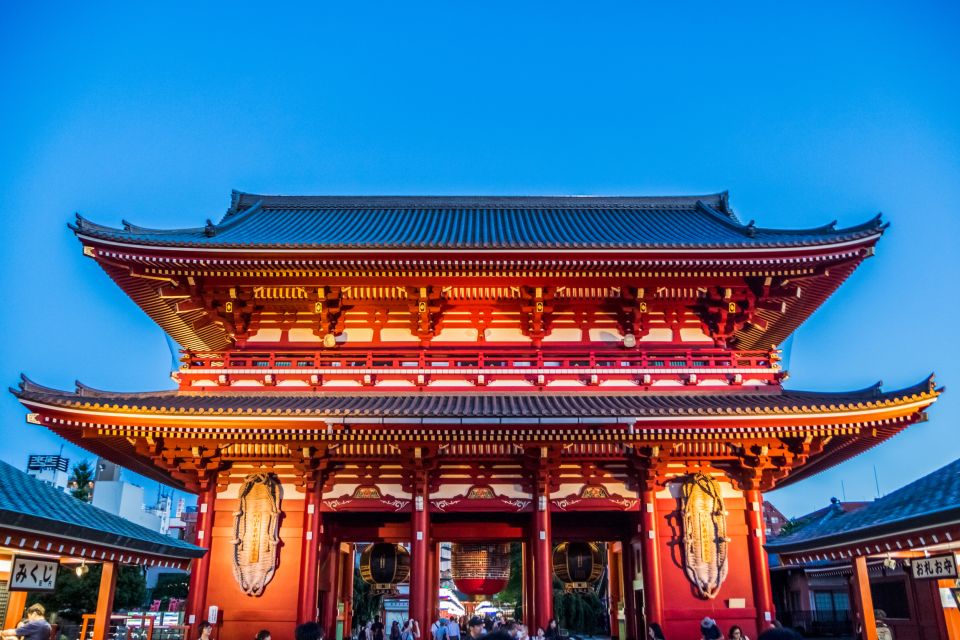
With unlimited access to all routes, you can build a plan around your energy level.
A simple structure that fits most people:
- Day 1 (orientation): ride one full loop plus part of another. Focus on your “anchor stops,” like Skytree or Tokyo Tower.
- Day 2 (targeted exploring): hop off where you want more time, then return to the bus system for the next neighborhood.
This approach keeps the ticket from feeling expensive. Instead of paying for “a bus ride,” you’re paying for repeatable transportation while you decide what you want to dig into later.
If you only have one day, don’t try to hop off at every single stop. Pick 3–4 priorities max. Tokyo rewards good selection.
Comfort, staff help, and practical tips that matter
The ride is designed for sightseeing, not a quiet commute. Expect open-air exposure, busy stop areas, and lots of camera-ready moments.
Good news: the staff and boarding process are described as well organized, and they provide ponchos when it rains. You’ll also get multilingual support from the driver (English and Japanese).
A few practical rules to keep it smooth:
- Plan to sit—standing is prohibited while the bus is in motion.
- Remember second-floor seating is where you’ll be comfortable.
- Don’t bring umbrellas on board; rain gear is handled.
- If weather is bad or severe, the tour may not run, so keep a flexible backup plan.
And one more thing: the bus is great for panoramic viewing, but don’t ignore the fact that Tokyo is still a walking city at stop time. Your comfort will come from matching your sightseeing to real walking time on the ground.
Should you book this Tokyo hop-on hop-off bus?
I think this ticket is a strong choice if you want an efficient way to see major areas like Tokyo Skytree, Asakusa, Ueno/Akihabara, Tokyo Tower, Tsukiji Ginza, Shinjuku, Shibuya, Harajuku, and Meiji Jingu without building a complicated transit plan.
Book it if:
- you’re short on time and want broad coverage
- you want unlimited flexibility across multiple routes
- you like the idea of open-top panoramic viewing
Skip it (or consider a smaller plan) if:
- you hate heat and weather exposure because there’s no air-conditioning
- you only want one neighborhood and would rather save money with trains
If you’re on your first Tokyo trip, doing this bus early is one of the easiest ways to make the rest of your days feel simpler. You’ll leave with a mental map, and that’s worth a lot in a city this big.
FAQ
How long do I need for a Tokyo hop-on hop-off bus ticket?
The ticket is valid for 1 to 2 days, and it depends on how many times you hop off and how many stops you want to explore between rides. If you want time to return to more than one area, plan closer to two days.
Where do I meet the bus?
You meet the bus in front of the Mitsubishi Building. You can also board from other stops if you have the QR code sent with your voucher.
Can I use the same ticket for all routes?
Yes. Your ticket provides unlimited access to all routes, and you can hop off and back on whenever you want.
Do I need my own smartphone for the audio guide?
You can use a bring-your-own-device audio system on your phone or tablet. You’ll also need earphones, and data charges may apply. A vehicle-mounted option might be available on some buses, but the phone-based system is the one that’s clearly supported.
Is the bus air-conditioned?
No. The bus is open-air and there is no air-conditioning.
What happens if it rains?
Raincoats are distributed if needed, but umbrellas are not allowed on board. If weather is severe (like typhoons or thunderstorms), the tour may not operate.