REVIEW · TOKYO
Kintsugi Experience: Art of Golden Joinery in Tokyo
Book on Viator →Operated by Beauty of Japan · Bookable on Viator
Cracked pottery becomes golden art in an hour. In Minami-Aoyama, you learn the why and the how of kintsugi, repairing a studio-provided plate with lacquer mixed with gold. You also get a chance to meet Master Taku in the 11:00am class.
I love that the lesson isn’t just hands-on crafting. You get the philosophy behind kintsugi—breakage as part of an object’s story—so the technique feels meaningful, not gimmicky. I also love the take-home result: you finish a repaired item you can keep as a souvenir.
One consideration: you can’t bring your own items to repair, and you’ll need to make your own way to the small studio in Minami-Aoyama (plus kids under 6 can’t enter the atelier for safety).
In This Review
- Key things that make this kintsugi class work
- Kintsugi in Tokyo: what you’re really learning
- Where you’ll go: Minami-Aoyama studio near Omotesando
- The first 10 minutes: meeting your teacher and getting into the groove
- Putting on the gold: how the kintsugi repair lesson feels
- The “why” behind the technique: wabi-sabi in plain language
- Souvenir quality: taking your repaired plate home with confidence
- Language and pacing: designed for non-Japanese speakers
- Price and value: what $59.69 buys you
- Timing tip: the Master Taku chance in the 11:00am class
- Who should book this kintsugi workshop
- Should you book it?
- FAQ
- How long is the kintsugi experience?
- Where does the class start?
- Will I take my work home?
- Can I repair my own pottery items?
- Do I need to bring anything?
- What should I expect to wear during the class?
- Is there an age limit?
- Is pickup included from my hotel?
- Is the experience refundable or changeable?
- Is there a mobile ticket?
Key things that make this kintsugi class work

- Small group format (no more than 10 guests) keeps the instruction personal and the pace comfortable
- A real technique lesson: you practice kintsugi on a provided ceramic plate using lacquer mixed with gold
- Culture and craft combined: you learn the philosophy behind repairing, not replacing
- You leave with a souvenir: the repaired plate is yours to take home
- Master Taku connection in the 11:00am class, when he’s present
- Studio vibe for first-timers: clear guidance helps even if you don’t consider yourself an artist
Kintsugi in Tokyo: what you’re really learning
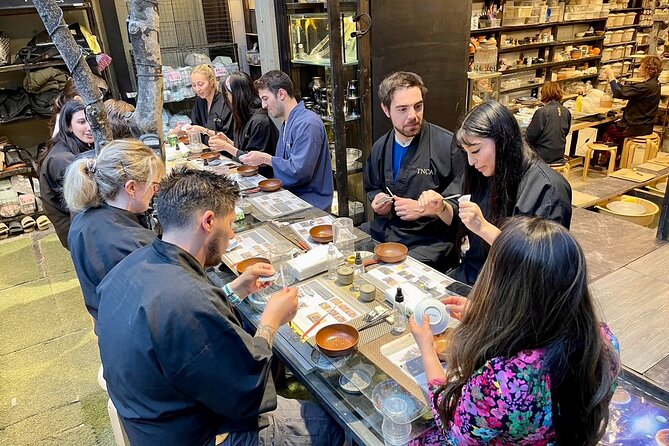
Kintsugi is usually described as pottery repair, but the better way to think of it is as a mindset. You’re taught that broken things don’t have to disappear. Instead, the repair becomes part of the object’s history, turning damage into visible design.
In this Tokyo workshop, the philosophy is built into the lesson from the start. You’re not only shown how to apply lacquer mixed with gold—you’re also guided on why this method matters in Japanese aesthetics. Terms like wabi-sabi come up naturally through the way the lesson explains what to value: age, wear, and imperfection rather than hiding the past.
That balance is a big part of why this class works for visitors. You get an art object and a story you can actually explain later.
You can also read our reviews of more tours and experiences in Tokyo.


Where you’ll go: Minami-Aoyama studio near Omotesando

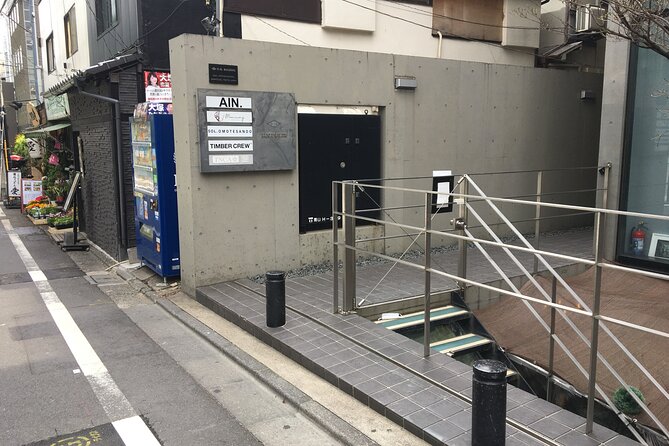
The class begins at the TNCA Minami-Aoyama Studio in Minato City (3-chōme-8-2 Minamiaoyama, Tokyo 107-0062). You’ll meet there and end back at the same point.
This isn’t a sit-down tour with pickup. You’re expected to make your own way to the studio, which is great if you like being flexible, but it does mean you should plan arrival time carefully. The studio is near public transportation, so using the metro is usually the simplest approach. If you’re hopping off at a nearby line, give yourself a little extra buffer because small craft studios can be easy to miss.
Also note the atelier rule: children under 6 can’t enter the atelier for safety. If you’re traveling with a young kid, double-check whether the class time fits everyone’s needs.
The first 10 minutes: meeting your teacher and getting into the groove
Once you arrive, you’ll meet your teacher and your capped small group (no more than 10 guests). The atmosphere is intentional: small enough that you can ask questions, but not so large that you feel lost.
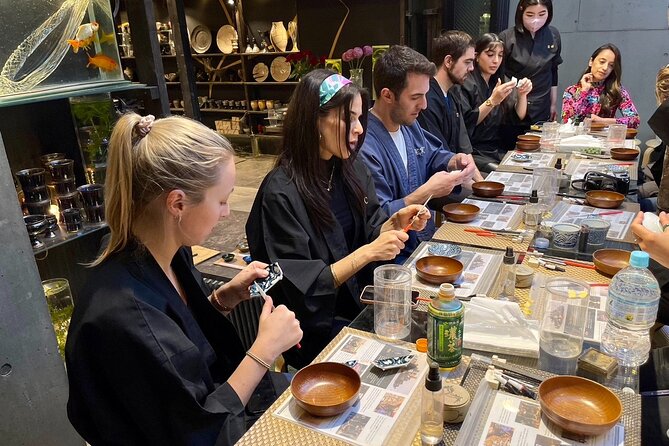
Then comes the fun part—dressing for the craft. You’ll put on a samue, a traditional garment used by Japanese craftspersons. It’s not just a costume moment. It helps you switch into the mindset of careful work, and it adds a genuine cultural touch without making the lesson feel overly formal.
You’ll also learn the basic structure of what’s going to happen during the hour or so. Your instructor walks you through the steps and the reasoning behind them, so you don’t have to memorize a list and hope for the best.
Putting on the gold: how the kintsugi repair lesson feels
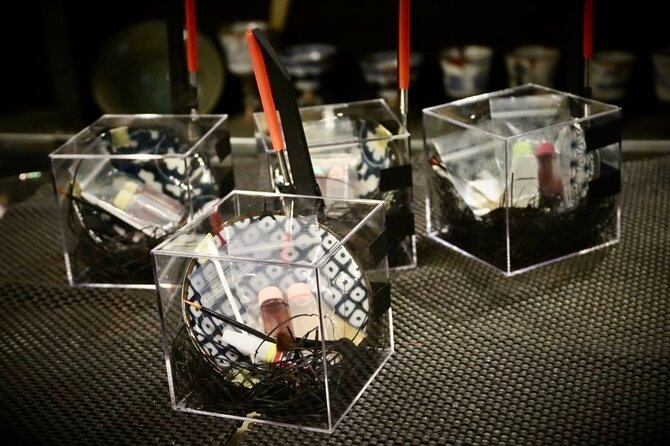
The workshop centers on repairing a ceramic plate supplied by the studio. Personal items aren’t allowed, which keeps the process streamlined and safer for a first-time class. You use the studio plate for the lesson and you take that repaired plate home afterward.
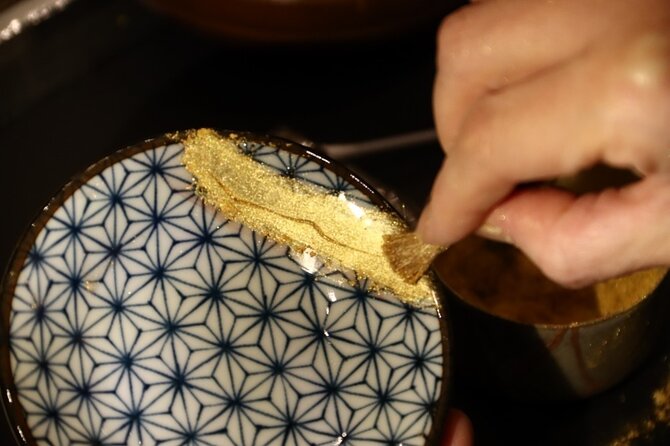
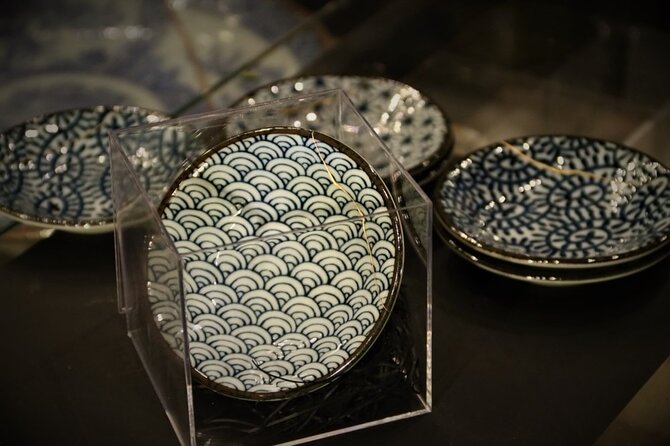
The technique you’ll practice is kintsugi with lacquer mixed with gold. That combination matters. Lacquer is the bonding medium used for the joinery look, and the gold effect turns the repair line into the visual focal point. Instead of trying to make the damage disappear, you’re making it intentional.
Your teacher guides you through the process over roughly an hour. While you’re working, you’ll learn not just the sequence of actions, but what to pay attention to: alignment, patience, and the look of the finished seam.
One of the most praised parts of this experience is how supportive the instruction is. The class is designed so you can do it even if you’ve never handled ceramic repair materials before.
The “why” behind the technique: wabi-sabi in plain language
A lot of workshops teach a skill. Fewer teach the thinking behind it.
Here, you spend real time on the philosophy of why kintsugi exists. The lesson frames breakage as part of the history of an object, not a reason to toss it. That message hits differently when you’re actively repairing something right in front of you.
From the way the lesson is described, you’re also guided to see Japanese crafts as close to everyday life. The goal isn’t to make you feel like you need to be a master. It’s to help you appreciate why this approach has such staying power in Japanese art and design.
If you like travel experiences that change how you look at normal objects back home, this is exactly that. You’ll leave thinking about your own “break it, replace it” habits.





Souvenir quality: taking your repaired plate home with confidence
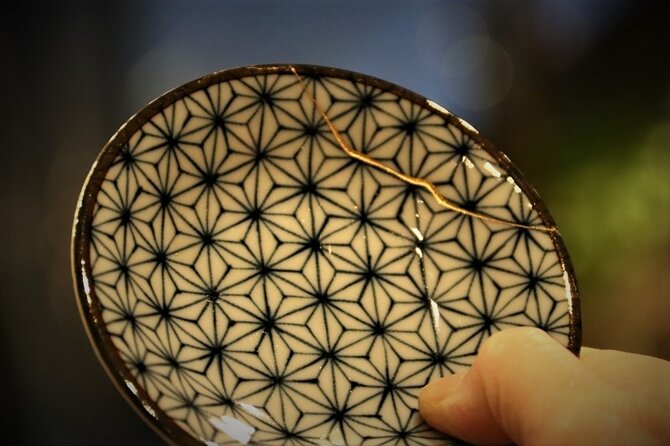
You’re not just watching. You’re creating a take-home piece.
The class includes the plate you use and the plate you bring home after the lesson, along with all necessary equipment. That inclusion is more valuable than it sounds. In craft classes, equipment and materials often decide whether the experience feels smooth or stressful. Here, everything needed for your first kintsugi repair is provided.
Packaging is another practical win. Some participants note that the souvenir is handled carefully for travel. That matters in Tokyo, where you might be moving between neighborhoods and trains the same day. A repaired ceramic item can be tricky to transport, so getting it properly prepared is a real part of the value.
Language and pacing: designed for non-Japanese speakers
If you’re worried about language barriers, this is one of the nicer workshops to choose. The instruction is offered in English, and the teaching is described as clear and easy to follow.
The pacing also helps. With a small group and a guided process, you can keep up without feeling rushed. The class is also described as patient and encouraging, which makes a difference when your hands are busy and you’re trying to learn a technique that looks precise.
And yes, there’s a “mindful” side to it. Kintsugi has a slow, focused rhythm: you concentrate on small movements and details. If you want a break from high-energy sightseeing, this is a calming way to spend an hour.
Price and value: what $59.69 buys you
At $59.69 per person, the pricing is easier to justify than many short activities in Tokyo because the experience includes key costs up front.
Your lesson fee is included, along with:
- the plate you repair and take home
- all equipment and materials needed for the class
- taxes, fees, and handling charges
What’s not included is straightforward: hotel pickup/drop-off and food and drinks.
So the value question becomes simple: does it feel worth it for a one-hour workshop plus a repaired souvenir? For most people, the answer is yes because you’re paying for instruction, materials, and the end product. You’re not just paying to “participate”—you’re paying to make something you can display or gift.
Also, the group cap (no more than 10) adds value. You’re not floating through a crowded class where your questions go unanswered.
Timing tip: the Master Taku chance in the 11:00am class
If you can choose among time slots, the 11:00am class has a special note: you may have the chance to meet Master Taku. In addition, the owner and master artisan is often present in the atelier, so even if you’re not in the 11:00am session, you might still see a high level of craft leadership around you.
That matters because kintsugi is one of those arts where the teacher’s presence changes the vibe. You get a sense you’re learning something real, not just doing a craft demo for tourists.
Who should book this kintsugi workshop
This class is a great fit if:
- you want a creative souvenir that actually connects to a Japanese idea
- you like hands-on experiences more than passive sightseeing
- you’re traveling with a partner or small group and want something calmer
- you’re curious about Japanese aesthetics like wabi-sabi
- you want an activity that works well for first-timers, not just experienced artists
It might be less of a fit if:
- you want to repair your own personal pottery (the studio plates are used instead)
- you need hotel pickup (you’ll be going to the studio yourself)
- you’re traveling with a child under 6 who needs to attend the atelier
Should you book it?
If you like meaningful hands-on travel, I’d say yes, book this. The strongest reasons to go are the combination of (1) clear, patient instruction and (2) the fact that the repaired plate is yours to keep.
You’re also getting the part that makes kintsugi different from most crafts: the lesson explains why repair matters in Japanese culture, so you don’t leave with a nice object but no context. And because it’s capped at a small group size, you’re not fighting for attention when you need guidance.
If you can handle a one-hour workshop where you’re making something with lacquer and taking it home carefully, this is an excellent use of time in Tokyo.
FAQ
How long is the kintsugi experience?
It lasts about 1 hour.
Where does the class start?
You’ll meet at the TNCA Minami-Aoyama Studio, 3-chōme-8-2 Minamiaoyama, Minato City, Tokyo 107-0062, Japan.
Will I take my work home?
Yes. You repair a plate provided by the studio, and you take the repaired plate home after the lesson.
Can I repair my own pottery items?
No. The experience uses plates provided by the studio, and personal items are not allowed.
Do I need to bring anything?
The studio provides the lesson fee setup, the plate, and all necessary equipment. You just need to get yourself to the studio.
What should I expect to wear during the class?
You’ll put on a samue, a traditional Japanese craftsperson’s garment.
Is there an age limit?
Yes. Under 6 years old cannot enter the atelier for safety reasons.
Is pickup included from my hotel?
No. Hotel pickup and drop-off are not included.
Is the experience refundable or changeable?
No. It is non-refundable and cannot be changed for any reason.
Is there a mobile ticket?
Yes, the experience includes a mobile ticket.