REVIEW · TOKYO
Tokyo: Authentic Samurai Training at a Dojo
Book on GetYourGuide →Operated by Toyama-Ryu BIZENKAI · Bookable on GetYourGuide
Samurai training feels real, not staged. At the Toyama-ryu Bizen-kai dojo near Machida, you’ll work on Iai and gekken skills, try a horseback-archery-style bow, and learn the why behind the movements with Yoshioki Sumida.
Two things I really like: you’re not just watching, you’re doing. The Iai portion focuses on correct draw-and-swing mechanics with a practice sword, then you move into sparring/timing work using the practice blade. Second, the instruction is practical and direct, with an easy-to-follow pace that still feels serious.
One consideration: this is physical training with standing, controlled movement, and sword practice, so it’s not a fit if you have the listed medical or mobility limits. Also, there’s an important note about real-sword cutting being scheduled only through May 30, so confirm what your exact date includes.
In This Review
- Key things you’ll notice fast
- Finding Toyama-ryu Bizen-kai and settling into training mode
- The short lecture before any sword work
- Iai lesson: the draw, the swing, and the discipline of accuracy
- Gekken sparring: offense, defense, and timing you can feel
- Blade-line checking and cutting: where your form gets tested
- Horseback archery bow: the samurai weapon most people forget
- Toyama-ryu 7th grade live demonstration: how the tradition shows up
- Inkajo certificate: a real souvenir of progress
- Price and value: is $211 for 2 hours worth it?
- Who should book this dojo training (and who should skip)
- What to bring and how to prepare for a smooth visit
- Should you book this samurai dojo experience?
- FAQ
- FAQ
- How long is the samurai training workshop?
- Where is the meeting point near Tokyo?
- What skills are included during the 2-hour session?
- Do I get a certificate?
- What should I bring, and what is not allowed?
- Is it suitable for children and people with mobility or medical limitations?
Key things you’ll notice fast

- Small group coaching (max 6) so you’re not lost in the back row.
- Iai + gekken in the same session, so you see both form and combat timing.
- Blade-line check and target cutting practice that train accuracy, not just swinging.
- Horseback archery bow try-on tied to what samurai used a long time ago.
- Toyama-ryu 7th grade live demonstration to show how serious the tradition is.
- Inkajo completion certificate handed over as a real milestone.
Finding Toyama-ryu Bizen-kai and settling into training mode
The meeting point is at Toyama-ryu Bizen-kai (戸山流備前会 居合・抜刀のご体験 日本刀 試し斬り), about a 10-minute walk from JR Machida Station. The dojo is on the third floor. You’ll use the stairs at the back between the sword shop and the vending machines on the first floor to get up.
What I like about this setup is how straightforward it is. There’s no guessing, no “mystery location.” You show up, you follow the stair instructions, and you’re in a dojo space built for training, not for photos.
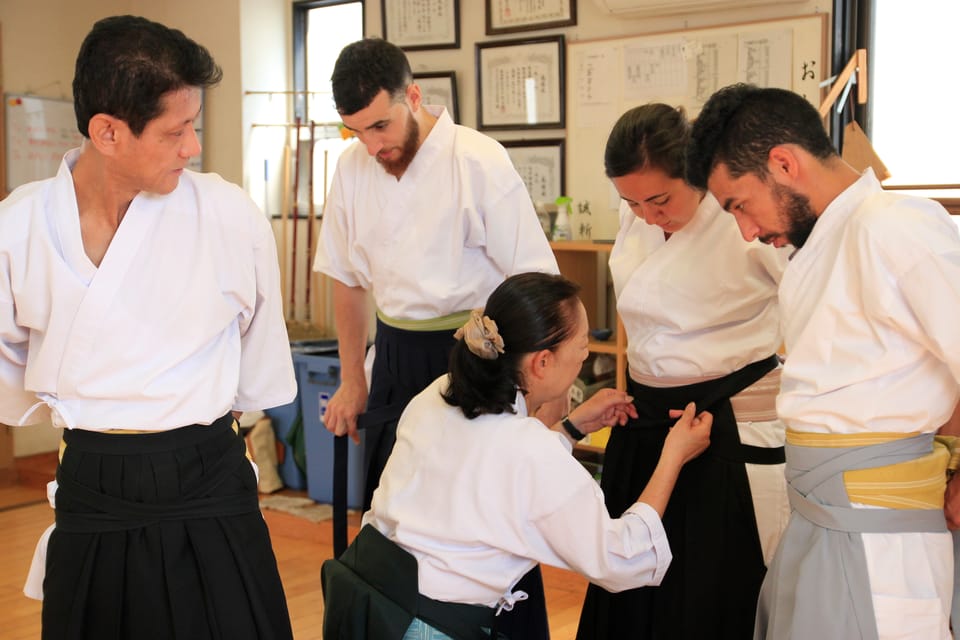
Once you arrive, you’ll get a short lecture and then change into proper training wear. This matters more than it sounds. When you’re in the right clothing, your movement gets more consistent, and the session feels like training—not costume time.
You can also read our reviews of more tours and experiences in Tokyo.


The short lecture before any sword work
Before hands-on practice, you’ll hear a briefing on the weapons and what you’re going to do. Expect the instructor to connect the session to samurai weapon culture and discipline, not just technique names. The program also emphasizes that it’s not entertainment, so you should plan to learn the hard parts: form, timing, and control.
This is where you’ll understand the “why” behind the movements. Sword skills are easy to misunderstand if you only watch movies. The lecture gives you a framework for what you’re about to practice: drawing, cutting mechanics, defensive timing, and how archery fits the broader samurai toolkit.
If you prefer learning in a calm, structured way, you’ll likely feel comfortable here. The sessions in this dojo style start with theory, then quickly shift to practical repetition.
Iai lesson: the draw, the swing, and the discipline of accuracy
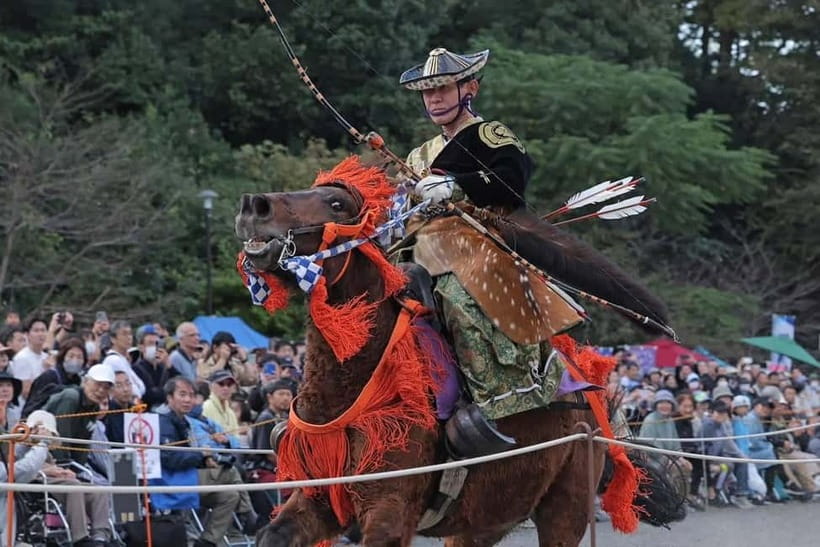
The Iai lesson is built around handling and swinging a mock sword correctly. This is not just waving a blade around. You’re practicing the fundamentals of draw control and the mechanics of a clean cut.
You’ll likely spend time on:
- how the sword is held and moved safely
- the sequence of the action (not skipping steps)
- the idea of proper technique over wild power
From the feedback I’m seeing, the instructor’s teaching style is what makes this portion work. You get guidance that’s patient but firm, with a focus on consistency. That helps a beginner translate “how it should feel” into repeatable action.
One detail I’d call out for your expectations: you’ll probably feel a little awkward at first. That’s normal. Real training starts by correcting small things, like how your hands and body line up for the motion. The point is to build a foundation you can build on during the rest of the session.
Gekken sparring: offense, defense, and timing you can feel
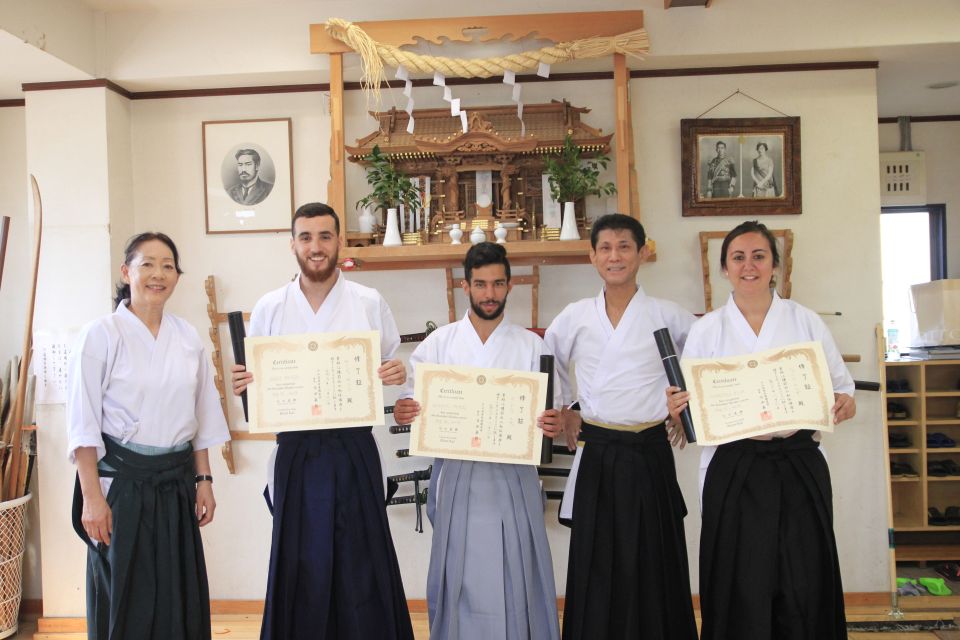
After Iai, you move into the gekken lesson. Here the focus shifts to the timing of attack and defense. You’ll spar using a practice sword, and the session is designed to teach control under pressure.
This is where you’ll learn that “fighting” is not about chaos. It’s about spacing, timing, and staying aligned with the technique. Your job is to respond without rushing and without freezing. That balance is harder than it sounds.
If you enjoy martial arts that feel technical, you’ll probably like this part the most. Reviews and program notes point to a clear teaching structure: instruction first, then sparring practice with coaching.
Also, if you’ve never done any sword training before, this is one reason to choose a real dojo workshop over a performance. The sparring is practical. You’re not just pretending to attack; you’re learning the timing that makes the exchange safe and meaningful.
Blade-line checking and cutting: where your form gets tested
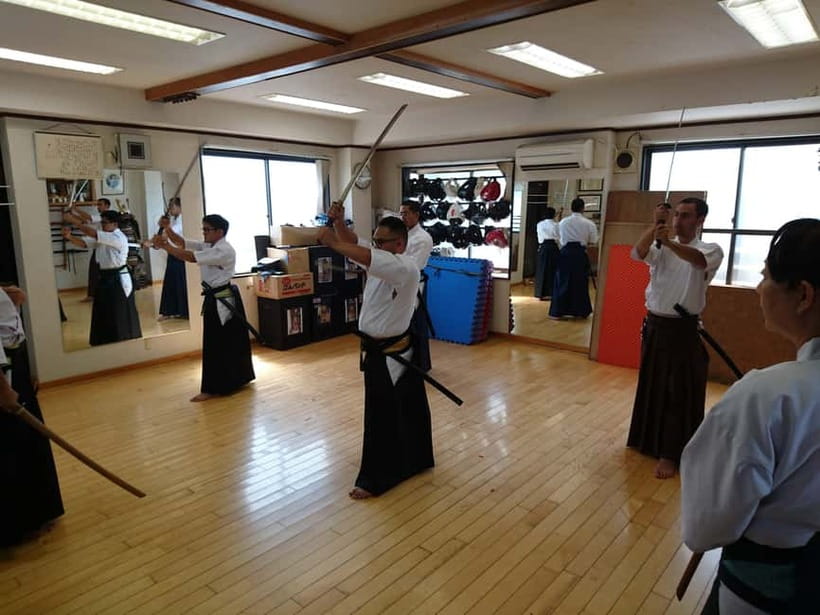
The program includes an activity where you can check the blade line. This is one of those training steps that separates “I swung a sword” from “I learned a skill.” Blade line work trains accuracy: whether your movement sends the blade where it needs to go.
Then there’s target cutting practice. This part is often what people remember most because it turns the abstract into something physical. You’ll slash targets with guidance on technique and how to cut cleanly.
Important scheduling note: the materials say slashing targets with real swords is scheduled through May 30, and the experience starts on June 1. That means your exact session may or may not include real-sword cutting. The workshop is still designed to give you the sword-and-archery experience, but you should confirm what’s used for cutting on the date you book so there are no surprises.
Either way, even with practice gear, cutting practice trains:
- commitment (proper follow-through)
- control (no reckless motion)
- accuracy (clean strikes)
And yes, it can feel a little addictive. Once your body starts understanding the motion, you want one more attempt to get it right.






Horseback archery bow: the samurai weapon most people forget
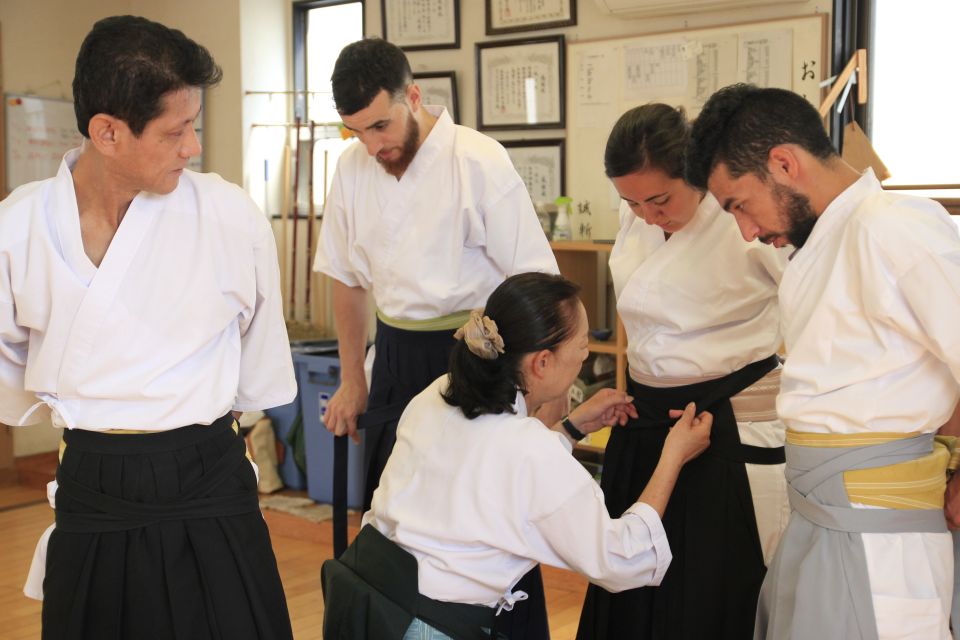
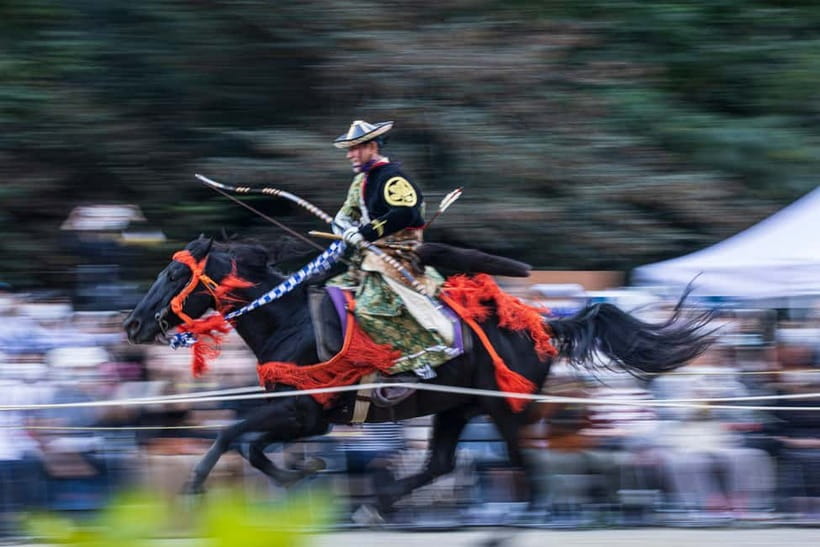
You’ll also try shooting arrows using a real horseback archery bow. This is a major value add because most samurai-themed experiences stop at swords.
Historically, the bow is part of the samurai skill set for a long time. In this workshop, you get to experience why that matters: archery requires posture control, consistent drawing/aiming mechanics, and a steady mental rhythm.
Even if you’re not an archer, this portion helps you connect the dots. Samurai training isn’t only about dramatic sword cuts. It’s a whole set of weapons and skills shaped by how battles were fought.
If you enjoy hands-on activities where you can compare your first attempt to your second, this is a good segment. You’ll leave with at least one clear “I did it” skill you can explain back home.
Toyama-ryu 7th grade live demonstration: how the tradition shows up
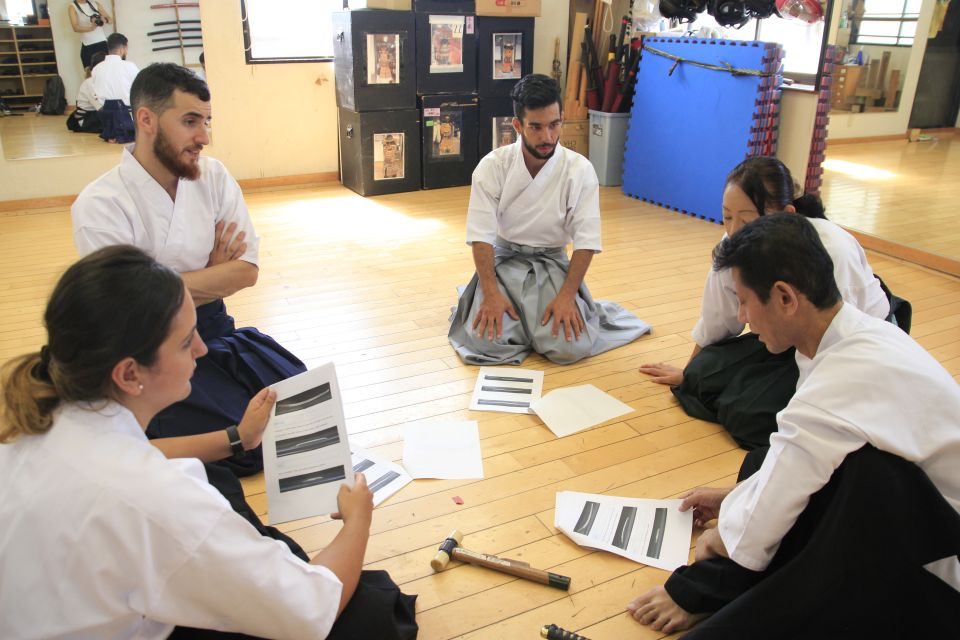
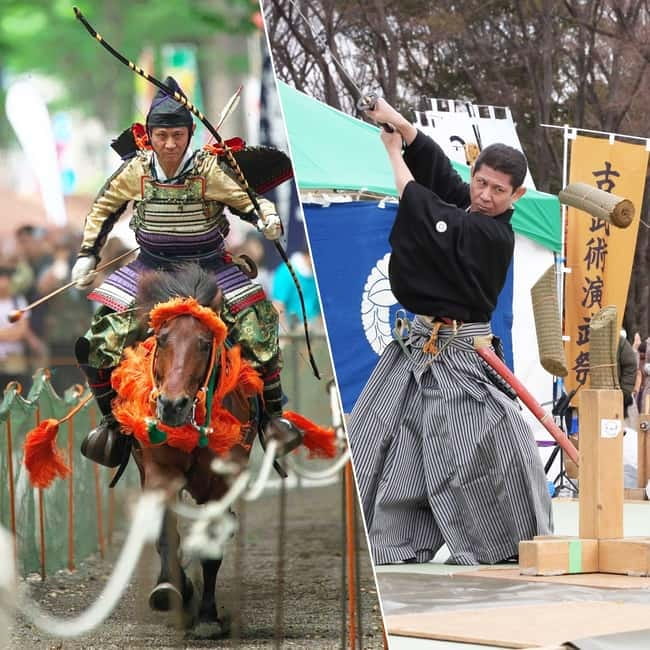
The session also includes a live demonstration of Toyama-ryu 7th grade. That’s a meaningful detail because it signals that this dojo isn’t teaching a simplified version of the art for tourists.
A demonstration like this is useful even if you don’t catch every nuance. You can watch how the technique scales in speed and precision. You also get a sense of discipline and timing that you can feel even from the sidelines.
Think of it like this: the practice parts teach you the basics you can repeat. The demonstration shows what those basics are supposed to lead toward.
Inkajo certificate: a real souvenir of progress
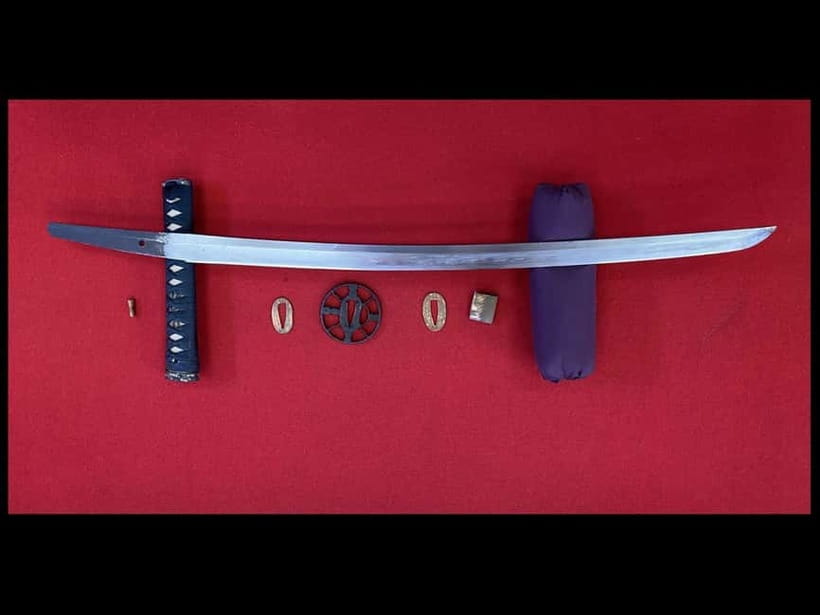
At the end, participants receive an official certificate of completion called Inkajo. Many experiences hand you a paper. This one feels more like a mark of training because it’s tied to a structured session: lecture, Iai, gekken practice, blade-line work, and cutting/archery activities.
The certificate also becomes something you can frame later, which is exactly the kind of tangible memory that sticks. It’s not just a souvenir. It’s proof you learned a set of techniques under a real teacher.
Price and value: is $211 for 2 hours worth it?
At about $211 per person for a 2-hour workshop (check starting times), this isn’t a cheap impulse activity. So the value question is fair.
Here’s how I’d judge it for your trip:
- You’re paying for real coaching, not watching a performance. The group size is limited to 6 participants, which means more direct attention and less waiting.
- You get multiple skill areas (sword draw/form, sparring timing, blade-line accuracy check, target cutting practice, and a real horseback-archery bow try).
- You’re getting credibility signals: Toyama-ryu instruction, a live demonstration of Toyama-ryu 7th grade, and an Inkajo certificate.
If you’re the kind of traveler who wants authentic skills you can talk about later, this price can make sense. If you’re only in Japan for a light, casual cultural stop, you might feel it’s more “training session” than “activity.”
My practical advice: treat this as martial arts education. If you do that, the cost starts to feel more reasonable.
Who should book this dojo training (and who should skip)
This workshop is best for you if you want hands-on Japanese culture through technique, not through a staged story. It’s a strong fit for people interested in martial arts, historical weapon traditions, and structured coaching.
It’s also a good choice if you speak English and want a teacher who can explain clearly. The instruction here is described as happening with English support, and the teaching style is patient but honest.
Who should skip:
- pregnant women
- people with back problems
- people with mobility impairments
- people with heart problems
- wheelchair users
- children under 18 (with the note that under-18 participation may be possible with permission and a parent/guardian)
- people with epilepsy
- visually impaired people
If you fit any of those categories, don’t guess. Confirm with the provider first.
What to bring and how to prepare for a smooth visit
You’ll want to bring a camera and drinks. Alcohol and drugs are not allowed.
You should also plan to provide your height and weight so the provider can prepare a proper training uniform. That’s not a “nice-to-have.” It affects safety and technique comfort.
Finally, wear clothes you can move in. You’ll change into training wear after the short lecture, so you don’t need your best outfit—but you do need to be comfortable enough to go through the full session without fuss.
Should you book this samurai dojo experience?
If you want a genuine training-style experience in Tokyo, I’d say yes, with one careful check: confirm what cutting equipment is used on your specific date. The note about real-sword cutting being through May 30 and the experience starting on June 1 is the only potential uncertainty in the plan.
If you’re comfortable with the physical nature of sword and archery practice, and you value instruction from a true master-teacher like Yoshioki Sumida, this workshop can be one of the most memorable parts of your Japan trip. You’ll leave with technique basics you can describe clearly, plus that Inkajo certificate to prove it happened.
FAQ
FAQ
How long is the samurai training workshop?
The duration is listed as 2 hours. Starting times vary, so you’ll want to check availability for the specific slot you want.
Where is the meeting point near Tokyo?
You meet at Toyama-ryu Bizen-kai (戸山流備前会 居合・抜刀のご体験 日本刀 試し斬り). It’s about a 10-minute walk from JR Machida Station. The dojo is on the third floor, reached via the stairs at the back between the sword shop and the vending machines on the first floor.
What skills are included during the 2-hour session?
The session includes a short lecture, changing into training wear, an Iai lesson with a practice sword, a gekken lesson with practice-sword sparring focused on attack and defense timing, a blade line check activity, an opportunity to try a bow for horseback archery, and a live demonstration of Toyama-ryu 7th grade.
Do I get a certificate?
Yes. Participants receive an official completion certificate called Inkajo.
What should I bring, and what is not allowed?
Bring a camera and drinks. Alcohol and drugs are not allowed.
Is it suitable for children and people with mobility or medical limitations?
Children under 18 are generally not suitable, but the provider states that children under 18 may experience the program with permission and accompaniment of a parent or guardian. It’s also listed as not suitable for people with back problems, mobility impairments, heart problems, wheelchair users, people with epilepsy, visually impaired people, and pregnant women.