REVIEW · TOKYO
From Tokyo: Mount Fuji Full-Day Sightseeing Trip
Book on GetYourGuide →Operated by GORYO TRAVEL CO. LTD. · Bookable on GetYourGuide
Fuji is a moving target. This 10-hour day trip is interesting because it stacks the classic photo stops—Kawaguchiko Lake at Oishi Park, then Oshino Hakkai for those famous Fuji spring ponds—so you have multiple chances even if the mountain plays hide-and-seek. I also like that the guide-led pacing makes the day feel organized, and the trip descriptions you’ll hear (from guides like Sophie, Evita, and Annie) tend to be funny, clear, and built around what you’re actually seeing.
Here’s the main catch: weather controls everything. If clouds roll in, you may not get the sweeping views you pictured, and winter conditions can mean a swap away from Mt. Fuji 5th Station.
In This Review
- Quick hits you’ll feel immediately
- Why this Mt. Fuji day trip from Tokyo is such a practical choice
- The Tokyo departure: start points matter more than you think
- Oishi Park at Kawaguchiko: your first Fuji framing in one clean stop
- Arakurayama Sengen Park and Chureito Pagoda: the hillside payoff
- Hikawa Clock Shop stop: free time to reset and browse
- Oshino Hakkai: the ponds, the water, and a real lunch window
- Mt. Fuji 5th Station (2,300m): your closest top-of-Fuji moment
- Weather, crowds, and route changes: how to protect your expectations
- Price and value: what $68 really buys you
- Who this tour fits best (and who might not love it)
- Should you book this From Tokyo Mt. Fuji full-day trip?
- FAQ
- How long is the Mt. Fuji full-day sightseeing trip?
- Where do you get picked up and dropped off?
- What’s included in the tour price?
- Are food and drinks included?
- What happens if Mt. Fuji 5th Station can’t be reached?
- Are there restrictions on luggage or minors?
Quick hits you’ll feel immediately
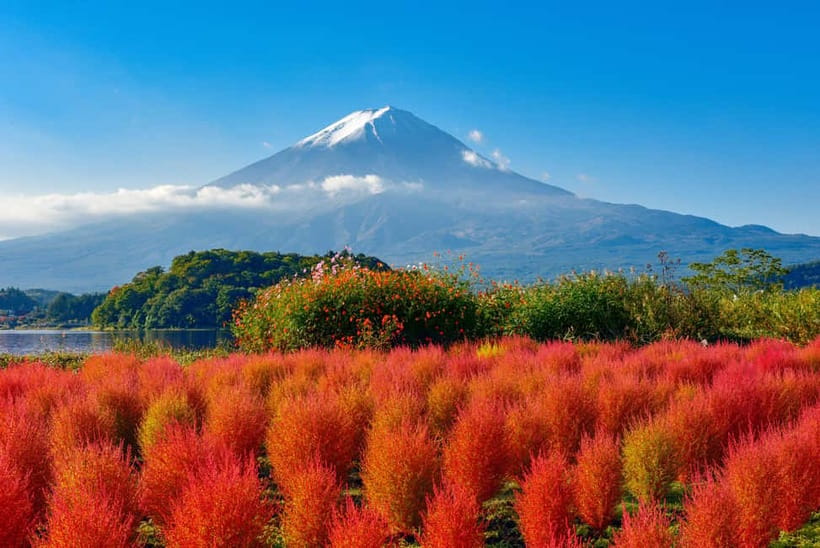
- Lake Kawaguchiko at Oishi Park: lake + Fuji framing in a short, efficient stop
- Arakurayama Sengen Park and Chureito Pagoda: panoramic viewpoints plus a scenic walk
- Oshino Hakkai: eight ponds, including time to taste Fuji spring water
- Mt. Fuji 5th Station (2,300m): the closest “top of Fuji” experience you’ll get by coach
- Guide-led rhythm: timing designed to chase clearer views when they appear
- No food included: you’ll want snack planning because lunch is time set aside, not included
Why this Mt. Fuji day trip from Tokyo is such a practical choice

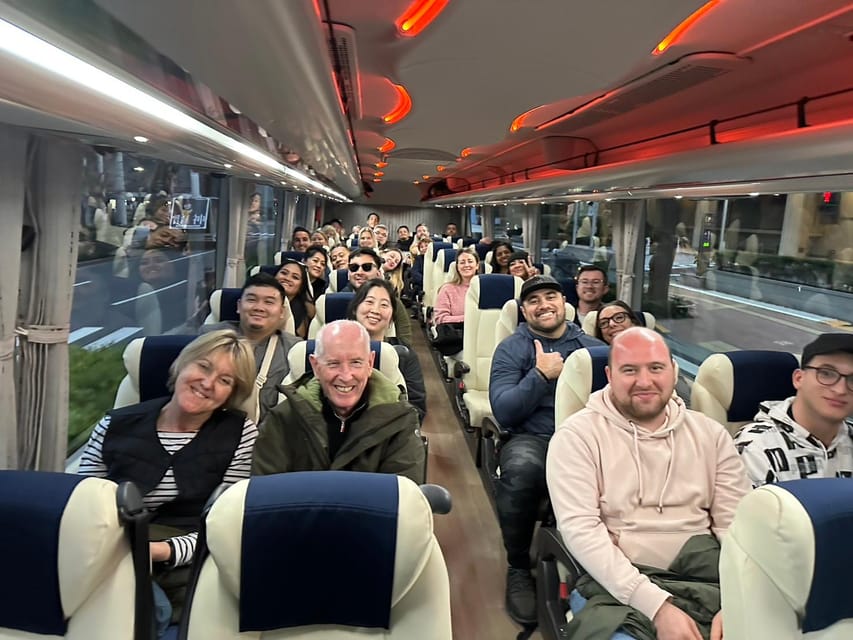
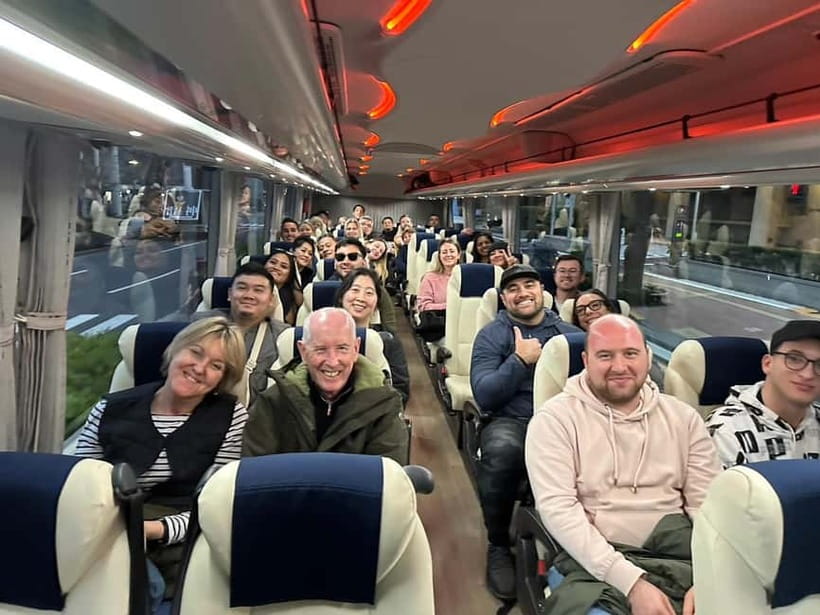
This is one of those tours that makes sense when you only have a single day (or you just don’t want to solve trains, transfers, and parking). You start in Tokyo—either from Shinjuku Nishiguchi or Tokyo Station (Yaesu side)—then ride out on a 3-star safety air-conditioned bus with an English guide. Once you’re in the Fuji area, the day is designed like a checklist of the most photographed spots, but with enough walking to actually feel you’re there.
What I like most is the logic of the stops. Instead of one “Mt. Fuji or nothing” moment, you get several viewpoints at different elevations and in different settings: lake reflections, hillside temple views, volcanic-spring ponds, then the high-altitude Fuji 5th Station. It’s the same mountain, but the mood changes fast, and that’s the point of doing it by a guided circuit.
The other big win is how well these days can run when the guide is on top of timing. Past groups highlight guides who stay organized, keep directions simple, and move the group at the right moment when visibility improves. One review even mentions guides using WhatsApp to keep meeting times clear—small detail, big stress reducer.
You can also read our reviews of more tours and experiences in Tokyo.

The Tokyo departure: start points matter more than you think
You’ll be picked up from one of two starting locations: the Shinjuku Nishiguchi Branch (Yaesu area, 2-chōme-2-1 option is listed) or the Tokyo Station (Yaesu) side. The tour is built around the bus ride, so you’ll want to be early and easy to spot. One common complaint is that meeting points can be tricky if you exit the station on the wrong side, so give yourself buffer time.
On the coach, you’re looking at about 2 hours each way. That means the morning is mostly transit, then you start your photo-and-walk loop. If you’re the type who likes to line up your camera settings before you arrive, this is the time to do it—once you reach the Fuji viewpoints, the stops are timed tightly.
Also note two rules that affect your comfort level: no large luggage and no unaccompanied minors. This isn’t just policy trivia. A compact day with limited bag space means you’ll move faster between stops if you travel light.
Oishi Park at Kawaguchiko: your first Fuji framing in one clean stop
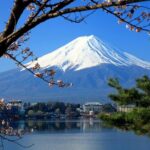
The first real stop is Oishi Park, at Kawaguchiko (Lake Kawaguchi). You get about 30 minutes for photos and visiting. This is where the tour earns its reputation for classic Mt. Fuji shots: the lake gives you that iconic foreground, and on clear days the mountain can line up dramatically behind the water.
Even if visibility isn’t perfect, this stop still pays off. The lake area is a good place to reset after the morning bus ride, and it’s often the moment when people realize Fuji visibility can change hour by hour. If you want reflections, arrive ready: keep your camera at chest level and look for the best angle quickly, because the time is short.
One practical tip: wear shoes you can walk in. Even on a “photo stop,” you’ll be moving around for the best view, and later you’ll do more walking at the temple and spring areas.
Arakurayama Sengen Park and Chureito Pagoda: the hillside payoff
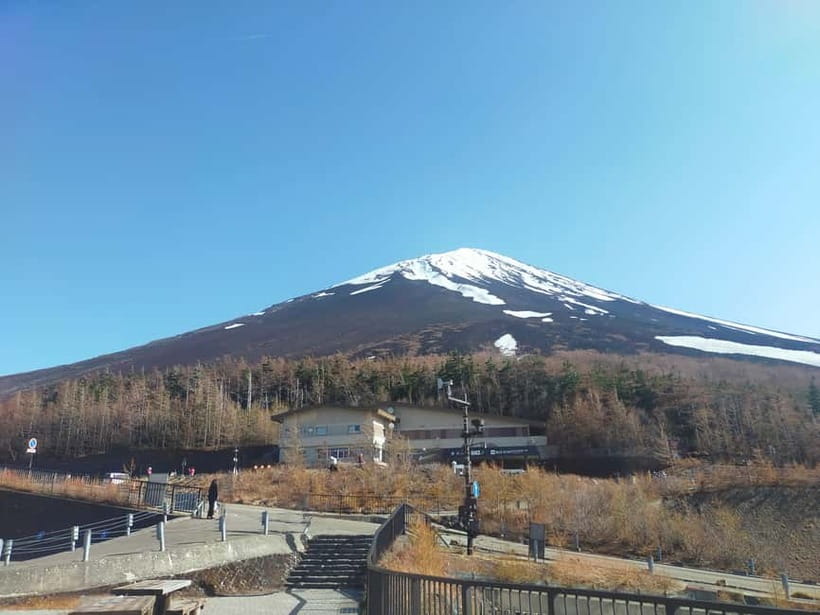
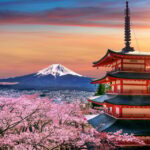
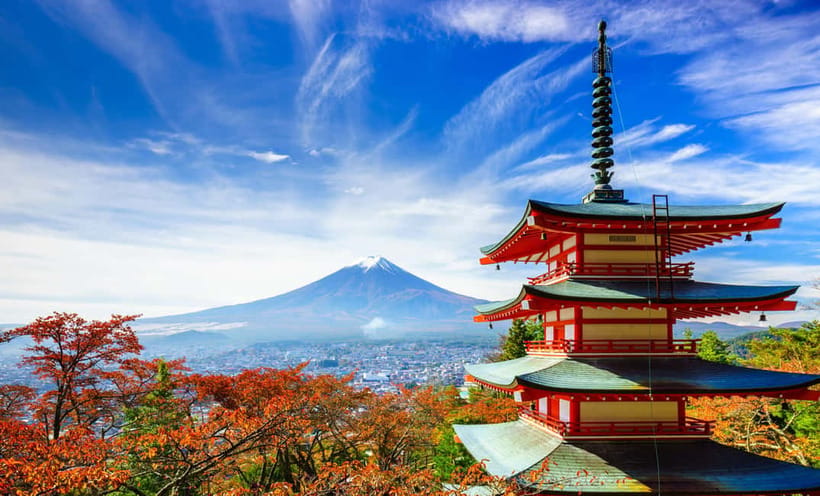
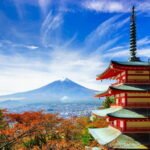
Next you head to Arakurayama Sengen Park in Fujiyoshida. You’ll have about 75 minutes for photo stops, sightseeing, and walking, including the Chureito Pagoda area. This is one of the most “Japan postcard” combinations: a pagoda viewpoint with Fuji in the background.
Why this stop matters: it’s not just a pretty picture. You’re up on a hillside park, and you get that layered perspective—city below, pagoda mid-frame, Fuji in the distance when weather allows. Reviews consistently praise this as a highlight, especially for people who got lucky with clear skies.
Drawback to plan for: if you’re in a flower season or you’re there on a weekend, the area can get crowded fast. The tour is designed to keep moving, but queues and congestion can eat into your “wander time.” If you hate waiting, prioritize photos first, then do the slower stroll.
Hikawa Clock Shop stop: free time to reset and browse
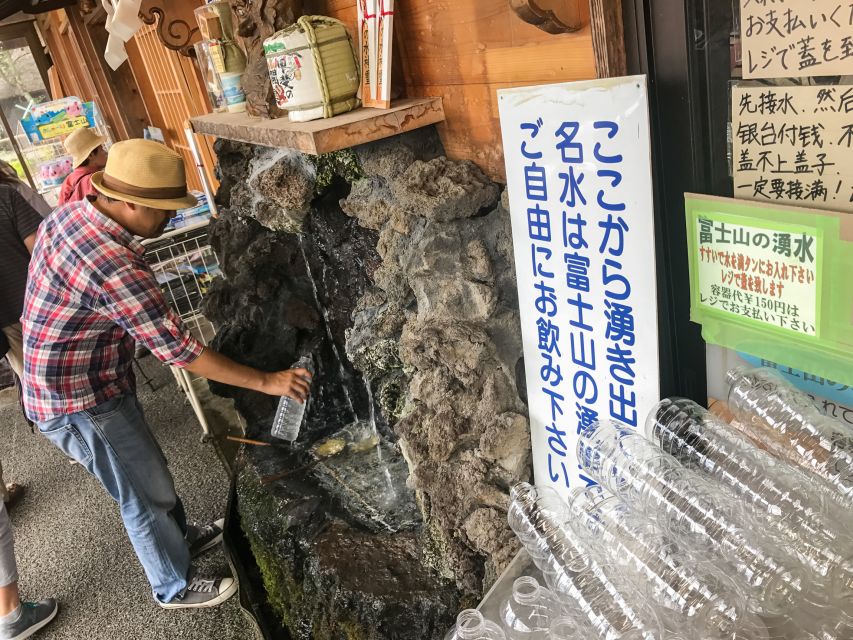
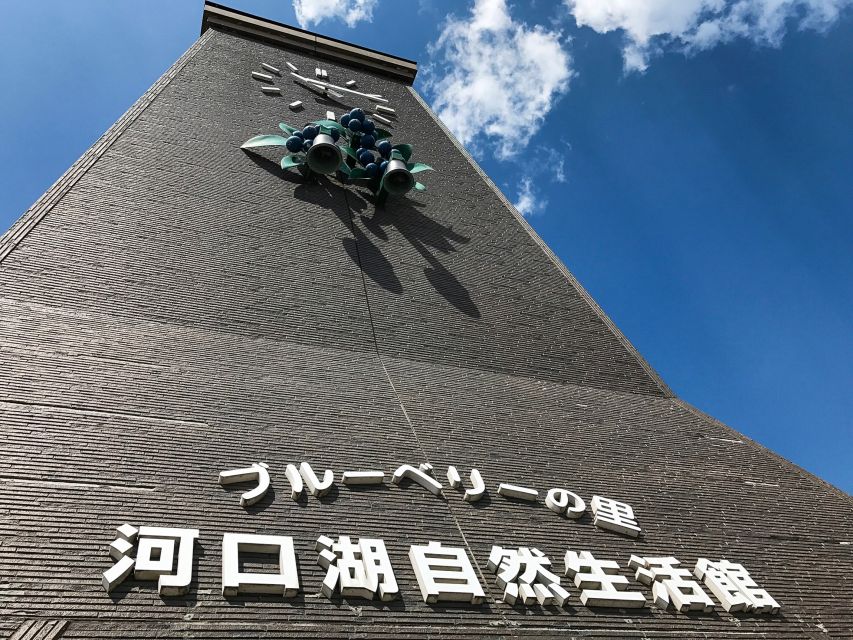
Between the big scenic areas, there’s a Hikawa Clock Shop stop. The schedule lists time for visit, free time, sightseeing, and walking. This is basically your break point in the day—a chance to use restrooms (if available), stretch your legs, and buy small souvenirs without committing to a long stop.
I treat this kind of stop as a “fuel and sanity” moment. You can grab a drink or a snack here if you like to snack through the day (food and drinks are not included in the tour price). If you’re trying to keep your Mt. Fuji energy up, use this moment to avoid buying everything later in lines.


Oshino Hakkai: the ponds, the water, and a real lunch window
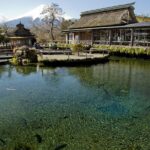
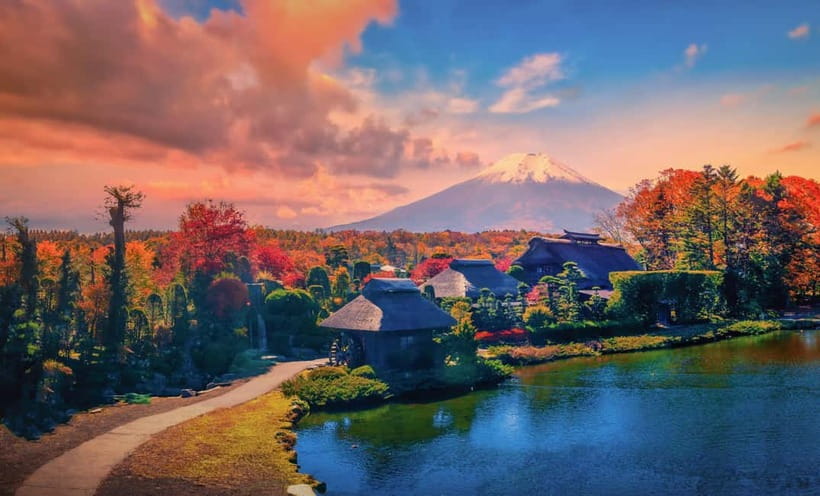
Then you reach Oshino Hakkai, one of the best-known stops in the Fuji area. You get about 80 minutes including lunch time, sightseeing, and wandering the area. This is where the tour leans into the natural side: you’ll see eight different lakes/ponds, and the experience includes time to taste water from Mt. Fuji.
This is a stop I think many people enjoy more than they expect. It’s not only scenery; it’s the “why” behind the region. Volcanic spring water has a different feel than just looking at a mountain. Even if you skip the tasting, the pond shapes and layout make it feel like a living system rather than just a viewpoint.
Two things to be ready for:
- Lunch isn’t included, so budget for your meal here. The tour just gives you time to eat.
- The area can have queues around the most popular viewpoints and water tasting spots, so don’t count on doing everything at once.
If you want the best photos, go early in your stop time and work outward. That way you’re not chasing angles while the crowd thickens.
Mt. Fuji 5th Station (2,300m): your closest top-of-Fuji moment
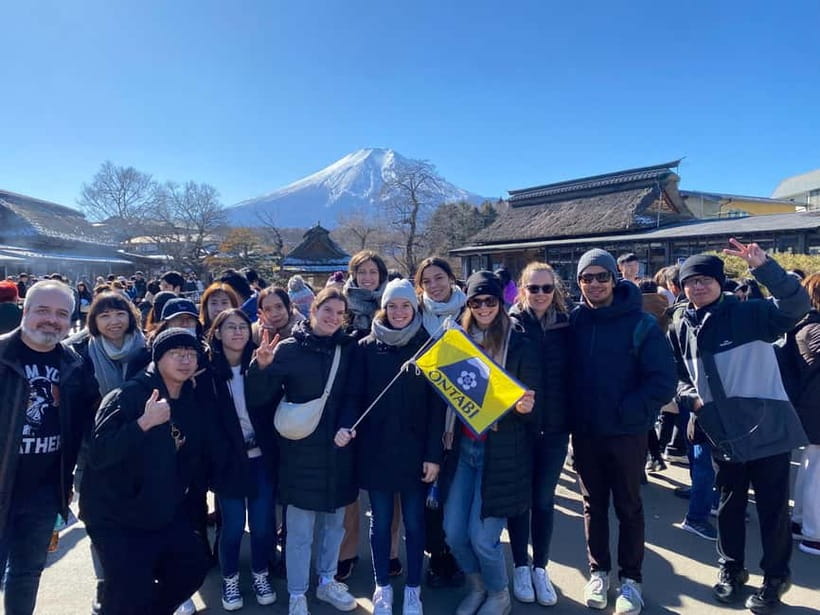
The final major stop is Mt. Fuji 5th Station, at about 2,300 meters high, with 40 minutes for photo stops, visiting, and sightseeing. This is the moment many people wait for: a very close look at the top of Fuji when visibility is good. You’ll also have time for special food and souvenirs, and the atmosphere feels like the mountain has turned up the volume.
Plan for cold. Even in warmer months, high elevation can be chilly, and winter conditions can be brutal. One review specifically notes the Fuji stop being freezing, which matches the altitude reality. Bring layers you’ll actually wear.
Also know this: the plan isn’t guaranteed. The tour states that if the road to 5th Station is closed due to weather or traffic, the route may switch to Mt. Fuji 4th Station / Mt. Fuji 1st Station. In winter, there’s also a special option to aim for the diamond Fuji sunset view at 4th/1st Station or Lake Yamanakako Hananomiyako Park. So even “winter” tours can still be built for the dramatic sky effect, but not the full-height 5th Station version.
Weather, crowds, and route changes: how to protect your expectations
This tour does a good job telling you the truth up front: visibility depends on weather, and panoramic views of Mt. Fuji are not guaranteed. That’s not a marketing loophole. It’s the mountain. Clouds can roll in quickly, and you’ll see it in real time as the group moves between stops.
The good news is the tour structure helps you cope. Multiple viewpoints across the day mean you’re not stuck with one verdict. Reviews also praise guides for getting the group to 5th Station quickly when they can still see Fuji, then moving on as clouds close in. That’s what timing is for on a day like this.
Crowds are the other reality check. During flower season and weekends, heavy congestion is highly possible, and the tour warns that your itinerary could shift due to traffic, weather, or force majeure. Add in the fact that road conditions can delay arrival by 2–3 hours, and you should pack your day like a marathon, not a sprint.
If you’re trying to minimize stress:
- Keep your plan flexible around Fuji visibility.
- Use each stop time for the most important photos first.
- Don’t underestimate walking. Even without a mountain climb, you’re on your feet a lot.
Price and value: what $68 really buys you
At $68 per person for a 10-hour coach day, you’re paying for convenience and access, not just transportation. The price includes:
- Pick-up and drop-off from the two Tokyo-area locations
- Entry fees for all the sightseeing spots
- A professional guide (English/Mandarin/Cantonese)
- An air-conditioned bus
That changes the math. If you tried to DIY this using buses and admissions one by one, you’d spend money on transit anyway, then lose time coordinating transfers. Here, the “routing brain” is handled for you.
Food and drinks are not included, though lunch time is built into the day at Oshino Hakkai. So your real “all-in” cost depends on how you handle snacks and meals. If you hate long lines for food, you’ll likely spend your money faster at the stops where options are queue-heavy.
Value also depends on your priorities. If you want Fuji from multiple angles in one day—lake, pagoda viewpoint, spring ponds, high station—this is a strong deal. If you want a slow, independent exploration or you don’t enjoy crowds and fixed timing, you might find the structure limiting.
Who this tour fits best (and who might not love it)
This tour fits best if you:
- Want a one-day Mt. Fuji plan that hits multiple top sights
- Prefer a guide to explain what you’re looking at and help you move efficiently
- Like getting photos from several viewpoints without doing logistics
It may be less ideal if you:
- Need lots of quiet time or hate crowds
- Want to linger for long at shops or restaurants
- Travel with lots of luggage, since the tour says no large bags
Also, remember that the tour leader “simply accompanies your group throughout the day.” That’s not a negative, but it means you’ll follow the group schedule and meet times. Reviews are overwhelmingly positive about organization, but it’s still a coach day with tight stop windows.
Should you book this From Tokyo Mt. Fuji full-day trip?
If your goal is to see Mt. Fuji from the most famous angles—Kawaguchiko, Arakurayama/Chureito, Oshino Hakkai, and Fuji 5th Station—I’d book it. The biggest reason is practical: the tour’s multi-stop design gives you several chances, and the guide-led timing helps when clarity improves.
Book with eyes open about the tradeoffs. It’s a long day, you’re subject to weather, and you’re going to walk at multiple locations with time pressure. If you want a simple, high-odds day trip where the important pieces are handled, this is a strong choice.
FAQ
How long is the Mt. Fuji full-day sightseeing trip?
It’s about 10 hours total.
Where do you get picked up and dropped off?
Pickup and drop-off are available from two locations in the Tokyo/Shinjuku area, with one option at the Shinjuku Nishiguchi branch and another at Tokyo Station’s Yaesu side.
What’s included in the tour price?
The tour includes pick-up/drop-off, entry fees for all sightseeing spots, a 3-star safety air-conditioned bus, and a professional guide.
Are food and drinks included?
No. Food and drinks are not included, though lunch time is built into the day.
What happens if Mt. Fuji 5th Station can’t be reached?
If the road is closed due to weather or traffic, the itinerary may change to Mt. Fuji 4th Station / Mt. Fuji 1st Station or Lake Yamanakako Hananomiyako Park in winter.
Are there restrictions on luggage or minors?
Luggage or large bags are not allowed. Unaccompanied minors are not allowed, and all children must be accompanied by an adult.