REVIEW · KYOTO
Kyoto: Samurai Sword Class by Experts in Traditional Arts
Book on GetYourGuide →Operated by Ginbu Co. · Bookable on GetYourGuide
Kyoto turns history into something you can do with your hands. This Samurai Kembu Theater class teaches the core Kenbu routine step-by-step, from bowing to drawing and striking in stylized form, then wraps it up with a costume photo session and a completion certificate. I like that the instruction is practical and safety-minded, and names like Hoga sensei and Kazu Sensei show up in the way people describe the coaching: clear, patient, and often funny. The one possible drawback: there’s no observation-only option, so if you want to watch quietly you won’t fit here.
You’re also not dealing with a huge crowd. The class caps at 10 participants, and the experience runs about 90 minutes to 2 hours, which feels like good value for the mix of history, hands-on practice, and a short performance at the end.
In This Review
- Key things that make this class worth your time
- Where you’ll go in Kyoto: Samurai Kembu Theater, Higashiyama
- The warm-up you actually need: 4-minute film, then bowing
- Suiting up: costume changes, tenugui towel, and what to wear
- Learning the Kenbu routine: draw, strike, and controlled movement
- Respect to the opponent: the bow that turns technique into etiquette
- Photo session and completion certificate: how you take the class home
- The optional end show: 10 or 30 minutes with commentary
- Price and timing: is $64 good value?
- Who this suits best (and who should skip)
- Practical tips that make your session smoother
- Should you book the Samurai Sword Class in Kyoto?
- FAQ
- How long is the Samurai Sword Class in Kyoto?
- Where is the meeting point?
- What is the price per person?
- Do I get English instruction?
- What’s included in the class?
- Do I need to bring a sword or weapons?
- Is it a small group?
- Can I observe only instead of participating?
- What should I wear?
- Is the class suitable for young children?
Key things that make this class worth your time
- Start with etiquette, not sword flailing: bowing is trained as part of the technique.
- A short film before you pick up the sword: you get basics fast and stay on track.
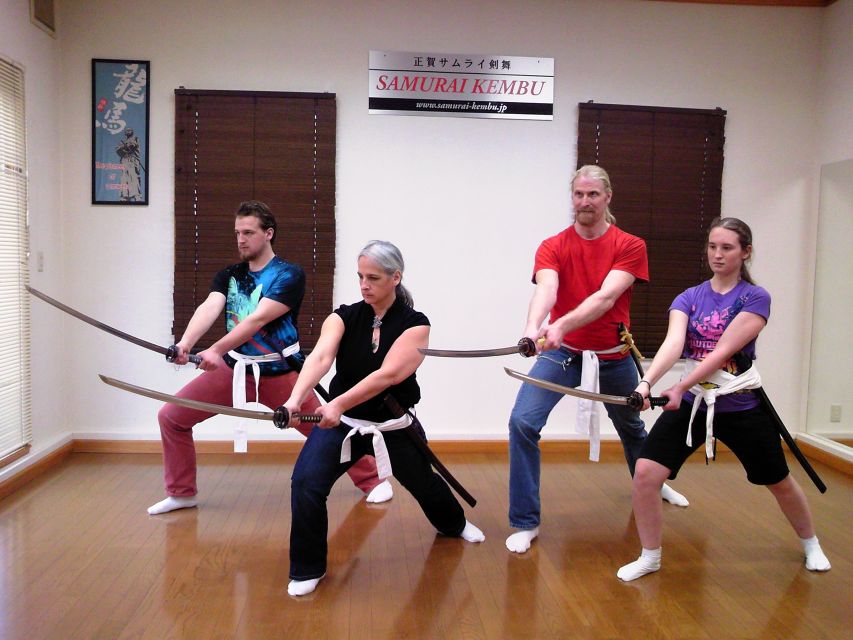
- Your sword work includes draw, strike, and return to scabbard: it’s a complete mini sequence.
- Costume time plus a keepsake: photo shoot, tenugui towel, and a certificate.
- You can add a 10-minute or 30-minute show with commentary by a sword dance instructor.
- Small group instruction with a limited headcount (10 max).
Where you’ll go in Kyoto: Samurai Kembu Theater, Higashiyama
This class is based at Samurai Kembu Theater in the Higashiyama area (35-7 Sanchome, Higashi-iru, Sanjo-hanamikoji), inside Gozan Building at B1F. That matters because you’re not heading out to a remote countryside dojo. You’ll be able to plan this as a focused morning or afternoon stop, then keep exploring Kyoto right after.
Higashiyama is a classic base for visitors, and the area is walkable-friendly once you know where you’re going. Still, this venue has a small-space vibe: there’s no waiting room, so you’ll want to arrive ready to go and on time.
You can also read our reviews of more tours and experiences in Kyoto.
The warm-up you actually need: 4-minute film, then bowing
The session starts with a short 4-minute film about the basics of samurai sword arts and Kenbu. It’s brief by design. You don’t get lost in names and dates for 30 minutes. Instead, you get just enough context so what you do next feels intentional.
Then you move into the first physical lesson: how to bow properly before training begins. In a lot of “tour sword” activities, politeness is treated like a formality. Here, bowing is presented as a real part of the technique and the mindset. That’s useful because it sets a tone fast: you’re practicing discipline, not chaos.
Suiting up: costume changes, tenugui towel, and what to wear
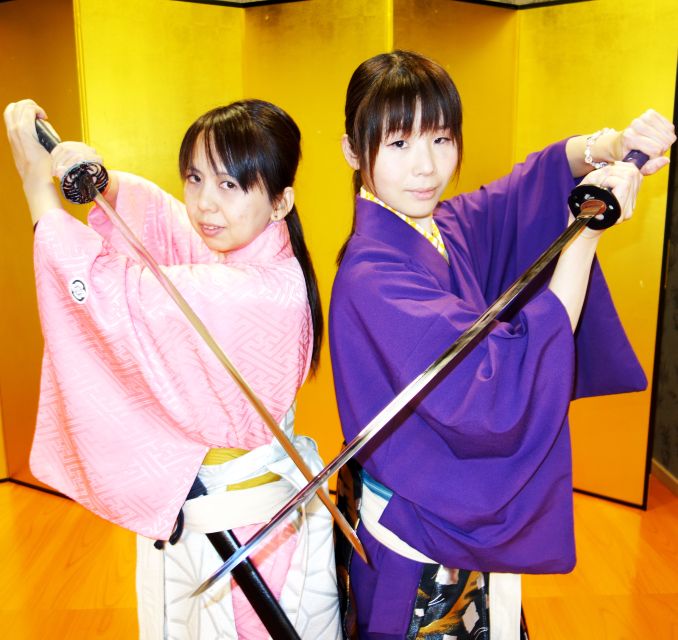
After the film, you suit up and take hold of your samurai sword (you won’t be bringing any weapons yourself). Costumes are part of the point here, and that’s why the dress code isn’t casual. You need clothes suited for moving around, and the guidance specifically notes that a single hoodie or tights outfit is not suitable for costume changes.
So plan your clothing like it’s a small workout plus a dressing-room moment. Comfortable layers you can adjust quickly will make the costume stage less stressful. Also remember: there’s luggage limits. Large bags and extra stuff aren’t a fit for this space.
One nice inclusion: you receive a tenugui towel, the traditional Japanese cloth towel. It’s small, practical, and it feels more “Kyoto” than a generic souvenir.
Learning the Kenbu routine: draw, strike, and controlled movement
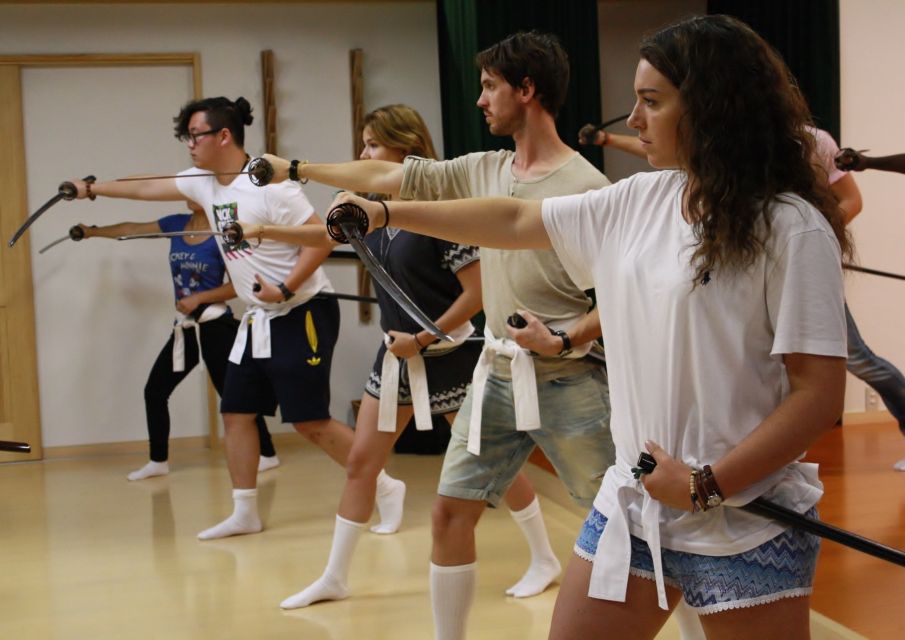
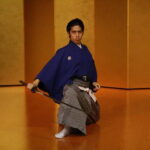
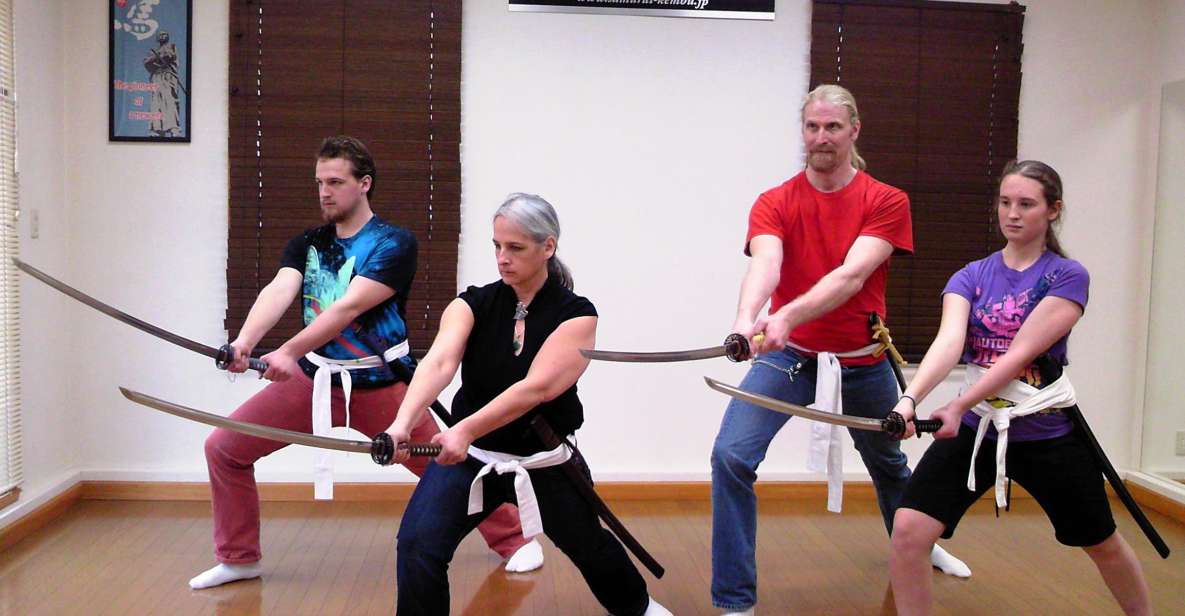
This class centers on Kenbu, the stylized sword-dance discipline. What you practice isn’t random swinging. The structure you’re taught—bow, draw, strike in stylized movements, and replace the blade in its protective scabbard—keeps your body moving through a full sequence.
That sequence matters for beginners. If all you do is learn one strike, it’s easy to end up with sloppy timing and no sense of flow. A draw-and-return drill teaches control: how your hands coordinate, how your body positions, and how the movement stays purposeful from beginning to end.
Safety-wise, the rules are clear: weapons or sharp objects aren’t allowed, and you must follow instructor instructions on the day. In other words, the class is designed around you learning the right handling rather than testing your own style.
Respect to the opponent: the bow that turns technique into etiquette
You’ll also learn how to show respect to an opponent with the sword—ending up with a respectful bow to your instructor. This part can be easy to underestimate, but it’s one of the most meaningful pieces of the experience.
Kenbu isn’t just performance. It’s built around manners and measured movement. When you practice the bow-to-instructor moment at the end (and the respectful stance earlier), you get a better idea of why samurai arts are so often described as a discipline of self-control, not just fighting.


Photo session and completion certificate: how you take the class home
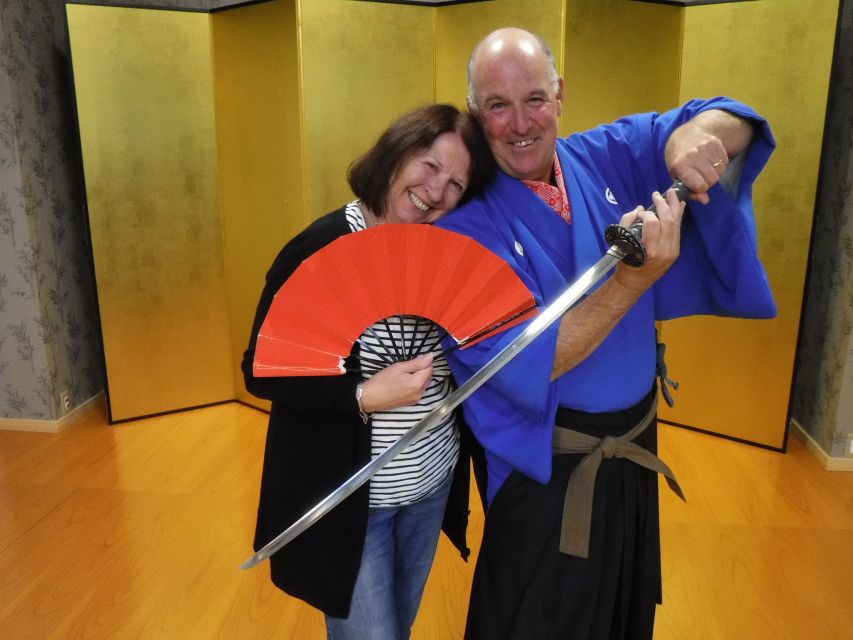
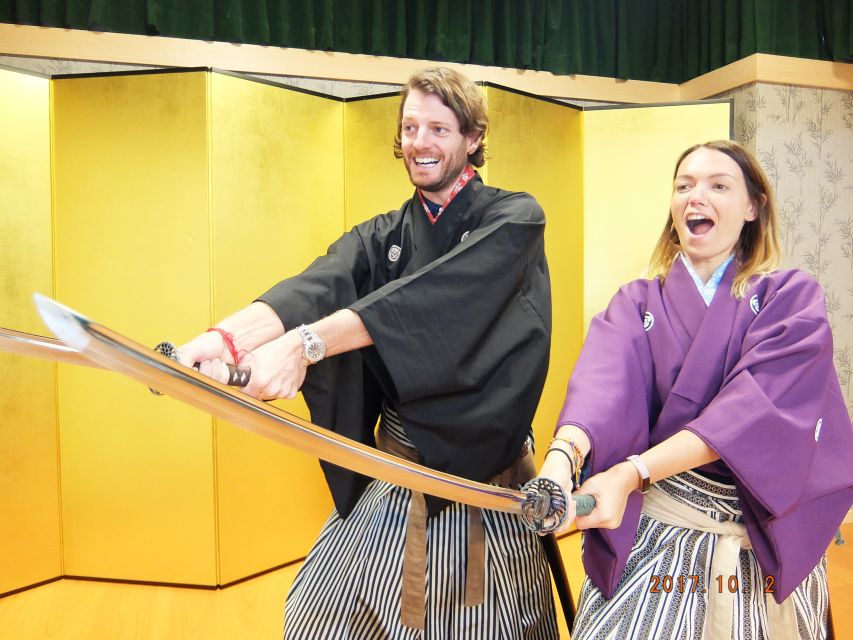
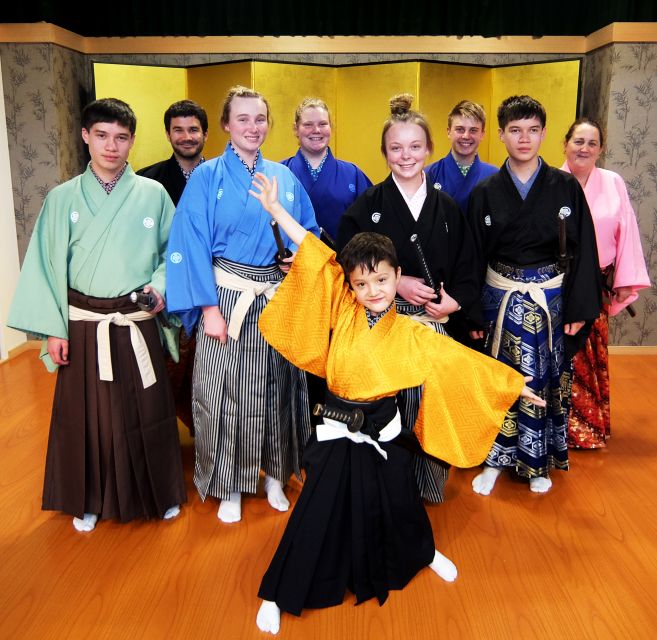
One of the highlights is the costume photo session, plus a completion certificate. This is a big part of why the class is so popular with first-timers. You’re not just leaving with memories in your head—you’re leaving with proof of participation you can frame, and a set of photos that looks like you stepped into a samurai scene.
It also helps motivate you during practice. When you know there’s a photo moment included, you tend to pay more attention to the full sequence: posture, timing, and how you hold the sword safely.
The optional end show: 10 or 30 minutes with commentary
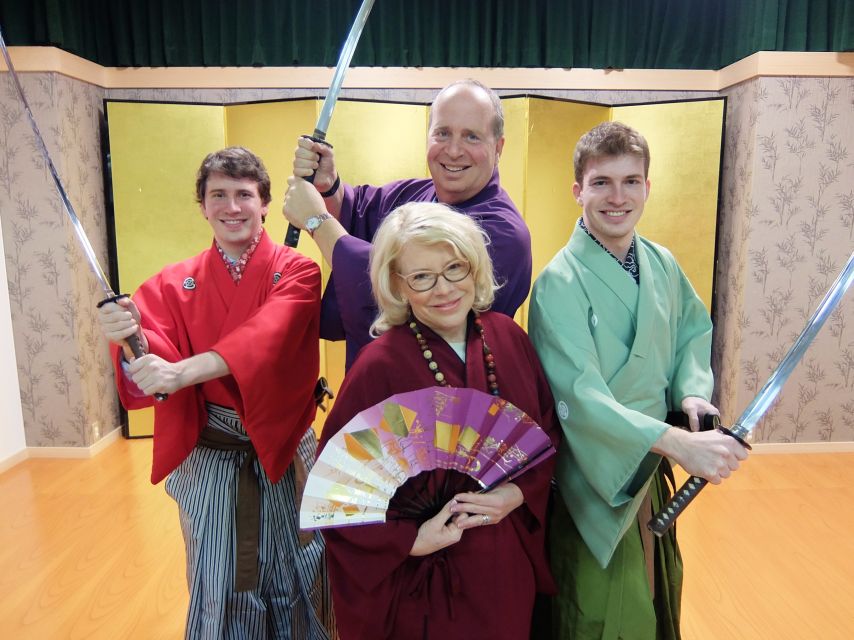
At the beginning or end (depending on your chosen option), you can add a performance with commentary by a sword dance instructor. The duration is either 10 minutes or 30 minutes.
This is valuable because it turns what you practiced into something you can see at full expression. The routine becomes a “concept you did” rather than only “moves you copied.” If you choose the longer option, you’ll likely get more context on the techniques that have been passed down through generations.
Practical note: this is part of the session flow, so decide based on your schedule. If you’re short on time, go 10 minutes. If you’re enjoying it and want context, choose 30.
Price and timing: is $64 good value?
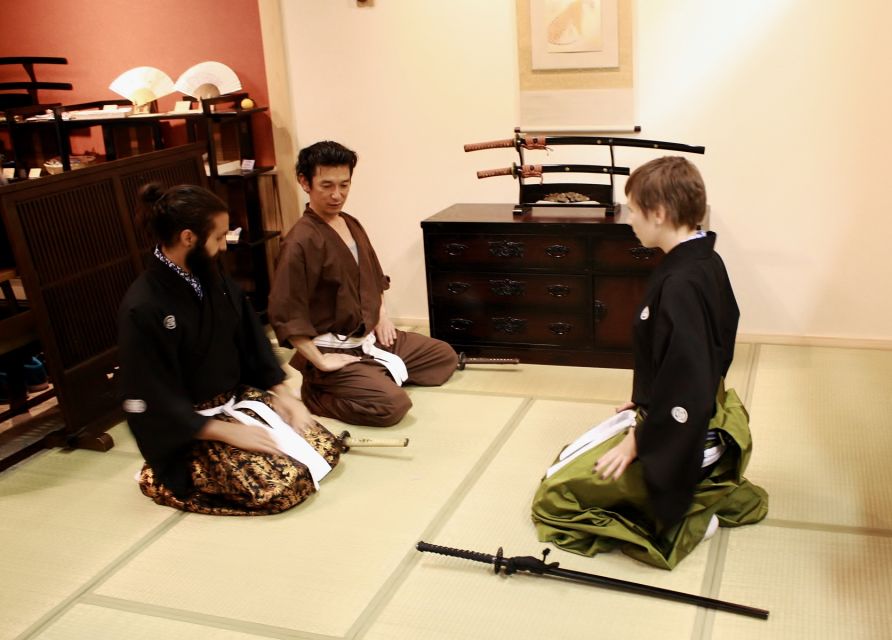
At $64 per person for about 90 minutes to 2 hours, you’re paying for more than sword practice. You’re getting:
- an English-speaking instructor
- a short film introduction
- costume setup and training time
- a photo shoot
- the tenugui towel
- a completion certificate
- an optional performance component
For me, the value angle is the mix. Pure “sword demo” tickets are often just watching. Pure martial arts classes cost more and take longer to learn basics. This sits in the middle: you leave with a real mini skill sequence and a visual souvenir, without needing hours of training.
Small-group size helps too. With a maximum of 10 participants, you’re less likely to get lost in the shuffle, and the instruction can actually correct posture and timing.
Who this suits best (and who should skip)
This is best for people who want a hands-on cultural activity and don’t mind looking a little serious in a samurai costume. If you like practical learning—how to bow, how to draw, how to strike in form—this class gives that structure quickly.
It’s also a good fit for families with older kids. The class is not suitable for children under 4. For ages 5 to 10, it’s desirable that the child already attends a martial arts class or has learned something, because the lesson is conducted with adults and the movements are taught with that pace in mind.
If you’re expecting a casual walk-through or a place to hang out and watch quietly, skip it. There’s no observation only policy and no waiting room for people without an appointment.
Practical tips that make your session smoother
A few small things can make a big difference:
- Wear clothes for exercise and movement. You’ll be practicing with your body, not just standing.
- Avoid a single hoodie or tights outfit if you’ll need costume changes. Bring a setup that’s easy to adjust.
- Plan light: there’s no space for large luggage or travel bags.
- Expect to follow safety directions closely since weapons/sharp objects aren’t allowed.
- Arrive at Samurai Kembu Theater on time. There’s no waiting room, and you can’t just wait around.
If you’re doing this during a busy Kyoto day, give yourself a buffer for getting there. The venue is B1F, and you don’t want to rush in at the last second.
Should you book the Samurai Sword Class in Kyoto?
I’d book this if you want a guided, beginner-friendly way to experience Kenbu in a real Kyoto setting. The class checks the boxes that matter: small group size, hands-on instruction (bow, draw, strike, scabbard), costume time, a photo keepsake, and an optional show that explains what you practiced.
I’d skip it if you only want to watch, if you want a strict history lecture with no movement, or if you’re not willing to dress for costume changes and follow safety rules. This isn’t a “spectator-only” experience. It’s a do-the-moves-and-learn moment.
FAQ
How long is the Samurai Sword Class in Kyoto?
The duration is listed as 90 minutes to 2 hours, depending on the starting time and the options you choose.
Where is the meeting point?
You meet at Samurai Kembu Theater (Kyoto dojo), 35-7 Sanchome (Higashi-iru, Sanjo-hanamikoji), Higashiyama-ku, Gozan Building B1F, Kyoto 605-0005.
What is the price per person?
The price is $64 per person.
Do I get English instruction?
Yes. The instructor is listed as English, with Japanese also available.
What’s included in the class?
Included items are an English-speaking instructor, a photo shoot, a tenugui towel, and a completion certificate.
Do I need to bring a sword or weapons?
No. Weapons or sharp objects are not allowed, and you’ll be training as part of the class with the proper equipment.
Is it a small group?
Yes. It’s a small group limited to 10 participants.
Can I observe only instead of participating?
No. Observation only is not allowed.
What should I wear?
Wear clothes suited for exercise and moving around. A single hoodie or tights outfit is not suitable for costume changes.
Is the class suitable for young children?
Children under 4 years are not suitable. For ages 5 to 10, it’s desirable that they attend a martial arts class or have learned something, since lessons are conducted with adult participants.