REVIEW · KYOTO
Kyoto: Tea Ceremony Experience
Book on GetYourGuide →Operated by Camellia Tea Ceremony · Bookable on GetYourGuide
A quiet ritual can stop a chaotic day in Kyoto. This Kyoto matcha tea ceremony takes you into a traditional Higashiyama tearoom where you’ll watch the movements, ask questions, and make your own bowl. I love the combination of hands-on matcha whisking and the chance to taste Kyoto sweets alongside the tea. One thing to plan for: sitting on the floor for most of the 45 minutes can feel tough if you have mobility or knee issues.
You’ll meet your host at a machiya in Higashiyama, then settle in as the instructor breaks down utensils, room layout, and the steps before the tea is served. If you’re lucky enough to get a host like Ikuko, you’ll likely find the explanations very calm and structured, with plenty of chances to ask follow-up questions. The experience is short and peaceful, but it moves at a deliberate pace—so don’t book it when you’re racing to catch the next train.
The best part is how much meaning fits into just 45 minutes: etiquette, symbolism, and a real taste of Kyoto matcha culture. If you want photos, still shots are fine, but video recording isn’t allowed. If you’re coming with an interpreter or you’re traveling with an infant under 3, plan ahead because that changes how you should book.
In This Review
- Key Things I’d Highlight Before You Go
- Finding the Machiya Near Ninenzaka, Park Hyatt, and Studio Ghibli
- Inside the Tearoom: Utensils, Room Layout, and Tea Ceremony Basics
- Seasonal Sweet + Matcha Chat: Your Calm Start to the Ceremony
- Making Your Own Bowl of Matcha: Powder, Water, and Froth
- What you’ll taste
- Tea Utensils and Room Rules: The Little Things That Matter
- Price and Time: Is $32 Worth It for 45 Minutes?
- Comfort, Photos, and Seating Reality in Higashiyama
- Photos and video rules
- If you want kimono photos
- Waiting area for tour guides
- Who Should Book This Kyoto Tea Ceremony (and Who Might Skip)
- Should You Book Camellia Tea Ceremony in Kyoto?
- FAQ
- How long is the Kyoto tea ceremony experience?
- What’s the price per person?
- Is the tea ceremony taught in English?
- What’s included in the price?
- Where do I meet the group in Higashiyama?
- Are photos or videos allowed?
- Is seating on the floor required?
- Is there an option for wheelchair access?
- Are kimono rentals included?
- What if I’m traveling with an interpreter or with a baby?
- Can I cancel, and do I pay immediately?
Key Things I’d Highlight Before You Go
- You’ll do the whisking: you’re not just watching; you’ll make your own bowl with guidance.
- You start with tea and seasonal sweets in a traditional Higashiyama setting.
- You learn the “why” behind utensils and room decoration, not just the sequence of steps.
- You can ask about different tea schools, including the three schools of ceremony.
- Finding the spot is easier than it sounds once you know the Park Hyatt + Studio Ghibli store landmark.
Finding the Machiya Near Ninenzaka, Park Hyatt, and Studio Ghibli
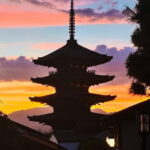
This tea ceremony is in Kyoto’s Higashiyama area, close to the famous sights around Kiyomizu-dera and Gion. Your main navigation anchor is the Park Hyatt hotel. Opposite it is a Studio Ghibli store, and the alley you want is just to the left of that store.
From there, you’ll head down an alley branching from the main thoroughfare of Ninenzaka. The key detail is that it’s tucked away—so don’t expect a big, obvious storefront. The good news: the experience is set up so you can find it without guesswork. In practice, you’ll get clear directions in advance, and someone will meet you at the entrance area once you’re there.
If you’re doing this as a break from temple crowds, it’s a good move. Higashiyama can feel like constant motion. A ceremony like this gives your feet a moment of recovery while your brain slows down.
Practical walking tip: if you’re coming from Kiyomizu-dera or Kodai-ji, expect a short climb and a fair amount of foot traffic. Give yourself a little buffer so you’re not trying to arrive while out of breath.
You can also read our reviews of more tours and experiences in Kyoto.
Inside the Tearoom: Utensils, Room Layout, and Tea Ceremony Basics
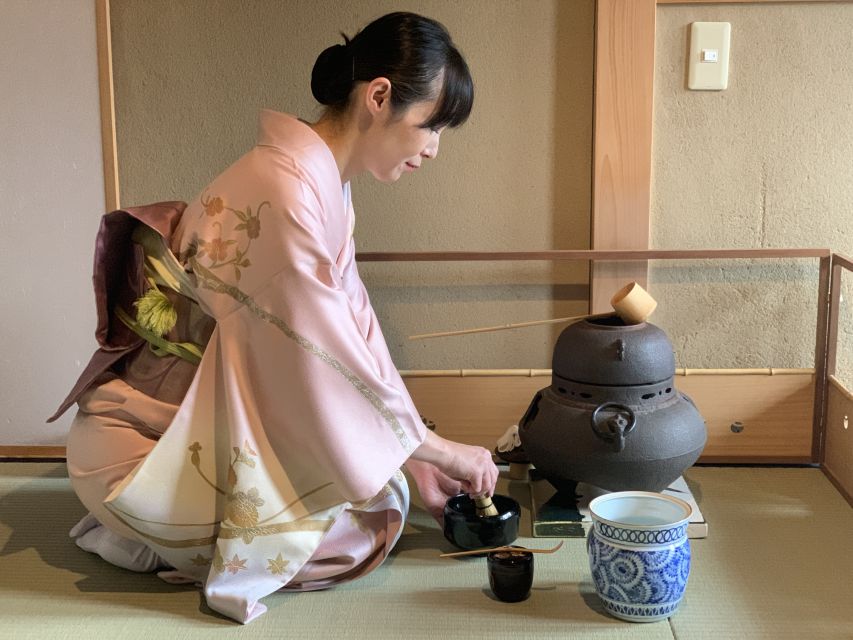
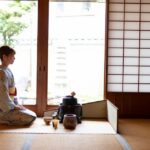
You begin inside a traditional machiya, then move into the tearoom experience. Before any tea is served, your host sets the stage with an introduction to matcha culture and the ceremony itself.
Here’s what you’re typically walked through:
- the utensils and what each one does
- the steps of making tea
- the importance of the room’s decoration and layout
That room-detail piece matters more than you might think. The tea ceremony isn’t just about taste. It’s about attention—how objects are arranged, how the host moves, and how the space supports calm focus.
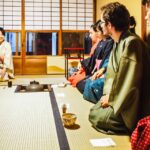
Also, the experience includes a proper chance to ask questions. If you’re curious about the three schools of tea ceremony, this is a solid setting to ask. If you’re more interested in Japanese culture broadly, you can usually steer the conversation that way too.
One more “read this before you arrive” note: the tearooms are upstairs. If you need extra help with mobility, you may be directed to the Garden Teahouse, which is wheelchair accessible. And if floor seating is hard for you, chairs and tables are available.
Seasonal Sweet + Matcha Chat: Your Calm Start to the Ceremony
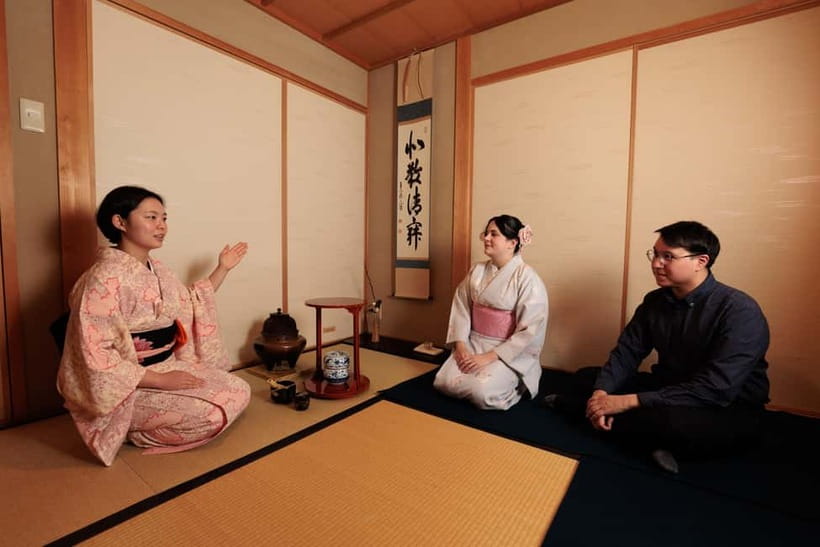
Before you start whisking, the ceremony usually includes a first tasting moment. You’ll be served tea while you nibble on seasonal sweets. This combo is a classic entry point because it helps you notice contrast: sweet, then bitterness and grassiness from matcha.
You’ll also get time to talk with your host. That’s where the experience becomes more than a script. This is the part where you can ask about meaning and tradition, not just procedures.
A few real-world details that help:
- The host often balances explanation with relaxation.
- The overall pace feels unhurried, especially compared to the pace of Higashiyama streets.
- Restroom facilities are available, so you’re not stuck making a stressful decision mid-visit.
If you’re coming with kids or a group of friends, this conversational section is usually the easiest time for everyone to stay comfortable and engaged.
Making Your Own Bowl of Matcha: Powder, Water, and Froth
The highlight for most people is the hands-on part: making your own frothy matcha with help from the host.
You’ll learn the basics of how to whisk so you get that foam layer on top. You don’t need prior skill. You’re there for the guided practice. Even if your first whisk looks a little chaotic, that’s normal—this isn’t a competition. The point is to understand what you’re doing and why.
One useful expectation: the actual ceremonial movement can be brief, sometimes around 10 minutes, and then your time is spent explaining plus your own whisking. So even though the full experience is 45 minutes, you won’t feel like you’re trapped in silence the whole time.
A host like Ikuko has been described as patient and clear, and that matches what you want here: calm correction, not rushed instructions. If you’re bringing questions (Is matcha always bitter? Why does foam matter? How do utensils influence taste?), this is where you’ll get the most value.
What you’ll taste
Matcha is often described as bitter, and that bitterness is part of the craft. The sweet you get earlier is there to make the transition easier. When you make it yourself, you’ll usually notice how your whisking technique changes the texture and feel of the tea.


Tea Utensils and Room Rules: The Little Things That Matter
It’s easy to think a tea ceremony is all about the cup and the drink. This one spends real time on the details that support the ritual.
You’ll learn about:
- tea-making utensils and how they’re used in the process
- how the room layout influences the flow of the ceremony
- why room decoration is treated like part of the experience, not background
If you’ve ever visited a museum and noticed the signs are less important than the objects themselves, that’s the same idea here. The ceremony becomes easier to understand once you see how everything is connected.
Also, you can usually see the difference between “learning a trick” and “learning a ritual.” The host’s explanation ties the steps together, so you leave with more than a memory of tea—you leave with a sense of how Japanese tea culture thinks.
And yes, it’s peaceful. It’s also structured. That combination is what makes it work as a short stop in Kyoto rather than something that consumes your whole day.
Price and Time: Is $32 Worth It for 45 Minutes?
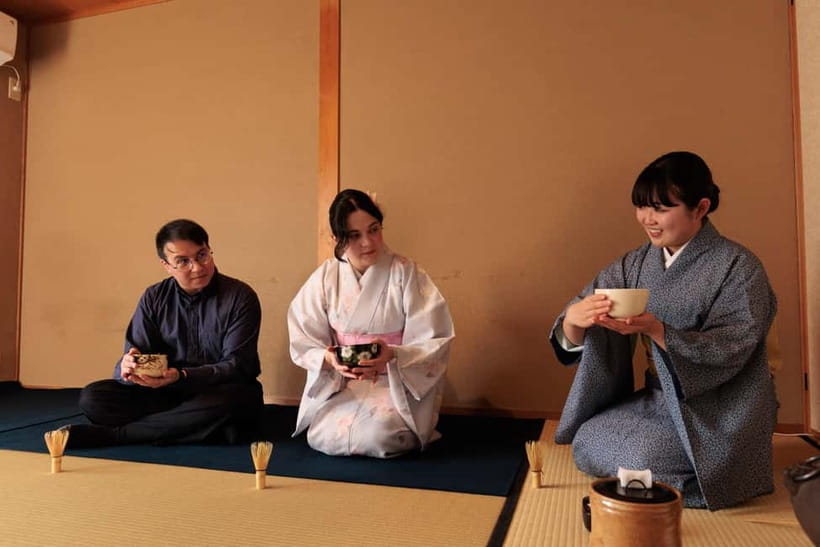
At $32 per person for about 45 minutes, this is priced as a learning experience plus a guided tasting. You’re not paying just for matcha—you’re paying for:
- an English-speaking host/instructor
- traditional utensils and the supplies for matcha-making
- seasonal sweets
- a real explanation of ceremony steps, tools, and room symbolism
What you don’t get is also part of the calculation:
- no hotel pickup or drop-off
- no meals included
- kimono rentals aren’t included
So the value depends on your style. If you want a quick “see and move on” Kyoto activity, this might feel too focused. If you want a meaningful reset that teaches you something you can actually use (like how to whisk matcha basics), it’s a good fit.
Also, keep your expectations right: this is not a multi-hour formal tea school lesson. It’s a compact, guided experience. For many people, that’s exactly the sweet spot.
Comfort, Photos, and Seating Reality in Higashiyama
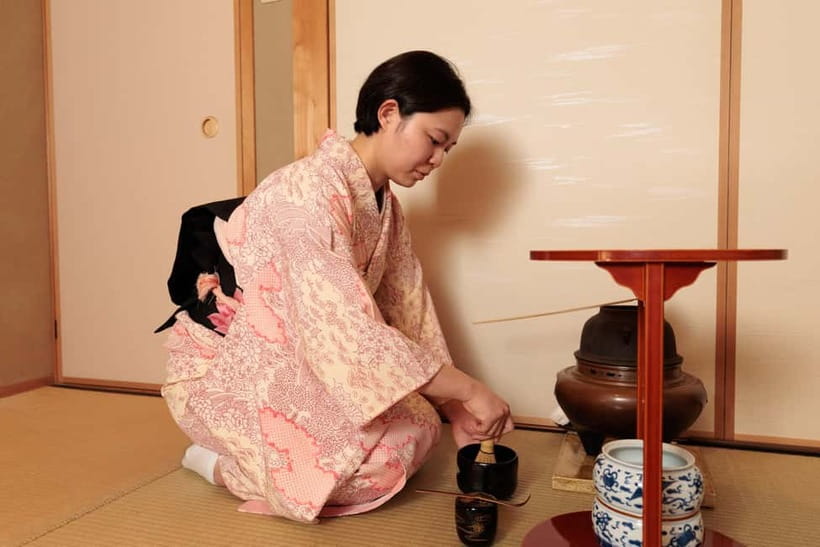
Tea ceremonies can sound fancy and effortless. Your body might disagree if you’re not used to sitting on the floor.
Here’s the practical reality:
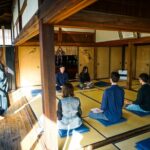
- you may sit on the floor for around 40 minutes
- some guests find it uncomfortable on the bum and knees
- hosts understand this and encourage you to make yourself comfortable
- chairs and tables are available if needed
If you choose floor seating, wear clothing that doesn’t restrict your movement too much. Bring a layer if you get chilly in a traditional interior space.
Photos and video rules
- Video recording isn’t allowed.
- Non-flash, still photography is permitted.
That means you can capture the moment, but keep it respectful. No phones rolling like a mini movie set.
If you want kimono photos
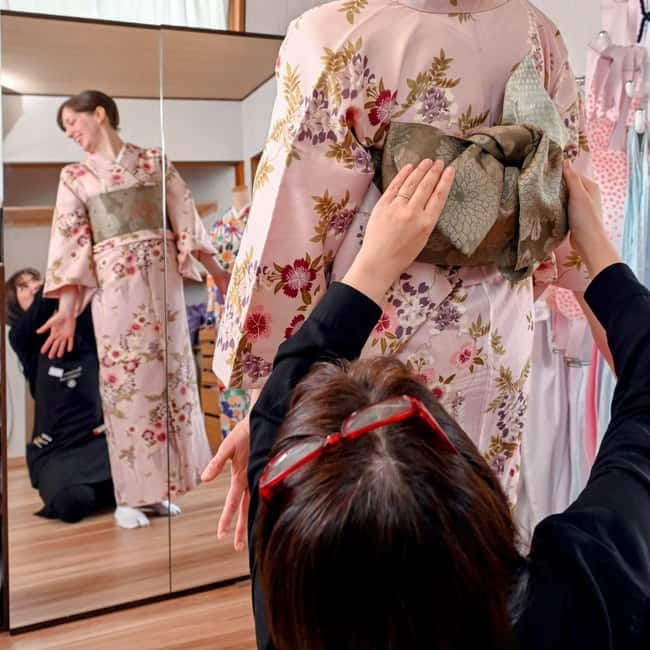
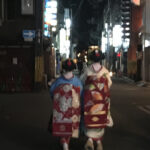
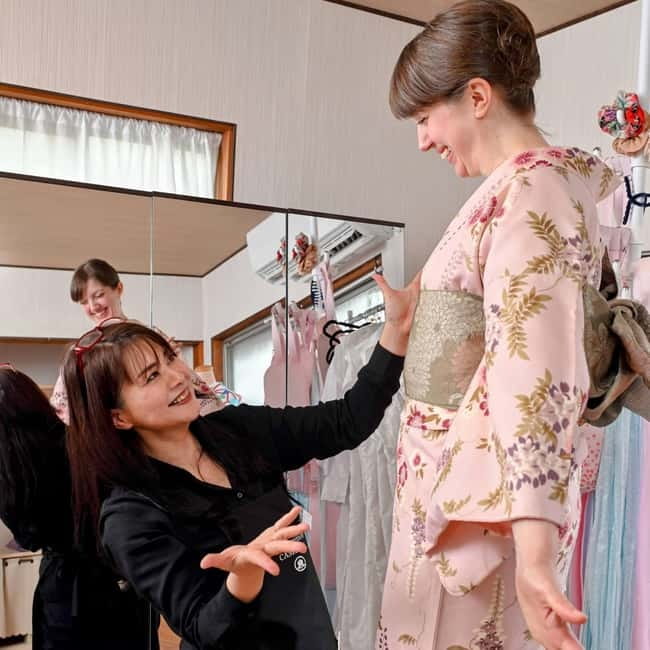
Kimono rentals are available nearby (and not included in the ceremony fee). One helpful tip: if you’re doing a kimono, it can be smart to arrange it in advance so you’re not trying to solve timing problems right before the ceremony. There’s also been mention of staff member Nel being kind and helpful with photos—so if you’re on your own, don’t hesitate to ask.
Waiting area for tour guides
If you’re traveling with a group where someone is working as a guide, accompanying guides may wait in a waiting room with WiFi and refreshments.
Who Should Book This Kyoto Tea Ceremony (and Who Might Skip)
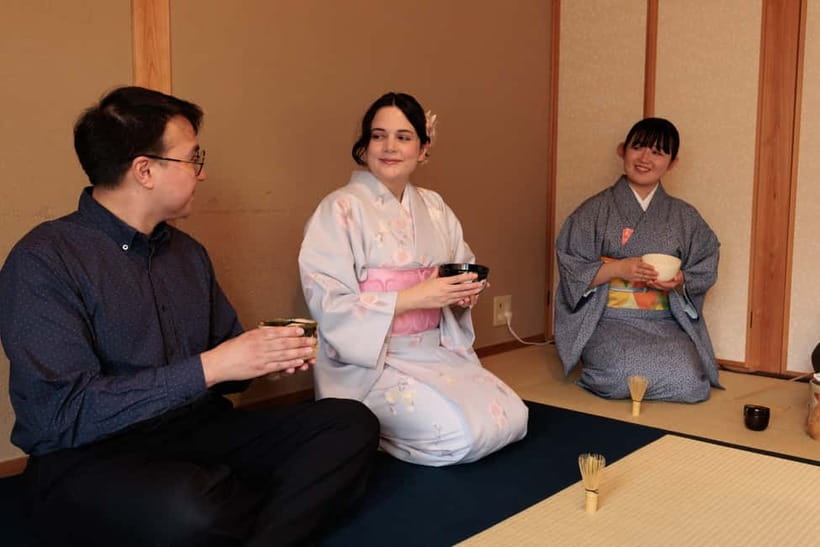
This experience is best for you if:
- you like calm cultural activities with a hands-on component
- you want to understand how matcha culture works in Kyoto
- you enjoy asking questions and getting direct answers in English
- you want a short break from temples and shopping streets
It may be less ideal if:
- you hate sitting on the floor for much of the session (even with encouragement, your comfort matters)
- you’re trying to pack in too many activities back-to-back without any buffer
- you’re looking for a full-day immersive program rather than a compact lesson
The private or small group option is a big plus if you want more conversation and fewer interruptions. If you’re traveling with an interpreter, the experience notes you should book a private tea ceremony so you don’t disrupt other guests. For an infant under 3, booking a private ceremony at the Garden Teahouse is requested.
Should You Book Camellia Tea Ceremony in Kyoto?
My take: yes, if you want a real Kyoto cultural moment that doesn’t eat your entire day. For $32 and 45 minutes, you get more than a tasting. You get a guided introduction to tools, room etiquette, and the basic craft of whisking matcha.
It’s also one of those experiences where the small details pay off: the utensils, the room layout, the seasonal sweet pairing, and the chance to ask about tea schools. If you’re doing Higashiyama anyway, this is a clean way to slow down without feeling like you’re giving up time.
The one reason to hesitate is comfort. If floor seating is a deal-breaker, plan to use the available chair/table option or consider the Garden Teahouse route if you need accessibility support.
FAQ
How long is the Kyoto tea ceremony experience?
It lasts about 45 minutes.
What’s the price per person?
The price is $32 per person.
Is the tea ceremony taught in English?
Yes. The instructor/host speaks English.
What’s included in the price?
You’ll get matcha, traditional seasonal sweets, tea-making utensils, and a personal instructor/host.
Where do I meet the group in Higashiyama?
Meet down an alley branching from the main thoroughfare of Ninenzaka. The easiest landmark is the Park Hyatt hotel; Studio Ghibli store is opposite it, and the alley is just to the left of the store.
Are photos or videos allowed?
Non-flash still photography is permitted during the workshop. Video recording is not allowed.
Is seating on the floor required?
No. Chairs and tables are available if you find it difficult to sit on the floor. The tearooms are upstairs, so plan accordingly for stairs.
Is there an option for wheelchair access?
Yes. The Garden Teahouse is wheelchair accessible.
Are kimono rentals included?
No. Kimono rentals are not included in the ceremony price.
What if I’m traveling with an interpreter or with a baby?
If you plan to come with an interpreter, you should book a private tea ceremony so it doesn’t disrupt other guests. If you’re traveling with an infant under 3, you’re asked to book a private tea ceremony at the Garden Teahouse.
Can I cancel, and do I pay immediately?
You can reserve now and pay later. Free cancellation is available up to 24 hours in advance for a full refund.