REVIEW · TOKYO
Tokyo: Zen Meditation at a Private Temple with a Monk
Book on GetYourGuide →Operated by Travel Japan Together · Bookable on GetYourGuide
Tokyo can feel like white noise. This experience cuts through it with Zen meditation inside a temple that’s not open to the general public. In Asakusa, you’ll sit with a resident monk, learn the point of Zazen, and finish in a quieter, slower rhythm.
I like two things a lot. First, the monk-led instruction is direct and personal, with English support from guides such as Tamami-san as the monk explains practice (often with names like Namiki-san). Second, the session doesn’t stop at meditation: you also do matcha tea and a small calligraphy moment, then end with a free talk.
One drawback to consider: this is 90 minutes, so the meditation itself stays short. If you’re craving a long silent retreat, you’ll want to treat this as a grounding introduction, not a full-day practice.
In This Review
- Key things that make this Tokyo Zen session worth your time
- Asakusa’s quiet side: meeting at Family Mart near Tawaramachi
- Zazen with a monk: what you’re actually learning
- Inside the temple: how the sitting, calligraphy, and chanting flow
- Matcha tea at the end: why it’s more than a snack
- Q&A with the monk: stress answers you can use the next day
- Price and value: is $55 worth it for 90 minutes?
- How to fit it into your Tokyo day (and who will like it)
- Should you book this Tokyo Zen meditation with a monk?
- FAQ
- FAQ
- What’s the duration of the Zen meditation experience?
- How much does this tour cost?
- Where do I meet the guide in Asakusa?
- Is the tour conducted in English?
- Does the guide contact me before the tour?
- What’s included in the price?
- Is transportation included?
- Can I take photos during the experience?
- Can I cancel and get a refund?
Key things that make this Tokyo Zen session worth your time
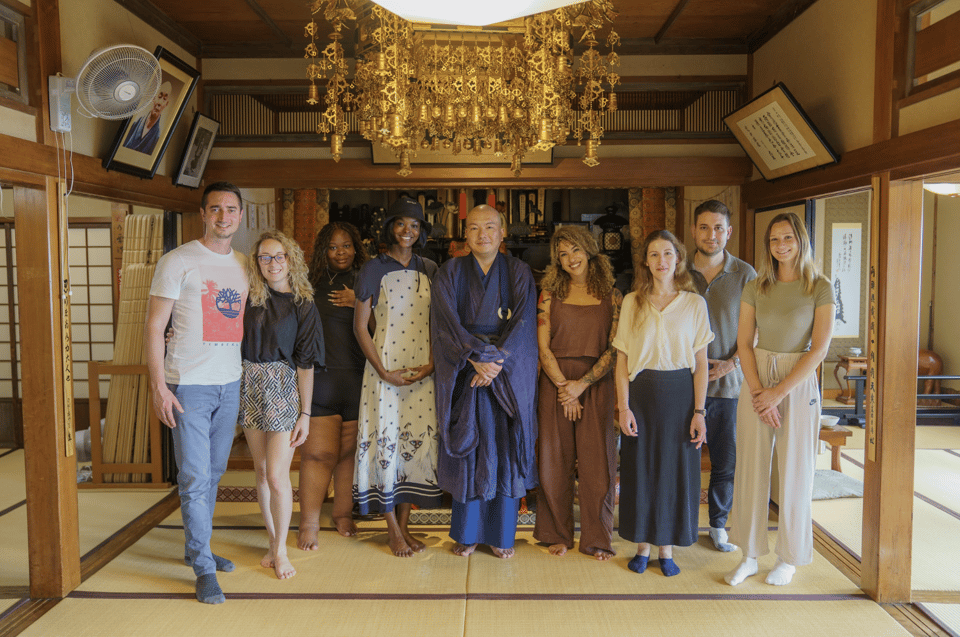
- Private temple access in Asakusa with a skip-the-line separate entrance
- Zazen instruction from the resident monk with guided practice time
- Short, structured sitting sessions so you can actually follow along
- Calligraphy tied to the ritual (often paired with chanting during the exercise)
- Matcha tea to slow the whole experience down at the end
- English guidance (often Tamami-san) to keep the meaning clear during Q&A
Asakusa’s quiet side: meeting at Family Mart near Tawaramachi
This starts in the Asakusa area, with a very specific meeting spot: in front of Family Mart, about a 2-minute walk from Tawaramachi Station on the Ginza line. There are two Family Mart locations nearby, so take a second to confirm you’re at the correct one before you wait.
What you’re really doing with that first step is buying yourself calm. Asakusa can be lively around the main streets, but this activity is designed to take you away from the crowd quickly. Once you’re with your guide, you’ll head to a temple that isn’t meant for general public browsing—this matters because it changes the energy in the room. People aren’t there to look around; they’re there to practice and listen.
Also plan to use WhatsApp. Your guide contacts you there so you can meet smoothly. If you don’t have it set up before you go, you may lose time figuring it out right when you want to be settled.
You can also read our reviews of more tours and experiences in Tokyo.

Zazen with a monk: what you’re actually learning
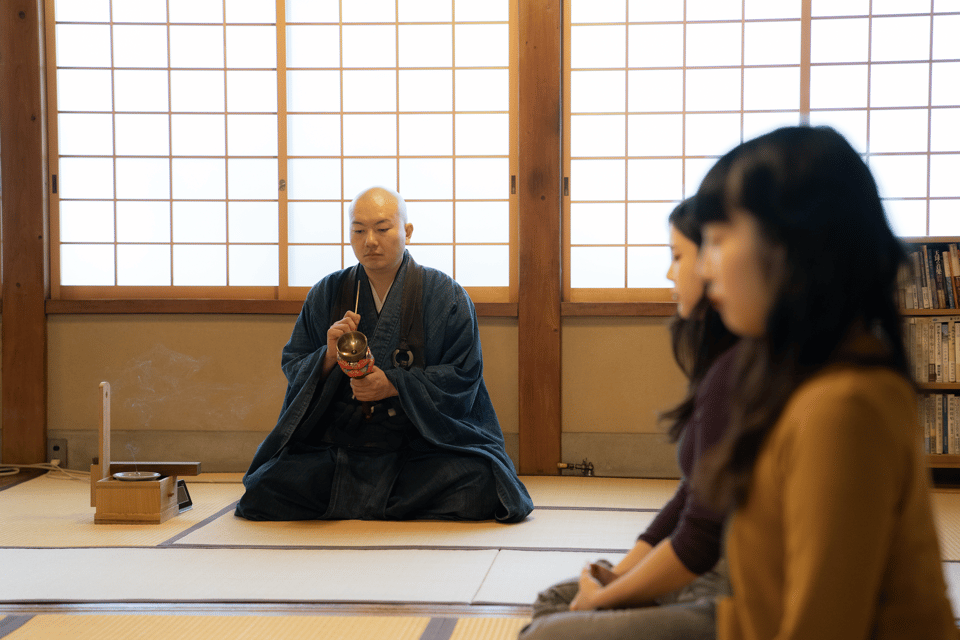
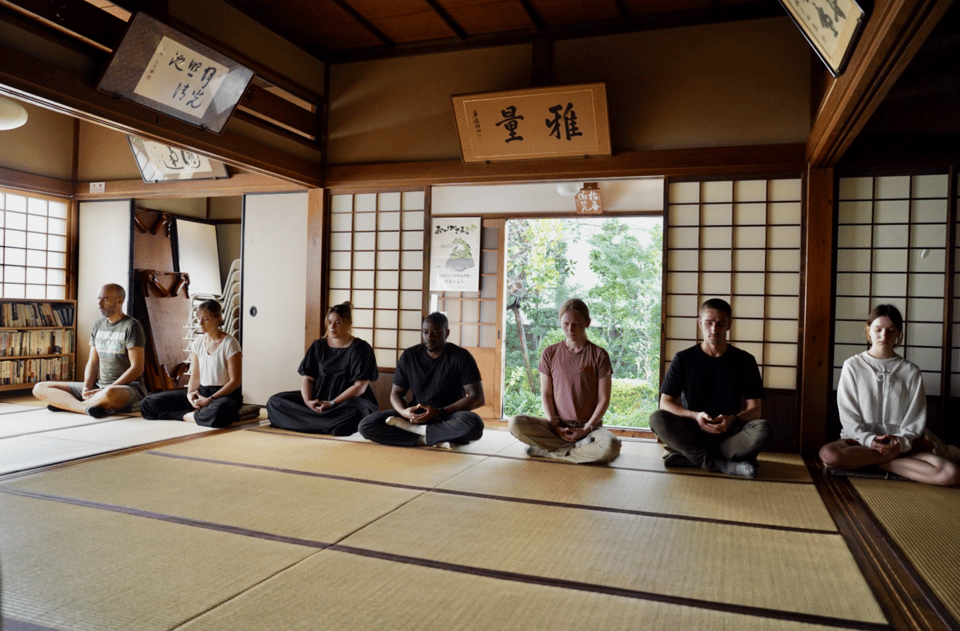
Zazen is the core of Zen Buddhism, and here you don’t just hear the story—you get a working sense of what it asks from you. The monk starts by explaining the principles and techniques of seated meditation, then you practice with guidance.
The biggest value for you is that the session is practical. You’re learning what to do with your body and attention while you’re sitting still. Many people expect meditation to be about forcing your mind to go blank. Zazen is more like training your awareness: you notice what shows up, and you return to the rhythm and posture you’re practicing.
Your guide helps bridge the language gap so you can follow what the monk is teaching. When the monk speaks and your guide translates, you’re not left guessing. That matters, especially if you’re new to Zen. You get enough context to understand why the breathing and posture matter, rather than treating it like a performance you’re trying to get right.
From the way sessions are run, you can also expect instruction to include reminders about how to hold your attention. Some participants mention the monk using a small “stick” cue during meditation, which sounds simple, but it reinforces the point: you’re following a method, not improvising in the dark.
Inside the temple: how the sitting, calligraphy, and chanting flow
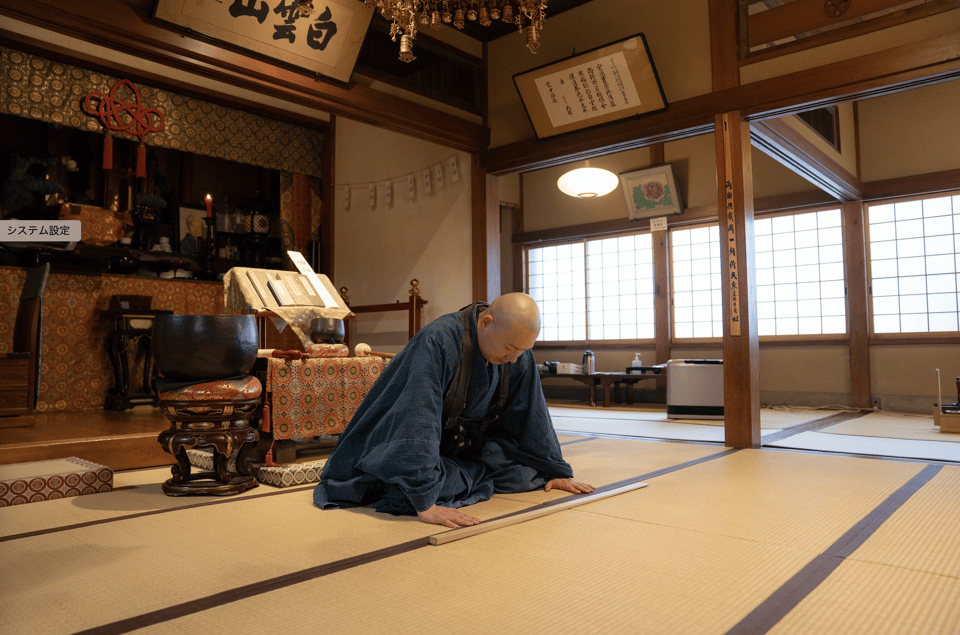
Once you reach the temple, the mood shifts quickly. You’re stepping into a space that’s meant for ongoing practice, not staged tourism. The rooms often carry that temple scent and quiet you can’t fake—calm becomes the default.
Your program is built in a clear sequence:
- A guided explanation from the monk
- Time for seated meditation (Zazen)
- A calligraphy activity tied to the practice
- Matcha tea
- Q&A and discussion with the monk
In several accounts, meditation is split into two short sitting periods—often described as two sessions around 10 minutes each. That structure is smart for first-timers. It gives you a chance to start, settle, and then re-center again without turning the whole experience into a test of endurance.
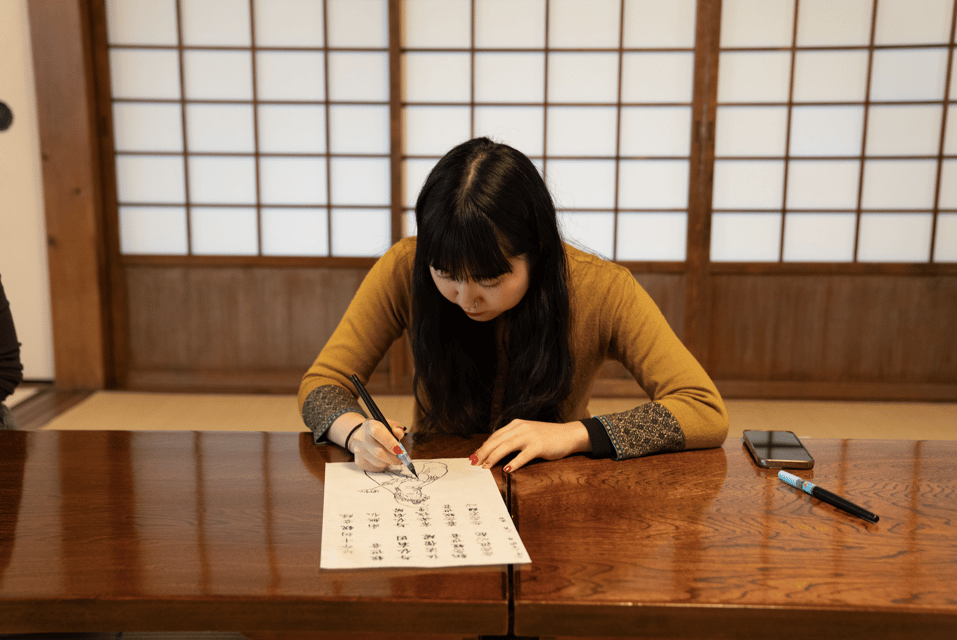
After meditation, calligraphy enters as another form of focus. You’re not just making art; you’re doing a ritual that trains the same attention you used during sitting. Some participants describe calligraphy of a sutra written as the monk chants, which creates a rhythm that’s part lesson, part meditation. Even if you don’t expect to like handwriting, you might find this is one of the most relaxing segments because your mind stops racing and starts concentrating on a single action.
Photography is allowed inside the temple and even with the monk. If you’re someone who hates taking photos in spiritual spaces, you can still keep it simple: snap a couple of respectful shots early, then put your phone away and treat the rest like a real practice time.
Matcha tea at the end: why it’s more than a snack
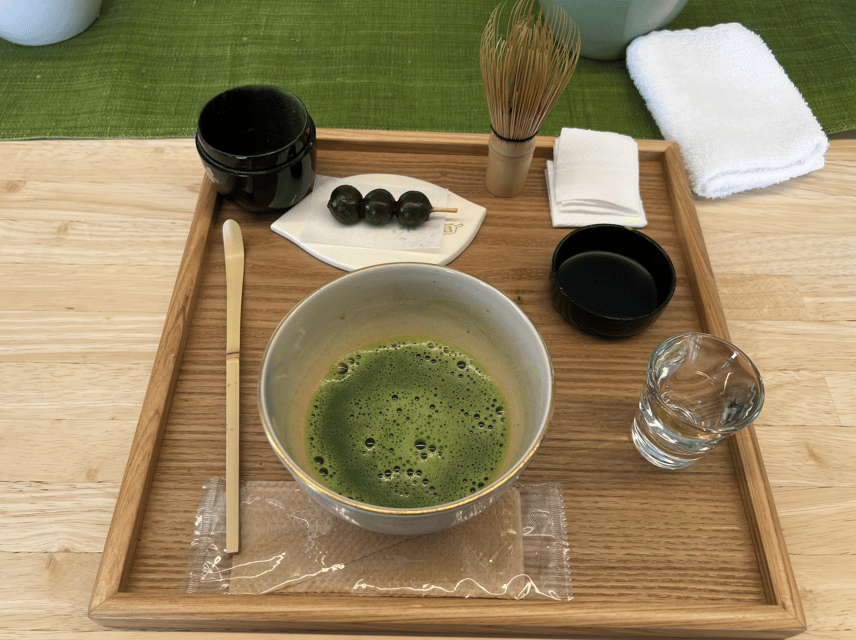
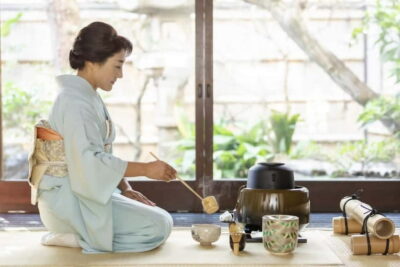
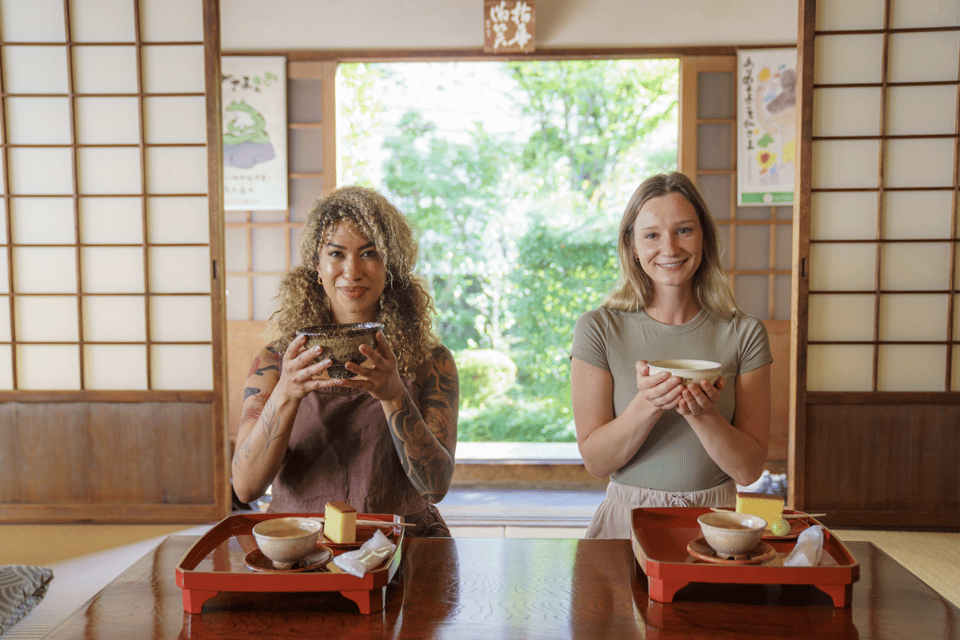
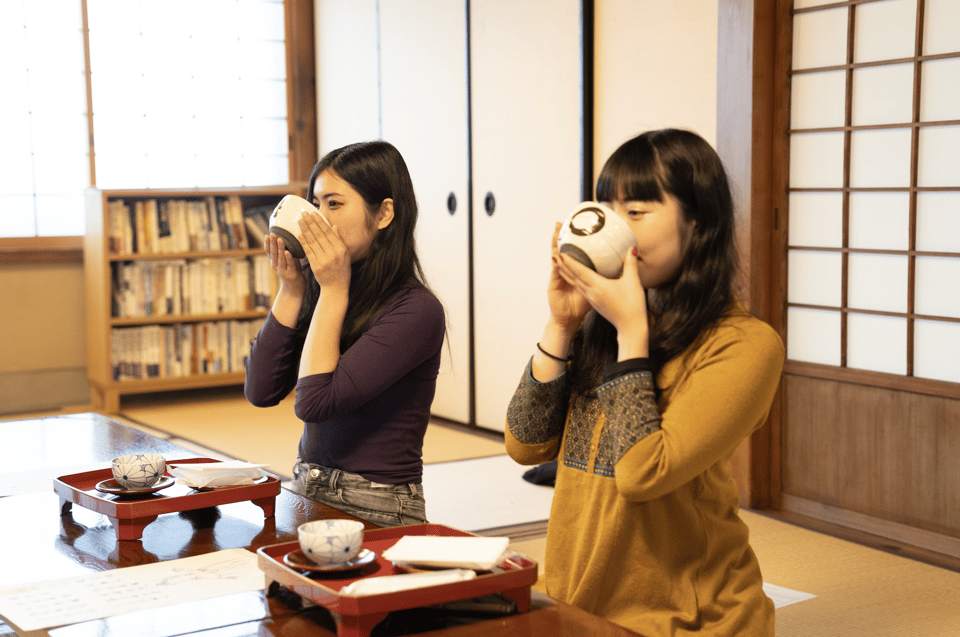
The matcha tea ceremony is included, and it isn’t just a sweet finish. In a Zen context, tea functions like a “closing bell.” After sitting still and listening quietly, you’re asked to return to your senses in a structured way.
What’s valuable for you is the contrast. Tokyo can be fast, loud, and bright. Tea is slow. You’re getting a chance to feel the warmth, smell, and taste—small sensory anchors that bring your attention back to the present. Many people report that this ending moment leaves them feeling centered rather than overstimulated.
This is also where the conversation changes. Instead of learning in one direction, you’re moving toward discussion. The monk and guide create space for you to ask questions and clarify what you just practiced, and tea gives everyone a natural pause point.
If you’re a matcha fan, you’ll like that you’re not just drinking it—you’re doing it as part of a ritual with meaning. If you’re not a matcha person, don’t skip it; the ceremony is still the point, not the beverage fandom.
Q&A with the monk: stress answers you can use the next day
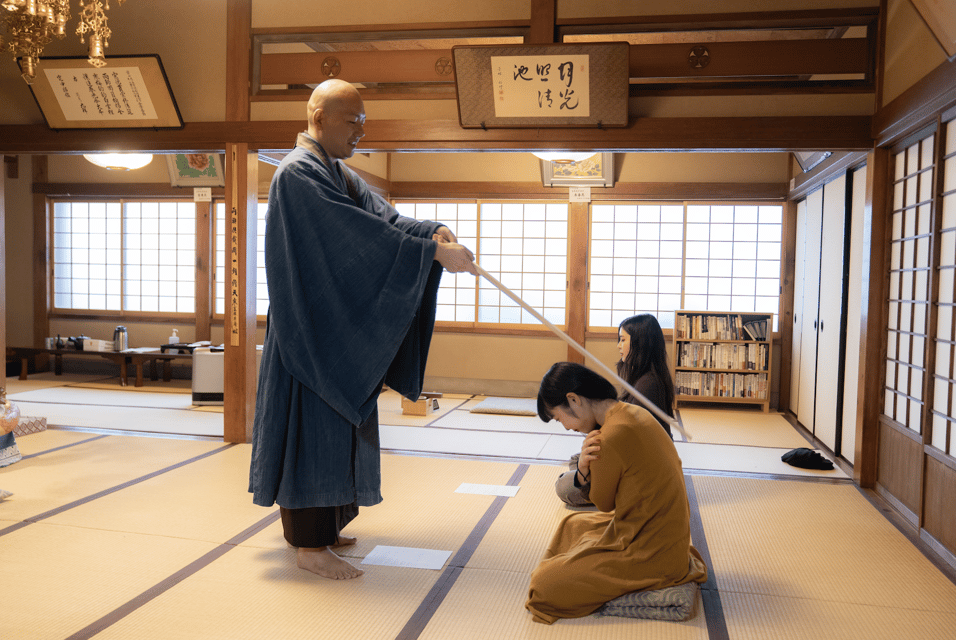
The session ends with a free talk and question time with the monk. This is one of the most helpful parts if you want something more than spiritual theater.
You’ll likely hear advice that’s surprisingly everyday. Based on what’s been shared in other similar sessions at this temple, the monk may speak about staying present in small tasks—simple actions like tying shoes or peeling vegetables done fully. You might also hear guidance about not comparing yourself to others, and what to do when anger shows up (often by looking at the root rather than reacting automatically).
Here’s why that lands: you just went through a training session. Your mind is already a little quieter, so the answers don’t bounce off. You can actually think during the Q&A.
And because your guide is there translating, you won’t get stuck at the edge of comprehension. You can ask normal questions too, not just “Is enlightenment hard?” type questions. People often ask about temple life, meditation practice, and how Zen fits into daily Japanese culture.




Price and value: is $55 worth it for 90 minutes?
At about $55 per person for 90 minutes, this is not a budget add-on, but it also isn’t trying to be one. You’re paying for several things at once:
- Access to a temple area that isn’t open for regular public wandering
- A guide who speaks English and translates the monk’s teaching
- Monk instruction on Zen principles and Zazen practice
- Entry into the temple
- Matcha tea and the ceremony portion
- A separate entrance that helps you avoid waiting in general lines
Transportation isn’t included, so you’ll still cover your own way into Asakusa. But once you arrive, the rest is handled. For many visitors, the value is the human element: short, structured practice with a monk plus translation that keeps you from missing the meaning.
If you’re comparing this to doing meditation on your own, the math is different. Learning Zazen from a monk inside a real temple space is hard to replicate casually. A guided session also helps you avoid common beginner traps—like trying too hard to “empty your mind” and getting frustrated.
How to fit it into your Tokyo day (and who will like it)
Think of this as a reset button. Put it early in your morning or as a break between major sightseeing blocks. It’s especially good when Tokyo is stacking up sensory input: crowds, stations, food smells, and constant walking. A focused session like this can make the rest of the day feel less chaotic.
It also suits:
- Beginners who want clear instruction rather than guesswork
- People who are curious about Zen but not ready for a book-heavy introduction
- Anyone who likes hands-on cultural moments (meditation plus calligraphy plus tea)
- Couples or friends who want a shared, calm experience
You might not love it if you want a long meditation-only experience. The program includes multiple activities, and the main meditation time is shorter than a retreat style session. In that case, treat it like a first taste and then build your own longer practice later.
Should you book this Tokyo Zen meditation with a monk?
Yes, if you want an authentic, guided taste of Zazen in a real temple setting, not a generic “mindfulness” workshop. The combination of monk-led instruction, English translation support from guides such as Tamami-san, calligraphy, and a matcha tea ceremony makes this more complete than most short cultural experiences.
Book it sooner rather than later if your trip dates are tight. Also, do yourself a favor: arrive a few minutes early at the correct Family Mart, and set up WhatsApp before the tour. That way, you walk into the temple already calm—which is exactly what the practice asks for.
FAQ
FAQ
What’s the duration of the Zen meditation experience?
The experience runs for 90 minutes.
How much does this tour cost?
It costs $55 per person.
Where do I meet the guide in Asakusa?
Meet in front of Family Mart in the Asakusa area, about a 2-minute walk from Tawaramachi Station (Ginza line). There are two Family Mart locations in the area, so make sure you’re at the correct one.
Is the tour conducted in English?
Yes, the live guide provides English translation.
Does the guide contact me before the tour?
Yes. The guide contacts you through WhatsApp, so you should download WhatsApp before the tour.
What’s included in the price?
Included are the Zen meditation experience, a guide, entry to the temple, monk explanation, and matcha tea.
Is transportation included?
No. Transportation is not included.
Can I take photos during the experience?
Yes. You can capture photographs with the monk and within the temple.
Can I cancel and get a refund?
Yes. Free cancellation is available up to 24 hours in advance for a full refund.