REVIEW · KANDY
Kandy Village Cooking Class
Book on Viator →Operated by Kandy Village Cooking Class · Bookable on Viator
Market-to-meal cooking in Kandy’s village home. I love the Kandy Municipal Central Market visit, where you pick five vegetables and choose either chicken or fish, and I also love how Shyama teaches the spice logic as you cook. One thing to flag: confirm the return plan, because transport back to Kandy isn’t always spelled out clearly.
This is a 3-hour class with pickup offered and a small group size (up to 15). At $25 per person, you’re not just watching food go by—you’re buying ingredients, cooking a full set of Sri Lankan dishes, and eating what you make.
It’s a great pick whether you’re a couple, a solo foodie, or a family with mixed ages. The vibe is friendly and very family-run, which is exactly what makes this kind of cooking class feel real instead of staged.
In This Review
- Key highlights you’ll remember
- Kandy Municipal Central Market: your ingredient lesson before the cooking
- The route through Kandy: lake views, a dance stop, and the Sacred Tooth Relic
- Village kitchen time: clay house charm, outdoor cooking, and Shyama’s instruction
- What dishes you’ll make, and how the meal comes together
- Tasting like you mean it: eating the meal you cooked
- Price and value in Kandy: why $25 can feel like a steal
- Logistics that matter: pickup, group size, and dietary reality
- Who should book this cooking class (and who might want a different plan)
- Should you book the Kandy Village Cooking Class?
- FAQ
- How much does the Kandy Village Cooking Class cost?
- How long does the cooking class last?
- Where does the experience start and end?
- Is pickup offered?
- What do you do at the market, and can you choose what you cook?
- Is there gluten-free help for celiac disease?
- Is free cancellation available?
Key highlights you’ll remember
- Market shopping with a purpose: select five vegetables plus chicken or fish.
- Cooking taught step-by-step: Shyama’s instruction focuses on spices and technique, not guesswork.
- Real village kitchen setting: you cook in the home environment, not a sterile classroom.
- A full meal at the end: you eat a traditional spread you helped create.
- Often includes sweet finish: some sessions end with caramel coconut pancakes.
Kandy Municipal Central Market: your ingredient lesson before the cooking
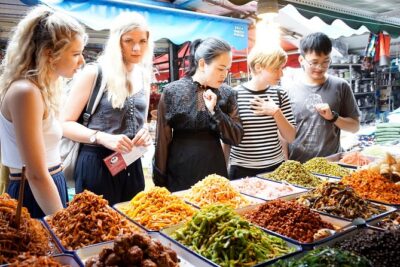
The experience starts in Kandy’s central market area. This is not just a quick look-around. You get guidance on what matters for Sri Lankan cooking and you actively choose what will go into your dishes.
Here’s what you can expect at the stalls:
You’ll select five vegetables from what’s available, and you’ll also choose chicken or fish for your protein dishes. The guide explains spices and ingredients while you’re there, so you’re learning what you’re actually buying—not just collecting items for later.
What I like about this format is simple: it forces you to pay attention. You start thinking like a cook. When you pick vegetables, you start noticing how they’ll behave in curry—tender vs. firm, watery vs. starchy, quick-cooking vs. slow-cooking. And when you choose chicken or fish, you’re already anticipating the flavor direction before you ever step into the kitchen.
Practical tip: wear comfortable shoes. Market floors can be uneven, and you’ll likely do a fair bit of walking while ingredients are explained.
You can also read our reviews of more tours and experiences in Kandy.


The route through Kandy: lake views, a dance stop, and the Sacred Tooth Relic
Even though the main event is the cooking, the day can include a short string of Kandy highlights. The plan may take you past:
- Kandy City Center
- Kandy Lake and a viewpoint stop
- Kandy Lake Club for a cultural dance show
- Kandy District areas
- Temple of the Sacred Tooth Relic
The key word here is short. This is not a full sightseeing day with museum-level time. It’s more like: get your bearings, see a few major landmarks, then head to where the real action is—the village kitchen.
If you care about temples and cultural performances, this added layer is a bonus. If you’re hoping for long, calm time at each site, you might find the schedule a bit tight. In that case, decide what you want more: deeper landmark time or more hands-on cooking.
Village kitchen time: clay house charm, outdoor cooking, and Shyama’s instruction
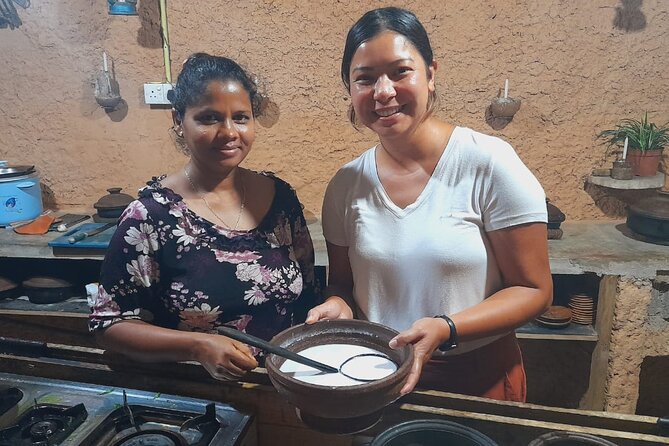
After the market and the route, you head to the village home kitchen. This is where the class becomes more than a meal kit with a chef.
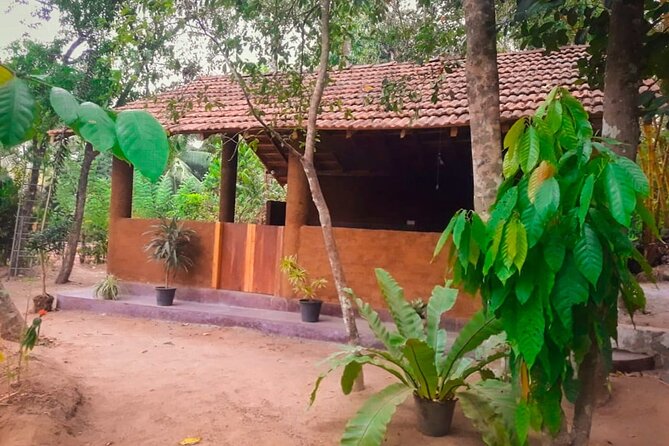
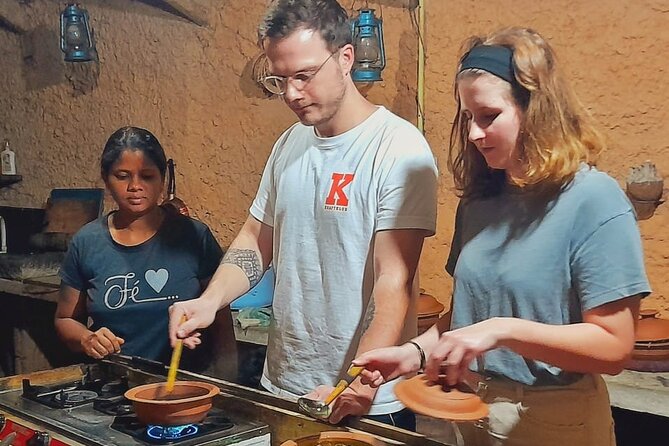
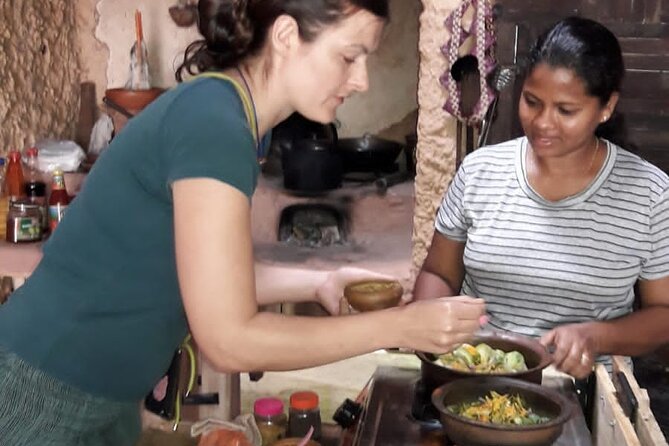
You’ll be welcomed into the family setting, and many sessions are described as an outdoor or semi-outdoor kitchen area near the house—often with that traditional clay-house feel. The best part is that the cooking isn’t treated like a performance. You’re participating.
From the way people describe the teaching, the experience focuses on:
- learning spices and herbs and why they’re used
- getting hands-on with prepping and cooking
- understanding the Sri Lankan approach to curries and sides
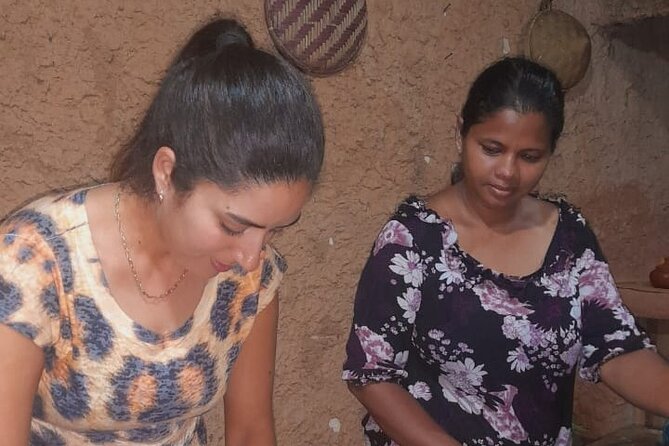
Shyama is specifically named in multiple accounts as the teacher who makes the steps clear and the process friendly. People also mention her husband as part of the teaching and hosting.
You might also get practical lessons that go beyond “stir and taste,” such as making coconut milk from scratch (one review specifically calls this out). That matters because coconut milk isn’t just an ingredient—it’s a texture and timing issue in many Sri Lankan dishes.
Cooking output: you’re not likely to come away with just one curry. In different sessions, people mention learning to cook anywhere from about eight to eleven dishes, including curries and sides. Examples that show up in accounts include sambal and aubergine curry, along with chicken curry—plus sweet finishing items like caramel coconut pancakes.
What dishes you’ll make, and how the meal comes together
The promise is a complete traditional meal, and the structure is built around that. You cook multiple dishes, then you eat them as a group meal.
A few patterns show up in what people report:
- You’ll cook several curry-style dishes (not just one).
- You’ll likely make sides such as sambal-style condiments.
- Rice and curry are often described as a highlight.
- There’s usually a sweet finish—people specifically mention caramel coconut pancakes.
What makes this satisfying is variety. Sri Lankan cooking leans on contrast: spicy vs. cooling, rich coconut vs. sharper flavors, soft and tender textures vs. firmer vegetables. When you’re cooking it all yourself, those contrasts feel obvious by the end.
Also, you’ll usually leave with practical take-home value. Several accounts mention that recipes are provided so you can recreate the dishes later at home.
Tasting like you mean it: eating the meal you cooked
You don’t just sample a bite and move on. The class ends with a proper sit-down tasting of what you made. People talk about leaving full—stuffed, in some cases—because you’re eating the whole spread.
This is a big deal for value. A lot of cooking classes are light on actual food. Here, the meal is the payoff.
If you like tasting the exact dishes you just worked on, you’ll enjoy the flow:
cook → plate up → eat together → finish sweet.

Price and value in Kandy: why $25 can feel like a steal
At $25 per person, this class sits in the budget-friendly zone for what you get: market shopping, cooking instruction, a full meal, and a family-run setting.
Here’s what makes the value feel real:
- Market ingredient selection is included (you’re not paying extra to buy basics later).
- You cook multiple dishes, not just a single curry.
- You eat what you make, so the learning turns into a meal you can actually feel.
- The teaching is small-group sized (up to 15), so it doesn’t turn into a crowd where you just watch.
In other words, you’re paying for a hands-on food lesson with an end result. Not just an expensive snack.
Logistics that matter: pickup, group size, and dietary reality
Pickup is offered from a designated point for the market part, and the experience starts at the Kandy Municipal Central Market address listed as the meeting point. The activity ends back at the meeting point.
One possible drawback to plan around: return transport timing and clarity. A couple of accounts mention that it wasn’t clear they had to arrange their own way back, or that you might need to pay for the return. So before you go, ask a simple question when you confirm:
Will you return us to the Kandy Municipal Central Market, and is any return ride included in the price?
Dietary notes: if you have celiac disease or strict gluten needs, read carefully and ask ahead. One account says there weren’t gluten-free options, but the kitchen removed some ingredients (including items like soy sauce, mustard, papadam, and pancakes). That’s helpful—but it also signals that this may be more of an adaptation than a guaranteed gluten-free menu.
What to bring:
- comfortable shoes for market and walking
- a phone/camera for ingredient stalls and cooking moments (some accounts mention photo moments with sellers)
Who should book this cooking class (and who might want a different plan)
Book it if:
- you want a real Sri Lankan cooking session, not a demo
- you like learning spices and technique while you cook
- you enjoy eating what you cook
- you’re traveling with mixed ages and want a shared activity
Skip or adjust expectations if:
- you want long, slow time at each Kandy landmark (the day is time-structured)
- you need a fully guaranteed gluten-free setup (ask hard questions first)
This works particularly well for people who want Kandy beyond the temple and the lake photos. The class gives you something practical: flavor skills you can repeat.
Should you book the Kandy Village Cooking Class?
Yes—if your goal is to come home with edible memories and skills, this is one of the best ways to spend a few hours in Kandy. The market-to-kitchen flow makes the cooking lesson feel connected, and Shyama’s teaching style comes through in the way people describe the class: friendly, step-by-step, and focused on spices.
Before you book, do two things:
1) Confirm the return plan so you’re not scrambling after the meal.
2) If you have dietary restrictions, ask exactly how they handle them for your specific needs.
If that’s squared away, you’ll likely walk out happy and full, with recipes you can actually use.
FAQ
How much does the Kandy Village Cooking Class cost?
The price is $25.00 per person.
How long does the cooking class last?
The duration is approximately 3 hours.
Where does the experience start and end?
It starts at Kandy Municipal Central Market (144 Central Market, Kandy 20000, Sri Lanka). The activity ends back at the meeting point.
Is pickup offered?
Yes, pickup is offered from a designated point for the market visit.
What do you do at the market, and can you choose what you cook?
You visit a local market where you select five vegetables. You can also choose either chicken or fish. Spices and ingredients are explained during the market stop.
Is there gluten-free help for celiac disease?
There isn’t a gluten-free menu described. One account specifically notes that for celiac disease, some ingredients were removed (such as soy sauce, mustard, papadam, and pancakes), but gluten-free options weren’t provided as a dedicated menu.
Is free cancellation available?
Yes. You can cancel for a full refund if you cancel at least 24 hours in advance of the experience start time. If you cancel less than 24 hours before, the amount paid is not refunded.