REVIEW · UBUD
PRIVATE Authentic Balinese Cooking Class in Ubud at Putu’s Home
Book on Viator →Operated by Traveling Spoon · Bookable on Viator
Cook dinner like a Balinese auntie. This private, hands-on class with Putu in her ancestral village hits the sweet spot between farm-fresh ingredients and real family culture. You’ll spend time learning why Balinese food tastes the way it does, not just how to copy it, but the setup can be fairly simple and open-air, so expect it to feel rustic in rain or strong heat.
The class runs about 3 hours door-to-door from central Ubud, and you can choose lunch or dinner. You’ll cook roughly five dishes together, then eat them as a shared feast, with 1–2 small glasses of local alcohol and non-alcoholic drinks included.
In This Review
- Key Highlights at a Glance
- Entering Putu’s Ubud Home: More Than a Cooking Class
- What makes it feel local
- The Cooking Menu: Five Balinese Dishes You’ll Actually Make
- How the lessons usually work
- Their Farm, Their Food: Why the Ingredients Taste Different
- What to look for while you cook
- Temple Spaces and Balinese Life: The Culture Part That Actually Feels Useful
- Humor and real conversation
- The Hands-On Kitchen Details You Should Know
- Spice control is part of the skill
- Lunch vs Dinner: Pick the Meal That Matches Your Day
- Transportation and Timing: Door-to-Door from Ubud
- Communication tip that saves headaches
- Price and Value: Is $75 Worth It?
- Who gets the best value
- Dietary Needs: Vegetarian/Vegan Options Exist
- Who Should Book This Ubud Cooking Class?
- A few you might skip it for
- Practical Tips So You Enjoy It From Minute One
- Should You Book Putu’s Private Balinese Cooking Class in Ubud?
- FAQ
- How long does the cooking class take?
- Is pickup and drop-off included?
- What’s included in the price?
- What dishes will I cook?
- Can this class accommodate vegetarian or vegan diets?
- Is it a private experience or a group class?
- What is the cancellation policy?
Key Highlights at a Glance
- A private, multigenerational home experience with Putu, her husband, grandparents, and kids
- Five Balinese dishes taught step by step, then eaten right away
- Farm-to-plate produce from their gardens and rice farming
- Spice lessons with practical adjustments, including how to balance heat
- Temple and daily-life context, including traditional herbal and medicinal ideas
- Take-home recipes after the meal
Entering Putu’s Ubud Home: More Than a Cooking Class
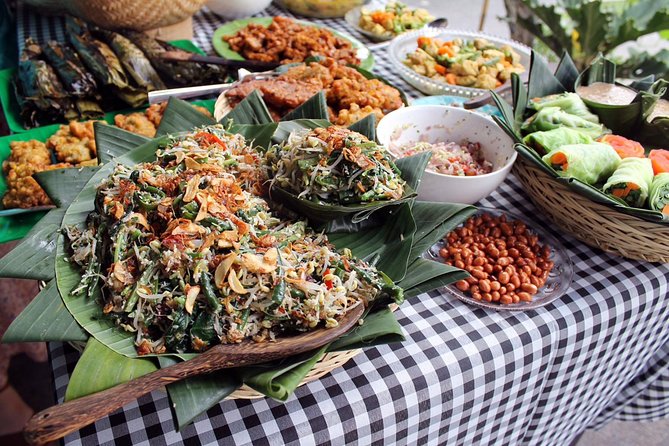
This isn’t a classroom. You’re going into a real traditional compound home, where daily life is wrapped around cooking, farming, and worship. That matters, because Balinese cooking is as much about relationships and ritual as it is about flavor.
I love the warmth of the welcome and the way Putu makes space for questions while still keeping the pace moving. One of the best parts is how the story of the food comes attached to the place: you’re not just learning recipes, you’re learning why ingredients are chosen and how the family thinks about balance in a meal.
You can also read our reviews of more tours and experiences in Ubud.



What makes it feel local
You’ll usually start with an introduction to the home layout and the family’s temple spaces. From there, you move into garden produce and ingredients that are part of their everyday rhythm. It turns “Ubud cooking class” into something that feels like a visit to a real household, not a staged experience.
The Cooking Menu: Five Balinese Dishes You’ll Actually Make
You’re set up to cook about five dishes, and the exact menu can change with the season. Still, you should expect traditional items in the general Balinese lane—things like grilled fish, banana leaf parcels, and curry-style dishes.
What I like about a five-dish format is that you get variety without losing momentum. You won’t just do one technique. You’ll chop, grind, grill/steam, and learn how flavors get layered across a full meal.
How the lessons usually work
Putu teaches while you work. She’ll guide you through the order of tasks, when to taste, and how to adjust spice levels to suit your palate. If you want mild, you can ask for it. If you want it hotter, you can do that too.
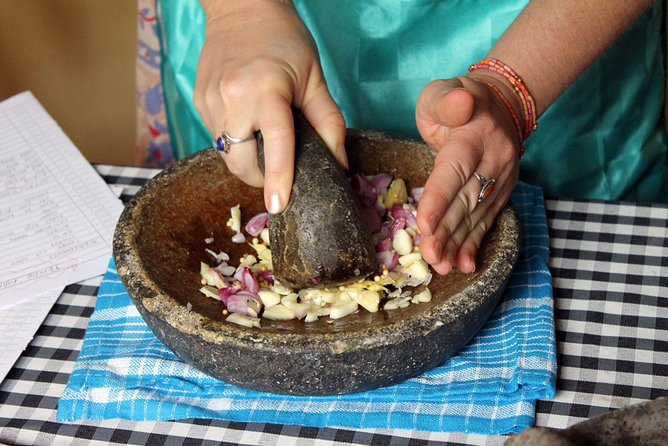
Also, don’t be surprised if you use traditional tools and methods. One common thread in the experience is hands-on prep with older-school techniques—like grinding ingredients by hand and cooking rice with traditional steaming methods. Even if you’re not a “wood-fire” person, the point is to understand what each step changes in the final flavor.
Their Farm, Their Food: Why the Ingredients Taste Different
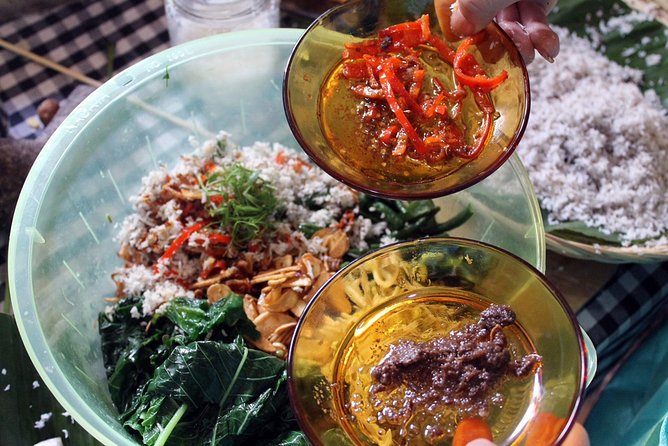
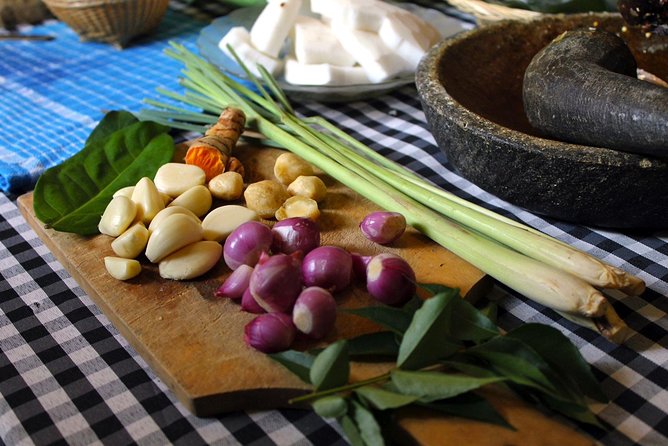
This class leans hard on ingredients grown by Putu’s family—rice from the grandparents’ farming, plus fruits and vegetables from gardens around the home. That farm link isn’t just a nice story. It changes what you notice when you taste things side by side.
You’ll likely see produce before it becomes dinner, and you’ll learn how spices are used in context. Putu talks about the spices she relies on and how she combines them, and she’ll connect ingredients to everyday healing ideas from traditional Balinese medicine.






What to look for while you cook
Pay attention to scent and texture, not just salt and heat. Balinese spice blends often depend on balancing fragrant aromatics with the right level of chili, and the lessons help you feel the difference as you build each dish.
And yes, you’ll eat what you make. That’s one of the reasons this works better than many short cooking demos—you get instant feedback on your own work.
Temple Spaces and Balinese Life: The Culture Part That Actually Feels Useful
Food here is tied to daily religion. You’ll get an explanation of the typical layout of a Balinese household and the meaning behind parts of the home temple area. You also hear about the traditional medicines and ingredients Putu’s family makes or uses.
This isn’t a lecture that stops at trivia. It gives you a framework for what you’re tasting. When you understand the role of offerings, herbs, and routine practices, the meal feels more like a cultural system instead of just another set of dishes.
Humor and real conversation
A lot of the warmth comes from Putu’s personality and the family’s relaxed way of hosting. You’ll hear stories that make the setting feel human—temples, kitchen routines, and family roles—plus a sense of humor that keeps it from feeling formal.
The Hands-On Kitchen Details You Should Know
The cooking area can be simple and may be outdoors. That sounds minor until you show up—then you realize why it matters. You’ll want to be comfortable with a home-style setup: some steps are done at work tables, with practical tools and a focus on function over polish.
Based on how the experience is described, you may work with wood blocks for chopping and traditional methods for key elements like rice and spice grinding. Lighting can change if you go at night, so it’s worth wearing footwear you’re comfortable moving around in.
Spice control is part of the skill
One of the most practical things Putu teaches is how to manage chili and seasoning. If you’ve ever had Balinese dishes and wondered how they get that flavor without being uniformly punishing, this is where you learn the knobs you can turn—when to add heat, how to balance it, and how to taste while you go.
Lunch vs Dinner: Pick the Meal That Matches Your Day
You can choose a lunch class or a dinner class, and that choice changes the vibe. Lunch tends to feel more airy and schedule-friendly if you’re also doing Ubud sightseeing. Dinner tends to feel like a full evening event, especially if the home kitchen setup is lit for night cooking.
The entire experience runs about 3 hours total, though the cooking portion is about 1.5 hours, with time for introductions and the shared meal. If you’re planning a tight itinerary, aim for a buffer before and after, since you’ll be picked up and dropped off and the drive takes some time outside the Ubud center.
Transportation and Timing: Door-to-Door from Ubud
The value here is that you don’t have to coordinate a taxi on your own. You get round-trip private transport from your Ubud hotel, which keeps it stress-free and time-efficient.
One practical consideration: the home is in an ancestral village setting outside central Ubud, and for some people it’s about 40 minutes from the center. If you’ve built your day around a reservation in Ubud proper, double-check your timing so you’re not rushing back at the end.
Communication tip that saves headaches
Bring your WhatsApp if you have it. Many hosts use it for quick coordination, and you’ll likely appreciate the fast communication if anything changes with pickup timing.
Price and Value: Is $75 Worth It?
At $75 per person, this lands in the midrange for Bali cooking experiences—but the pricing makes sense for what you’re getting.
You’re paying for a private class inside a family home, not a shared bus-and-demo format. You also get all taxes and fees included, local alcohol (1–2 glasses), non-alcoholic drinks, and round-trip transport from Ubud.
Then there’s the “hidden” value: ingredient access and cultural context. Cooking with produce grown by the family and learning traditional herbal ideas is hard to replicate elsewhere. The finished meal is included too, and you should expect leftovers in some cases, since the meal quantity is often described as generous.
Who gets the best value
If you enjoy cooking, you’ll feel like you’re getting real skill practice. If you don’t cook much, you’ll still get a satisfying experience because Putu leads you through every step, and you finish with a meal that actually reflects your effort.
If you’re booking from outside Ubud, there may be an extra transport charge, so factor that in when you decide what feels fair.
Dietary Needs: Vegetarian/Vegan Options Exist
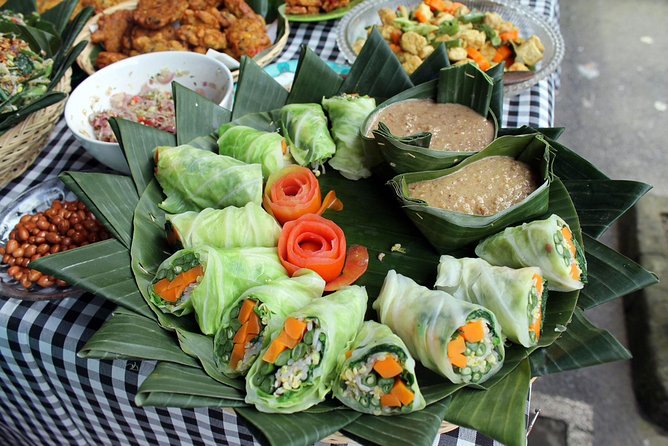
If you’re vegetarian or vegan, you can request those options. You’ll want to share dietary restrictions, allergies, or cooking preferences when you book so Putu can adapt the menu.
This is important because the menu can vary by season. The best results happen when the host knows your needs upfront, instead of trying to troubleshoot at the last minute.
Who Should Book This Ubud Cooking Class?
This experience fits best if you want more than a tasting. Book it if you like food and also like people, places, and a bit of cultural context that makes the meal make sense.
It can also work well across ages because it’s private and hands-on. The family environment tends to keep things flexible for different comfort levels in the kitchen, and Putu involves people so you’re not just watching.
A few you might skip it for
If you want a perfectly modern cooking studio with strict timing, this may feel too home-style. If you hate any outdoor or rustic elements, check the setup expectations ahead of time with your provider.
Practical Tips So You Enjoy It From Minute One
- Decide your spice comfort level early. Tell Putu what you want so you start the meal balanced for you.
- Wear shoes you can walk in easily. You may move around garden and cooking areas.
- Plan your day with a buffer. The transport and meal add up to about 3 hours total.
- Ask about dietary needs when booking. Vegetarian and vegan options are available when requested.
- Bring questions. This experience includes cultural explanations, including temple layout and traditional ingredients.
Should You Book Putu’s Private Balinese Cooking Class in Ubud?
I’d book it if you want the best kind of souvenir: food you can recreate, plus a story you can tell because you lived part of the process. The combination of farm-fresh ingredients, hands-on instruction, and the family setting makes it more memorable than many cooking classes that stay “in the kitchen only.”
I’d think twice if you need a polished, fully indoor venue or if you’re strict about being back in central Ubud immediately. The village location is part of the appeal, so plan accordingly.
If you’re the type who enjoys learning by doing—chopping, tasting, adjusting, then eating what you made—this is a strong pick for Ubud.
FAQ
How long does the cooking class take?
The experience lasts about 3 hours total, with the cooking lesson itself taking about 1.5 hours and then time for the meal.
Is pickup and drop-off included?
Yes, round-trip private transport is included from your Ubud hotel. If you’re staying outside Ubud, there’s an extra transportation charge.
What’s included in the price?
The price includes the private cooking lesson, a home-cooked meal with Putu, local alcohol (1–2 glasses), non-alcoholic beverages, taxes/fees, and gratuities.
What dishes will I cook?
You’ll prepare about five authentic Balinese dishes. The menu can vary by season, but typical dishes include grilled fish, banana leaf parcels, and curry-style food.
Can this class accommodate vegetarian or vegan diets?
Yes. Vegetarian and vegan options are available, and you should advise your needs at the time of booking.
Is it a private experience or a group class?
It’s private and personalized. Only your group participates.
What is the cancellation policy?
Free cancellation is available up to 24 hours in advance for a full refund. If you cancel less than 24 hours before the start time, the amount paid is not refunded.