REVIEW · KAMPONG PHLUK
Siem Reap: Kampong Phluk Floating Village Tour with Boat
Book on GetYourGuide →Operated by Siem Reap Experiences · Bookable on GetYourGuide
A floating village tour that feels real, not staged. I like the houses on stilts and the way the community adjusts to the seasons, plus you get real boat time on Tonle Sap and a sunset dinner viewpoint. One drawback to plan around: it is not for everyone, since it isn’t suitable for wheelchair users and involves time outdoors and on boats.
You’ll leave Siem Reap in the early afternoon, ride to Kampong Phluk, walk through mangroves and stilted homes, then head out onto the lake. Along the way, the tour builds in small comforts like chilled water and restroom stops, so the day stays easy even when the schedule is tight.
In This Review
- Key Things I’d Prioritize on This Kampong Phluk Tour
- Floating Village on Tonle Sap: What Kampong Phluk Really Shows
- The Ride From Siem Reap to Kampong Phluk: How the Day Starts
- Walking the Stilt Houses: What You’re Seeing and Why It Matters
- The Hindu and Buddhist Church With Mural Walls
- Wet Season vs Dry Season: What Changes in Your Actual Experience
- Tonle Sap Boat Time: The Part That Makes the Tour Feel Like a Trip
- The Floating Restaurant and Sunset View: Your Payoff
- Optional Mangrove Canoe ($5): Should You Add It?
- Price and Value: Is $19 a Fair Deal?
- Who Should Book This, and Who Might Want to Skip It
- Guides, Group Size, and the Comfort Factor
- Should You Book This Kampong Phluk Floating Village Tour?
- FAQ
- What time does the Kampong Phluk tour depart from Siem Reap?
- How long is the tour, and when do you get back to your accommodation?
- Is hotel pickup and drop-off included?
- What’s included in the $19 price?
- Is the floating forest canoe included?
- Are food and drinks included?
- Do you get any restroom stops during the tour?
- Is the tour suitable for wheelchair users or very young or older visitors?
- What is the cancellation and reserve-pay-later policy?
Key Things I’d Prioritize on This Kampong Phluk Tour
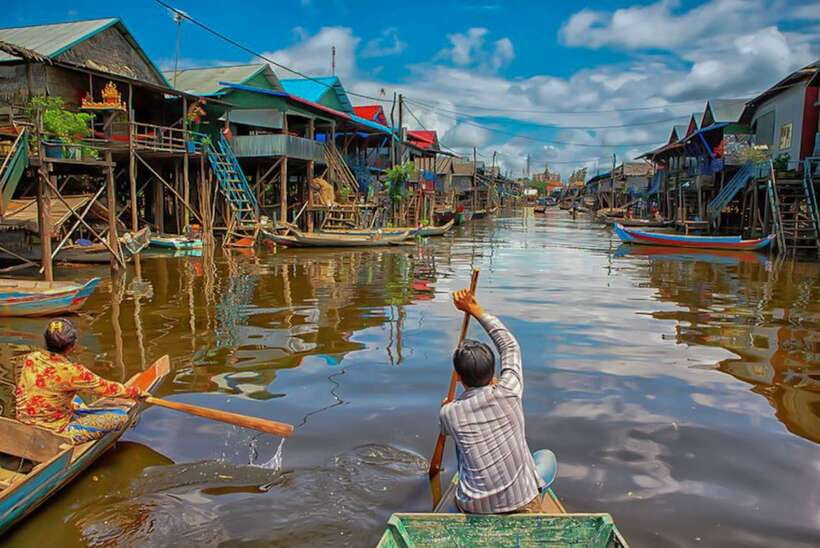
- Stilt houses up to 9 meters high: you’ll see what adaptation looks like, not just a photo op.
- A shared Hindu and Buddhist church: colorful murals explain how religions coexist in Cambodia.
- Wet-season vs dry-season differences: the village experience changes with water level.
- Tonle Sap boat ride to a floating restaurant: rooftop river boats and lake air make it feel special.
- Guides who bring local context: expect clear English and stories (often from locals like Tom or Chout).
Floating Village on Tonle Sap: What Kampong Phluk Really Shows
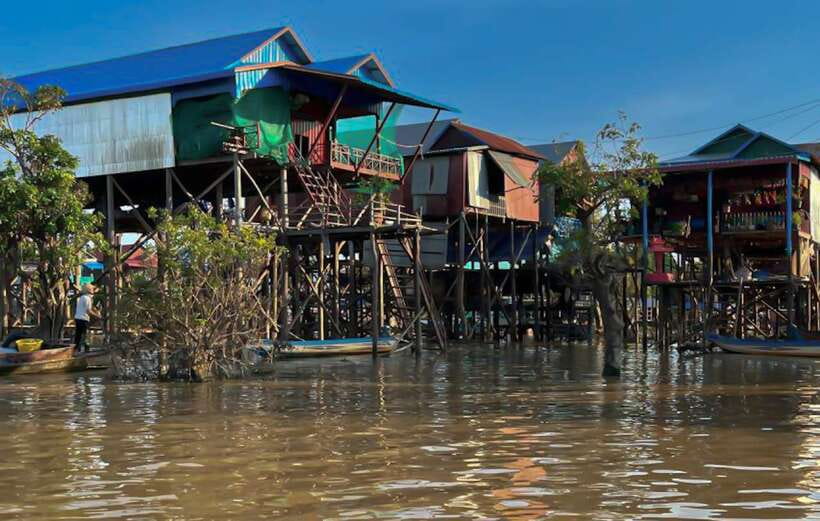
Kampong Phluk is one of those places where the setting does the explaining. The village sits among mangrove trees and lives with the water level instead of fighting it. You get an afternoon built around motion: minibus out of Siem Reap, walking and viewing once you arrive, then a boat transfer onto Tonle Sap for that famous lake sunset feel.
I especially like two parts of the experience. First, stilted homes give you a visual answer to how people handle floods, tides, and daily work. Second, the tour doesn’t just point at buildings; it talks about how families—mostly fishermen and farmers—stay stable and busy, including school and community life.
The main consideration is physical and practical. You’re not doing a smooth “walk-and-shop” outing. You’ll be on boats (life jackets are on board) and moving around outdoors, and the tour isn’t set up for wheelchair users or very young babies, and it’s not recommended for people over 70.
You can also read our reviews of more tours and experiences in Kampong Phluk.
The Ride From Siem Reap to Kampong Phluk: How the Day Starts
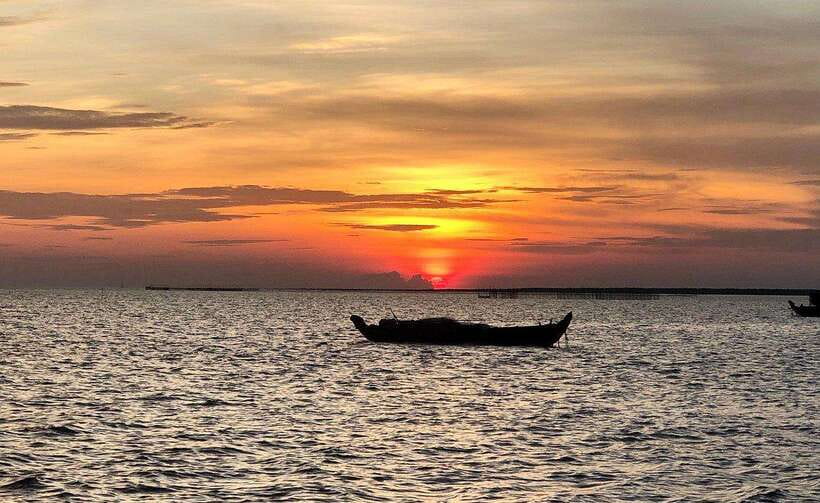
This tour runs on a late-afternoon schedule. Pickup happens about 30 minutes before the 2:30pm departure time, and the total day is 5 to 6 hours, ending by about 7:30pm with drop-off back at your accommodation.
The drive itself is part of the pacing. You’ll head out from Siem Reap Province to Kampong Phluk, which is described as about a 45-minute drive. Along the route, you may pass through smaller town stops, including markets around Roluos, which helps you ease into the countryside vibe rather than jumping straight into the lake.
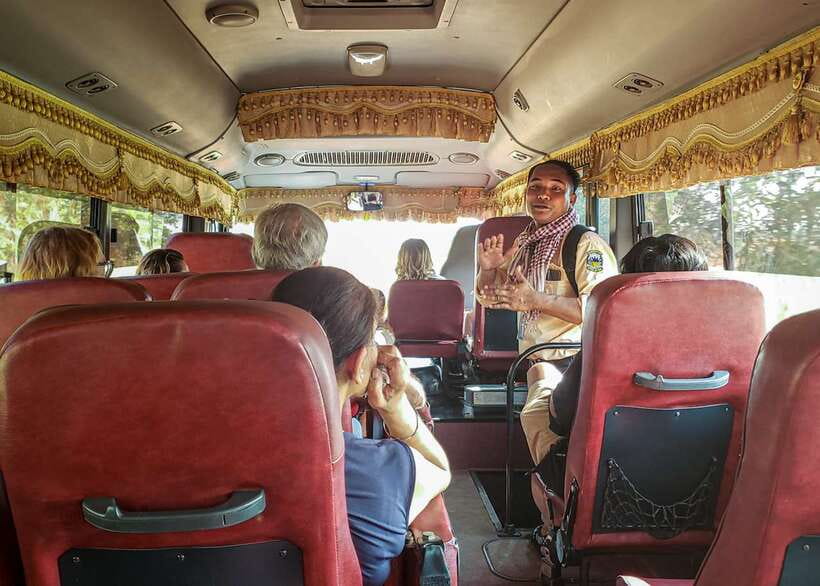
You’ll be in an air-conditioned minibus with an English-speaking guide. The combination matters: when the schedule is concentrated and you’ll later be outdoors near water, having a cool ride sets you up for the walking and the boat time that come next.
Walking the Stilt Houses: What You’re Seeing and Why It Matters
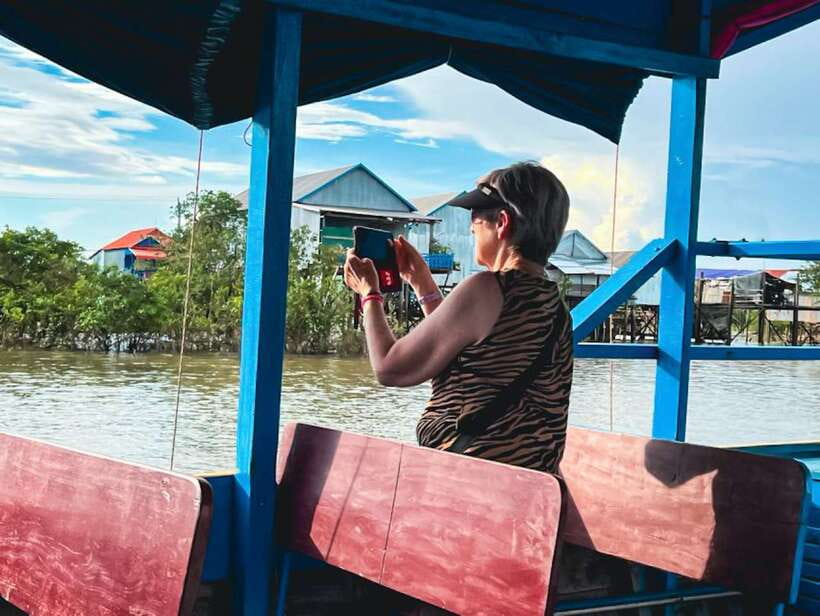
When you arrive, the village view is the first big “oh wow” moment. Homes rise on stilts, and in some cases they reach up to 9 meters high. That height isn’t just impressive—it’s functional. The village’s design responds to changing water levels, and you’ll see how daily life fits around that reality.
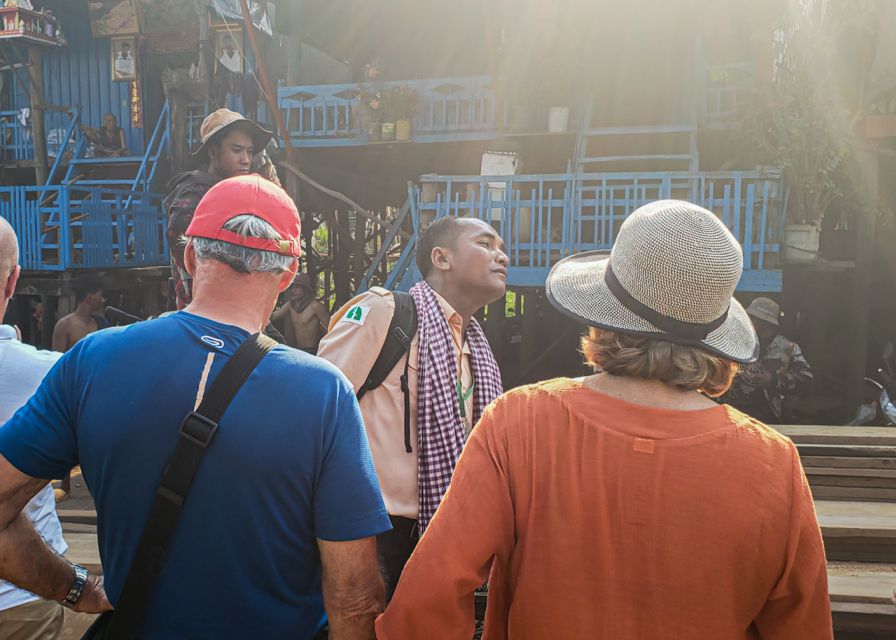
The best part here is context. As you meander through painted homes, your guide will explain what the community does to stay self-sufficient and how it has thrived since the civil war ended. This isn’t history as a lecture. It’s history as a reason you can see: when water shifts, people shift too—housing, routines, and travel.
You’ll also notice the daily rhythm in small details. In the dry season, before the water rises, you may have time to walk along the main street to watch daily activities and even see parts of how new houses get made. In the wet season, when boats are the practical way to move, the tour focuses more on how locals can travel by boat to reach school, work, and a pagoda.
Either way, the effect is the same: you’re not just touring a set. You’re watching a living system.
The Hindu and Buddhist Church With Mural Walls
One stop you should treat as a highlight is the church building inside the village. You’ll be introduced to a structure that blends Hindu and Buddhist themes, decorated with colorful murals showing how the two traditions coexist in Cambodia.
This matters because it gives your visit a social backbone. You’re in a community defined by water and work, but it’s also defined by shared places for belief, celebration, and teaching. If you’ve ever wondered how religion works in real life—beyond temple postcards—this is the kind of stop that gives you a grounded answer.
Also, because it’s covered in murals, it’s a great spot for photos that feel meaningful, not just scenic. Keep your camera ready, but don’t speed through—take a moment and let the guide connect what you’re seeing to how people live.
Wet Season vs Dry Season: What Changes in Your Actual Experience
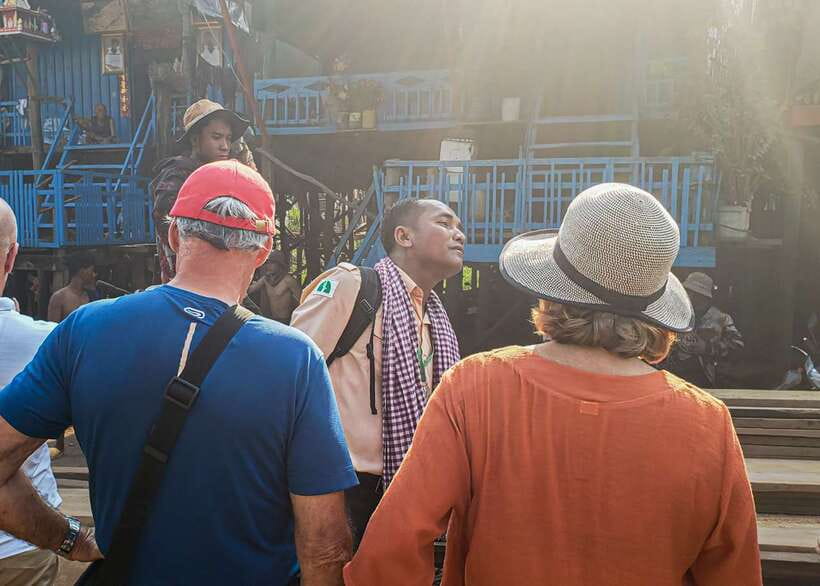
Cambodia’s water levels do not behave like a “nice backdrop.” They control movement. That’s why your timing changes what you notice.
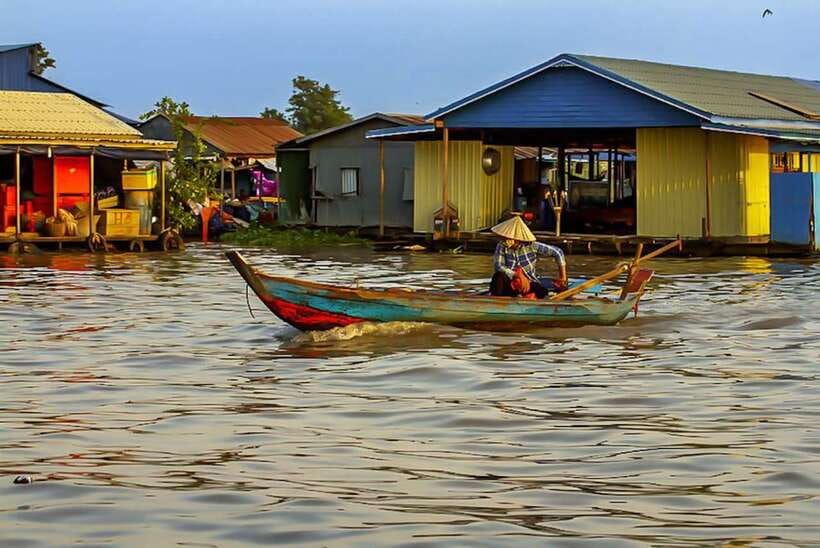
In the wet season (June to March), the village’s boating routines become the storyline. You’re more likely to see how locals travel by boat to get to school, work, and religious sites. It turns the trip into a living transportation map: water routes replace roads.
In the dry season, when the water level is lower and the village has more land visibility, you may get time to walk along the main areas and watch daily life in a more land-based way. That’s also when you might see activity around building new houses.
So if you’re flexible with dates, the “best” season is the one that matches the kind of story you want. Want the boating-and-mangrove feel? Aim for wet-season. Want the street-life and house-building moments? Dry-season tends to highlight that.
Tonle Sap Boat Time: The Part That Makes the Tour Feel Like a Trip
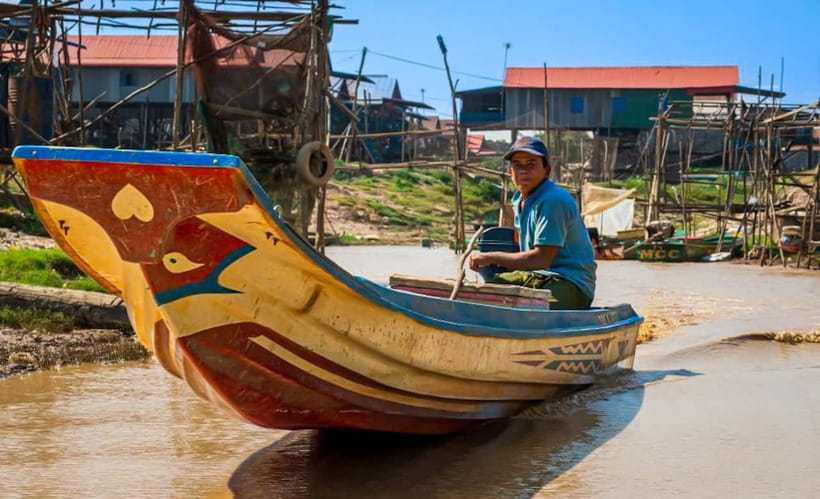
After you explore the village, you head out to Tonle Sap, the big lake that powers this whole way of life. You’ll take a riverboat ride to reach the floating restaurant.
Safety is handled in a straightforward way: life jackets are on the boat, and the river boats run with a roof, which helps if the weather is bright or you get a passing shower. That roof detail may sound small, but it changes how comfortable you stay while the boat moves and you’re taking in views.
I like this segment because it shifts the angle. Inside the village, you’re close to homes and people. On the boat, you’re reading the mangroves and water routes—how the landscape supports the village instead of separating it from the world.
The boat ride also gives you a breather. You’ve done walking, and now you get to sit, cool down a bit, and let the lake air do its job.
The Floating Restaurant and Sunset View: Your Payoff
This is where the timing starts to feel worth it. You’ll reach a floating restaurant on Tonle Sap, eat dinner, and enjoy the sunset viewpoint. The sunset is described as part of the experience, and there’s also an option for sunset views if you select that add-on.
Dinner details matter less than the setting. You’re eating on the lake while the light changes, with water movement and sky color doing the work that no restaurant ad ever can. Even if you’ve seen sunsets before, this one has a different texture because it’s tied to a working community and a real environment.
Also, the tour includes chilled bottled water, and there are multiple restroom stops built in. That comfort makes it easier to stay present during the later hours instead of rushing because you’re uncomfortable.
If you’re sensitive to light or heat, bring a charged smartphone and keep it handy for photos, but also remember to look up often. This is one of those moments where staring at your screen gets in the way.
Optional Mangrove Canoe ($5): Should You Add It?
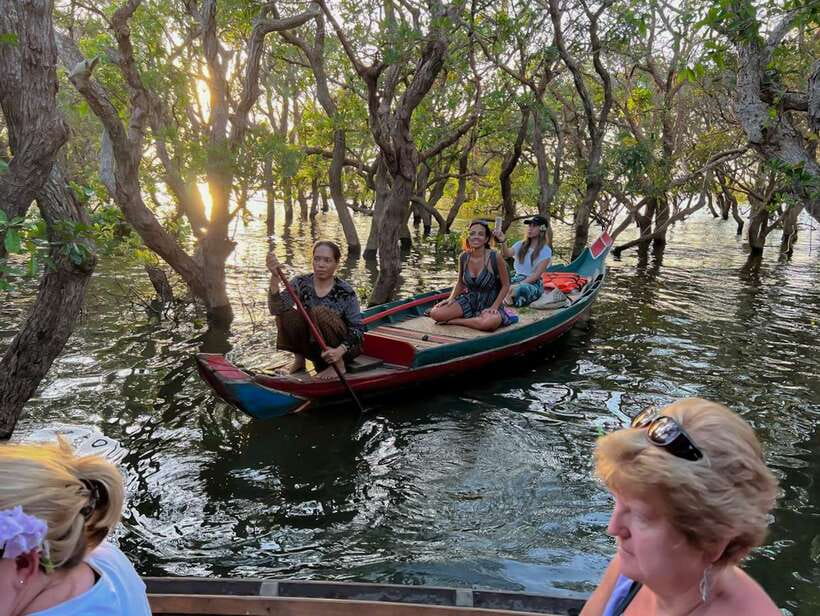
There’s an optional extra called the floating forest canoe. It costs $5 and is not included in the base tour price.
If you want more motion and a closer mangrove feel, it’s a good add-on. If you’d rather keep the afternoon relaxed—especially if you’re not sure how your body handles extra boat time—it’s totally fine to skip and stick with the main village + Tonle Sap sunset.
Just be aware you’ll be paying for it separately, and food and additional drinks are not included in the main price either. That’s not a dealbreaker; it’s simply budgeting reality.
Price and Value: Is $19 a Fair Deal?
At $19 per person, this tour is priced like a value-forward afternoon: hotel pickup and drop-off, an English-speaking guide, admission, a boat ride, and chilled bottled water are all part of the package.
What makes the value feel real is the mix of components. You’re not just viewing a village from the roadside. You walk through a community with local context, then you get lake boat time and a sunset restaurant stop. In a place where transportation and time matter, bundle pricing usually wins.
The two things you may still pay for are predictable:
- The optional $5 canoe
- Food and additional drinks while on the lake (not included)
So my “value check” is simple: if you’re already planning to spend late afternoon in Siem Reap, and you want a structured route that includes pickup, guide interpretation, and lake time, this price is strong. If you’re the type who prefers to travel fully on your own, you might not see the same value.
Who Should Book This, and Who Might Want to Skip It
This is a good fit for you if:
- You like cultural sights that explain how people live, not just what they own
- You want boat time on Tonle Sap and a sunset experience with actual context
- You enjoy guides who tell stories tied to seasonality (wet vs dry changes)
It may not be ideal if:
- You use a wheelchair (the tour is listed as not suitable for wheelchair users)
- You’re traveling with a baby under 1 year
- You’re over 70 (not suitable per the activity guidance)
- You want a purely “comfortable, seated” outing (you’ll walk in the village and spend time outdoors)
If you fall into one of those categories, you may need a different kind of day trip with easier access and fewer boat segments.
Guides, Group Size, and the Comfort Factor
This tour runs with an English live guide. You can also choose private or small groups, which usually helps if you like asking questions without feeling rushed.
One detail I appreciate: pickup timing is clearly set—30 minutes before departure—and the schedule is tight enough that the guide and driver have to keep it moving. That’s also why chilled bottled water and restroom stops are included. When the day is concentrated, small comforts make the whole experience smoother.
In the guidance you’ll see, guides are described as clear and active, with a sense of humor that helps when you’re sitting on a boat and then walking again. Some named guides you might hear about—like Tom, Chout, Pon/Poun, or Ho Heang—are often credited for combining English clarity with village stories.
You might not get the same guide, but the pattern is worth expecting: lots of explanation, and a real effort to make the day understandable.
Should You Book This Kampong Phluk Floating Village Tour?
Yes, if your goal is an afternoon that feels like real Cambodia—stilt homes, mangroves, Tonle Sap boat time, and a sunset meal viewpoint—wrapped into an easy, organized schedule from Siem Reap.
I’d especially book it if:
- You want the season story (wet vs dry) built into the experience
- You like tours with a clear route: pickup, village walk, lake boat, restaurant sunset, return
- You’re happy to budget for optional extras like the $5 canoe and any drinks or meals not included
I’d skip it or look for an alternative if access limits or extra boat time would be a problem for you. Otherwise, it’s a strong value use of your time in Siem Reap.
FAQ
What time does the Kampong Phluk tour depart from Siem Reap?
The tour departure time is listed as 2:30pm.
How long is the tour, and when do you get back to your accommodation?
The duration is 5 to 6 hours, and it ends by about 7:30pm, with minibus drop-off back at your accommodation.
Is hotel pickup and drop-off included?
Yes. The tour includes hotel pickup and drop-off, with pickup about 30 minutes before departure time.
What’s included in the $19 price?
Included are hotel pickup and drop-off, an air-conditioned minibus, a guide (English), admission to the village, a boat ride, and chilled bottled water. Sunset views are included if you select the option.
Is the floating forest canoe included?
No. The optional floating forest canoe costs $5 and is not included in the main price.
Are food and drinks included?
Food and additional drinks are not included. You’ll want to budget for what you eat and drink at the floating restaurant.
Do you get any restroom stops during the tour?
Yes. The tour includes multiple restroom stops.
Is the tour suitable for wheelchair users or very young or older visitors?
No. It is listed as not suitable for wheelchair users, babies under 1 year, and people over 70 years.
What is the cancellation and reserve-pay-later policy?
It offers free cancellation up to 24 hours in advance for a full refund, and you can reserve now and pay later.