REVIEW · SIEM REAP
Siem Reap: Full-Day Angkor Wat Guided Tour with Sunset
Book on GetYourGuide →Operated by Siem Reap Experiences · Bookable on GetYourGuide
Five temples and a golden sunset is the plan. A sunset climb at Phnom Bakheng caps a long day of Angkor’s biggest sights, with a guide helping you read the stories hidden in stone and carvings.
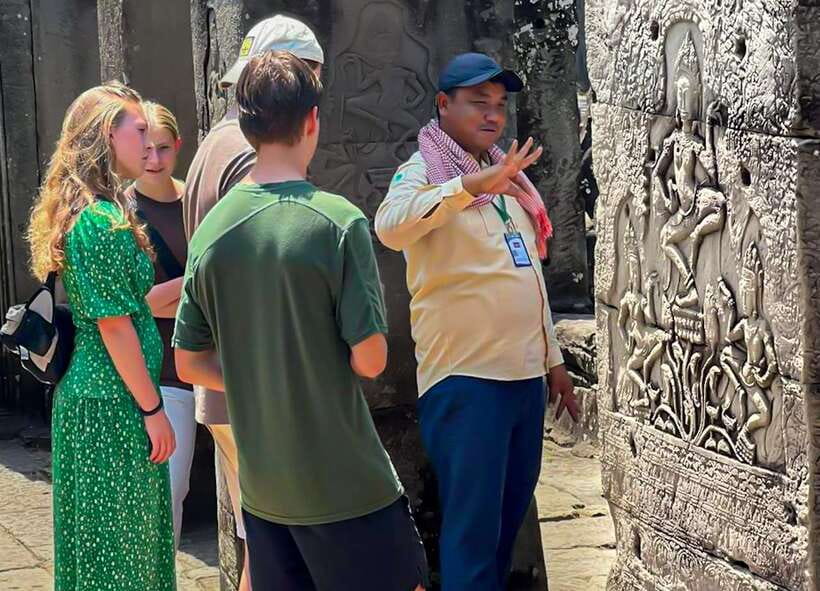
I really like the small group setup (never more than 13), which makes it easier to pause for photos, ask questions, and wander at a human pace. I also love that the English-speaking guide turns what looks like random ruins into a clear tour of Khmer history and temple symbolism.
The main drawback is effort. Expect uneven steps, heat, and a late-day climb, so you’ll want comfortable shoes and a realistic attitude about walking a lot.
In This Review
- Key highlights at a glance
- Price and logistics: what you’re really paying for
- Temple ticket and dress rules you must plan for
- Siem Reap pickup and the AC minibus advantage
- Angkor Wat: reading the world’s largest religious complex
- Angkor Thom and Bayon: where the smile story starts
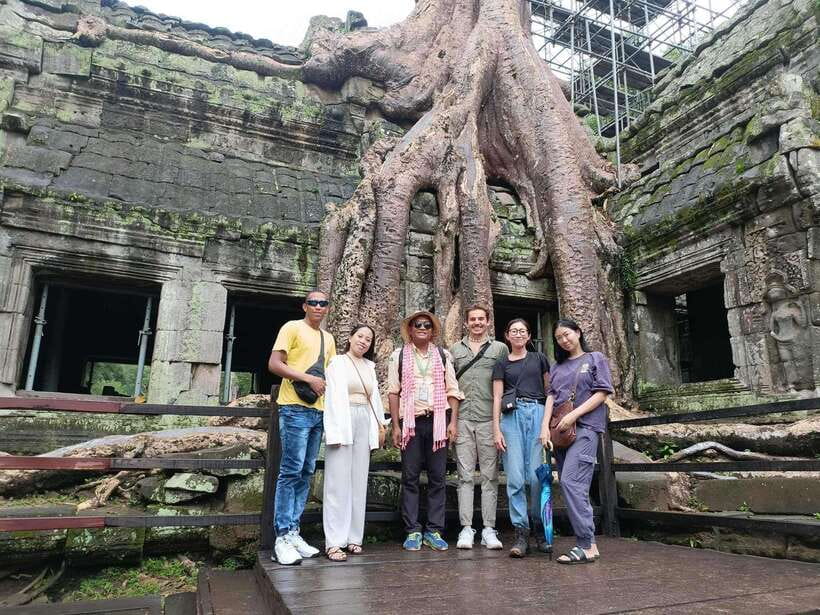
- Ta Prohm: jungle paths, tree roots, and the best photo mood
- Phnom Bakheng at sunset: the climb that finishes the story
- Lunch, breaks, and the human rhythm of a long day
- Guide impact: how names like Nick and Vone point to quality
- Who this tour is best for
- Should you book this Angkor Wat guided tour with sunset?
- FAQ
- Do I need an Angkor temple pass for this tour?
- Is the Angkor entrance ticket included in the $15 price?
- What temples do you visit during the day?
- What time does pickup and drop-off happen?
- What should I wear and bring?
- Is this tour suitable for kids or older travelers?
Key highlights at a glance
- Small-group pacing: typically capped at 13, with time to look around rather than sprinting
- Guide storytelling that makes it click: praised guides include Nick, Vone, Heang, Thom, and Sayon
- Temple lineup that covers the core sites: Angkor Wat, Angkor Thom, Bayon, Ta Prohm, and Phnom Bakheng
- Ta Prohm’s jungle atmosphere: the walk through greenery leads right into the famous tree-root ruins
- Sunset payoff: the Phnom Bakheng mountain view gives you a dramatic ending to a full day
Price and logistics: what you’re really paying for
Let’s do the math up front, because Angkor trips have one sneaky variable: temple entry. The tour itself is $15 per person, and that fee covers hotel pickup and drop-off, an air-conditioned minibus, an English-speaking guide, chilled bottled water, cool towels, and a local tax. The Angkor Archaeological Park entry ticket is extra: $37 for a 1-day pass.
For value, I think this combo makes sense if you care about understanding what you’re seeing. Angkor can be visually stunning but emotionally flat if you show up with no context. Paying a little more for a registered guide (instead of just buying entry and going solo) is what turns those galleries, towers, and bas-reliefs into a coherent story.
One more practical note: the tour runs long. You’ll start with pickup between 9:10 am and 9:30 am, and you should be back at your hotel around 6:30 pm to 7:00 pm. That’s a full workday of heat, walking, and stairs, even though the minibus gives you breaks between sites.
You can also read our reviews of more tours and experiences in Siem Reap.
Temple ticket and dress rules you must plan for
You need a temple pass (1-day or 3-day). You can buy it online or have your guide take you to the ticket office before the tour begins. The official site is: https://www.angkorenterprise.gov.kh/
If you forget this step, your day can stall before you even reach the first monument. So I suggest handling the pass early and keeping an eye on the day you choose. Also, note the guide will help you get started, but you still want the paperwork sorted.
Dress code matters at Angkor temples. You’ll want clothes that cover your knees and shoulders. That means skipping shorts, short skirts, and sleeveless shirts. And bring a charger-ready smartphone if you want to capture the carvings and sunset light without battery panic.
Siem Reap pickup and the AC minibus advantage
This tour begins in Krong Siem Reap, with hotel pickup included. The route by minibus matters more than people think. Siem Reap’s sun can drain you fast, and having a cooled vehicle between temple stops is not a luxury; it’s what lets you keep enjoying the day instead of just surviving it.
What I like here is the “small comforts, repeated” approach. You’ll get chilled bottled water and refreshing cool towels, not just once at the start. Several guide and driver comments point to how these little resets keep people going through the long hours.
Expect some early instructions when you meet your guide, including a reminder to be ready about 30 minutes before pickup time. That early buffer keeps the day moving, especially for the sunset timing.
Angkor Wat: reading the world’s largest religious complex
Angkor Wat is the reason most people come to Cambodia. The scale hits you immediately: wide causeways, long corridors, and the kind of symmetry that makes you feel small.
With a guide, you don’t just walk through a museum of stone. You learn how to see. Your time here is about 2.5 hours, and that’s enough to cover the main highlights without feeling like you’re being herded. A good guide will show you how the design links to religious meaning, so you’re not stuck guessing why certain galleries and bas-reliefs are arranged the way they are.
I also like that the tour doesn’t treat Angkor Wat as a one-pass stop. Instead, you’ll have time to walk around and inside temples, not just stand for photos. That makes a big difference when the details are what you want to remember.
Practical note: Angkor Wat can involve lots of stairs and uneven surfaces. You’ll feel it more in your legs than your brain. The tour’s pacing helps, but you still need your feet to hold up.
Angkor Thom and Bayon: where the smile story starts
After Angkor Wat, you’ll head into Angkor Thom, the walled city. The stop here is shorter (about 30 minutes), but it’s a sharp, high-impact visit.
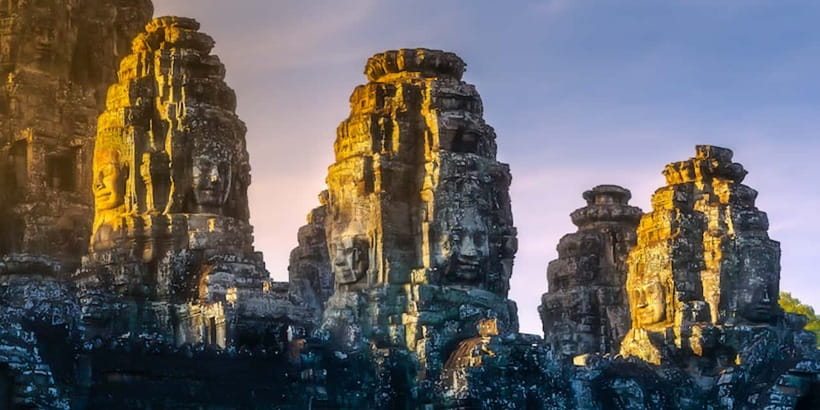
One of the most memorable elements is arriving at the southern gates, greeted by stone figures that set the tone for the whole complex. From there, you’ll walk toward Bayon Temple, where the central peaks are famous for the smiling faces.
You’ll spend about 1.5 hours on Bayon, which gives you time to slow down and actually look. This is also where a guide’s storytelling really helps. You start to understand what you’re seeing as religious imagery, political power, and artistic style from the Khmer era, rather than just a set of iconic images.
The nice part is how the tour balances “must-see” with breathing room. Several guide comments highlight that timing and pacing feel managed, so you’re not trapped in a constant rush.

Ta Prohm: jungle paths, tree roots, and the best photo mood
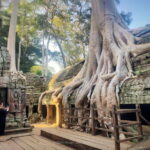
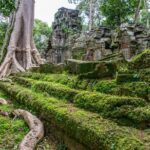
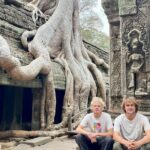
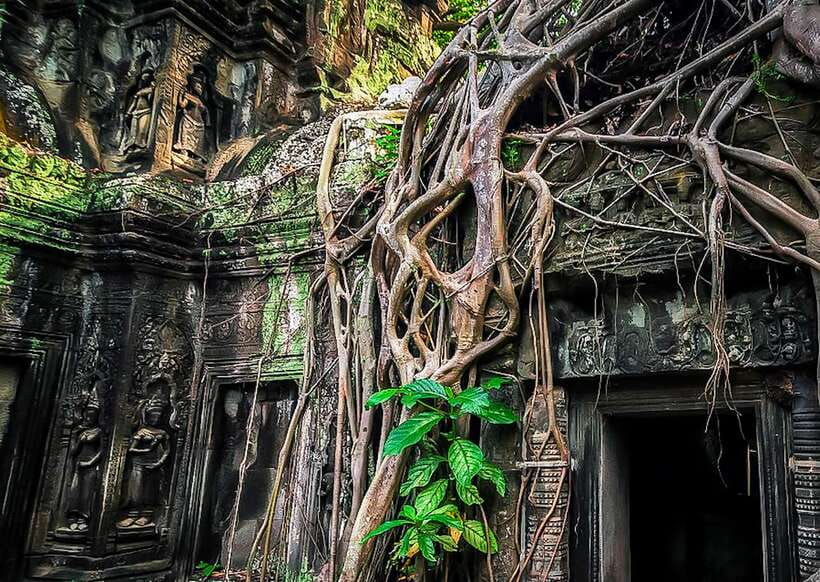
Now you get the mood shift. Ta Prohm is famous for the way nature takes the ruins back, with trees growing through stone and casting shifting shadows.
This portion is where the experience becomes more atmospheric than ceremonial. You’ll have a break and lunch around Ta Prohm (about 1 hour), then later you’ll return for more walking and a guided visit.
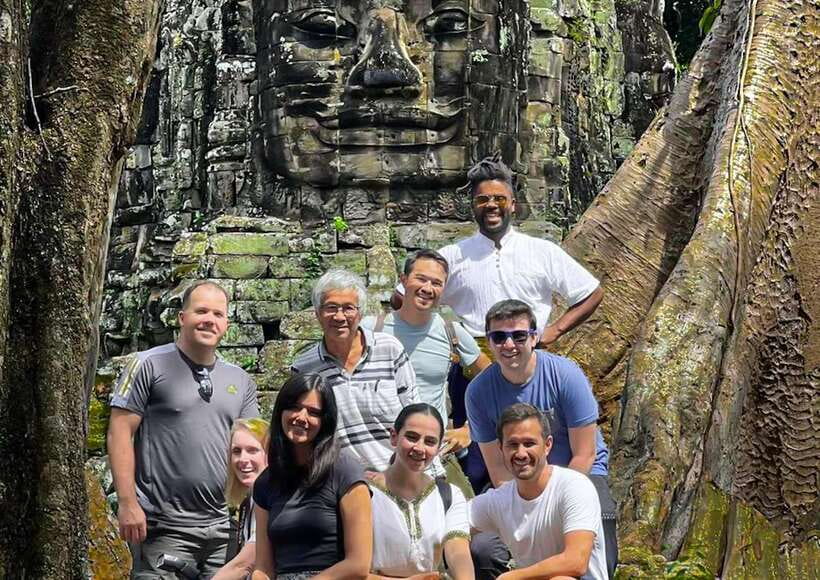
The tour includes a stroll through lush jungle paths on the way in. That detail matters because Ta Prohm looks great from the moment you approach. When you’re walking under green canopy with stone and roots appearing between tree trunks, the site feels less like a monument and more like a living scene.
You’ll spend about 1.5 hours at Ta Prohm for guided exploration and walking. That’s a solid amount of time for the big photo angles, plus the smaller carvings and textures that show how the temple was built and altered over centuries.
One realistic note: this part of the day can feel a bit harder on your feet, because you’re doing more ground-level walking. Wear shoes with grip. If your feet slip, the ruins become more frustrating than magical.
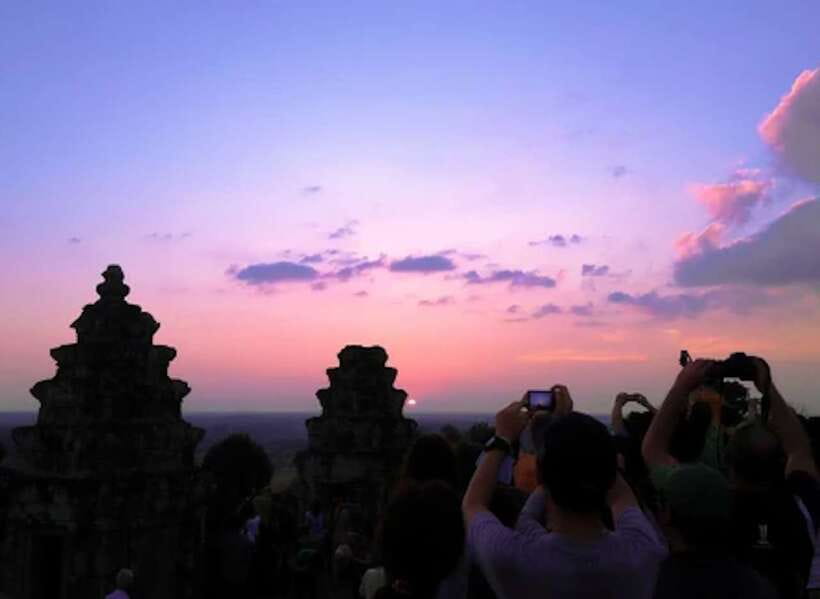
Phnom Bakheng at sunset: the climb that finishes the story
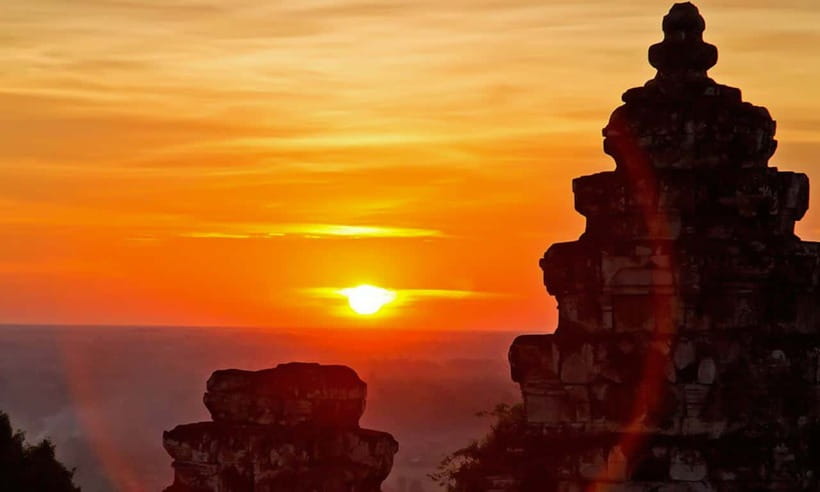
The last act is a true “save the best light for last” moment. After the temple day, you’ll travel back with the final stop being Phnom Bakheng Temple East entrance, then climb to watch sunset.
You’ll have about 1.5 hours here, including the guided component and the sunset window. The climb is steep enough that you’ll feel it in your calves, and you may find crowds at peak viewing time, but the payoff is the view.
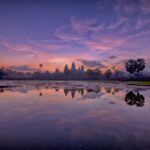
Sunset also changes how Angkor feels. During the day, stone details are crisp and obvious. At sunset, the temple mountain becomes a silhouette, and that glow makes the whole complex look more mythic. If you’re the kind of person who remembers a place by its mood, this is the moment you’ll probably talk about later.
Lunch, breaks, and the human rhythm of a long day
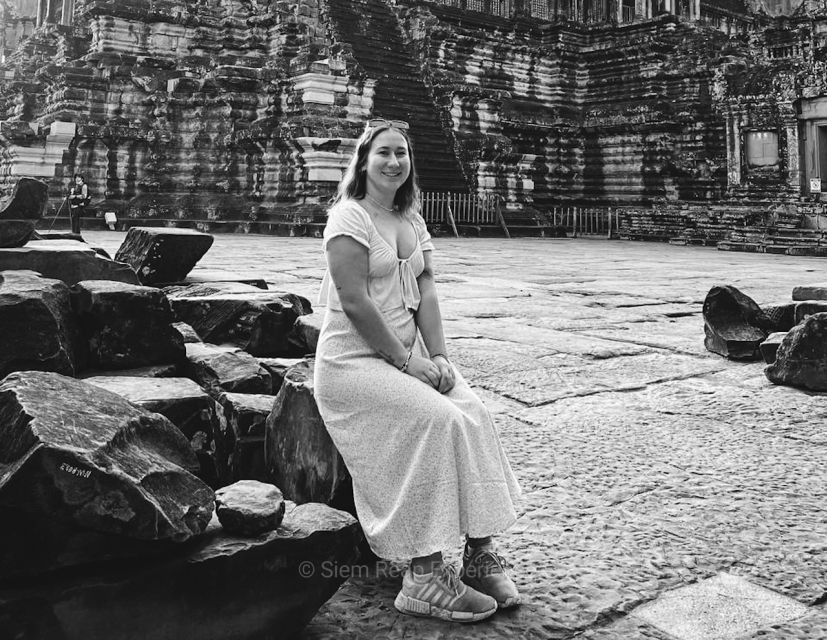
You’re not stuck in one temple for hours without food. There’s a break time with lunch during the Ta Prohm segment (about 1 hour). The tour doesn’t include food, so you’ll pay for meals separately at local restaurants near the temples.
I like that the tour builds in breaks because Angkor is not just sightseeing; it’s walking, heat, and attention span management. Water and cool towels help, but timing and reset breaks are what keep the day enjoyable instead of exhausting.
If you’re picky about lunch, plan to treat it as convenient fuel rather than a culinary mission. The priority is getting your energy back so you can enjoy the final sunset climb.
Guide impact: how names like Nick and Vone point to quality
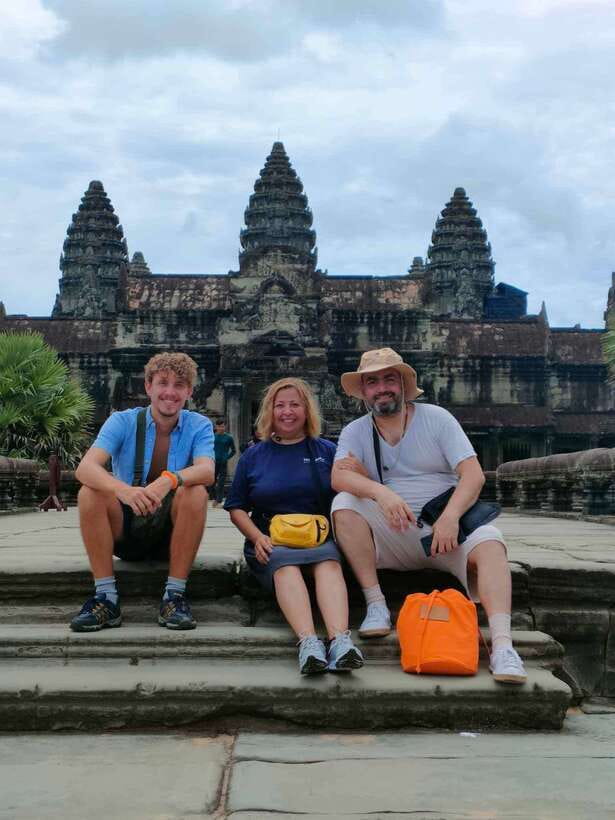
This tour’s standout theme is guide quality. The guides credited in top-rated experiences include people like Nick, Vone, Heang, Thom, and Sayon. What’s consistent across these comments isn’t just accuracy; it’s delivery.
You’ll see it in three ways:
- Guides explain what’s happening in the carvings and architecture, so your eyes have something to track.
- Guides manage pacing so you have time to wander without falling behind.
- Guides help with photos and stops, so you’re not stuck shooting the same angle everyone else gets.
One practical tip I’d borrow from those experiences: ask your guide what the best photo points are for the light you want. If they’re on their game, they’ll know where the view opens up and how to time it.
If you want a tour where someone actually talks while you walk, this is the right kind of Angkor experience.
Who this tour is best for
I think this tour is a strong match for you if:
- You want a guided day and not just a self-guided checklist.
- You prefer small-group energy (maximum 13) over huge crowds.
- You care about history and symbolism, and you want it explained in plain language.
- You want a sunset ending rather than an early afternoon wrap-up.
It’s less ideal if you hate stairs and long walks. Also, it’s noted as not suitable for babies under 1 year and people over 70 years. If you’re in either category, you’ll want to look for a different pace or accessibility-focused option.
Should you book this Angkor Wat guided tour with sunset?
Book it if you want the easiest way to turn one temple day into a story you can actually follow. The value math works well once you factor in that you’re paying separately for entry anyway, and the extra fee for guidance is what makes the monuments connect in your mind.
Skip it if you’re determined to do Angkor completely independently, or if you’re dealing with mobility limits and already know you struggle with steep stairs and a late-day climb.
If your goal is: see the highlights, understand what you’re looking at, keep the day comfortable with AC transport and regular refreshment breaks, and end with a proper sunset scene, this tour fits the bill.
FAQ
Do I need an Angkor temple pass for this tour?
Yes. You need an Angkor Archaeological Park temple pass (1-day or 3-day). You can purchase it online or have your guide take you to the ticket office before the tour begins.
Is the Angkor entrance ticket included in the $15 price?
No. The tour price is $15, and the entrance fee is extra. The 1-day pass is listed as $37.
What temples do you visit during the day?
You visit five temples/areas: Angkor Wat, Angkor Thom, Bayon Temple, Ta Prohm, and Phnom Bakheng (for sunset).
What time does pickup and drop-off happen?
Pickup is between 9:10 am and 9:30 am, and the tour ends with hotel arrival between 6:30 pm and 7:00 pm.
What should I wear and bring?
Wear clothes that cover your knees and shoulders. Bring comfortable shoes and a charged smartphone.
Is this tour suitable for kids or older travelers?
Kids under 12 years old don’t require a temple ticket. The tour is not suitable for babies under 1 year old and for people over 70 years old.