REVIEW · SIEM REAP
Siem Reap: Angkor Wat: Small-Group Sunrise Tour
Book on GetYourGuide →Operated by Angkor Wat Travel Tour · Bookable on GetYourGuide
Sunrise at Angkor changes the whole day. This small-group Siem Reap tour starts before dawn, so you get the sunrise over Angkor Wat and calmer photo angles before the big crowds. I also love the human touch: guides like Mr T or Sen turn the Khmer stories into something you can actually picture, not just read off signs.
The trade-off is simple: the early pickup at 4:30 AM makes for a long day, and you’re walking in heat. One more thing to plan for is money—entrance tickets and food aren’t included—so you’ll want to budget ahead instead of assuming everything is handled.
In This Review
- Quick hits before you go
- Sunrise at Angkor Wat: why timing matters in Siem Reap
- Hotel pickup at 4:30 AM and a day that runs like clockwork
- Stop by stop: what you’ll actually see (and why each place is worth it)
- Angkor Wat sunrise: photo time plus guided walking
- South Gate of Angkor Thom: the big transition point
- Bayon Temple: 54 towers and 216 faces
- Baphoun and Bayon context: what the guide connects for you
- Terrace of the Elephant and Terrace of the Leper King: royal viewing platforms
- Ta Prohm’s roots and Banteay Kdei’s stonework: the variety that keeps it interesting
- Ta Prohm: jungle temple energy
- Banteay Kdei: Jayavarman VII’s 12th-century temple
- The guide experience: why Mr T, Sen, and Chanthy keep earning top marks
- Logistics that matter: comfort, group size, and what’s left for you
- What’s included
- What’s not included (and how to plan)
- Comfort and footwear
- Shared group vs private tour: which version fits your style
- Is this a good value at around $16?
- Who should book this sunrise Angkor Wat small-group tour
- Should you book this tour?
- FAQ
- How long is the Angkor Wat sunrise tour?
- What time is hotel pickup in Siem Reap?
- Are entrance tickets included?
- Is food included?
- Which temples and sites are included in the route?
- How large is the group?
- Do you get an English-speaking guide and can you book a private tour?
Quick hits before you go
- Small-group size (max 15) means you can hear your guide and move with less chaos
- Cold water and cold towels after temple stops help more than you’d think in the heat
- Angkor Wat at sunrise gives you first-light views plus great photo timing
- Ta Prohm and Bayon balance jungle romance with iconic face-towers and temple symbolism
- Comfortable logistics include air-conditioned transport and hotel pickup/drop-off in Siem Reap city
Sunrise at Angkor Wat: why timing matters in Siem Reap
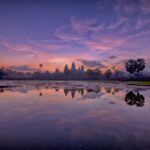
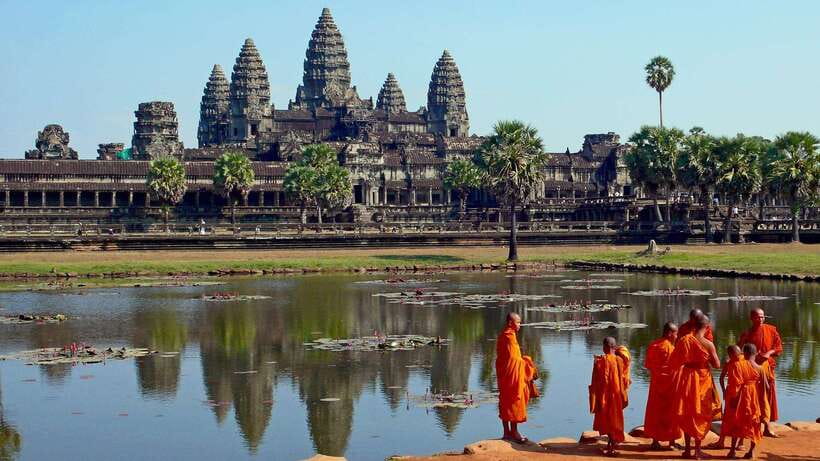
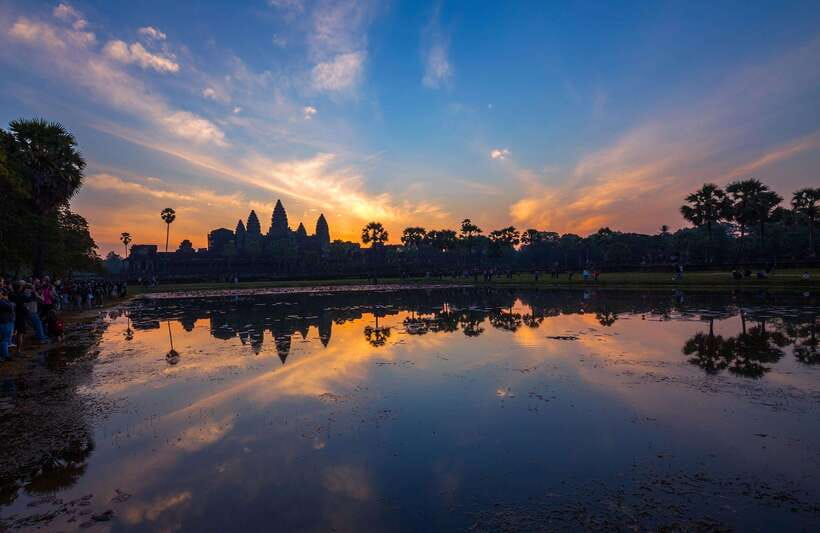
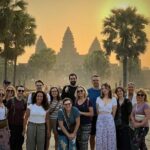
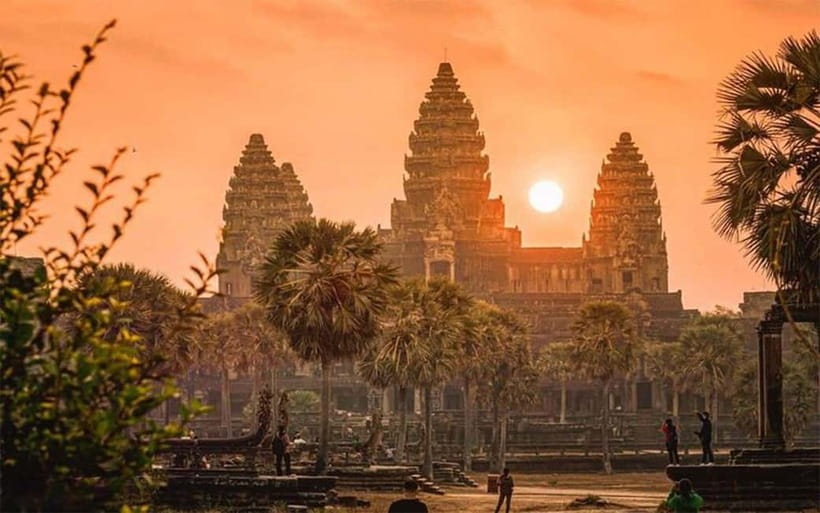
Angkor Wat works in layers. At midday, it’s impressive but busy. At sunrise, it feels like the stone is still waking up. You start at the main entrance early enough to catch that soft light on the towers and walls, and you’ll have time for photos before the busiest waves arrive.
What makes this tour feel different is how it pairs sunrise with a route that keeps you moving through big highlights without getting stuck in a crowd. You’re not just going once and leaving. You’re there for the moment, then you keep your momentum.
And if clouds roll in? You may still get a memorable “light show” on the temple grounds. Even when the sky doesn’t cooperate fully, the early start gives you breathing room to enjoy the carvings and the scale.
You can also read our reviews of more tours and experiences in Siem Reap.
Hotel pickup at 4:30 AM and a day that runs like clockwork
Your morning starts with pickup from your Siem Reap hotel area around 4:30 AM in an air-conditioned vehicle. You’ll be asked to wait about 10 minutes in the lobby, and the driver will hold a sign with your last name. It’s a small thing, but it reduces that awkward “are we in the right place?” stress at dark-o’clock.
The tour runs for about 8 hours, with transport segments between sites (including a 45-minute coach ride at the start and another later). Between stops, the group is typically kept together and guided to photo points and temple entrances.
This is where the small-group format shows its value. With a max of 15 travelers, you’re less likely to lose people in the shuffle, and you can follow along when your guide points out details—like what to look for in the carvings or which structures connect to a specific era of Khmer rule.
One more practical point: the tour includes cold water and cold towels, and it’s handled regularly rather than only once at the beginning. In humid heat, that matters. It’s the difference between “we’re fine” and “we can’t wait to sit down.”
Stop by stop: what you’ll actually see (and why each place is worth it)
Angkor Wat sunrise: photo time plus guided walking
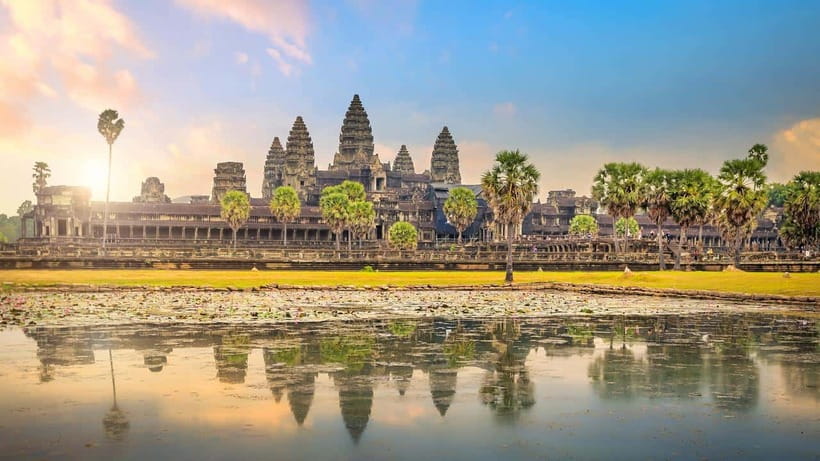
You’ll spend a full chunk of the morning at Angkor Wat: photo stop time plus a guided visit. The complex is huge, so having a guide helps you find the visual anchors fast—where to stand for the best views and what to pay attention to as you walk.
This isn’t the kind of visit where you wander with zero direction. You’re guided to see the highlights in an order that makes sense for the light and the crowd levels, and you’ll get context about what you’re looking at as you go.
Also, yes—camera time is built in. So if you’re the type who wants a few careful shots, you won’t feel rushed immediately after arriving.
South Gate of Angkor Thom: the big transition point
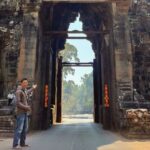
After Angkor Wat, you shift to Angkor Thom. You start at the South Gate, which is your gateway into a broader world of Khmer city planning and temple symbolism.
The guide typically frames what you’re about to see: Bayon and Baphoun sit within this larger complex, so the route isn’t random. It’s a “city to temple” transition, not just another photo stop.

Bayon Temple: 54 towers and 216 faces
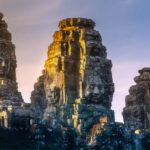
Bayon is the headliner inside Angkor Thom. The tour includes guided time here, and you’ll get the dramatic details: 54 towers and 216 faces of Avalokesvara (a key Buddhist bodhisattva figure). Those faces aren’t just decoration; they’re part of how the Khmer kings projected religious and political meaning across their capital.
This is one of those temples where your photos improve when you understand the layout. Your guide’s job is to help you see the repeating motifs and the way the towers dominate your viewpoint from multiple angles.
It also tends to be a favorite stop for guides who love storytelling. A good guide can point out what the faces symbolize, how the temple fits into the larger Khmer story, and why it feels so intense when you look at it from ground level.
Baphoun and Bayon context: what the guide connects for you
The Bayon visit is paired with context for nearby structures such as Baphoun. Even when the towers steal the show, this part helps you understand the “why” behind the structures—not just the “what.”
If you’re someone who usually skips explanations and just wants the view, you might be surprised here. This is where the guide’s style matters. Guides like Sen and Chanthy (often described as a real-life Indiana Jones type) use humor and clear temple logic so the site stops being a confusing maze.
Terrace of the Elephant and Terrace of the Leper King: royal viewing platforms
Lunch-time is followed by stops inside Angkor Thom’s larger ceremonial landscape. You’ll see the Terrace of the Elephant and the Terrace of the Leper King—described as royal viewing platforms and associated with the king’s great audience hall.
These terraces can look like “just another structure” if you don’t know what they were for. With a guide, you get the sense of how they functioned: these were performance and display spaces, not random building blocks. That changes how you see the details.
And it’s another reason why this tour works as a one-day plan. You get the iconic temples, but you also get the parts that explain how the city operated.
Ta Prohm’s roots and Banteay Kdei’s stonework: the variety that keeps it interesting
Ta Prohm: jungle temple energy
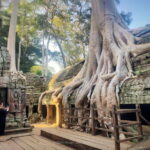
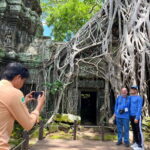
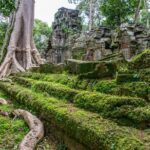
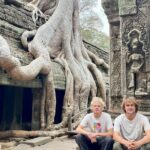
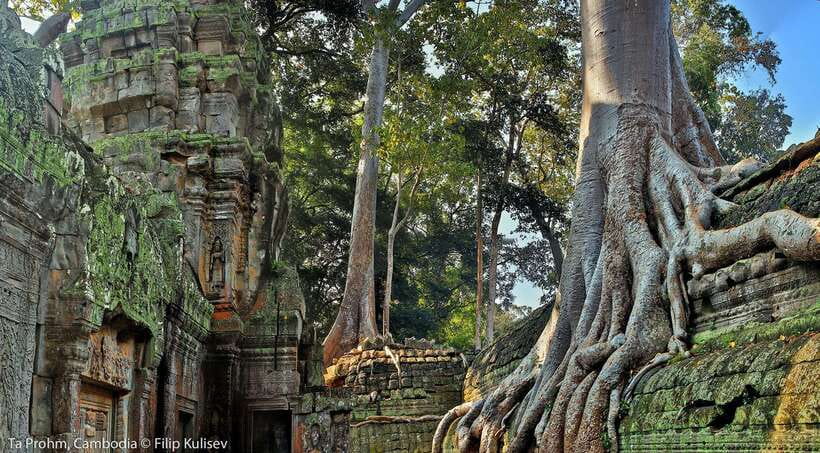
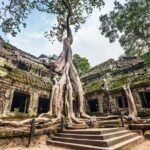
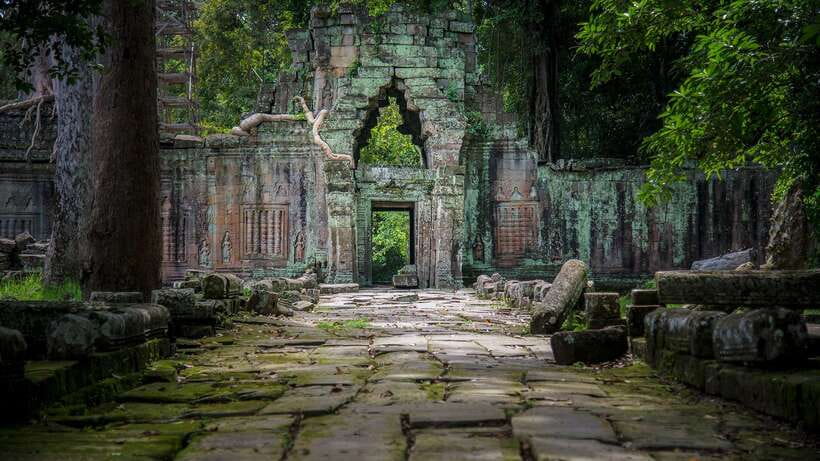
Then you hit Ta Prohm, the jungle temple famous for massive trees growing around and through stone blocks. This is where Angkor becomes cinematic.
The tour includes guided time and photo opportunities, so you’ll know where to stand to capture the dramatic “roots + ruins” effect. You also get help noticing how nature and architecture interact here, and why this temple has a reputation beyond just being old.
Expect this stop to feel different from Bayon. Bayon is face-towers and order. Ta Prohm is time caught in motion—stonework surrounded by living growth.
Banteay Kdei: Jayavarman VII’s 12th-century temple
Finally, you’ll visit Banteay Kdei, built by King Jayavarman VII in the late 12th century. This stop is shorter than Ta Prohm, but it’s a strong way to end the day because it adds another layer to the Khmer timeline.
Banteay Kdei’s vibe is more grounded and temple-like than Ta Prohm’s dramatic jungle scene. It’s a useful contrast, and it helps the day feel like a connected story instead of a checklist.
The guide experience: why Mr T, Sen, and Chanthy keep earning top marks
The most repeated praise from guides isn’t just that they talk a lot. It’s that they talk in a way that makes the site easier to read. I love tours where I’m not just standing somewhere waiting for “the interesting part.” Here, the guide points out details that most people would walk right past.
Names that come up often include Mr T, Sen, and Chanthy, and you’ll also hear about drivers like James Bond (and others referred to as Mr T2). The common thread is a smooth, friendly rhythm: your guide handles the storytelling and timing, while the driver keeps things organized and keeps cold water and towels coming at sensible moments.
If you care about photography, you’ll also appreciate guides who naturally position the group for good angles. Several guides in this tour style are described as helpful photographers, which usually means better timing for your shots and fewer missed photo moments.
Logistics that matter: comfort, group size, and what’s left for you
What’s included
You’ll get:
- Air-conditioned vehicle transportation
- English-speaking tour guide
- Cold water and cold towel
- Hotel pickup and drop-off within Siem Reap city area
That “cold towel plus water” package is one of the smartest inclusions for an early-start, heat-heavy temple day.
What’s not included (and how to plan)
Entrance tickets aren’t included, and neither is food. So you’ll want to budget for temple entry fees and plan for lunch on your own.
That said, you’re not stuck doing everything hungry. The day includes time breaks, including a meal break around late morning/early afternoon depending on the pace. If you’re the type who gets tired when you skip fuel, I’d bring a simple snack idea in your day bag so you’re not hunting for something quickly once the schedule moves again.
Comfort and footwear
Bring comfortable shoes. You’ll be walking enough that good soles matter. Also wear clothes that handle humidity. This isn’t a “sit on a bench and admire” day.
Not suitable for people with back problems, and unaccompanied minors aren’t allowed. Children must be accompanied by an adult, and the tour isn’t suitable for kids under 4.
Shared group vs private tour: which version fits your style
You can choose between a shared small group and a private tour.
A shared group is great if you want:
- the classic sunrise timing
- good value for money
- a friendly, guided flow between temples
A private tour is better if you want:
- more flexibility if you like extra wandering time at certain spots
- a quieter experience with fewer people around you
Either way, the route includes the core highlights: Angkor Wat sunrise, Ta Prohm, Bayon (at Angkor Thom), and Banteay Kdei, plus viewpoints and terraces in between.
Is this a good value at around $16?
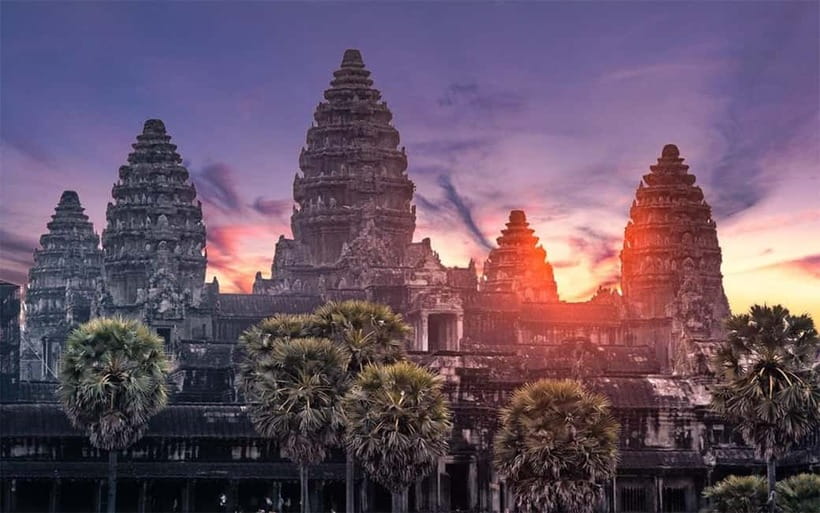
At roughly $16 per person for a full 8-hour day, this is one of those deals that works because the experience is heavy on what’s hard to do alone: early access timing, an English-speaking guide, comfortable transport, and the practical comfort items.
The cost trade-off is that you still need to handle entrance tickets and meals yourself. But compared to a do-it-yourself plan (where you’d still hire a guide or pay for private transport to manage sunrise timing), the included support makes the price feel fair.
If your main goal is to see the big temples in one efficient day while learning what you’re looking at, this pricing makes sense.
Who should book this sunrise Angkor Wat small-group tour
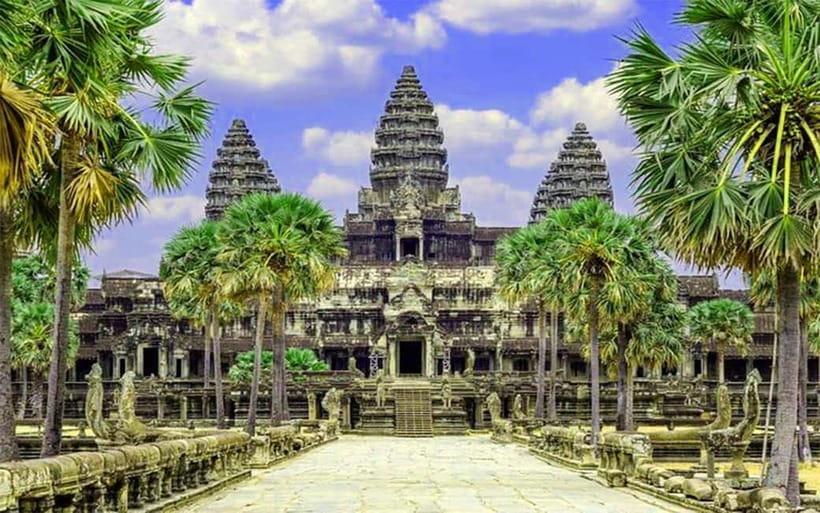
Book it if you:
- want sunrise at Angkor Wat without dealing with timing chaos
- enjoy guides who use stories and humor to explain temple meaning
- like a structured day that still includes photo time
- appreciate comfort perks like cold water and cold towels
Consider a different option if you:
- need a slower pace or more rest time (the route is active and the day is long)
- have back issues
- prefer a fully unstructured day with lots of independent wandering
Should you book this tour?
Yes—if sunrise is on your Angkor “must-see” list and you’d rather have a guide help you read the temples, not just look at them. This tour’s big strength is the combination of early light, a tight route through iconic sights, and guide-led context that makes the complex feel understandable.
If you’re comfortable walking in heat and you’re ready to budget for entrance tickets and lunch, you’ll likely feel like you got a lot of Angkor for your morning alarm clock. And if your sunrise ends up being partly clouded, you still get a well-timed, well-guided day through Ta Prohm and Bayon, which is the real point of starting early.
FAQ
How long is the Angkor Wat sunrise tour?
The tour runs for about 8 hours, including pickup, travel between sites, and visits.
What time is hotel pickup in Siem Reap?
Pickup is at 4:30 AM from your hotel area in Siem Reap.
Are entrance tickets included?
No. Entrance tickets are not included in the price.
Is food included?
No. Food is not included.
Which temples and sites are included in the route?
You’ll visit Angkor Wat (sunrise), Ta Prohm, Banteay Kdei, and Bayon (at Angkor Thom), plus stops such as the South Gate of Angkor Thom and terraces like the Elephant Terrace and the Leper King Terrace.
How large is the group?
The group has a maximum of 15 travelers.
Do you get an English-speaking guide and can you book a private tour?
Yes, the tour includes an English-speaking tour guide, and private group tours are available.