REVIEW · PUSHKAR
Spiritual City Walking Tour-THE Pushkar Route
Book on Viator →Operated by THE PUSHKAR ROUTE · Bookable on Viator
Pushkar’s temples tell stories fast. In just a short walk, this tour links Sikh and Hindu holy places around the ghats and Pushkar Lake, with a local guide who explains what you’re looking at as you move.
I love the way you begin at Gurudwara Sahib and then transition into major Hindu temples, so the city’s spirituality feels connected instead of random. I also love that the tour includes special masala tea in a claypot plus a traditional malpua breakfast, which makes the experience feel genuinely local.
One drawback to keep in mind: the route is only about 1 to 3 hours, and if you choose extra blessings or ceremonies, those charges are not included. If you’re hoping for a long, full-on ritual afternoon, you’ll likely want to add something beyond this walk.
In This Review
- Key highlights at a glance
- Why Pushkar’s holy circuit works best on foot
- Small-group pacing, pickups, and why this feels organized
- Stop 1: Gurudwara Sahib and the Sikh thread in Pushkar
- Stop 2: Varaha Temple, 150 feet of stone story
- Stop 3: Old Rangji Temple (Rama Vaikuntha Temple) craftsmanship
- Stop 4: Atmateshwar Mahadev Mandir and Shiva with family
- Stop 5: Brahma Temple and the world’s one Brahma temple clue
- Stop 6: Pushkar Lake and Brahma Ghat prayers
- Stop 7: The short refresh at Alka Rooftop Restaurant
- Stop 8: Gau Ghat and the sweets of Halwai Gali
- The included malpua and cardamom-ginger tea (this is real value)
- Price and logistics: why this low cost can still add up
- Who should book this Pushkar walking tour
- Should you book it? My decision guide
- FAQ
- What is the duration of the Spiritual City Walking Tour – THE Pushkar Route?
- How much does this tour cost?
- Is hotel pickup and drop-off included?
- What food and drinks are included?
- Which places are included in the walking route?
- Are entrance fees included?
- Are holy rituals or ceremonies included?
- What is the maximum group size?
- Is the tour weather-dependent?
Key highlights at a glance
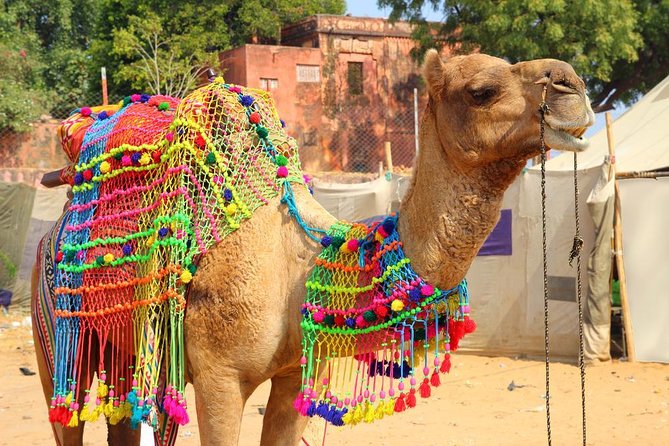
- Sikh start at Gurudwara Sahib with context for why Pushkar matters to the Sikh community
- Temple-hopping with specific stops like Varaha and the old Rangji (Rama Vaikuntha) temple complex
- Shiva and family at Atmateshwar Mahadev Mandir, presented as the oldest Shiva temple in town
- Brahma Temple explanation of why Brahma has only one temple in the world
- Pushkar Lake and Brahma Ghat prayers where families offer prayers and tribute
- Included chai and malpua with cardamom-ginger tea served in a claypot
Why Pushkar’s holy circuit works best on foot
Pushkar is the kind of place where you understand more by walking than by riding. The city is packed with religious sites, and this tour is built for getting around on foot at a calm, human pace.
What I like is that the route isn’t only about seeing architecture. It’s about understanding how people practice—what they come to the ghats for, why certain temples matter, and how Sikh and Hindu traditions show up side by side in the same town.
Also, the group size is capped at 6 travelers. That matters in a place where you’re often sharing space with pilgrims, passing worship areas, and trying to listen while everything is happening around you.
Small-group pacing, pickups, and why this feels organized
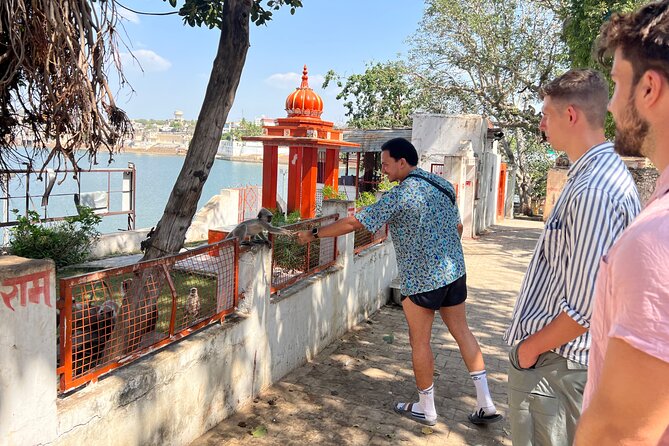
This experience includes guiding fees and a tour explorer who’s well versed in the subject. In practice, that translates to less guessing. You’re not just wandering temple to temple—you’re getting the meaning behind what you’re seeing as you go.
You can also get hotel pickup and drop-off, and you’ll receive a mobile ticket. There are locker facilities for cameras and larger items, which helps when you’re moving around a lot and don’t want to carry gear the whole time.
Timing-wise, plan for about 1 to 3 hours. That’s short enough to fit into most itineraries, but it also means you’ll want to be ready to keep moving and take it all in quickly.
Stop 1: Gurudwara Sahib and the Sikh thread in Pushkar
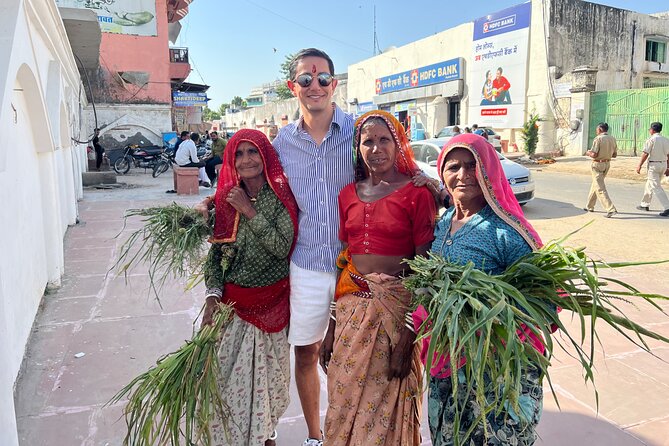
The tour starts at Gurudwara Sahib, with about 30 minutes at the stop. Admission is free, and your guide explains Sikh religion and the importance of Pushkar for the Sikh community.
This opening stop is more than a checklist item. It sets context. If you only focus on Hindu temples, Pushkar can feel like one-note religiosity. Starting with Sikh worship changes the tone and helps you understand why pilgrims from different backgrounds converge here.
It’s also a nice way to ease into the day. You’re not jumping straight into temple compounds. You begin with a place of worship that teaches you how to read the city through another lens.
Stop 2: Varaha Temple, 150 feet of stone story
Next comes the Varaha Temple, about 25 minutes. This is a major visual stop: the temple is described as 150 feet high, and the present statue was set up in 1784.
The tour notes the structure is built of heavy stone and plaster in a typical Rajasthani haveli style, located inside a walled temple compound. Entry is included, so you can focus on the explanation rather than worrying about ticket steps.
A practical consideration: because this is such a “big” temple visually, it can be busy with visitors and pilgrims. If you want clear photos and time to look, be ready to follow your guide’s pacing and listen for when they say to slow down.
Stop 3: Old Rangji Temple (Rama Vaikuntha Temple) craftsmanship
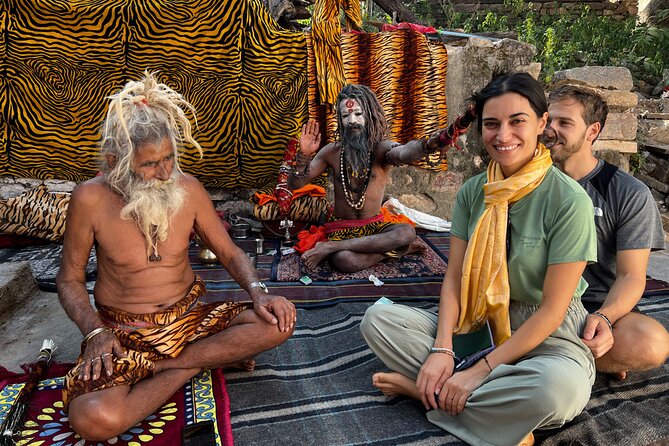
You’ll then visit the Old Rangji Temple, also known as the Rama Vaikuntha Temple, for about 15 minutes. This stop is described as an old Vishnu temple famous for workmanship and architecture.
The focus here is quality and design. The tour describes the temple as built of heavy stone with beautiful Rajasthani style elements. With only 15 minutes, I’d treat this as a quick-but-intentional look: learn what you’re seeing, then spend a moment appreciating the details your guide points out.
If you’re the type who likes to understand symbolism more than just taking pictures, this is a good mid-route pause.
Stop 4: Atmateshwar Mahadev Mandir and Shiva with family
About 25 minutes bring you to Atmateshwar Mahadev Mandir, dedicated to Lord Shiva. It’s also described as the oldest temple of Lord Shiva in the town, and you can see the statue of Shiva with his complete family.
This is one of those stops where the guide’s explanation can matter a lot, because the “why” can be easy to miss if you only scan for big landmarks. The tour framing helps you connect the art and the layout to the meaning behind Shiva worship in Pushkar.
Admission is free at this stop, so you’re not paying again to access the viewpoint. That’s part of the value in the way the route is assembled.
Stop 5: Brahma Temple and the world’s one Brahma temple clue
After that, you move to the Brahma Temple for about 30 minutes. This is where your guide explains why Lord Brahma has only one temple in the world, and the temple is also described as famous for architecture and mythology.
This stop works well if you want a quick crash course in how Hindu stories get tied to geography. The tour gives you a reason for the temple’s uniqueness, rather than treating it like another stop along a walking route.
Admission is free here too, so you’ll feel the tour is truly built around the interpretation, not around extra fees.
Stop 6: Pushkar Lake and Brahma Ghat prayers
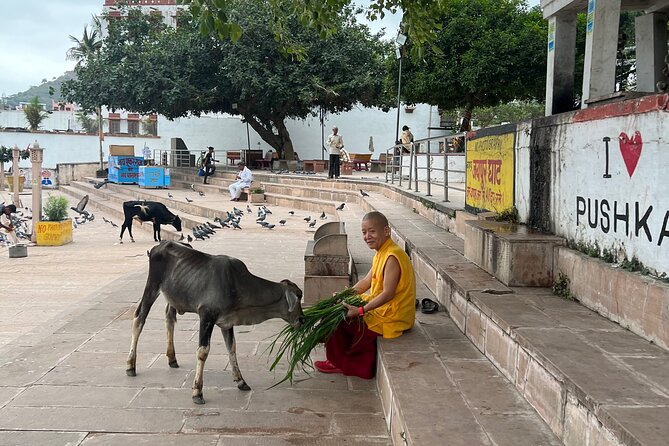
From the Brahma Temple area, the tour heads toward Brahma Ghat and the Pushkar Lake zone for about 30 minutes. This part is described as important for families offering prayers for happiness and for tribute to the dead souls.
The lake-and-ghat setting is a major reason this tour appeals. You’re not just learning in theory. You’re seeing devotion tied to a water setting that pilgrims actively use.
This stop is listed as free for admission. It’s also described as famous for photography and the ghat experience. If you like photos, you’ll want to watch for the moment your guide tells you to step back and let the scene settle.
Stop 7: The short refresh at Alka Rooftop Restaurant
After the lake/ghat area, there’s a quick break at Alka Rooftop Restaurant. It’s about 10 minutes, and this part is listed as included.
The refreshment is a cup of Lemon Ginger Honey, and the selling point here is the view—your stop is described as having a beautiful view of the market. This doesn’t feel like a big detour. It’s the kind of micro-break that keeps you comfortable enough to keep walking.
If you’re sensitive to heat or your energy dips during walking tours, this brief stop can make the difference between feeling rushed and feeling in control of your pacing.
Stop 8: Gau Ghat and the sweets of Halwai Gali
Next is Gau Ghat for about 15 minutes. The tour describes it as the oldest ghat in 52 Ghats, also known as Gandhi Ghat.
This stop also connects the spiritual to the everyday market life nearby. The tour highlights that Halwai Gali in front of Gau Ghat is popular for sweet bakers and confectioners, so it’s a good moment to notice how devotion and local food culture overlap in Pushkar.
Admission is included for this stop. Even if you don’t buy anything, it’s an informative cultural check-in before the tour wraps.
The included malpua and cardamom-ginger tea (this is real value)
Food on a city-walk can be hit-or-miss, but here it’s built into the experience. You get traditional breakfast malpua, plus coffee and/or tea—specifically a special masala tea served in a claypot with cardamom and ginger.
Malpua is described in detail: sugar syrup-coated pancakes made with curd, spices, khoya (dried milk solids), and topped with nuts. That level of description matters because it tells you the snack isn’t generic. It’s a Pushkar sweet.
There’s also a clear line on what’s not included: foods and drinks beyond what the tour states are not included. So if you plan to eat a full separate meal during the walk, you may need to pay extra.
Still, getting chai and malpua as part of the route helps you keep moving. You’re not hunting for a café while everyone else is ready to continue.
Price and logistics: why this low cost can still add up
At $6.76 per person, this is priced for travelers who want meaning without spending like it’s a luxury guided day. But don’t assume it’s light on value just because the price is low.
What’s included here is a lot: guiding fees, taxes and handling charges, entrance fees, pickup and drop-off, a tour explorer, and the included chai and malpua. There’s also locker support for camera and larger items, plus a mobile ticket.
So where does the value come from? It comes from bundle design. Instead of paying separately for each entry and then trying to find someone to explain it well, you get a structured walk where interpretation and access are paired together.
One thing to watch: holy rituals and ceremonies are not included if you choose them. If you’re hoping to participate in a blessing ceremony, budget for that choice separately.
Who should book this Pushkar walking tour
This is a great fit if you:
- Want a fast, guided orientation to Pushkar’s spirituality and temple architecture
- Like understanding what you’re seeing, not just taking photos
- Are comfortable walking through town for about 1 to 3 hours
- Want Sikh and Hindu context in the same route
It may be less ideal if you:
- Want a long food-focused day (this is a city and temple walk, with specific included snacks)
- Plan to add multiple ceremonies and want everything priced upfront
- Need a slower pace with lots of sitting time at each site (this route is structured for movement)
Should you book it? My decision guide
If you want a focused, structured introduction to Pushkar, I’d say yes. The included guide work, temple-to-ghat flow, and the chai-and-malpua break are the kind of details that turn a walk into a story you can repeat later.
I’d think twice only if you know you’ll need a lot of downtime, or if you’re certain you want paid ceremonies built into the package. Since rituals are listed as optional at your choice and not included, plan for extra costs if that’s your priority.
FAQ
What is the duration of the Spiritual City Walking Tour – THE Pushkar Route?
The tour lasts about 1 to 3 hours (approx.).
How much does this tour cost?
The price is $6.76 per person.
Is hotel pickup and drop-off included?
Yes, hotel pickup and drop-off are included.
What food and drinks are included?
You’ll be served a traditional breakfast of malpua and masala tea in a claypot. Coffee and/or tea is included, with cardamom and ginger mentioned for the special tea.
Which places are included in the walking route?
The route includes Gurudwara Sahib, Varaha Temple, Old Rangji Temple (Rama Vaikuntha Temple), Atmateshwar Mahadev Mandir, Brahma Temple, Pushkar Lake and Brahma Ghat, a stop near Alka Rooftop Restaurant, and Gau Ghat.
Are entrance fees included?
Yes, entrance fees are included.
Are holy rituals or ceremonies included?
No. Charges for holy rituals and ceremonies based on traveler choices are not included.
What is the maximum group size?
The maximum group size is 6 travelers.
Is the tour weather-dependent?
Yes. This experience requires good weather. If canceled due to poor weather, you’ll be offered a different date or a full refund.