REVIEW · LHASA
Tibet Tour 8 Days Lhasa to Everest Base Camp Small Group Tour
Book on Viator →Operated by Tibet Vista · Bookable on Viator
Everest is the goal, but the pace wins. This 8-day small-group trip connects Lhasa to Everest Base Camp with an English-speaking Tibetan guide, and it keeps the heavy lifting like permits and timing off your plate. I also like that permits and entry tickets for the listed sites are built into the tour price, so you can spend more energy acclimatizing and less time figuring out logistics.
One thing to keep in mind: this is a high-altitude, long-day road trip where weather can affect the Everest area. Also, the site details sometimes say admission tickets are not included even though the package lists entrance fees as included, so I’d confirm what your final voucher covers before you go.
In This Review
- Key highlights that make this tour feel easier
- A smart way to link Lhasa classics to Everest
- Getting to Lhasa: pickup, mobile ticket, and first-night reset
- Potala Palace, Jokhang Temple, and Barkhor kora without the scramble
- Drepung and Sera monastery day: the debate that makes time feel real
- Yamdrok Yumtso and the Karola La road: passes, glacier views, and prayer flags
- Shigatse staging and travel comfort that actually matters
- Everest Base Camp day: permits, high passes, and a full 12 hours
- Rongbuk sunrise and Everest views from the Rongpuk vantage point
- Tashilunpo Monastery and the drive back to Lhasa: a strong cultural finish
- Leaving Tibet on schedule: why permits shape the ending
- Price and value: what $949 really buys (and what it doesn’t)
- Should you book this Lhasa to Everest Base Camp small-group tour?
- FAQ
- What does the $949 per person price include?
- What’s not included in the tour price?
- Do I need a Tibet permit, and who handles it?
- Is the Chinese L visa included?
- How large is the small group?
- Is airport or train pickup included in the tour?
- How does the tour handle accommodations and single rooms?
- What meals are included during the 8 days?
- Is oxygen provided for the altitude?
- Is there any special cold-weather help?
- What happens if Everest plans are affected by weather?
Key highlights that make this tour feel easier
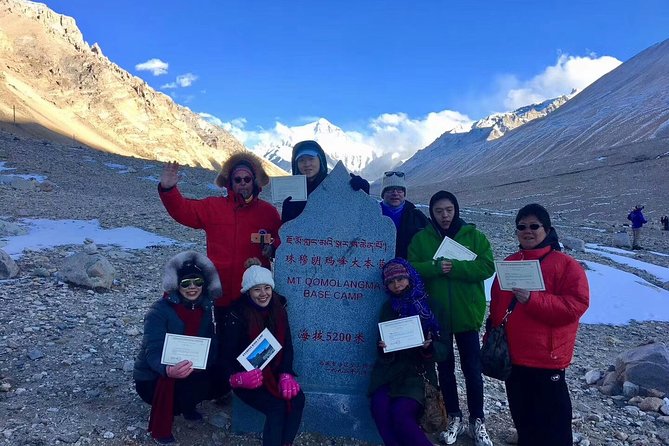
- Max 12 travelers means less crowding and more time with your guide
- Permits, transport, hotels, and oxygen are packaged together for smoother planning
- Sera Monastery debate timing gives you a real rhythm to the afternoon visit
- High-pass route days include Yamdrok-tso, Karola La Glacier, and prayer-flag stops
- Everest Base Camp access includes the Everest Base Camp Echo bus
- Winter comfort add-ons (Nov 15–Feb 15) include warm-up items at Rongpuk Guest House
A smart way to link Lhasa classics to Everest
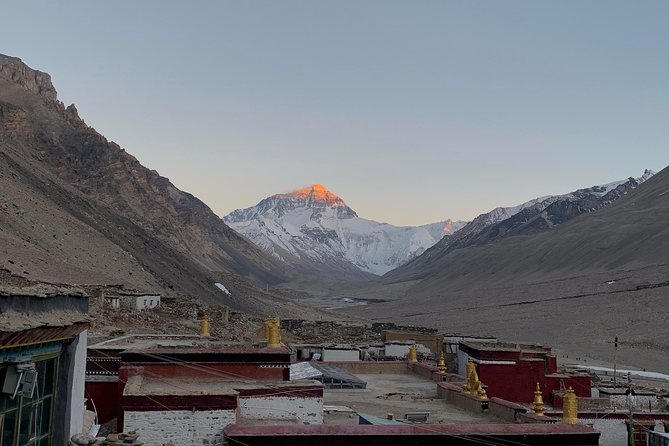
This tour is built for people who want the big names—Potala Palace, Jokhang Temple, and Everest Base Camp—without spending days piecing together transportation and permissions. You’re moving between spread-out sites in a comfortable van or minibus, and you have an English-speaking Tibetan guide to translate, explain, and keep the day running.
The small-group size matters more than it sounds. On a route like this, you don’t just want information—you want access. Fewer people means your guide can help you handle the small moments: where to stand, what to watch for, and how to make your time count at each stop.
Getting to Lhasa: pickup, mobile ticket, and first-night reset
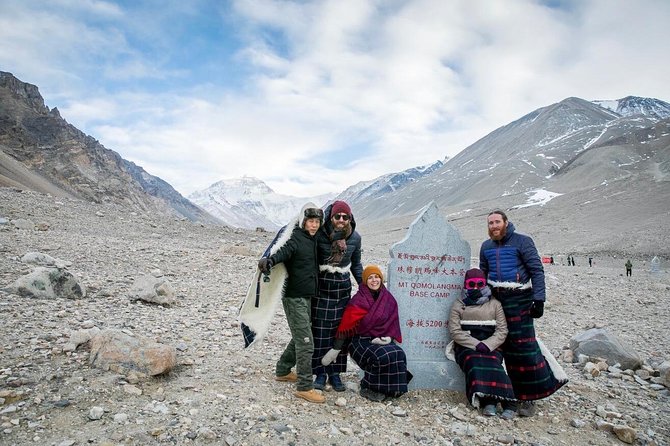
Day 1 starts with a simple win: you’re greeted at the airport or train station by your Tibetan guide, then transferred to your downtown Lhasa hotel. Along the way, you’ll get views of the Yarlung Tsangpo River, which is a nice way to transition from travel-mode into Lhasa-mode.
You also get practical coverage from the start. The tour includes pickup/drop-off service, and you’ll receive a mobile ticket. Add in drinking water during the trip and the fact that your transportation is handled by an experienced local driver, and your first day stays calm.
My only advice here is the obvious one that still matters: treat Lhasa as your acclimatization runway. Even with oxygen available later, the first day is about settling, hydrating, and not trying to sprint through “one more temple” right away.
Potala Palace, Jokhang Temple, and Barkhor kora without the scramble
Day 2 is all about the sacred core of Lhasa.
First up is Potala Palace, described here as the winter palace of the Dalai Lama, with use dating back to the 7th century. You’ll have about 1 hour 30 minutes to see the highlights at a comfortable pace.
Then you shift to Jokhang Temple, founded in the 7th century. This stop is special because it centers on a key devotional image: a statue of Buddha Sakyamuni at the age of twelve, plus the surrounding temple atmosphere that draws pilgrims year after year. You’ll also get about 1 hour 30 minutes here.
After lunch, you head to Barkhor Street, where you can join the kora (a religious loop) with pilgrims and locals, and browse the old market. The tour also notes a chance to taste Tibetan tea with locals—small moment, but it’s the kind of human detail that makes the day feel lived-in rather than just photographed.
One caution: the schedule notes admission ticket not included for Potala Palace and Jokhang Temple, but the package states entrance ticket fees for sites in the itinerary are included. That mismatch is enough that I’d confirm your inclusions message or voucher wording before you arrive.
Drepung and Sera monastery day: the debate that makes time feel real
Day 3 keeps the monastery theme going, but adds two different textures: village calm, then monastery intensity.
In the morning, you visit Drepung Monastery (Zhebang Si), plus Dadong Village, described as 25 kilometers southwest of central Lhasa. This is one of those stops that doesn’t just add “another dot on the map.” A protected ancient Tibetan village gives you a breather from crowds and a more grounded sense of where the monastic world sits in daily life.
In the afternoon, you go to Sera Monastery, one of the “great three” Gelug monasteries. The hot attraction here is the monks’ debate, typically around 3 to 5 in the afternoon. Even if you don’t know the language, you’ll feel what’s happening—rhythm, pacing, and the seriousness of the exchange. You get about 2 hours, which is enough time to observe without feeling rushed.
This day works well if you like your travel with structure. You’re not just wandering; you’re arriving at moments that have a built-in timing.
Yamdrok Yumtso and the Karola La road: passes, glacier views, and prayer flags
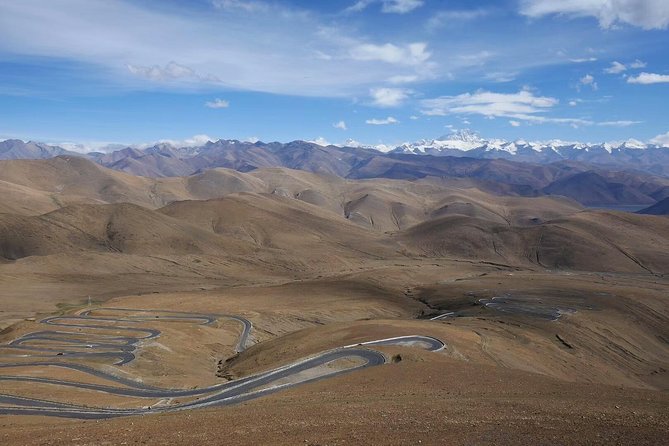
Day 4 is a “road day,” but it’s not dead time. It’s the kind of travel day where the scenery and the stops keep changing, so you don’t feel like you’re trapped in the seat for hours.
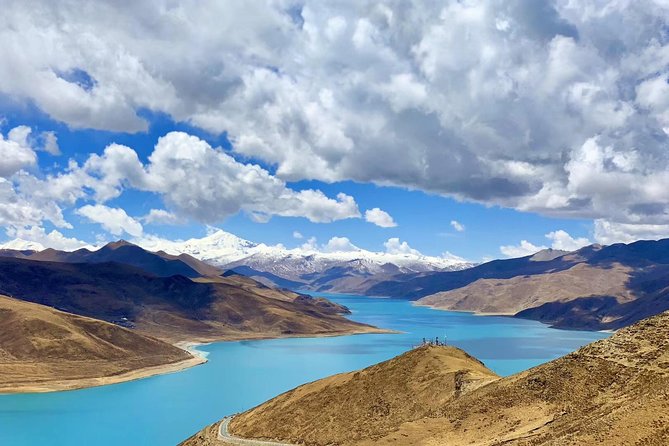
You drive from Lhasa toward Shigatse and cross Gampala Pass (4790m). You get a glimpse of Yamdrok-tso (about 4400m)—a lake set among snow-capped mountain views.
Then the itinerary brings you to Karo La Glacier by the roadside. You’ll also pass Manak Dam Lake, with a chance to hang prayer flags at Simila Mountain Pass. That’s a small action, but it’s one that connects you to Tibetan devotional practice in a very direct way.
In Gyantse (historically described as Tibet’s third-largest city after Lhasa and Shigatse), you visit Pelkor Chode Monastery, plus Gyantse Kumbum and get a far view of Gyantse Fortress. After that, you continue on to Shigatse after about 1.5 hours of driving.
The drawback with days like this is obvious: you’re trading sleep-in for scenery. If you hate long drives, this is the day that will test you. If you’re okay with “stop, see, drive, stop, see,” it’s one of the more satisfying days on the route.
Shigatse staging and travel comfort that actually matters
Shigatse is where the trip steadies out. You’ll have hotel time with breakfast included (your overnight stays are in Lhasa and Shigatse, twin-sharing), and you’re still working within a planned pace instead of making decisions on the fly.
Your transportation setup helps here: a comfortable vehicle with an experienced local driver, plus gasoline included. Drinking water is also provided during the trip, which is a quiet comfort at high altitude when you’re more likely to forget to hydrate.
This matters because the Everest days are coming. Days 5 and 6 are long and intense—so Shigatse functions like a reset point: sleep, eat breakfast, and get ready for the permit-and-pass-heavy run toward Rongbuk and base camp.
Everest Base Camp day: permits, high passes, and a full 12 hours
Day 5 is your long one: about 12 hours from the moment you start.
Before going, you’ll get your permit (the notes call it an Alien’s travel permit as part of the process). Then you drive to Lhatse, where lunch is included in the flow of the day. You’ll pass Tsola Pass (4600m) and Gyatsola Pass (5248m) before entering the Mount Everest area.
Once you’re in, the day becomes about endurance and patience. You’ll be dealing with altitude, crowds (depending on conditions), and the reality that the base camp area is less about comfort and more about presence.
It’s also included with Everest Base Camp Echo bus in the package, plus a platform service fee. That’s one of those details that makes the logistics easier, because it reduces the number of moving parts you’d have to handle yourself.
My practical tip: keep your expectations grounded. You’re going for the view and the moment, not a “relax by the café” experience.
Rongbuk sunrise and Everest views from the Rongpuk vantage point
Day 6 focuses on the Everest payoff in a more intentional way.
You start in the morning with the chance to see sunrise appear on top of Mt. Everest. The tour description points to Rongpuk as the vantage point for a full view of Everest as a snow-capped pyramid. You’ll also visit Rongbuk Monastery, with about 1 hour planned here.
This is where timing and conditions matter most. If the weather is clear, the morning can feel electric. If it’s not, you may still get meaningful views, but sunrise won’t feel the same.
Also note the tour includes oxygen in the car (4L or 7L), which can be a comfort during the bumpy parts of the day, especially for people who get headaches or feel “off” at altitude.
Tashilunpo Monastery and the drive back to Lhasa: a strong cultural finish
Day 7 is your cultural closer and your big distance ride back.
You visit Tashilunpo Monastery, seat of Tibet’s second-highest incarnation, the Panchen Lama. You’ll have about 2 hours here, and it’s a meaningful contrast to the Everest days: instead of snow and passes, you’re back in the world of devotion, ceremony, and monastic art.
Then you drive about 175 miles (280 km) back to Lhasa by late day timing (the details don’t specify an arrival clock time, but it’s a long return).
This day is for travelers who want their trip to end with something grounded. You’re not just “returning to the airport.” You’re finishing with a place that explains another layer of Tibetan spiritual life.
Leaving Tibet on schedule: why permits shape the ending
Day 8 is departure-focused. The notes say you have to leave Tibet by air or flight because your Tibet Permit is limited for this tour. If you want to stay longer, you’ll need to arrange another tour in Tibet, or the supplier can help with airport or railway drop-off service if you contact them in advance.
That “permit-shaped” ending is one of the reasons this style of tour can feel easier. The tour operator is building around the rules of what’s allowed during your travel window, so you’re not trying to extend or reshape the trip while you’re already at high altitude.
Price and value: what $949 really buys (and what it doesn’t)
At $949 per person, this tour isn’t cheap on paper. But it’s also not just “a driver and some stops.” Your price covers big-ticket items that are usually the hardest to assemble yourself in Tibet.
Included items that matter for value:
- Permits (Tibet Travel Permit and other necessary permits), with the Chinese L visa specifically excluded
- Transportation in a comfortable van/minibus with an experienced local driver
- English-speaking Tibetan guide
- Hotels with breakfast in Lhasa and Shigatse (twin-sharing based)
- Entrance ticket fees for sites in the itinerary, plus the Everest Base Camp Echo bus and platform service fee
- Oxygen cylinder in the car (4L or 7L)
- Welcome dinner when the group meets in Lhasa
- Drinking water, liability travel insurance, and a Tibet handy map
- Winter comfort add-on from Nov 15 to Feb 15: hot water bottle and electric blanket for Rongpuk Guest House
What’s not included:
- Tips to driver and guide
- Lunches and dinners (only the welcome dinner and one lunch are included)
- Flights or train tickets to Lhasa (the operator says they can help if you need it)
- Any required single room supplement is not included, since the price is based on double occupancy and singles cost extra if available
My biggest “value-check” for you is the admission ticket note mismatch. Because the package claims entrance fees are included but some stop notes say admission tickets are not included, you should confirm what you’re paying at the gate versus what’s already covered.
Should you book this Lhasa to Everest Base Camp small-group tour?
I think this tour is a solid fit if you want structure, language help, and a route that hits major Tibetan sights plus Everest Base Camp without turning your vacation into project management.
You should strongly consider booking if:
- you like the idea of a small group (max 12) and an English-speaking Tibetan guide
- you don’t want to hunt down permits and entrance logistics on your own
- you’d rather use your energy on acclimatizing and enjoying the experience than planning drives
- you value included extras like oxygen, hotel nights with breakfast, and winter warmth for cold-season travel
You might pass if:
- you’re very sensitive to long driving days
- you need absolute certainty on admission coverage for each site and want everything spelled out in one consistent way (do that confirmation first)
- you’re trying to keep costs extremely tight, since lunches and dinners aren’t included
If you want a high-altitude trip that feels organized and human, this one makes a strong case.
FAQ
What does the $949 per person price include?
It includes the Tibet Travel Permit and other necessary permits for Tibet (excluding the Chinese L visa), transport by comfortable van or minibus with an experienced local driver (gasoline included), an English-speaking Tibetan guide, a welcome dinner in a local restaurant when the group meets in Lhasa, an oxygen cylinder in the car (4L or 7L), liability travel insurance, drinking water during the trip, a Tibet handy map, winter care service from Nov 15 to Feb 15 (hot water bottle and electric blanket to keep warm at Rongpuk Guest House), service charges and government taxes, pickup/drop-off from the airport or train station to Lhasa, hotel accommodations with breakfast based on twin-sharing in Lhasa and Shigatse, entrance ticket fees for tourist sites listed in the itinerary plus the Everest Base Camp Echo bus and platform service fee, and breakfast (6).
What’s not included in the tour price?
Tips to the driver and tour guide are not included. Lunches and dinners are not included (beyond the welcome dinner and one included lunch mentioned in the details), and flight or train tickets to Lhasa are not included (though the operator says they can help if you need them).
Do I need a Tibet permit, and who handles it?
Yes. The tour includes the Tibet Travel Permit and other necessary permits for Tibet, and your permit is delivered to your delivery address or hotel address in one city of China. You’re required to provide photocopies of your passport and China L visa at least 20 days before travel.
Is the Chinese L visa included?
No. The tour includes the Tibet permit and other necessary permits for Tibet, but it explicitly excludes the Chinese L visa. The tour also says it can provide a Chinese visa invitation letter if needed.
How large is the small group?
This tour has a maximum of 12 travelers.
Is airport or train pickup included in the tour?
Yes. Pickup and drop-off service from the airport or train station to Lhasa is included, and it states that your airport pick-up and drop-off in Lhasa needs to be arranged by the tour supplier.
How does the tour handle accommodations and single rooms?
The tour price is based on double occupancy. Single room supplement is subject to availability and has an additional charge.
What meals are included during the 8 days?
Breakfast is included 6 times. A welcome dinner is included in Lhasa, and one lunch is included. Lunches and dinners are otherwise excluded.
Is oxygen provided for the altitude?
Yes. Oxygen cylinders are included in the car (4L or 7L).
Is there any special cold-weather help?
Yes. Winter care service is included from Nov 15 to Feb 15, with a hot water bottle and an electric blanket to keep warm at Rongpuk Guest House.
What happens if Everest plans are affected by weather?
The cancellation policy notes that the experience requires good weather. If it is canceled due to poor weather, you’ll be offered a different date or a full refund.