REVIEW · TAITO CITY
Tokyo: Sumo Show Experience with Chicken Hot Pot and a Photo
Book on GetYourGuide →Operated by Asakusa Sumobeya Co.,Ltd. · Bookable on GetYourGuide
Tokyo’s sumo show is pure theater. You get the real dohyo feeling, then throw in a chicken hot pot meal and audience participation, all in about two hours.
I like that the whole experience is built for mixed ages: kids get the laughs and the chance to interact, while adults get clear explanations in English and Japanese. I also love the setting, because the restaurant centers around an actual sumo ring (dohyo), so it feels less like a show in a hall and more like sumo in miniature.
One thing to keep in mind: this is an entertainment show with retired wrestlers, not the behind-the-scenes routine of an active sumo stable. If you’re craving serious training, you’ll still enjoy this, but your expectations should be tuned to family-friendly fun.
In This Review
- Key things you’ll notice (fast)
- Entering Asakusa Sumo Club: where the dohyo becomes the star
- What happens during the 2-hour show (and what each part is for)
- The chicken chanko-nabe hot pot meal: your comfort break with real payoff
- Sumo challenge: how to maximize your odds and your moment
- Seating choices in Tokyo: Standard vs VIP vs VVIP
- The vibe: why this works for families and first-timers
- Value check: is $103 per person worth it?
- Souvenirs and photo: a nice finish, not just a gimmick
- Who should book this Tokyo sumo experience?
- Should you book it?
- FAQ
- How long is the Tokyo sumo show experience with chicken hot pot?
- What’s included with the ticket?
- Can I step into the ring and challenge a sumo wrestler?
- Is this show the same as seeing a serious sumo stable practice?
- What seating options are available?
- Is the meal vegetarian or vegan friendly?
- Can you provide gluten-free or halal meals?
- What kind of food is served during the show?
- What if my group needs wheelchair-accessible seating?
- Is this suitable for babies?
Key things you’ll notice (fast)
- Bilingual explanation keeps the rules and rituals clear even if you’re brand-new to sumo
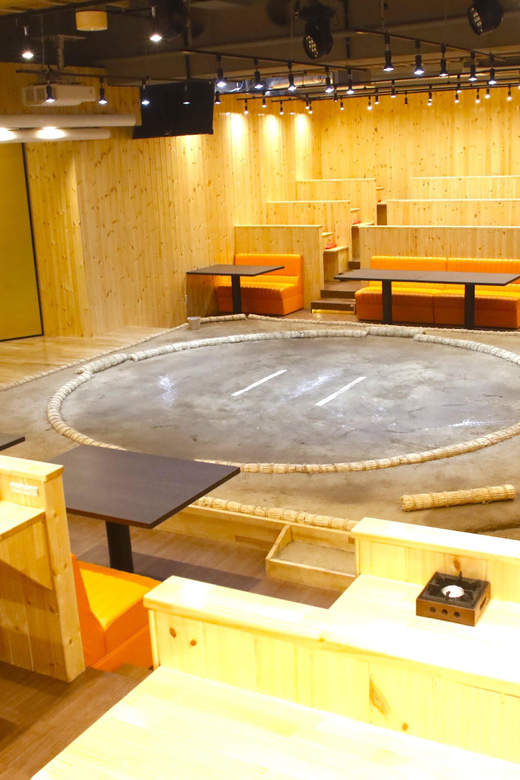
- Real dohyo on site makes the action feel close and visually authentic
- All-you-can-eat chicken hot pot (chanko-nabe) keeps the energy up during the show
- Ring challenge is the big interactive payoff, with limited spots and possible lottery selection
- Souvenir photo plus souvenir set/gift bag gives you something to take home right after
Entering Asakusa Sumo Club: where the dohyo becomes the star
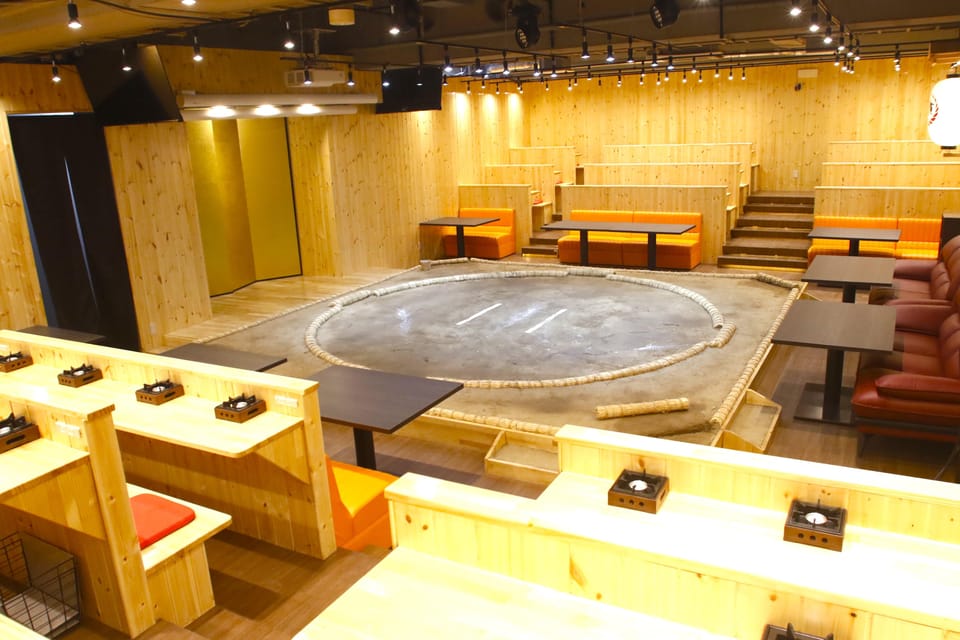
This Tokyo sumo show takes place at Asakusa Sumo Club, with the key difference being that the venue is built around the ring itself. You’re not just watching from far away while performers do their thing at a distance. The dohyo sits at the center, so your eyes keep returning to the circle of sand and the ceremonial space around it.
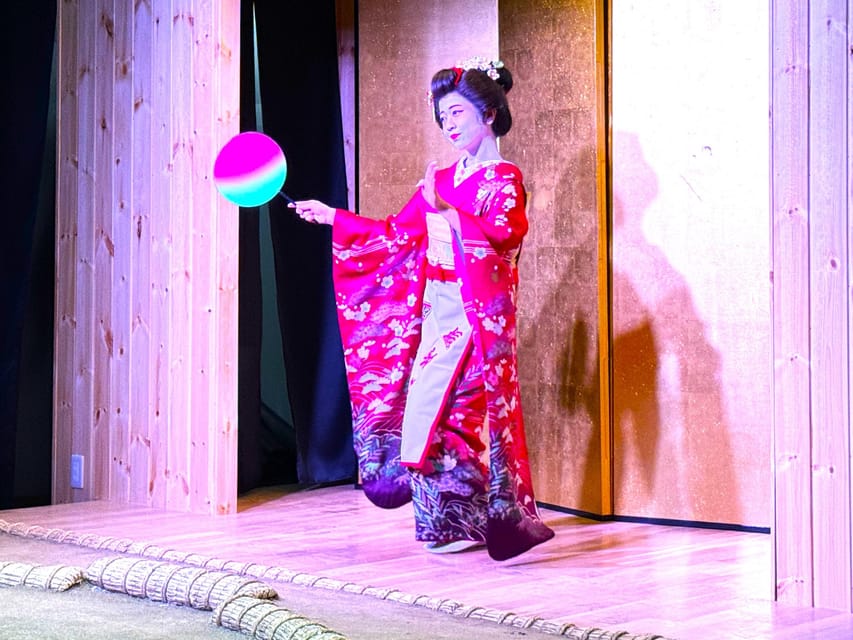
Before any “match” starts, you’ll get a traditional dance performed by a geisha in kimono. It’s a classic tone-setter, and it also helps you transition from normal restaurant life into a scripted cultural performance. The pace moves quickly after that, with live demonstrations and explanations geared to people who might not know what they’re looking at yet.
If you’ve only seen sumo on TV, this is a helpful bridge. You’ll get context for what you’re seeing: how bouts start, what different gestures mean, and why so much of sumo is ritual, not just brute force.
What happens during the 2-hour show (and what each part is for)
The show runs about 2 hours, and it’s structured to keep attention without rushing through the basics. The best way to think of it is as three layers: learn, watch, participate.
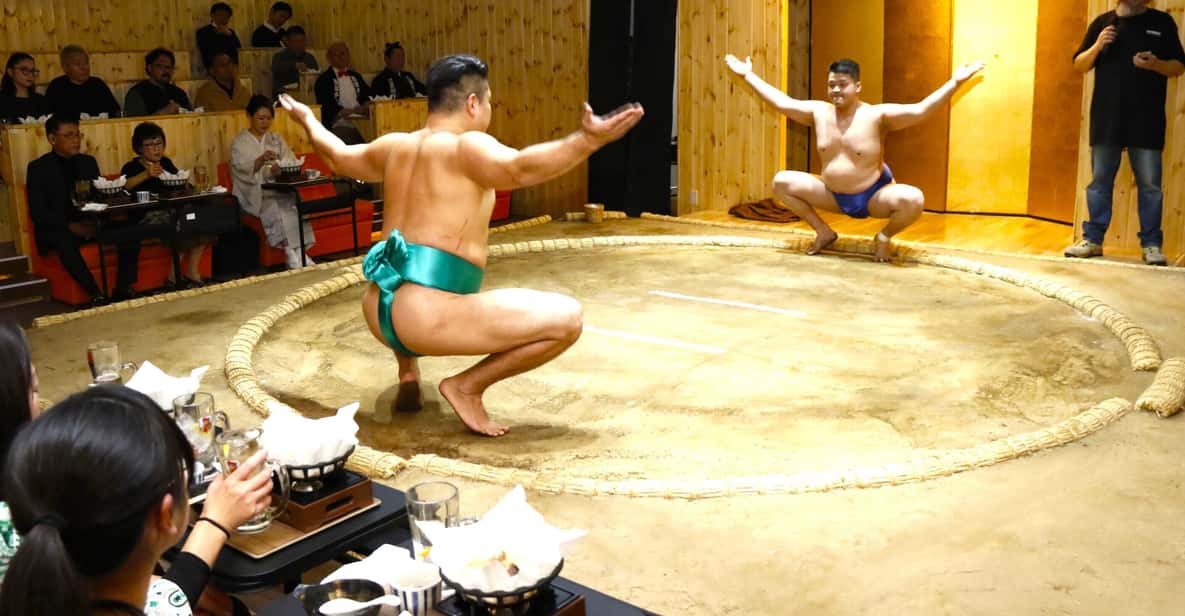
First comes a guided introduction to sumo rules and classic techniques. There are live demonstrations of morning-style training movements, plus instruction on the do’s and don’ts of sumo wrestling. The moderator provides live bilingual commentary (English and Japanese), so even if the action is fast, the meaning isn’t lost.
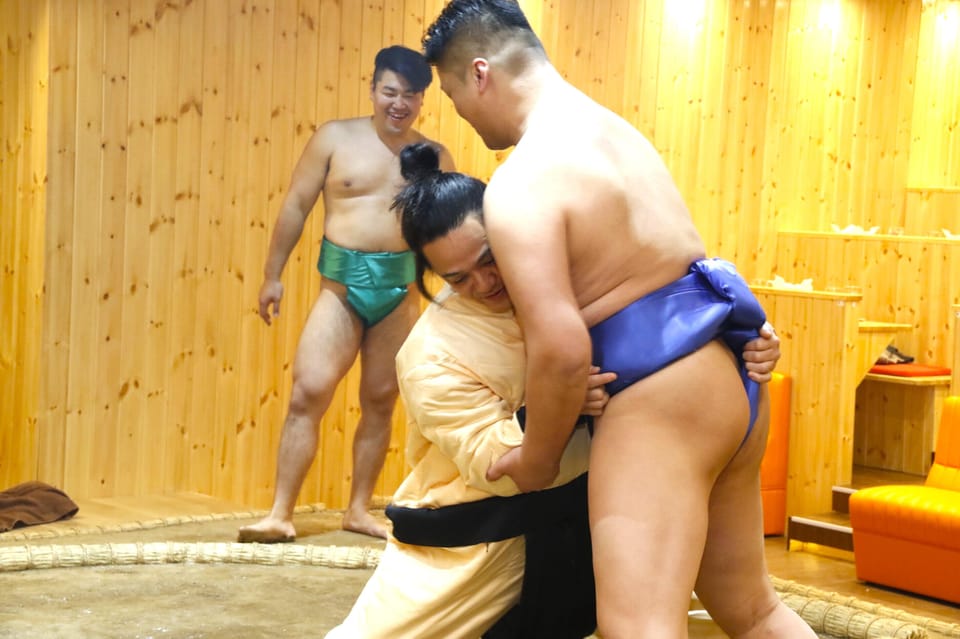
Next you watch a best-of-three match between retired professional wrestlers. This is where you see technique and timing in a way that’s usually entertaining rather than overly long. Since they’re professionals but not running an actual tournament schedule, the show can also afford to be playful and audience-friendly.
Finally, the interactive section lets you step into the ring and challenge a wrestler. Challenger spots are limited per show, and if too many people want in, participants are selected by lottery. That limitation is actually part of the “value” of the moment: it keeps the experience special instead of turning it into a free-for-all.
The chicken chanko-nabe hot pot meal: your comfort break with real payoff
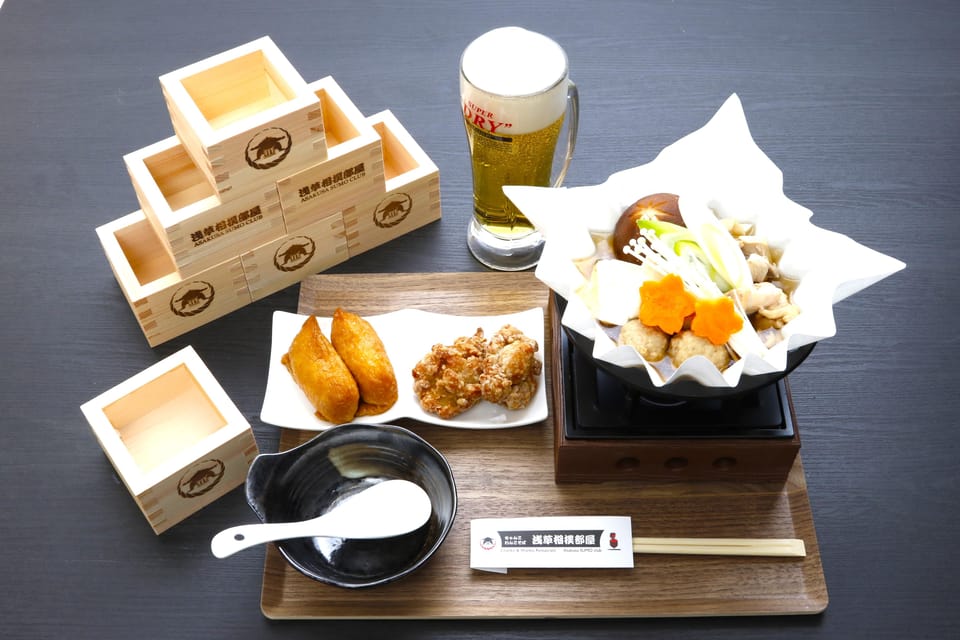
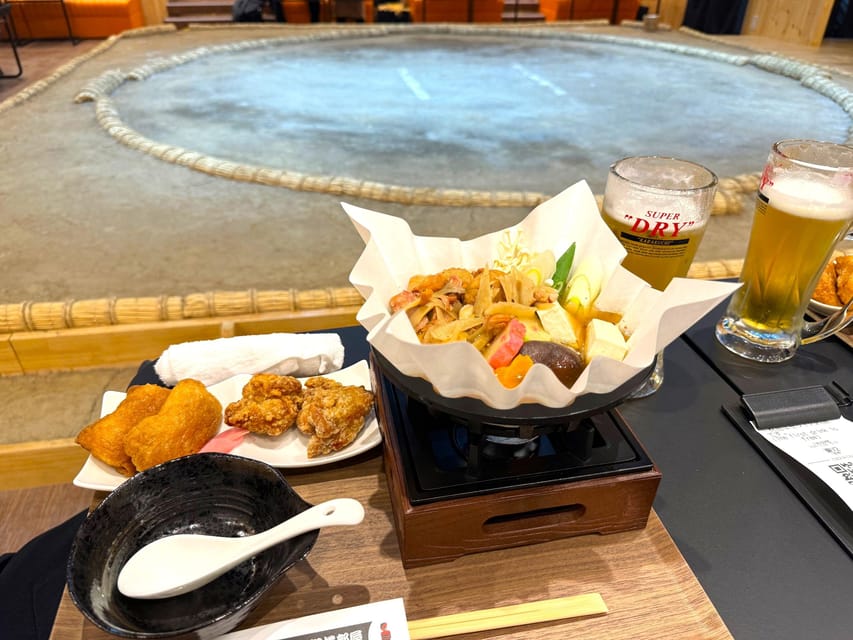
Food is a big part of why this experience works so well. During the show you’ll enjoy an all-you-can-eat chicken hot pot (often described as chanko-nabe), plus additional Japanese dishes. One of the nice details: ordering more food is easy, and at least some guests note you can request extras using a QR code at your table.
Chanko-nabe makes sense in a sumo context because it’s the kind of hearty meal associated with wrestlers’ training routines. In this show, it’s also practical: it gives you something warm and filling while the entertainment builds in stages.
Some reviewers mention the meal includes items like edamame and inari sushi, plus sweet rolls. If you’re expecting a fancy multi-course kaiseki dinner, adjust your mindset. This is more “cozy, filling, and fun,” and it’s clearly designed to keep families comfortable and energized.
Possible drawback to note: a few people have commented on the look/feel of the serving bowls over the heat during hot pot (like paper bowls placed near open flame). It’s not usually a problem, but if you’re sensitive to kitchen theatrics, keep that in mind.
Sumo challenge: how to maximize your odds and your moment
Stepping into the ring is the part people remember. It’s also the part that requires the most planning on your end, because challenger spots are limited and selection can be by lottery.
If your goal is to participate, apply early when you’re given the chance during your booking flow. Also go in with the right expectations: this is a staged, supervised challenge with safety and showmanship in mind. You’re not training for a tournament. You’re getting the fun of facing a wrestler up close, with the event staff controlling the timing.
When it comes to performers, recent feedback highlights a host named Lala and a crew member named Benjamin, along with wrestlers such as Anosonobi and Ansohibi, plus a performer referred to as Asanakuma. Your show’s exact lineup can vary, but knowing that the wrestlers lean into comedy and audience interaction helps you set expectations.
To make the experience smoother, wear comfortable shoes and keep your hands free for the moments they cue you. If you’re bringing kids, remind them that they might get chosen or might not, and the show still has plenty of entertainment even if you’re watching rather than stepping in.
Seating choices in Tokyo: Standard vs VIP vs VVIP
All seats offer a view of the ring, but the “closest experience” comes from upgrading. Your best seats depend on what you care about most: watching the ring action clearly, or getting great photos.
- Standard: comfortable with a clear ring view. Good if you’re on a budget and want the full show without worrying too much about angles.
- VIP: front-row seats for an up-close view. This is the sweet spot for many people because you’ll see footwork, gestures, and audience energy more clearly.
- VVIP: premium central seats for the most immersive, unobstructed view. If photography matters a lot, this is where you’ll feel it.
A practical tip: if you’re spending extra, spend it to sit closer, not to chase “perfect” details you can’t control. With an event like this, proximity changes how you experience the ring and the body language.
The vibe: why this works for families and first-timers
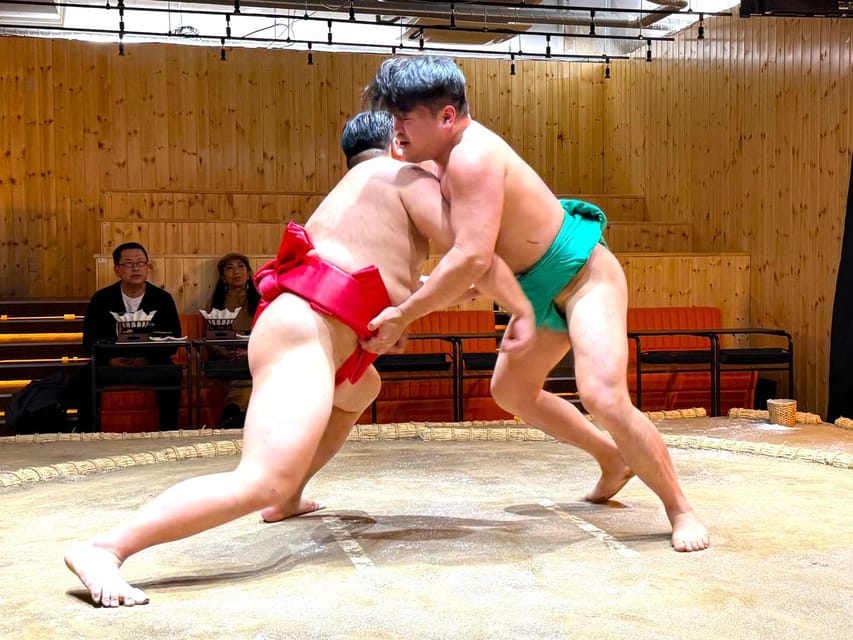
This show is designed to be light, friendly, and easy to understand. The commentary is bilingual, the pacing is energetic, and the audience participation keeps people from tuning out. Several comments emphasize that it’s fun for adults while still feeling safe and age-appropriate for kids.
That balance is not automatic. Some cultural performances lean too long or too serious. Here, the structure is clearly built to keep the fun layer on top while still teaching you the basics: how sumo works, what rituals mean, and why certain behaviors are important.
There’s also a sense of warmth in the way performers interact. The show staff and wrestlers are not just reciting lines; they’re responding to the room. If you like experiences where the energy is shared rather than one-sided, you’ll probably enjoy this.
Value check: is $103 per person worth it?
At about $103 per person for roughly 2 hours, this isn’t a bargain meal. But it also isn’t just a ticket to watch something.
You’re paying for multiple packaged elements:
- a live sumo show with bilingual narration
- training demonstrations and a match segment
- a chance to enter the ring (limited, lottery possible)
- all-you-can-eat chicken hot pot and Japanese dishes
- one complimentary drink
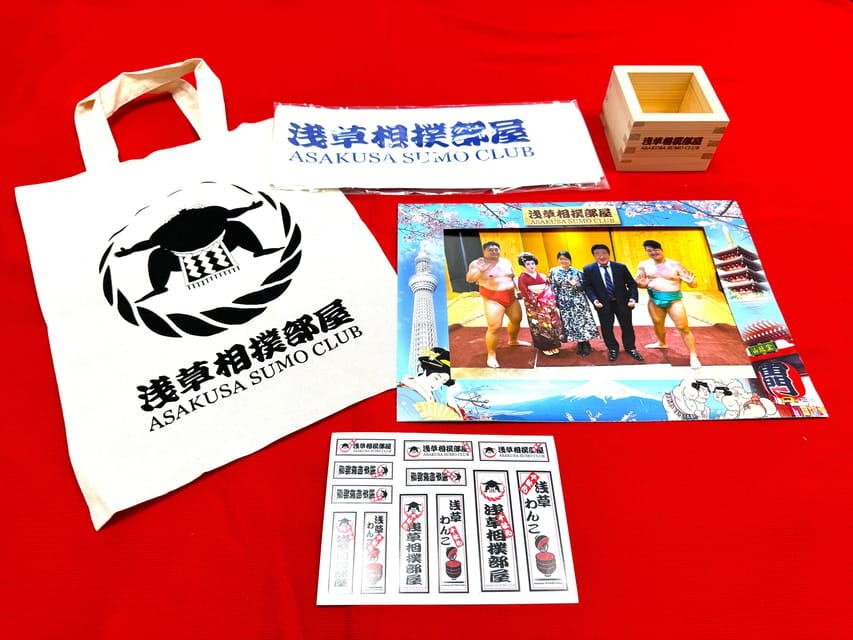
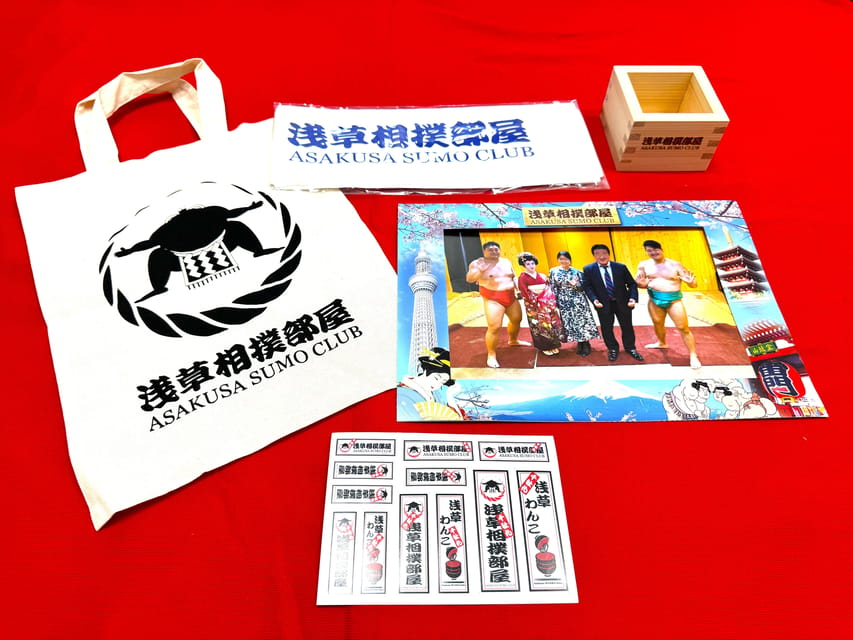
- a printed souvenir photo and a souvenir set/gift bag
From a value standpoint, the math often works best if you’d otherwise spend separately on a cultural performance ticket and a solid dinner. Several reviews also point out the food feels plentiful, and the show feels like it delivers real interaction, not just passive watching.
If your group has at least one person who will enjoy the challenge segment, that’s where the value jumps. If nobody in your group cares about participating, you’re mainly buying a show + meal. You’ll still likely enjoy it, but it won’t feel as “special” as it does for the ring-in-club moment.
Souvenirs and photo: a nice finish, not just a gimmick
After the performance, you’ll take home a souvenir gift bag plus a photo set featuring the sumo wrestlers and the geisha. The format is described as printed souvenir photos, and you may see it referenced as a framed photo as part of the souvenir set.
This is one of those practical tour add-ons that doesn’t feel random. It lands right at the end, when you’ll actually want the memory. If you’re traveling with kids, it’s also a way to keep them invested in what’s happening rather than waiting for dinner and going home.
Who should book this Tokyo sumo experience?
I think this fits best if you want a Tokyo cultural experience that still feels playful and easy to follow.
You’ll probably love it if:
- you’re new to sumo and want the rules explained without a lecture
- you’re traveling as a family or with mixed ages
- you want food included, and you like hot pot-style meals
- you care about audience interaction and fun photos
You might hesitate if:
- you’re a hardcore sumo fan searching for the serious tournament training vibe
- you want gluten-free or halal options, because the experience notes they can’t provide those meals
- you’re sensitive to hot food serving setup near heat (paper bowls over flame has made at least one guest nervous)
Should you book it?
If you want a memorable night in Asakusa with real dohyo visuals, a full meal, bilingual explanations, and a real chance to step into the ring, I’d say this is an easy yes. It’s also a strong choice when you’re building a Tokyo itinerary that needs something understandable, timed right, and not overly complicated.
Book with realistic expectations: this is family-friendly entertainment with retired wrestlers, not a strict training session tour. If that matches your mood, you’ll likely come away smiling, fed, and with a souvenir photo that actually feels tied to the moment.
FAQ
How long is the Tokyo sumo show experience with chicken hot pot?
The experience runs for about 2 hours.
What’s included with the ticket?
You get live bilingual commentary, the sumo show, the chance to challenge a wrestler (limited), a geisha dance performance, all-you-can-eat chicken hot pot and Japanese dishes, one complimentary drink, and a printed souvenir photo plus a souvenir set.
Can I step into the ring and challenge a sumo wrestler?
Yes, you can participate in a ring challenge. Challenger spots are limited, and if there are too many applicants, participants are selected by lottery.
Is this show the same as seeing a serious sumo stable practice?
No. This is designed as a fun, family-friendly entertainment show with retired wrestlers, not a serious morning practice tour or behind-the-scenes active-stable experience.
What seating options are available?
There are Standard, VIP, and VVIP seating options. All have a view of the ring, but VIP is front-row, and VVIP is premium central seating with the most immersive, unobstructed view.
Is the meal vegetarian or vegan friendly?
Vegetarian and vegan meals are available upon request, but you need to reserve at least 2 days in advance.
Can you provide gluten-free or halal meals?
The experience states they are unable to provide gluten-free or halal meals. If you need dietary accommodations, you may bring your own food.
What kind of food is served during the show?
You’ll have all-you-can-eat chicken hot pot (chanko-nabe) along with other Japanese dishes. Some guests also mention items like edamame and inari sushi.
What if my group needs wheelchair-accessible seating?
Wheelchair-accessible seating is available but limited. Inform the provider at booking so they can place you appropriately.
Is this suitable for babies?
It is not suitable for babies under 1 year.