REVIEW · TOKYO
Mt Fuji Private Tour with English Speaking Driver
Book on Viator →Operated by Welcome Japan Tours · Bookable on Viator
Fuji in your own car beats the bus fight. This private day trip is built for easy pacing and big mountain views, with a driver who can handle the busy weekend chaos for you. You’ll hit classic photo spots like the Arakura Fuji Sengen Shrine area and Lake Kawaguchiko, with an itinerary you can tweak to match your energy and interests. I like the personal attention from English-speaking drivers (names like Vohra, Shaz, Azhar, and Abdul pop up again and again), and I like that the day doesn’t feel rushed between stops. One drawback to plan around: Mt Fuji visibility depends on the weather, and lunch isn’t included.
You’re getting an air-conditioned vehicle, round-trip Tokyo hotel or airport transfers (when selected), and a mobile ticket to keep everything smooth. The price is $415 per group (up to 3), which sounds high until you factor in the private transport, parking, tolls, and a driver doing the work for you all day. Also, some stops include walking and stairs—like the Chureito Pagoda approach—so it’s worth thinking about mobility before you book.
In This Review
- Key things that make this Mt Fuji tour work well
- Why this private Mt Fuji day trip feels easier than trains
- The route: shrines, lake views, and Fuji Five Lakes highlights in one long day
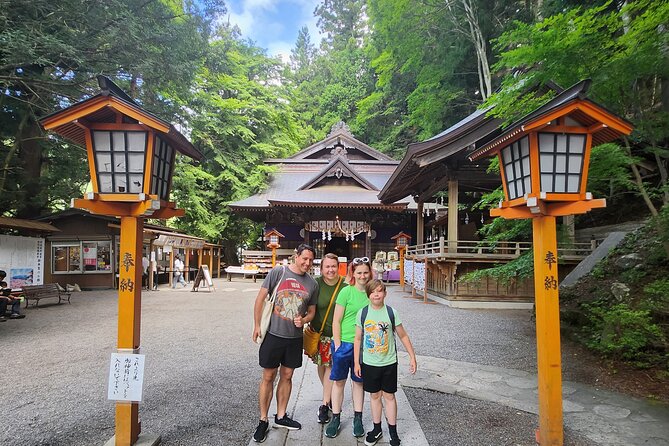
- Arakura Fuji Sengen Shrine and the Chureito Pagoda photo angle
- Lake Kawaguchiko and Oishi Park: getting the Fuji view without rushing
- Mt Fuji Panoramic Ropeway: when the optional add-on makes sense
- Oshino Hakkai ponds and Fuji Honcho Street’s Stairway to Fuji moment
- Kitaguchi Hongu Fuji Sengen Shrine: ending on a calmer Fuji connection
- Food, toilets, and planning lunch (without turning it into a headache)
- Price and value: what $415 per group buys you
- Weather reality: why the clearest day changes everything
- Should you book this Mt Fuji private tour?
- FAQ
- How many people can I book for?
- What is the duration of the Mt Fuji day trip?
- What does the tour price include?
- Where does the tour start, and is pickup available?
- What happens if the weather is poor or Mt Fuji visibility is limited?
- Can I cancel and get a full refund?
Key things that make this Mt Fuji tour work well
- Private, English-speaking driver who can steer you through timing and photo moments without a rigid bus schedule
- Air-conditioned vehicle plus WiFi hotspot when available, so the ride isn’t just “getting there”
- Classic Fuji views in smart order, from shrines to Lake Kawaguchiko and the pond village of Oshino Hakkai
- Optional ropeway time (extra cost) if you want that higher observation point moment
- Free admissions at most stops, with only the ropeway mentioned as not included
Why this private Mt Fuji day trip feels easier than trains
Tokyo to Mt Fuji is one of those routes that can be great on paper and annoying in real life. Trains and buses mean schedules, transfers, and crowded platforms. With this tour, you’re handling the long day by car, with a driver who takes the stress out of navigation and parking.
The day is designed around comfort: an air-conditioned vehicle, parking fees covered, and fuel/highway tolls paid. You also get an onboard WiFi hotspot when available, which helps if you want to check the forecast, look up opening times, or just keep your group connected.
The private format matters most when the route gets tight. Fuji-area traffic can change fast, and visibility can vanish behind clouds. Having a driver who can adjust your timing makes the difference between a frustrating day and a productive one—especially on weekends.
You can also read our reviews of more tours and experiences in Tokyo.

The route: shrines, lake views, and Fuji Five Lakes highlights in one long day
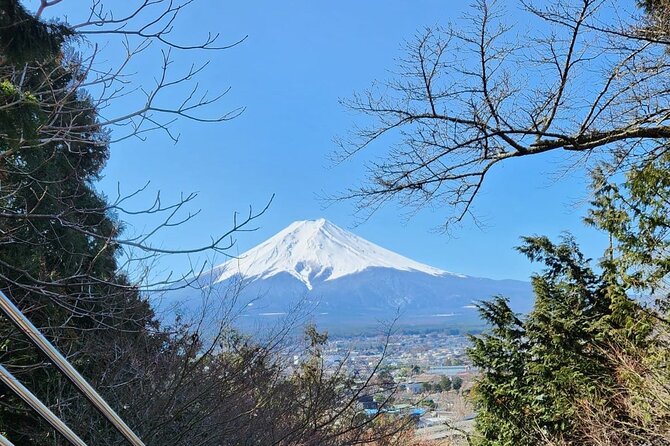
Your schedule is built to hit the most photogenic and meaningful “Fuji region” stops without turning the day into a sprint. Mount Fuji itself is 3,776.24 meters high and is an active volcano—the tallest peak in Japan—and the whole trip is a loop through towns and viewpoints that frame the mountain from different angles.
Here’s how the day flows in practice, stop by stop:
1) Arakura Fuji Sengen Shrine (about 1 hour)
You start with a view-focused shrine area. This is the place people come for the classic Fuji backdrop, with the pagoda viewpoint nearby.
2) Chureito Pagoda (about 30 minutes)
A short but visually intense stop. Expect a climb—this spot is reached after a stair approach with nearly 400 steps mentioned in the tour description.
3) Lake Kawaguchiko (about 30 minutes)
You transition from shrine viewpoints to lakeside scenery. This is one of the easiest bases in the Fuji Five Lakes region to access from Tokyo.
4) Oishi Park (about 15 minutes)
A quick hit of park views. Seasonal flowers can be a big deal here, including lavender in mid-June, plus it has a kid-friendly play area.
5) Mt Fuji Panoramic Ropeway (optional) (up to 1 hour; not included)
If you want the observation height and the big view from higher up, this is the add-on.
6) Fuji-Honcho Main Street / Clock Street area (about 10 minutes)
A fast stroll for a very recognizable photo angle—often called the Stairway to Fuji moment.
7) Oshino Hakkai (about 20 minutes)
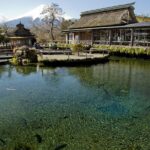
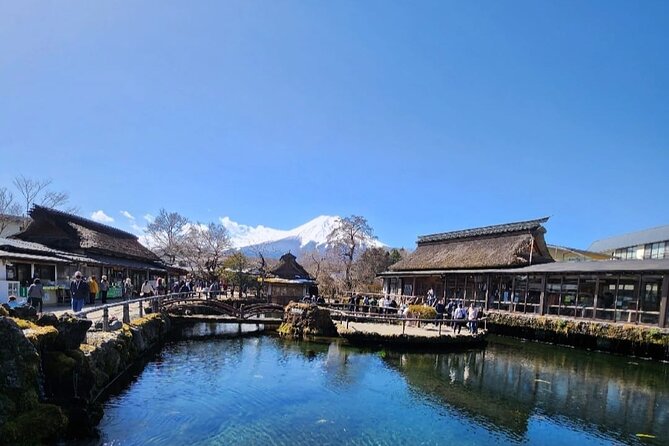
A pond village with eight ponds, tied to the region’s water story and known as a popular stop between Lake Kawaguchiko and Lake Yamanakako.
8) Kitaguchi Hongu Fuji Sengen Shrine (about 30 minutes)
You end on another shrine with a historical Mount Fuji association, finishing the day in a calmer, less photo-rush mood than the pagoda area.
The order above is geared toward variety: shrine views, pagoda shots, lake scenery, a park break, an optional higher viewpoint, then the quaint villages and ponds. It’s the kind of route that helps you get at least a few good views even if the mountain hides behind clouds for a while.
Arakura Fuji Sengen Shrine and the Chureito Pagoda photo angle
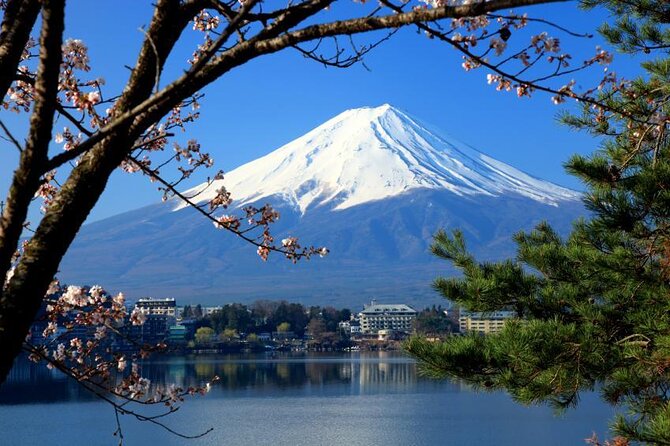
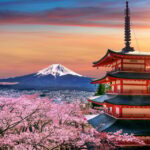
This is the “start strong” part of the day. Arakura Fuji Sengen Shrine is known for a dramatic Mount Fuji view, and it pairs naturally with the Chureito Pagoda area right above.
At Chureito Pagoda, the big thing is the stairs. The description points to nearly 400 steps up, which means you should plan for a little leg work. If your group is traveling with kids, older relatives, or anyone who doesn’t love climbing, you can still do it—but build in a slower pace and don’t rush the steps.
Why this stop is worth the effort: the pagoda viewpoint creates a framing effect. Instead of seeing Fuji as one distant peak, you get a composed scene with the shrine/pagoda foreground and the mountain in the background. Even when the sky isn’t perfect, the area tends to give you options—different angles as you move through the viewpoint paths.
If you care about photos (and who doesn’t here), this is usually where you spend your “camera time.” Ask your driver to time your arrival so you’re not fighting the densest crowd moment, then take your shots before you start moving down.
Lake Kawaguchiko and Oishi Park: getting the Fuji view without rushing
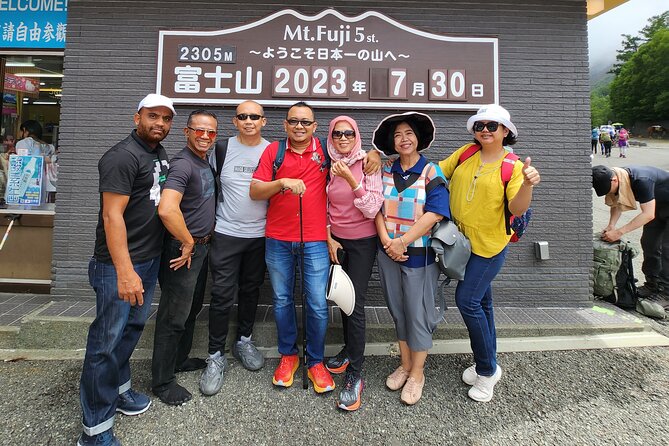
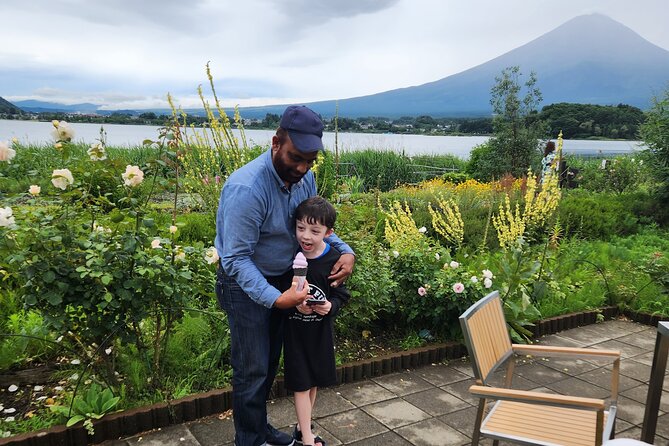
After shrines and steps, Lake Kawaguchiko feels like the calm chapter of the trip. This is the most easily accessed of the Fuji Five Lakes, which is exactly why it’s such a popular base. The 30-minute window is short, so treat it as a scenic reset: walk a bit, find a viewpoint, and enjoy the lake-and-mountain composition.
Then you roll into Oishi Park (about 15 minutes). This stop is quick, but it’s a smart quick stop because parks are built for views with less “line pressure” than pagoda-style viewpoints. The tour description also calls out seasonal flowers, especially lavender in mid-June, and notes there’s a play area—useful if you’ve got children and need an energy outlet.
Practical tip: bring a light layer. Lakes can feel cooler than central Tokyo, and the climb back and forth between view spots can swing your comfort level fast.
Mt Fuji Panoramic Ropeway: when the optional add-on makes sense
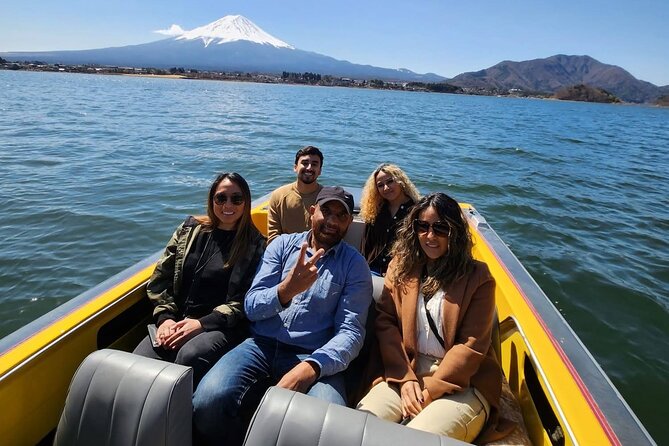
The ropeway is listed as optional and not included in the package, with the cable car taking you up about 220 meters to an observation point. In plain terms: it’s a higher vantage moment, and that can mean a better view—or at least a different angle—than the lakeside or shrine viewpoints.
You’ll love it most if:
- you want fewer crowd pressures at ground level
- you’re chasing that “towering mountain” perspective
- you’re okay adding up to about an hour
You might skip it if:
- your group is already walking a lot (those steps earlier add up)
- you prefer a slower pace and want more time for Oshino Hakkai or Honcho Street
Because it’s weather-dependent, I’d treat the ropeway as a “yes if it looks clear” decision. If Fuji is already hidden, that extra cost can feel like a letdown. If clouds are thin and light is changing, it can be the best bet to still get a strong view.



Oshino Hakkai ponds and Fuji Honcho Street’s Stairway to Fuji moment
Oshino Hakkai is your mid-to-late day culture-and-nature stop. It’s a village known for eight ponds (Oshino Hakkai literally refers to the eight ponds), and the tour description ties it to the site of a former sixth lake. You get about 20 minutes here, which is enough time to walk around, look for the best pond angles, and pick up a feel for how the Fuji region lives beyond the iconic mountain photos.
Then comes Fuji-Honcho Main Street, also associated with the “Clock street” nickname. The tour calls it Honcho Street (or Hikawa Clock Shop Street), and it’s famous for the Stairway to Fuji photo opportunity. Expect a quick 10-minute stop: this is not a long shopping street moment. It’s a photo-and-move stop, and it works well right after Oshino Hakkai when you’ve got a natural “walk fatigue” level.
If you’re traveling with a small group, this part is ideal because you can split for a minute—one person heads to grab photos while the other checks the most direct walking route back to the driver pickup point. With a private car, you’re not losing time to mass group logistics.
Kitaguchi Hongu Fuji Sengen Shrine: ending on a calmer Fuji connection
The last shrine on the route is Kitaguchi Hongu Fuji Sengen Jinja (about 30 minutes). This one is also described as having a prominent association with Mount Fuji, and it’s a nice ending because the pace tends to feel less frantic than the pagoda zone.
It’s a good final stop if you want a sense of the mountain’s spiritual presence beyond the “postcard” viewpoints. Even if you don’t read much Japanese, the atmosphere helps you slow down after hours of sightseeing.
Food, toilets, and planning lunch (without turning it into a headache)
Lunch isn’t included, so you’ll need to plan one real meal during the day. The stops are spaced so you usually have a window to eat, but you don’t want to guess and end up eating late or chasing menus with everyone hungry.
I recommend you do two things before you head out:
- Ask your driver what’s realistic for timing based on traffic and your remaining stops.
- Decide early if your priority is a quick bite near a stop or a slightly longer sit-down meal.
Also, expect that the day includes walking (especially if you do Chureito Pagoda), and it’s smart to use restrooms whenever you spot them rather than waiting for later. Private tours keep you flexible, but your body still needs the basics.
Price and value: what $415 per group buys you
At $415 per group (up to 3), this isn’t a budget day trip. But it’s not trying to be.
Here’s what your money covers:
- a private English-speaking driver
- an air-conditioned vehicle
- parking fees
- fuel and highway tolls
- round-trip Tokyo hotel or airport transfers (when selected)
- WiFi hotspot when available
That set of inclusions matters because Mt Fuji day trips often get expensive fast once you add private transport plus paid parking plus the tolls that come with getting out of Tokyo efficiently.
For couples, it can be a strong value if you’d otherwise need two taxis or spend time assembling transit connections. For a group of three, it’s even easier to justify because you spread the cost while keeping the door-to-door comfort.
The optional ropeway is extra, and lunch is on you, so think of the base price as the “transport + planning + most entry costs” bundle, with two personal add-ons you can choose.
Weather reality: why the clearest day changes everything
This experience requires good weather. When Mt Fuji is visible, the whole day feels like one long payoff. When clouds roll in, it can turn into a “wait and hope” rhythm, and visibility can change by the minute.
The driver role becomes extra important here. You want someone who can respond to cloud breaks by adjusting your timing so you still catch a few clear moments rather than spending the day staring at gray sky.
If you can choose between dates, I’d pick one with the best forecast you can find. And if you’re sensitive to cold, remember lakeside and higher viewpoints can feel chillier than Tokyo.
Should you book this Mt Fuji private tour?
Book it if you want:
- a relaxed day trip that avoids trains, transfers, and tight bus schedules
- a driver who can help with timing and photo chances
- the convenience of hotel or airport transfers and a comfortable ride
- the flexibility to adjust the plan without feeling stuck in a rigid group timetable
Skip it or reconsider if:
- your group has limited mobility and you’d rather avoid a route with steep stair climbing (the Chureito Pagoda approach is a big clue)
- you’re trying to keep costs ultra-low since lunch and the ropeway (if you add it) aren’t included
- you’re booking on a date with shaky weather and you’re expecting guaranteed mountain visibility
If you match those needs, this tour is a practical way to do Mt Fuji with fewer hassles and more time enjoying the actual experience.
FAQ
How many people can I book for?
This is a private tour, priced per group, with a maximum of up to 3 people.
What is the duration of the Mt Fuji day trip?
The tour runs about 8 to 9 hours, approximately.
What does the tour price include?
The package includes an air-conditioned vehicle, parking fees, fuel and highway tolls, an English-speaking driver, and WiFi hotspot on board when available. Lunch and the Mt Fuji Panoramic Ropeway are not included.
Where does the tour start, and is pickup available?
The listed meeting point is in Asakusa (Kaminari mon 2-chōme-3-1, Taito City, Tokyo). The tour also offers round-trip Tokyo hotel or airport transfers, so check your confirmation for your exact pickup details.
What happens if the weather is poor or Mt Fuji visibility is limited?
The tour requires good weather. If it’s canceled due to poor weather, you’ll be offered a different date or a full refund.
Can I cancel and get a full refund?
Yes. You can cancel up to 24 hours in advance for a full refund. Canceling less than 24 hours before the start time isn’t refundable.