REVIEW · UBUD
Ubud: Balinese Cooking Class and Market Tour
Book on GetYourGuide →Operated by Group Wonderful Activities · Bookable on GetYourGuide
Cooking in a Balinese family kitchen is a treat. You start with local produce and end with a full meal you made yourself, with 9 signature dishes as the big payoff.
I especially like the hands-on pacing—hands do the work, but the chef steps in before you get stressed. The second win is the chance to see the food story start in the market, not after it’s been cleaned up for tourists.
One thing to consider: the “real” market stop is part of the morning option only, and it can be intense, with tight stalls and a no-filter local vibe.
In This Review
- Key points at a glance
- First Stop: The Local Market Before You Cook
- Pickup, Timing, and the Small-Group Advantage
- Morning Session: The Traditional Market Tour and Fruit Tasting
- Rice Paddies: Why Rice Shows Up Everywhere
- Cooking Class Setup: A Family Complex, Not a Factory Kitchen
- What You’ll Make: Hands-On Balinese Cooking Techniques
- Afternoon Session: Canang Offering Setup and Dinner Together
- Meal Time: Taste What You Cook, Together
- Price and Value: Why $23 Can Make Sense Here
- Guides That Matter: Names You Might Meet
- Who This Is Best For (And Who Should Think Twice)
- Practical Tips That Make the Class Easier
- Should You Book This Ubud Cooking Class and Market Tour?
- FAQ
- How long is the Ubud Balinese Cooking Class and Market Tour?
- What does the class include?
- Is the market tour included in the afternoon session?
- Do you provide hotel pickup and drop-off?
- Is the tour suitable for kids or wheelchair users?
- What should I bring with me?
Key points at a glance
- 9 Balinese dishes made by hand, with a mix of hands-on work and helpful instruction
- Morning market tour + fruit tasting, run by a local guide who explains what people actually buy
- Rice paddy visit in the morning, tied to why rice is central to daily Balinese life
- Family-complex setting, not a big tourist kitchen, so you get a more authentic feel
- Afternoon alternative includes Canang offering setup and ends with dinner together
First Stop: The Local Market Before You Cook
If you’re coming to Ubud for food, this is the smart order. Instead of memorizing recipes, you learn what ingredients look like in real life—then you cook them.
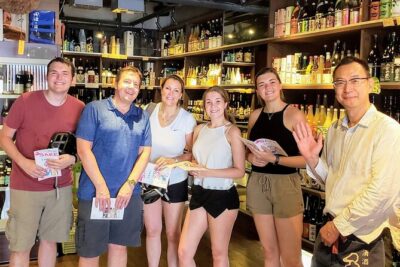
The market tour is designed to show how locals shop and how sellers think. You’ll walk with your guide through a traditional market, learn what people are buying, and taste some local fruit along the way. In the best moments, it feels like food chemistry class, except it’s all human-scale and practical.
One detail I really appreciate: the guides don’t just point. They explain. I saw examples of how guides talk through unfamiliar fruits and ingredients using comparisons you can understand fast, so you’re not left guessing what you’re tasting.
You can also read our reviews of more tours and experiences in Ubud.



Pickup, Timing, and the Small-Group Advantage
This runs about 4 hours, and it’s built for a small group (limited to 14). That matters more than you might think. With only a small crowd, your chef and guide can actually notice when someone needs help, whether it’s mixing, chopping, or understanding the steps.
You get hotel pickup and drop-off in the Ubud area. If you’re outside that zone, the tour notes you can meet the shuttle at the front of Ubud Palace or you can go directly to the class. Either way, plan for a bit of coordination so you don’t arrive early and wander around in the heat.
You’ll also start with a welcome drink, then move into the market and/or cooking portion depending on the session. And yes, bring what they request: camera, headphones, and cash.
Morning Session: The Traditional Market Tour and Fruit Tasting
Choose the morning class if you want the full “real Bali” ingredient journey. Traditional market visits are for morning classes only, so afternoon won’t replicate this part.
What you’ll do in the market:
- Walk with your guide through the stalls and see how produce and ingredients are displayed
- Learn how people buy and sell foods used in everyday Balinese cooking
- Taste local fruit as part of the experience
This is where you’ll likely notice the difference between markets made for tourists and markets made for locals. One review described dirt floors, tight quarters, and an overall no-frills feel. That can be fascinating if you like authenticity—but it can also feel off-putting if you’re expecting a neat, sanitized setting. If you’re squeamish about the look of a working market, keep that in mind before booking.
Your guide can make a big difference here. Names that came up in the experience include Putu and Butu, both praised for explaining what’s on offer and for guiding tastings in a way that makes unfamiliar foods feel less intimidating.
Rice Paddies: Why Rice Shows Up Everywhere
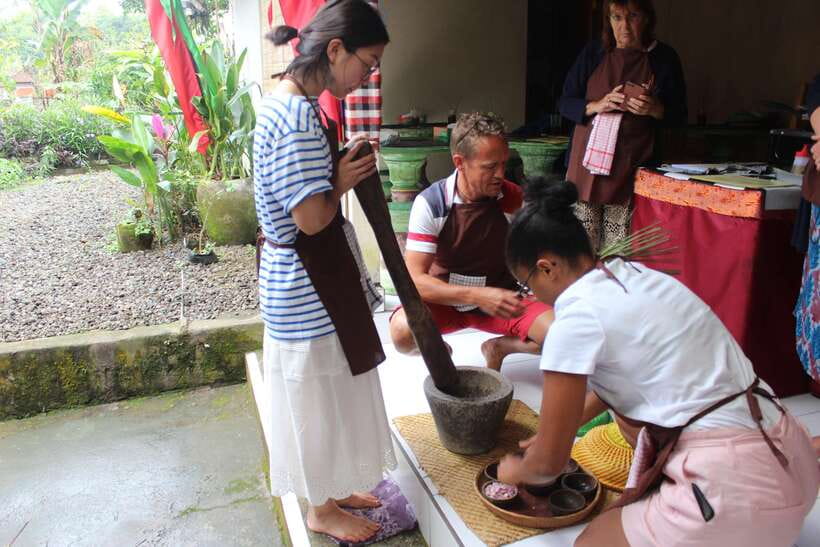
For morning classes, the tour typically includes a visit to local rice paddies. This stop isn’t random scenery. The guide ties it to daily life and how important rice is in Balinese culture.
Here’s what this adds to the cooking class: it gives context. You’ll understand why certain ingredients and food patterns matter, rather than treating the meal as just another activity. When you later cook, it feels less like “follow steps” and more like “you’re part of the food system.”
If you’re short on time in Bali, this is a useful pairing: you get countryside atmosphere and cultural meaning, without needing a full-day trek.
Cooking Class Setup: A Family Complex, Not a Factory Kitchen
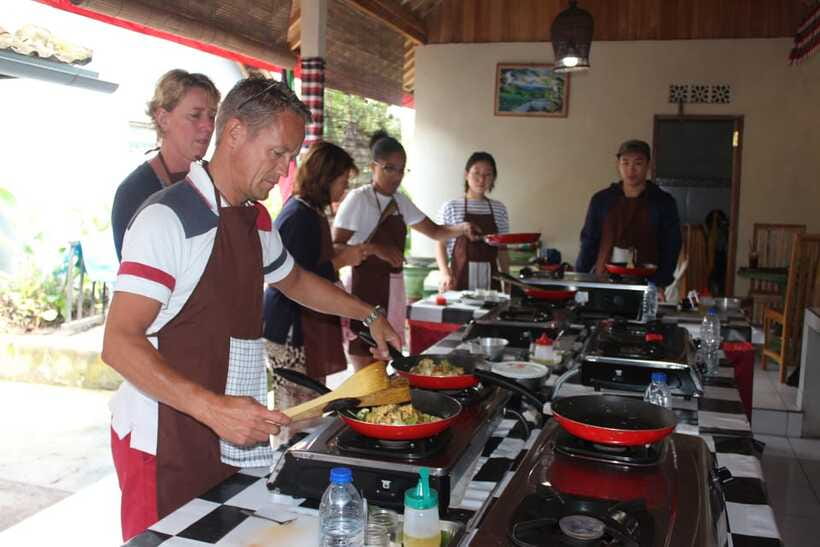
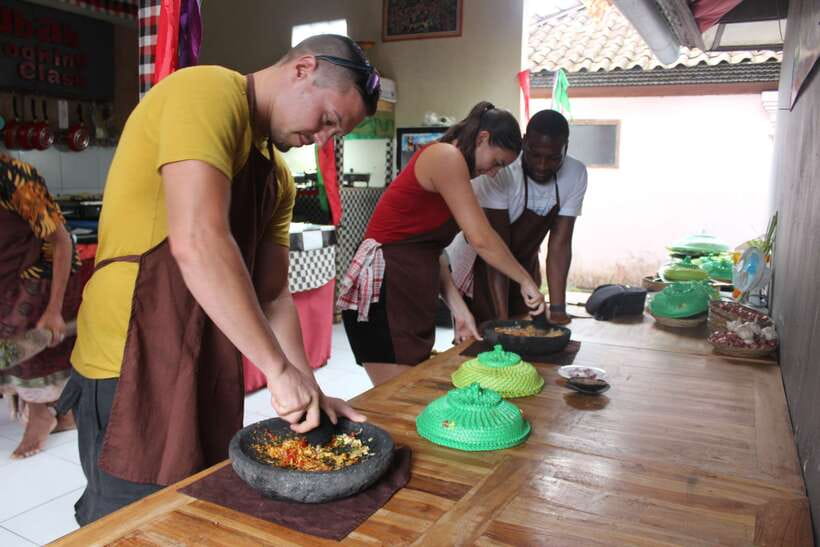
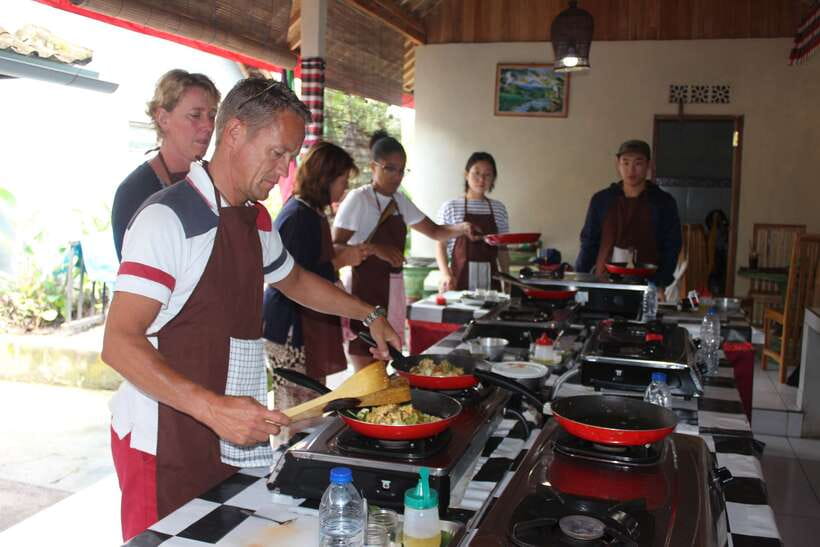
This is one of the most praised parts for a reason. The cooking happens inside a family complex. That changes the whole tone of the experience. Instead of a staged classroom, it feels like you’re joining a household workflow.
The group stays small, and the chefs guide you step by step. Many cooking classes in Bali are either too hands-off (watch only) or too chaotic (you’re on your own). This one aims for balance: you cook with support. One review specifically praised the “no stress” feeling because instruction is active and mistakes are corrected in the moment.
Also: you’re not just cooking one dish. You’ll make 9 Balinese signature dishes, which typically include a mix of sauces, mains, and a dessert. That variety is where the value starts to show. In a short afternoon or morning, you get multiple flavor profiles—spice balance, aromatics, and different textures—so you leave with more than one recipe idea.






What You’ll Make: Hands-On Balinese Cooking Techniques
The core promise is simple: you learn Balinese food preparation and you do it yourself. The class is structured around learning recipes step by step, with your own hands doing the work.
In practice, that usually means:
- You prep ingredients and follow the chef’s method for each dish
- You combine components the Balinese way (not generic “Thai-style” shortcuts)
- You taste along the way, not just at the end
One of the best-feeling aspects is that you get to taste while cooking. That helps you adjust your expectations. You start recognizing what the flavors should become, instead of waiting until the final plate.
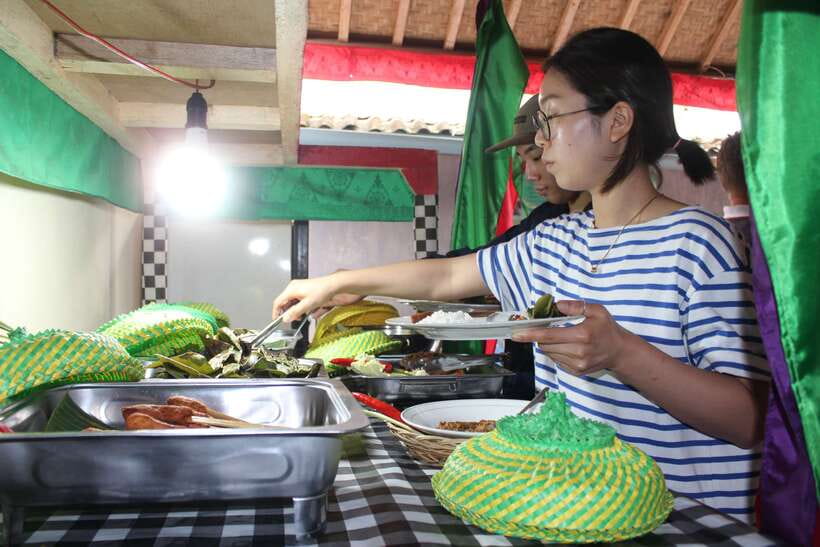
And at the end, you all eat together. One review even called it a feast, which fits the reality: making nine dishes for a small group produces a lot of food, enough to feel satisfied rather than “one bite per course.”
Afternoon Session: Canang Offering Setup and Dinner Together
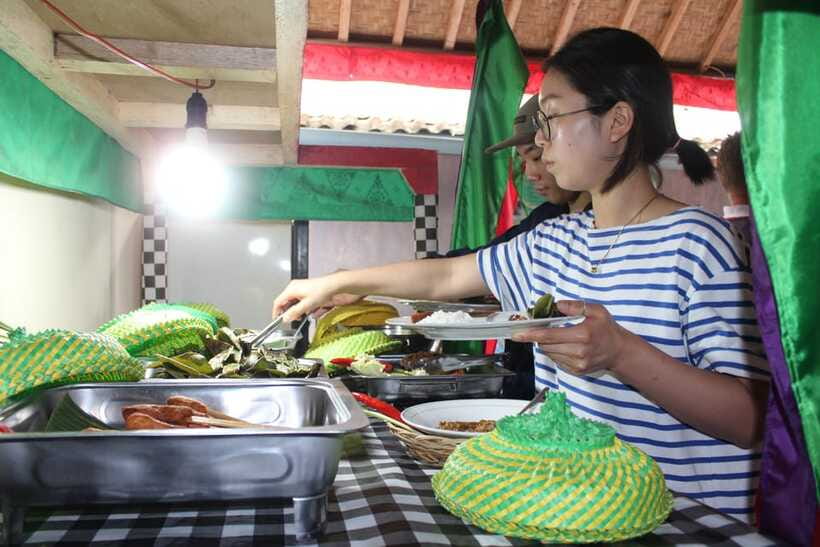
If mornings don’t work for you, the afternoon class is built around a different cultural piece. Morning market and rice paddies are not included in the afternoon session.
Instead, you’ll learn about making set up Canang offering (the tour notes “Canang offering” setup for the afternoon option). That adds a religious and everyday-life element to the meal. It helps explain how food and offerings connect in daily Balinese practice.
Then you still get the cooking class experience and dinner together. So you’re not losing the main payoff—you’re just swapping the market + rice story for the offering + cooking story.
Meal Time: Taste What You Cook, Together
This is the part you’ll remember when you think about the value. You don’t just take photos of food and then leave. You eat what you made.
Because you cook multiple dishes, the table becomes a mix of flavors rather than repeating the same taste in different forms. The experience is designed so everyone savors the finished dishes in a shared meal at the end.
This also makes the class feel social in a good way. Small-group cooking can sometimes feel awkward, but reviews frequently praise the team vibe and the relaxed cooperation. Even if you come solo, you’re working at the same pace as everyone else, then enjoying the results together.
Price and Value: Why $23 Can Make Sense Here
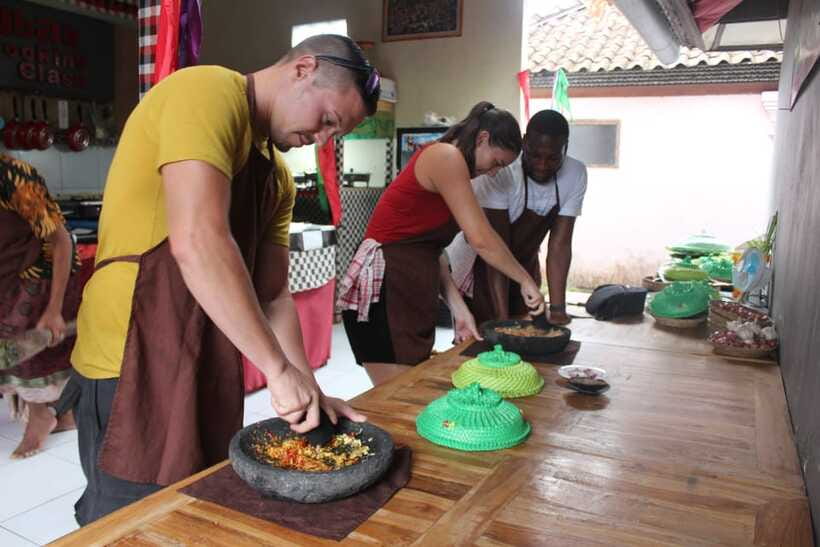
At $23 per person, this is priced low for what’s included. You’re getting:
- Hotel pickup and drop-off in Ubud
- A live English-speaking guide
- A cooking class built around 9 dishes
- A welcome drink
- PDF recipe copy after the class
- Morning-only stops: market tour and rice paddies
- Afternoon-only stop: Canang offering setup
The big value driver is that you leave with both skill and ingredients knowledge. You learn how Balinese food is built (not just what it tastes like), and you get practical take-home recipes.
If you’ve paid more for cooking classes elsewhere and wondered why it felt thin, the difference here is the density: nine dishes in a short time, plus the market and/or rice context. That’s why the reviews repeatedly highlight how much you produce and how smoothly it runs.
Guides That Matter: Names You Might Meet
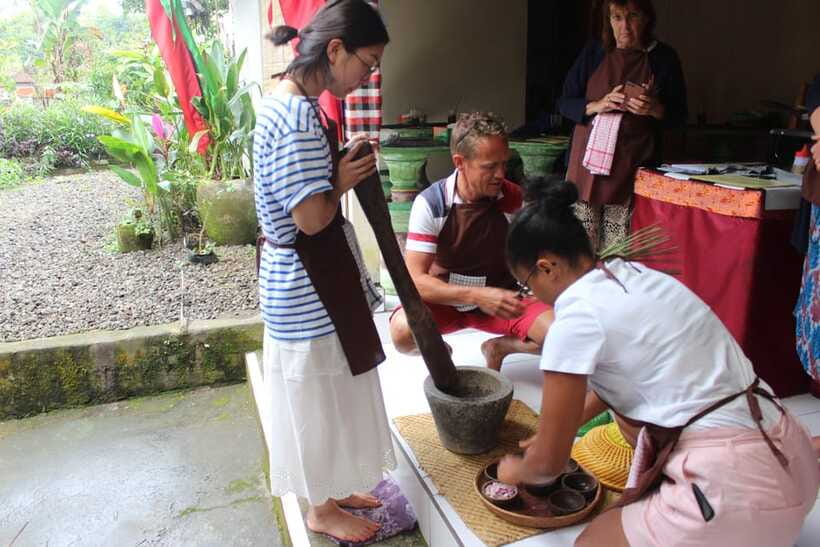
One nice bonus from the experience is that it feels personal. Specific guide names that came up include Putu, Butu, and Tata. On the cooking side, Wayan also came up as a highly recommended instructor.
You might not meet the exact same people, but the pattern shows what the organizers are aiming for: clear communication, friendly energy, and real support while you cook.
A good guide also changes how you experience Bali. The market stop is one place where you can easily feel lost; the guide’s explanations turn the chaos into an education you can actually use.
Who This Is Best For (And Who Should Think Twice)
This works best if:
- You want a hands-on cooking class rather than a lecture
- You like local food culture, especially markets and ingredient sourcing
- You’re staying in Ubud and want an activity that fits easily into your schedule
- You like small groups and learning directly from local hosts
It’s likely less ideal if:
- You expect an easy, polished market experience. The market visit is traditional and can be rough around the edges.
- You need wheelchair accessibility. The experience notes it’s not suitable for wheelchair users.
- You’re traveling with young kids under 6. The activity isn’t suitable for children under 6 years.
Practical Tips That Make the Class Easier
These are the basics I’d follow:
- Bring cash, since the market and local environment often involve small purchases
- Bring headphones, as requested, especially if the guide uses audio you’ll want to hear clearly
- Bring a camera if you want to capture the cooking process and the rice paddy setting (when you’re on the morning route)
Also, be honest about your preferences when choosing morning vs afternoon. Morning gives market fruit tasting and rice paddies. Afternoon trades those for Canang offering setup and dinner.
Should You Book This Ubud Cooking Class and Market Tour?
If you want the best value in a short Ubud stay, I’d book this—especially the morning option if you care about ingredients, markets, and context. The combination of nine dishes you cook yourself, a shared meal, and optional culture stops makes it feel complete rather than like a quick demo.
Skip it only if you strongly prefer a clean, tourist-style market environment or if you need accessibility accommodations that the experience can’t support. Otherwise, this is exactly the kind of practical Bali activity that leaves you with both memories and recipes you can actually use.
FAQ
How long is the Ubud Balinese Cooking Class and Market Tour?
It runs for about 4 hours.
What does the class include?
You’ll cook 9 Balinese signature dishes, enjoy a meal together, and get a PDF copy of the recipes. It also includes a welcome drink, and there’s a local guide. Morning classes include a market tour and rice paddies visit, while afternoon classes include Canang offering setup and dinner together.
Is the market tour included in the afternoon session?
No. Traditional market visits are for morning classes only.
Do you provide hotel pickup and drop-off?
Pickup and drop-off are included in the Ubud area. If you’re outside Ubud, you can meet the shuttle at the front (Ubud Palace) or go directly to the class.
Is the tour suitable for kids or wheelchair users?
It is not suitable for children under 6 years, and it is not suitable for wheelchair users.
What should I bring with me?
Bring a camera, headphones, and cash.