REVIEW · AO NANG
Ao Nang: Hands-on Learn to Cook 3 Popular Thai’s street food
Book on GetYourGuide →Operated by Authentic Thai Cooking School · Bookable on GetYourGuide
Three Thai street-food dishes, cooked hands-on in Krabi.
I love the clean open-air family kitchen and the fact you pick your own menu, including vegan or vegetarian options. One catch: there’s no pickup, so plan your own ride.
You’ll meet an English-speaking instructor and cook a soup plus a main plus a salad, with step-by-step guidance that makes Thai flavors feel doable. Some recent classes were led by instructors like New and Gataii, both praised for keeping things fun and productive.
Afterward you eat what you made, take photos during the activity, and leave with a PDF recipe book you can actually use at home. At $28 for 150 minutes, it’s strong value if you want skills, not just a meal.
In This Review
- Key highlights worth your time
- What You Cook in This Ao Nang Thai Street-Food Class
- Inside the Open-Air Family Kitchen in Krabi
- How the English-Speaking Instructor Teaches Thai Flavor
- A Realistic 150-Minute Class Flow (Soup, Main, Salad)
- Vegan, Vegetarian, and Gluten-Free: How to Get a Real Meal
- Photos, Eating Together, and the PDF Recipe Book
- Price and Value: Why $28 for 150 Minutes Makes Sense
- Logistics in Ao Nang: No Pickup, Plan Your Ride
- Who This Class Is Best For (and Who Should Rethink)
- My Booking Checklist Before You Go
- Should You Book This Ao Nang Thai Cooking Class?
- FAQ
- What dishes will I cook?
- How do vegan, vegetarian, or gluten-free options work?
- Is the class taught in English?
- What’s included in the price?
- Do they offer pickup or transportation?
- Is alcohol included?
Key highlights worth your time

- Pick your own 3-dish menu (soup, main, salad), so you’re never stuck cooking something you don’t want
- Hands-on in an open-air, family-style setup where you do the work, not just watch
- PDF recipe book to recreate the dishes at home instead of relying on memory
- Dietary options are built in when you tell the operator in advance (vegan, vegetarian, gluten-free)
- English instruction with lots of reassurance for first-timers, including repeat explanations when needed
- No pickup, but easy planning if you’re already based in Ao Nang
What You Cook in This Ao Nang Thai Street-Food Class
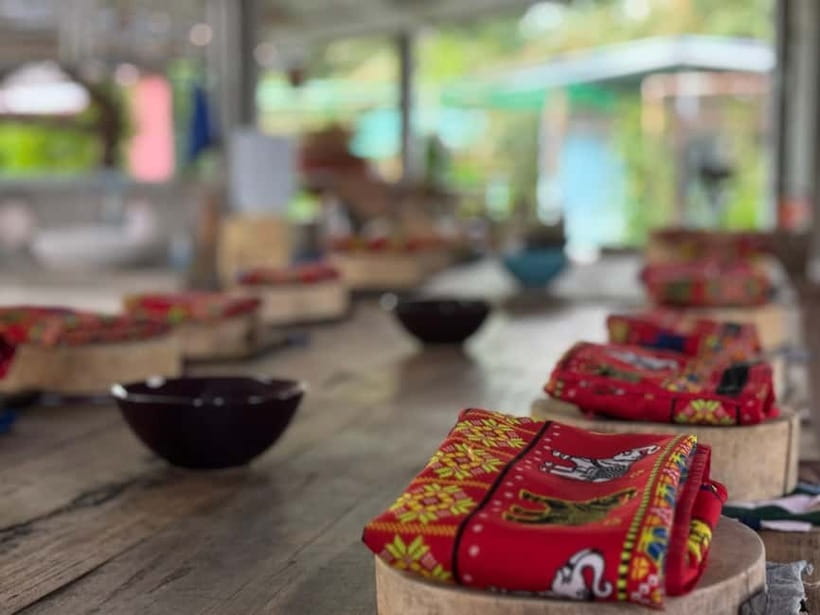
This class is built around learning Thai street-food basics the practical way: you cook three popular dishes from start to finish, then eat them together at the end.
Your menu choices come from three categories. For soup, you can choose either a local chicken soup or a chicken in coconut milk soup. For the main course, you can go for Pad Thai, fried holy basil, or cashew nuts with chicken. And for your side, you pick either papaya salad or cucumber salad. That menu structure matters because it teaches you three different parts of Thai cooking: a broth or curry-style base, a stir-fry or noodle rhythm, and a bright, sour-salty salad balance.
One smart detail: you’re not locked into one person’s version of dinner. You can choose different dishes within the class, which makes it easier to tailor the meal to your taste. I also like that many instructors are willing to adjust flavors and ingredients for dietary needs, rather than treating requests as an afterthought.
If you’re the type who likes to eat with purpose, this approach helps. You’ll leave with a small set of dishes that cover a lot of what you’ll taste all over Krabi and beyond.
You can also read our reviews of more tours and experiences in Ao Nang.



Inside the Open-Air Family Kitchen in Krabi
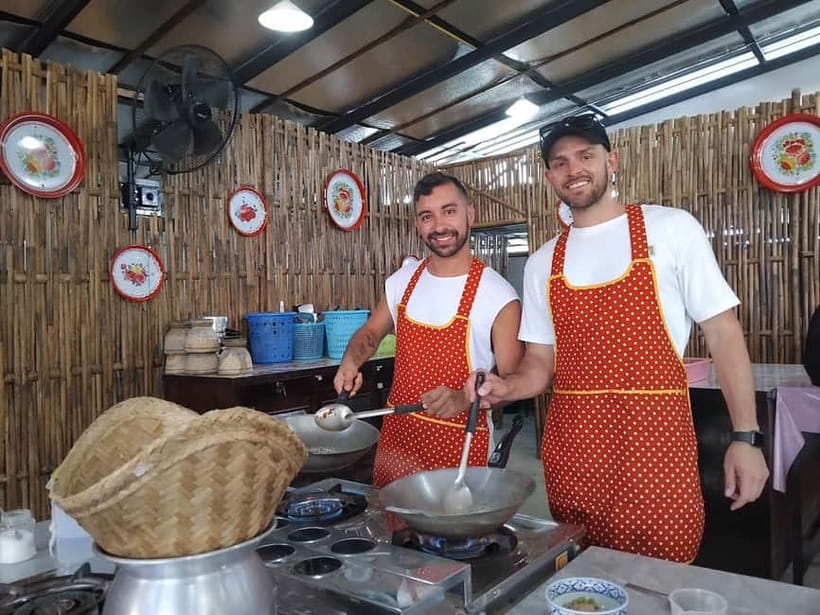
The experience happens in a clean, open-air kitchen that feels more like a Thai household than a school classroom. You meet your instructor first, then you get set up with ingredients and cooking stations. This matters because open-air kitchens are usually less cramped, and you can actually move while you chop, stir, and test flavors.
It’s also hands-on in the most useful sense. You’re not just turning steps on and off. You’re learning how to handle common Thai ingredients and techniques, like balancing sour, salty, sweet, and spice in real time. You’re also learning the timing behind dishes like Pad Thai and the way salads stay crisp when dressed properly.
Helpers take care of the cleanup side in at least some setups, which keeps the class focused on cooking and eating instead of dishes. And since photos of the activity are included, you can capture the process without worrying about whether your phone battery survives the full session.
The overall vibe is casual but organized. Several instructors are described as funny and engaging, and that’s not just personality fluff. When you’re learning something new, calm repetition helps. If you mess up a sauce or timing, a good instructor helps you course-correct without turning it into a lecture.
How the English-Speaking Instructor Teaches Thai Flavor
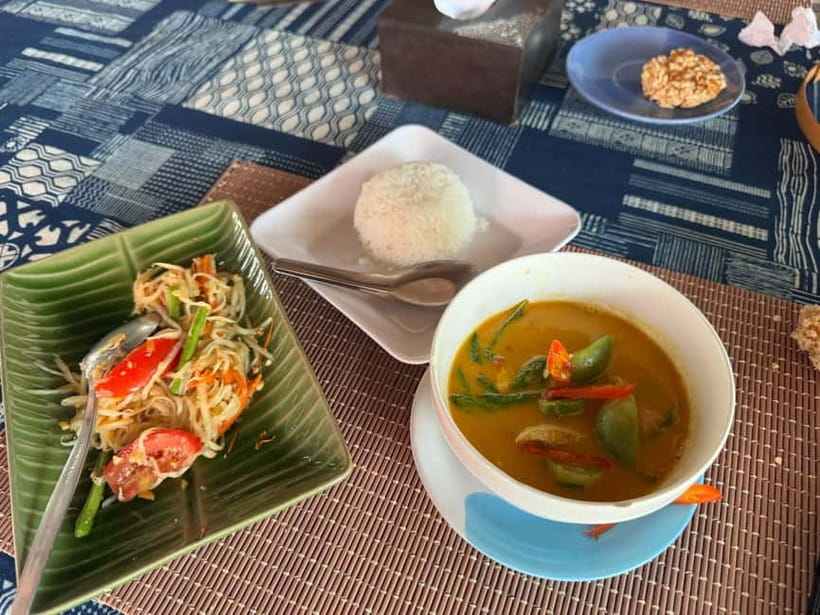
This is the part that decides whether a cooking class is worth your time. Here, the teaching style is practical and confidence-building, with an English-speaking instructor leading you through the process.
Many people are specifically happy with how clear instruction is, plus the fact that instructors will repeat steps when needed. That’s huge if you’re a beginner or if you’re traveling with kids, where attention can wander. One reason the class gets such strong feedback is that the instructors don’t just teach what to do. They also explain ingredients and how to recognize the right flavor stage.
I also like how the coaching supports different comfort levels with spice. Thai food can be intense, but you don’t have to leave angry. You can tell the instructor your preference, and they’ll help you get to a version you can enjoy.
In recent experiences, instructors named New, Tu, Gataii, Thiwa, Poppy, Khun An, and Mac show up as hosts. Again, you won’t always get the same person, but the consistent thread is the same: friendly guidance that keeps things moving, plus a willingness to help you fix problems on the fly.
A Realistic 150-Minute Class Flow (Soup, Main, Salad)
The total class time is 150 minutes, so you get enough time to cook three dishes without spending half a day. You’ll move through your chosen soup first, then the main dish, then finish with the salad. The point isn’t to rush. It’s to give you a full meal worth eating, with techniques you can repeat.
Here’s what that sequence teaches you:
First, the soup helps you learn how Thai flavors build in a base. If you choose the coconut milk version, you’ll get experience balancing richness with salt and acidity. If you choose the local chicken soup, you’ll learn the lighter side of Thai comfort flavors.
Next, the main dish is where the class really shows its street-food roots. Pad Thai teaches noodle timing and how sauces cling. Fried holy basil teaches aromatics and quick stir-fry heat. Cashew nuts with chicken teaches how to keep meat tender while the pan stays hot enough for flavor.
Finally, the salad is the payoff. Papaya or cucumber salad is where you learn the finishing act: dressing and mixing that creates that classic Thai punch. Salads are also a great win for beginners because the results are visible fast. Get the balance right, and it tastes like you knew what you were doing the whole time.
By the time you sit down to eat, you’ve made a full plate of food that matches what you would actually order locally.
Vegan, Vegetarian, and Gluten-Free: How to Get a Real Meal
This class explicitly welcomes vegans, vegetarians, and gluten-free participants. The big practical tip is simple: tell the operator in advance about your dietary restrictions so the instructor can prepare the right substitutions.
One reason this matters is that Thai recipes depend on key ingredients, and substitutions affect flavor. The better setups swap sauces and adjust components so the dish still tastes like Thai street food, not like a bland “safe version.”
For vegetarian choices, tofu and egg options may be used depending on what’s available and what you request. For vegan requests, instructors can adapt. Several instructors are praised for making substitutions without making people feel difficult or awkward.
If gluten-free is your concern, you should flag it early. The class runs on a menu system, so pre-planning helps the cooking team avoid mistakes and focus on teaching you.
When dietary needs are handled well, you don’t lose the fun part of the class. You still chop, stir, taste, and build flavor. That’s the best kind of “customization,” because it keeps the learning experience intact.





Photos, Eating Together, and the PDF Recipe Book
This class includes photos of the activity and also offers time to take photos during the cooking. That might sound minor, but it’s useful when you want to remember specific steps, not just the final food.
The real home-cooking tool is the PDF recipe book. It’s provided after the class and is described as detailed enough to make people eager to cook again at home. That means you’re not flying blind once you’re back in your kitchen and the ingredients are not laid out in neat bowls.
I also like that the PDF isn’t just one recipe. You’re learning three dishes and related techniques, so the recipe book supports your next attempt with clear guidance.
If you’ve ever had a cooking class where you left with a vague idea and a few photos, this is the opposite. You’ll have a written reference.
Price and Value: Why $28 for 150 Minutes Makes Sense
Let’s talk about money in a practical way. At $28 per person, you’re paying for a 150-minute, hands-on cooking experience that includes ingredients, drinking water, a PDF recipe book, and activity photos.
Cooking classes can get expensive when you factor in labor, ingredients, and the fact that you get to eat what you make. Here, the value is that you get three dishes, not one. You also get something lasting: the PDF you can use to recreate the food later.
There are a couple of things to keep in mind. Beer and alcohol are not included (though they’re available for purchase), so don’t budget on alcohol being part of the price. And since there’s no pickup or transportation service, you need to consider your own ride cost or walking time from where you’re staying.
Still, if your goal is to learn Thai cooking you can actually repeat, the included ingredients plus the take-home recipe materials make the price feel fair.
Logistics in Ao Nang: No Pickup, Plan Your Ride
No pickup is part of the deal. That’s not a problem if you already know your way around Ao Nang, but it does change how you plan your evening (or morning).
A practical approach:
- Use your phone to map the meeting area.
- Budget a little extra time if you’re relying on Grab or similar rides.
- If you’re with family, keep a simple meetup plan in case someone’s running late.
Because the class is time-bound, getting there smoothly helps you start cooking without stress. Also, note that pets are not allowed.
Who This Class Is Best For (and Who Should Rethink)
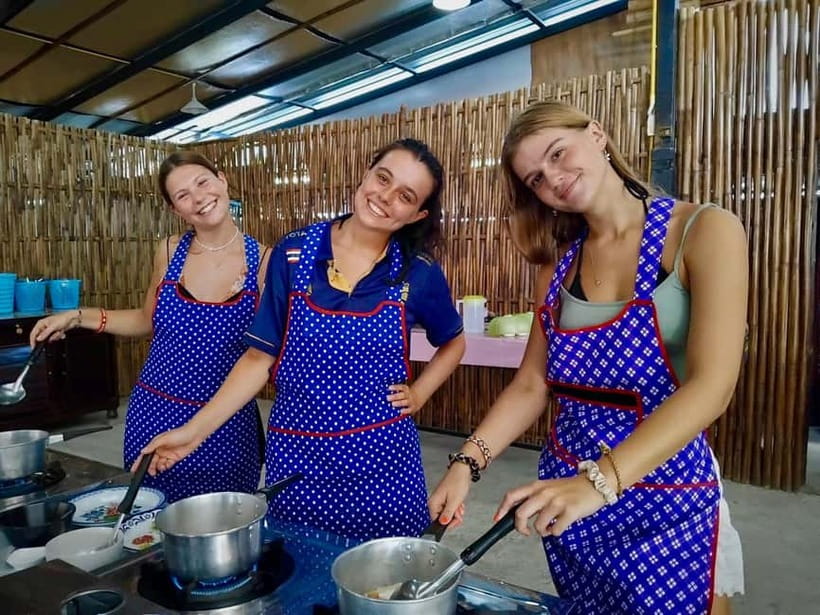
This is a strong fit for beginners. The teaching style is friendly, the steps are guided, and instructors are described as patient and clear. It’s also good for families. Kids have enjoyed it when instructors keep the energy up and let children participate in hands-on tasks.
It’s also a smart choice for couples and solo travelers who want a break from beach time and a skill they can carry home. You’ll have a real reason to taste Thai flavors beyond restaurants, because you’ll understand how those flavors are built.
Who should consider another option? If you strongly prefer dining-only experiences and don’t want to cook at all, you might feel the effort isn’t your thing. And if you’re not comfortable arranging your own transport, the lack of pickup might be annoying.
My Booking Checklist Before You Go
Before you book, I’d do three quick things.
First, decide your menu based on what you actually like to eat. If you love noodles, pick Pad Thai. If you prefer bright and crunchy, pick cucumber or papaya salad. If you want comfort, pick one of the chicken soups.
Second, message your dietary needs ahead of time. The class supports vegan, vegetarian, and gluten-free options, but the key is giving the operator enough notice to prepare the right substitutions.
Third, plan for spice. Thai cooking is not automatically mild, but you can ask for a level you’ll enjoy. You’ll learn faster when you can taste and adjust without suffering.
Should You Book This Ao Nang Thai Cooking Class?
Yes, you should book it if you want Thai street-food skills in a format that’s fun, structured, and repeatable at home. The biggest win is that you cook three dishes, get a PDF recipe book, and learn in an open-air family-style kitchen with supportive English instruction.
I’d skip it only if you hate hands-on cooking, need guaranteed pickup, or you’re trying to fit it into a super tight schedule with no buffer for getting there.
If your travel goal is to come home with something you can actually make again, this is the kind of class that earns its place on your Krabi itinerary.
FAQ
What dishes will I cook?
You choose 3 dishes: one soup (either local chicken soup or chicken in coconut milk soup), one main (Pad Thai, fried holy basil, or cashew nuts with chicken), and one salad (papaya salad or cucumber salad).
How do vegan, vegetarian, or gluten-free options work?
Vegan, vegetarian, and gluten-free options are available upon request. Tell the operator about your dietary restrictions in advance so the instructor can prepare suitable substitutions.
Is the class taught in English?
Yes. The instructor speaks English.
What’s included in the price?
The included items are the hands-on cooking class, all ingredients, drinking water, a PDF recipe book, and photos of the activity.
Do they offer pickup or transportation?
No. There is no pickup or transportation service.
Is alcohol included?
Beer and alcohol are not included, but they are available for purchase. Drinking water is included.