REVIEW · BANGKOK
Bangkok: Hands-on Thai Cooking Class and Market Tour
Book on GetYourGuide →Operated by House of Taste Thai Cooking School · Bookable on GetYourGuide
Food smells turn into real skills here.
This is a Thai cooking class built around you cooking (not watching), with time to taste what you make while it is still hot. I like that the school walks you through key building blocks like coconut milk and curry paste from scratch, so the dishes make sense instead of feeling like a mystery.
The best part for me is the structure: a small group, a professional English-speaking instructor, and clear help as you tackle four traditional dishes. One thing to consider: the market visit is only for the morning class, while afternoon and evening swap that out for mango carving, so pick the time that matches what you want most.
In This Review
- Key things that make this class worth your time
- Getting There: BTS Asoke Meets MRT Sukhumvit (and then Sukhumvit 4)
- Morning Market Tour: A Real Ingredient Hunt (Not Just a Photo Stop)
- The 210-Minute Flow: Four Dishes, Two Big Teach-and-Do Hours
- What You’ll Cook: Thai Menu Rotations (and One Dessert That Never Changes)
- Monday
- Tuesday
- Wednesday
- Thursday
- Friday
- Saturday
- Sunday
- Curry Paste From Scratch: The Skill That Makes Everything Click
- Eating What You Made: Why Timing Is a Feature, Not an Afterthought
- Small Class Help: When You Need a Hand, You Get One
- Afternoon and Evening Upgrade: Mango Carving as the Grand Finale
- Dietary Needs: Substitutions Are Possible With Advanced Notice
- Recipes and Repeatability: Leaving With What You Actually Need
- Price and Value: Why $45 Feels Fair for a Bangkok Skill Session
- Who Should Book This Class (and Who Might Skip It)
- Should You Book the Bangkok Thai Cooking Class at House of Taste?
- FAQ
- Where is the meeting point for the morning class?
- Where is the meeting point for the afternoon and evening classes?
- How long is the cooking class?
- Is there a market tour?
- What dishes will I cook?
- Can the class accommodate dietary restrictions?
- Does the class use MSG?
- Will I receive recipes after the class?
- Is alcohol included in the price?
Key things that make this class worth your time
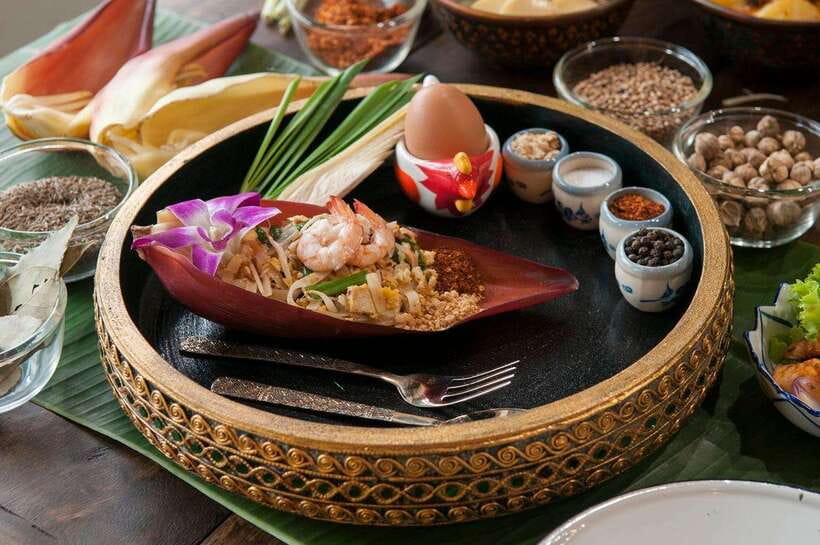
- Make Thai staples from scratch: curry paste and coconut milk preparation are part of the process
- Four dishes plus mango sticky rice every day: you leave full and with a full set of recipes
- Small-class attention: help is personal enough that first-timers don’t feel lost
- Market tour in the morning only: shop for fresh ingredients with a guided walkthrough
- Mango carving skill show: afternoon/evening ends with mango carving as a fun finale
- No MSG used: the flavors come from herbs, spices, and technique, not shortcuts
Getting There: BTS Asoke Meets MRT Sukhumvit (and then Sukhumvit 4)
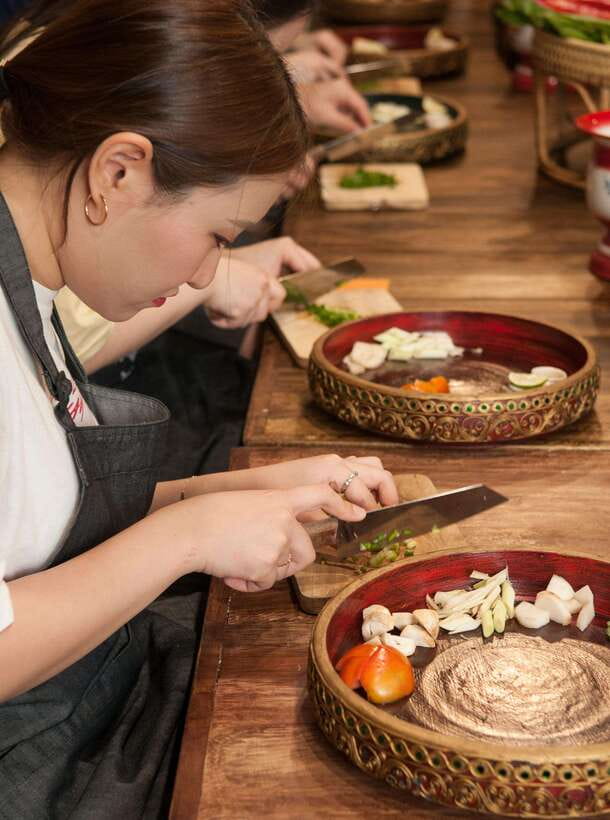
Bangkok is huge, but this class gives you a straightforward starting point. For the morning class, you meet at the street floor near BTS Asoke Exit 3 and MRT Sukhumvit Exit 3 (you can also pin Hey! Coffee MRT Sukhumvit as a meeting reference). That matters because you can plan your day around transit without worrying about a complicated pickup.
For afternoon and evening, you go directly to the school in Sukhumvit 4. This split is practical: morning is built like a mini outing (market first, then cooking), while later sessions feel more like a straight cooking workshop with a special finishing touch.
Wear comfortable shoes. Even if the walking is not extreme, you’ll be on your feet and moving between prep stations and your cooking space.
You can also read our reviews of more tours and experiences in Bangkok.


Morning Market Tour: A Real Ingredient Hunt (Not Just a Photo Stop)
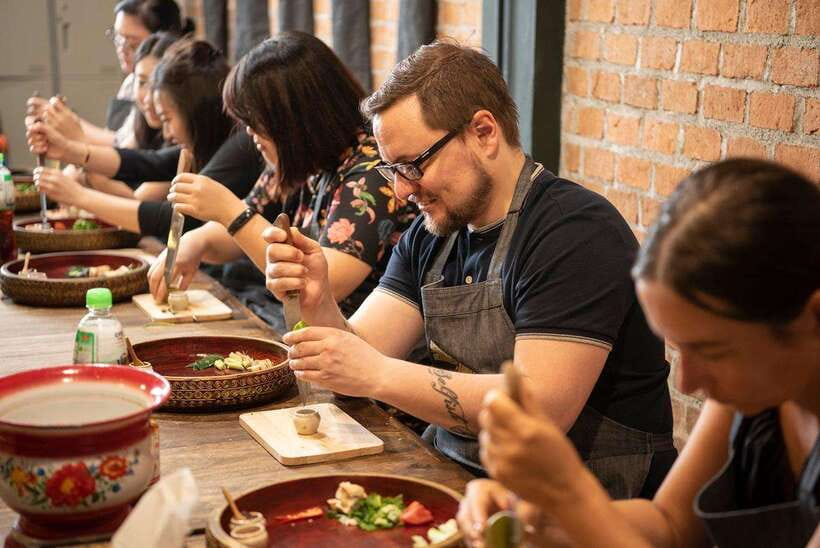
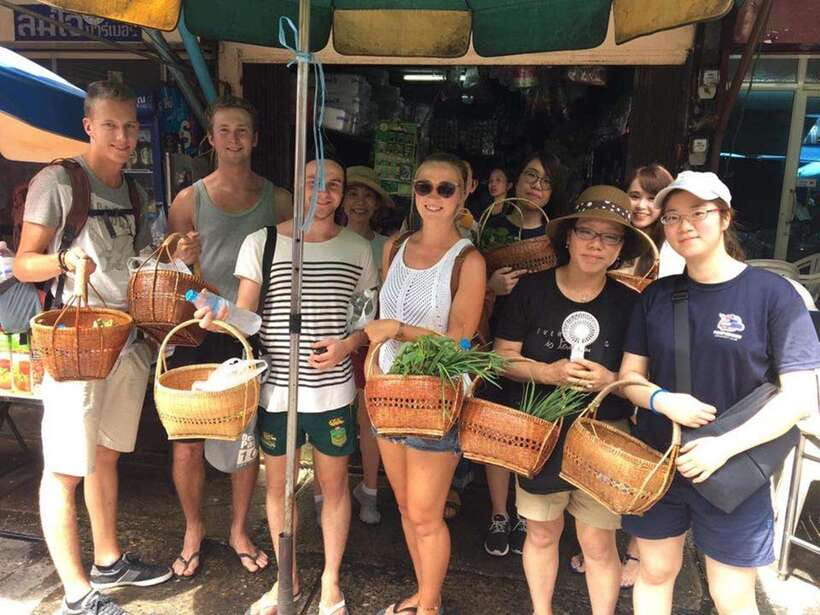
If you choose the morning class, the day starts with a guided ingredient tour at a nearby local market. The point is not to browse for fun; it is to help you understand what Thai cooking expects from ingredients. You’ll learn about vegetables, rice, herbs, and spices, and you’ll see how fresh produce and pantry items shape the flavor profile of dishes like curry, stir-fries, and soups.
You also get a key time-saving benefit: when you cook later, you already know what each ingredient is and why it’s used. That is the difference between remembering a recipe and actually being able to recreate it.
One practical note: the class description is clear that the market tour only happens in the morning. If you care a lot about ingredient shopping, plan your schedule around the morning session and not the afternoon or evening slot.
The 210-Minute Flow: Four Dishes, Two Big Teach-and-Do Hours
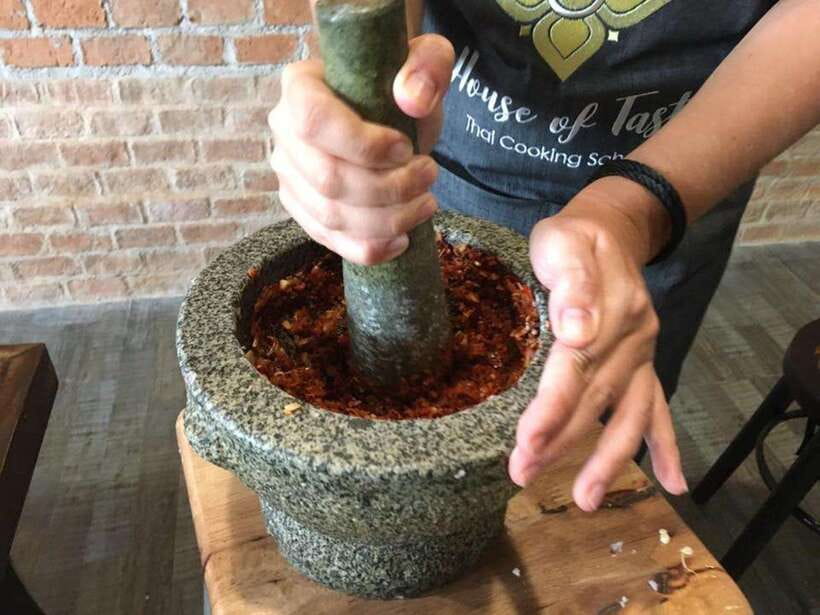
The class runs 210 minutes total, with the main cooking block lasting about two hours. The tempo is designed so you can do real work at the cutting board and stove, then sit down and taste as your dishes finish.
Here’s the rhythm you can expect:
- You learn and prep ingredients with guidance.
- You cook several components, including key flavor bases.
- Your group eats each dish individually while it is still hot.
- You finish with a Thai dessert that is included every day.
This “cook, then eat immediately” style is more than a convenience. It trains your palate to notice seasoning balance while the food is fresh, which is exactly what you want when you later try to cook at home.
What You’ll Cook: Thai Menu Rotations (and One Dessert That Never Changes)
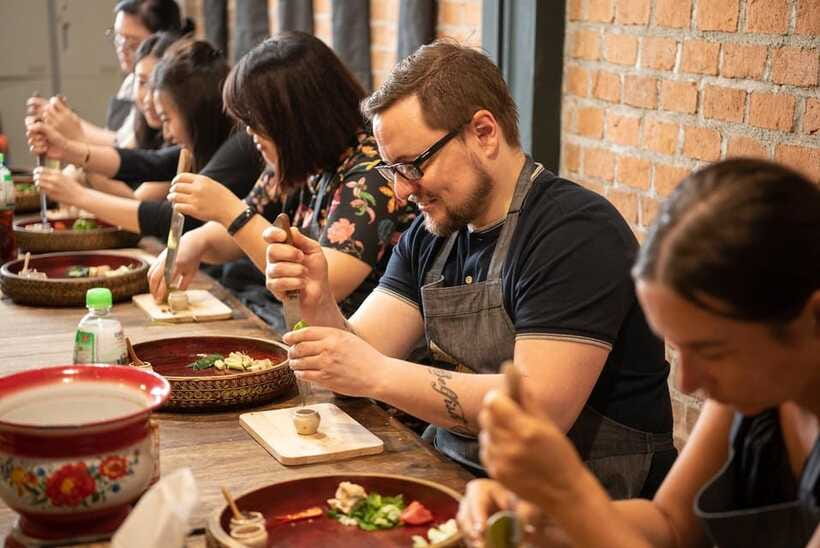
The dishes rotate by day, so you won’t cook the exact same lineup every weekday. What stays consistent in the information provided is the payoff: you cook four traditional courses, and you always finish with mango sticky rice.
Here is what the weekly rotation looks like:
Monday
- Thai Papaya Salad (Som Tum)
- Stir-Fried Noodles with Shrimp (Pad Thai)
- Green Curry with Chicken
- Mango Sticky Rice






Tuesday
- Spicy Coconut Soup with Chicken (Tom Kha Gai)
- Stir-Fried Thai Basil Chicken (Pad Krapow Gai)
- Red Curry with Chicken
- Mango Sticky Rice
Wednesday
- Hot and Sour Soup with Shrimp (Tom Yum Goong)
- Stir-Fried Flat Rice Noodles with Chicken (Pad See Ew)
- Green Curry with Chicken
- Mango Sticky Rice
Thursday
- Spicy Minced Chicken Salad (Larb Gai)
- Stir-Fried Noodles with Shrimp (Pad Thai)
- Panang Curry with Chicken
- Mango Sticky Rice
Friday
- Thai Papaya Salad (Som Tum)
- Stir-Fried Thai Basil Chicken (Pad Krapow Gai)
- Red Curry with Chicken
- Mango Sticky Rice
Saturday
- Spicy Coconut Soup with Chicken (Tom Kha Gai)
- Stir-Fried Noodles with Shrimp (Pad Thai)
- Green Curry with Chicken
- Mango Sticky Rice
Sunday
- Hot and Sour Soup with Shrimp (Tom Yum Goong)
- Stir-Fried Flat Rice Noodles with Chicken (Pad See Ew)
- Panang Curry with Chicken
- Mango Sticky Rice
What you should take from this: you’re not just doing one style of Thai cooking. You’ll touch the major categories—salads, noodles, soups, curries, and dessert—so you leave with a broader Thai cooking toolkit.
If you’re deciding between days, choose based on the dish you most want to eat while you cook it. For example:
- If you love bright, herb-forward flavors, aim for Som Tum or Larb Gai.
- If you crave deep curry comfort, look for Green Curry or Panang Curry days.
- If you want a Thai “comfort + zing” combo, Tom Yum Goong is an excellent target.
Curry Paste From Scratch: The Skill That Makes Everything Click
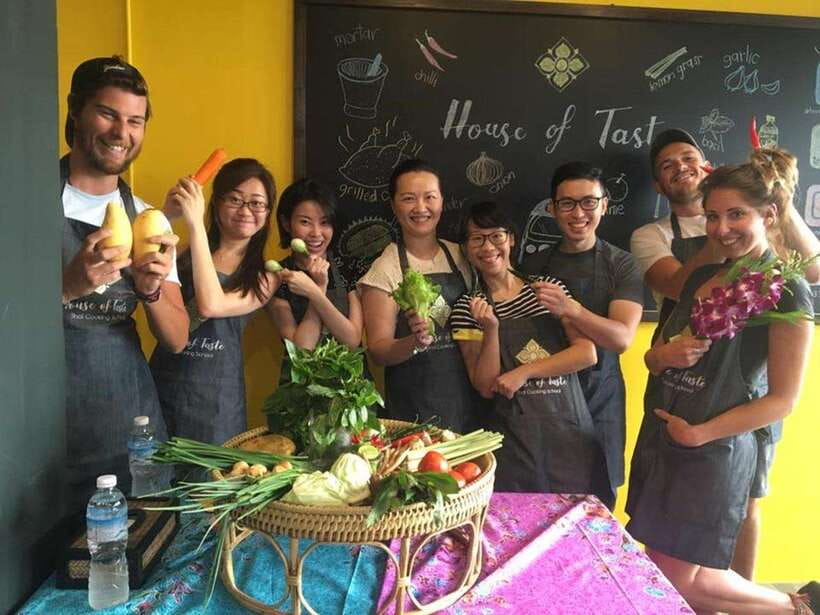
One of the most praised and most useful parts of this class is the focus on foundations—especially making curry paste from scratch and learning how coconut milk and curry paste work together.
Thai curries often get treated like a spice packet at home, but here you learn the actual method and logic. You are shown how ingredients come together to form the base flavor, then you see how that base transforms once it hits heat and coconut richness.
I like this approach because it gives you flexibility later. If you want to adjust heat levels or switch proteins, you can. Your flavor base is not locked in from a shortcut—it is something you understand.
Also, the class states that no MSG is used, which matters for both taste and trust. You’re learning seasoning that relies on herbs, spices, and balance, not an easy additive.
Eating What You Made: Why Timing Is a Feature, Not an Afterthought
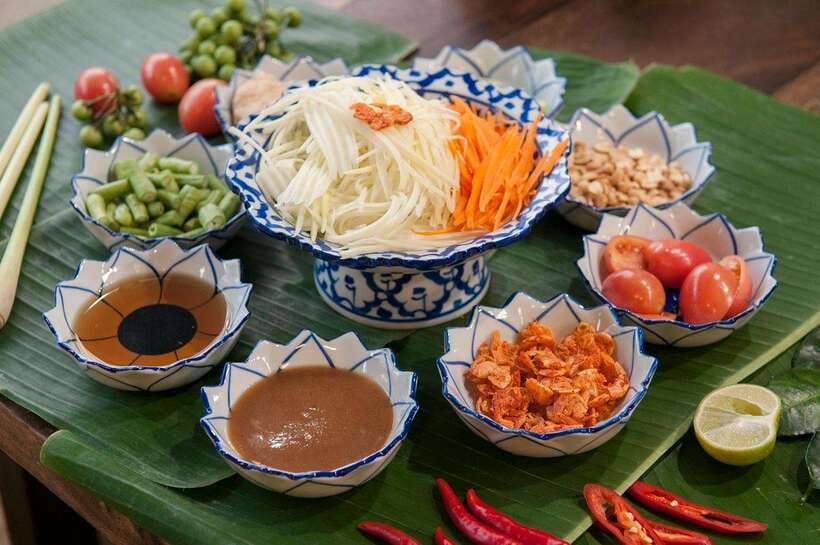
You don’t just cook and then leave. The experience is designed so you savor each dish individually while it’s still hot and fresh.
That changes how you learn. Thai food is sensitive to timing: noodles want to be eaten at the right texture moment, soups taste different as they settle, and curries are at their best when flavors are still warm and active.
A practical tip: come with an empty stomach. The class notes there’s plenty of food, and after four courses plus dessert, you will likely be full in a good way.
Small Class Help: When You Need a Hand, You Get One
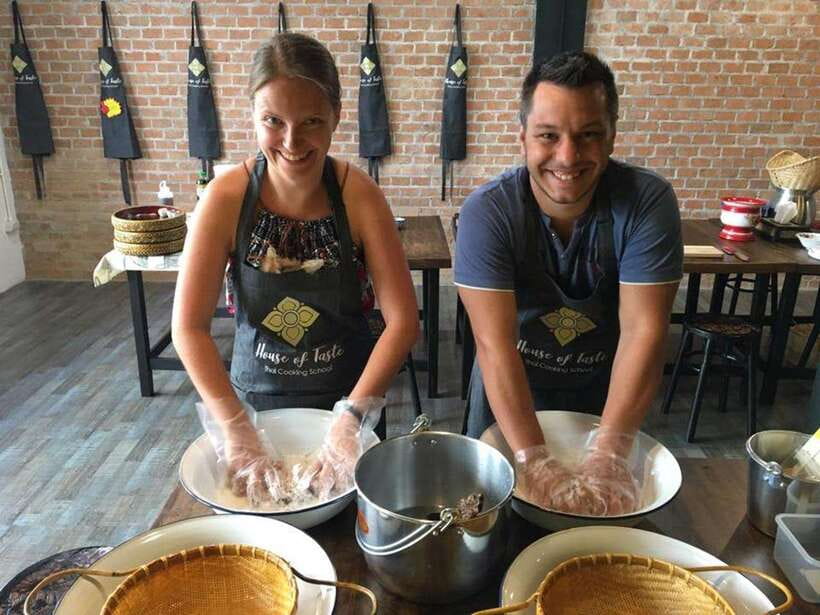
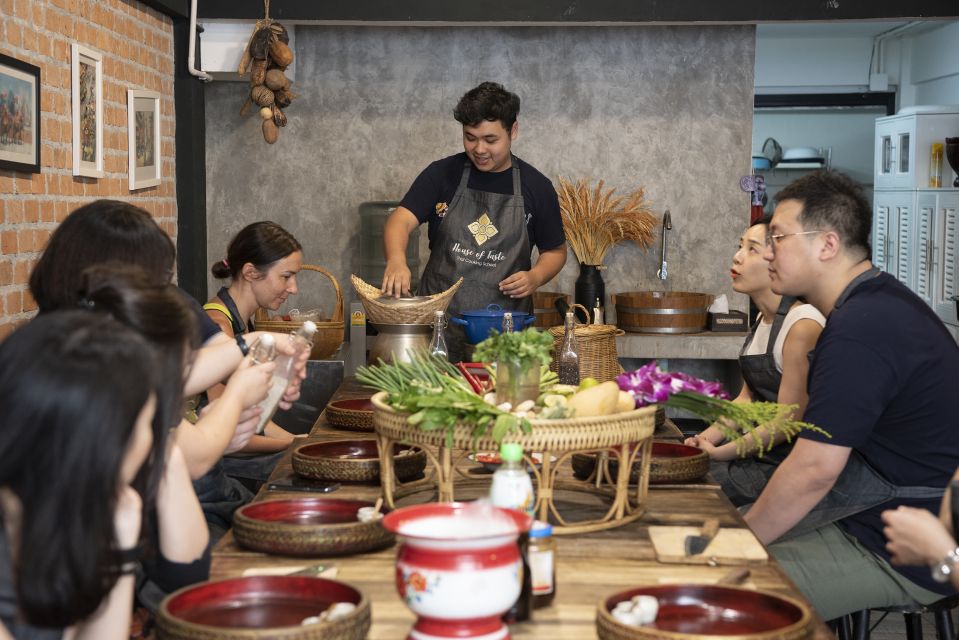
This class runs with professional instruction in English and Thai, plus extra help from instructors and assistants. Reviews highlight that the sessions can feel personal, including moments where you get one-on-one time.
In practice, that means you’re less likely to get stuck mid-recipe. If your chopping is uneven, or your paste consistency is off, you have people to steer you back on track quickly.
I also appreciate that the class plan is built for different skill levels. Some guests may be cooking for the first time; others may just want a refresher. Either way, the structure keeps you moving at a safe pace without turning it into a rushed production line.
Afternoon and Evening Upgrade: Mango Carving as the Grand Finale
If you choose the afternoon or evening class, you skip the market tour. Instead, you get a mango carving session as the last class activity.
This is a great choice if:
- You already planned a market visit elsewhere in Bangkok.
- You want a cooking class plus a visual Thai craft finish.
- You’d rather focus on technique inside the kitchen than walking stalls for ingredients.
The menu rotation still includes four dishes and mango sticky rice, but the final act becomes a cultural food-arts moment. It is fun, photo-friendly, and a little different from the usual “eat and go” ending.
Dietary Needs: Substitutions Are Possible With Advanced Notice
If you have dietary restrictions, this class is set up to handle them. The information provided says they can provide substitute ingredients for vegetarian, halal, kosher, and for allergy needs with advanced notification.
A practical move: send your dietary notes before you arrive, not on the day of. That gives the school time to adjust ingredients and prep in advance, which keeps your cooking experience on schedule.
In the information shared, there’s also an example of someone receiving ingredient changes for low FODMAP needs. While you should still confirm specifics for your situation, it suggests flexibility when you communicate your requirements early.
Recipes and Repeatability: Leaving With What You Actually Need
You get recipes via email, plus ingredients and equipment are provided. You also get a personal locker, which is a nice small convenience in a working kitchen setup.
This part matters for value. Cooking classes can be fun, but without a way to reproduce the results, you quickly lose the benefit. Here, you leave with the ability to recreate your Thai dishes later—especially the techniques that are harder to guess from memory, like curry paste building blocks and seasoning balance.
Also, the class includes drinking water. Alcohol is not included, though it’s available for purchase, so you can keep the experience comfortable and focused.
Price and Value: Why $45 Feels Fair for a Bangkok Skill Session
At $45 per person for 210 minutes, the value is strong—mainly because you are not just getting a meal. You’re getting instruction, ingredients, equipment, and a structured cooking result: four dishes plus dessert, made by you.
You’re also paying for a specific kind of learning:
- You cook curry paste from scratch (not just assemble)
- You learn ingredient roles (especially in the morning market option)
- You get recipes to repeat at home
If you’ve ever done a cooking class where you chop twice and wait for food to appear, this is the opposite of that. The time is built for active work and actual outcomes.
For many people, this becomes one of their best Bangkok food experiences because it turns eating into skill.
Who Should Book This Class (and Who Might Skip It)
This is a great fit if you want to:
- Learn Thai cooking in a hands-on way
- Eat a real Thai meal that you helped make
- Practice across multiple dish types (curries, noodles, soups, salads, dessert)
- Prefer small-class instruction with help as you cook
You might think twice if:
- You’re mostly interested in street-food shopping. The morning market tour exists, but afternoon and evening sessions focus on cooking plus mango carving, not extended wandering.
- You can’t do lots of standing and chopping. Comfortable shoes help, but you are active for the full session.
Should You Book the Bangkok Thai Cooking Class at House of Taste?
I’d book it if you want an experience that turns Thai food from something you order into something you can make. The combination of four-course cooking, mango sticky rice, and core techniques like curry paste from scratch is exactly what makes this class more than a one-time meal.
Choose your time based on the experience style you want:
- Book morning if you care about fresh ingredient shopping and getting context for flavors.
- Book afternoon/evening if you’d rather skip market walking and end with mango carving.
Either way, you’ll leave with full bellies, recipes by email, and skills you can use back home.
FAQ
Where is the meeting point for the morning class?
For the morning class, meet at the street floor of BTS Asoke Exit 3 and MRT Sukhumvit Exit 3 (you can also pin Hey! Coffee MRT Sukhumvit as the meeting reference).
Where is the meeting point for the afternoon and evening classes?
For the afternoon and evening classes, meet at the school in Sukhumvit 4.
How long is the cooking class?
The duration is 210 minutes.
Is there a market tour?
Yes, but only for the morning class. The afternoon and evening classes swap the market tour for mango carving.
What dishes will I cook?
You will cook four traditional dishes plus mango sticky rice. The exact four dishes rotate by day, including options like Som Tum, Pad Thai, Green Curry, Tom Yum Goong, Tom Kha Gai, Pad See Ew, Panang Curry, Pad Krapow Gai, and Larb Gai.
Can the class accommodate dietary restrictions?
Yes. Vegetarian, halal, kosher, and allergy-related ingredient substitutions are available with advanced notification.
Does the class use MSG?
No MSG is used.
Will I receive recipes after the class?
Yes. Recipes are provided via email.
Is alcohol included in the price?
Alcoholic drinks are not included, but they are available for purchase.